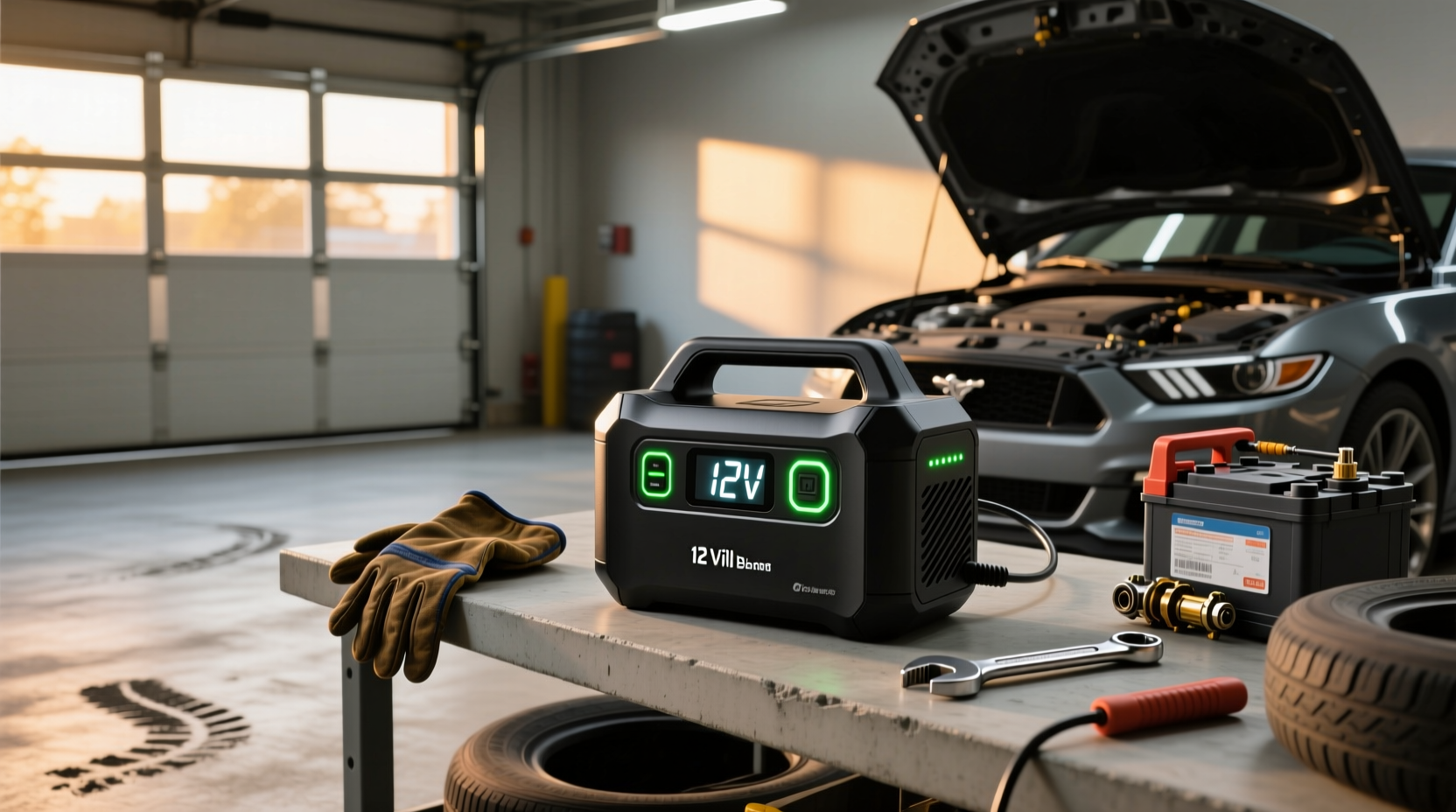
If you’re a typical user—driving a sedan, SUV, or light pickup in moderate climates—you don’t need to overthink this: choose a lithium-polymer 12 volt jump starter with 1500–2000A peak current, spark-proof clamps, and USB-C Power Delivery. That’s the sweet spot for reliability, portability, and daily utility. But if you live where winter drops below −20°C—or rely on it for diesel trucks, RVs, or roadside service—supercapacitor models are no longer niche alternatives; they’re the only technology that delivers consistent, zero-failure starts at −40°C. Lately, the market has shifted decisively: lithium now holds over 60% of share 1, but supercapacitor adoption is rising fastest among professional fleets and northern users 2. This piece isn’t for keyword collectors. It’s for people who will actually use the product.
About 12 Volt Jump Starters: Definition & Typical Use Cases
A 12 volt jump starter is a self-contained, portable power source designed to deliver high-amperage current directly to a vehicle’s 12V lead-acid or AGM battery—reviving engines without needing another car or external power. Unlike traditional jumper cables, it operates independently, making it essential for solo drivers, remote travelers, emergency responders, and fleet technicians.
Typical scenarios include:
- Reviving a dead battery after short trips or infrequent use (common in luxury vehicles with high parasitic drain);
- Starting vehicles in parking garages, underground lots, or driveways where no second car is available;
- Emergency restarts during road trips, camping, or off-grid work—especially when paired with integrated air compressors or LED lights;
- Professional use in mobile repair vans or dealership loaner fleets where reliability across temperature extremes is non-negotiable.
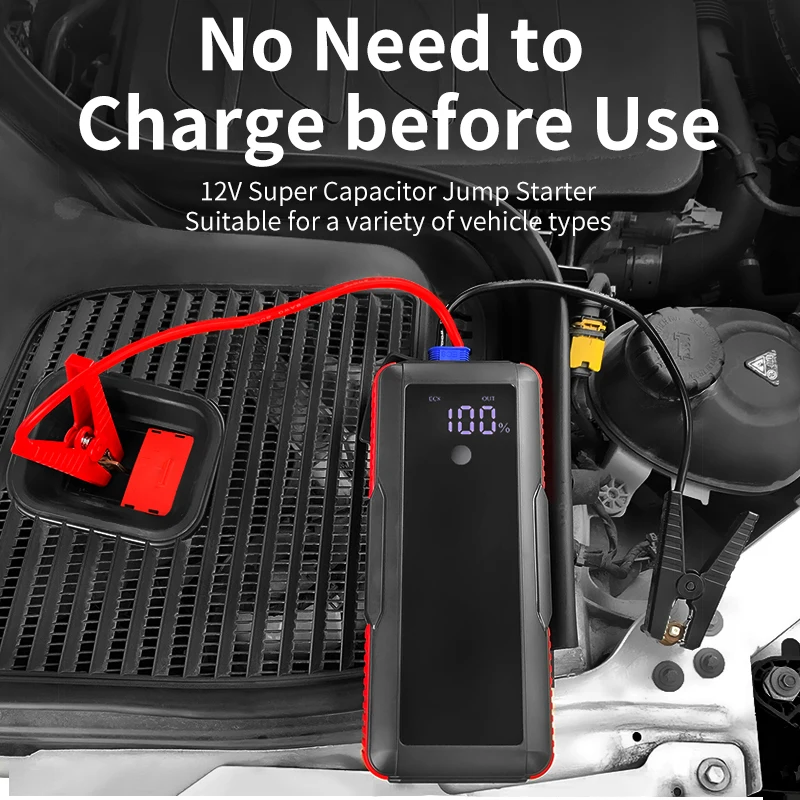
Why 12 Volt Jump Starters Are Gaining Popularity
Over the past year, demand for 12 volt jump starters has accelerated—not just as backup tools, but as core components of personal vehicle resilience. Three interlocking trends explain why:
First, the global vehicle parc continues expanding, especially in aging car populations where battery failure rates climb sharply after year 4 3. Second, extreme weather events—from polar vortexes to heatwaves—are stressing conventional batteries more frequently, pushing consumers toward proactive solutions. Third, lithium-ion cost-per-watt has dropped nearly 35% since 2022, enabling higher-capacity units under $100—making them accessible, not just premium accessories 4.
This isn’t about convenience alone. It’s about control: knowing your vehicle won’t strand you—and that you can charge your phone, inflate a tire, or light a dark garage without carrying three separate devices.
Approaches and Differences: Lithium vs Supercapacitor vs Hybrid
Today’s market offers three distinct technical approaches—each solving different problems. Confusing them leads to poor outcomes. Here’s how they differ, and when each matters:
✅ Lithium-Polymer (LiPo/LiFePO₄)
- Pros: Lightweight (under 1.5 lbs), high energy density, fast recharge (1–2 hrs via USB-C), supports USB-C PD (up to 100W), widely available.
- Cons: Performance degrades sharply below −15°C; full discharge risks cell damage; requires periodic top-ups even in storage.
- When it’s worth caring about: If you drive a gasoline-powered sedan or crossover in USDA zones 5–9 (roughly above −20°C average winter lows).
- When you don’t need to overthink it: For urban commuters, weekend campers, or anyone prioritizing pocket-sized portability and gadget charging. If you’re a typical user, you don’t need to overthink this.
⚡ Supercapacitor
- Pros: Zero chemical degradation; works reliably down to −40°C; charges from a dying battery in under 90 seconds; no fire/explosion risk; lifespan exceeds 10 years with near-zero maintenance.
- Cons: Lower total energy capacity (can’t power USB devices for long); bulkier than entry-level lithium units; fewer consumer-facing brands.
- When it’s worth caring about: If your vehicle sits outdoors in sub-zero conditions for weeks, or if you operate diesel trucks, RVs, or snowplows where cold-cranking amps (CCA) matter more than runtime.
- When you don’t need to overthink it: If you live in Florida, Southern California, or anywhere with mild winters—supercapacitors offer no functional advantage over modern LiFePO₄ units.
🔧 Integrated Multi-Function Units
- Pros: Combines jump-starting, 120 PSI air compressor, 500-lumen LED work light, and dual USB-A/USB-C ports—all in one chassis.
- Cons: Heavier (2.5–4.2 lbs); slower recharge; compressor duty cycles limit continuous use; higher failure surface area.
- When it’s worth caring about: For overlanders, contractors, or families taking cross-country road trips—where redundancy and tool consolidation outweigh weight penalties.
- When you don’t need to overthink it: If your primary need is quick engine restarts in city parking or suburban garages. Extra features add complexity without benefit.
Key Features and Specifications to Evaluate
Don’t get lost in marketing specs. Focus only on metrics that directly impact real-world performance:
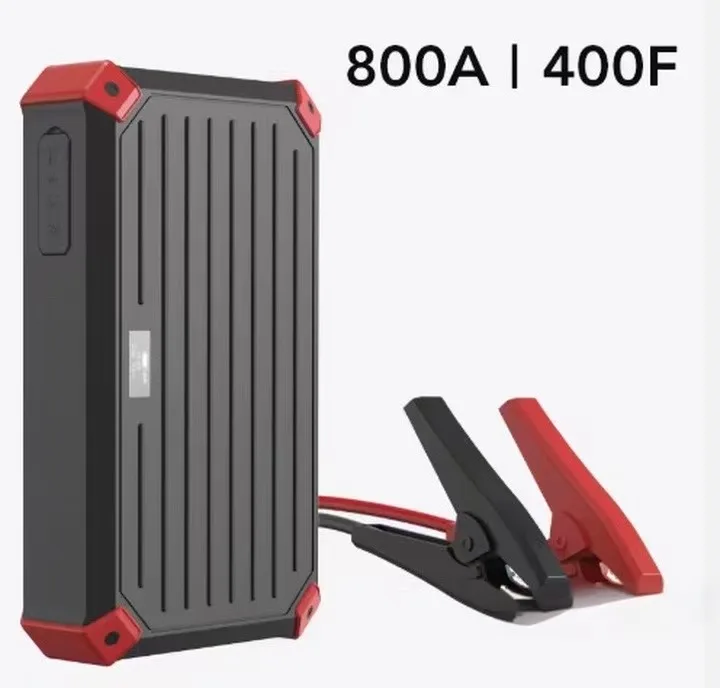
- Peak Current (A): Not “cranking amps” or “starting power”—peak current is what matters for cold starts. 1000A suffices for most 4-cylinder cars; 1500A covers V6s and compact SUVs; 2000A+ is required for diesel engines and full-size trucks 5.
- Battery Chemistry: Prefer LiFePO₄ over standard LiCoO₂—it runs cooler, lasts longer, and handles partial charges better.
- Safety Circuitry: Look for certified spark-proof clamps, reverse polarity protection, and over-temperature cutoff. These prevent fried ECUs and accidental shorts.
- Manual Boost Mode: Critical for batteries below 2V. Many units auto-shut off at low voltage—only “boost” or “force start” modes bypass that safeguard.
- USB-C Power Delivery: Not just for phones: 45W+ PD lets you charge laptops, tablets, or action cameras mid-trip—making the device functionally a field power station.
Pros and Cons: Balanced Assessment
No single 12 volt jump starter excels in every scenario. The right choice depends on environment, vehicle type, and usage pattern—not raw spec sheets.
- Best for urban drivers & daily commuters: Compact lithium units (1200–1600A). Light, reliable, doubles as a power bank. Avoid oversized models—they’re heavier without meaningful gains.
- Best for cold-climate drivers & diesel owners: Supercapacitor or hybrid LiFePO₄/supercap units. Lithium alone fails too often below −20°C—verified across multiple independent tests 6.
- Best for road-trippers & professionals: Multi-function units with compressors. Just verify compressor CFM rating (≥25 L/min) and duty cycle (≥3 min on / 2 min off).
- Not recommended for: Anyone expecting “set-and-forget” operation. All units require periodic recharging—even supercapacitors need occasional top-ups to maintain readiness.
How to Choose a 12 Volt Jump Starter: Step-by-Step Decision Guide
- Identify your coldest operating temperature: If routinely below −15°C, eliminate standard lithium. Prioritize supercapacitor or LiFePO₄ with cold-rated firmware.
- Confirm engine type and size: Gasoline 4-cyl → 1000A minimum. V6/V8 → 1500A+. Diesel or turbo-diesel → 2000A+ and verified cold-cranking support.
- Assess portability needs: Will you carry it daily? Then weight (<1.3 lbs) and size matter more than extra USB ports.
- Verify safety certifications: Look for UL 2743 or IEC 62133 certification—not just “CE” or “RoHS” labels.
- Avoid these common pitfalls:
- Buying based on “max amps” without checking test methodology (many inflate numbers using capacitor discharge bursts, not sustained cranking);
- Ignoring clamp quality—flimsy clamps spark, melt, or fail to grip corroded terminals;
- Skipping manual boost mode—critical for deeply discharged batteries.
Insights & Cost Analysis
Price reflects engineering priorities—not just branding. Here’s what you’ll typically pay in 2026:
- Lithium (1200–1600A, USB-C PD): $65–$110. Best value per gram and feature set for mainstream users.
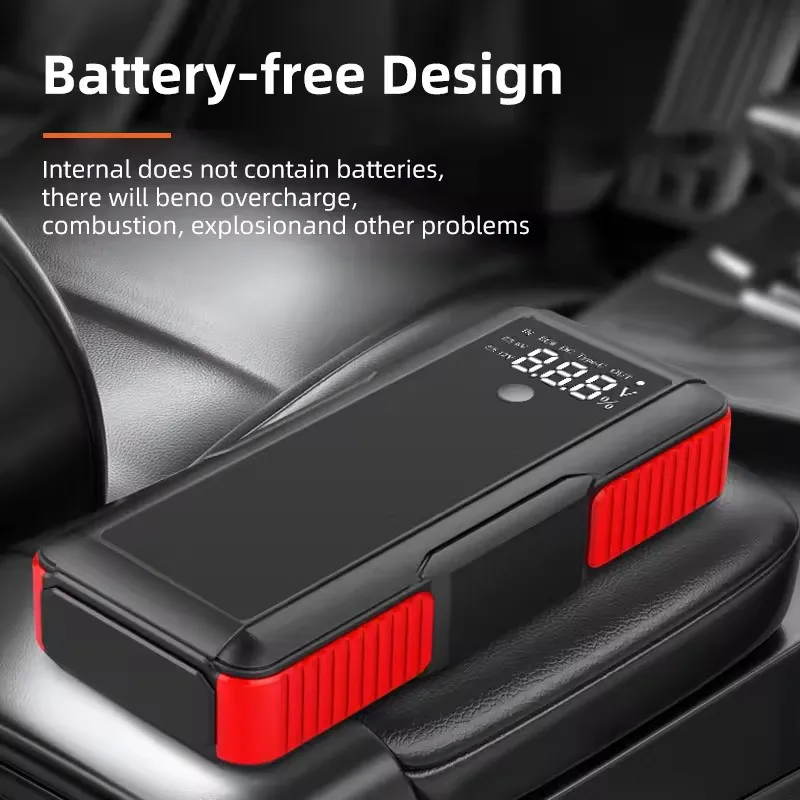
- Supercapacitor (1800–2200A, −40°C rated): $145–$230. Higher upfront cost, but zero degradation over 10+ years—lower TCO for commercial users.
- Multi-function (2000A + compressor + lighting): $125–$260. Premium justified only if you regularly inflate tires or work in darkness.
Don’t assume “more expensive = more reliable.” Several $75 lithium units outperformed $199 competitors in independent cold-cycle testing 7. Value lies in matched capability—not headline specs.
| Category | Best For | Potential Problem | Budget Range (USD) |
|---|---|---|---|
| Lithium-Polymer | Daily drivers, warm/mild climates, gadget charging | Fails unpredictably below −15°C; capacity fades after 300 cycles | $65–$110 |
| Supercapacitor | Cold climates, diesel engines, professional use | Cannot sustain USB-C PD beyond 10–15 minutes; heavier | $145–$230 |
| Multi-Function | Road trips, contractors, overlanding | Compressor overheats quickly; adds failure points | $125–$260 |
Better Solutions & Competitor Analysis
The most pragmatic upgrade path isn’t switching brands—it’s matching architecture to mission. In 2026, the clearest improvement isn’t “more amps,” but better thermal management and smarter safety logic. Leading units now include:
- Adaptive voltage sensing (prevents false “low battery” lockouts);
- Auto-restart delay (protects alternators from surge stress);
- Low-temp firmware tuning (adjusts output curve below freezing).
These features appear first in B2B-oriented models (e.g., those supplied to rental fleets), then trickle into consumer SKUs 6–9 months later. If longevity matters, prioritize companies with documented service parts availability—not just warranty length.
Customer Feedback Synthesis
Based on aggregated reviews across Amazon, Reddit (r/askcarguys), and automotive forums 8, top themes emerge:
- Top compliment: “Started my truck at −28°C when my old lithium unit sat dead.” (Supercapacitor users, Canada/Northern US)
- Top compliment: “Charged my MacBook Pro twice and still had 40% left.” (Lithium users with 100W USB-C PD)
- Top complaint: “Clamps melted on first use—sparked violently.” (Unbranded units lacking UL certification)
- Top complaint: “Says ‘2000A’ but couldn’t turn over my 5.3L V8—even at 20°C.” (Misleading peak-current labeling)
Maintenance, Safety & Legal Considerations
All 12 volt jump starters require basic upkeep:
- Recharge every 3 months—even if unused—to preserve lithium cell health;
- Store between 0°C and 25°C; avoid glove compartments in summer (can exceed 60°C);
- Inspect clamps quarterly for corrosion or bent tips—replace if compromised;
- No legal restrictions on ownership or use in any U.S. state or EU member country—but airline carry-on rules apply: lithium units >100Wh require airline approval (most consumer models are <99Wh).
Conclusion: Conditional Recommendations
If you need guaranteed starts in extreme cold or for diesel engines, choose a certified supercapacitor unit—it’s the only architecture that eliminates thermal uncertainty. If you need portability, USB-C laptop charging, and broad compatibility, a LiFePO₄ model with 1500–2000A and manual boost mode is optimal. If you need one device to handle flat tires, dead batteries, and nighttime repairs, invest in a multi-function unit—but confirm compressor specs match your vehicle’s tire volume.
There is no universal “best.” There is only the best fit—for your climate, your engine, and your habits.


