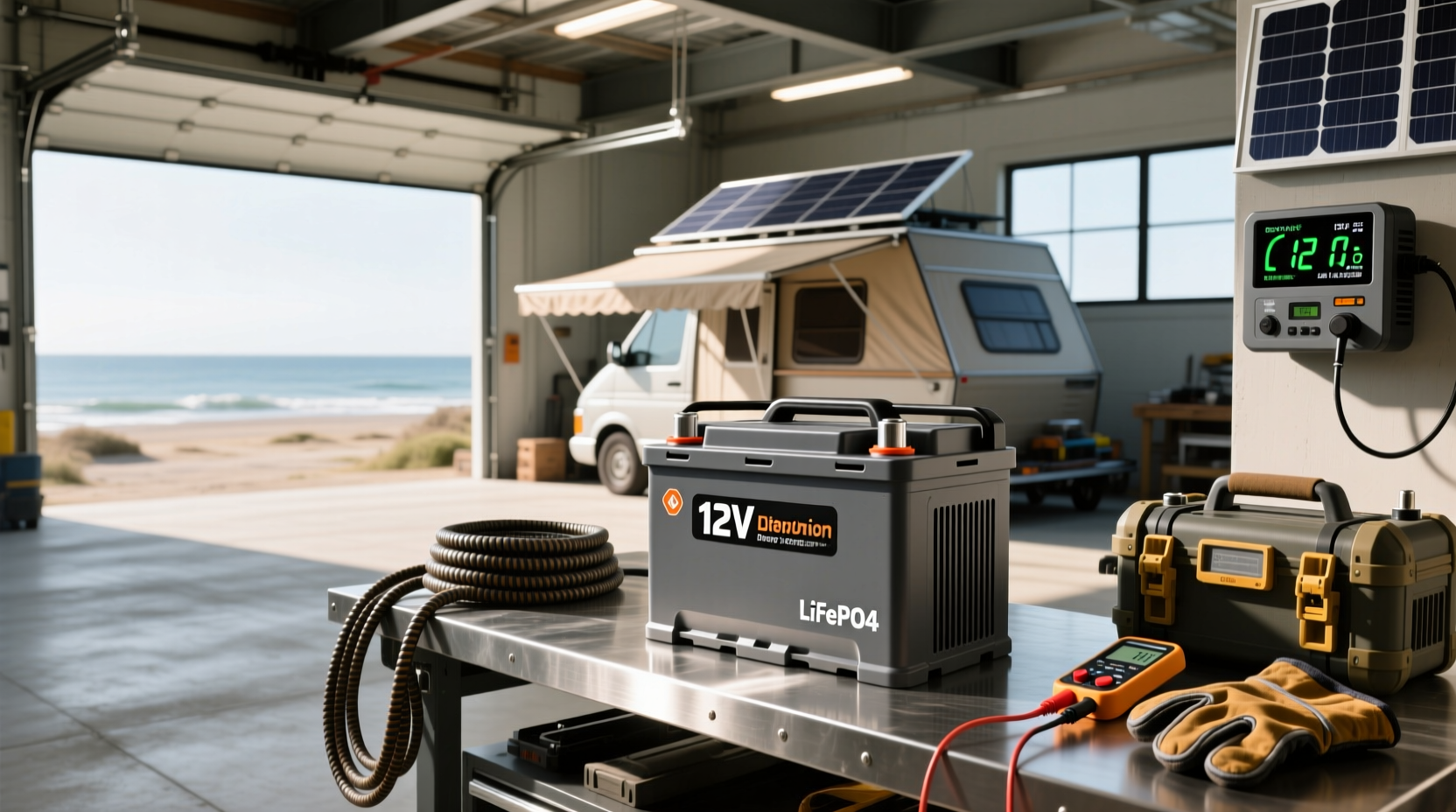
If you’re upgrading from lead-acid or choosing your first deep-cycle power source for an RV, marine system, or off-grid solar setup—start here. Over the past year, the market has decisively shifted toward 12V lithium ion deep cycle batteries using LiFePO4 chemistry, not NCM or legacy alternatives. The change isn’t incremental—it’s structural: smarter built-in BMS, reliable sub-zero charging via integrated heating, and verified 3,000–6,000+ cycle lifespans now define baseline expectations. If you’re a typical user, you don’t need to overthink this: prioritize LiFePO4 + Bluetooth-enabled BMS + low-temp heating. Skip lead-acid comparisons unless weight, space, or long-term cost per cycle are irrelevant to your use case. This piece isn’t for keyword collectors. It’s for people who will actually use the product.
About 12V Lithium Ion Deep Cycle Batteries
A 12V lithium ion deep cycle battery is a rechargeable energy storage unit designed for sustained, partial-discharge cycling—not brief bursts of cranking power. Unlike starter batteries, it delivers steady current over hours, recovers efficiently after repeated discharge to 20%–80% State of Charge (SOC), and tolerates hundreds—or thousands—of full cycles without significant degradation. Typical applications include:
- RV house banks: powering lights, refrigerators, water pumps, and inverters during dry camping;
- Marine trolling motors & electronics: supporting silent, high-torque propulsion and chartplotters without voltage sag;
- Off-grid solar storage: storing daytime PV output for nighttime loads with minimal round-trip loss;
- Golf carts & utility vehicles: where weight reduction directly improves range and handling.
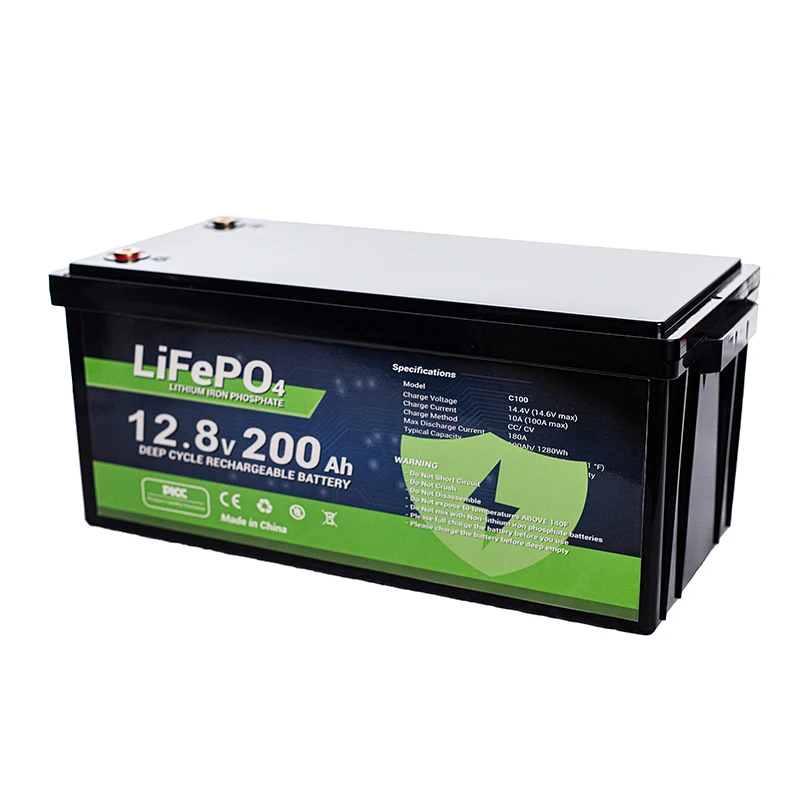
Crucially, “12V” refers to nominal voltage—not peak or resting voltage. LiFePO4 cells operate between ~2.5V–3.65V per cell; four in series yield a stable 12.8V nominal pack. That consistency matters: unlike lead-acid, voltage doesn’t plummet under load, so inverters and DC devices run more reliably.
Why 12V Lithium Ion Deep Cycle Batteries Are Gaining Popularity
Lately, adoption has accelerated—not because lithium is new, but because three converging improvements solved longstanding pain points:
- Cost-per-cycle parity: While upfront price remains higher than AGM, total ownership cost now favors LiFePO4. A $1,200 100Ah LiFePO4 battery delivering 5,000 cycles costs ~$0.24 per cycle; a $350 AGM rated for 500 cycles costs $0.70 per cycle 1.
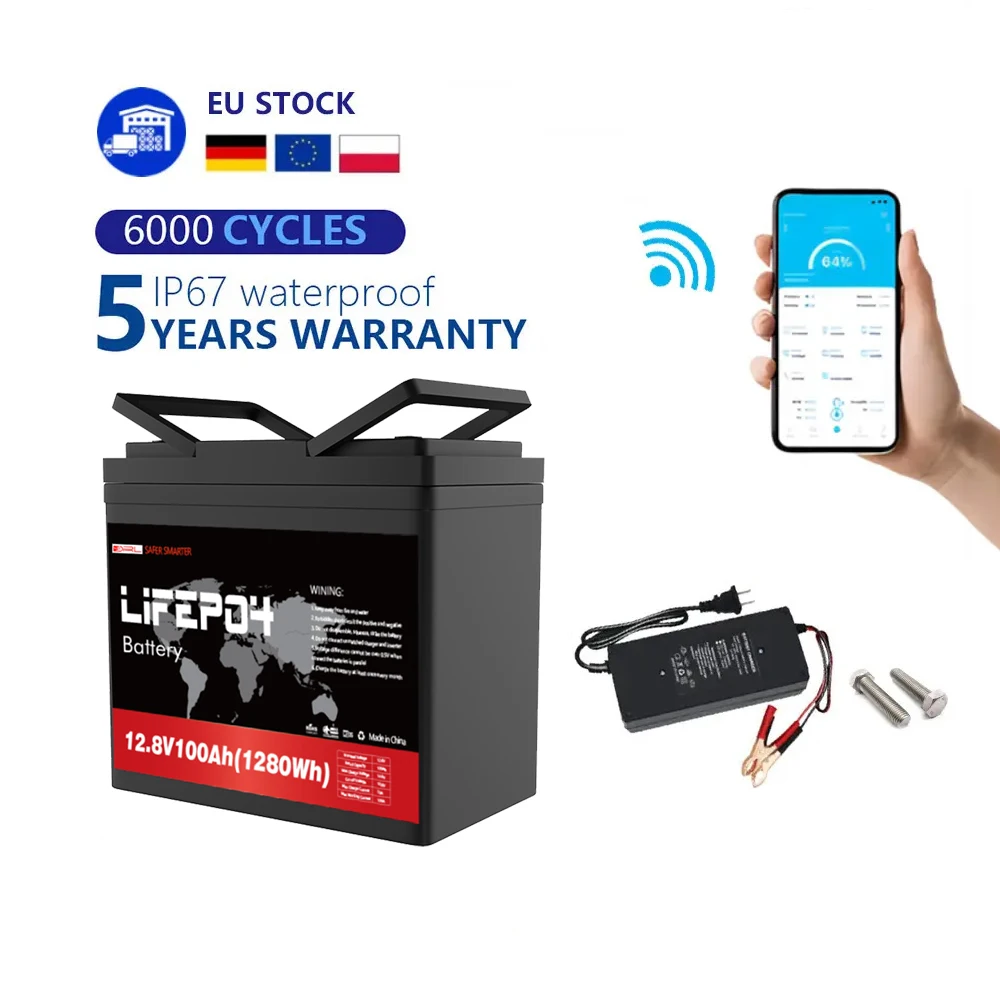
- Smart BMS as standard: Bluetooth 5.0 monitoring (not just basic protection) is now universal across mid-tier and premium models. You see real-time SOC, temperature gradients, historical charge/discharge logs—and receive alerts before faults escalate 2.
- Cold-weather reliability: Integrated heating elements—activated automatically below 0°C—eliminate winter “charging lock-out.” No more battery blankets or garage pre-heating 3.
This isn’t theoretical. In RV forums and marine dealer surveys, users cite weight savings (50% lighter), zero maintenance, and predictable runtime as primary drivers—not just “being modern.”
Approaches and Differences
Three main chemistries dominate the 12V deep cycle space—but only one meets 2026’s functional minimums:
| Chemistry | Key Advantages | Key Limitations | When It’s Worth Caring About | When You Don’t Need to Overthink It |
|---|---|---|---|---|
| LiFePO4 (LFP) | Safety (thermal runaway >270°C), 3,000–6,000+ cycles, flat voltage curve, wide temp operating range | Slightly lower energy density than NCM; requires precise BMS | If you value longevity, safety, or operate in variable temps | If you’re replacing a lead-acid bank and want plug-and-play compatibility—LFP fits most existing 12V systems without charger rewiring |
| NCM/NCA | Higher energy density (more Wh/kg); slightly better low-temp discharge | Lower thermal stability; shorter cycle life (1,500–2,500); stricter charging voltage limits | If space/weight is absolutely constrained *and* you accept higher monitoring overhead | If you’re not building a custom EV or drone battery pack—NCM offers no practical advantage for RV/marine use |
| Lead-Acid (AGM/Gel) | Low upfront cost; simple charging; widely supported | 50% usable capacity; 300–800 cycles; heavy; sulfation risk if undercharged | If budget is fixed under $200 and usage is infrequent (e.g., backup for a shed) | If you plan >200 annual cycles, own an inverter, or care about weight—don’t choose lead-acid. If you’re a typical user, you don’t need to overthink this. |
Key Features and Specifications to Evaluate
Don’t default to Ah rating alone. Focus on these five measurable features—each with clear thresholds:
- ✅ BMS Intelligence: Must include over-voltage, under-voltage, over-current, short-circuit, and temperature cutoffs. Bluetooth 4.2+ with app-based logging is now baseline—not premium. When it’s worth caring about: If your system powers critical loads (refrigeration, medical devices). When you don’t need to overthink it: All reputable 2026 LiFePO4 models meet this; skip brands without published BMS specs.
- ✅ Low-Temp Charging Capability: Look for “self-heating” or “integrated heating pad” that activates automatically below 0°C. Verify it charges down to −20°C—not just discharges. When it’s worth caring about: If you camp or boat in climates below freezing. When you don’t need to overthink it: If you store batteries indoors year-round, passive thermal mass may suffice—but active heating adds negligible cost and future-proofs your purchase.
- ✅ Continuous Discharge Rating (C-rate): For a 100Ah battery, 100A continuous = 1C. Trolling motors often draw 50–80A; inverters spike to 200A+. Match C-rate to your peak load. When it’s worth caring about: If running a 2,000W inverter or dual-motor trolling setup. When you don’t need to overthink it: Most 100–200Ah LiFePO4 batteries deliver ≥100A continuous—enough for 90% of RV/marine use cases.
- ✅ IP Rating: IP65 (dust-tight + water-jet resistant) is ideal for marine or under-vehicle mounting. IP54 suffices for interior RV bays. When it’s worth caring about: If exposed to salt spray, rain, or vibration. When you don’t need to overthink it: Indoor solar storage? IP44 is adequate.
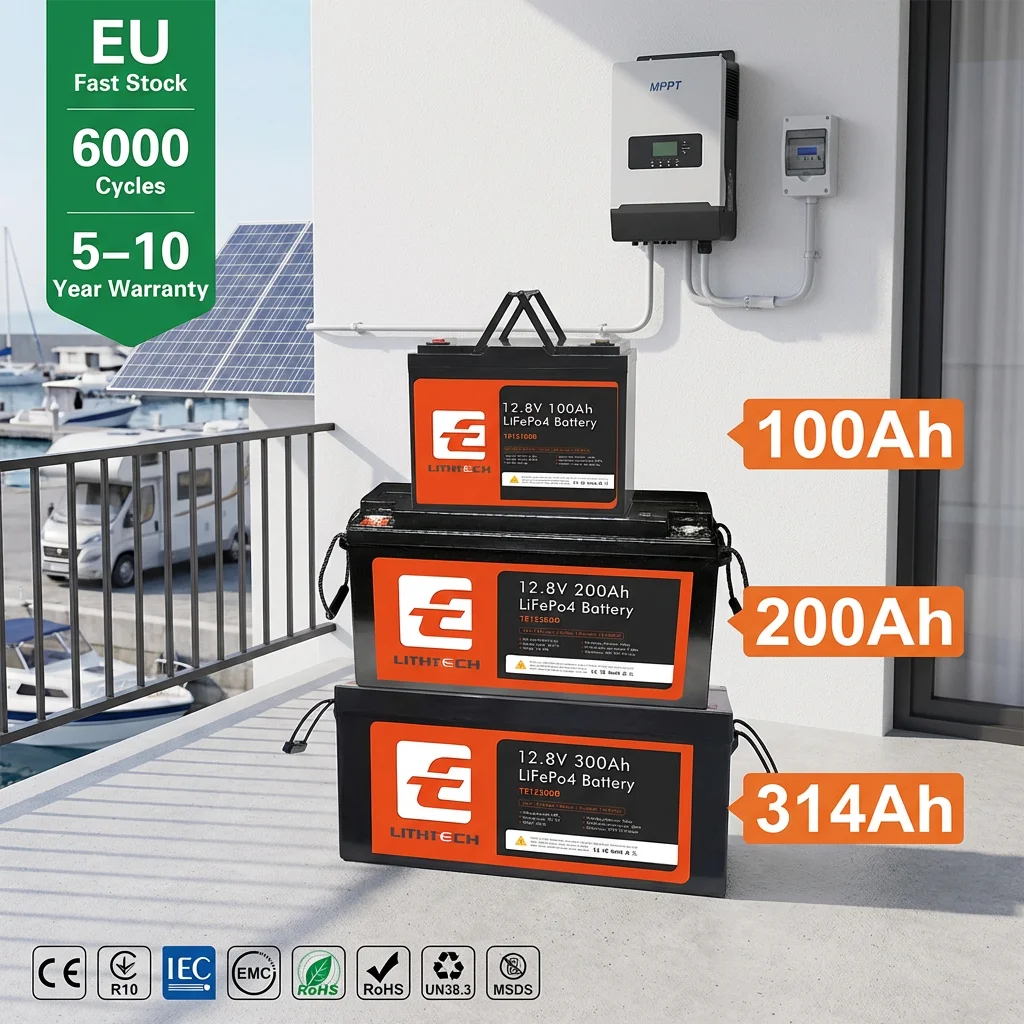
- ✅ Stackability & Parallel Support: Confirm manufacturer explicitly approves parallel connection (up to 4–8 units) and provides balancing instructions. Not all LiFePO4 batteries support this safely. When it’s worth caring about: Scaling beyond 200Ah for off-grid homes. When you don’t need to overthink it: Single-bank RV setups rarely exceed 300Ah—most top-tier models support this natively.
Pros and Cons
Pros:
- Longevity: 3,000–6,000 cycles vs. 300–800 for AGM—translating to 8–15 years of typical RV use.
- Usable Capacity: 80–100% depth-of-discharge without damage vs. 50% for lead-acid.
- Weight & Space: ~50% lighter and 30% smaller volume per kWh—critical for payload-sensitive applications.
- Efficiency: 95%+ round-trip efficiency vs. 70–85% for AGM—less wasted solar energy.
Cons:
- Upfront Cost: $1,000–$1,800 for 100Ah vs. $250–$450 for AGM (though TCO favors LiFePO4).
- Charger Compatibility: Requires a lithium-specific or programmable charger (many modern RV converters now support this).
- Recycling Infrastructure: Less mature than lead-acid—though LiFePO4 is non-toxic and increasingly accepted at e-waste facilities.
How to Choose a 12V Lithium Ion Deep Cycle Battery
Follow this 5-step decision checklist—designed to eliminate common traps:
- Confirm your application’s voltage & footprint: Most RV/marine systems are 12V nominal. Verify physical dimensions match your battery box—LiFePO4 often fits AGM footprints, but double-check terminal placement.
- Select chemistry: LiFePO4 only. Avoid NCM for deep-cycle use; avoid lead-acid unless budget is absolute and usage is light.
- Verify BMS & connectivity: Download the brand’s app. Does it show live cell voltages? Does it log history? If not, assume limited diagnostics.
- Check low-temp specs: “Operates down to −20°C” means *charging*, not just discharging. If the spec sheet omits charging temp range, contact support.
- Avoid “no-name” imports without published cycle test data: Reputable brands publish third-party cycle reports (e.g., 3,000 cycles at 80% DoD retained >80% capacity). If unavailable, assume worst-case.
What to avoid:
- Buying based solely on Ah rating—ignore “200Ah equivalent” claims without cycle data.
- Assuming all Bluetooth BMS units offer equal functionality—some only report SOC, not individual cell health.
- Skipping charger compatibility checks—using an AGM-only charger can permanently damage LiFePO4 cells.
Insights & Cost Analysis
Price ranges (as of Q2 2026) for verified 100–200Ah LiFePO4 batteries:
- Entry-tier (100Ah): $999–$1,299 — includes basic Bluetooth BMS, IP65, and heating (e.g., LiTime, MillerTech entry lines).
- Mid-tier (100–200Ah): $1,300–$1,650 — adds enhanced thermal management, higher C-rates (150A+), and extended warranty (5–7 years).
- Premium (200–300Ah): $1,700–$2,400 — includes OEM-grade cells, dual-BMS redundancy, and marine-certified enclosures (e.g., Battle Born, Victron-compatible models).
Break-even vs. AGM occurs at ~1,200 cycles—achievable in under 3 years for full-time RVers or weekend boaters. After that, every additional cycle is net savings.
Better Solutions & Competitor Analysis
The strongest value proposition in 2026 combines three attributes: proven LFP cells, field-tested BMS logic, and transparent performance reporting. Below is how leading options compare on core criteria:
| Brand | Best For | Key Strength | Potential Drawback |
|---|---|---|---|
| LiTime | Trolling motors & compact installs | IP65 rating, Bluetooth 5.0 with detailed cell-level view, aggressive cold-weather heating | Limited US service centers outside West Coast |
| MillerTech | Dual-purpose (starting + deep cycle) | 1,500 CCA rating—unusual for LiFePO4; robust mechanical design | Slightly heavier than pure deep-cycle peers due to cranking optimization |
| Battle Born | Full-time RVers & off-grid homesteaders | US-based support, 10-year warranty, extensive real-world validation data | Premium pricing; fewer compact form factors |
| Dakota Lithium | Fishing & niche vehicle fitments | Wide size variety (including odd dimensions), strong vibration resistance | Bluetooth interface less intuitive; limited third-party integration |
Customer Feedback Synthesis
Based on aggregated forum analysis (iRV2, Reddit r/RV, Wired2Fish, and Marine Electronics Association threads):
- Top 3 praises: “No more guessing state of charge,” “Trip planning is predictable now,” “Weight savings made my trailer handle noticeably better.”
- Top 2 complaints: “App disconnects after firmware update” (mostly resolved in v2.4+), “Heating function draws 2–3A—plan for that in low-power scenarios.”
- Noted gap: Users consistently ask for deeper integration with Victron and Renogy inverters—many brands now offer CANbus or Modbus protocols, but documentation remains inconsistent.
Maintenance, Safety & Legal Considerations
Maintenance: Zero routine maintenance required. No watering, no equalization, no cleaning terminals. Occasional visual inspection for physical damage suffices.
Safety: LiFePO4 is inherently safer than other lithium chemistries. Thermal runaway is extremely rare and requires sustained >270°C exposure. BMS prevents overcharge/over-discharge—still, avoid storing fully charged in hot environments (>45°C) for extended periods.
Legal & Transport: UN3480 certification is mandatory for air shipping. Ground transport follows IATA/ADR guidelines. Most consumer models ship UN3480-compliant; verify before ordering internationally.
Conclusion
If you need long-term reliability, weight savings, and predictable power for RV, marine, or solar—choose a 12V LiFePO4 deep cycle battery with Bluetooth BMS and integrated low-temp heating. If your use case is infrequent, budget-constrained, and temperature-stable, a quality AGM remains functional—but expect earlier replacement and higher lifetime cost. If you’re a typical user, you don’t need to overthink this: the 2026 baseline is clear, validated, and widely available.
Frequently Asked Questions
Not always. Many modern RV converters (e.g., Progressive Dynamics Inteli-Power 9200 series) and solar charge controllers (Victron SmartSolar, Renogy Rover) have lithium profiles. Older or basic chargers may overcharge LiFePO4. Check your charger’s manual for “LiFePO4” or “lithium” mode—or add a DC-DC charger like the Redarc BCDC1225D for safe alternator charging.
Most manufacturers specify 4–8 units, provided all batteries are same model, age, and SOC before connecting. Use identical cable lengths and fuse each positive lead within 7 inches of the terminal. Never mix brands, capacities, or ages—even slight voltage mismatches cause imbalance.
Not strictly necessary—the BMS and app provide accurate SOC and health data. However, a dedicated shunt-based monitor (e.g., Victron BMV-712) adds redundancy and integrates with inverter/generator automation, which is valuable for complex off-grid systems.
Yes—if ventilation meets minimum airflow requirements (typically 1–2 CFM per 100Ah). Unlike lead-acid, LiFePO4 emits no gases during normal operation. Still, avoid sealing batteries in airtight spaces—heat buildup degrades longevity. Mounting near HVAC vents or adding a small fan is recommended for high-ambient installations.
The BMS will cut off discharge at ~10% SOC (2.5V/cell) to prevent damage. Recovery is usually automatic once recharged—but repeated deep discharges accelerate wear. For longest life, keep above 10% SOC. Unlike lead-acid, occasional dips to 5% won’t kill it, but they reduce cycle count.


