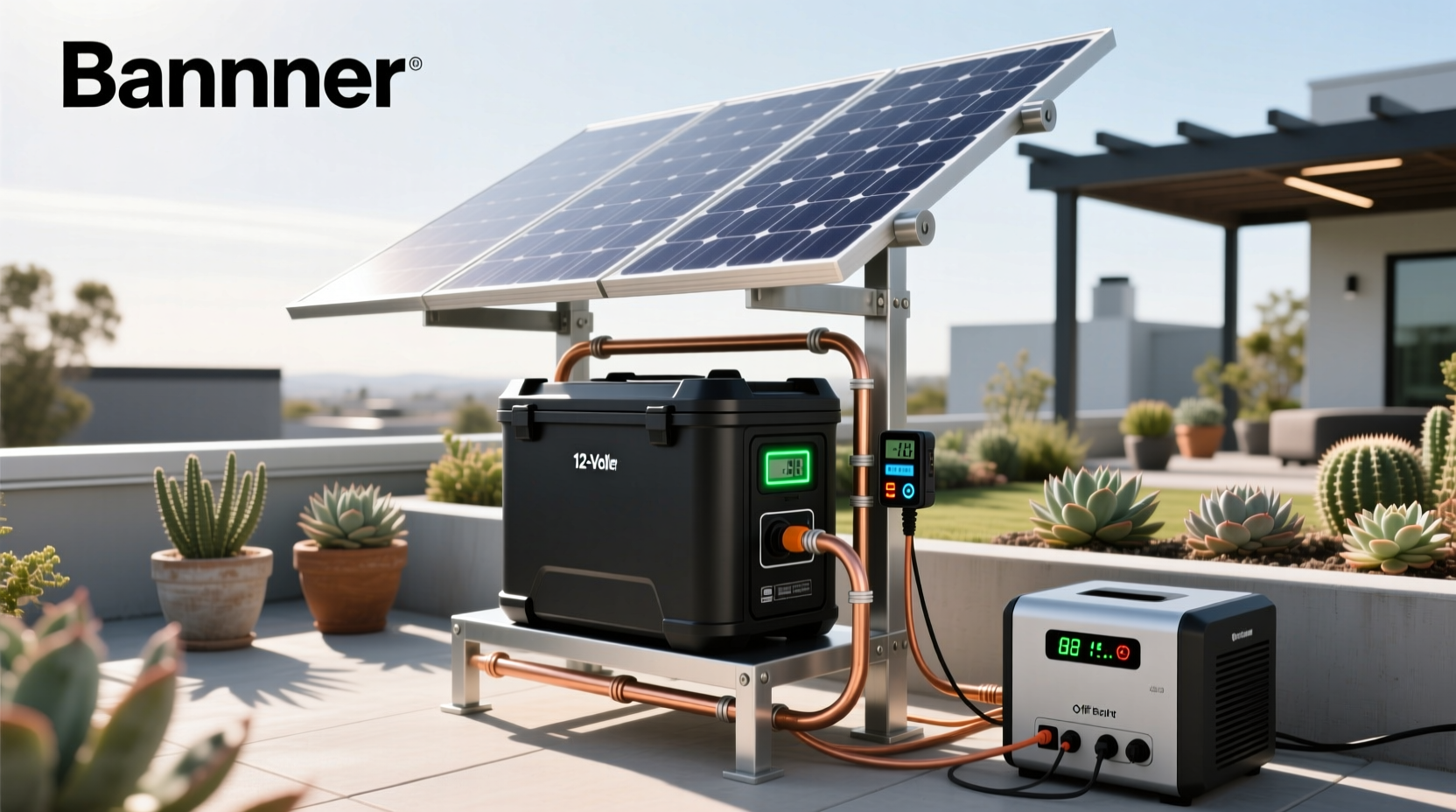
Lately, the 12 volt solar battery landscape has shifted decisively—not by incremental improvement, but by a technology inflection point. If you’re sizing a battery for an RV, marine setup, portable solar generator, or small residential backup system, LiFePO4 is now the default recommendation for nearly all daily-use scenarios. Over the past year, cycle life, usable capacity, and total cost of ownership have converged so strongly that choosing AGM today usually means accepting three to five times higher cost per cycle—not lower upfront cost—as your primary trade-off. This guide cuts through the noise: we compare chemistries head-to-head, map real-world constraints (not lab specs), and deliver a step-by-step 12 volt solar batteries guide focused on what actually changes outcomes. If you’re a typical user, you don’t need to overthink this.
About 12 Volt Solar Batteries
A 12 volt solar battery is a DC energy storage unit designed to accept charge from photovoltaic panels via a charge controller and supply power to 12V loads (lights, pumps, inverters, fridges) or feed into a hybrid inverter. Unlike automotive starter batteries, these are deep-cycle units built for repeated discharge and recharge. The most common form factors are 12V 50Ah, 100Ah, and 200Ah—often installed singly or in parallel. Typical use cases include:
- 🚐 RV and van conversions requiring lightweight, high-cycle reliability
- 🛥️ Marine applications where space, weight, and corrosion resistance matter
- 🏡 Small off-grid cabins or emergency home backup (especially with 12V-only loads)
- 🔋 Portable solar generators and field-deployable systems
What defines “solar readiness” isn’t just voltage—it’s compatibility with solar charge profiles, tolerance for partial state-of-charge operation, and built-in safety management. That’s why chemistry choice matters more than capacity alone.
Why 12 Volt Solar Batteries Are Gaining Popularity
Residential solar storage demand surged in 2025–2026—not because of policy shifts alone, but because grid instability, time-of-use rate spikes, and rising electricity costs made self-consumption a measurable financial lever. The global 12V solar battery market is projected to support a $12 billion residential storage segment by end of 2026 1. Crucially, growth isn’t evenly distributed across chemistries: LiFePO4 now accounts for over 68% of new 12V solar installations in North America and Western Europe 2. This isn’t hype—it’s driven by three converging signals:
- Cost-per-cycle parity: Average lithium-ion battery costs are forecast to drop another 40% between 2023 and 2030 3, making long-term TCO calculations increasingly decisive.
- System-level integration: Modern inverters and energy managers (e.g., Victron, Outback, Sol-Ark) now natively support LiFePO4 BMS communication—eliminating manual voltage tweaks.
- User behavior shift: Consumers no longer treat batteries as “set-and-forget.” They expect remote monitoring, firmware updates, and scalability—features baked into modern LiFePO4 designs.
If you’re a typical user, you don’t need to overthink this. What changed isn’t marketing—it’s physics, economics, and software alignment.
Approaches and Differences: LiFePO4 vs AGM
The two dominant options remain Lithium Iron Phosphate (LiFePO4) and Absorbent Glass Mat (AGM). But “dominant” doesn’t mean “equally suitable.” Their differences aren’t academic—they directly impact usable runtime, lifespan, and installation complexity.
| Feature | LiFePO4 | AGM |
|---|---|---|
| Cycle Life | 3,000–7,000+ cycles (to 80% capacity) | 500–1,500 cycles (to 80% capacity) |
| Usable Capacity (DoD) | 80–100% Depth of Discharge | ≤50% Depth of Discharge (recommended) |
| Rounded Efficiency | ~95% | 80–85% |
| Weight (100Ah example) | ≈12–14 kg | ≈30–35 kg |
| Cold Charging Limit | 0°C (32°F) minimum for charging | Operates down to –20°C (–4°F); charges at low temps |
| BMS Required? | Yes—mandatory for safety & longevity | No—built-in safety via valve regulation |
When it’s worth caring about: Daily cycling frequency, weight sensitivity (RV/marine), and total lifetime cost. If you discharge >50 times/year, LiFePO4’s cycle life advantage compounds quickly.
When you don’t need to overthink it: Occasional backup use (e.g., emergency lighting only), unheated garages in sub-zero climates, or legacy systems with non-configurable charge controllers. AGM remains viable—but not future-proof.
Key Features and Specifications to Evaluate
Don’t start with price. Start with these five non-negotiable specs—and know when each truly moves the needle:
- Real-world usable Ah (not nominal): A 100Ah LiFePO4 delivers ~95Ah usable; a 100Ah AGM delivers ~50Ah. Always calculate based on DoD, not label rating.
- BMS quality & communication protocol: Look for CAN bus or Bluetooth-enabled BMS with cell-level voltage monitoring and temperature sensors. Avoid “BMS-lite” units lacking balancing or over-temp cutoff.
- Charge voltage profile compatibility: LiFePO4 requires bulk/absorb at 14.2–14.6V—not 14.4V “AGM mode.” Verify your controller supports programmable lithium profiles 4.
- Parallel scalability: Check manufacturer specs for max parallel units. Some LiFePO4 models allow up to 8x in parallel; others cap at 4 or require master-slave wiring.
- Warranty terms (not just duration): A “10-year warranty” means little if it excludes capacity retention guarantees. Reputable LiFePO4 warranties specify ≥80% capacity at 10 years—or 6,000 cycles 5.
Pros and Cons
LiFePO4 Pros: Higher usable capacity, 3–5× longer service life, 15–20% less energy loss per cycle, lighter weight, no maintenance, stable voltage curve (reduces inverter stress).
LiFePO4 Cons: Higher initial cost ($250–$450 for 100Ah vs $180–$280 for AGM), cold-weather charging restrictions, requires compatible charge controller/inverter, sensitive to improper termination.
AGM Pros: Lower entry price, wide temperature tolerance, plug-and-play with legacy solar gear, no BMS dependency.
AGM Cons: Half the usable capacity, rapid capacity fade after 500 cycles, heavier, slower recharge acceptance, sulfation risk if left partially charged.
This piece isn’t for keyword collectors. It’s for people who will actually use the product.
How to Choose 12 Volt Solar Batteries: A Step-by-Step Guide
- Calculate your true daily Ah demand: Add up watt-hours of all 12V loads, divide by system voltage (12), then add 20% buffer. Example: 600Wh ÷ 12V = 50Ah → aim for ≥60Ah usable. Remember: AGM gives half that.
- Decide your usage rhythm: Daily cycling? → LiFePO4. Seasonal or emergency-only? → AGM may suffice.
- Verify hardware compatibility: Check your charge controller’s spec sheet for “Lithium” or “LiFePO4” mode—not just “AGM/Gel/Flooded.” If it lacks programmable voltage settings, upgrade the controller first.
- Assess thermal environment: If batteries live in an unheated trailer or boat cabin below 0°C, consider heated LiFePO4 models or insulate/heat the enclosure. Don’t rely on “low-temp charging” claims without verified BMS cutoff logic.
- Avoid these pitfalls: Buying “drop-in” LiFePO4 labeled for “AGM replacement” without checking voltage thresholds; stacking AGM and LiFePO4 in same bank (dangerous imbalance); ignoring BMS firmware update capability.
Insights & Cost Analysis
Let’s compare realistic 100Ah options:
- Mid-tier LiFePO4 (e.g., 100Ah, integrated BMS, Bluetooth): $320–$390. Delivers ~95Ah usable × 5,000 cycles = 475,000 Ah-cycles.
- Premium AGM (e.g., 100Ah, deep-cycle rated): $220–$270. Delivers ~50Ah usable × 800 cycles = 40,000 Ah-cycles.
Even without factoring efficiency losses or replacement labor, the LiFePO4 unit delivers over 11× more usable energy over its lifetime. At $360 vs $240, the LiFePO4 costs 50% more upfront—but just 3% more per Ah-cycle. If you’re a typical user, you don’t need to overthink this.
Better Solutions & Competitor Analysis
“Better” depends on your architecture—not raw specs. Below is how top-tier 12V 100Ah solutions align with real-world priorities:
| Solution Type | Best For | Potential Issue | Budget Range (100Ah) |
|---|---|---|---|
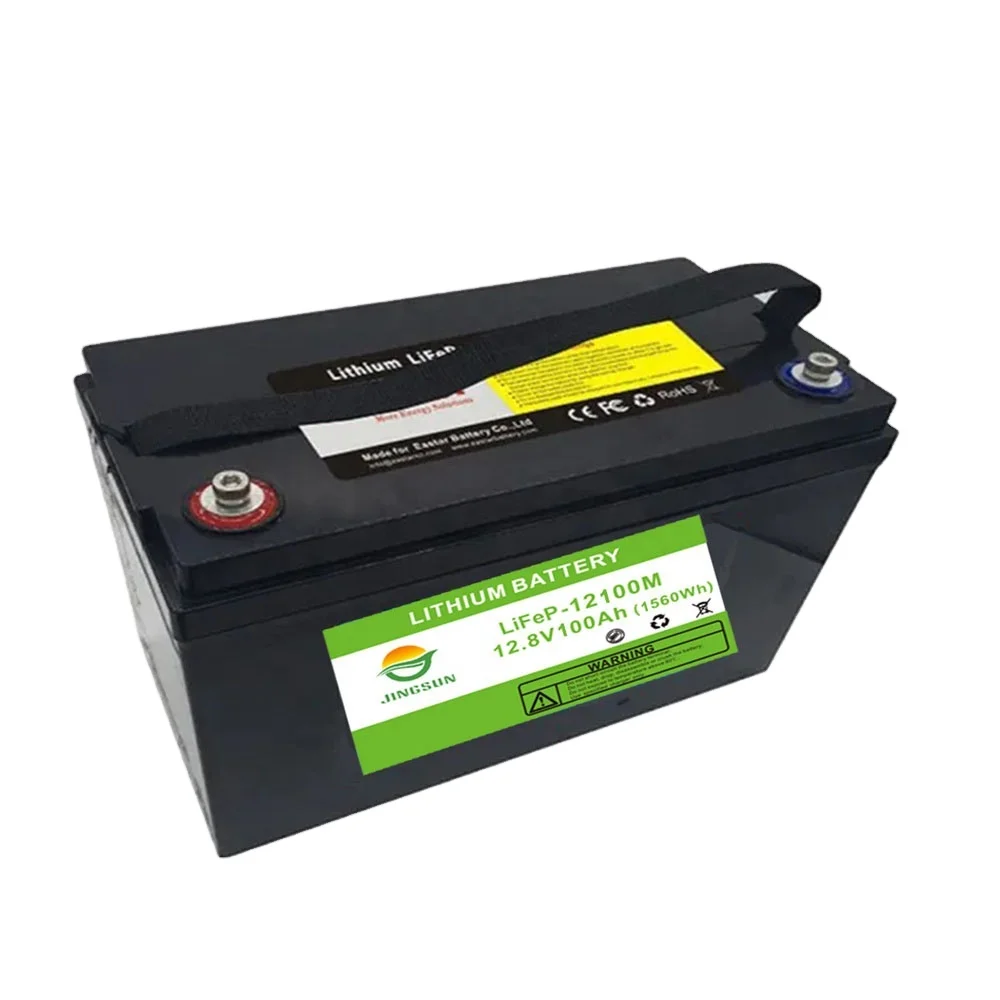
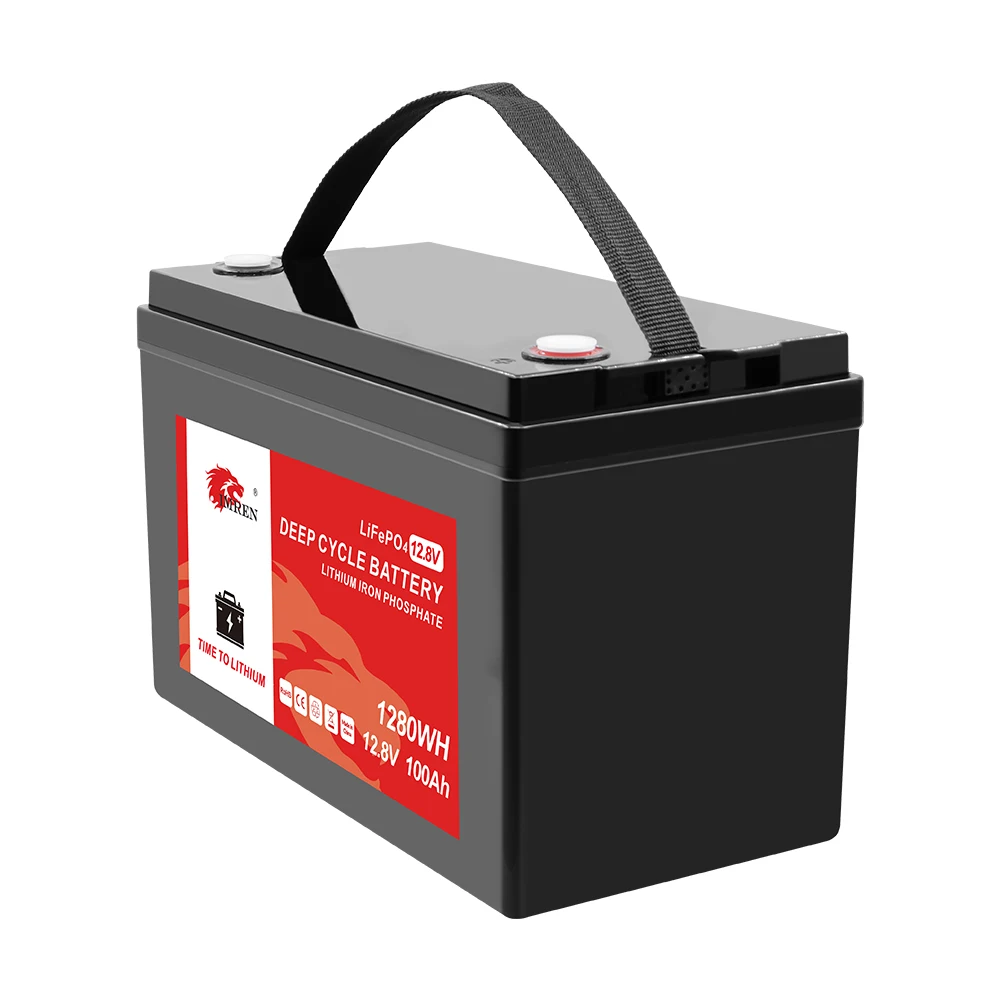
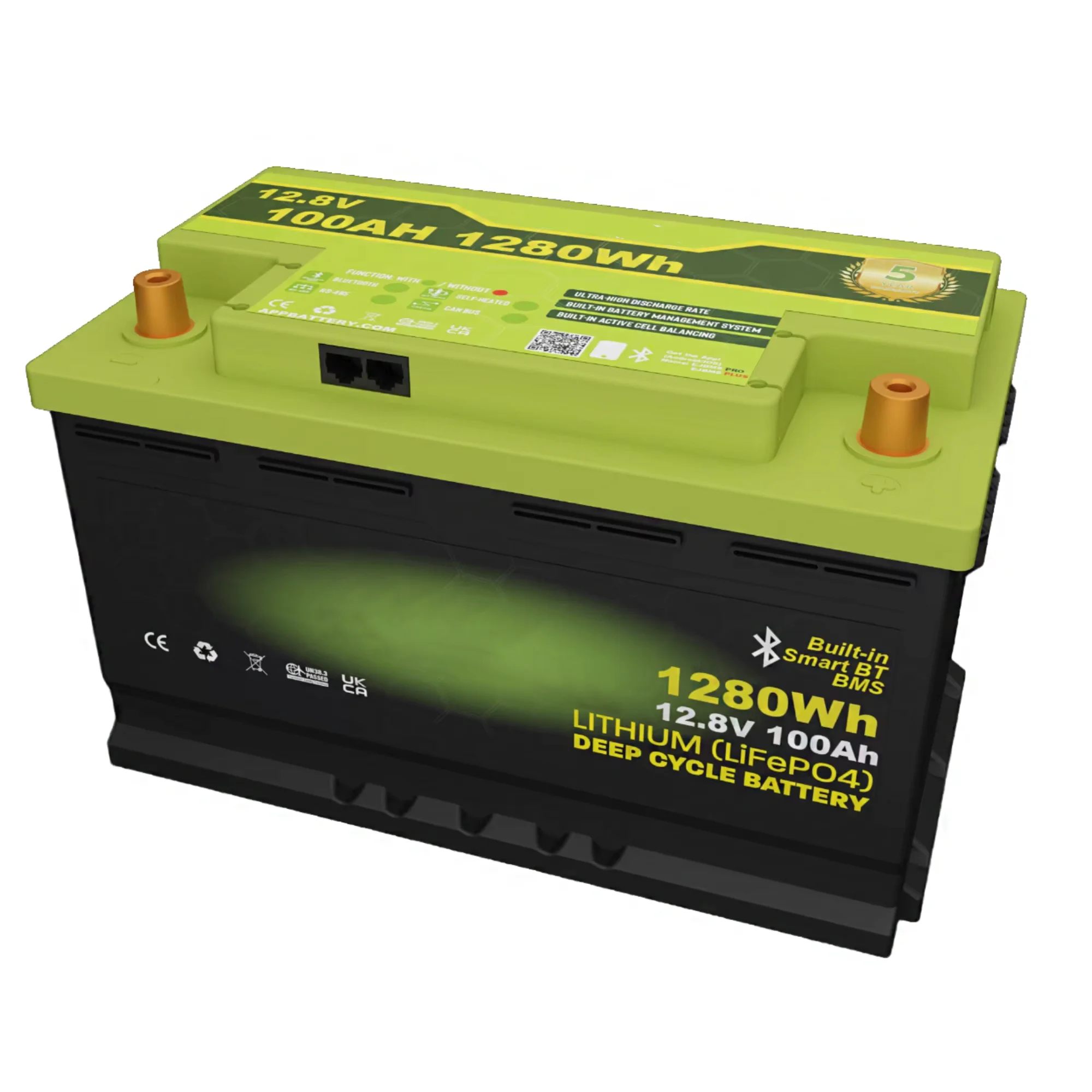
| Integrated LiFePO4 w/ CAN Bus | Systems using Victron, Outback, or Sol-Ark inverters; users wanting remote monitoring & firmware updates | Higher upfront cost; requires CAN interface setup | $380–$450 |
| Bluetooth-Enabled LiFePO4 | RVs, marine, DIY solar generators; users prioritizing visibility without complex wiring | App-dependent; limited historical logging | $320–$380 |
| High-Reliability AGM | Backup-only setups; cold-climate seasonal cabins; budget-constrained legacy systems | No path to scalability; capacity degrades predictably but irreversibly | $220–$270 |
Customer Feedback Synthesis
Based on aggregated reviews across major retailers and forums (EnerGysage, Reddit r/Solar, DIY Solar Forum):
Top 3 LiFePO4 praises: “No more guessing state-of-charge,” “Lasted 3+ years with daily use—still holds 94%,” “Weight savings let us add 2 more panels.”
Top 3 LiFePO4 complaints: “BMS disconnected during firmware update,” “Cold weather charging failed below 5°C despite spec sheet,” “Parallel wiring instructions were unclear.”
Top 3 AGM praises: “Worked straight out of box with old controller,” “Survived winter in unheated shed,” “Easy to replace when dead.”
Top 3 AGM complaints: “Lost 30% capacity in 18 months,” “Swelled after 2 years of partial charging,” “Too heavy to mount securely in van.”
Maintenance, Safety & Legal Considerations
Maintenance: LiFePO4 requires zero routine maintenance beyond visual inspection and keeping terminals clean. AGM needs periodic voltage checks and equalization (rarely needed but recommended annually).
Safety: LiFePO4 has superior thermal runaway resistance versus other lithium chemistries—but still requires proper ventilation, mounting, and BMS oversight. AGM is vented but produces hydrogen gas during overcharge; avoid sealed enclosures.
Legal: No federal U.S. certification mandates for 12V solar batteries, but UL 1973 (for stationary storage) and UN38.3 (transport) compliance are strong indicators of design rigor. Most reputable LiFePO4 manufacturers meet both; many AGM units meet only UN38.3.
Conclusion
If you need daily cycling, weight savings, or long-term ROI—choose LiFePO4. If you need occasional backup in extreme cold with existing non-programmable gear—AGM remains functional, but not optimal. The 2026 threshold isn’t technical feasibility; it’s economic inevitability. LiFePO4’s lower cost-per-cycle, higher usable capacity, and seamless integration with modern solar hardware make it the rational default for any application exceeding ~50 cycles per year. Your decision shouldn’t hinge on “which brand,” but on “which architecture”—and architecture now favors lithium.


