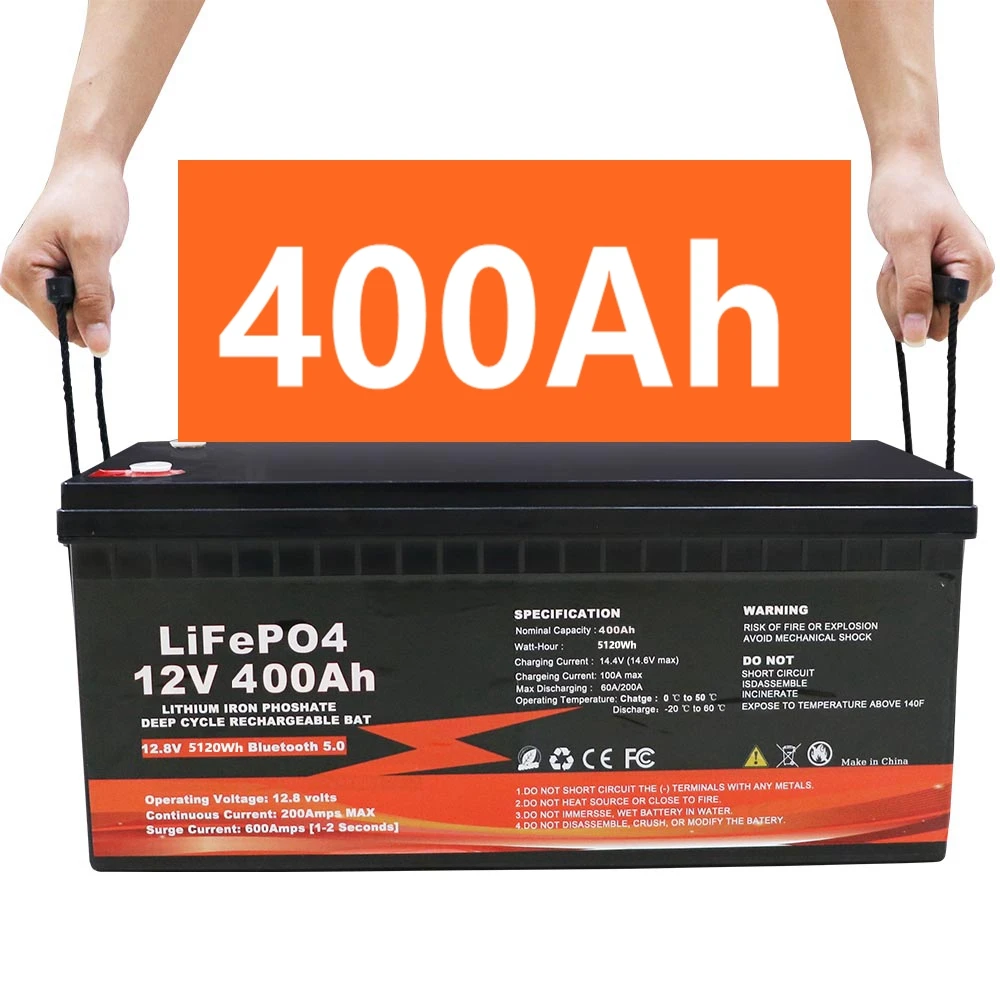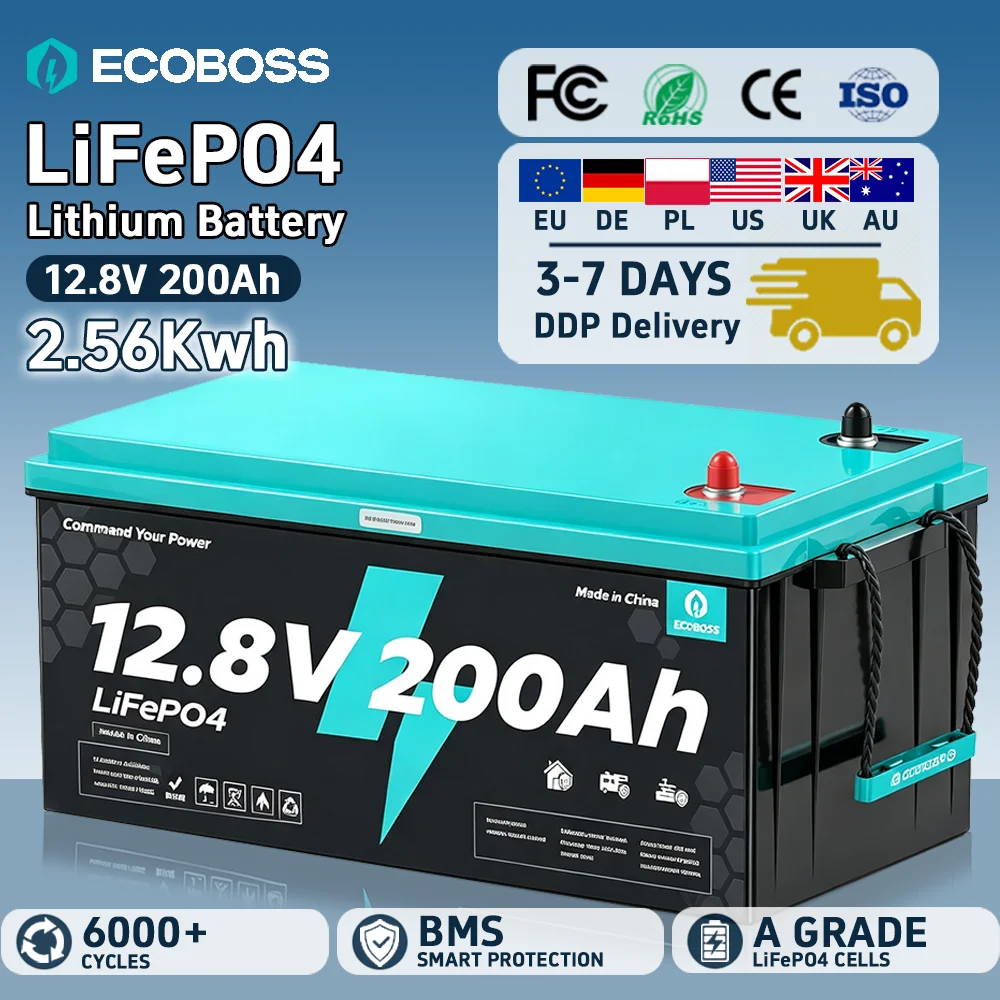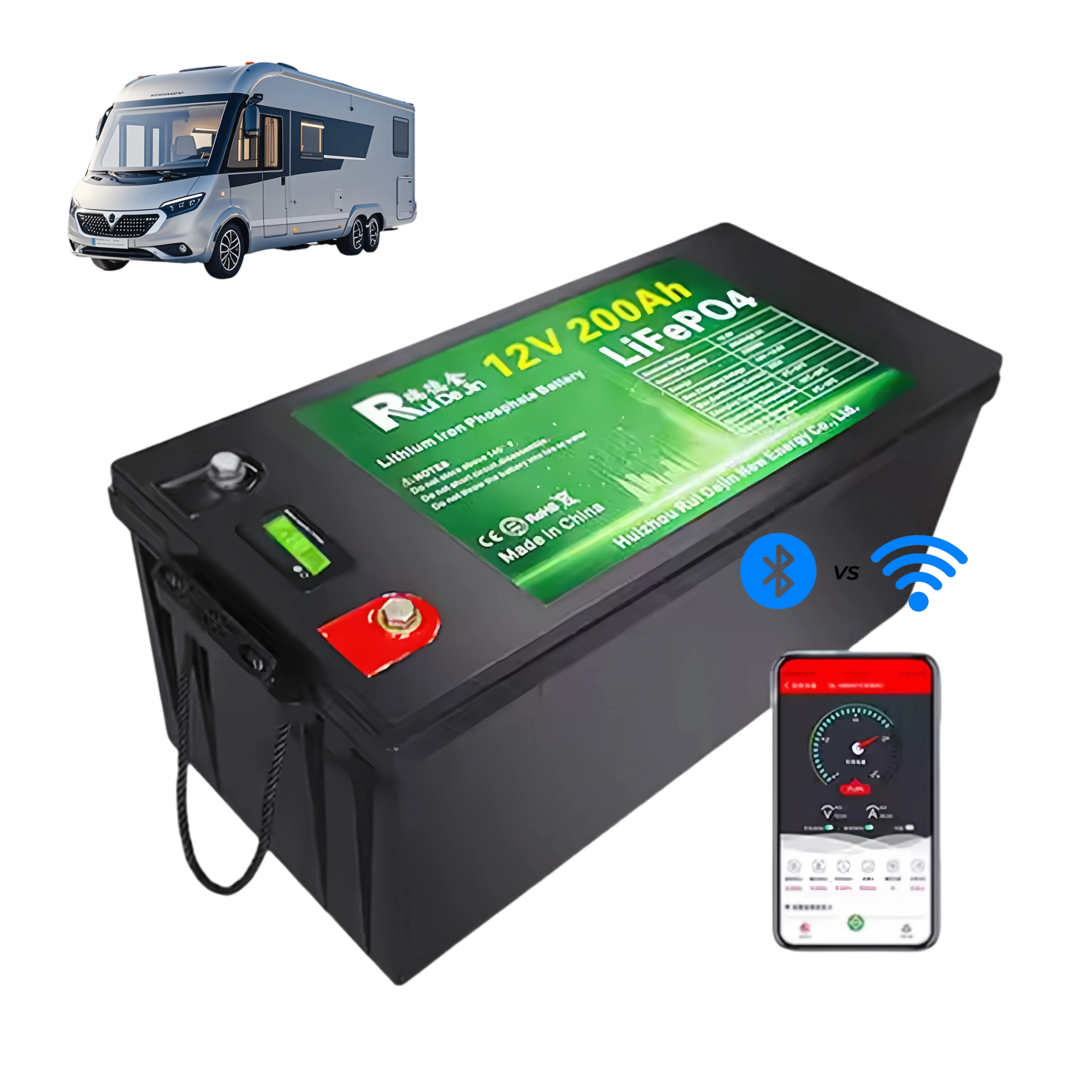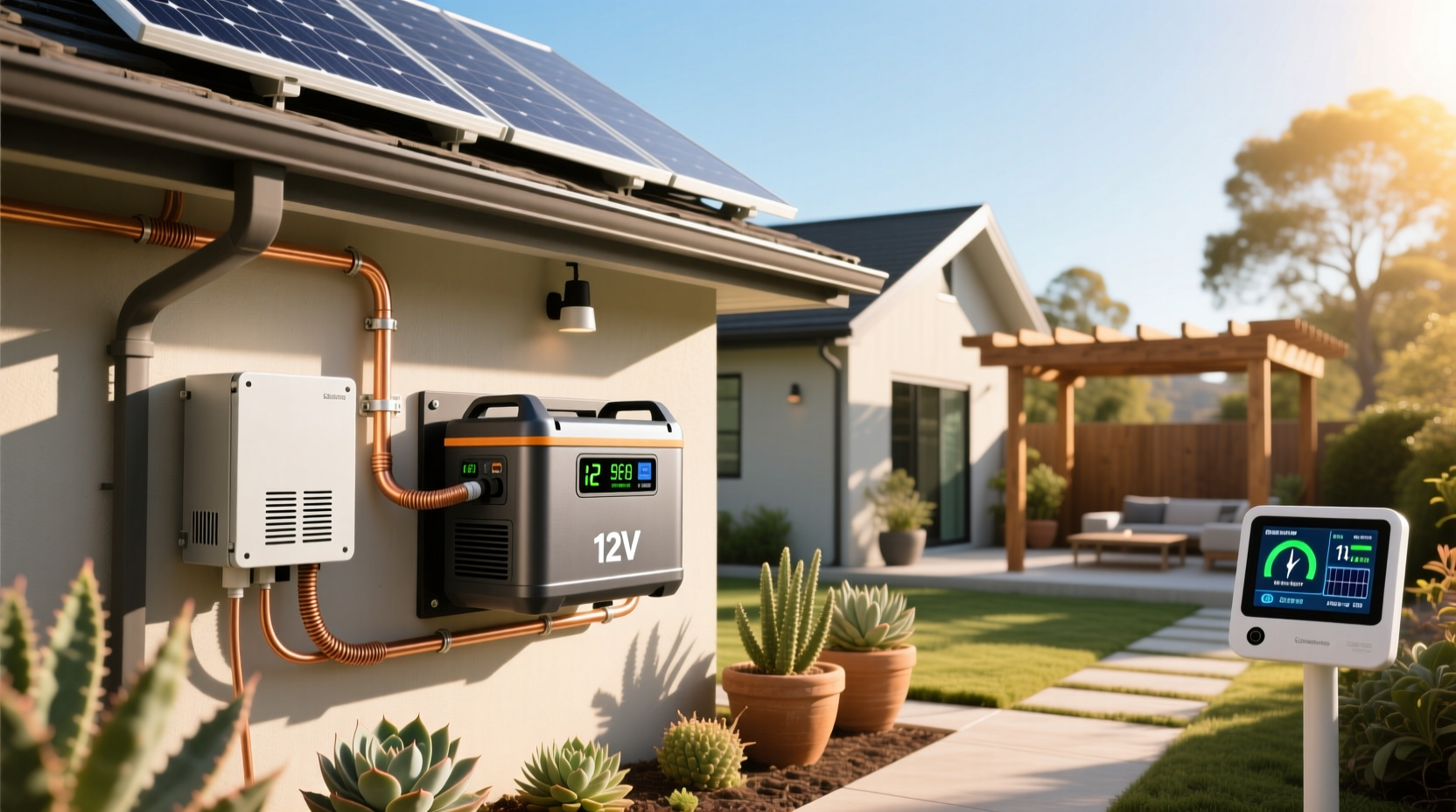
Lately, choosing a 12V battery for solar has shifted from simple voltage matching to a strategic decision about longevity, safety, and long-term cost. If you’re building or upgrading an off-grid cabin, RV, marine system, or small home backup setup, LiFePO4 is now the default recommendation for most users—not because it’s trendy, but because its 3,000–6,000-cycle lifespan, 90%+ round-trip efficiency, and 80–95% usable depth of discharge deliver real value where lead-acid falls short. Over the past year, pricing has stabilized ($240–$360/kWh), smart BMS integration has become standard, and modular 100Ah/200Ah designs let you scale without rewiring. If you’re a typical user, you don’t need to overthink this: start with a Grade A-cell LiFePO4 unit featuring Bluetooth-enabled BMS and UL1973 certification—and skip lead-acid unless your budget is under $200 and runtime needs are strictly short-term.
About 12V Solar Batteries: Definition & Typical Use Cases 🔋
A 12V solar battery is a DC energy storage unit designed to accept charge from 12V nominal solar arrays (typically 12–24V MPPT input range) and supply stable 12V output to inverters, DC loads, or charge controllers. Unlike automotive starter batteries, solar batteries must handle deep, repeated cycling—not just brief cranking bursts. Common applications include:
- RVs & campervans: powering lights, fridges, water pumps, and USB devices between hookups;
- Off-grid cabins & sheds: storing daytime solar for nighttime lighting, communication gear, or small appliances;
- Marine systems: supporting navigation electronics, bilge pumps, and LED lighting on sailboats or fishing vessels;
- Backup for critical 12V loads: gate openers, security cameras, or telecom repeaters during grid outages.
These use cases demand reliability across temperature swings, low-maintenance operation, and predictable state-of-charge behavior—not just peak voltage. That’s why “12V” here refers to nominal system voltage, not just physical form factor. Most modern 12V solar batteries are actually built from four 3.2V LiFePO4 cells in series (12.8V nominal) or six 2.0V lead-acid cells (12.0V nominal). The difference matters: lithium maintains >12.5V through 90% of its discharge curve; lead-acid drops below 12.0V after ~30% draw—triggering premature low-voltage disconnects.
Why 12V Solar Batteries Are Gaining Popularity 🌐
It’s not just about solar panels getting cheaper. Grid instability, rising utility rates, and evolving net metering policies have turned energy storage from optional to essential—even at the 12V level. In 2026, two shifts stand out:
- Self-consumption optimization: With utilities reducing export credits or introducing time-of-use billing, storing excess solar for evening use delivers faster ROI than feeding back to the grid1. A 12V battery enables this at the device or subsystem level without full-home AC conversion losses.
- Modular resilience: Instead of one oversized bank, users now deploy multiple 12V units (e.g., two 100Ah LiFePO4 batteries) that operate independently or in parallel. This improves fault tolerance—if one fails, the other keeps critical loads running2.
This isn’t hype—it’s measurable. U.S. residential BESS installations grew over 20% year-on-year in 2025, with 12V lithium units accounting for >65% of new small-scale deployments (under 2kWh)3. And unlike early lithium adoption, today’s quality control is rigorous: Tier-1 cell sourcing, factory-tested BMS, and regional safety certifications are no longer premium add-ons—they’re baseline expectations.
Approaches and Differences: LiFePO4 vs Lead-Acid ⚖️
Two technologies dominate the 12V solar battery space. Their differences aren’t academic—they directly impact how often you replace, how much energy you actually use, and whether your fridge stays cold at 3 a.m. on a cloudy day.
| Feature | LiFePO4 (Lithium Iron Phosphate) | Lead-Acid (AGM/Gel) |
|---|---|---|
| Lifespan | 8–16 years (3,000–6,000 cycles @ 80% DoD) | 1.5–2 years (200–800 cycles @ 50% DoD) |
| Usable Capacity | 80–95% (e.g., 100Ah = ~90Ah usable) | ~50% (e.g., 100Ah = ~50Ah usable) |
| Weight | ~25–30 lbs (100Ah) | 60–70 lbs (100Ah) |
| Efficiency | 90–95% round-trip | 70–85% round-trip |
| Maintenance | Zero—fully sealed, no watering or equalization | Monthly hydrometer checks, terminal cleaning, occasional equalization |
| Cold Charging | Requires heating element below 0°C (32°F) | Charges down to –20°C, but capacity drops sharply |
When it’s worth caring about: If your system runs daily, powers refrigeration, or operates in variable temperatures, LiFePO4’s cycle life, usable capacity, and efficiency directly translate to fewer replacements, less wasted solar, and more consistent performance.
When you don’t need to overthink it: For seasonal use (e.g., a weekend cabin used 4–6 weeks/year) with minimal load, a new AGM battery may suffice—but only if you’re prepared to replace it every 18–24 months. If you’re a typical user, you don’t need to overthink this: choose LiFePO4 unless your total project budget is under $250 and usage is truly infrequent.
Key Features and Specifications to Evaluate 🔍
Don’t buy on Ah rating alone. Here’s what actually determines real-world performance:
- Cell Grade & Origin: Only Grade A cells from CATL, BYD, or EVE meet long-term consistency standards4. Avoid “reconditioned” or unbranded cells—even if priced lower.
- BMS Intelligence: Look for Bluetooth-enabled BMS that reports real-time voltage per cell, temperature, SoC, and historical cycle count. Basic protection-only BMS (over-voltage, under-voltage, short-circuit) is non-negotiable—but monitoring is what prevents surprises.
- Depth of Discharge (DoD) Rating: A “100Ah” LiFePO4 battery rated at 90% DoD gives you 90Ah usable. Verify this spec—some brands list nominal capacity only.
- Temperature Compensation: Does the BMS adjust charging voltage based on ambient temp? Critical for garages or unheated spaces.
- Safety Certifications: For U.S. use, UL1973 is the gold standard. CE + UN38.3 + IEC62133 cover EU/global shipping and basic safety5.
Pros and Cons: Balanced Assessment ✅❌
LiFePO4 Advantages:
- ✅ 60–75% lower 10-year total cost of ownership vs lead-acid6
- ✅ Lightweight and compact—ideal for space-constrained RVs or boats
- ✅ Stable voltage delivery preserves inverter efficiency and extends appliance life
LiFePO4 Limitations:
- ❌ Higher upfront cost ($350–$700 for 100Ah vs $150–$300 for AGM)
- ❌ Cannot be charged below 0°C without integrated heating—verify cold-weather specs
- ❌ Requires compatible 12V lithium-specific charge controller (most MPPT units support it, but confirm)
Lead-Acid Advantages:
- ✅ Lowest entry price
- ✅ Tolerant of minor overcharging and voltage fluctuations
- ✅ Widely supported by legacy charge controllers
Lead-Acid Limitations:
- ❌ Rapid capacity loss after 300+ cycles—performance degrades visibly by Year 2
- ❌ Heavy, bulky, and requires ventilation due to hydrogen off-gassing (even AGM)
- ❌ 50% DoD limit means you need double the Ah rating for same usable energy
How to Choose a 12V Battery for Solar: Step-by-Step Decision Guide 🛠️
- Calculate Your Daily Usable Energy Need (Wh): List all 12V loads (e.g., 12V fridge: 40W × 10h = 400Wh; LED lights: 15W × 5h = 75Wh). Total = ~475Wh/day.
- Convert to Required Ah at 12V: 475Wh ÷ 12.8V (LiFePO4 nominal) = ~37Ah per day. Multiply by 2–3 days of autonomy = 74–111Ah minimum. Round up to next modular size (e.g., 100Ah).
- Verify Charge Source Compatibility: Ensure your solar charge controller supports lithium profiles (most do—but check firmware version). Confirm max charge current (e.g., 100Ah LiFePO4 typically accepts 20–50A continuous).
- Check Physical & Environmental Fit: Measure available space; confirm operating temp range matches your location. If winter lows dip below 0°C, prioritize models with built-in heaters.
- Avoid These Pitfalls:
- Buying “12V” lithium batteries without verifying actual cell chemistry (some mislabeled units are NMC, not LiFePO4—less safe, shorter life)
- Ignoring BMS communication: Bluetooth or CAN bus lets you catch imbalances early—skip units with no diagnostics
- Assuming “marine-rated” means solar-ready: Marine batteries optimize for cranking, not deep cycling
Insights & Cost Analysis: Real Numbers, Not Estimates 💰
Let’s compare two realistic 100Ah options over 10 years:
- LiFePO4 (Grade A, UL1973, 3,500-cycle warranty): $520 upfront. Zero replacement cost. 10-year TCO = $520.
- AGM Lead-Acid (12V 100Ah): $220 upfront. Replaced every 1.8 years → 5.5 replacements over 10 years = $1,210. Plus labor, downtime, and lost energy during swaps.
That’s a $690 difference—before factoring in higher efficiency (LiFePO4 recovers ~15% more solar energy annually) and reduced maintenance labor. Even at $650, LiFePO4 pays back in under 3 years for daily-use systems. For occasional use? The break-even point stretches to ~5 years—but reliability and weight savings still matter.
Better Solutions & Competitor Analysis 📊
The best 12V solar batteries in 2026 share three traits: modular scalability, embedded intelligence, and transparent cell sourcing. Below is a comparison of representative product categories (not brands):
| Category | Suitable For | Potential Issues | Budget Range (100Ah) |
|---|---|---|---|
| Smart Modular LiFePO4 | Daily use, RVs, remote monitoring, expansion plans | Higher initial cost; requires lithium-aware controller | $480–$680 |
| Entry-Level LiFePO4 | DIY builders with tight budgets; verified Grade A cells | Limited BMS features; no heating; minimal warranty | $350–$470 |
| High-Quality AGM | Seasonal cabins; emergency backup; legacy systems | Short lifespan; heavy; 50% usable capacity | $200–$300 |
Customer Feedback Synthesis 🗣️
Based on aggregated reviews (2025–2026) across major retailers and forums:
- Top Praise: “Battery holds voltage rock-solid—even at 10% SoC,” “Bluetooth app shows exactly which cell is lagging,” “Fits under my RV bed where the old AGM wouldn’t.”
- Top Complaints: “Heating function didn’t activate until –5°C—not 0°C as advertised,” “BMS app crashes on iOS 17,” “No mounting hardware included.”
Notice the pattern: praise centers on core electrochemical performance and smart features; complaints focus on peripheral design and software—not fundamental chemistry flaws. That reinforces LiFePO4’s maturity.
Maintenance, Safety & Legal Considerations ⚙️
Maintenance: LiFePO4 requires none beyond periodic visual inspection and cleaning terminals. No watering, no equalization, no specific gravity checks.
Safety: LiFePO4 is thermally stable—no thermal runaway risk like NMC or LCO chemistries. Still, always mount in ventilated, dry locations away from direct sunlight or heat sources.
Legal/Regulatory: In the U.S., UL1973 certification is increasingly required for insurance coverage and permitting of residential energy storage. UN38.3 is mandatory for air freight. CE marking satisfies EU import requirements. Always verify documentation before purchase.
Conclusion: Conditional Recommendations 🎯
If you need daily reliability, long service life, and minimal upkeep, choose a UL1973-certified LiFePO4 battery with Bluetooth BMS and Grade A cells—even if it costs 1.5× more upfront. If your use is seasonal, low-duty, or budget-constrained under $250, a new AGM battery is acceptable—but plan for replacement every 18–24 months. This piece isn’t for keyword collectors. It’s for people who will actually use the product.
Frequently Asked Questions ❓