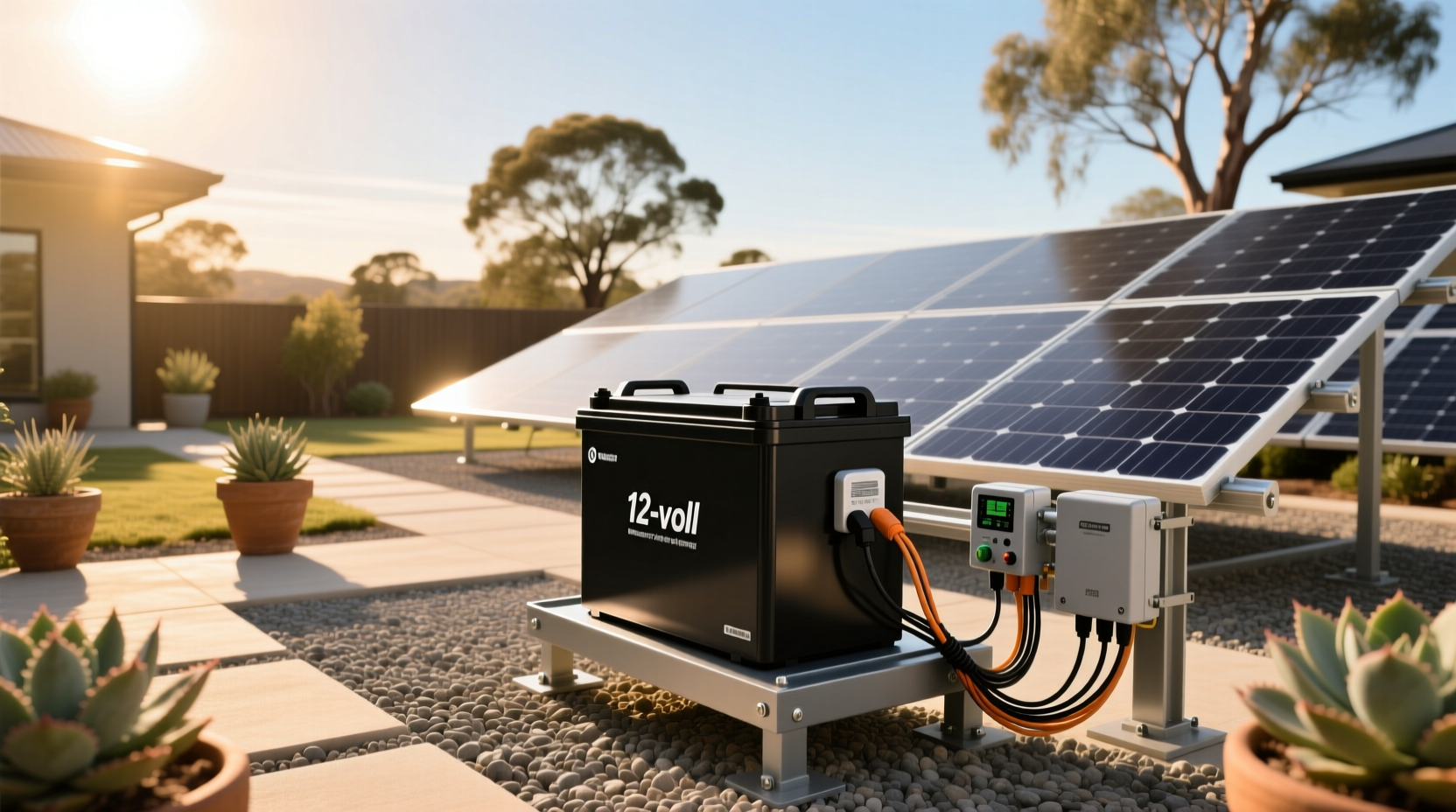
If you’re installing a small solar system for an RV, cabin, or backup power—and need a reliable 12V battery—you should choose LiFePO4. Over the past year, LiFePO4 has become the de facto standard for daily-cycling 12V solar applications—not because it’s ‘trendy,’ but because it delivers 3–6× more usable cycles than AGM lead-acid at comparable upfront cost, and its price per kilowatt-hour has dropped 22% since 2023 1. Sodium-ion is emerging as a cold-climate and budget-conscious alternative, but it’s still rare in compact 12V form factors. If you’re a typical user, you don’t need to overthink this: skip lead-acid unless your usage is strictly seasonal or infrequent (e.g., emergency-only backup). And avoid batteries without a certified BMS—even if they’re cheaper. This piece isn’t for keyword collectors. It’s for people who will actually use the product.
About 12V Batteries for Solar
A 12V solar battery stores energy from photovoltaic panels for later use—typically in low-voltage DC systems where simplicity, portability, or compatibility with existing 12V infrastructure (like RVs, marine setups, or small off-grid cabins) matters most. Unlike high-voltage home storage (e.g., 48V lithium stacks), 12V batteries are plug-and-play with common inverters, charge controllers, and accessories. They’re not meant for whole-house backup—but excel in targeted, modular deployments: powering lights and fans overnight, running a fridge during grid outages, or supporting portable solar generators.
Why 12V Solar Batteries Are Gaining Popularity
Lately, demand for 12V solar batteries has surged—not just among DIYers, but also professional installers of microgrids and mobile systems. Why? Three converging signals: first, the sharp drop in LiFePO4 cell costs has made 12V lithium competitive with premium AGM models on a per-cycle basis 2. Second, users increasingly expect visibility and control—so Bluetooth-enabled BMS units now outsell ‘dumb’ variants by 3:1 in mid-tier retail channels 3. Third, extreme weather events have raised awareness of temperature resilience: standard lithium can’t accept charge below 0°C, but self-heating LiFePO4 models solve that—making them viable across North America, Northern Europe, and mountainous regions.
Approaches and Differences
The three main chemistries available in 12V solar format differ sharply in longevity, safety, temperature tolerance, and total cost of ownership:
| Battery Type | Key Strengths | Key Limitations | When It’s Worth Caring About | When You Don’t Need to Overthink It |
|---|---|---|---|---|
| LiFePO4 (LFP) | 6,000+ cycles at 80% DoD; 95–100% usable capacity; lightweight; thermal stability | Higher initial cost; requires compatible charger; no charging below freezing (unless self-heating) | If you cycle daily, live off-grid, or prioritize long-term reliability | If you only need monthly backup and replace batteries every 2 years anyway |
| AGM/Gel Lead-Acid | Low upfront cost; wide charger compatibility; tolerant of voltage fluctuations | 300–500 cycles; max 50% usable DoD; heavy; sulfation risk if undercharged | If budget is absolute priority *and* usage is infrequent (<1x/week) | If you’re building a primary solar system—you’ll pay more over time 4 |
| Sodium-Ion (Na-ion) | Lower material cost; better low-temp discharge (-20°C); non-flammable; abundant raw materials | Still limited 12V availability; lower energy density; shorter track record (2025–2026 launch phase) | If you operate in sub-zero climates *and* lithium prices spike >25% YoY | If you’re sourcing today—few verified 12V Na-ion models exist outside pilot programs |
Key Features and Specifications to Evaluate
Don’t default to Ah rating alone. A 100Ah LiFePO4 holds nearly twice the usable energy of a 100Ah AGM. Focus instead on these four metrics:
- Usable Capacity (kWh): Multiply rated Ah × nominal voltage × DoD. Example: 100Ah LiFePO4 × 12.8V × 95% = ~1.22 kWh usable. AGM: 100Ah × 12V × 50% = 0.6 kWh.
- Cycle Life @ 80% DoD: Look for ≥3,000 cycles (LiFePO4) or ≥1,200 (AGM). If specs omit DoD, assume worst-case—don’t trust “10,000 cycles” claims without context.
- Smart BMS with Bluetooth: Lets you monitor SoC, voltage per cell, temperature, and history via app. Critical for diagnosing early failure—not a luxury.
- Self-Heating Function: Built-in heating pads activate automatically below 0°C. Essential for winter operation; adds ~$30–$50 but prevents permanent capacity loss.
Pros and Cons
LiFePO4 Pros: Higher energy efficiency (95% round-trip vs. 75–80% for AGM), lighter weight (≈50% less than equivalent AGM), zero maintenance, stable voltage output (reduces inverter stress). Cons: Requires lithium-specific charge profile; sensitive to overvoltage; recycling infrastructure still scaling up.
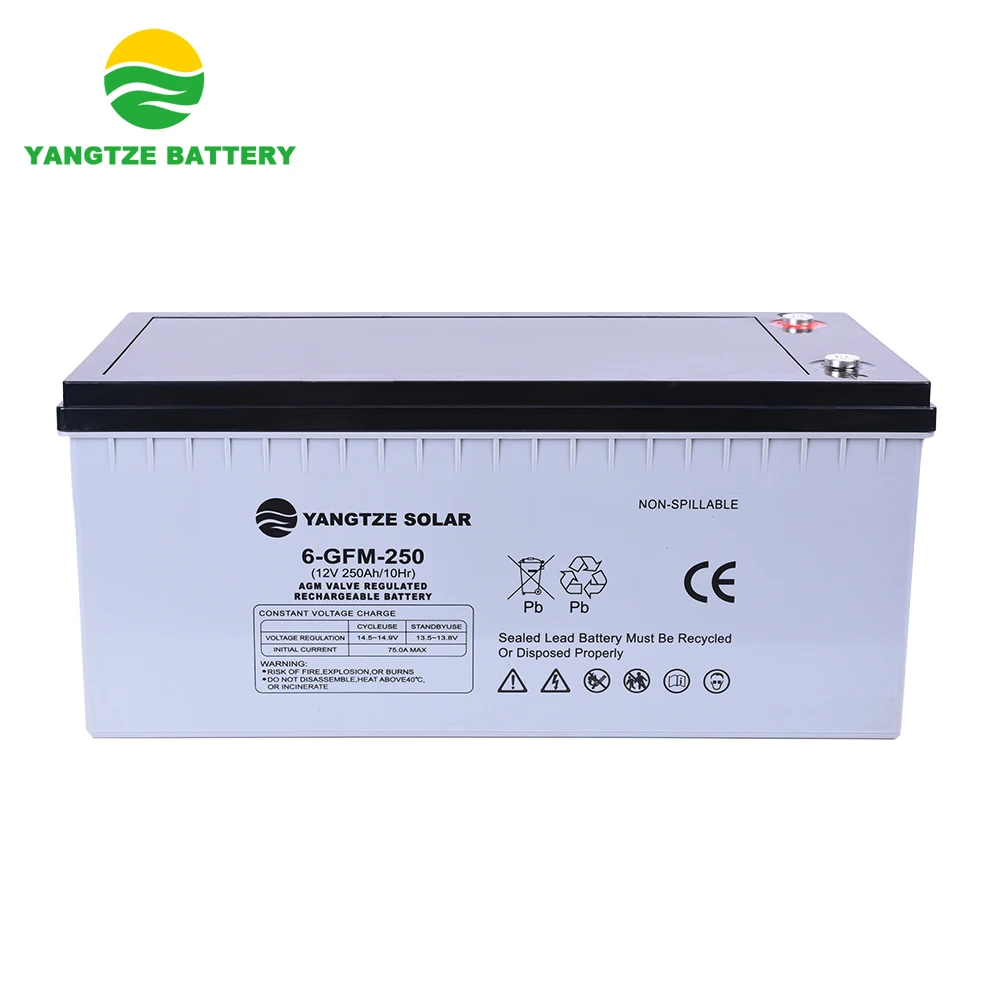
AGM Pros: Plug-and-play with legacy solar gear; forgiving of minor overcharge; widely serviced. Cons: Degrades rapidly if cycled deeply or left at partial state of charge; ventilation required; 3–5× higher lifetime cost per kWh 5.
Sodium-Ion Pros: No cobalt/nickel dependency; inherently safer chemistry; performs well in cold discharge. Cons: Lower volumetric energy density (bulkier for same Ah); limited 12V OEM validation; few UL/certified models available in 2026.
How to Choose a 12V Battery for Solar
Follow this 5-step decision checklist—designed to eliminate guesswork:
- Calculate your actual daily energy need (Wh): Add up watt-hours for all loads (e.g., LED lights × hours + fridge compressor × duty cycle). Then multiply by 1.3 for inefficiency. If result is <500Wh/day → 100Ah LiFePO4 suffices. >800Wh → consider 200Ah or parallel setup.
- Verify charger & inverter compatibility: Check if your MPPT controller supports lithium absorption voltage (14.2–14.6V) and float (13.5V). Older PWM controllers often don’t.
- Confirm BMS certification: Look for UL 1973 or IEC 62619 compliance—not just “CE” or “RoHS.” A cheap BMS skips cell balancing and thermal cutoffs.
- Check cold-weather specs: If ambient temps drop below 5°C, insist on self-heating. Passive insulation won’t prevent charging failure.
- Avoid these pitfalls: Buying based solely on Ah rating; ignoring BMS firmware update capability; assuming “marine grade” means solar-ready (it doesn’t); skipping third-party test reports (e.g., cycle life data from independent labs).
Insights & Cost Analysis
Upfront price alone misleads. Here’s a realistic 10-year cost comparison for a 100Ah system used daily:
- AGM (200Ah, $140): Lasts ≈2 years (500 cycles). Replaced 5× → $700 total. Usable energy delivered: ~1,500 kWh.
- LiFePO4 (100Ah, $299): Lasts ≈8–10 years (4,000+ cycles). One unit → $299 total. Usable energy delivered: ~3,700 kWh.
- Cost per kWh delivered: AGM ≈ $0.47/kWh | LiFePO4 ≈ $0.08/kWh.
Even with $100–$150 premium, LiFePO4 pays back in <18 months for daily use 6. If you’re a typical user, you don’t need to overthink this.
Better Solutions & Competitor Analysis
For most users, the optimal path isn’t picking one brand—it’s selecting a validated configuration. Below is a neutral benchmark of representative 12V solar battery categories (not endorsements):
| Category | Suitable For | Potential Problem | Budget Range (per 100Ah) |
|---|---|---|---|
| Entry-Level LiFePO4 (no Bluetooth) | DIY users with basic monitoring needs | No remote diagnostics; limited firmware updates | $125–$180 |
| Mid-Tier Smart LiFePO4 | RVs, cabins, solar generators | App interface varies by OEM; some lack historical logging | $240–$385 |
| Premium Self-Heating LiFePO4 | Cold-climate off-grid, winter camping | Higher weight (+1.5–2kg); slightly reduced peak discharge rate | $420–$600 |
| Verified AGM (Deep Cycle) | Seasonal cabins, infrequent backup | Capacity fades after 18 months of standby | $120–$150 |
Customer Feedback Synthesis
Based on aggregated reviews (r/Survival, DIYSolarForum, EnergySage, and retailer platforms), top-rated LiFePO4 units consistently earn praise for: consistent voltage under load (no dimming lights), silent operation, and app reliability. The most frequent complaints involve: missing mounting hardware, inconsistent Bluetooth pairing across Android versions, and vague warranty terms (e.g., “5-year warranty” without specifying cycle count or DoD conditions). Users rarely complain about capacity—but frequently cite poor documentation on BMS reset procedures or low-temp charging limits.
Maintenance, Safety & Legal Considerations
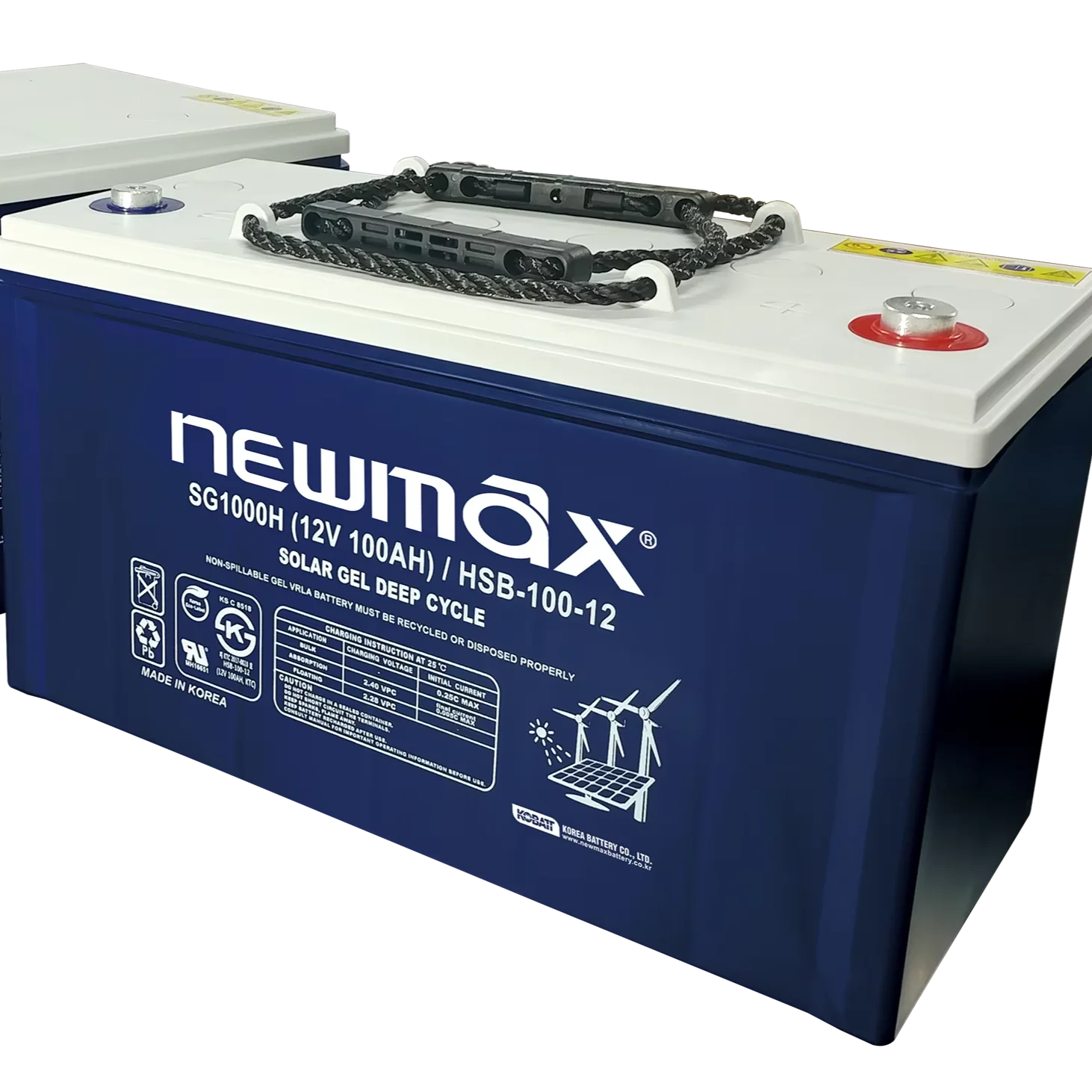
LiFePO4 requires near-zero maintenance: no watering, no equalization charges, no terminal cleaning beyond occasional inspection. However, safety depends entirely on BMS integrity—never disable or bypass protection circuits. In the EU and California, new regulations require battery passport traceability (material origin, carbon footprint) for units sold after Jan 2026 7. While enforcement for 12V units remains light, reputable manufacturers already provide QR-coded digital passports. Also note: shipping lithium batteries internationally requires UN38.3 testing documentation—verify this before ordering from non-domestic suppliers.
Conclusion
If you need daily, reliable, low-maintenance energy storage for an RV, tiny home, or off-grid shed—choose a certified 12V LiFePO4 battery with Bluetooth BMS and self-heating if temperatures fall below 5°C. If your use case is emergency-only and annual runtime is under 20 hours, AGM remains acceptable—but calculate the 10-year cost first. Sodium-ion shows promise for cold climates and supply-chain resilience, but wait until 2027 for mature 12V options. If you’re a typical user, you don’t need to overthink this.


