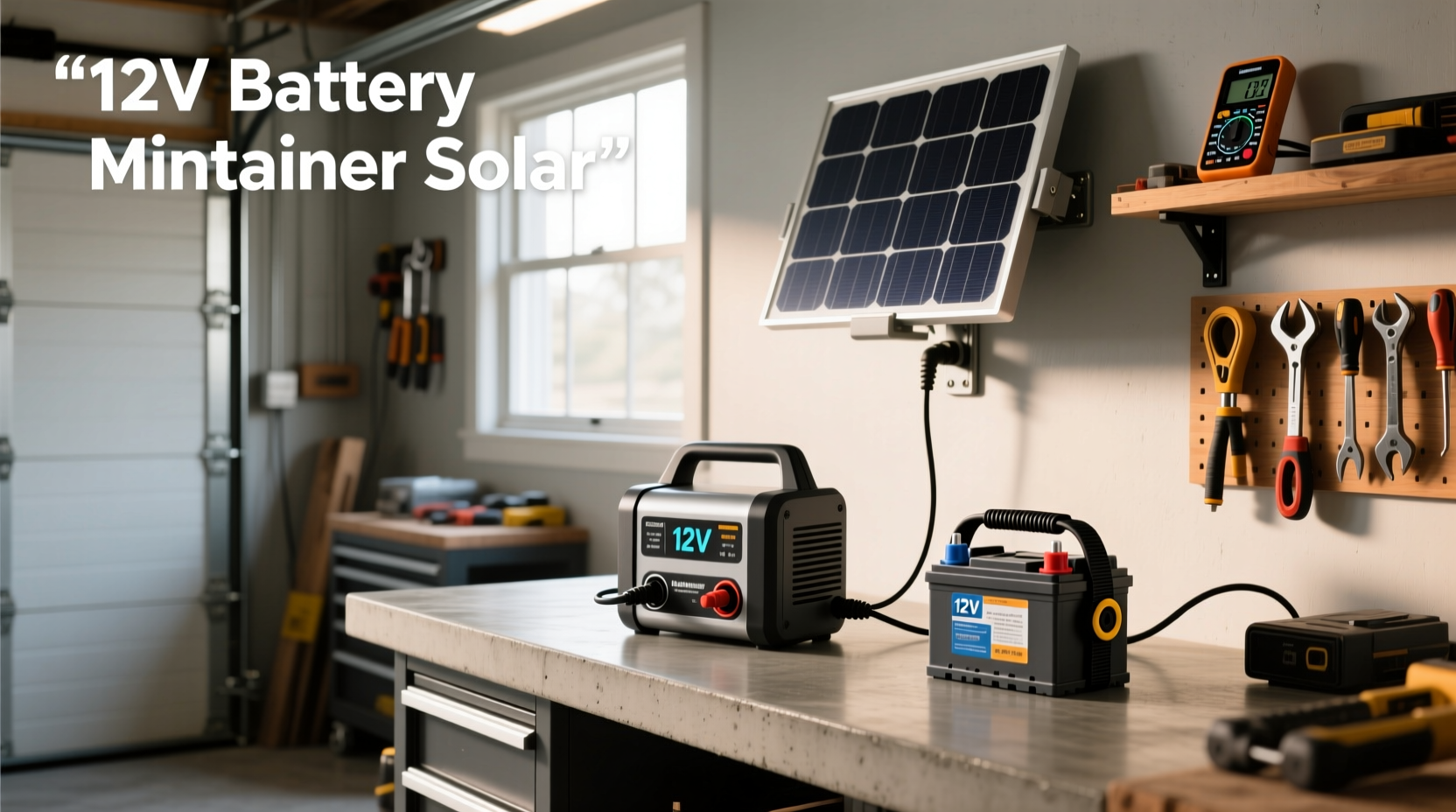
If you’re storing a car, boat, RV, or motorcycle for more than two weeks—and want to prevent sulfation without plugging into grid power—a 12V solar battery maintainer with an integrated smart controller is the only solution worth considering. Over the past year, falling panel prices (<$0.10/W) and wider adoption of IP67-rated, foldable kits have made intelligent solar maintenance accessible and reliable 1. For most users, a 10W–20W kit with built-in MPPT or PWM regulation delivers consistent float-mode charging—no manual intervention, no overcharge risk, and no parasitic drain compromise. If you’re a typical user, you don’t need to overthink this: skip basic trickle chargers, verify reverse discharge protection, and choose a kit with alligator clips *and* cigarette-lighter compatibility. This piece isn’t for keyword collectors. It’s for people who will actually use the product.
About 12V Solar Battery Maintainers: Definition & Typical Use Cases
A 12V solar battery maintainer is a compact, self-contained system that uses photovoltaic energy to deliver regulated, low-amperage current to a 12-volt lead-acid or AGM battery—keeping it at optimal voltage (typically 13.2–13.8V) without overcharging. Unlike standalone solar panels or generic chargers, it integrates three core functions: solar energy capture, intelligent charge regulation, and battery state monitoring.
It’s designed for passive, long-term maintenance, not rapid recharging. Common use cases include:
- 🚗 Storing classic cars, seasonal vehicles, or fleet trucks during off-seasons;
- 🛥️ Maintaining marine batteries on docked boats exposed to humidity and temperature swings;
- 🚐 Powering auxiliary systems (LP detectors, CO alarms, clocks) in parked RVs or campers;
- 🏍️ Preventing deep discharge in motorcycles or ATVs stored in garages with limited daylight exposure.
Crucially, it’s not for jump-starting dead batteries, replacing alternators, or powering high-draw accessories. When it’s worth caring about: if your battery sits idle >14 days and you lack consistent AC access. When you don’t need to overthink it: if your vehicle sees weekly use—even short drives—or if you already use a wall-powered smart maintainer indoors.
Why 12V Solar Battery Maintainers Are Gaining Popularity
Lately, demand has surged—not because solar tech suddenly improved, but because real-world constraints aligned. Three interlocking shifts explain the momentum:
- Falling hardware cost: Solar module pricing dropped below $0.10 per watt in 2025, making 10W–20W kits affordable enough for single-battery applications 1.
- Rising awareness of battery failure modes: Users now understand that even “maintenance-free” AGM batteries sulfate within 30 days when left uncharged—especially in warm climates or with parasitic drains 2.
- Form factor evolution: Foldable, ETFE-coated panels (lighter, more durable, higher transmission than PET) now dominate the sub-20W segment—enabling secure mounting on mirrors, hoods, or trailer roofs without permanent drilling 3.
This isn’t a trend driven by eco-idealism. It’s a pragmatic response to aging vehicle fleets, longer storage durations, and tighter energy budgets. If you’re a typical user, you don’t need to overthink this: popularity reflects usability—not hype.
Approaches and Differences: Trickle vs. Smart Maintainers
Two fundamental architectures exist—and the difference isn’t incremental. It’s safety-critical.
| Feature | “Dumb” Trickle Charger | Smart Solar Maintainer |
|---|---|---|
| Charge delivery | Constant 100–500mA output, regardless of battery voltage | Adaptive 3-stage cycle (bulk → absorption → float), voltage-aware |
| Overcharge risk | High: Can boil electrolyte, warp plates, shorten life 4 | Negligible: Auto-switches to maintenance mode at ~13.2V |
| Controller required? | No—but unsafe above 5W without one | Always built-in (PWM or MPPT) |
| Reverse discharge protection | Rarely included | Standard (prevents nighttime battery drain into panel) |
When it’s worth caring about: if your battery is AGM, gel, or lithium-iron-phosphate (LiFePO₄)—smart regulation prevents irreversible damage. When you don’t need to overthink it: if you’re using a 5W panel on a flooded lead-acid battery *and* will manually disconnect it weekly. But that defeats the purpose of “set-and-forget.”
Key Features and Specifications to Evaluate
Four technical specs determine real-world performance—not marketing claims.
🔋 Wattage (Power Output)
Not “how much sun it gets,” but how much usable power it delivers *after losses*. Panel rating assumes STC (Standard Test Conditions); real output is typically 70–85% of label value.
- 5W–10W: Sufficient for small batteries (motorcycles, lawnmowers) with minimal parasitic load (<10mA). Ideal for shaded or north-facing mounts 5.
- 20W+: Required for RVs, boats, or vehicles with modern electronics (keyless entry, telematics) drawing 25–50mA continuously 6.
⚙️ Charge Controller Type
Any panel >5W requires regulation. Two types exist:
- PWM (Pulse Width Modulation): Cost-effective, reliable for maintenance-level input. Efficiency loss ~15–20% in low light or cold temps.
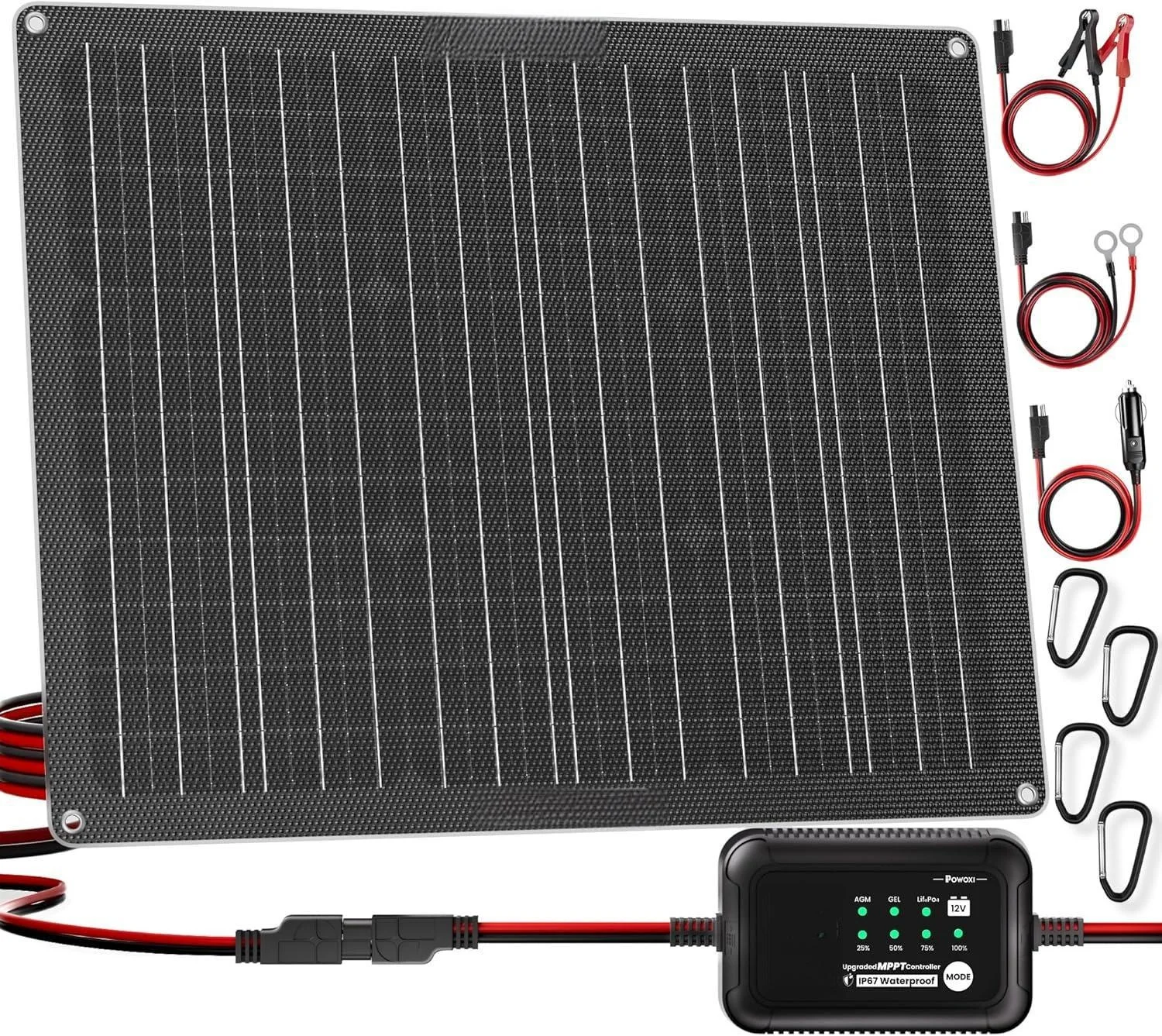
- MPPT (Maximum Power Point Tracking): 15–30% more efficient in variable conditions—worth the premium for 20W+ kits or marginal sunlight areas 7.
💧 Environmental Durability
IP65 means dust-tight + low-pressure water jets. IP67 adds immersion resistance (1m for 30 min). For automotive/marine use, IP67 is non-negotiable 8. Also check for ETFE frontsheet—superior UV resistance and scratch resistance vs. PET.
🔌 Connection Versatility
Look for kits offering at least two of these:
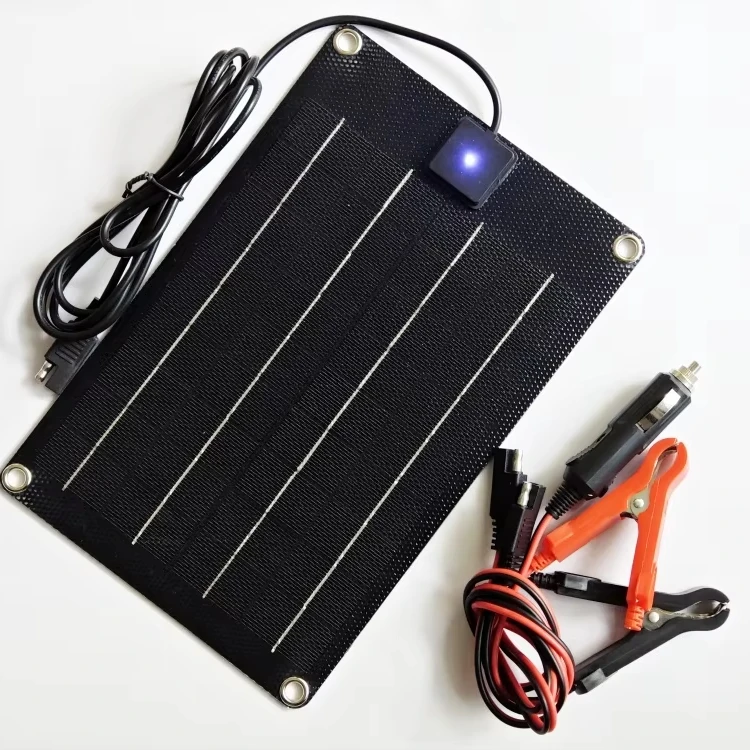
- Alligator clips (for direct, tool-free terminal connection)
- O-ring terminals (for semi-permanent installs)
- Cigarette-lighter plug (only useful if your vehicle’s port stays live when ignition is off)
Pros and Cons: Balanced Assessment
Pros:
- Zero electricity cost after purchase
- No risk of forgetting to unplug (unlike AC chargers)
- Prevents 80% of storage-related battery failures 9
- Enables remote storage (e.g., trailered boats, winterized RVs)
Cons:
- Ineffective in prolonged cloud cover or heavy shade (requires ~2–4 hours of direct sun daily)
- Cannot recover deeply discharged batteries (<11.5V)
- Lower-wattage kits fail if parasitic drain exceeds solar input (e.g., >30mA draw on a 5W panel)
When it’s worth caring about: if you store in garages with north-facing windows, or in high-humidity coastal zones where sulfation accelerates. When you don’t need to overthink it: if your vehicle parks outdoors in full sun and you drive it every 7–10 days.
How to Choose a 12V Solar Battery Maintainer: Step-by-Step Decision Guide
Follow this sequence—skip steps only if criteria are met:
- Confirm battery type & parasitic load: Check owner’s manual or multimeter (measure current draw with ignition off). If >25mA, step up to 20W.
- Assess mounting location: Full sun? Partial shade? Roof-only access? Choose wattage and panel form factor accordingly (rigid for fixed mounts, foldable for hoods).
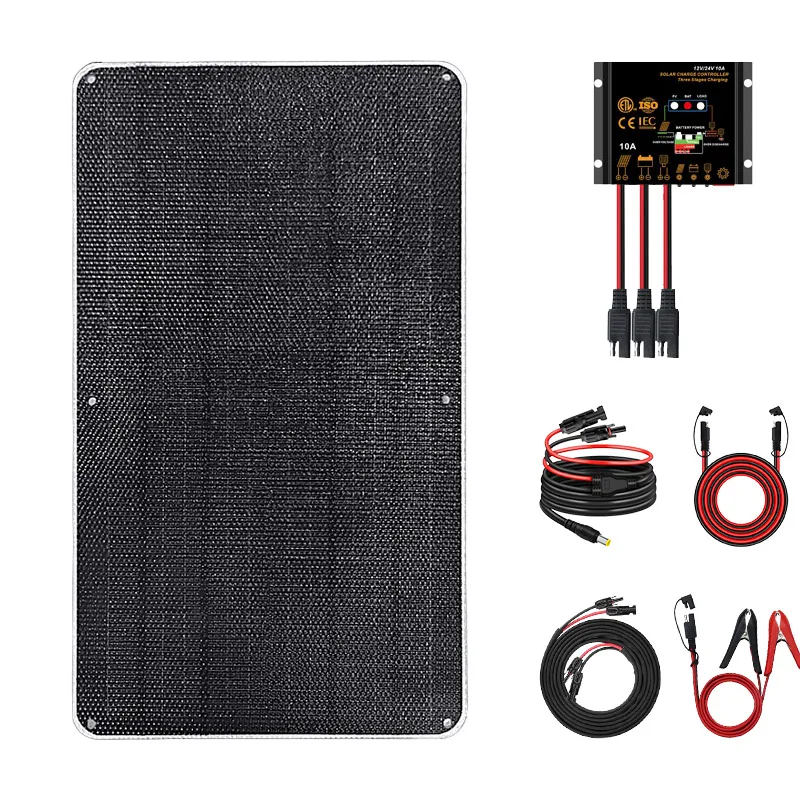
- Verify controller inclusion: No standalone panel >5W should be used without regulation. Avoid “panel-only” listings unless you’ll add a separate controller.
- Check IP rating & coating: Skip anything rated below IP65. Prefer ETFE over PET.
- Test connection options: If your 12V port powers down with ignition, alligator clips are mandatory—not optional.
Avoid these common mistakes:
- Buying a 5W panel for an RV with modern infotainment (underpowered)
- Using a “solar charger” without a controller (risk of battery damage)
- Mounting flat on a horizontal surface (dust accumulation reduces output by up to 25%)
Insights & Cost Analysis
Price correlates strongly with controller quality and durability—not just wattage.
- $25–$45: 5W–10W, PWM controller, IP65, PET panel — suitable for motorcycles, occasional use.
- $55–$95: 10W–20W, MPPT controller, IP67, ETFE panel — recommended for cars, boats, RVs.
- $100+: 20W+, Bluetooth monitoring, dual-battery support — for professional or multi-battery setups.
ROI is measured in battery replacements avoided: a $70 maintainer pays for itself after preventing one $180 AGM battery failure. If you’re a typical user, you don’t need to overthink this: the $55–$95 range delivers optimal balance of reliability and value.
Better Solutions & Competitor Analysis
| Solution Type | Best For | Potential Issue | Budget Range |
|---|---|---|---|
| Integrated 10W Kit (PWM) | Single-car storage, garage use, budget-conscious buyers | Limited low-light performance; no data logging | $35–$55 |
| 20W Foldable Kit (MPPT + IP67) | RVs, boats, trailers, variable sun exposure | Slightly bulkier when folded | $65–$95 |
| Panel + Separate Smart Controller | Custom installations, multi-battery systems, future upgrades | Requires wiring knowledge; higher assembly time | $80–$130 |
Customer Feedback Synthesis
Based on aggregated reviews across forums and retail platforms (2024–2026):
- Top praise: “Stays at float voltage for months without supervision,” “Survived monsoon season on my sailboat,” “No more dead battery after ski season.”
- Top complaint: “Stopped working after 14 months—controller failed silently.” (Most frequent with sub-$40 PWM units lacking thermal protection.)
- Underreported issue: Cigarette-lighter adapters failing due to poor contact—users unknowingly rely on intermittent charging.
Maintenance, Safety & Legal Considerations
Maintenance: Wipe panel monthly with microfiber + water; inspect clips for corrosion; check cable insulation for cracks annually.
Safety: Never connect to lithium batteries without explicit compatibility verification. Most 12V maintainers assume lead-acid chemistry; mismatched profiles cause fire risk 10.
Legal: No federal regulations prohibit solar battery maintainers. Some marinas restrict permanent panel mounting—check local slip agreements before drilling.
Conclusion: Conditional Recommendations
If you need to maintain one standard 12V lead-acid or AGM battery in a car, boat, or RV stored >14 days—choose a 10W–20W kit with built-in MPPT controller, IP67 rating, and ETFE panel. Skip “trickle-only” models entirely. If you’re a typical user, you don’t need to overthink this.
If your vehicle has a live 12V port and you park in full sun, a 10W kit suffices. If parasitic draw exceeds 25mA or sunlight is inconsistent, step up to 20W.
If you manage multiple batteries or require remote monitoring, invest in a modular setup: panel + standalone smart controller + distribution harness.


