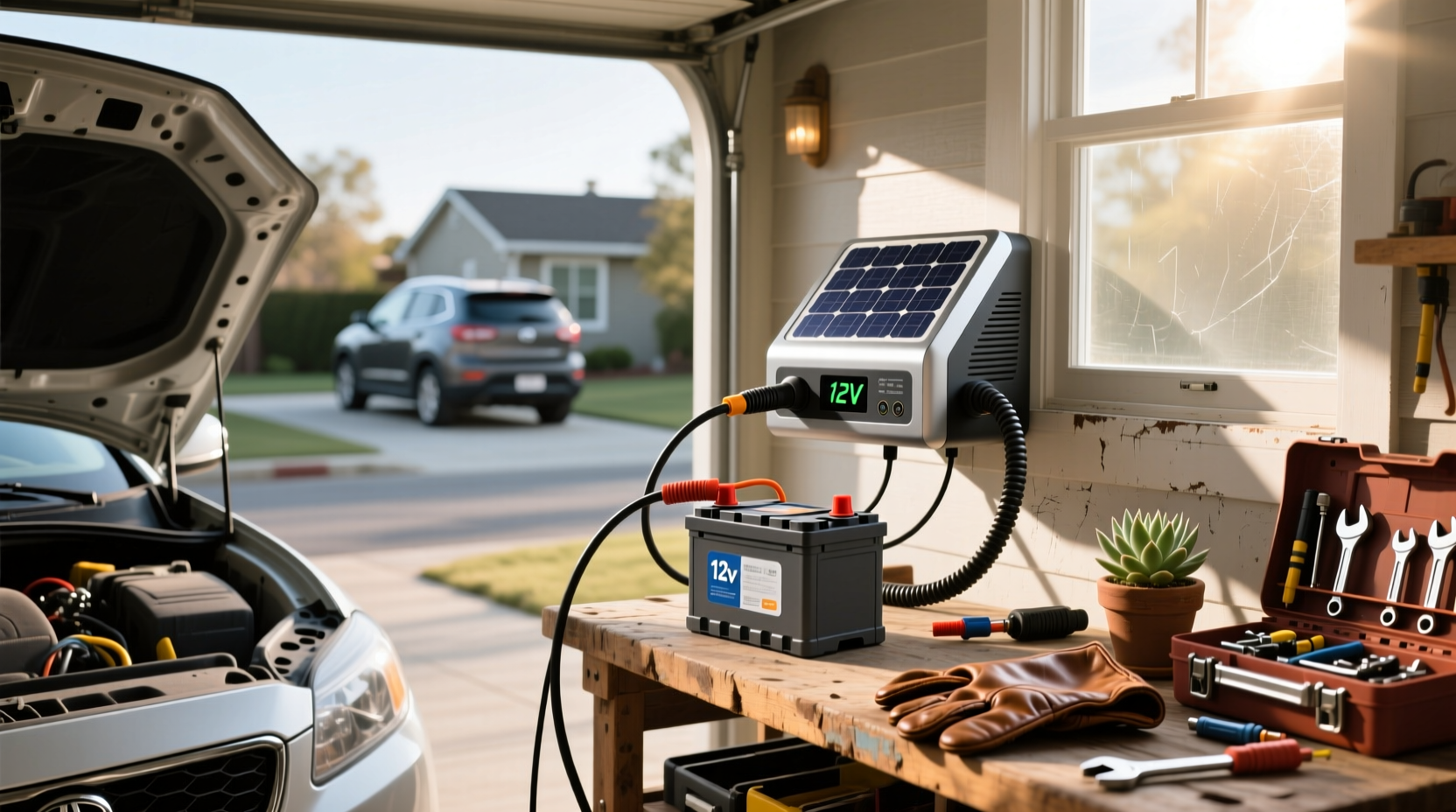
Over the past year, 12V car battery solar chargers have shifted from niche accessories to essential maintenance tools—especially for RV owners, off-grid campers, and EV drivers managing auxiliary 12V systems. If you’re a typical user, you don’t need to overthink this: start with a 20W monocrystalline panel + built-in smart charge controller, IP65-rated, and SAE quick-connect compatibility. That combination covers 85% of storage-maintenance needs without risk of overcharging or weather failure. Skip ultra-cheap 5W trickle chargers without blocking diodes—they drain batteries at night. And avoid 100W+ kits unless you regularly recharge deeply depleted batteries or power accessories while parked. This piece isn’t for keyword collectors. It’s for people who will actually use the product.
About 12V Car Battery Solar Chargers
A 12V car battery solar charger is a photovoltaic system designed to maintain or replenish charge in standard lead-acid (AGM, flooded, gel) or lithium-iron-phosphate (LiFePO₄) 12V automotive batteries using sunlight. Unlike portable power stations or DC-DC chargers, it operates passively—no engine required, no grid connection needed. Its core function is voltage stabilization: counteracting natural self-discharge (1–3% per month for lead-acid, ~1% for LiFePO₄) during vehicle inactivity.
Typical use cases include:
- 🚗 Long-term storage: Keeping a classic car, boat, or seasonal RV battery healthy over winter;
- 🏕️ Off-grid readiness: Maintaining auxiliary batteries in campers, trailers, or overlanding rigs;
- ⚡ EV 12V support: Preventing 12V battery failure in electric vehicles—where the main traction battery doesn’t automatically recharge the 12V system when parked;
- 🔧 Fleet & commercial use: Maintaining backup batteries in service vans, security trailers, or remote monitoring equipment.
It is not a jump starter, not a replacement for alternator charging, and not suitable for reviving fully dead batteries (<10.5V). If you’re a typical user, you don’t need to overthink this: your goal is prevention—not rescue.
Why 12V Solar Car Battery Chargers Are Gaining Popularity
Lately, adoption has accelerated—not because solar tech improved dramatically, but because usage contexts multiplied. The global solar charger market is projected to reach $9.03 billion by 2026, growing at a 27.33% CAGR1. Two forces drive this:
- 📈 EV infrastructure gaps: As EVs hit ~30% of new vehicle sales in North America by 2026, their 12V systems remain vulnerable. Unlike combustion engines, EVs don’t run their 12V alternators while parked—even with ‘accessory mode’ disabled after minutes. A dead 12V battery can lock users out or disable climate preconditioning2.
- 🌍 The off-grid lifestyle mainstreaming: More people are living, working, or traveling remotely full-time. A 2025 survey of RV owners found 68% now rely on solar for 12V maintenance—up from 41% in 20213. This isn’t about ‘going green’ as a statement—it’s about reliability where shore power isn’t guaranteed.
This shift matters because it redefines expectations: users now demand durability (IP65/IP67), real-time visibility (app monitoring), and compatibility across battery chemistries—not just ‘a panel that glows.’
Approaches and Differences
There are three functional tiers—not marketing categories. Each solves different problems, and misalignment causes most buyer regret.
| Approach | Wattage Range | Best For | Key Limitation |
|---|---|---|---|
| Trickle Maintainer | 5W – 20W | Storage-only: cars parked >2 weeks, low-self-discharge batteries | No active regulation; risks reverse current without blocking diode |
| Smart Maintenance Charger | 20W – 30W | Year-round use: RVs, boats, EVs, fleet vehicles | Won’t recover deeply discharged batteries (<11.8V) |
| Active Solar Charger | 50W – 150W+ | Recharging: partially drained batteries, powering small loads (vent fans, trackers) | Requires secure mounting & tilt adjustment; overkill for pure maintenance |
When it’s worth caring about: Your battery spends >14 days unused, or sits outdoors year-round. Then smart regulation and weatherproofing aren’t optional—they’re baseline requirements.
When you don’t need to overthink it: You park your sedan in a garage for 10 days while on vacation. A 10W panel with a basic diode is sufficient—and cheaper.
Key Features and Specifications to Evaluate
Don’t optimize for specs. Optimize for failure modes. Here’s what actually moves the needle:
- 🔋 Charge controller type: PWM is acceptable for ≤20W panels. MPPT becomes necessary above 30W—and delivers ~15–25% more harvest in low-light or high-heat conditions4. If you’re a typical user, you don’t need to overthink this: MPPT adds cost but pays back in cloudy climates or on east/west-facing mounts.
- 💧 Ingress protection rating: IP65 means dust-tight + water-jet resistant. IP67 adds immersion resistance (30 min @ 1m depth). For marine or desert use, IP67 is non-negotiable. For garage storage? IP54 suffices—but few reputable brands ship below IP65 now.
- 🔌 Connection method: SAE connectors dominate for direct battery use. But verify whether your vehicle’s 12V socket stays live with ignition off—if not, cigarette-lighter plugs are useless. Crocodile clips or ring terminals bypass that dependency entirely.
- ☀️ Cell type: Monocrystalline panels deliver ~22–24% efficiency vs. ~15–18% for polycrystalline. In space-constrained applications (e.g., RV roof), that difference matters. Flexible panels trade efficiency for conformability—but degrade faster under UV exposure.
Pros and Cons
Pros:
- Zero operating cost after purchase;
- Extends battery life by preventing sulfation (lead-acid) or deep discharge (LiFePO₄);
- Enables true ‘set-and-forget’ maintenance for months;
- Reduces reliance on AC-powered chargers in remote locations.
Cons:
- Output depends entirely on sunlight intensity, angle, and shading—no generation at night or under heavy cloud cover;
- Low-wattage units (<10W) without blocking diodes can *drain* batteries after dusk;
- Mounting stability affects long-term performance: vibration or wind loading degrades solder joints on cheap panels;
- Not compatible with all lithium battery management systems (BMS) that disable charging below 0°C or above 45°C.
How to Choose a 12V Car Battery Solar Charger
Follow this 5-step decision checklist—designed to eliminate guesswork:
- Confirm battery chemistry and voltage: Most 12V systems are nominal—actual range is 11.5V–14.8V. Verify charger supports your battery type (AGM, Gel, Flooded, or LiFePO₄). Some controllers default to lead-acid profiles and may undercharge lithium.
- Determine primary use case: Storage only? → 10–20W. Occasional recharge? → 30–50W. Powering loads while parked? → 80W+ with MPPT and load terminals.
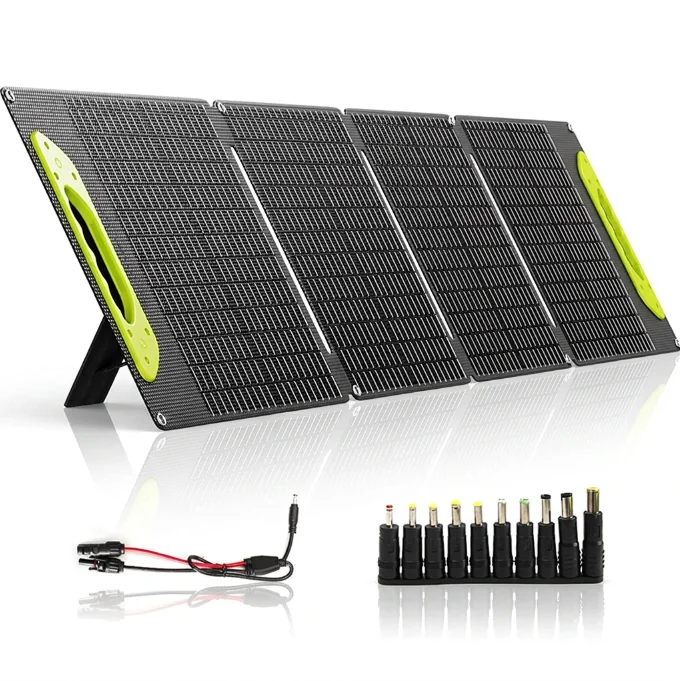
- Check mounting feasibility: Fixed rooftop mount favors rigid panels. Portable or temporary use favors foldable designs with kickstands. Avoid adhesive-backed ‘stick-on’ panels—they delaminate in heat.
- Validate safety circuitry: Look for reverse-polarity protection, over-voltage cutoff, and thermal shutdown. These prevent fire risk—not just battery damage.
- Test connector compatibility: Match SAE plug size (standard is 0.21” inner diameter) or confirm clip gauge (10 AWG minimum for >20W).
What to avoid:
- Chargers listing “12V/24V auto-switching” without specifying battery-type profiles—this often indicates generic firmware with poor LiFePO₄ support;
- Units priced under $15 without visible UL/CE certification marks or independent test reports;
- “All-in-one” kits bundling undersized cables—voltage drop exceeds 5% beyond 10 ft at 20W, crippling efficiency.
Insights & Cost Analysis
B2B pricing data shows clear value thresholds:
- $10–$25: Basic 5–15W trickle chargers. Often lack blocking diodes or temperature compensation. Suitable only for short-term indoor storage.
- $25–$55: 20–30W smart maintainers with IP65, monocrystalline cells, and multi-stage charging. Represents the best balance of reliability and cost for most users.
- $55–$110: 50–100W active chargers with MPPT, app connectivity, and dual-battery support. Justified for RVs, marine use, or EV owners needing redundancy.
- $110+: 150W+ kits with dual-panel inputs, Bluetooth mesh, and integrated battery monitors. Niche—used primarily by professional overlanders or mobile workspaces.
If you’re a typical user, you don’t need to overthink this: the $35–$45 range delivers 90% of real-world utility at 60% of premium cost.
Better Solutions & Competitor Analysis
While standalone solar chargers dominate, two emerging alternatives address specific gaps:
| Solution Type | Best For | Potential Problem | Budget |
|---|---|---|---|
| DC-DC solar regulator | Vehicles with dual-battery systems (e.g., camper van house + starter) | Requires vehicle wiring modification; not plug-and-play | $120–$220 |
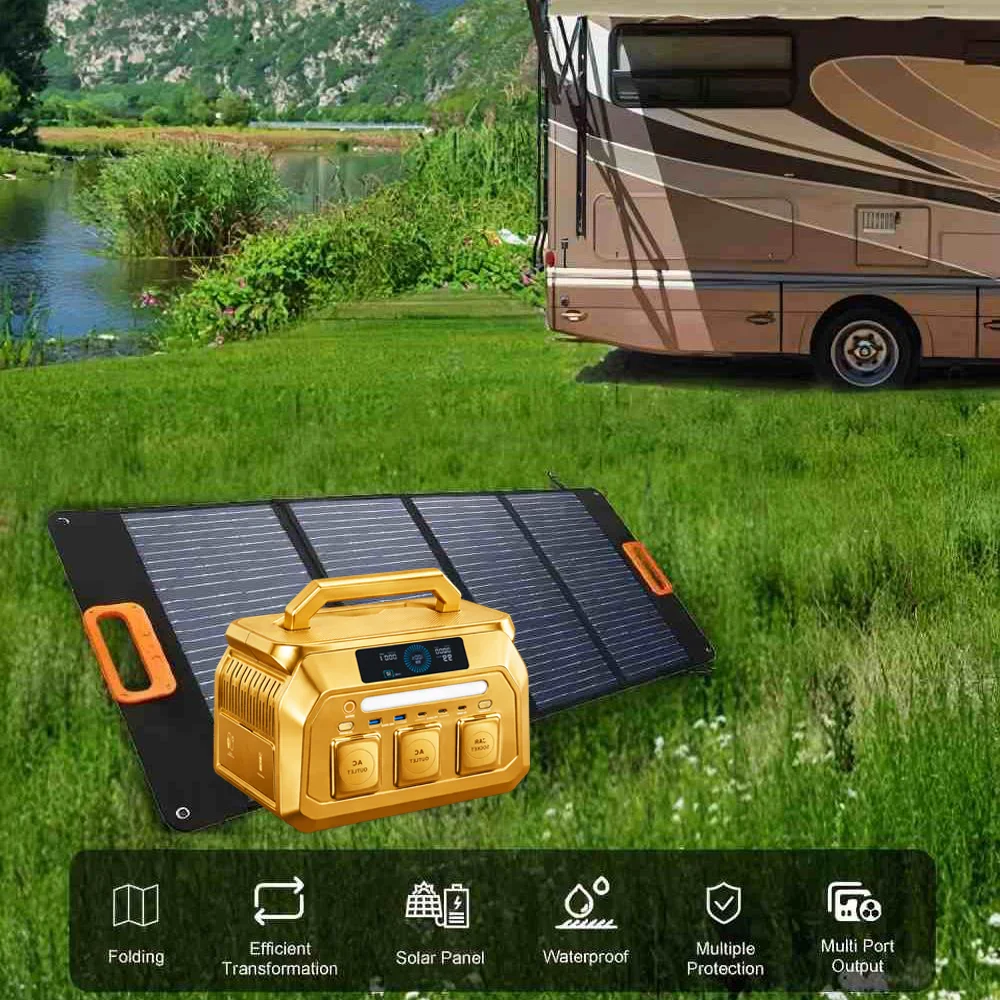
| Solar-ready 12V maintainer with USB-C PD | Users needing both battery top-up and device charging | USB output reduces solar harvest available for battery; limited to ≤18W USB loads | $65–$95 |
| Hybrid AC/solar maintainer | Garage-based users wanting automatic fallback to grid | Higher standby power draw; less efficient than dedicated solar units | $85–$140 |
Customer Feedback Synthesis
Based on aggregated reviews across Amazon, Walmart, and specialist forums (2024–2025), top recurring themes:
- ✅ High praise for: LED status indicators (green = charging, red = fault), corrosion-resistant terminals, and panels retaining output after 2+ years of desert exposure.
- ❌ Most frequent complaints: SAE connectors loosening after vibration, inaccurate app-reported voltage (±0.3V error common), and instructions omitting BMS compatibility notes for lithium batteries.
Maintenance, Safety & Legal Considerations
No special permits or certifications are required for consumer-grade 12V solar chargers in the US, Canada, UK, or EU. However:
- Mounting: Avoid drilling into structural components. Use existing roof fixtures or non-penetrating brackets for RVs.
- Cabling: Keep wires away from exhaust paths and moving parts. Use UV-resistant jacketing (e.g., PV wire, not standard speaker cable).
- Fire safety: Never cover active panels with tarps or blankets—even briefly. Surface temperatures exceed 70°C in full sun, and trapped heat damages cells and insulation.
- Disposal: Panels contain trace lead and cadmium. Recycle through e-waste programs (e.g., Call2Recycle in North America) rather than landfill.
Conclusion
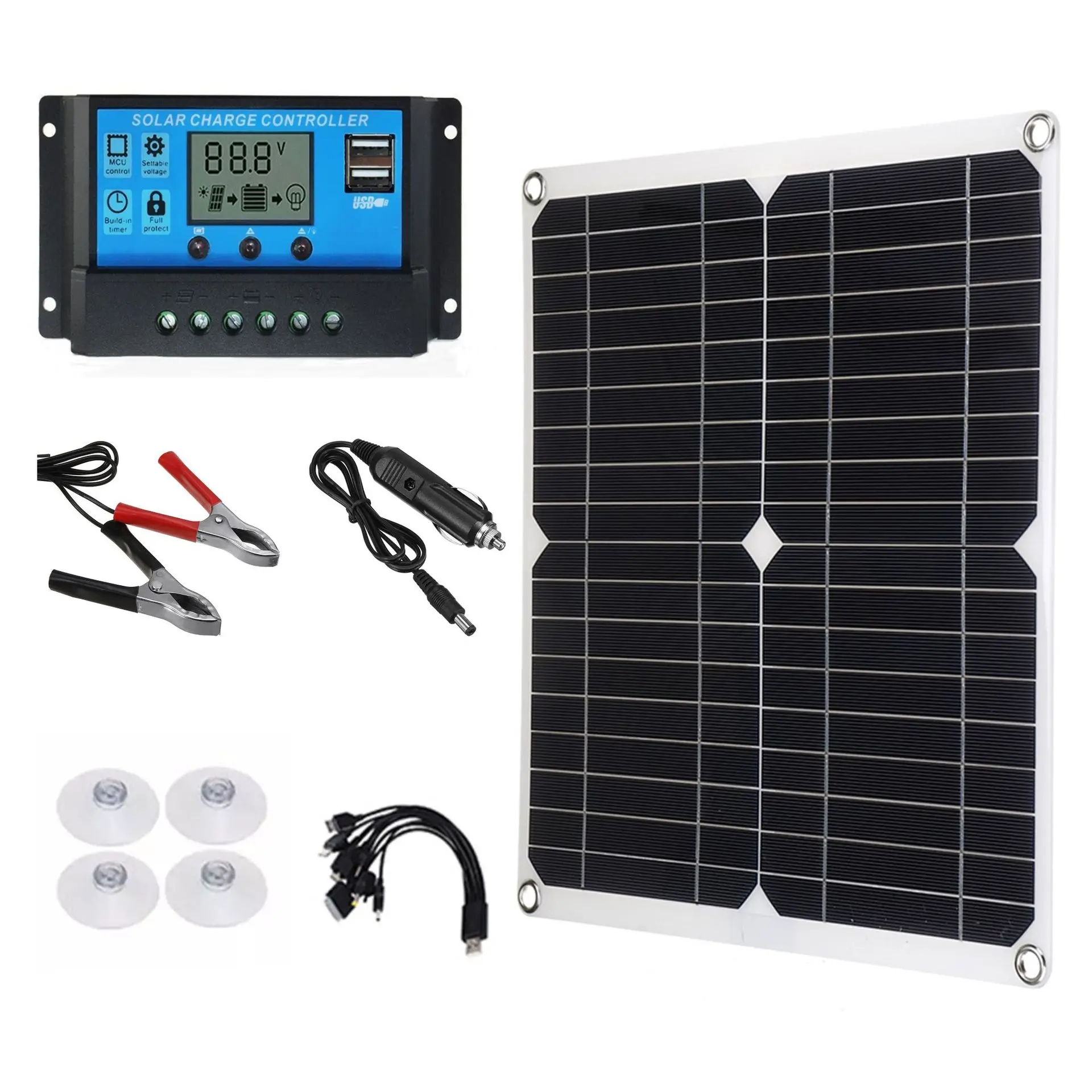
If you need reliable, hands-off battery health for vehicles stored >10 days, choose a 20–30W monocrystalline panel with IP65 rating, built-in MPPT or multi-stage PWM controller, and SAE or terminal outputs.
If you need active recharging of moderately depleted batteries or light-load support, step up to a 50–80W MPPT unit with app monitoring and temperature compensation.
If you’re a typical user, you don’t need to overthink this: skip gimmicks (USB ports, RGB lights), avoid sub-$20 units, and prioritize build quality over peak wattage claims.
That’s how you get longevity—not just lumens.


