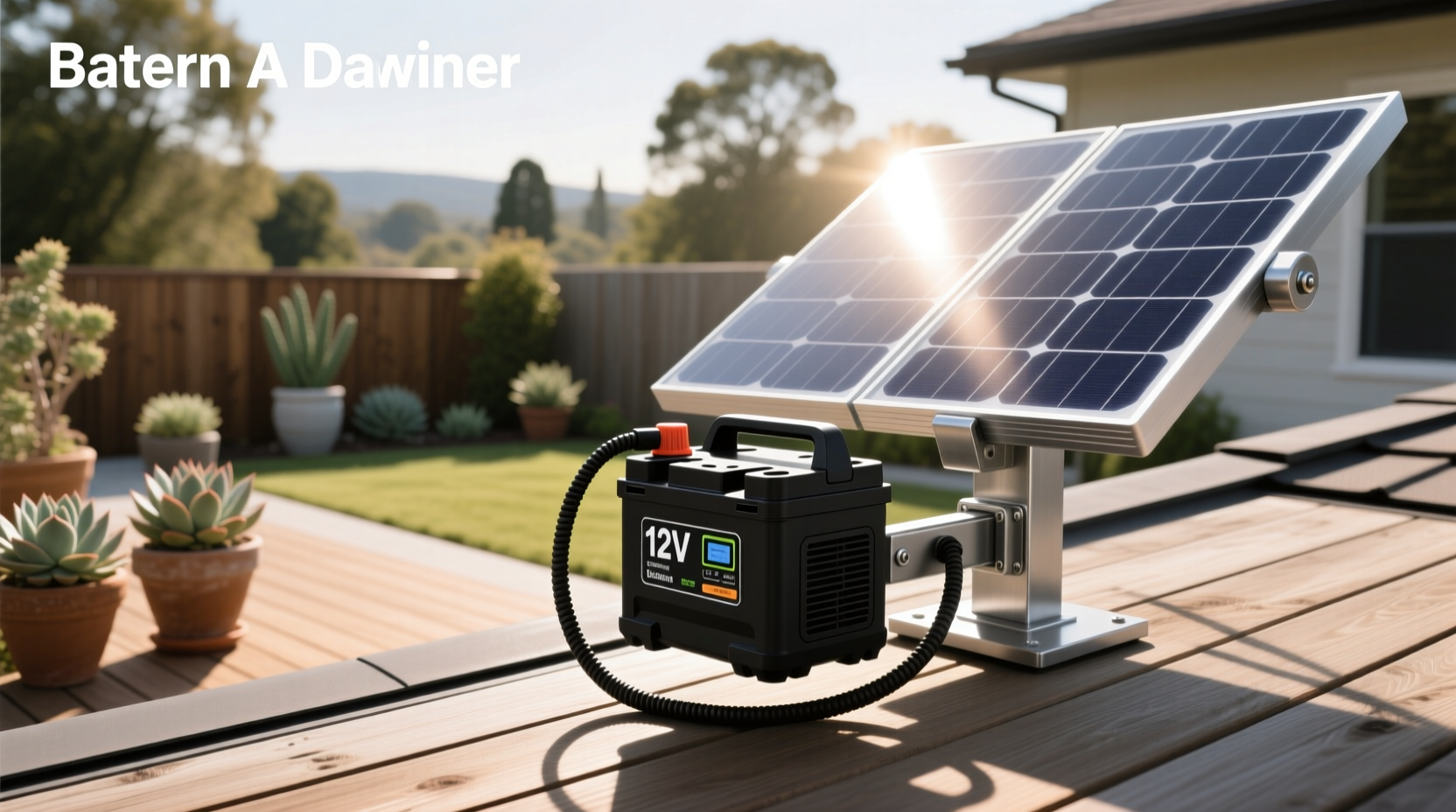
If you’re a typical user building a portable or off-grid 12V power setup—especially for RVs, cabins, or emergency backup—start with a LiFePO4 battery paired with an MPPT solar charge controller and a 200W+ monocrystalline foldable panel. Over the past year, LiFePO4 has become the de facto standard for new 12V solar systems—not because it’s “trendy,” but because its cycle life (5,000+ cycles), safety profile, and flat voltage curve deliver measurable long-term value over AGM or flooded lead-acid. Meanwhile, MPPT controllers now routinely outperform PWM by 20–30% in real-world conditions, especially under partial shade or low-light mornings. If you’re a typical user, you don’t need to overthink this: skip PWM entirely unless your panel is under 100W and budget is under $50. And avoid mismatched voltage ratings—e.g., pairing a 36V nominal solar panel with a 12V-only controller. This piece isn’t for keyword collectors. It’s for people who will actually use the product.
About 12V Battery and Solar Charger Systems
A 12V battery and solar charger system is a self-contained energy loop: solar panels convert sunlight into DC electricity, a charge controller regulates that input to prevent overcharging, and a 12V battery stores usable energy for later discharge. Unlike grid-tied solar, these systems operate independently—making them essential for mobile applications (RVs, boats, vans), remote cabins, disaster preparedness, and even urban balcony setups where plug-and-play sub-800W kits are now legally permitted in Germany, the UK, and parts of Australia 1. The core components must be electrically compatible: panel Voc (open-circuit voltage), controller input range, and battery chemistry all affect safety and efficiency. Misalignment here doesn’t just reduce yield—it risks thermal runaway in lithium cells or chronic undercharging in lead-acid units.
Why 12V Solar Systems Are Gaining Popularity
Lately, demand has surged—not from niche off-gridders alone, but from digital nomads, suburban homeowners seeking energy resilience, and renters adopting “balcony solar.” Three structural shifts explain this: first, regulatory simplification lowers entry barriers—no permits required for ≤800W plug-and-play systems in key markets 2. Second, LiFePO4 pricing has dropped ~35% since 2021, narrowing the upfront gap with AGM while widening the lifetime cost advantage 3. Third, GaN-based MPPT controllers and perovskite-enhanced solar cells (lab-tested at 33.89% efficiency) are pushing usable wattage into smaller, lighter packages—critical for portable use 4. When it’s worth caring about? If you plan >3 years of regular use—or rely on the system during outages. When you don’t need to overthink it? For occasional weekend camping with a single 100W panel and no overnight loads: a basic PWM controller and AGM battery remain functional and predictable.
Approaches and Differences
Three common configurations dominate the market:
- Standalone Components: You select panel, controller, and battery separately. Offers maximum flexibility and repairability—but demands electrical literacy. Requires manual voltage/current matching and wiring verification. Best for users who understand Voc, Vmp, and battery absorption voltages.
- All-in-One Kits: Pre-matched bundles (e.g., 200W panel + 100Ah LiFePO4 + 40A MPPT). Reduces compatibility risk and speeds deployment. Trade-off: limited upgrade paths and proprietary connectors. Ideal for beginners or time-constrained buyers.
- Integrated Solar Generators: Enclosed units combining battery, inverter, MPPT, and sometimes AC outlets. Prioritizes plug-and-play simplicity over modularity. Often uses lower-efficiency internal panels or fixed mounting. Worth considering only if portability and AC output are primary needs—not raw solar harvest efficiency.
If you’re a typical user installing for an RV or shed, start with an all-in-one kit. If you’re upgrading an existing 12V bank or optimizing for weight-sensitive van life, standalone components give better long-term control.
Key Features and Specifications to Evaluate
Don’t optimize for peak wattage alone. Focus on four interdependent specs:
- Battery Chemistry: LiFePO4 offers 2–3× the cycle life of AGM and stable voltage under load. When it’s worth caring about? Any application requiring >1,000 cycles or daily cycling. When you don’t need to overthink it? Temporary backup for infrequent use (e.g., powering a sump pump during storms).
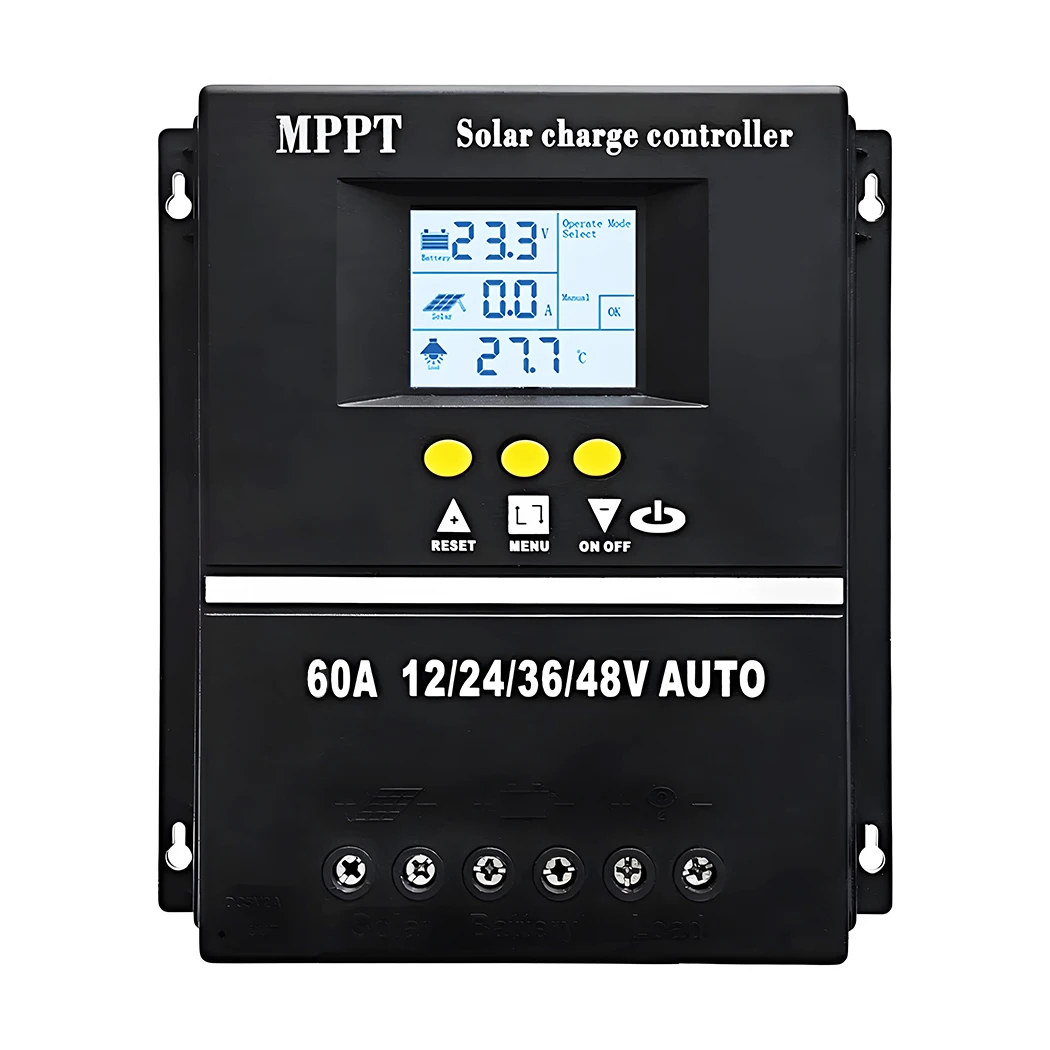
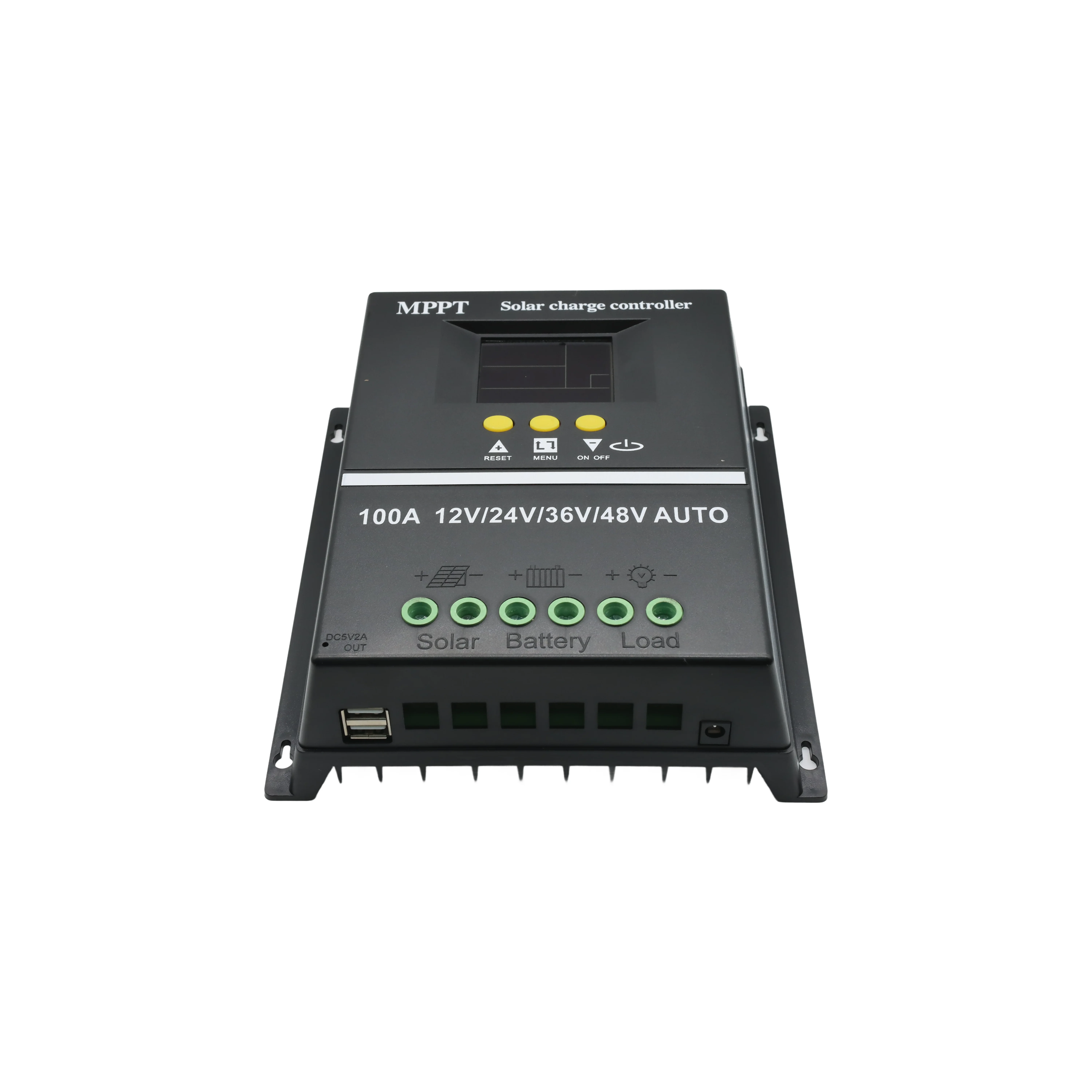
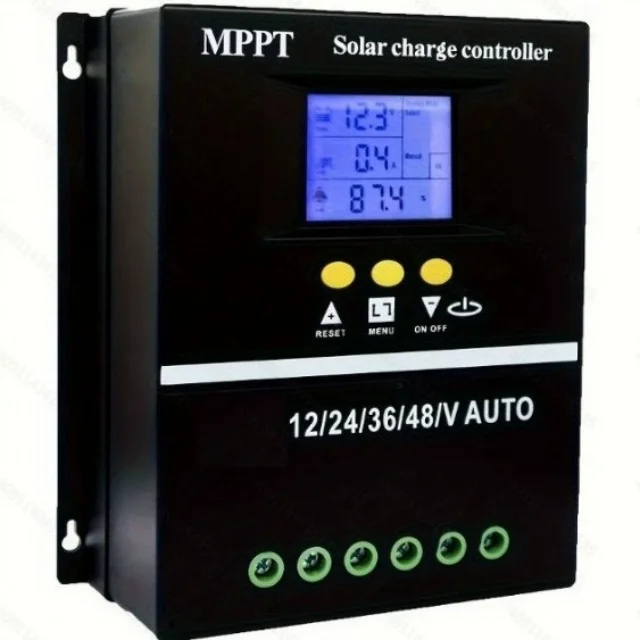
- Charge Controller Type: MPPT is non-negotiable above 100W. It dynamically adjusts input impedance to harvest up to 30% more energy than PWM, especially when panel and battery voltages differ significantly. When it’s worth caring about? In variable weather, partial shade, or cold climates (where panel Voc rises). When you don’t need to overthink it? A single 80W panel in full sun with a 12V AGM battery—PWM suffices.
- Solar Panel Construction: Monocrystalline > Polycrystalline > Thin-film. Foldable monocrystalline panels now achieve 23–25% lab efficiency and weigh <15 lbs for 200W. Rigid glass panels last longer but lack portability. When it’s worth caring about? Mobile use or space-constrained roofs. When you don’t need to overthink it? Permanent ground-mount installations where weight and folding aren’t factors.
- System Voltage Compatibility: Confirm controller supports both 12V and 24V battery banks—and that panel Voc stays within controller’s max input (e.g., 100V for most 40A MPPT units). Exceeding Voc risks permanent controller failure.
Pros and Cons
LiFePO4 + MPPT + Foldable Panel: Pros—high energy density, 10+ year service life, superior low-light harvest, lightweight portability. Cons—higher initial cost ($300–$600 for 100Ah), requires BMS communication for optimal charging, sensitive to improper low-temp charging (<0°C). AGM + PWM + Rigid Panel: Pros—lower entry price ($150–$250), wide temperature tolerance, simple maintenance. Cons—500–800 cycle life, 30–50% heavier per kWh, voltage sag under load reduces usable capacity.
How to Choose a 12V Battery and Solar Charger System
Follow this decision checklist—skip steps only if your use case matches the exception:
- Define your load profile: List all devices (watts × hours/day). Add 25% buffer. If total daily draw exceeds 600Wh, prioritize LiFePO4 (its depth-of-discharge tolerance matters).
- Select battery capacity first: For daily cycling, size battery to hold ≥1.5× your daily draw (e.g., 1,000Wh draw → 1,500Wh battery = ~125Ah @ 12V). Avoid undersizing—it accelerates degradation.
- Size solar input accordingly: Aim for 1.2–1.5× battery capacity in watts (e.g., 100Ah LiFePO4 ≈ 1,200Wh → 1,400–1,800W solar array). But constrain by physical space: a 200W foldable panel delivers ~800Wh/day in good sun—realistic for most mobile setups.
- Choose MPPT—always—for arrays >100W. Verify controller max input voltage exceeds panel Voc at lowest expected ambient temp (Voc rises ~0.3%/°C below 25°C).
- Avoid these three common mistakes: (1) Using a 12V-only controller with a 24V panel string; (2) Charging LiFePO4 with a lead-acid profile controller without firmware update; (3) Mounting foldable panels flat on RV roofs without tilt—reducing yield by 20–40%.
Insights & Cost Analysis
Upfront cost ≠ lifetime cost. Consider “cost per cycle”: a $400 AGM battery rated for 500 cycles costs $0.80/cycle. A $650 LiFePO4 unit rated for 5,000 cycles costs $0.13/cycle—plus higher usable capacity (80–100% DoD vs. 50%). Over five years, the LiFePO4 system typically saves $200–$400 in replacement labor and downtime—even before factoring in weight savings or reliability. MPPT controllers add $50–$120 over PWM, but pay back in <6 months via increased harvest in non-ideal conditions.
| Configuration | Suitable For | Potential Issue | Budget Range (USD) |
|---|---|---|---|
| LiFePO4 + MPPT + Foldable Panel | RVs, van life, frequent off-grid use, emergency readiness | Requires temperature-aware charging; higher initial investment | $550–$1,400 |
| AGM + PWM + Rigid Panel | Occasional camping, shed lighting, seasonal cabin | Rapid capacity loss with deep cycling; heavy and bulky | $220–$500 |
| All-in-One Solar Generator | Urban balcony use, short-term backup, AC-dependent devices | Lower solar input ceiling; limited expansion; proprietary parts | $800–$2,200 |
Better Solutions & Competitor Analysis
The most robust approach combines modular design with future-proof specs: a 40A MPPT controller supporting lithium profiles and dual-voltage (12V/24V) operation; a 100–200Ah LiFePO4 battery with accessible terminals and CAN bus communication; and a 200W+ foldable monocrystalline panel with MC4 connectors and IP65 rating. While branded “solar generators” simplify purchase, their integrated architecture often locks users into single-vendor ecosystems and limits panel upgrades. Standalone components let you mix best-in-class pieces—e.g., pairing a Victron SmartSolar controller with a Battle Born battery and EcoFlow foldable panel—without sacrificing interoperability.
Customer Feedback Synthesis
Top-rated products consistently earn praise for three traits: (1) accurate state-of-charge reporting (not just voltage-based estimates), (2) silent fanless MPPT operation, and (3) intuitive controller interfaces with Bluetooth app support. Recurring complaints focus on: (1) foldable panel zippers failing after 12–18 months of UV exposure, (2) AGM batteries swelling prematurely due to chronic undercharging from unadjusted PWM controllers, and (3) “plug-and-play” kits lacking documentation for lithium profile activation—leaving users unknowingly charging LiFePO4 with lead-acid curves.
Maintenance, Safety & Legal Considerations
LiFePO4 batteries require minimal maintenance but demand correct charging parameters: absorption voltage must stay between 14.2–14.6V (never exceed 14.8V), and low-temp charging (<0°C) should be disabled unless the BMS includes heater control. MPPT controllers need periodic firmware updates—check manufacturer portals quarterly. Legally, most jurisdictions exempt ≤800W DC-only systems from permitting, but always verify local fire codes for battery enclosure ventilation and separation from living spaces. Never install lithium batteries in sealed compartments without passive airflow.
Conclusion
If you need reliable, daily-cycled power for mobile or off-grid use, choose a LiFePO4 battery with a compatible MPPT controller and a 200W+ foldable monocrystalline panel. If your use is seasonal or occasional, an AGM battery with a quality PWM controller remains cost-effective and forgiving. If you prioritize AC output and simplicity over solar harvesting efficiency, a certified all-in-one generator may suit—but verify its MPPT capability and lithium support before purchase. If you’re a typical user, you don’t need to overthink this: match chemistry to usage pattern, not marketing claims.


