If you’re outfitting an RV, boat, or off-grid cabin with 12V solar power in 2026, skip the outdated advice: choose monocrystalline PERC panels (22–23% efficiency), pair them exclusively with MPPT charge controllers, and avoid PET-coated flexible modules — ETFE is non-negotiable for marine or long-term use. Over the past year, the 12V solar module market has shifted decisively: rigid panels now routinely exceed 22% efficiency, bifacial models are mainstream for ground- and railing-mounts, and lightweight ETFE-flexible units have become the de facto standard for curved surfaces. This isn’t incremental change — it’s a hard reset in what qualifies as baseline performance. If you’re a typical user, you don’t need to overthink this: your priority is matching panel Voc (18–24V), verifying bypass diodes, and rejecting any ‘12V’ panel sold without an MPPT-compatible spec sheet. This piece isn’t for keyword collectors. It’s for people who will actually use the product.
About 12V Solar Modules
A 12V solar module is a photovoltaic panel engineered to operate within the voltage range suitable for charging 12V battery systems — most commonly lead-acid or LiFePO4 batteries used in RVs, marine vessels, campervans, and remote cabins. Despite the “12V” label, these panels output significantly higher open-circuit voltage (typically 18–24V) to overcome voltage drop and ensure effective charging under variable conditions. They are not interchangeable with 24V or 48V modules, nor are they designed for grid-tied inverters. Their defining trait is system compatibility: they integrate directly into low-voltage DC architectures without step-down conversion losses.
Why 12V Solar Modules Are Gaining Popularity
Lately, demand for 12V solar modules has surged — driven by a 30% rise in off-grid boondocking and van-life adoption1. Unlike residential rooftop systems, which increasingly favor higher-voltage strings for efficiency, mobile and portable applications prioritize simplicity, safety, and direct compatibility with existing 12V infrastructure (lights, pumps, fridges, USB hubs). The 2026 trend isn’t just growth — it’s specialization. Manufacturers now optimize for weight (under 6 lbs per 100W), UV resilience (ETFE coatings), and partial-shade tolerance (multi-bypass diode layouts). Vehicle OEMs are shipping “solar-ready” RVs with pre-routed wiring and roof bonding points — signaling that 12V solar is no longer an aftermarket add-on but a core utility2.
Approaches and Differences
Three physical formats dominate the 2026 12V solar module landscape — each solving distinct mechanical and environmental constraints:
| Format | Key Strengths | Real-World Limitations | When It’s Worth Caring About | When You Don’t Need to Overthink It |
|---|---|---|---|---|
| Rigid Monocrystalline | 20–22% efficiency; 20–25 yr lifespan; excellent heat dissipation | Heavy (15–20 lbs/100W); requires flat mounting surface; glass breakage risk on rough terrain | If you have a permanent, flat roof and prioritize longevity over weight savings | If your vehicle has a curved roof or you’re building a lightweight van — skip rigid unless budget is extremely tight |
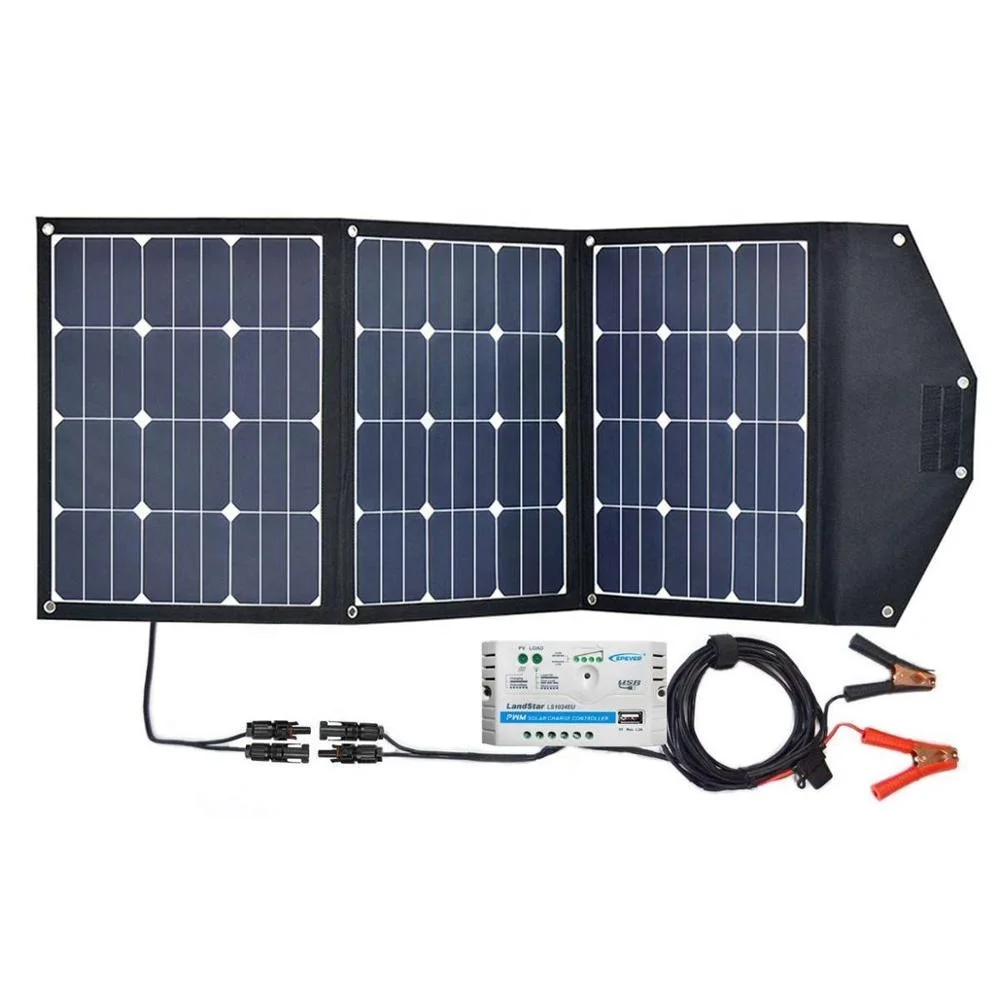
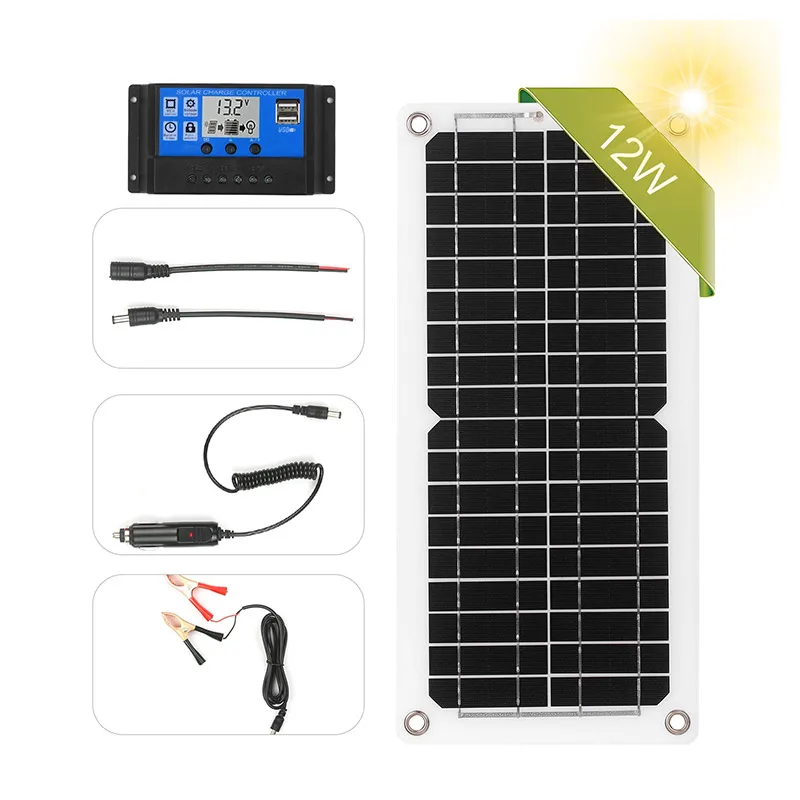
| Flexible ETFE | Lightweight (4–6 lbs/100W); conforms to curves; zero wind uplift profile | Lower long-term UV resistance if PET-based; reduced thermal tolerance vs. glass; warranty often shorter (5–10 yrs) | If mounting on fiberglass, aluminum curves, or low-profile van roofs — ETFE is mandatory for durability | If you’re using it temporarily on a flat plywood platform — a rigid panel is simpler and cheaper |
| Bifacial Monocrystalline | Captures reflected light (5–20% gain); dual-glass construction; high efficiency (22–23%+) | Heavier (18–22 lbs/100W); requires reflective surface (white roof, water, sand) and elevated mounting | If you mount on railings, ground stands, or white-painted RV roofs — gains are measurable and consistent | If mounting flush on a dark, non-reflective surface — bifacial offers no advantage over standard mono |
Key Features and Specifications to Evaluate
Don’t rely on wattage alone. A 12V solar module’s real-world output depends on four technical specifications — all verifiable on the datasheet:
- Open Circuit Voltage (Voc): Must be 18–24V. Below 18V won’t reliably charge a 12V battery bank; above 24V risks exceeding MPPT controller input limits. When it’s worth caring about: Matching your charge controller’s max input voltage. If you’re a typical user, you don’t need to overthink this: Stick to panels labeled “12V nominal, Voc 21.6–22.8V” — that range fits >95% of modern MPPT controllers.
- Bypass Diodes: Minimum two diodes per 36-cell string. Prevents total output loss when part of the panel is shaded (e.g., by an antenna or vent). When it’s worth caring about: If your installation site experiences frequent partial shading. When you don’t need to overthink it: All reputable 2026 monocrystalline modules include ≥2 diodes — avoid anything without explicit diode count listed.
- Efficiency Rating: 22–23% is now the 2026 baseline for PERC/n-type cells. Panels below 20% are legacy stock — lower power density means more roof space needed. When it’s worth caring about: Space-constrained builds (e.g., Class B vans). If you’re a typical user, you don’t need to overthink this: Prioritize certified efficiency (IEC 61215) over marketing claims — look for test reports, not brochures.
- Material Certification: ETFE frontsheet > PET. ETFE withstands >10,000 hrs UV exposure without yellowing; PET degrades visibly after ~3,000 hrs, especially near saltwater3. When it’s worth caring about: Marine use or installations in high-UV zones (Southwest US, Australia, Mediterranean). When you don’t need to overthink it: If your panel is under warranty and explicitly states “ETFE laminated,” proceed — no further verification needed.
Pros and Cons
12V solar modules deliver unmatched simplicity for DC-native systems — but they aren’t universally optimal.
- ✅ Pros: Plug-and-play integration with 12V loads; no DC-DC conversion losses; inherently safer low-voltage operation; wide availability of compatible accessories (MPPT controllers, fuses, busbars).
- ❌ Cons: Lower system efficiency at scale (>400W) due to higher current (and thus I²R losses); limited scalability without parallel wiring complexity; less future-proof than 24V/48V for expanding battery banks.
Best suited for: Systems under 400W, mobile platforms (RVs, boats, trailers), and users prioritizing reliability and install simplicity over peak efficiency.
Not ideal for: Large off-grid cabins aiming for >1kW capacity, users planning multi-kWh lithium banks, or those already invested in 48V inverter ecosystems.
How to Choose a 12V Solar Module: A Step-by-Step Guide
- Confirm your battery chemistry — LiFePO4 requires different absorption voltages than AGM or flooded lead-acid. Your MPPT controller must support it.
- Select format first: Flat roof → rigid; curved roof → ETFE-flexible; railing or ground mount → bifacial.
- Verify Voc and temperature coefficient: Ensure Voc stays below your controller’s max input at lowest expected ambient temp (e.g., -20°C).
- Reject any panel without: IEC 61215 certification, ≥2 bypass diodes, and a published ETFE/PET material spec.
- Never pair with PWM: Even mid-tier MPPT controllers (e.g., Victron SmartSolar, Renogy Rover) recover 15–25% more energy in real-world RV conditions4.
Insights & Cost Analysis
Price per watt has stabilized: $0.85–$1.20/W for quality 100–200W monocrystalline modules (rigid or ETFE). Bifacial adds ~15–20% premium. While entry-level PET-flexible panels hover near $0.65/W, their 3–5 yr lifespan versus ETFE’s 10–15 yr makes them false economy for anything beyond seasonal use. For context: a 200W ETFE-flexible kit (panel + MPPT controller + MC4 cables) averages $290–$360 — competitive with DIY rigid setups when labor and mounting hardware are factored in.
Better Solutions & Competitor Analysis
“Better” depends on your constraint. Below is how top-performing configurations align with real-world priorities:
| Solution Type | Best For | Potential Problem | Budget Range (200W) |
|---|---|---|---|
| ETFE Flexible + MPPT Kit | Weight-sensitive van builds; curved marine decks | Requires careful adhesive application; not repairable if punctured | $290–$360 |
| Bifacial + Ground Mount | Marine railings; RV rear ladder mounts; desert camping | Needs clean, reflective surface; taller mounting increases wind load | $320–$410 |
| Rigid + Roof Z-Brackets | Permanent RV roof installs; budget-conscious users | Drilling required; less aerodynamic; heavier | $220–$280 |
Customer Feedback Synthesis
Based on aggregated reviews from RV forums, marine retailers, and off-grid communities (2025–2026):
✅ Top compliments: “No sagging after 18 months on curved roof,” “MPPT controller made my old 100W panel outperform a new 150W PWM setup,” “ETFE stayed crystal clear despite 3 seasons in Florida salt air.”
⚠️ Top complaints: “PET-flex panel yellowed and delaminated in Year 2,” “Voc exceeded my controller’s 50V limit during cold mornings,” “No bypass diodes — one shadow killed full output.”
Maintenance, Safety & Legal Considerations
12V solar modules require minimal maintenance: rinse with fresh water every 2–3 months (critical for marine use), inspect MC4 connectors for corrosion, and verify torque on mounting hardware annually. Safety-wise, always fuse between panel and controller (1.25× Imp rating), use UV-rated cable (e.g., USE-2 or PV wire), and ground the frame per NEC Article 690. No federal permitting is required for standalone 12V systems under 120W — but local marinas or RV parks may enforce mounting height or wind-load rules. Always check jurisdiction-specific codes before permanent installation.
Conclusion
If you need reliable, space-efficient power for a mobile or small off-grid setup, choose a monocrystalline PERC 12V solar module — rigid for flat permanence, ETFE-flexible for curves and weight savings, bifacial only where reflection is guaranteed. Pair it exclusively with an MPPT controller rated for your panel’s Voc and battery chemistry. Skip PWM. Skip PET. Skip panels without certified efficiency and diode specs. If you’re a typical user, you don’t need to overthink this: the 2026 baseline is clear, and deviation rarely pays off.