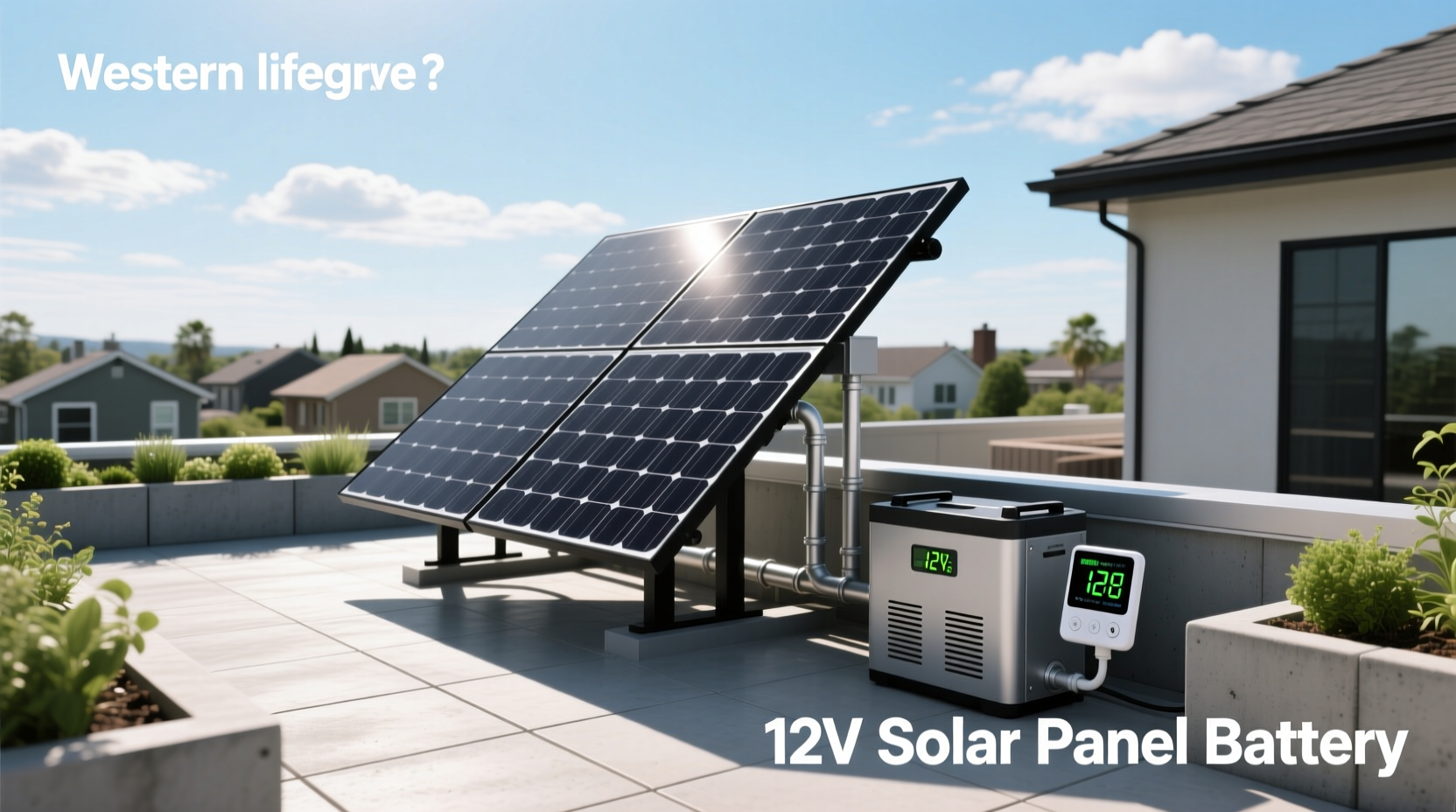
If you’re installing a 12V solar panel battery system for an RV, boat, or small off-grid cabin—choose LiFePO4. Over the past year, lithium iron phosphate (LiFePO4) has become the default standard for daily-cycling applications, not just a premium option. Why? Because its 10-year total cost of ownership is 2.5× cheaper than lead-acid, it delivers double the usable energy from the same Ah rating, and it’s now widely available under $150 per 100Ah unit. If you’re a typical user, you don’t need to overthink this: skip AGM or gel for anything beyond emergency-only backup. This piece isn’t for keyword collectors. It’s for people who will actually use the product.
About 12V Solar Panel Batteries
A 12V solar panel battery stores energy harvested by photovoltaic panels for later use—typically in mobile or decentralized systems where grid access is limited or unreliable. Unlike high-voltage residential battery stacks (e.g., 48V Tesla Powerwall), 12V batteries interface directly with common DC loads: LED lighting, water pumps, refrigerators, inverters, and vehicle electronics. They’re the backbone of 🚐 RV power systems, ⛵ marine auxiliary banks, and ⛺ portable solar kits. Most users pair them with 100–400W solar panels and charge controllers rated for 12V nominal input.
Why 12V Solar Panel Batteries Are Gaining Popularity
Lately, demand for 12V solar panel batteries has surged—not because of new technology, but because of shifting real-world usage patterns. Consumers are no longer treating solar as a ‘nice-to-have’ add-on. They’re relying on it for full-time power autonomy during travel, remote work, and seasonal living. The global solar energy storage battery market is projected to reach $7.84 billion in 2026, growing at a CAGR of 28.93% through 2034 1. Crucially, lithium (LiFePO4) now accounts for 78% of new hybrid solar installations in key growth markets—driven by falling cell costs (down 50% since 2020) and proven field reliability 2. This isn’t hype—it’s adoption backed by cycle life, weight savings, and measurable TCO advantage.
Approaches and Differences
Three main chemistries dominate the 12V solar panel battery space—each suited to distinct usage profiles:
| Chemistry | Best For | Key Trade-offs | Budget Range (100Ah) |
|---|---|---|---|
| LiFePO4 | Daily cycling: RVs, boats, off-grid cabins, solar generators | Higher upfront cost, but 3,000–6,000+ cycles; 80–100% depth of discharge (DoD); 95–98% efficiency | $120–$268 |
| Gel / AGM Lead-Acid | Emergency-only backup: sump pumps, security lights, infrequent use | Lower upfront cost, but only 300–1,500 cycles; max 50% DoD recommended; 80–85% efficiency; heavy & maintenance-sensitive | $70–$140 |
| Portable Solar Battery Packs | Camping, tailgating, weekend trips—no permanent mounting | Integrated solar input, USB/AC outputs, built-in BMS; lower capacity density; less serviceable | $180–$420 |
When it’s worth caring about: You cycle the battery daily—or more than once per week. Lithium’s cycle life and usable capacity directly translate to fewer replacements and more runtime per dollar.
When you don’t need to overthink it: You’ll only use the battery during rare outages (e.g., once every 6–12 months). A quality gel battery works fine—and avoids unnecessary complexity.
Key Features and Specifications to Evaluate
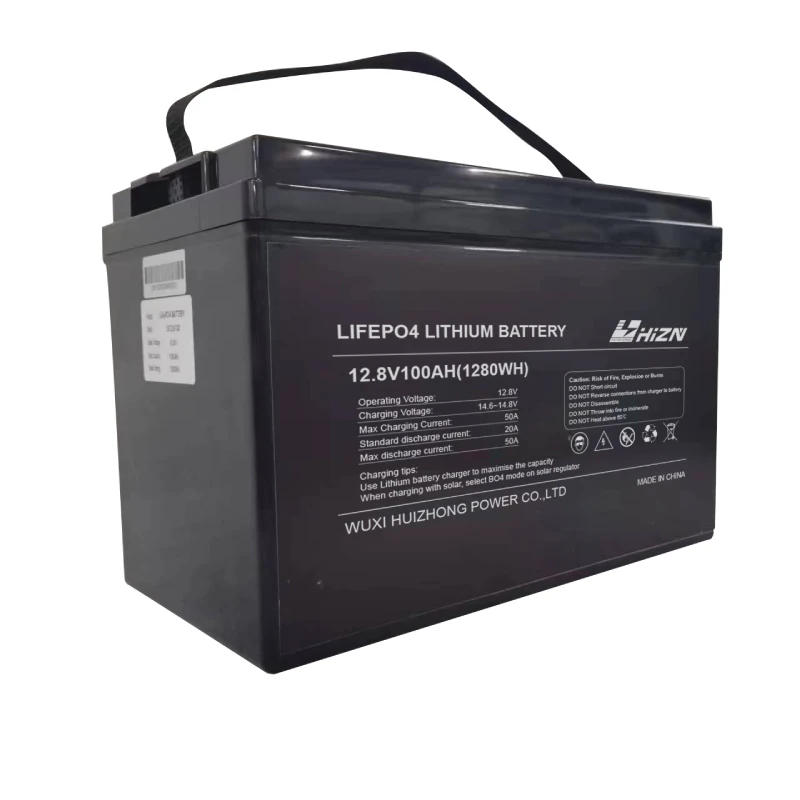
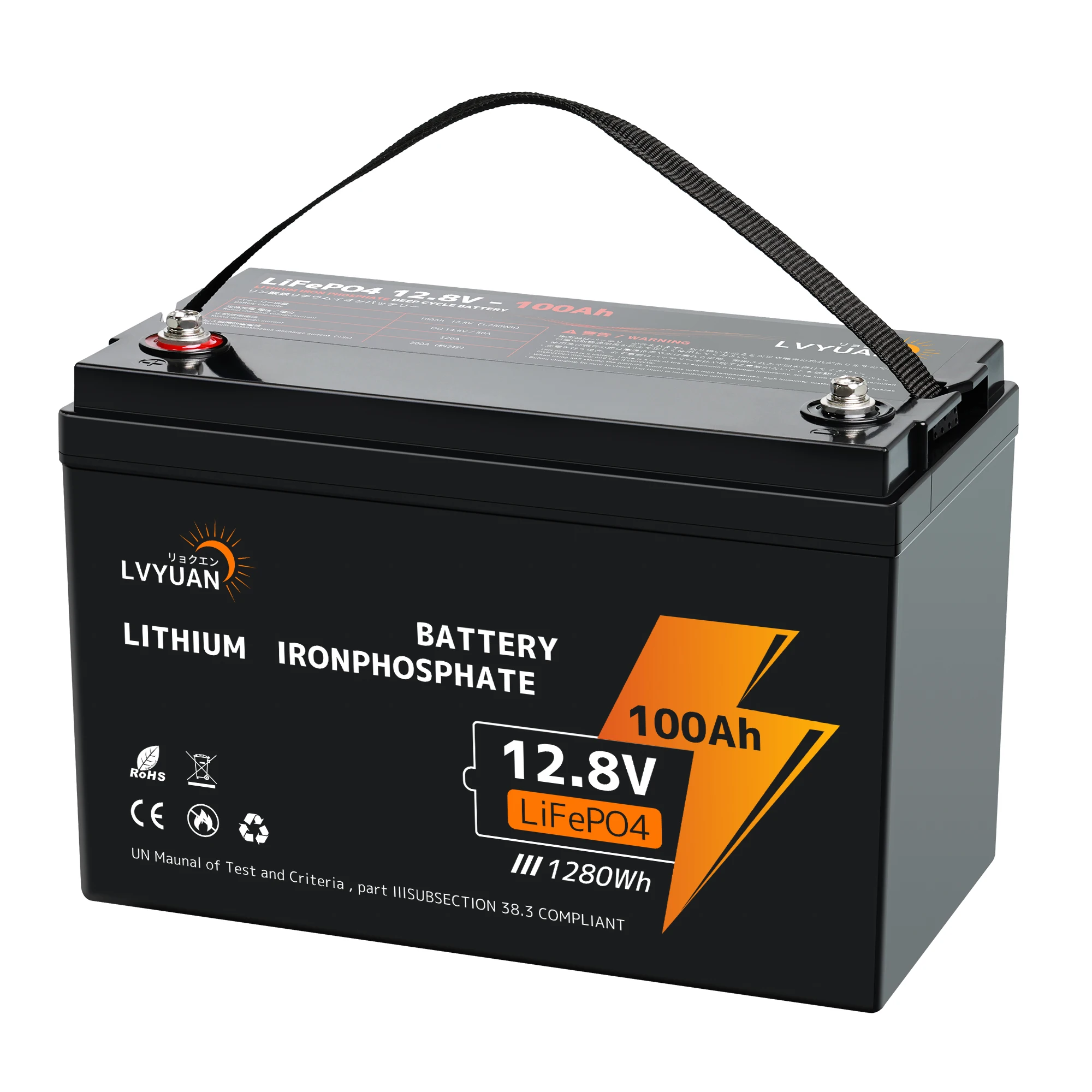
Don’t buy on Ah alone. A 100Ah LiFePO4 battery delivers 1,280Wh of usable energy (12.8V × 100Ah × 100% DoD). The same 100Ah AGM gives only 640Wh (12.8V × 100Ah × 50% DoD) 3. Here’s what to verify before purchase:
- 🔋 Real usable Wh (not just Ah): Multiply nominal voltage × rated Ah × DoD. Always compare on watt-hours.
- ⚙️ Smart BMS with Bluetooth: Standard on 2026 LiFePO4 units. Lets you monitor voltage, temperature, SOC, and fault logs via smartphone app.
- ⚡ C-Rating: Indicates safe continuous discharge current. A 1C 100Ah battery supports 100A continuous draw—critical for microwaves or power tools. Lead-acid suffers severe Peukert losses above 0.2C.
- ⚖️ Weight & form factor: LiFePO4 cuts weight by 60–70% vs. lead-acid for equal energy. A 100Ah LiFePO4 weighs ~10 kg; AGM weighs ~30 kg 4.
- 🛡️ Warranty & support: Reputable LiFePO4 brands offer 5–10 year warranties. Anything under 3 years signals low confidence in longevity.
If you’re a typical user, you don’t need to overthink this: prioritize verified Wh, built-in BMS, and warranty length over brand name or marketing claims.
Pros and Cons
LiFePO4 Pros: 3–6× longer lifespan, near-zero maintenance, indoor-safe (non-gassing), 95%+ efficiency, lightweight, stable thermal profile.
LiFePO4 Cons: Higher initial price, requires compatible charge controller (must support LiFePO4 voltage profile), sensitive to freezing temps below −10°C without heating.
Lead-Acid Pros: Low entry cost, widely supported by legacy equipment, simple replacement process.
Lead-Acid Cons: Shorter life, frequent water top-ups (flooded), ventilation required, performance degrades sharply in cold or high-load conditions.
When it’s worth caring about: You live full-time in an RV or sail seasonally. Weight, space, and long-term reliability outweigh first-cost concerns.
When you don’t need to overthink it: You’re adding backup power to a garden shed or garage workshop used 2–3 times per month. A sealed AGM battery suffices.
How to Choose a 12V Solar Panel Battery
Follow this 5-step decision checklist—designed to eliminate guesswork:
- Calculate your actual daily Wh needs — List all devices, wattage, and hours used. Add 20% buffer. Then size battery bank to deliver that Wh at your chosen DoD.
- Rule out lead-acid if you cycle >2×/week — Its 50% DoD limit and 300–500-cycle life make it unsustainable for active use.
- Verify BMS protection features — Must include over-charge, over-discharge, short-circuit, and temperature cutoff. Bluetooth monitoring is strongly recommended.
- Check physical fit and mounting — Lithium packs often use different terminal layouts (e.g., M8 bolts vs. F1 terminals). Confirm compatibility with your tray or enclosure.
- Avoid ‘12V nominal’ traps — Some lithium batteries list 12.8V nominal but operate between 10–14.6V. Ensure your inverter and charge controller accept that full range.
What to avoid: Buying based solely on Ah rating; ignoring temperature derating (capacity drops ~15% at 0°C); skipping a dedicated LiFePO4-compatible charge controller.
Insights & Cost Analysis
The 10-year total cost of ownership tells the clearest story. A $220 LiFePO4 battery delivering 3,000 cycles at 90% DoD costs ~$0.076 per usable Wh over its life. A $110 AGM battery rated for 500 cycles at 50% DoD costs ~$0.19 per usable Wh—even before factoring in replacement labor and downtime 2. That’s why lithium is now the economic default—not just the technical one.
Price tiers (2026, per 100Ah unit):
- Budget LiFePO4: $120–$150 — Reliable BMS, basic Bluetooth, 3,000-cycle warranty
- Premium LiFePO4: $190–$268 — Dual CAN bus, heated models, 6,000-cycle spec, app-based firmware updates
- Gel/AGM: $70–$140 — Still viable for low-utilization roles, but diminishing returns for daily use
Better Solutions & Competitor Analysis
For most users, the better solution isn’t a specific brand—but a standardized evaluation framework. Below is how top-tier 2026 offerings compare across functional dimensions:
| Category | LiFePO4 (High-Performance) | Portable Solar Pack | Gel/AGM (Backup) |
|---|---|---|---|
| Usable Energy Density | ✅ 1,200–1,300Wh/100Ah | ✅ 800–1,100Wh (integrated design) | ❌ ~600–650Wh/100Ah |
| Weight Savings | ✅ 60–70% lighter than AGM | ✅ Optimized for portability | ❌ Heavy; limits mounting options |
| Maintenance Burden | ✅ Zero routine maintenance | ✅ Plug-and-play; no wiring | ⚠️ Terminal cleaning, voltage checks, occasional watering (flooded) |

Customer Feedback Synthesis
Based on aggregated reviews across RV forums, marine retailers, and off-grid communities:
- Top praise for LiFePO4: “No more guessing state of charge,” “Fit three batteries where one AGM used to go,” “Still holding 94% capacity after 28 months.”
- Most common complaint: “Controller wasn’t LiFePO4-configured out of the box—had to update firmware.” (Easily resolved; not a battery flaw.)
- AGM feedback: “Worked fine for 3 years powering my shed lights—but died fast when I tried running a fridge.”
Maintenance, Safety & Legal Considerations
LiFePO4 batteries require no routine maintenance—no watering, no equalization charges, no venting. They’re thermally stable and non-gassing, making them safe for enclosed spaces like RV underfloor bays or boat engine rooms. Lead-acid batteries must be installed in ventilated areas due to hydrogen off-gassing during charging.
No federal U.S. regulations prohibit 12V LiFePO4 use in vehicles or dwellings—but always comply with local fire codes for battery enclosures. UL 1973 or UN38.3 certification is strongly advised for any lithium pack sold commercially.
Conclusion
If you need reliable, daily-use energy storage for an RV, boat, or off-grid cabin—choose a certified LiFePO4 battery with Bluetooth BMS, ≥3,000-cycle warranty, and verified Wh output. If your use case is strictly intermittent (e.g., backup for a gate opener or emergency light), a quality gel battery remains a rational, low-risk choice. If you’re a typical user, you don’t need to overthink this: focus on usable watt-hours, smart monitoring, and real-world warranty terms—not marketing slogans or Ah vanity numbers.


