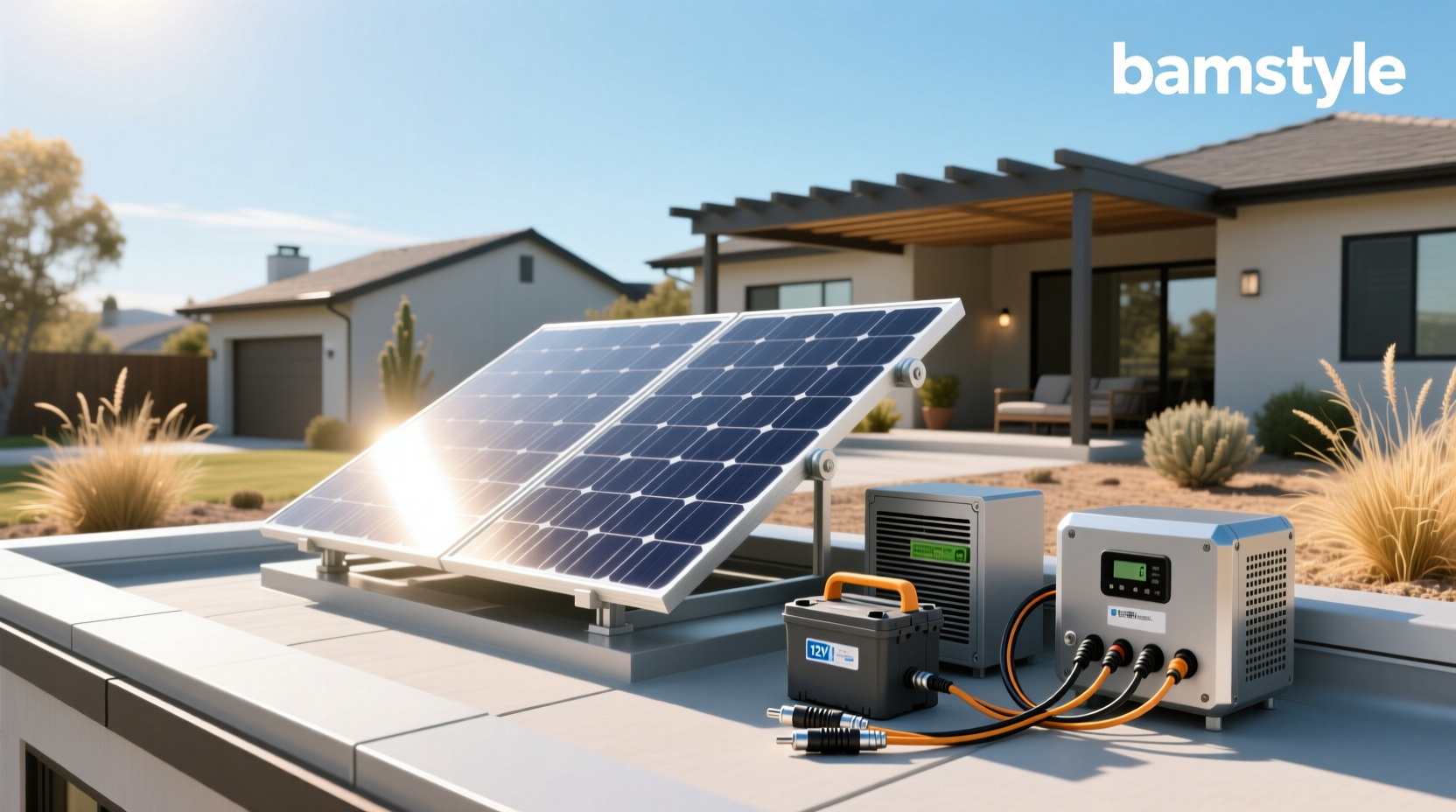
Over the past year, 12V solar panels have shifted from niche accessories to essential power infrastructure for mobile and off-grid users—and not just because prices dropped. Efficiency now routinely hits 22–24% thanks to mainstream HJT and TOPCon cells1, bifacial models deliver up to 20% more yield on light-colored RV roofs2, and rigid monocrystalline panels remain the only choice for anyone planning >5 years of reliable operation. If you’re a typical user—camping weekends, converting a van, or powering a remote cabin—you don’t need to overthink cell chemistry or spectral response curves. Start with this: choose rigid monocrystalline for permanent installs, verified ETFE-coated portable kits for backpacking, and always pair your panel with a compatible MPPT charge controller. Skip flexible panels unless you’re mounting on curved fiberglass or prioritizing stealth over longevity. This piece isn’t for keyword collectors. It’s for people who will actually use the product.
About 12V Solar Panels: Definition and Typical Use Cases
A 12V solar panel is a photovoltaic module engineered to output nominal direct current (DC) voltage compatible with standard 12V battery systems—most commonly lead-acid, AGM, or lithium iron phosphate (LiFePO₄) batteries used in RVs, vans, boats, cabins, and portable power stations. Unlike grid-tied residential panels (which operate at 30–40V+), 12V panels are designed for simplicity: they connect directly—or via a charge controller—to a 12V battery bank without requiring high-voltage wiring or specialized inverters.
Typical applications include:
- 🔋 RV and van conversions: Roof-mounted arrays charging house batteries while parked or driving (via roof mounting or magnetic bases).
- 🏕️ Backcountry camping & hiking: Lightweight, foldable panels paired with portable power stations like Jackery or EcoFlow.
- 🏠 Off-grid cabins or sheds: Permanent installations powering lights, pumps, or communication gear where grid access is unreliable or unavailable.
- 🛰️ Emergency backup: Supplementing generator use or extending runtime during extended outages.
Crucially, “12V” refers to system compatibility—not peak voltage. Most modern 12V panels actually produce 17–22V open-circuit (Voc) to ensure sufficient voltage under load and temperature variation. That’s why a charge controller is non-negotiable: it regulates input to prevent overcharging or thermal stress.
Why 12V Solar Panels Are Gaining Popularity
Lately, adoption has accelerated—not just among hobbyists, but professionals and full-time nomads alike. Three interlocking trends explain why:
- Resilience-driven demand: Power outages, rising utility costs, and climate-related grid instability have pushed consumers toward self-sufficient energy sources. The portable solar panel market alone is projected to reach $8.76 billion by 2034, growing at a 16.4% CAGR from 20263.
- Technology democratization: High-efficiency N-type cells (HJT, TOPCon) once reserved for premium rooftop systems are now embedded in sub-$300 100W panels. Lab-tested efficiencies of 22–24% mean smaller footprints deliver meaningful output—even in partial shade or cooler morning light4.
- Integration maturity: Smart monitoring (via Bluetooth or Wi-Fi), plug-and-play MC4 connectors, and MPPT controllers with built-in load management have reduced setup friction. You no longer need an electrician to get functional off-grid power.
This isn’t about going fully off-grid overnight. It’s about predictable autonomy: knowing your fridge stays cold, your comms stay live, and your lights stay on—even when the world goes quiet.
Approaches and Differences: Rigid vs. Flexible vs. Portable
Three physical formats dominate the 12V market—each solving different problems. Choosing wrong means paying more for less durability, lower yield, or incompatible hardware.
| Feature | Rigid Monocrystalline | Flexible (ETFE) | Portable (Folding) |
|---|---|---|---|
| Lab Efficiency | 17–22% | 15–18% | 18–21% |
| Lifespan | 25+ years | 5–10 years | 10–15 years |
| Mounting | Z-brackets, tilt kits, adhesive | Adhesive, Velcro, magnetic strips | Ground stakes, kickstands, carabiners |
| Heat Tolerance | Excellent (with air gap) | Poor (adheres to surface → heat soak) | Moderate (folded storage limits exposure) |
| Key Trade-off | Weight & fixed footprint | Long-term UV degradation, delamination risk | Connector fragility, wind vulnerability |
When it’s worth caring about: Lifespan and long-term yield stability—if you’re installing on an RV roof you plan to keep for 7+ years, rigid is objectively superior. Bifacial rigid panels add ~15% yield on white roofs, making them the most cost-effective per watt over time5.
When you don’t need to overthink it: For weekend campers using a 100W folding panel with a 500Wh power station, efficiency differences between 19% and 21% won’t meaningfully change daily runtime. If you’re a typical user, you don’t need to overthink this.
Key Features and Specifications to Evaluate
Don’t default to wattage alone. Real-world performance hinges on four technical specs—each with clear thresholds that separate reliable products from marginal ones.
- Temperature Coefficient: Look for ≤ –0.35%/°C. Panels with HJT cells often hit –0.25%/°C, meaning they lose less power as ambient temps climb above 25°C. A coefficient of –0.45%/°C can cut output by 12% on a 40°C summer day6. When it’s worth caring about: If you operate in desert or southern U.S. climates. When you don’t need to overthink it: For coastal or northern deployments with mild summers.
- Shade Tolerance & Bypass Diodes: Minimum: 3 bypass diodes (for 60-cell equivalent layouts). More diodes = better partial-shade resilience. A single shaded cell shouldn’t kill >33% of output. When it’s worth caring about: Installing near vents, AC units, or roof rails. When you don’t need to overthink it: Fully unobstructed flat roof—shade tolerance matters less than mounting angle.
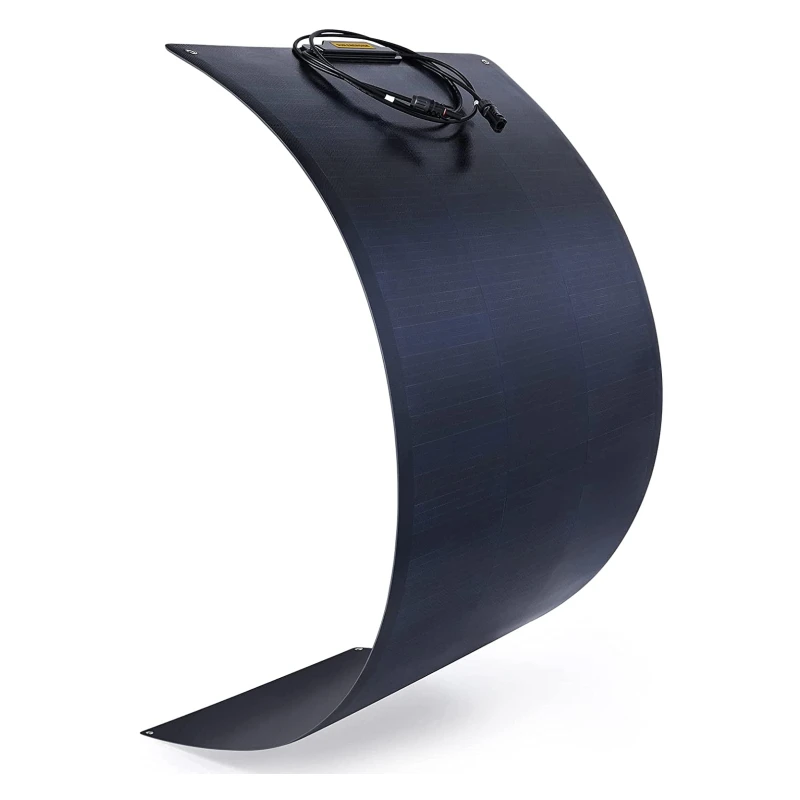
- Coating Material (Flexible/Portable): Prioritize ETFE over PET. ETFE resists yellowing, maintains >95% light transmission after 5 years, and withstands repeated folding7. PET yellows within 18 months and drops transmission by ~15%. When it’s worth caring about: Any panel you’ll use >2 seasons. When you don’t need to overthink it: Single-season festival use—PET is acceptable.
- IP Rating & Frame Integrity: Rigid panels should be IP67 or higher. Flexible panels require reinforced edge stitching and certified UV-resistant adhesives. When it’s worth caring about: Marine environments or frequent rain exposure. When you don’t need to overthink it: Dry, intermittent-use scenarios—basic weather resistance suffices.
Pros and Cons: Balanced Assessment
No format wins universally. Here’s where each excels—and where it falters.
- Rigid Monocrystalline:
✅ Pros: Highest long-term ROI, 25-year warranty standard, best heat dissipation, easiest to clean.
❌ Cons: Heavy (~15–20 lbs per 100W), requires drilling or strong adhesive, zero portability. - Flexible (ETFE):
✅ Pros: Conforms to curved surfaces, low visual profile (stealth-friendly), lightweight.
❌ Cons: Degrades faster under UV, prone to micro-cracks if walked on, no standardized warranty beyond 5 years. - Portable (Folding):
✅ Pros: Instant deployment, no installation, ideal for shared gear or rental vehicles.
❌ Cons: MC4 connector strain points, wind lift risk, limited panel-to-battery cable length (<5m optimal).
If you need reliability over 5+ years, choose rigid. If you need adaptability across multiple vehicles or temporary setups, choose portable—with verified ETFE coating and Anderson-compatible outputs.
How to Choose a 12V Solar Panel: A Step-by-Step Decision Framework
Follow this sequence—not chronologically, but hierarchically—to eliminate options fast:
- Define your primary use case: Permanent install? Frequent relocation? Occasional use? This decides format first.
- Calculate minimum wattage: Total daily watt-hours ÷ 4 (avg sun hours) × 1.3 (system loss factor). E.g., 600Wh/day ÷ 4 × 1.3 = ~200W needed.
- Verify compatibility: Does your battery accept 12V DC input? Does your charge controller support the panel’s Voc and Isc? Never exceed controller max input voltage.
- Filter by certification: CE + TÜV marks are baseline. UL 1703 is preferred for North America—but many quality panels omit it due to cost, not safety.
- Reject red flags: No published temperature coefficient, PET coating on flexible panels, proprietary connectors (e.g., “brand X only”), or warranties under 10 years (product) / 25 years (output) for rigid units.
If you’re a typical user, you don’t need to overthink this. Start with a 100–200W rigid monocrystalline panel (like those benchmarked in the 100W–200W capacity filter8), pair it with a Victron or Renogy MPPT controller, and mount it with a 1-inch air gap. That covers 85% of real-world needs.
Insights & Cost Analysis
Price alone misleads. Consider lifetime cost per watt:
- Rigid 100W panel: $180–$260 upfront. At $0.22/W over 25 years (factoring degradation), effective cost ≈ $0.11/W/year.
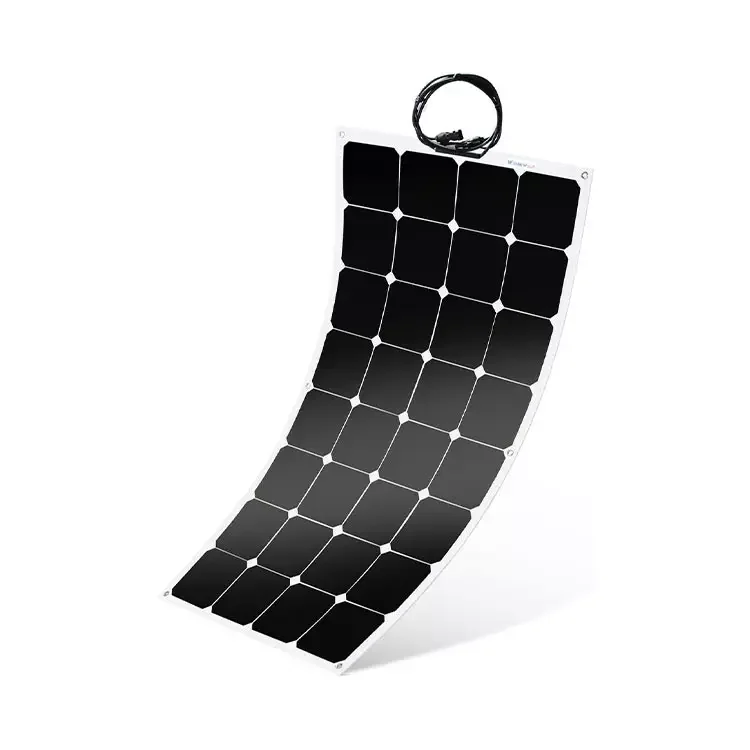
- Flexible 100W panel: $220–$320. With 7-year effective life, cost ≈ $0.38/W/year—even before replacement labor.
- Portable 100W kit: $240–$380. Includes controller and cables. Ideal for testing or short-term use—but not a long-term upgrade path.
For permanent installs, rigid pays back in energy yield consistency, not just dollar savings. A 200W rigid panel delivering 1.8kWh/day (vs. 1.4kWh for a degraded flexible unit) extends refrigerator runtime by ~3.5 hours weekly—value no spec sheet captures.
Better Solutions & Competitor Analysis
The smartest 2026 move isn’t choosing *between* formats—it’s designing around system integration. Top performers share three traits: MPPT optimization, real-time Bluetooth monitoring, and modular expansion capability.
| Solution Type | Best For | Potential Issue | Budget Range (100W) |
|---|---|---|---|
| Bifacial rigid + white roof | RVs with light-colored roofs | Requires reflective surface; minimal gain on dark roofs | $230–$290 |
| HJT monocrystalline rigid | Hot climates, space-constrained mounts | Limited vendor selection; slightly higher upfront cost | $260–$330 |
| ETFE folding kit (MC4 + Anderson) | Campers needing cross-system compatibility | Wind stability depends on stake quality | $270–$360 |
Customer Feedback Synthesis
Aggregated from 2025–2026 reviews across major retailers and forums (r/solarpower, Outdoors Gear Lab, EnergySage):
- Top 3 praises: “Output matches spec sheet even at 35°C,” “Z-bracket mounting held through 60mph crosswinds,” “Bluetooth app shows real-time shading impact.”
- Top 3 complaints: “Proprietary connector forced me to buy adapter cables,” “Flexible panel delaminated after 14 months of sun exposure,” “No VOC rating listed—had to contact support.”
The strongest signal? Users reward transparency (published specs, third-party test data) and punish obscurity (vague warranties, missing coefficients).
Maintenance, Safety & Legal Considerations
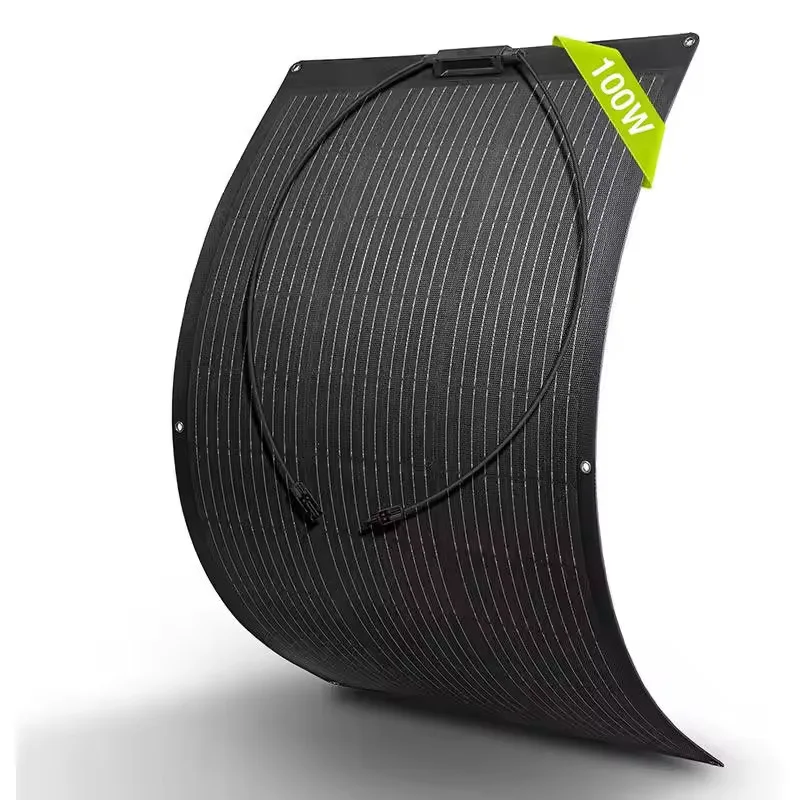
Maintenance: Rinse rigid panels quarterly with water; avoid abrasive cloths. Inspect flexible panels annually for edge lifting or micro-tears. Clean portable panels after dusty use—grit accelerates ETFE wear.
Safety: Always disconnect before cleaning. Verify grounding for rigid mounts (especially metal roofs). Never cover active panels—backfeed voltage can damage controllers.
Legal: No federal permitting required for 12V off-grid systems under 100W in the U.S. Some HOAs or RV parks restrict visible panels—“all-black” frames or BIPV-style mounting reduce visibility without sacrificing yield9. Check local fire codes if mounting near roof edges.
Conclusion: Conditional Recommendations
If you need long-term, hands-off power for an RV or cabin, choose rigid monocrystalline—ideally HJT or TOPCon, with ≥22% efficiency, –0.32%/°C temp coefficient, and 25-year linear warranty. Mount it with a 1-inch air gap and pair it with an MPPT controller.
If you need flexibility across vehicles or temporary setups, choose a portable folding kit with ETFE coating, MC4 + Anderson outputs, and integrated kickstand. Avoid PET, proprietary plugs, or unverified “200W” claims.
If you need stealth on curved surfaces and accept shorter lifespan, choose ETFE flexible—but verify edge stitching, adhesive certifications, and UV resistance test reports. Never use PET.
There’s no universal “best.” There’s only the right tool for your timeline, terrain, and tolerance for maintenance.


