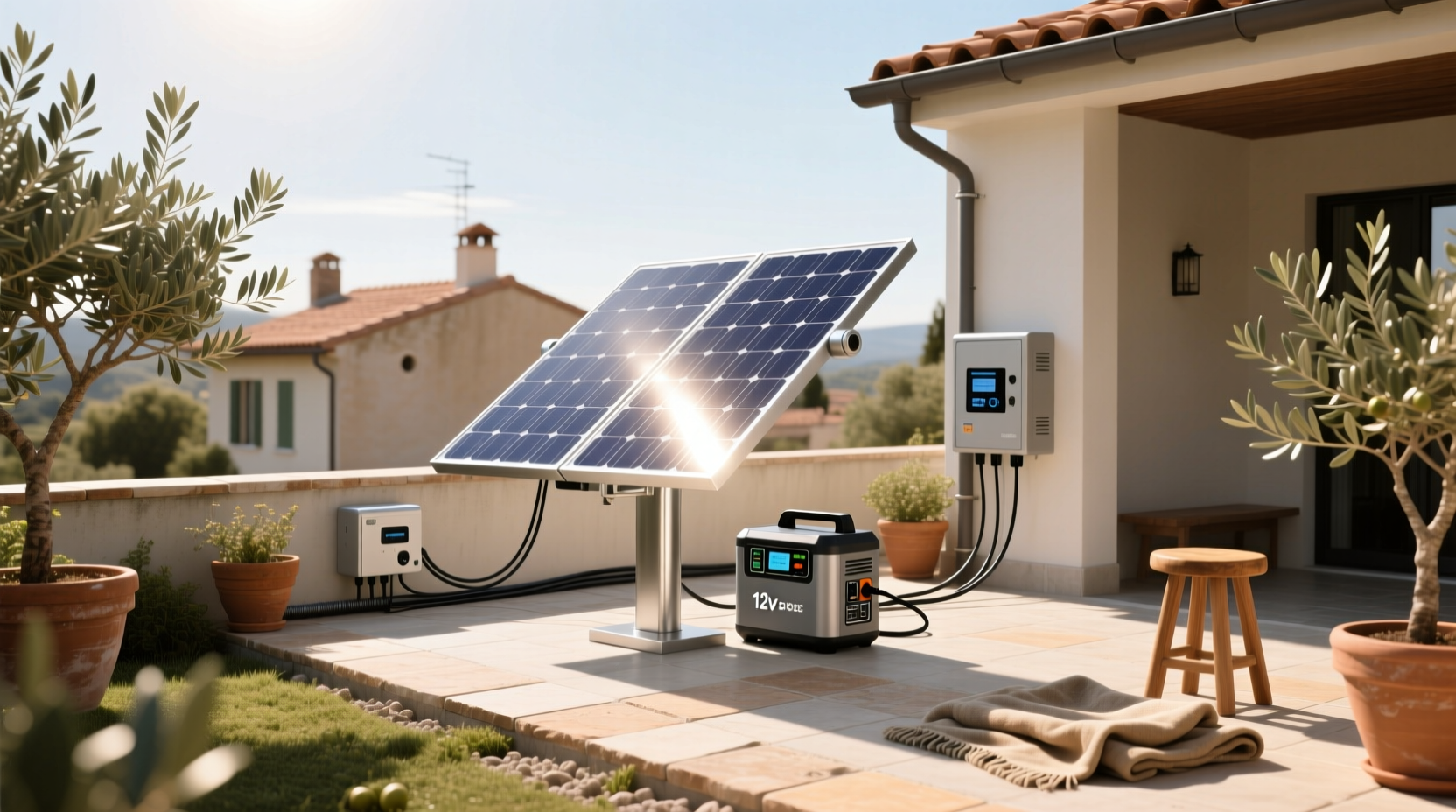
If you’re outfitting an RV, van, or boat with solar power in 2026, skip the outdated P-type panels and standalone components. N-type monocrystalline 12V solar panels (25–26% efficient) paired with Bluetooth-enabled MPPT controllers and LiFePO4-ready systems are now the baseline for reliable off-grid energy. Over the past year, pricing dropped ~7%, module costs fell to $0.34/Wdc, and integrated kits—designed for boondocking, overlanding, and marine use—now dominate buyer preference 1. If you’re a typical user, you don’t need to overthink cell chemistry or bifacial gain—but you must verify Bluetooth monitoring, IP67+ durability, and MPPT compatibility. This piece isn’t for keyword collectors. It’s for people who will actually use the product.
About 12V Solar Panels: Definition & Typical Use Cases
A 12V solar panel is a photovoltaic module engineered to output nominal direct current at ~12 volts—optimized to charge 12V battery banks (AGM, gel, or increasingly, LiFePO4) without complex voltage conversion. Unlike grid-tied residential systems, these panels serve low-voltage DC loads directly: lights, fans, fridges, water pumps, and USB-powered devices. They’re not standalone generators—they’re part of a tightly coupled system: panel → charge controller → battery → load.
Typical users include:
- RV and van lifers installing rigid panels on roofs or portable kits for temporary sun-chasing;
- Mariners mounting flexible, salt-resistant panels on curved decks or bimini tops;
- Cabin and shed owners seeking simple, low-maintenance backup power for weekend use;
- Overlanders who prioritize weight, portability, and rapid deployment over permanent mounting.
What defines “12V” here isn’t peak voltage (which often exceeds 20V for charging), but system architecture: it feeds into 12V battery banks using standardized connectors (MC4, Anderson SB50) and compatible charge controllers. Confusingly, many “12V” panels actually output 18–22V Voc—this is intentional and necessary for efficient charging under real-world conditions.
Why 12V Solar Panels Are Gaining Popularity
Lately, adoption has accelerated—not because solar tech suddenly improved, but because user behavior shifted. The rise of van life, remote work from nature, and marine-based digital nomadism created demand for self-contained, silent, zero-emission power that doesn’t rely on shore power or noisy generators 2. This isn’t about sustainability as ideology—it’s about operational resilience: no fuel refills, no noise complaints at campgrounds, no waiting for marina hookups.
Two concrete changes explain why 2026 is different:
- N-type monocrystalline cells replaced P-type as the performance standard—delivering measurable gains in low-light yield and thermal stability, especially critical during early mornings or coastal fog 3;
- Integrated kits (panel + controller + cables + app) now cost less than buying components separately—and include features like Bluetooth monitoring and LiFePO4-specific charge profiles out of the box.
When it’s worth caring about: If your trips last >3 days off-grid, or you run a 12V fridge overnight, N-type efficiency and smart monitoring directly impact whether you wake up to a dead battery—or full charge.
When you don’t need to overthink it: For occasional tailgate lighting or phone charging, a basic 100W portable kit still works fine. If you’re a typical user, you don’t need to overthink this.
Approaches and Differences: Portable, Rigid, and Flexible
There are three physically distinct approaches—not just form factors, but design philosophies aligned to specific constraints.
| Category | Best For | Key Advantages | Potential Drawbacks |
|---|---|---|---|
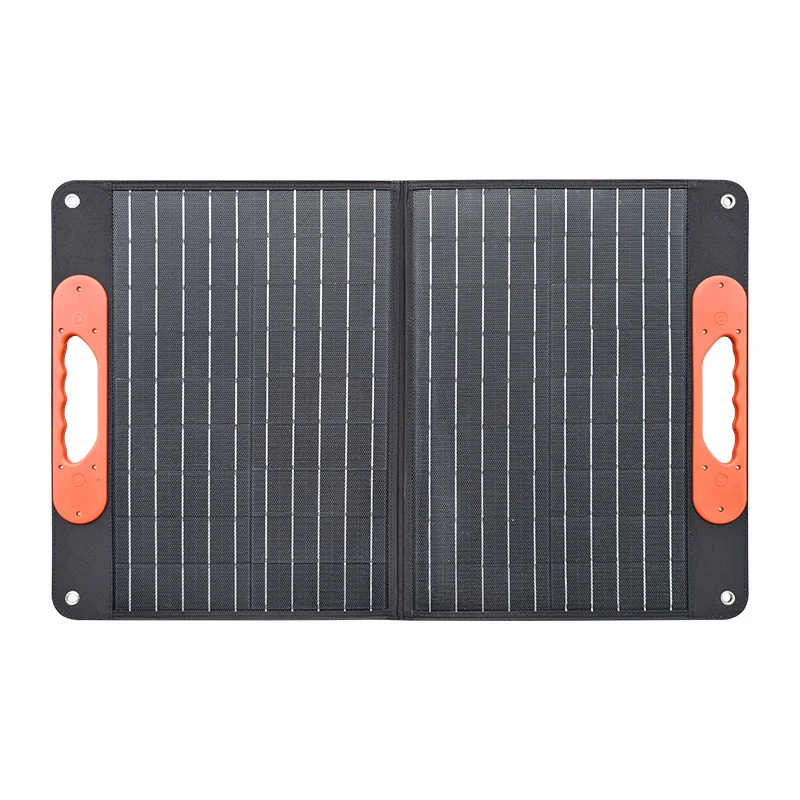
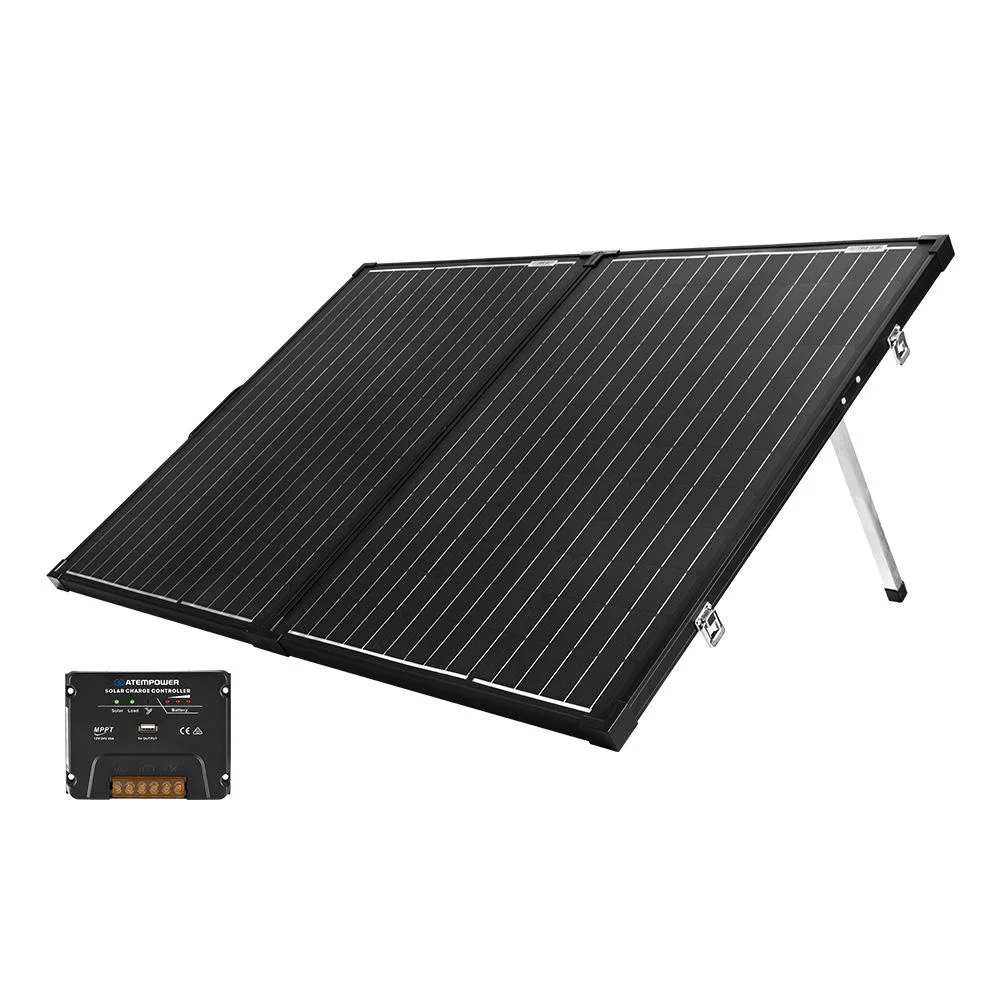
| Portable & Foldable | Weekend campers, renters, overlanders who move daily | Lightweight (<5 kg), packable, no drilling, instant deployment | Lower wind resistance rating; cable management can be fiddly; efficiency drops if not angled optimally |
| Rigid Monocrystalline | Permanent RV/van roof installs, cabins, sheds | Highest efficiency (25–26%), longest lifespan (>25 years), best value per watt | Requires mounting hardware and roof penetration; heavier (~15–20 kg per 200W); visible profile |
| Flexible & Marine-Grade | Curved surfaces (Airstreams, boats), saltwater environments | No drilling needed; conforms to curves; ETFE coating resists UV/salt corrosion; IP68-rated | Lower efficiency (18–22%); degrades faster under constant flexing; higher cost per watt |
Key Features and Specifications to Evaluate
Don’t optimize for specs alone. Optimize for what survives real use. Here’s what matters—and when it does (or doesn’t):
- Cell Type (N-type vs. P-type): N-type delivers measurably better performance in partial shade and high heat. When it’s worth caring about: If you camp in pine forests or coastal fog. When you don’t need to overthink it: For full-sun backyard setups. If you’re a typical user, you don’t need to overthink this.
- Efficiency (22–26%): Higher % means more power per square foot—critical on small RV roofs. But efficiency gains plateau above 25%. When it’s worth caring about: Space-constrained builds (e.g., Sprinter vans). When you don’t need to overthink it: Ground-mounted or shed installations with ample area.
- Monitoring (Bluetooth/App): Real-time voltage, current, kWh, and battery state prevent surprises. When it’s worth caring about: Any system powering refrigeration or medical devices. When you don’t need to overthink it: Simple lighting-only setups.
- Durability (IP67/IP68, ETFE): IP67 = dust-tight + immersion to 1m for 30 min. ETFE film on flexible panels resists salt and abrasion far better than PET. When it’s worth caring about: Marine use or frequent transport. When you don’t need to overthink it: Stationary cabin use in dry climates.
- Mounting System: Z-brackets (rigid) allow airflow and reduce thermal loss. Adhesive + grommets (flexible) avoid drilling—but require surface prep. When it’s worth caring about: Long-term roof integrity. When you don’t need to overthink it: Temporary ground deployment.
Pros and Cons: Balanced Assessment
Pros:
- ✅ No fuel, no noise, no emissions during operation
- ✅ Lower lifetime cost than generator + fuel + maintenance
- ✅ Modular—you can start small (100W) and scale
- ✅ Modern kits integrate seamlessly with LiFePO4 batteries (including sub-zero charging)
Cons:
- ❌ Output varies significantly with weather, season, and shading—requires realistic load planning
- ❌ Initial setup demands basic electrical literacy (wire gauge, fuse sizing, grounding)
- ❌ Flexible panels lose ~10–15% output after 3–5 years of constant flexing
- ❌ Poorly matched components (e.g., PWM controller + N-type panel) waste up to 30% potential yield
Best suited for: Users who track daily energy consumption, accept seasonal variability, and value autonomy over convenience.
Less suited for: Those expecting “set-and-forget” reliability in heavy tree cover or northern winters without supplemental charging.
How to Choose a 12V Solar Panel System: A Step-by-Step Guide
Follow this sequence—not in order of preference, but in order of consequence:
- Audit your actual 24-hour load: List every device (fridge, lights, pump), its wattage, and hours used. Convert to amp-hours (Ah) at 12V. Example: 50W fridge × 12 hrs = 600Wh ÷ 12V = 50Ah/day. Add 20% buffer. Avoid this pitfall: Using “nameplate” fridge wattage instead of real-world compressor cycling data.
- Choose battery chemistry first: LiFePO4 dominates 2026 for weight, cycle life, and usable capacity—but requires a compatible charge controller. AGM still works, but offers only ~50% usable Ah. Avoid this pitfall: Buying panels before confirming controller/battery compatibility.
- Select panel type by installation reality: Permanent roof? Rigid N-type. Curved deck? Marine-grade flexible. Weekend-only? Portable foldable. Avoid this pitfall: Prioritizing “stealth” aesthetics over ventilation—overheated panels lose ~0.4%/°C above 25°C.
- Insist on MPPT—not PWM: MPPT harvests up to 30% more energy, especially in cool/cloudy conditions. All 2026 mid-tier+ kits include it. Avoid this pitfall: Assuming “12V ready” means automatic MPPT—verify spec sheets.
- Confirm expansion path: Does the controller support >400W? Are MC4 inputs labeled for future daisy-chaining? Scalability prevents full system replacement later.
Insights & Cost Analysis
Module pricing hit $0.34/Wdc in Q2 2026—a 7% YoY drop 4. But total system cost depends more on integration than panel price:
- Basic portable kit (100W): $220–$320 — includes panel, controller, cables, carry bag
- Rigid N-type panel (200W): $260–$380 — panel only; add $120–$200 for MPPT controller + mounting
- Marine flexible (160W): $420–$590 — premium for ETFE, salt resistance, and adhesive bonding
Value tip: A 200W rigid + MPPT controller ($400 total) often delivers more reliable daily kWh than a $550 flexible kit—unless curvature or weight makes rigid impossible.
Better Solutions & Competitor Analysis
The real upgrade isn’t brand—it’s architecture. Top-performing 2026 systems share three traits: (1) N-type cells with rear-side passivation, (2) Bluetooth-enabled controllers with LiFePO4 presets, and (3) modular cabling (e.g., pre-terminated MC4 with strain relief).
| Solution Type | Where It Excels | Real-World Limitation | Budget Range (USD) |
|---|---|---|---|
| Pre-integrated Smart Kit | Zero configuration; app-guided setup; firmware updates | Less flexibility to mix brands; proprietary apps may sunset | $350–$750 |
| DIY N-Type + MPPT Controller | Maximizes component choice; serviceable; repairable | Requires wiring knowledge; no bundled support | $300–$600 |
| Marine-Specific Bundle | Corrosion-tested hardware; ABYC-compliant documentation | Over-engineered (and overpriced) for land use | $500–$900 |
Customer Feedback Synthesis
Based on aggregated reviews across Amazon, Renogy, Rich Solar, and Reddit communities (r/VanLife, r/Overlanding):
- Top 3 praised features: Bluetooth app responsiveness, clear battery state-of-charge visualization, and “plug-and-play” cable labeling.
- Top 3 recurring complaints: Inconsistent MC4 connector quality (some brands require crimping rework), vague “low-light performance” claims not backed by test data, and adhesive failure on flexible panels after 18 months of UV exposure.
Maintenance, Safety & Legal Considerations
Maintenance: Wipe panels quarterly with water and soft cloth; inspect MC4 connectors for corrosion (especially marine); check torque on Z-bracket bolts annually.
Safety: Always disconnect battery before working on wiring. Use appropriately rated fuses (per NEC Article 690.8) within 12″ of battery terminals. Never bypass charge controller safety settings—even for “temporary” loads.
Legal: No federal permitting required for 12V DC systems under 120W in the U.S. However, some RV parks and marinas require UL 1703 certification for fire resistance—verify panel listing before purchase 5.
Conclusion: Conditional Recommendations
If you need reliable, space-efficient power for permanent RV or van use, choose rigid N-type monocrystalline panels (200–400W) with Z-bracket mounting and a Bluetooth MPPT controller. Prioritize brands publishing independent lab test reports—not just datasheet claims.
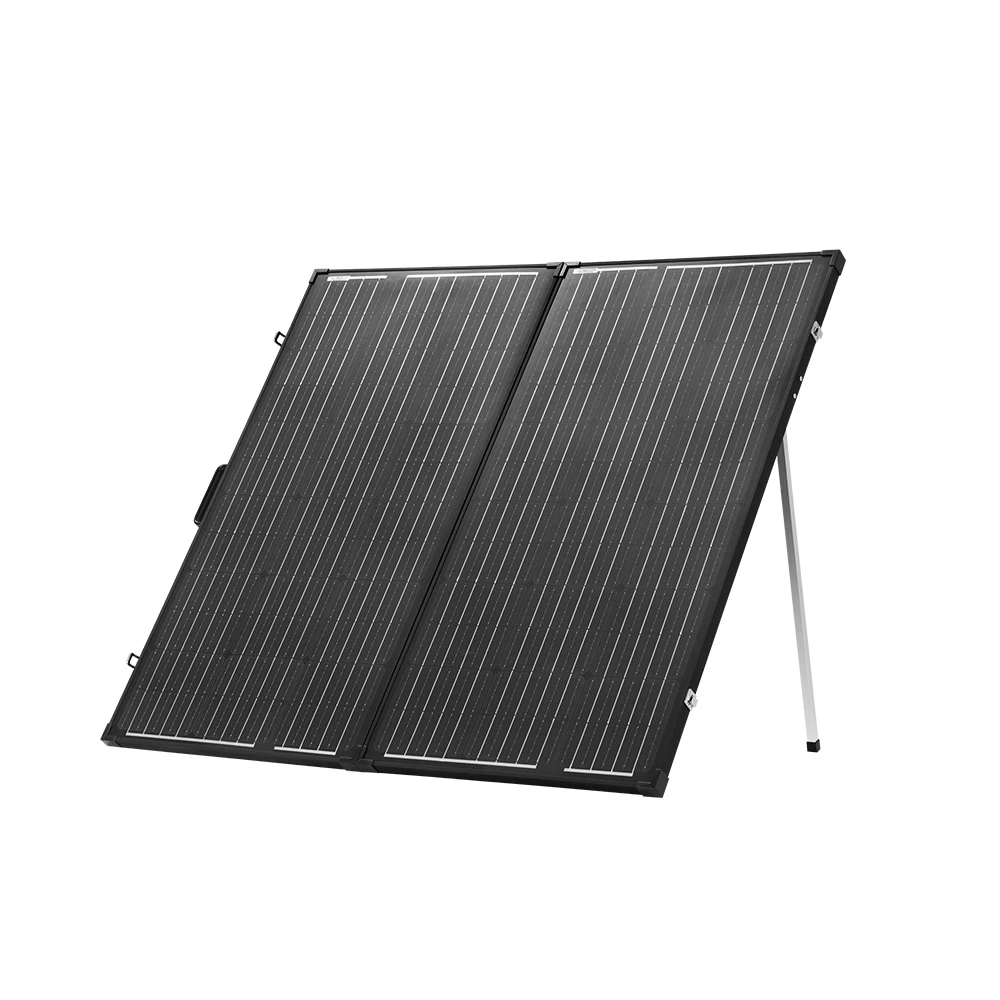
If you need portability and rapid setup for rotating campsites, invest in a well-built foldable kit (120–180W) with reinforced hinges and a rugged carrying case—but accept ~15% lower real-world yield than rigid equivalents.
If you need corrosion resistance and curve conformity for marine use, select ETFE-coated flexible panels rated IP68 and certified for salt fog (IEC 61701). Don’t compromise on adhesive quality—look for 3M VHB tape backing with UV inhibitors.
This isn’t about finding the “best” panel. It’s about matching physics, budget, and behavior. Your environment—not marketing copy—dictates the right choice.


