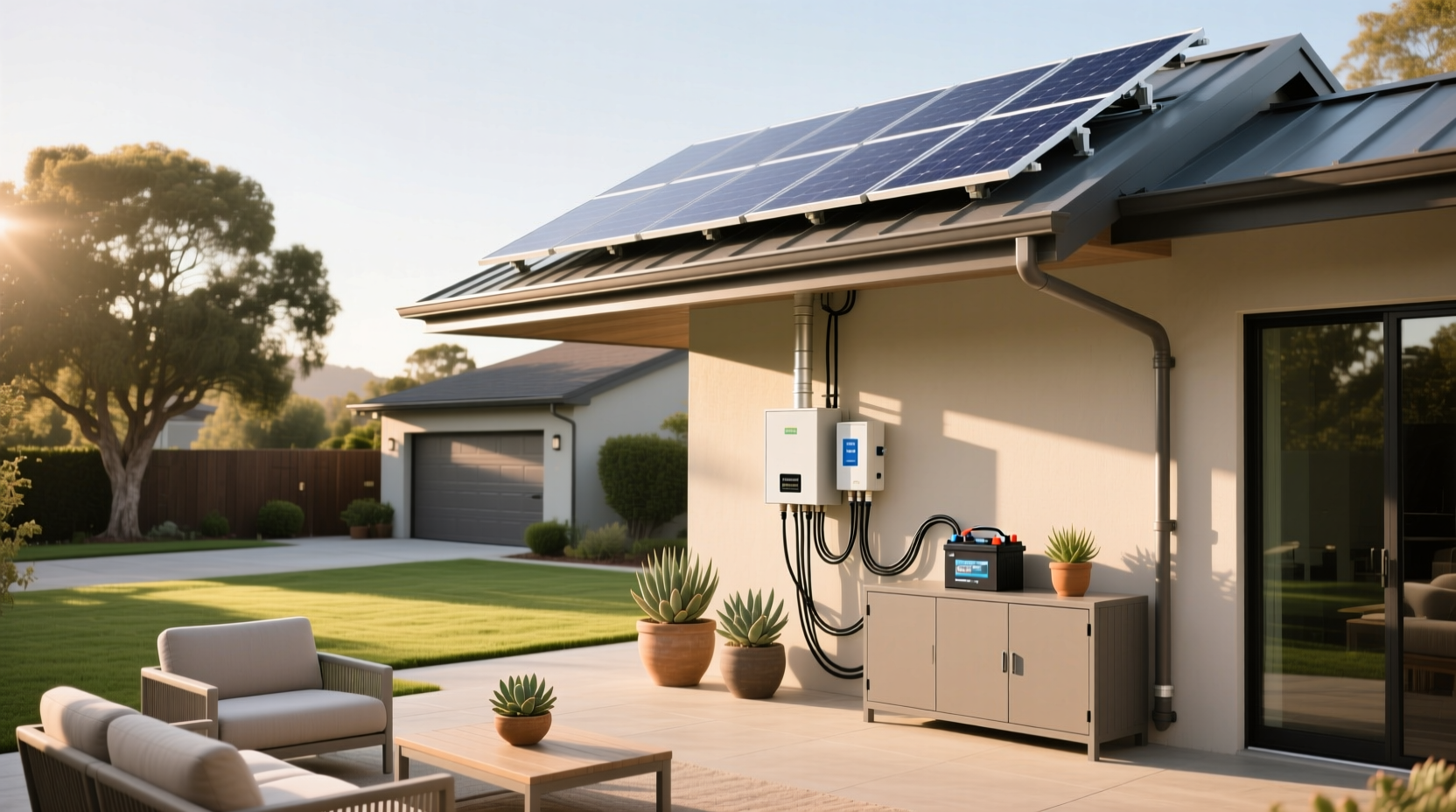
Over the past year, the 12 volt solar panel kit market has shifted decisively toward N-Type (TOPCon) cells — now delivering 22–25% efficiency, up from 18–20% just two years ago 1. If you’re outfitting an RV, van, or cabin with off-grid power, here’s your direct answer: choose a complete kit with an MPPT charge controller, TOPCon monocrystalline panels, and LiFePO4 battery compatibility — avoid PWM-only or P-Type-only kits unless budget is under $200 and daily load is under 20W. Flexible kits suit curved marine surfaces; foldable kits win for backpacking; rigid high-efficiency sets are best for permanent cabins. This piece isn’t for keyword collectors. It’s for people who will actually use the product.
About 12 Volt Solar Panel Kits
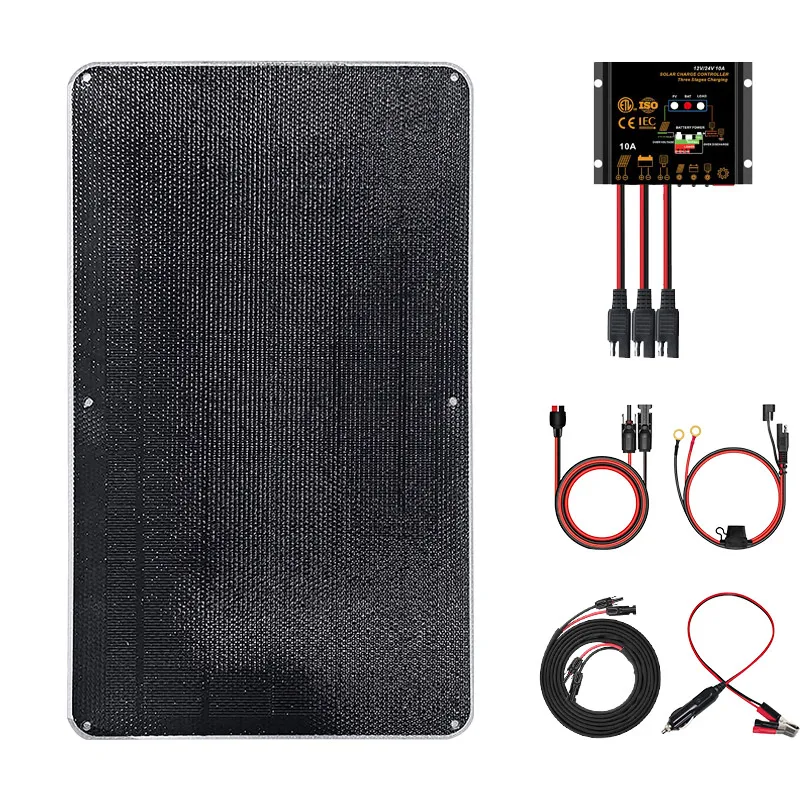
A 12 volt solar panel kit is a pre-integrated system designed to generate, regulate, and store DC electricity at nominal 12V — matching the voltage standard of automotive, marine, and many portable power systems. Unlike grid-tied residential arrays, these kits prioritize portability, plug-and-play wiring, and compatibility with 12V batteries (AGM, gel, or modern LiFePO4). Typical components include one or more solar panels, a charge controller (PWM or MPPT), mounting hardware, MC4 cables, and sometimes a battery or inverter.
They serve three primary use cases:
- RVs & vans: Powering lights, fans, fridges, and USB devices while on the road — often installed on roofs or portable stands.
- Camping & hiking: Lightweight, foldable panels that feed portable power stations or directly charge 12V accessories.
- Off-grid cabins & sheds: Fixed-mount setups powering pumps, security systems, or small appliances without grid access.
Why 12V Solar Panel Kits Are Gaining Popularity
Lately, demand for 12V solar kits has surged not just among outdoor enthusiasts but also homeowners seeking energy resilience. The global portable solar panel market is projected to grow from $1.8 billion in 2026 to $4.3 billion by 2033 2. That growth reflects two converging realities: first, rising fuel and grid instability costs make self-generation financially rational; second, modern electronics — from CPAP machines to laptop power banks — increasingly run natively on 12V or accept 12V input via DC-DC converters.
Crucially, it’s no longer about “just having solar.” It’s about predictable, low-maintenance output. That’s why anti-shading tech like ShadowFlux and bifacial designs — which gain 5–20% extra yield from ground reflection — are now mainstream features, not premium add-ons 3. Buyers aren’t asking “Does it work?” They’re asking “How reliably does it work when partially shaded, hot, or dusty?”
Approaches and Differences
There are three dominant physical configurations — each solving distinct problems. Choosing wrong means carrying unnecessary weight, sacrificing lifespan, or misallocating budget.
| Category | Best For | Key Strengths | Potential Issues |
|---|---|---|---|
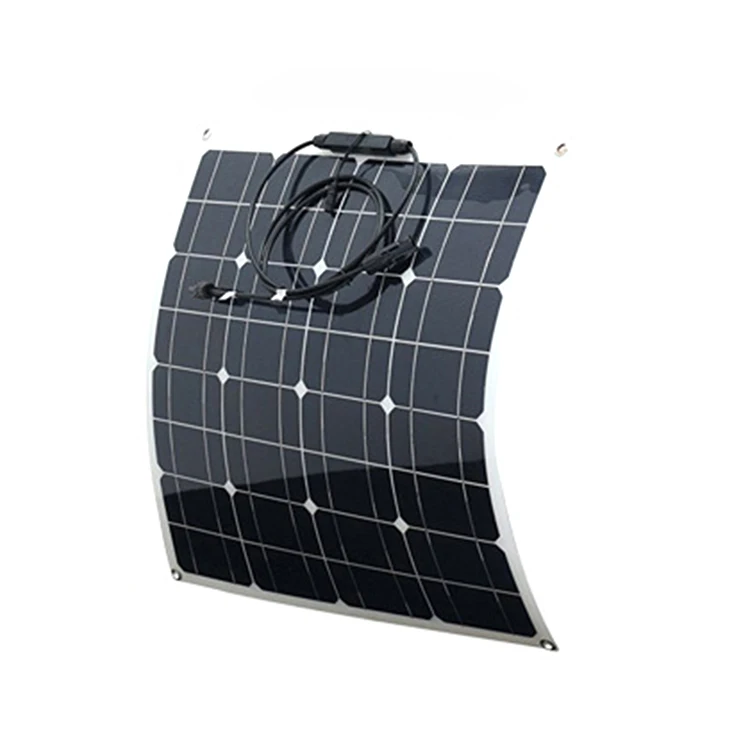
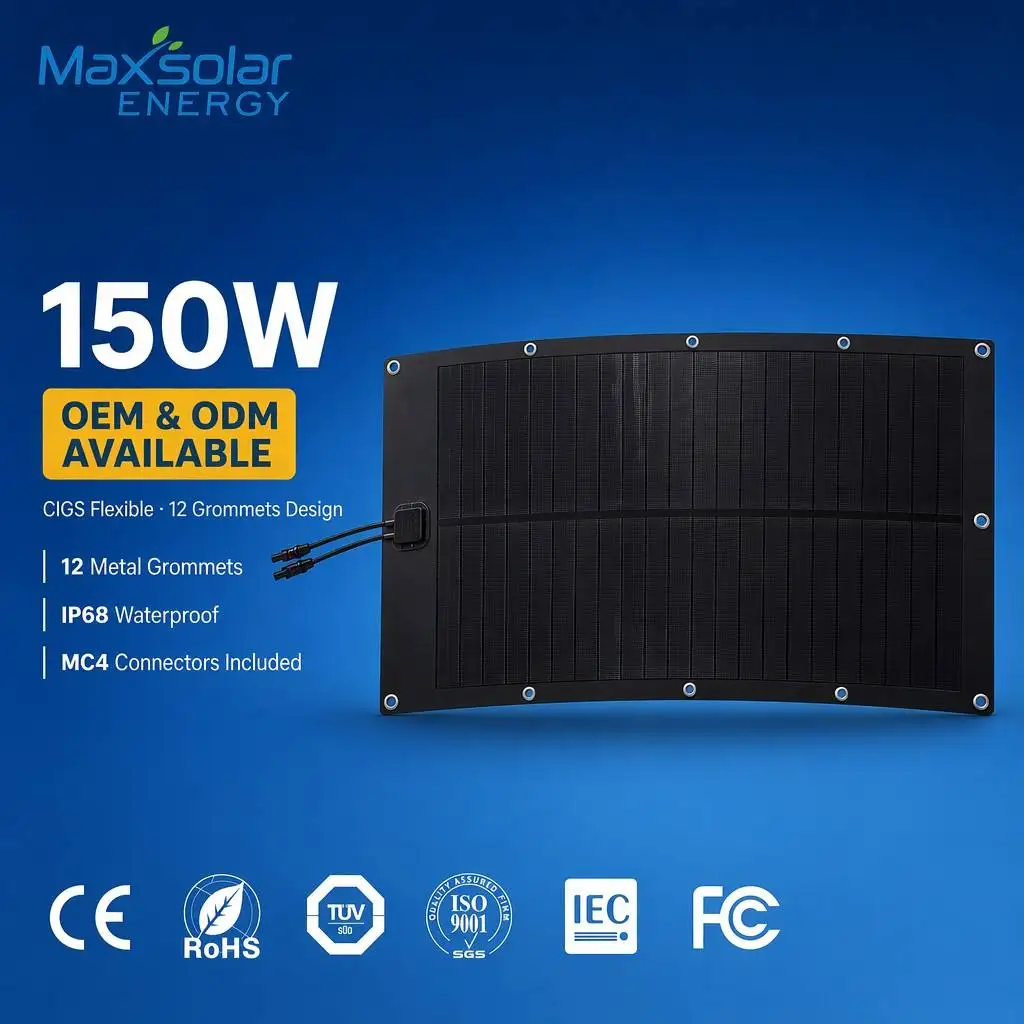
| Flexible ETFE Panels | RVs with curved roofs, boats, stealth van builds | Lightweight (~2–3 kg per 100W), conforms to curves, IP67-rated, easy to hide | Lower long-term UV resistance than glass; efficiency drops faster after 3–4 years; higher cost per watt ($0.35–$1.00/W) |
| Foldable Portable Kits | Backpacking, car camping, emergency kits | Ultra-portable (<5 kg), built-in kickstands & handles, USB/DC outputs, fast setup | No built-in battery; vulnerable to wind lift; limited panel durability under repeated folding |
| Rigid Monocrystalline (TOPCon) | Cabins, permanent RV installs, marine decks | Highest efficiency (22–25%), 25-year linear warranty, best heat tolerance, lowest degradation | Heavier (~12–15 kg per 200W); requires secure mounting; less discreet on non-flat surfaces |
When it’s worth caring about: If your installation surface is curved or visibility-sensitive (e.g., urban stealth van life), flexible is non-negotiable. If you hike with gear under 15 kg total, foldable is mandatory.
When you don’t need to overthink it: For flat-roofed RVs or cabin rooftops, rigid TOPCon panels deliver superior ROI and reliability. If you’re a typical user, you don’t need to overthink this.
Key Features and Specifications to Evaluate
Don’t default to wattage alone. A 200W kit with poor MPPT logic may deliver less usable energy than a 150W kit with smart tracking. Focus on four interdependent specs:
- Cell technology: Confirm N-Type (TOPCon or HJT) — not just “monocrystalline.” P-Type panels still dominate budget listings but lose >15% output in 40°C ambient vs. TOPCon 4.
- Charge controller type: MPPT is essential for any kit above 100W. It recovers up to 30% more energy than PWM in variable conditions — especially mornings, clouds, or high temps.
- Battery profile support: Verify the controller includes dedicated LiFePO4 charging algorithms. AGM-only profiles can overcharge lithium batteries, shortening cycle life.
- Shading resilience: Look for cell-level bypass diodes or proprietary tech like ShadowFlux. Partial shade on one cell shouldn’t kill 60% of panel output.
Pros and Cons
Every 12V solar kit involves trade-offs. The right choice depends on how you define “value”: weight savings? 10-year yield? ease of repair?
- ✅ Pros of modern 12V kits: Plug-and-play compatibility with 12V ecosystems (fridges, inverters, lighting), no AC conversion loss, lower installation complexity than 24V/48V, and strong vendor support for DIY troubleshooting.
- ❌ Cons to acknowledge: Limited scalability beyond ~1,200W without voltage upgrades; lower peak efficiency than utility-scale panels; some foldable kits lack UL/IEC certification for continuous outdoor exposure.
Who benefits most: RV owners needing reliable fridge operation; campers unwilling to carry generators; remote cabin owners with modest loads (lights, pump, comms).
Who should reconsider: Users planning >3kW off-grid loads (e.g., full-home HVAC or well pumps) — those require 24V/48V systems and professional design.
How to Choose a 12V Solar Panel Kit
Follow this 5-step checklist — and avoid the two most common dead ends:
- Define your daily load (in Wh): Add up wattage × hours for all devices. A 12V fridge (60W × 8h = 480Wh) + LED lights (10W × 4h = 40Wh) = 520Wh/day → minimum 150W–200W panel array (accounting for inefficiencies).
- Match panel voltage to battery bank: All panels must be rated for 12V nominal *system* voltage — not just “12V output.” Check Voc (open-circuit voltage) stays below controller max input (e.g., ≤30V for most 12V MPPTs).
- Verify controller specs: Does it list “LiFePO4 profile” explicitly? Does it show efficiency curves at 25°C AND 45°C? If not, assume it’s optimized only for AGM.
- Check physical integration: Are mounting brackets included? Are MC4 connectors pre-attached? Are fuse holders and bus bars provided? Missing parts add $40–$90 and 2+ hours of sourcing.
- Avoid these two traps:
• Trap #1: Buying a “12V kit” with a 24V panel wired in series — it won’t charge a 12V battery without a buck converter (not included).
• Trap #2: Assuming “portable” means “weatherproof” — many foldables lack IP65 rating and degrade rapidly in rain or UV.
Insights & Cost Analysis
Price per watt remains the clearest signal of component quality — but only when comparing same-cell-type kits:
- Flexible kits: $0.35–$1.00/W — justified only for curve-mounting or weight-critical use. Not cost-effective for flat surfaces.
- Foldable kits: $50–$200 per set (50W–100W). You pay for portability, not panel efficiency.
- Rigid TOPCon kits: $0.19–$0.30/W — best long-term value. A 300W TOPCon kit ($570–$900) typically outperforms a $400 P-Type kit within 18 months of real-world use.
- Complete off-grid sets (panel + MPPT + LiFePO4 + inverter): $2,800–$3,100. These eliminate compatibility guesswork but reduce flexibility in future upgrades.
Better Solutions & Competitor Analysis
The biggest leap in 2026 isn’t bigger panels — it’s smarter integration. Leading kits now include Bluetooth-enabled MPPT controllers with apps that log daily yield, detect shading patterns, and alert before battery over-discharge. Bifacial variants — capturing light reflected from gravel or white roofs — add measurable gains where ground albedo is high.
| Solution Type | Real-World Advantage | When It Matters Most | Budget Implication |
|---|---|---|---|
| Bifacial 12V kits | +5–20% yield in reflective environments (gravel, snow, white roofs) | RVs parked on light-colored surfaces; ground-mounted cabin arrays | +8–12% vs. standard mono |
| ShadowFlux anti-shading | Maintains >85% output under partial shade (e.g., tree branch, vent pipe) | Urban RV parking, forested campsites, tight rooftop layouts | +5–7% vs. standard bypass diode design |
| Self-heating LiFePO4 batteries | Operates safely down to –20°C without external heaters | Winter van life, northern cabins, cold-climate boondocking | +15–20% vs. standard LiFePO4 |
Customer Feedback Synthesis
Based on aggregated reviews across RV forums, Reddit (r/solarpower), and retailer platforms (Renogy, Goal Zero, Eco-Worthy), top recurring themes include:
- ✅ Highest praise: “MPPT controller held voltage steady during cloudy mountain mornings”; “Foldable kit charged my Jackery in 3.2 hours — faster than the brand’s own solar”; “No corrosion on MC4 connectors after 18 months of saltwater exposure.”
- ⚠️ Most frequent complaint: “Controller manual used technical jargon instead of plain-English settings”; “Panel frame bent under wind load — needed aftermarket bracing”; “USB-C port failed after 6 months of daily use.”
Maintenance, Safety & Legal Considerations
12V solar kits pose minimal electrical hazard — but safety hinges on correct fusing and grounding:
- Install an appropriately sized fuse (typically 1.25× max panel current) within 18 inches of the battery positive terminal.
- Ground the panel frame and controller chassis — critical for lightning-prone areas and marine use.
- No federal permitting is required for standalone 12V kits under 120W in the U.S., but RV parks or HOAs may restrict visible installations. Always check local rules before drilling into roofs.
Conclusion
If you need reliable, low-maintenance power for an RV or cabin and plan to use it for 3+ years, choose a rigid TOPCon kit with MPPT and LiFePO4 support — it delivers the strongest combination of efficiency, durability, and service life. If you prioritize packability over daily output, invest in a certified foldable kit with IP65 rating and dual USB-C/DC outputs. If your roof is curved or visibility is critical, flexible ETFE is the only viable path — but expect to replace panels every 4–5 years. There’s no universal “best” kit. There’s only the right kit for your constraints — and now you know exactly which constraints actually move the needle.


