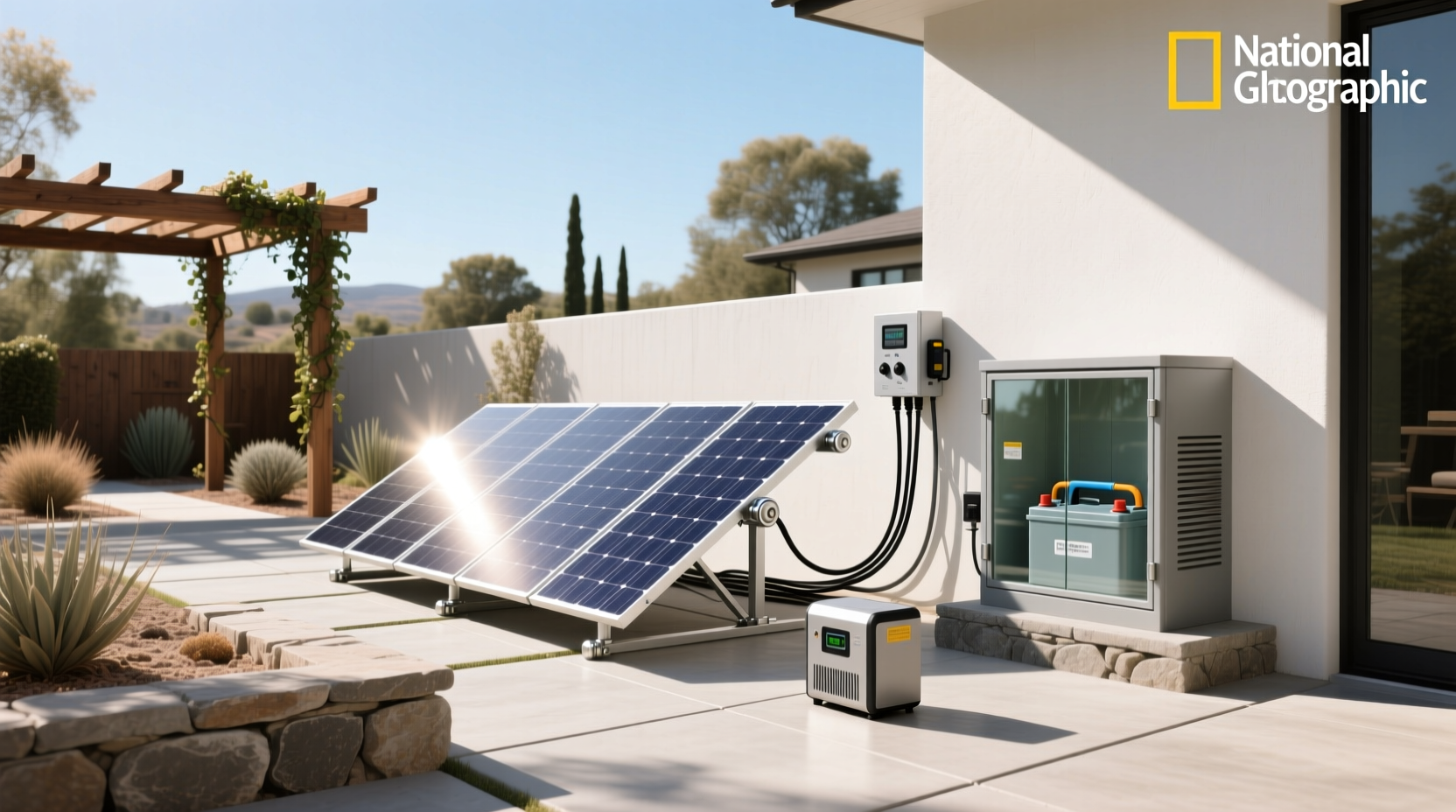
If you’re building or upgrading a 12V solar power system for an RV, van, boat, or remote cabin in 2026 — skip the outdated PERC panels and lead-acid assumptions. Go straight to N-type TOPCon or CIGS panels, MPPT controllers with Bluetooth monitoring, and LiFePO₄ batteries rated for 3,000+ cycles. Over the past year, efficiency gains (21–24%), smarter charge logic, and falling lithium costs have made this configuration the new baseline — not a premium upgrade. If you’re a typical user, you don’t need to overthink this: it’s now the most reliable, scalable, and future-proof path for any 12V solar power system guide worth following.
About 12V Solar Power Systems
A 12V solar power system is a DC-based energy setup designed to generate, regulate, store, and deliver electricity at nominal 12 volts — matching the native voltage of automotive, marine, and many portable electronics. Unlike grid-tied 240V home systems, 12V solar systems prioritize simplicity, low-voltage safety, and direct compatibility with common loads: LED lighting, 12V refrigerators, water pumps, fans, USB-C chargers, and inverters for small AC devices.
Typical use cases include:
- 🚐 RVs & camper vans: Powering fridges, lights, and ventilation without generator reliance
- ⚓ Marine applications: Topping up house banks on sailboats and fishing vessels
- 🏕️ Off-grid cabins & sheds: Supporting basic tools, comms, and security during seasonal stays
- 📦 Portable field kits: Emergency backup, construction site lighting, or outdoor events
Why 12V Solar Power Systems Are Gaining Popularity
Lately, 12V solar power systems have shifted from hobbyist add-ons to mission-critical infrastructure — driven by three converging signals:
- Rising grid instability and cost volatility: In North America and Europe, residential electricity rates rose 8–12% annually through 2025, making even modest off-grid autonomy financially rational2.
- Hardware maturity: N-type TOPCon panels now hit 22.5% efficiency at price parity with older PERC models — and LiFePO₄ battery pack prices dropped ~35% since 20223.
- User expectation shift: Buyers no longer accept “just enough” — they demand full-day fridge operation, overnight charging for laptops, and app-based visibility into State of Charge (SoC) and daily yield.
This isn’t about going off-grid forever. It’s about eliminating one anxiety point: “Will I run out of power before sunrise?” That’s why scalability — adding panels or batteries later — ranks as the #1 priority for 40% of buyers in 20264.
Approaches and Differences
There are two dominant implementation paths for a 12V solar power system — and their differences aren’t just technical. They reflect fundamentally different user priorities.
| Approach | Best For | Key Advantages | Potential Problems |
|---|---|---|---|
| Modular Build (DIY) | Users who value control, long-term scalability, and component-level optimization | Full flexibility in panel type (TOPCon vs. CIGS), battery chemistry (LiFePO₄ vs. AGM), and controller features (Bluetooth/cloud) | Requires basic wiring knowledge; mismatched components risk inefficiency or damage; longer setup time |
| Plug-and-Play Kit | New users, time-constrained owners, or those prioritizing reliability over customization | Pre-matched components; simplified wiring; often includes mounting hardware and app support; lower error rate in first-time installs | Limited expansion options; may include legacy PWM controllers or undersized batteries; less transparency on cell tech |
When it’s worth caring about: If your load profile changes regularly (e.g., adding a tankless water heater or second fridge), modular builds let you scale incrementally — replacing only what’s needed.
When you don’t need to overthink it: For standard RV lighting + fridge + phone charging, a certified plug-and-play kit saves hours and avoids grounding or fuse-sizing errors. If you’re a typical user, you don’t need to overthink this.
Key Features and Specifications to Evaluate
Don’t optimize for specs alone. Optimize for performance under real conditions. Here’s what matters — and why:
- 🔋 Panel Efficiency & Technology: N-type TOPCon (21–24%) outperforms P-type PERC in heat and partial shade. CIGS thin-film offers better low-light response and weight savings — critical for curved RV roofs. Bifacial variants add ~15% yield if mounted above reflective surfaces (e.g., white roofs). When it’s worth caring about: If your install location sees frequent cloud cover or tree shade. When you don’t need to overthink it: In open desert or flat-roof installations with full sun exposure — even 21% TOPCon delivers predictable output.
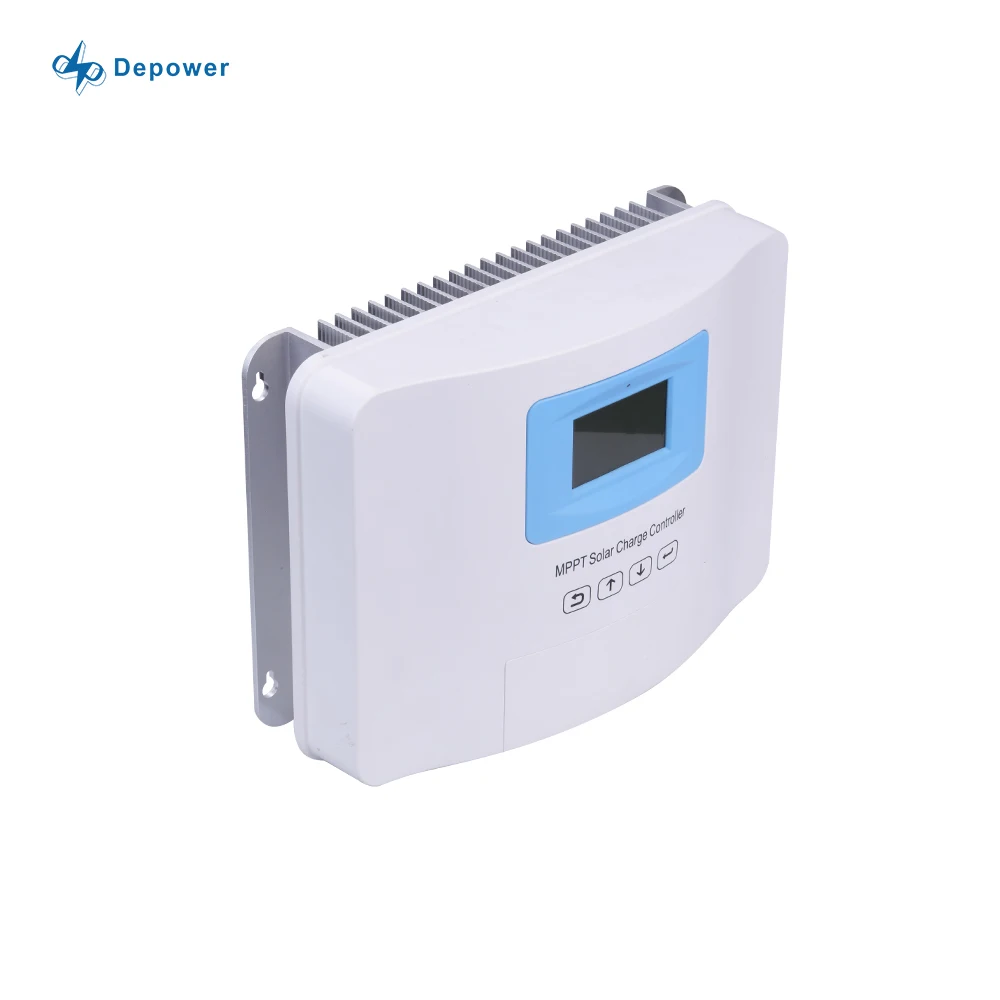
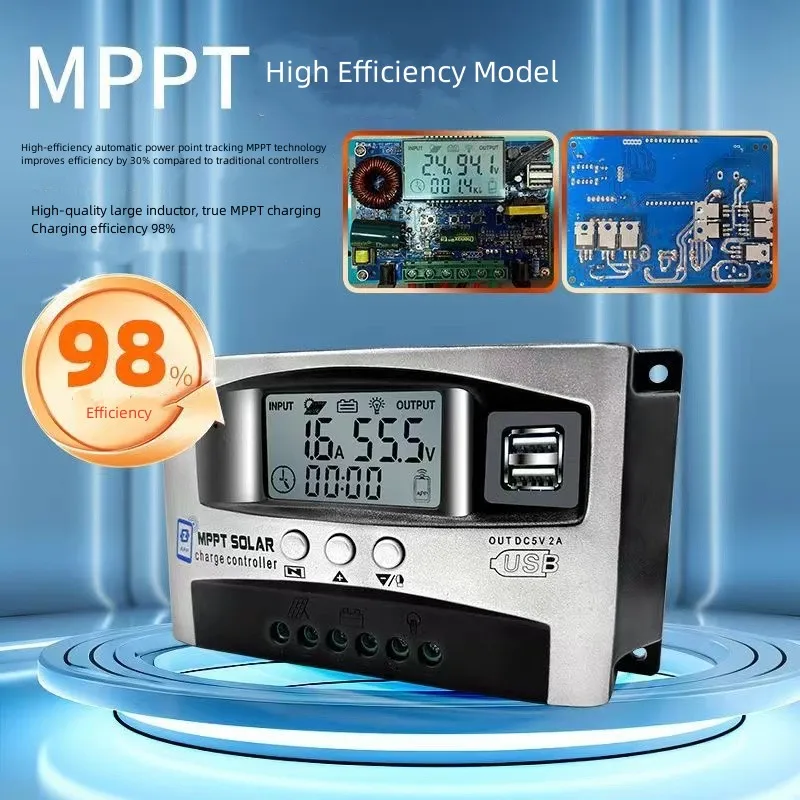
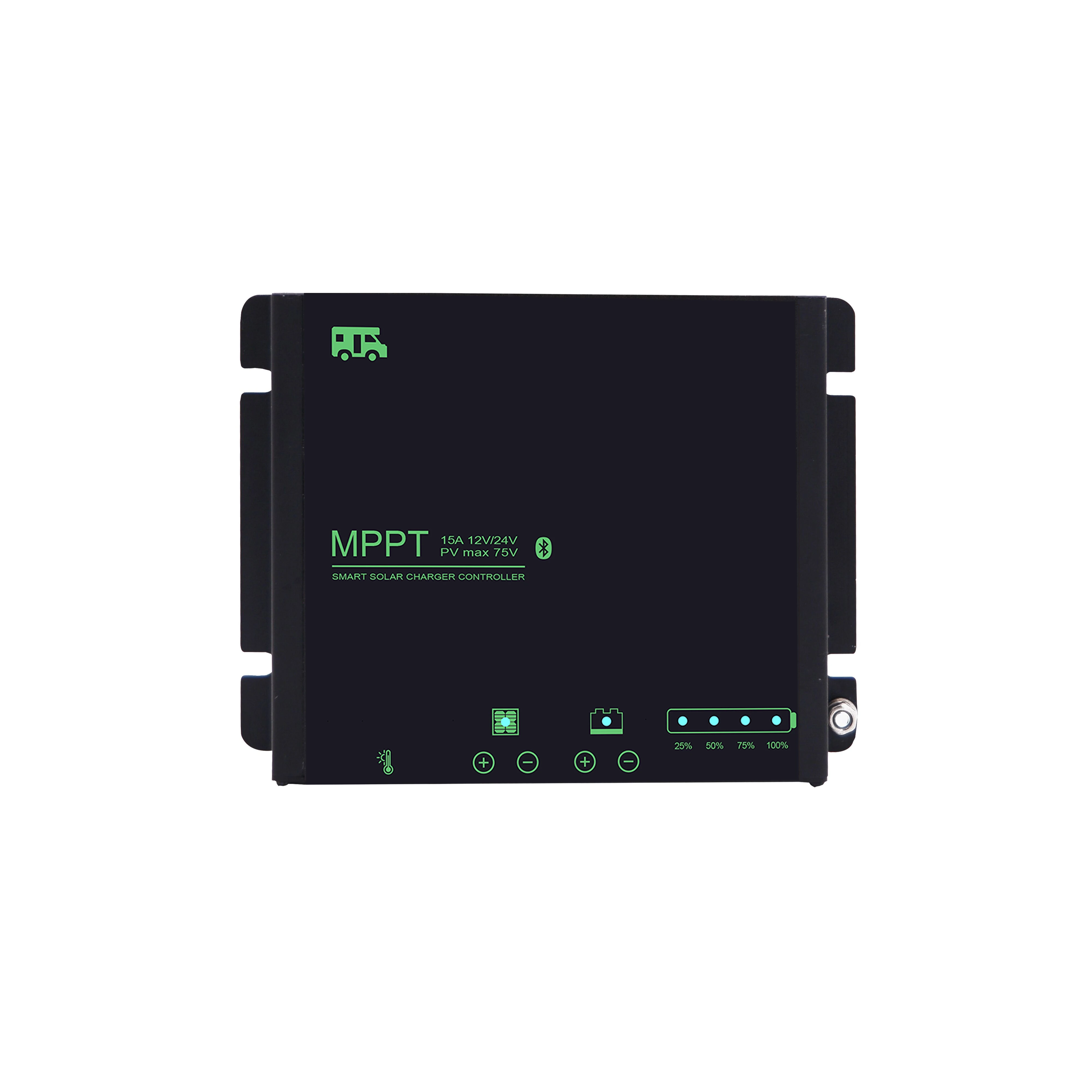
- ⚙️ Charge Controller Type: MPPT is non-negotiable for 12V solar power systems beyond 100W. It harvests ~30% more energy than PWM — especially in cooler or variable light. Bluetooth or Wi-Fi connectivity enables SoC tracking, firmware updates, and fault diagnostics. When it’s worth caring about: Any system >150W or paired with lithium batteries (MPPT prevents overcharge risks). When you don’t need to overthink it: For a single 100W panel charging a starter battery — PWM remains functional, though MPPT pays back in under 18 months.
- ⚡ Battery Chemistry: LiFePO₄ dominates for good reason: 3,000+ cycles (vs. 300–500 for flooded lead-acid), 95%+ depth of discharge (DoD), stable voltage curve, and no venting requirements. Its weight savings (≈50% lighter than AGM) directly impact vehicle payload. When it’s worth caring about: If you cycle daily or plan >3 years of service life. When you don’t need to overthink it: For occasional weekend use with infrequent deep discharges — a quality AGM can suffice, but LiFePO₄ is now cost-competitive.
Pros and Cons
A 12V solar power system delivers tangible benefits — but only when matched to realistic expectations.
- ✅ Pros
- No grid dependency for core loads (lights, fridge, comms)
- Low maintenance: No moving parts, no fuel, minimal seasonal upkeep
- Scalable architecture: Add panels or parallel batteries without rewiring entire system
- Safer DC voltage: Lower shock risk than 24V/48V systems in wet/marine environments
- ❌ Cons
- Lower efficiency for high-wattage AC loads (e.g., microwaves, air conditioners) — requires large inverter/battery bank
- Voltage drop over distance: Requires thicker gauge wire for runs >10 ft, increasing material cost
- Not ideal for whole-house backup: Limited to ~2.5kWh usable (200Ah LiFePO₄ @ 12V); insufficient for HVAC or well pumps
How to Choose a 12V Solar Power System: Step-by-Step Guide
Follow this sequence — in order — to avoid common oversights:
- Quantify daily consumption (in watt-hours): List every device, its wattage, and average daily runtime. Example: 12V fridge (60W × 12h = 720Wh), LED lights (10W × 4h = 40Wh), phone charging (5W × 2h = 10Wh) → Total ≈ 770Wh/day.
- Select battery capacity first: Aim for 1.5–2 days of autonomy. For 770Wh/day, that’s 1,155–1,540Wh storage. At 12V, that equals 96–128Ah — round up to 100Ah minimum LiFePO₄ (1,200Wh usable).
- Size solar array: Divide daily Wh by peak sun hours (use 4.5 for conservative US averages) → 770 ÷ 4.5 ≈ 171W. Add 20% buffer → 205W minimum. Choose two 120W TOPCon panels (240W total) for headroom.
- Pick controller amperage: Panel max current (Isc) × 1.25 safety factor. Two 120W panels @ 12V ≈ 20A Isc → choose ≥25A MPPT controller.
- Avoid these pitfalls:
- Assuming “12V” means all components must be 12V — many modern inverters and controllers accept 10–15V input, but verify voltage range
- Using automotive fuses instead of Class T or MRBF for battery protection — undersized fuses cause fire risk
- Skipping temperature compensation on charge settings — lithium batteries require precise voltage cutoffs
Insights & Cost Analysis
Based on Q2 2026 market data, here’s a realistic budget breakdown for a 200W–300W system powering basic RV loads:
| Component | 2026 Typical Range | Notes |
|---|---|---|
| N-type TOPCon Panel (120W) | $110–$145/unit | 22–23% efficiency; 25-year linear warranty |
| LiFePO₄ Battery (100Ah, 12V) | $320–$480 | 3,000+ cycles; built-in BMS; UL 1973 certified |
| MPPT Controller (30A, Bluetooth) | $95–$160 | Supports lithium profiles; real-time app dashboard |
| Wiring, fuses, mounting, inverter (300W) | $180–$260 | Includes 4 AWG cable, Class T fuse, Z-bracket, pure sine wave inverter |
| Total (200–300W system) | $700–$1,050 | Higher end includes dual 120W panels + 200Ah battery |
This is 18–22% lower than equivalent 2023 builds — mainly due to lithium price stabilization and MPPT controller commoditization. You pay more upfront for LiFePO₄, but break even versus AGM by Year 2.5 due to cycle life and zero maintenance.
Better Solutions & Competitor Analysis
The biggest leap in 2026 isn’t higher wattage — it’s intelligence. Leading controllers now use onboard weather APIs and historical usage patterns to adjust absorption voltage and float timing. This extends battery life and improves winter yield.
| Solution | Advantage Over Standard | Real-World Impact | When Worth It? |
|---|---|---|---|
| Smart MPPT with Cloud Sync | Adapts charging based on forecasted cloud cover and temperature | ~7% more usable kWh in shoulder seasons (spring/fall) | If you travel across climate zones or rely on solar year-round |
| CIGS Flexible Panels | No drilling required; conforms to curved surfaces; superior shade tolerance | Up to 40% less output loss under partial shading vs. rigid mono | If mounting on fiberglass RV roof or irregular surface |
| Integrated Monitoring Hub | Single dashboard for panels, battery, inverter, and loads | Identifies parasitic drains (e.g., faulty CO detector) in minutes | If troubleshooting downtime is costly (e.g., commercial fleet vehicles) |
Customer Feedback Synthesis
Based on aggregated reviews across RV forums, Amazon, and specialty retailers (Q1–Q2 2026):5
- Top 3 Compliments:
- “Battery SoC accuracy improved dramatically with Bluetooth MPPT — no more guessing.”
- “TOPCon panels produced 18% more than my old PERC set, even on hot afternoons.”
- “LiFePO₄ held 12.2V under load — fridge ran silently all night.”
- Top 2 Complaints:
- “Controller app crashed on iOS 18 beta — firmware update resolved it in 3 days.”
- “Flexible CIGS panels delaminated after 18 months of UV exposure — warranty covered replacement.”
Maintenance, Safety & Legal Considerations
Maintenance: Inspect terminals quarterly for corrosion; clean panels biannually (water + microfiber); verify battery BMS logs monthly via app.
Safety: Always disconnect solar input before servicing; use insulated tools; torque battery lugs to spec (e.g., 8–10 N·m for M8); ground all metal enclosures.
Legal: No federal permitting required for standalone 12V solar power systems in the US. Marine installations must comply with ABYC E-11 standards; RVs follow NFPA 1192. Local jurisdictions rarely regulate sub-120W DC-only systems.
Conclusion
If you need reliable, low-maintenance power for mobile or remote use, choose a 12V solar power system built around N-type TOPCon or CIGS panels, a Bluetooth-enabled MPPT controller, and a 100–200Ah LiFePO₄ battery. If you need full AC independence for high-wattage appliances, step up to a 24V or 48V system — 12V won’t scale efficiently past ~3kW continuous load. If you need a simple weekend backup, a pre-configured 100W kit with AGM battery remains viable — but for anything used >3 days/week, LiFePO₄ pays for itself fast. This piece isn’t for keyword collectors. It’s for people who will actually use the product.
Frequently Asked Questions
❓ Can I mix old and new 12V solar panels?
No — mixing panel types (e.g., PERC + TOPCon) or ages causes mismatch losses and reduces overall array output. Voltage/current curves differ, forcing the MPPT to compromise. Replace in full strings.
❓ Do I need an inverter for a 12V solar power system?
Only for AC devices (laptops, coffee makers). Most RV loads — lights, fans, fridges — run natively on 12V DC. Adding an inverter introduces 10–15% conversion loss. Use DC-DC chargers for USB-C or 19V laptop inputs instead.
❓ How cold can LiFePO₄ batteries operate?
Standard LiFePO₄ charges safely down to 0°C (32°F); below that, BMS blocks charging to prevent lithium plating. Some models offer low-temp charging (down to −20°C) with built-in heaters — worth it only in subarctic climates.
❓ What’s the difference between ‘12V’ and ‘12V nominal’?
‘12V nominal’ means the system operates between ~10.5V (fully discharged) and ~14.6V (absorption charging). True 12V devices tolerate this range. Don’t assume ‘12V’ labels mean fixed 12.0V — always check voltage tolerance specs.


