If you’re a typical user—preparing for home backup, job-site power, or extended outages—you don’t need to overthink this. Start with a dual-fuel 13,000-watt generator (10,500 running watts) that includes a NEMA 14-50R outlet, CO alert shutdown, and THD under 5%. Avoid basic gasoline-only models unless your runtime needs are under 6 hours and fuel access is guaranteed. Over the past year, CO safety integration has shifted from optional to expected—driven by both consumer demand and updated UL 2201 compliance standards 1. That’s why we focus on real-world tradeoffs—not theoretical specs.
About 13,000-Watt Generators: Definition & Typical Use Cases
A 13,000-watt generator refers to a portable unit with a peak output of 13,000 watts and a continuous (running) output of ~10,000–10,500 watts. It’s not “just bigger”—it’s engineered to handle simultaneous high-draw loads that smaller units can’t sustain: a 4–5 ton central air conditioner (3,500–5,000W startup), well pump (1,200–2,500W), electric water heater (4,500W), refrigerator (700W), and lighting circuits—all at once 2. This makes it functionally equivalent to a mid-tier standby generator—but without permanent installation, permitting, or $5,000+ labor costs.
Typical users include:
- 🏠 Homeowners in hurricane, wildfire, or winter storm zones needing full-house coverage;
- 🛠️ Contractors powering tools, lighting, and temporary HVAC on multi-day job sites;
- 🚚 RVers or remote-work professionals requiring reliable off-grid power for laptops, medical devices, and refrigeration.
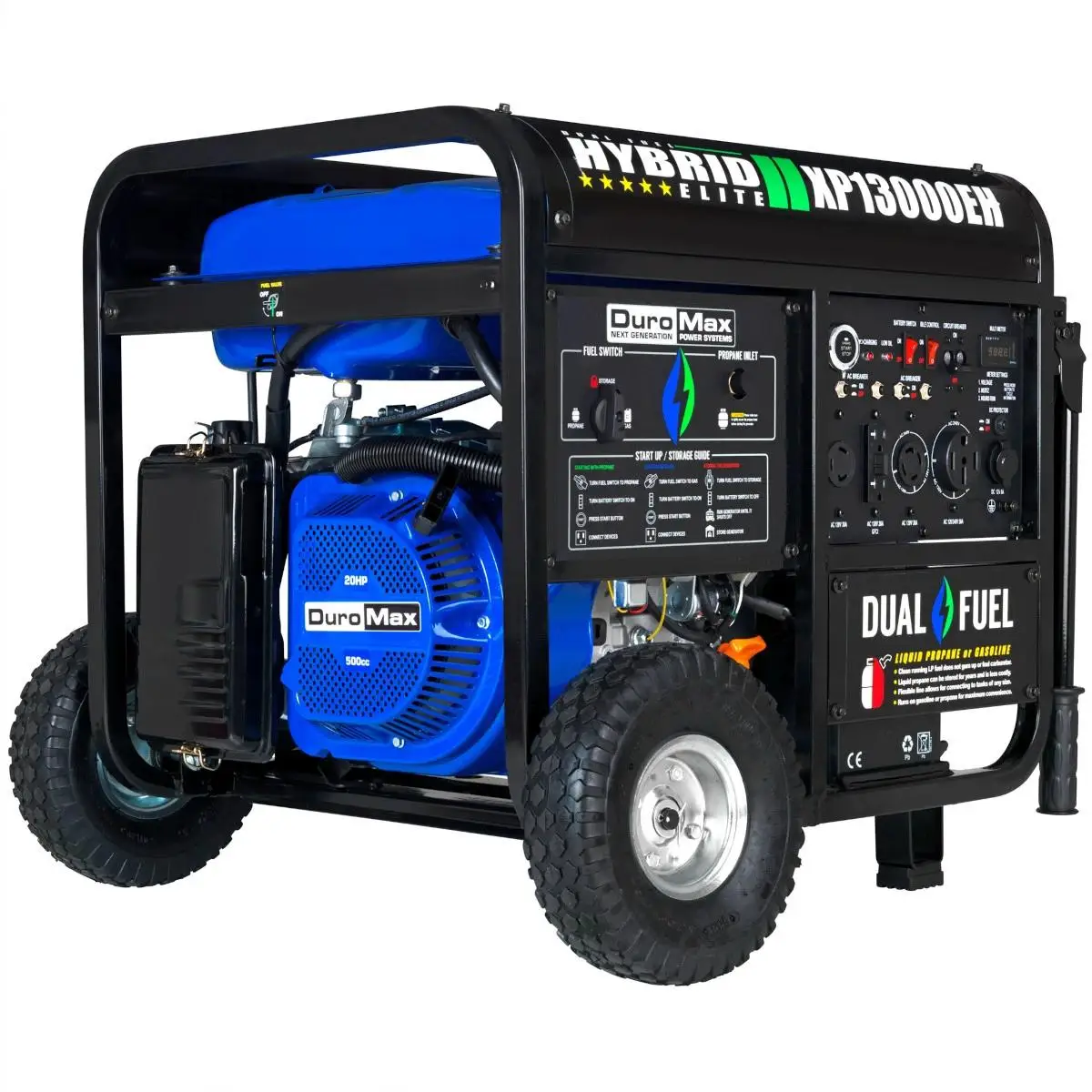
Why 13,000-Watt Generators Are Gaining Popularity
Lately, this wattage class has become the de facto “portable standby” benchmark—not because it’s flashy, but because it solves three converging problems: climate volatility, fuel uncertainty, and appliance sensitivity. The market shift isn’t about raw power alone. It’s about operational resilience.
First, extreme weather events now trigger longer, more frequent outages—especially in grid-constrained regions like Texas, California, and the Southeast. A 13,000-watt unit can run a full home load for 8–10 hours on propane (at 50% load), bridging gaps that smaller generators cannot 3. Second, gasoline shortages during disasters have made dual- and tri-fuel capability non-negotiable for preparedness-minded buyers. Third, modern homes contain more THD-sensitive electronics—smart thermostats, inverters, medical-grade CPAPs, and network infrastructure—that fail or degrade under dirty power. Low-THD (<5%) inverters or hybrid designs now appear even in mid-tier models.
If you’re a typical user, you don’t need to overthink this: fuel versatility and clean power are no longer premium upgrades—they’re baseline requirements for reliability.
Approaches and Differences: Gasoline vs. Dual-Fuel vs. Tri-Fuel
The biggest early decision isn’t “which brand,” but “which fuel architecture.” Each approach trades off simplicity, flexibility, and long-term viability.
- Gasoline-only: Lowest upfront cost ($900–$1,200), simplest maintenance. But gasoline degrades in 30–60 days without stabilizer, and stations often go offline during extended emergencies. When it’s worth caring about: You only need weekend backup, store fuel regularly, and live near functional gas infrastructure. When you don’t need to overthink it: If your outage history is under 4 hours and you never plan to run an A/C compressor.
- Dual-fuel (gasoline/propane): Adds propane tank compatibility—no degradation, safer storage, wider availability post-disaster. Adds ~$200–$400 to base price. When it’s worth caring about: You live rurally, rely on well water, or want >72-hour runtime without refueling. When you don’t need to overthink it: If you already own a 20–100 lb propane tank and use it for grills or heaters—no new infrastructure needed.
- Tri-fuel (gasoline/propane/natural gas): Enables direct connection to residential NG lines—ideal for automatic transfer switch setups. Requires professional NG hose installation. Highest cost ($1,800–$2,200). When it’s worth caring about: You want seamless, silent, long-duration backup without manual tank swaps. When you don’t need to overthink it: If your home lacks a natural gas line—or if you’re renting.
Key Features and Specifications to Evaluate
Don’t optimize for peak watts. Optimize for what sustains your critical loads. Here’s what actually moves the needle:
- 🔌 NEMA 14-50R outlet: Mandatory for hardwiring to a home transfer switch. Avoid models with only L14-30 or household 120V outlets unless you’ll use only extension cords.
- 📊 Running watts (not peak): Verify continuous output at 25%, 50%, and 75% load. Some brands inflate peak numbers while derating sustained output. Look for EPA-certified test reports.
- ⚠️ CO alert with auto-shutdown: UL 2201-compliant sensors must detect CO at ≤500 ppm and shut down within 2 minutes. Non-compliant “warning-only” units are still sold—but they’re increasingly rejected by insurers and municipalities.
- ⚡ Total Harmonic Distortion (THD): Under 5% is required for sensitive electronics. Inverter-based models hit 2–3%; conventional alternator models hover at 4–6%. If THD exceeds 6%, avoid for laptops, audio gear, or smart-home hubs.
- ⏱️ Runtime at 50% load: Measured in hours with a full tank. An 8-gallon tank delivering <7 hours at 50% load signals inefficient combustion or undersized carburetion.
Pros and Cons: Who This Serves—and Who It Doesn’t
✅ Best for:
- Homeowners with central A/C, well pumps, and electric heating/cooling;
- Contractors needing stable 240V for compressors, welders, or lighting towers;
- Families with medical equipment or remote work dependencies.
❌ Not ideal for:
- Apartment dwellers or renters (weight: 245–250 lbs; requires ground-level access);
- Backpackers or lightweight campers (even with wheels, it’s not “portable” in the hiking sense);
- Users seeking silent operation (<60 dB): These units run 72–78 dB at 23 ft—comparable to a vacuum cleaner. True quiet operation starts at 2,000–3,000W inverters.
How to Choose a 13,000-Watt Generator: A Step-by-Step Decision Checklist
Follow this sequence—not in order of preference, but in order of consequence:
- Confirm your total running load using a Kill-A-Watt meter or utility bill analysis. If your continuous draw is under 7,000W, a 10,000W unit may suffice—and save $300–$500.
- Verify fuel access: Do you own propane tanks? Is natural gas available? If not, dual-fuel adds future-proofing without complexity.
- Check outlet compatibility: Does your transfer switch require NEMA 14-50R? If yes, eliminate any model without it—even if cheaper.
- Require CO shutdown—not just warning: Skip units with “CO detector” labels that lack auto-shutoff. UL 2201 certification is mandatory.
- Reject models without digital monitoring: Voltage, frequency, and hour meters aren’t luxuries—they’re diagnostics. Analog gauges can’t warn of voltage sag before appliance damage occurs.
This piece isn’t for keyword collectors. It’s for people who will actually use the product.
Insights & Cost Analysis
Pricing reflects real engineering tradeoffs—not marketing tiers. Below is a realistic 2026 retail-to-wholesale spectrum based on verified B2B sourcing data:
| Category | Typical Retail Price | B2B Wholesale (FOB) | Key Tradeoffs |
|---|---|---|---|
| Gasoline-only (basic) | $900–$1,200 | $500–$550 | No fuel flexibility; higher maintenance; shorter shelf life for stored fuel |
| Dual-fuel + CO shutdown | $1,399–$1,799 | $560–$870 | Balanced cost/performance; dominant segment for homeowners |
| Tri-fuel / inverter hybrid | $1,800–$2,200 | $1,100–$1,250 | Cleanest power; longest runtime; requires NG line or larger propane setup |
For resellers: Sourcing from Chongqing or Shanghai manufacturing hubs cuts landed cost by ~45% versus U.S. retail—making dual-fuel units profitable even at $1,199 MSRP 4. For end users: Don’t chase “under $1,000” deals—the cheapest 13,000W units omit CO shutdown, THD control, or proper voltage regulation.
Better Solutions & Competitor Analysis
“Better” depends on your constraint. Below is a functional comparison—not a ranking:
| Solution Type | Best For | Potential Problem | Budget Range (Retail) |
|---|---|---|---|
| Dual-fuel with analog controls | Cost-conscious users prioritizing reliability over precision | No real-time voltage/frequency feedback; harder to diagnose load imbalances | $1,399–$1,599 |
| Dual-fuel with digital monitoring + remote start | Homeowners wanting indoor activation and usage tracking | Remote kits add $80–$120; battery drain risk if not maintained | $1,649–$1,799 |
| Tri-fuel inverter hybrid | Users needing ultra-low THD and seamless NG integration | Higher service complexity; fewer certified repair centers | $1,999–$2,199 |
Customer Feedback Synthesis
Based on aggregated reviews (Consumer Reports, Wirecutter, Home Depot, and independent forums), top recurring themes:
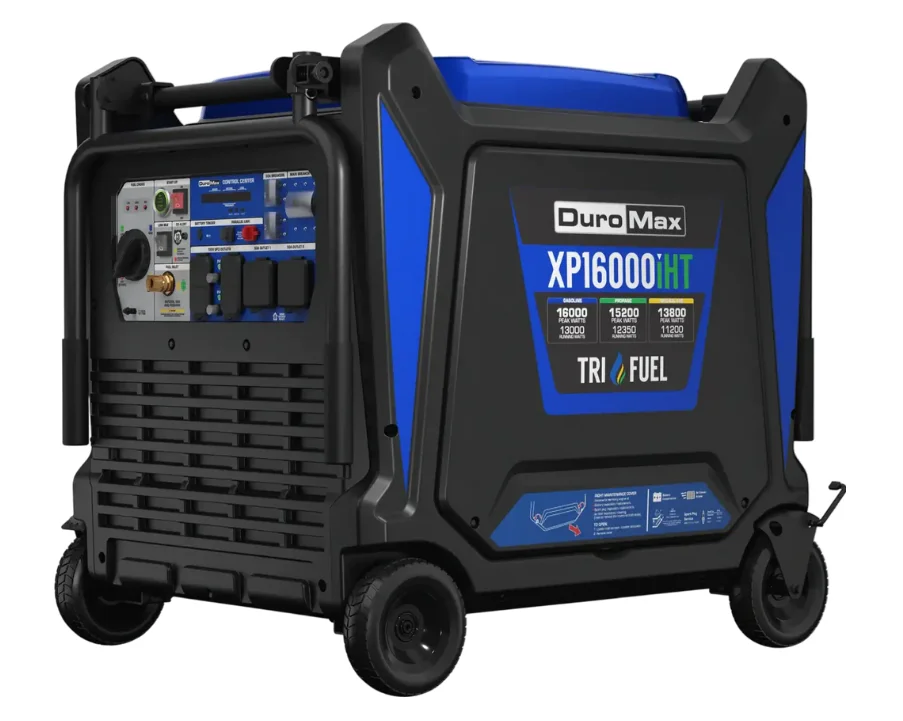
- Highly praised: Reliability of DuroMax XP13000HX under continuous 9,000W load; ease of electric start in sub-30°F conditions; intuitive control layout.
- Frequently cited pain points: Weight distribution during wheel-assisted movement (some units tip backward); inconsistent propane regulator priming on first cold-weather use; confusing manual language around THD thresholds.
Maintenance, Safety & Legal Considerations
These units require proactive upkeep:
- Oil changes: Every 50 hours or annually—use 10W-30 synthetic for temperature stability.
- Spark plug replacement: Every 100 hours; gap at 0.028–0.031 inches.
- CO safety: Never operate indoors, in garages (even with door open), or under canopies. Maintain ≥3 ft clearance on all sides.
- Legal compliance: UL 2201 certification is required for sale in all 50 U.S. states. EPA Tier 4 Final emissions compliance applies to all new units manufactured after Jan 2024.
Conclusion: Conditional Recommendations
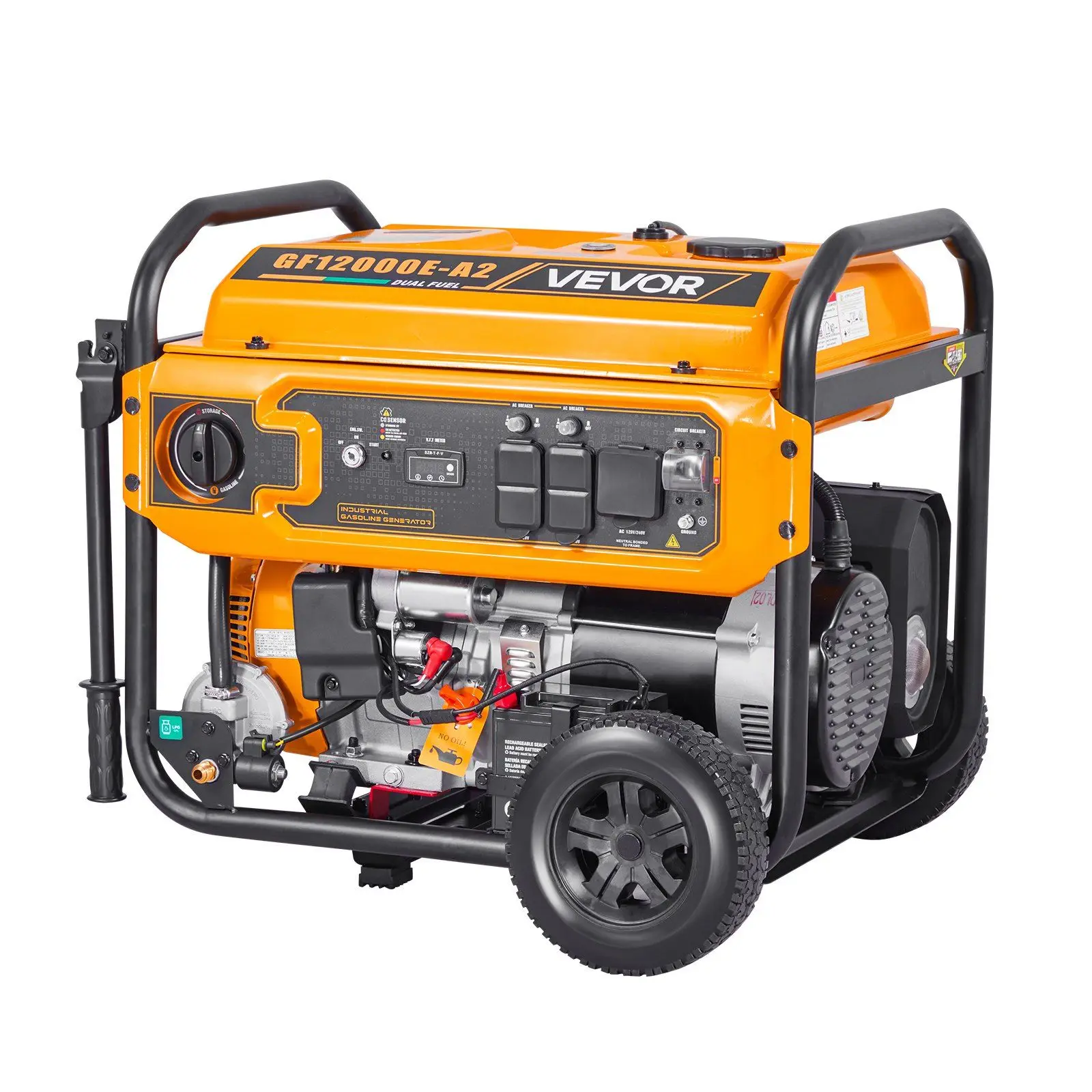
If you need full-home backup with A/C and well pump support, choose a dual-fuel 13,000-watt generator with NEMA 14-50R, CO auto-shutdown, and THD <5%. It delivers the highest reliability-to-cost ratio across real-world scenarios.
If you have a natural gas line and prioritize hands-off operation, step up to a tri-fuel model—but confirm local code allows NG-powered portable generators (some municipalities restrict this).
If your primary need is job-site power with OSHA compliance, verify GFCI protection on all 120V outlets and confirm runtime meets your crew’s shift length.
If you’re a typical user, you don’t need to overthink this: skip gimmicks, verify certifications, and match specs to your actual load—not your wishlist.


