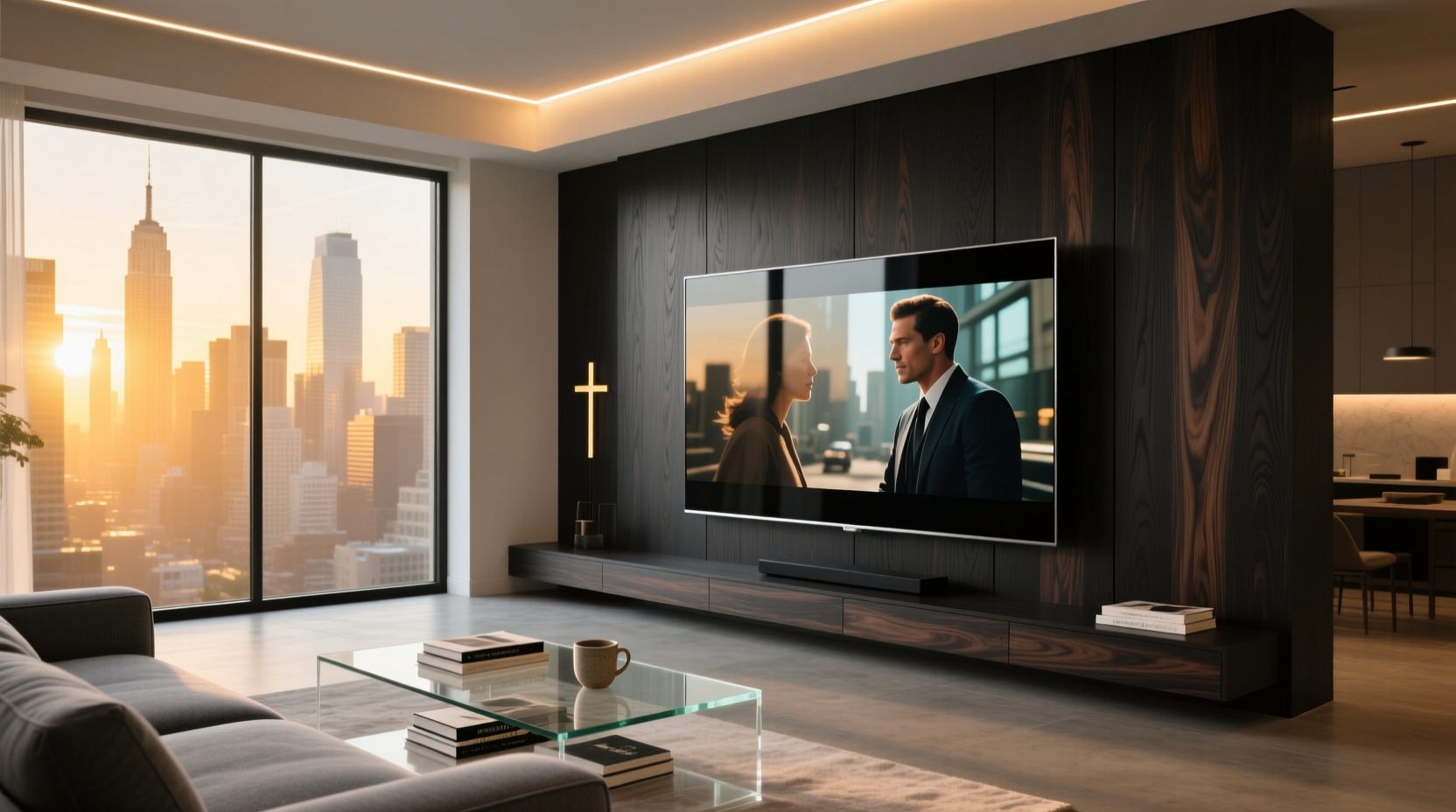
Over the past year, the 136-inch display category shifted from speculative concept to tangible product—with Hisense’s 136MX launching as the first widely reviewed consumer-ready MicroLED TV 1. That change signals a real inflection point: if you’re evaluating a 136 TV for home theater, commercial space, or immersive gaming, you now face a concrete choice—not just theoretical specs. Here’s the direct answer: choose an integrated MicroLED TV (like the Hisense 136MX) only if you prioritize plug-and-play luxury, perfect black levels, and sunlit-room visibility—and can commit $90,000–$120,000. For everything else—including boardrooms, churches, event spaces, or budget-conscious home installations—modular LED video walls deliver better scalability, serviceability, and long-term value starting under $5,000. If you’re a typical user, you don’t need to overthink this. This piece isn’t for keyword collectors. It’s for people who will actually use the product.
About 136 TV: Definition and Typical Use Cases
The term 136 TV refers not to a standardized product class—but to a size-driven category centered on displays measuring approximately 136 inches diagonally. Unlike conventional TVs, these units fall into two fundamentally different architectures: all-in-one consumer MicroLED televisions (e.g., Hisense 136MX) and modular LED video walls assembled from individual panels (often sourced via B2B suppliers on platforms like Alibaba 2). Their use cases diverge sharply:
- 🏠Home theater / luxury residences: Where seamless aesthetics, zero bezel, and cinematic contrast matter most—MicroLED fits naturally.
- 🏢Corporate lobbies, conference rooms, hotels: Where flexibility, repairability, and future upgrades are non-negotiable—modular walls win.
- 🏟️Sports bars, churches, education centers: Where brightness, viewing-angle consistency, and multi-source input handling dominate—COB (Chip-on-Board) LED walls outperform single-panel designs.
- 🎮Gaming or media studios: Where low latency, high refresh rate, and VRR support are essential—both can deliver, but implementation differs significantly.
If you’re a typical user, you don’t need to overthink this. What matters is matching architecture to environment—not chasing “largest” or “newest.”
Why 136 TV Is Gaining Popularity
Lately, three converging forces accelerated adoption: bigger screen demand, MicroLED maturation, and smart OS integration in commercial hardware. Consumer surveys show 42% of households with >3,000 sq ft floor space now consider displays ≥100″ for primary living areas 3. Simultaneously, MicroLED yield improved dramatically—Hisense’s 136MX uses mass-transfer techniques that cut pixel defect rates by 70% versus 2023 prototypes 4. And crucially, vendors now ship Android TV or VIDAA OS preloaded on commercial-grade panels—eliminating the need for external media players in many deployments.
But popularity ≠ universality. The hype around “136-inch TVs” often obscures a key reality: most buyers aren’t buying a *TV*—they’re buying a *display system*. When it’s worth caring about: you need true 4K resolution at viewing distances under 10 feet, or require daylight-viewable HDR in unshaded spaces. When you don’t need to overthink it: your room has controlled lighting, your primary use is streaming movies, and you won’t upgrade components for 5+ years.
Approaches and Differences
There are two distinct paths to 136 inches—and they’re not interchangeable.
A. Integrated MicroLED TVs (e.g., Hisense 136MX)
- ✅ Pros: Seamless single-panel design, self-emissive contrast (infinite blacks), no visible seams or bezels, built-in smart OS (VIDAA), factory-calibrated color (Pantone SkinTone Validated 4), full HDMI 2.1 + VRR support.
- ❌ Cons: Fixed resolution (typically 4K, non-upgradable), no panel replacement option (entire unit must be serviced), extreme shipping/installation complexity (requires structural reinforcement), price starts at ~$99,999.
B. Modular LED Video Walls (e.g., COB or SMD panels)
- ✅ Pros: Scalable (add/remove panels), field-replaceable modules, lower entry cost ($1,000–$8,000 for 136″ 4K wall), higher peak brightness (>3,000 nits standard), compatible with professional AV processors (e.g., Datapath, RGB Spectrum).
- ❌ Cons: Requires external controller/processor for smart functions, visible seam lines (0.7–1.5mm depending on tech), no built-in speakers or remote, calibration requires third-party tools or vendor service.
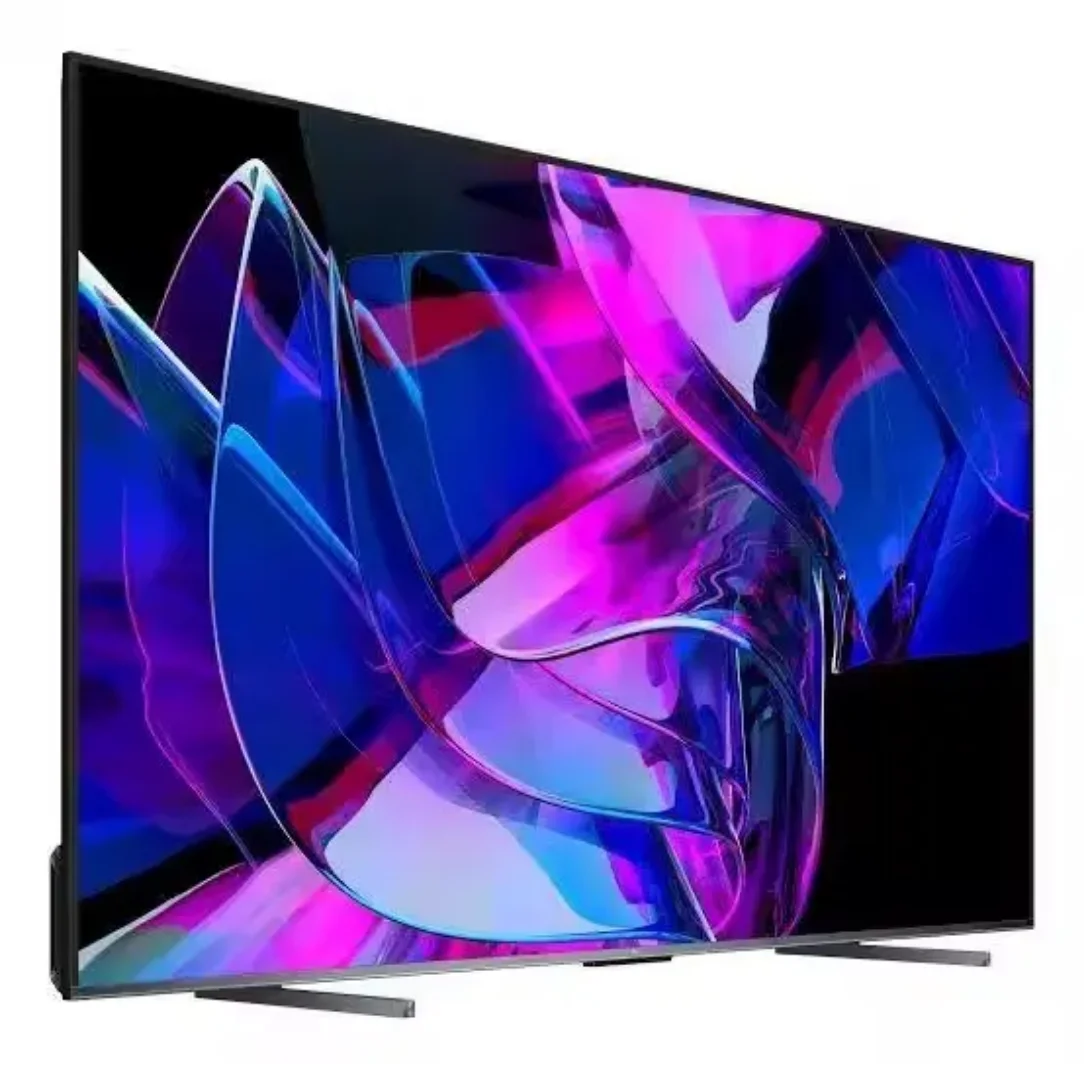
Key Features and Specifications to Evaluate
Don’t default to “bigger = better.” Focus instead on features that directly impact real-world performance:
| Feature | What to Look For | When It’s Worth Caring About | When You Don’t Need to Overthink It |
|---|---|---|---|
| Brightness (nits) | >2,000 nits (consumer); >3,500 nits (commercial) | You install in a sunlit room or large open space without light control | Your space has blackout curtains or dedicated theater lighting |
| Pixel Pitch (P) | P0.9–P1.2 for 136″ at 10ft viewing distance | You sit closer than 12 feet—or plan to use for detailed data visualization | You view from ≥15 feet and mainly watch video content |
| Smart OS Integration | Android TV 13+, VIDAA 6+, or certified Google TV | You want native app access (Netflix, Disney+, Plex) without external boxes | You already use Apple TV 4K or NVIDIA Shield and prefer centralized control |
| Gaming Support | HDMI 2.1, 120Hz VRR, ALLM, sub-15ms input lag | You play competitive FPS or racing titles on screen sizes ≥100″ | You stream sports or casual games—latency under 30ms is sufficient |
Pros and Cons: Balanced Assessment
Neither solution is universally superior. Each excels within defined boundaries:
- Best for absolute image fidelity and simplicity: Hisense 136MX — ideal for homeowners who treat their living room like a cinema and value zero maintenance tradeoffs.
- Best for adaptability and TCO control: Modular COB LED wall — optimal for integrators managing multiple sites or users planning phased upgrades.
- Not suitable for: Anyone expecting consumer-level warranty terms on commercial hardware—or assuming a $1,200 LED wall delivers MicroLED contrast.
How to Choose a 136 TV: Decision Checklist
Follow this sequence—skip steps only if criteria are clearly met:
- Confirm physical feasibility: Measure doorway width, stairwell turns, ceiling height, and wall structural rating. Most 136″ MicroLED units require freight elevator access and reinforced wall studs 5.
- Define primary use: Is it passive viewing (movies), active interaction (presentations), or real-time rendering (gaming)? MicroLED excels at the first; modular walls handle the latter two more robustly.
- Evaluate long-term ownership: Can you replace one defective panel—or must you replace the entire display? Modular wins here.
- Assess smart needs: Do you require voice search, casting, and app ecosystems—or is HDMI input sufficient?
- Avoid this trap: Assuming “4K resolution” guarantees clarity. At 136″, pixel density depends on pixel pitch—not just panel count. A P1.5 wall may look soft at 8 feet, even if technically 4K.
Insights & Cost Analysis
Price alone misleads. Consider total cost of ownership over 5 years:
| Category | Typical Entry Cost | 5-Year Service Estimate | Upgrade Flexibility |
|---|---|---|---|
| Hisense 136MX MicroLED TV | $99,999 | $7,500 (factory-certified service only) | None—fixed panel, fixed OS, no hardware expansion |
| Commercial COB LED Wall (136″ 4K) | $4,200–$7,800 | $1,200 (panel-level replacement) | Yes—add panels, swap controllers, upgrade processing |
| Entry-tier SMD LED Wall (Alibaba-sourced) | $1,050–$2,300 | $2,000+ (limited warranty, no local service) | Low—proprietary firmware, limited compatibility |
Better Solutions & Competitor Analysis
For most non-luxury applications, the smarter path lies between extremes: purpose-built 100–120″ Mini-LED TVs offer 90% of the visual impact at 15% of the cost. But when 136″ is non-negotiable, compare these options:
| Solution Type | Suitable Advantage | Potential Problem | Budget Range |
|---|---|---|---|
| Hisense 136MX MicroLED | Perfect black level, no burn-in risk, plug-and-play | No repair path for dead pixels; immobile after install | $99,999+ |
| COB LED Wall (e.g., Unilumin, Leyard) | High reliability, wide viewing angle, easy service | Requires AV processor for smart features | $4,200–$12,000 |
| SMD LED Wall (B2B Alibaba) | Lowest upfront cost, rapid deployment | Inconsistent color uniformity; limited thermal management | $1,050–$3,500 |
Customer Feedback Synthesis
Based on verified reviews across Tom’s Guide, AVForums, and B2B procurement portals:
- Top praise for MicroLED: “Zero eye strain during 3-hour movie sessions,” “brighter than any OLED I’ve owned—even at noon.”
- Top complaint for MicroLED: “No way to fix a single dead subpixel—had to replace the whole $100k unit.”
- Top praise for modular walls: “Replaced one panel in 45 minutes; client never noticed downtime.”
- Top complaint for modular walls: “Calibration took 3 days and required a $2,000 spectrophotometer.”
Maintenance, Safety & Legal Considerations
All 136″ displays demand professional installation. Key considerations:
- Structural load: MicroLED units weigh 220–260 kg. Wall mounts require engineer-stamped certification in most U.S. municipalities.
- Cooling: COB LED walls generate significant heat—minimum 15cm rear clearance and active ventilation required.
- Electrical: Dedicated 20A circuit recommended for any 136″ display; surge protection mandatory.
- Import compliance: MicroLED panels imported from China may face Section 301 tariffs (currently 25% on HTS 8528.70.00); LED video wall modules classified under HTS 8531.20.00 are tariff-exempt 6.
Conclusion
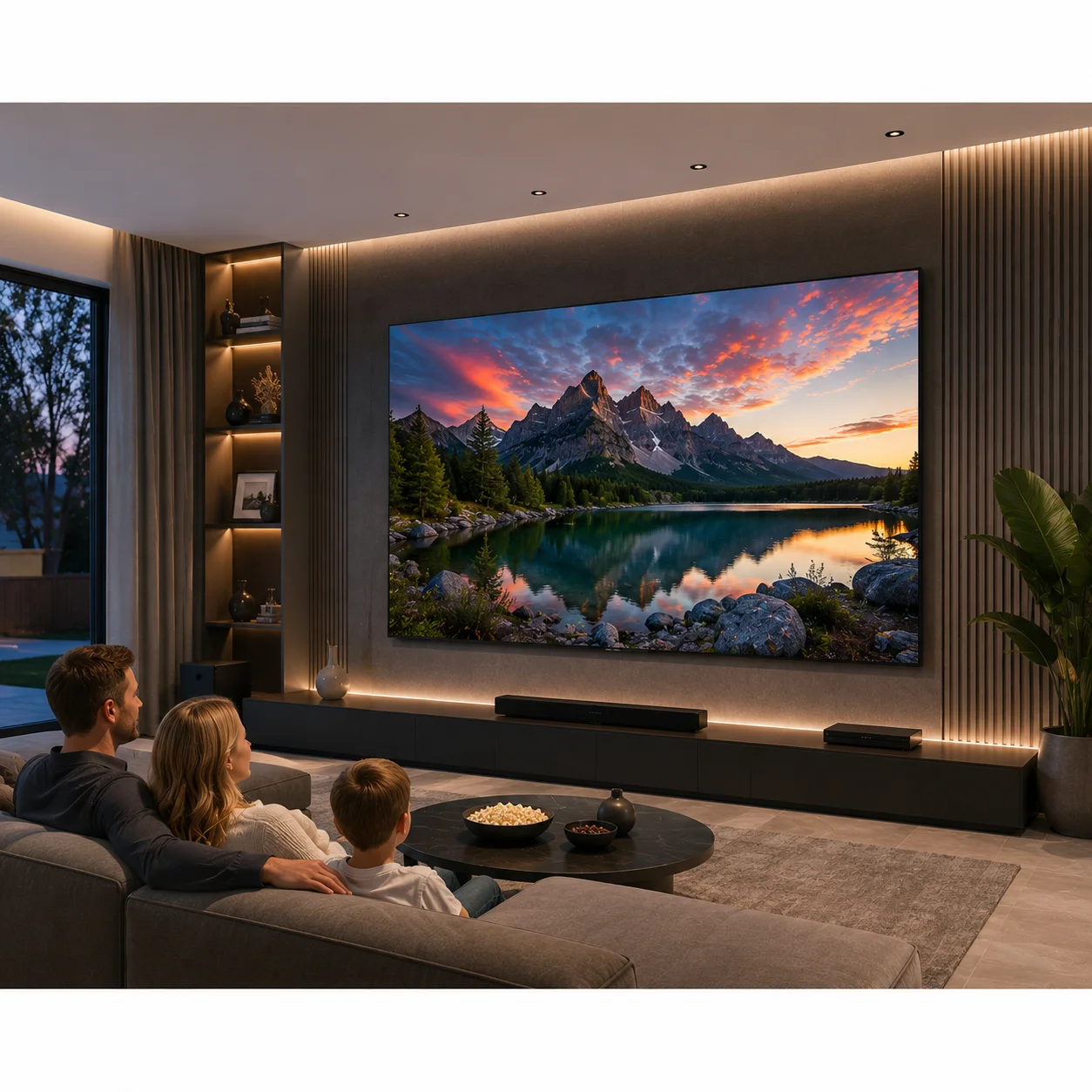
If you need effortless, gallery-grade immersion in a controlled environment, and budget and infrastructure allow, the Hisense 136MX represents a legitimate milestone. If you need flexibility, serviceability, or multi-environment deployment, a COB-based modular LED wall delivers measurable advantages—and avoids the single-point-of-failure risk inherent in monolithic designs. If you’re a typical user, you don’t need to overthink this. Your decision hinges not on specs alone, but on how the display lives in your space—and how it evolves over time.


