Over the past year, demand for 140 cm satellite dish antennas has sharpened—not in consumer living rooms, but in mission-critical infrastructure roles where signal gain, Ka-band readiness, and mechanical precision outweigh compactness. If you’re evaluating a 140 cm satellite dish antenna for professional deployment (military comms, maritime uplinks, or ground station redundancy), skip the residential spec sheets. This isn’t about mounting it on your roof—it’s about ensuring stable, high-throughput links where flat-panel alternatives still lack proven reliability at scale. For typical users installing home TV service? You don’t need to overthink this: smaller dishes (90–120 cm) are cheaper, faster to align, and fully sufficient for Ku-band broadcast. But if your use case requires >38 dBi gain, sub-0.1° tracking accuracy, or integration with HTS satellites like Starlink Gen2 or Eutelsat Konnect VHTS, then 140 cm is the smallest viable diameter—and even then, only when paired with ISO9001-certified fabrication and dual-band LNB support. This piece isn’t for keyword collectors. It’s for people who will actually use the product.
About 140 cm Satellite Dish Antennas: Definition & Typical Use Cases
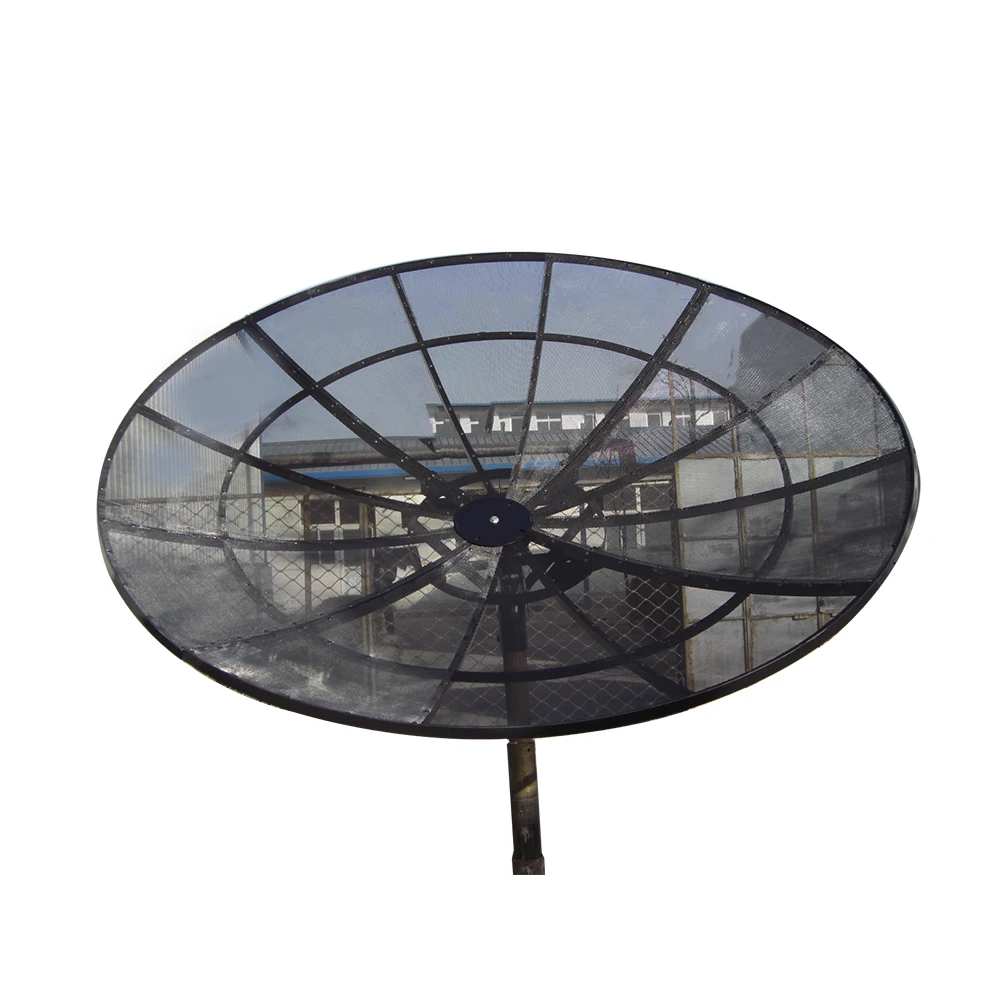
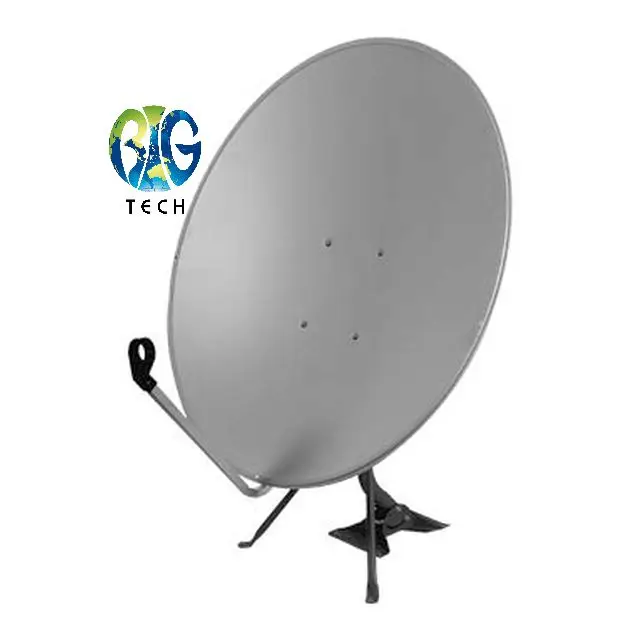
A 140 cm (1.4 m) satellite dish antenna is a parabolic reflector engineered for high-gain, narrow-beam reception and transmission—typically used in fixed or semi-mobile infrastructure applications. Unlike mass-market 60–90 cm dishes designed for DTH TV, the 140 cm class sits at a functional inflection point: large enough to deliver robust performance in Ka-band (26.5–40 GHz) and Q-band (33–50 GHz), yet small enough to be mounted on stabilized maritime platforms or vehicle-integrated systems without requiring full trailer-based deployment.
Typical use cases include:
- 📡 Military & government mobile command units: Requiring rapid-deploy, jam-resistant uplinks to GEO/LEO constellations.
- ⚓ Commercial maritime vessels: Supporting VSAT services for crew welfare, navigation telemetry, and remote diagnostics—even in heavy sea states.
- 🛰️ Ground station gateways: Acting as secondary or backup terminals for regional satellite operators managing traffic across multiple orbital planes.
- 🔬 Research & deep-space outreach: Used by university observatories or amateur radio astronomy groups for low-noise signal capture from distant transponders.
Why 140 cm Satellite Dish Antennas Are Gaining Popularity
Lately, the 140 cm size hasn’t grown due to consumer adoption—but because of infrastructure recalibration. As Low Earth Orbit (LEO) constellations expand and High Throughput Satellites (HTS) shift toward Ka-band spectrum, legacy 1.2 m dishes increasingly fail to meet minimum gain thresholds for reliable link budgets. The market reflects this: while flat-panel antennas dominate RV and maritime mobility segments, large-dish infrastructure holds a 44.7% share of the global satellite antenna market in military, maritime, and gateway applications 1. That growth isn’t speculative—it’s driven by measurable constraints: higher frequencies require larger apertures to maintain effective isotropic radiated power (EIRP), and Doppler-sensitive LEO links demand tighter beamwidth control than smaller dishes can reliably deliver.
When it’s worth caring about: You’re deploying a dedicated uplink for Ka-band HTS services—or integrating into a system where downtime costs exceed hardware investment by orders of magnitude.
When you don’t need to overthink it: You’re replacing a failed 90 cm dish for DISH or Sky TV. If you’re a typical user, you don’t need to overthink this.
Approaches and Differences: Common Configurations
There are three primary implementation paths for 140 cm satellite dish antennas—each defined more by engineering intent than physical appearance:
- 🏭 OEM-customized metal-spun dishes: Precision-formed aluminum or stainless steel, spun to ≤±0.3 mm surface tolerance. Highest gain consistency and thermal stability. Requires direct supplier engagement.
- 📦 Pre-assembled commercial kits: Complete systems (dish + mount + motor + LNB) sold under industrial brands. Faster procurement, but limited frequency flexibility and often locked to specific LNB bands.
- 🔧 Modular retrofit solutions: Designed to upgrade existing 1.2 m mounts or pedestals. Lower upfront cost—but may compromise wind-load rating or azimuth/elevation range.
Key divergence: Custom spinning ensures optimal surface accuracy for Ka-band, while pre-assembled kits prioritize time-to-operational over spectral adaptability. Modular retrofits work only when mechanical interfaces match exactly—no universal adapter exists.
Key Features and Specifications to Evaluate
Don’t optimize for diameter alone. At 140 cm, small variations in construction quality create outsized differences in real-world throughput. Prioritize these five technical attributes:
- Surface accuracy (RMS deviation): Should be ≤0.5 mm for Ku-band, ≤0.3 mm for Ka-band. Measured via laser interferometry—not visual inspection.
- Focal length-to-diameter ratio (f/D): Ideal range is 0.35–0.42. Values outside this reduce LNB illumination efficiency and increase sidelobe radiation.
- Mount type & tracking capability: Azimuth-elevation (Az-El) mounts suffice for GEO; positioner-driven mounts with GPS-synced prediction algorithms are mandatory for LEO handover.
- LNB compatibility: Dual-band (Ku/Ka) or tri-band (Ku/Ka/Q) support required for future-proofing. Avoid integrated LNBs unless certified for your region’s regulatory mask.
- Environmental rating: IP66 minimum for outdoor use; marine-grade anodization or stainless hardware essential for coastal or vessel deployment.
When it’s worth caring about: You’ll operate in environments with >65 km/h wind gusts, salt exposure, or temperature swings exceeding 60°C.
When you don’t need to overthink it: Indoor lab testing or temporary land-based demos. If you’re a typical user, you don’t need to overthink this.
Pros and Cons: Balanced Assessment
Advantages of 140 cm dishes:
- Delivers ~3–4 dB higher gain than 120 cm equivalents—critical for closing marginal Ka-band links.
- Supports narrower beamwidth (~0.8° vs ~1.1° at 30 GHz), reducing interference from adjacent satellites.
- Offers mechanical stability that phased arrays still struggle to match under vibration or thermal cycling.
Limitations:
- Not portable: Requires crane-assisted installation or reinforced concrete foundations.
- Higher wind load increases structural requirements—pedestal design must account for 1.8× static load factor.
- No consumer retail channel: Cannot be ordered off Amazon or Best Buy; procurement flows through B2B OEMs or specialized integrators.
Best suited for: Fixed or semi-fixed infrastructure deployments where uptime, spectral efficiency, and long-term calibration stability outweigh mobility needs.
Not suited for: Urban apartment balconies, backpackable field comms, or budget-conscious residential TV setups.
How to Choose a 140 cm Satellite Dish Antenna: Decision Checklist
Follow this step-by-step evaluation before engaging suppliers:
- Confirm your frequency band: If you’re operating exclusively on Ku-band (10.7–12.75 GHz), a 120 cm dish may suffice. Only choose 140 cm if Ka-band (26.5–40 GHz) or Q-band operation is confirmed in your license or service agreement.
- Verify mount interface specs: Cross-check flange dimensions, bolt circle, and azimuth travel range against your existing pedestal—or specify new mounting requirements upfront.
- Require ISO9001 certification documentation: Not just a logo on a website—ask for the latest certificate number and scope statement covering “precision metal spinning for parabolic reflectors.”
- Reject “off-the-shelf” claims without test reports: Request RMS surface accuracy validation reports from third-party metrology labs—not internal QA summaries.
- Avoid hybrid designs that mix spun aluminum reflectors with stamped steel frames: Thermal expansion mismatch causes focal drift over time, especially in diurnal cycles.
Insights & Cost Analysis
Professional-grade 140–150 cm satellite dish antennas are capital equipment—not consumables. Pricing reflects precision engineering, not volume manufacturing:
- Base spun reflector only: $3,200–$6,800 (OEM-sourced, unmounted, no LNB)
- Complete Az-El kit (dish + mount + motor + dual-band LNB): $23,000–$31,000
- Maritime-certified stabilized system: $36,000–$42,000
Compare that to consumer 90 cm kits ($85–$199) and the distinction becomes structural—not incremental. The cost delta isn’t markup; it’s certification, materials traceability, and metrology validation. Budget accordingly: underestimating integration labor (e.g., RF cabling, mast reinforcement, alignment verification) adds 25–40% to total project cost.
Better Solutions & Competitor Analysis
| Category | Suitable Advantage | Potential Problem | Budget Range (USD) |
|---|---|---|---|
| OEM Metal-Spun Dish | Guaranteed surface accuracy; customizable f/D; ISO9001 traceability | 12–16 week lead time; MOQ often ≥5 units | $3,200–$6,800 |
| Pre-Assembled Commercial Kit | Ships in 2–4 weeks; includes tested alignment procedure | Limited LNB band options; non-upgradable motors | $23,000–$31,000 |
| Maritime-Stabilized System | Active motion compensation; IP67+ enclosure; corrosion-rated hardware | Requires vessel power integration; annual gyro recalibration | $36,000–$42,000 |
Customer Feedback Synthesis
Based on verified procurement reviews (B2B portals, defense integrator forums, maritime tech bulletins):
- Top 3 praises: “Consistent signal lock during LEO handovers,” “No gain degradation after 18 months of tropical deployment,” “Metrology report matched delivered unit within ±0.05 mm.”
- Top 2 complaints: “Mounting flange didn’t match our legacy pedestal—required custom adapter machining,” “LNB firmware update process undocumented and vendor-unresponsive.”
Pattern: Satisfaction correlates strongly with supplier transparency on test data—not marketing claims. Dissatisfaction centers on integration friction, not dish performance.
Maintenance, Safety & Legal Considerations
Maintenance: Annual surface inspection (with optical profilometer if possible), hinge lubrication with marine-grade grease, and LNB connector torque verification. Avoid abrasive cleaners—use pH-neutral solvent and microfiber only.
Safety: Always de-energize and ground the system before maintenance. 140 cm dishes generate significant wind load—never leave unsecured during storms. Fall protection protocols apply during mast work.
Legal: In most jurisdictions, dishes ≥1 m require local zoning approval if permanently mounted above ground level. FCC Part 25 or ETSI EN 303 232 compliance is mandatory for transmit-capable systems—verify certification IDs before purchase.
Conclusion
A 140 cm satellite dish antenna isn’t a general-purpose upgrade—it’s a purpose-built tool for specific infrastructure challenges. If you need Ka-band throughput, LEO tracking resilience, or certified repeatability across temperature cycles, then 140 cm is the smallest diameter that delivers measurable, validated gains. If your goal is watching satellite TV or setting up a backup internet link in rural areas, you’ll get better value—and far less complexity—with a 120 cm dish and modern LNB. There’s no universal “better”—only context-aligned fit. Choose based on your link budget, not your budget alone.


