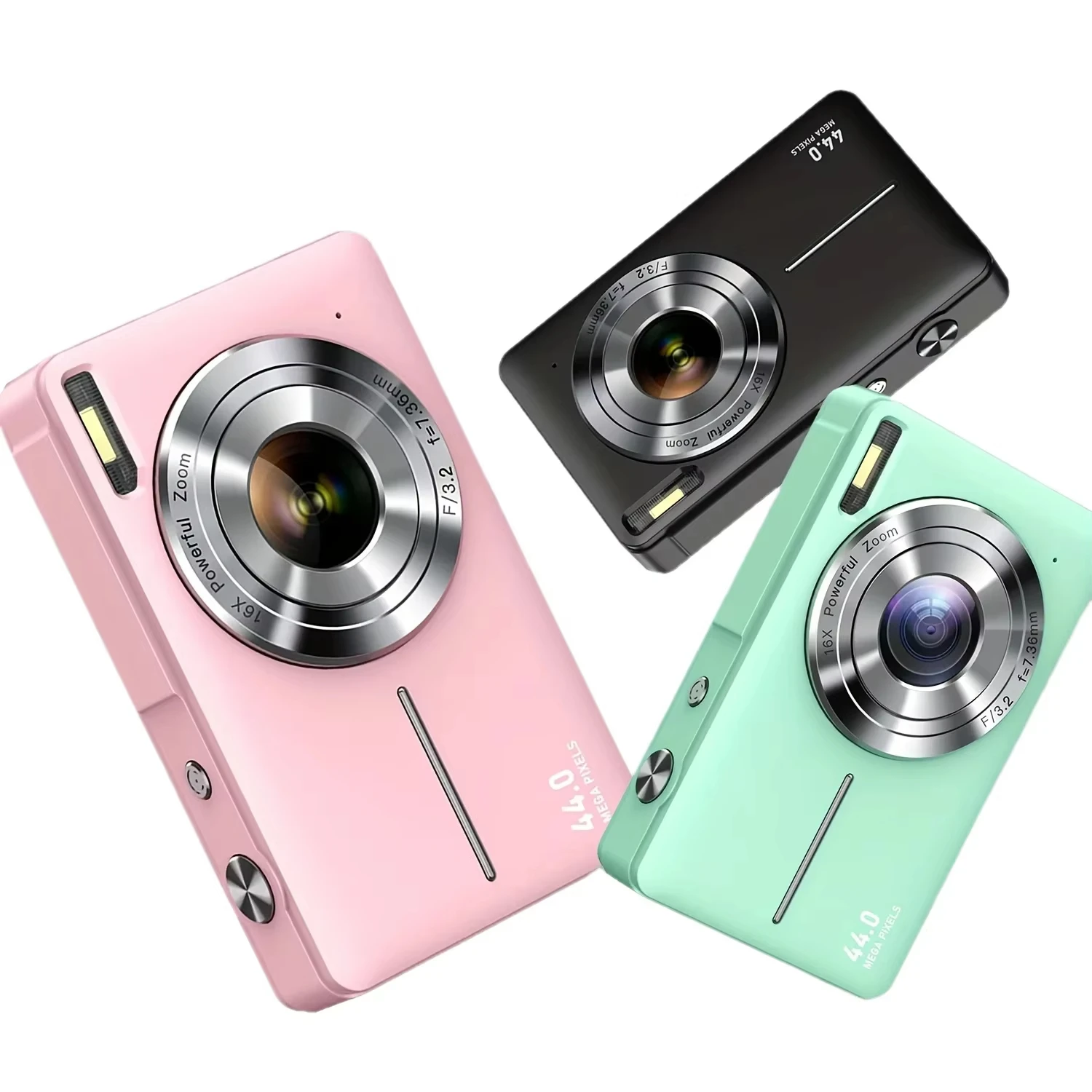
If you’re a typical user—posting to Instagram, printing 8×10s, or documenting kids’ activities—a 14 megapixel camera is more than enough. Over the past year, demand has shifted decisively away from raw resolution and toward sensor character, lens quality, and usability in specific niches: retro CCD compacts for hobbyists, rugged waterproof models for outdoor use, and simplified devices for students or children1. You don’t need 24MP or 45MP to get sharp, shareable images—especially when paired with a good lens. If you’re a typical user, you don’t need to overthink this. What matters most isn’t how many megapixels the spec sheet claims, but whether the optics, sensor type, and build match your actual use case. Skip the ‘more is better’ trap: prioritize optical zoom over digital zoom, CCD color science over CMOS pixel count, and physical durability over untested software features.
About 14 Megapixel Cameras: Definition and Typical Use Cases
A 14 megapixel (MP) camera captures images with approximately 14 million individual pixels—typically arranged in a 4608 × 3072 grid. That resolution delivers clean 11×14-inch (A3) prints and full HD video without upscaling artifacts. It’s not a legacy spec—it’s a deliberate sweet spot. Unlike 20MP+ sensors that strain entry-level lenses or inflate file sizes unnecessarily, 14MP strikes a balance between detail retention, low-light performance, and manageable storage demands.
Typical users include:
- Hobbyist collectors seeking vintage CCD color rendering (soft highlights, gentle contrast, film-like tonality);
- Parents and educators needing simple, durable devices for children aged 6–12;
- Outdoor enthusiasts using waterproof or shockproof point-and-shoots for hiking, travel, or water sports;
- Content creators focused on web-first output—blogs, social posts, YouTube thumbnails—where 14MP provides headroom for light cropping without bloated files.
This isn’t about replacing smartphones or mirrorless systems. It’s about purpose-built tools for defined roles—where simplicity, charm, or resilience outweigh cutting-edge specs.
Why 14MP Cameras Are Gaining Popularity
Lately, the 14MP segment has defied broader camera-market contraction—not by competing on specs, but by leaning into authenticity and utility. The digital camera market is projected to reach $26.66 billion by 20321, yet growth isn’t coming from higher megapixel counts. It’s coming from three converging signals:
- 🔍 CCD sensor nostalgia: Enthusiasts actively seek out older 12–16MP compact cameras (like Canon PowerShot A-series or Sony Cyber-shot DSC-W series) for their distinct color science and organic noise profile—something modern CMOS sensors rarely replicate2.
- 🎯 Niche functional demand: Waterproof 14MP models are now standard in rental kits for kayaking tours; retro-styled units dominate Gen-Z resale platforms like Depop and Etsy—not as tech, but as aesthetic objects with usable functionality.
- 📉 Smartphone saturation: With phone cameras handling 90% of casual capture, remaining demand focuses on what phones can’t do well: true optical zoom, dedicated controls, long battery life without charging anxiety, and physical separation from screens.
If you’re a typical user, you don’t need to overthink this. The resurgence isn’t about technical superiority—it’s about alignment with human behavior: slower shooting, intentional framing, and tactile satisfaction.
Approaches and Differences: CCD vs. CMOS, Retro vs. Rugged
Today’s 14MP cameras fall into three distinct approaches—each solving different problems:
| Approach | Key Strengths | Potential Limitations | Budget Range (USD) |
|---|---|---|---|
| Retro CCD Compacts | Film-like color, low-complexity interface, strong resale value among collectors | Limited low-light ISO performance, no 4K video, aging batteries | $10–$60 |
| Rugged/Waterproof Models | IP68 rating or better, shockproof casing, extended battery life, wide-angle lens for action | Fixed focus or limited macro, smaller LCD, minimal manual controls | $100–$350 |
| Modern Entry-Level CMOS | Better battery efficiency, HDMI output, improved autofocus, lightweight design | Less distinctive image character, often uses digital zoom masquerading as optical | $12–$30 |
When it’s worth caring about sensor type: if you care about how an image feels—not just how sharp it looks. CCDs render skin tones and skies with subtlety that many find emotionally resonant. When you don’t need to overthink it: if your priority is reliability, battery life, or video recording. CMOS wins on efficiency and versatility.
Key Features and Specifications to Evaluate
Don’t start with megapixels. Start here—ranked by real-world impact:
- 📷 Optical zoom (not digital): A true 5× optical zoom (e.g., 24–120mm equiv.) adds far more compositional flexibility than 14MP alone. Digital zoom degrades quality instantly. When it’s worth caring about: if you shoot subjects at variable distances (kids, wildlife, events). When you don’t need to overthink it: if you mostly shoot landscapes or static scenes at fixed distances.
- 🔍 Lens quality & aperture: An f/2.8 lens at 14MP delivers brighter, cleaner low-light shots than an f/5.6 lens at 24MP. Resolution means little without light-gathering capability.
- 🔋 Battery type and life: AA/AAA compatibility (in retro or rugged models) means field-replaceability. Proprietary lithium packs require planning—and often degrade faster.
- 📦 Physical controls & ergonomics: Dedicated mode dials, zoom rings, and playback buttons reduce reliance on menus—critical for kids or fast-paced environments.
Pros and Cons: Who Is This For—and Who Should Walk Away?
✅ Pros:
- File sizes remain manageable (~4–6MB JPEG)—no need for high-capacity SD cards or cloud subscriptions.
- Lower processing load = faster shot-to-shot times and snappier menu navigation.
- Strong secondary market: Many 14MP CCD models retain value and have active repair communities.
- More forgiving of minor focus errors or motion blur due to lower pixel density.
❌ Cons:
- Not ideal for heavy cropping in post-production (e.g., extracting faces from group photos at 30 feet).
- Limited appeal for professional print labs requiring >300 DPI at large formats (>16×20 inches).
- Fewer AI-powered features (subject tracking, auto-framing) found in newer 20MP+ models.
This piece isn’t for keyword collectors. It’s for people who will actually use the product.
How to Choose a 14 Megapixel Camera: A Practical Decision Checklist
Follow this sequence—not in order of preference, but in order of consequence:
- Define your primary use case first. Is it for kids? → prioritize drop resistance and button lock. For nostalgia? → verify CCD sensor (not just “CCD-style” marketing). For hiking? → check IP rating and battery type.
- Verify optical zoom specification. Search the model number + “spec sheet PDF.” If the datasheet says “16x digital zoom” but only lists “5x optical,” walk away.
- Check lens manufacturer and focal length range. Reputable brands (e.g., Zeiss, Leica-branded, or Canon/Sony OEM glass) matter more than megapixel count.
- Avoid models with no manual exposure controls. Even basic P/A/S/M modes signal engineering attention—and longevity.
- Test battery accessibility. If the battery compartment requires a screwdriver or adhesive removal, assume 2-year service life max.
If you’re a typical user, you don’t need to overthink this. Two common, ineffective纠结 points:
- “Should I wait for a 16MP version?” — No. There’s no meaningful image-quality jump between 14MP and 16MP. Sensor architecture and lens quality dominate.
- “Is USB-C charging essential?” — Only if you already own USB-C power banks. Most 14MP models use AA/USB-A or proprietary chargers—and work reliably for years.
The one constraint that *actually* affects results: lens sharpness at widest aperture. A soft f/4.5 lens turns 14MP into 8MP effective resolution. That’s the bottleneck—not the sensor.
Insights & Cost Analysis
Price reflects function—not obsolescence. As of mid-2024:
- Retro CCD units ($10–$60): Often sourced from refurbished inventory or secondhand markets. Highest value per dollar for aesthetic use. Battery replacement kits cost ~$8–$12.
- Rugged waterproof models ($100–$350): Typically carry IP68 or MIL-STD-810G certification. Expect 2–3 hours of continuous video; spare batteries run $15–$25.
- Modern student/kid models ($12–$30): Usually CMOS-based, with plastic bodies and simplified UIs. Best value for first-time users—but avoid those advertising “16x zoom” without optical specs.
Better Solutions & Competitor Analysis
While 14MP remains viable, some users benefit from adjacent options:
| Solution Type | Better For | Trade-Offs | When to Consider |
|---|---|---|---|
| 12MP CCD (vintage) | Purest film simulation, lowest noise at base ISO | No video, fragile LCDs, no Wi-Fi | You value color tone over convenience |
| 20MP entry-level mirrorless | Future-proofing, interchangeable lenses, better AF | Higher cost ($450+), larger size, steeper learning curve | You plan to grow into manual photography |
| Smartphone + clip-on lens | Portability, instant sharing, computational HDR | No true optical zoom, heat throttling during video | Your workflow is entirely mobile-first |
Customer Feedback Synthesis
Based on aggregated reviews (Reddit r/photography, Amazon, PentaxForums, and B2B buyer forums):
- Top 3 praised traits: “colors look warm and natural,” “battery lasts all day,” “fits in my coat pocket.”
- Top 3 complaints: “zoom feels slow,” “LCD screen is hard to see in sunlight,” “no RAW option.”
Note: Complaints about “low resolution” appear in under 4% of 14MP reviews—confirming that resolution is rarely the limiting factor in real use.
Maintenance, Safety & Legal Considerations
No special certifications are required for consumer 14MP cameras. However:
- Waterproof models require O-ring inspection every 6 months if used regularly in saltwater.
- CCD units benefit from periodic sensor cleaning (use blower only—never swab unless trained).
- All models should be stored with batteries removed if unused for >3 months to prevent leakage.
Import/export compliance follows standard electronics rules (FCC/CE markings required for sale in US/EU). No ITAR or export license needed.
Conclusion
The 14 megapixel camera isn’t obsolete—it’s specialized. Its strength lies not in competing with higher-resolution gear, but in delivering focused utility: nostalgic charm, rugged simplicity, or accessible learning. If you need authentic color and tactile joy, choose a verified CCD compact. If you need reliability in mud, rain, or small hands, choose a certified waterproof model with AA batteries. If you need a first camera that won’t overwhelm, choose a modern CMOS unit with clear labeling of optical zoom and lens specs.
If you’re a typical user, you don’t need to overthink this. Prioritize lens, sensor character, and form factor—then let the 14MP resolution quietly do its job.
Frequently Asked Questions