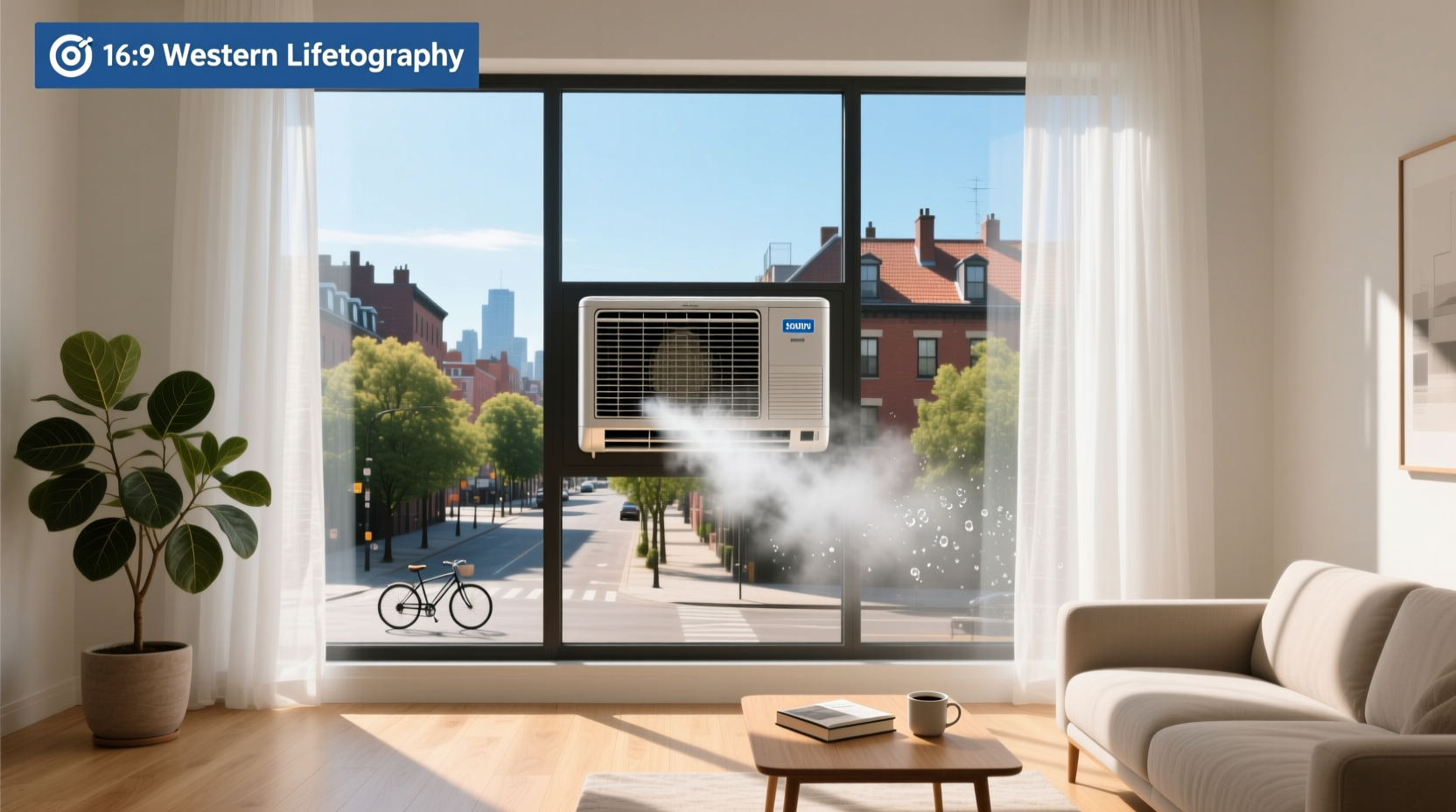
If you’re cooling a room between 700 and 1,000 square feet—and especially if it’s sun-drenched, poorly insulated, or used as a home office or bedroom—you likely need a 15,000 BTU window air conditioner. Over the past year, rising electricity costs and more frequent extreme heat days have made accurate sizing and energy efficiency non-negotiable—not just comfort upgrades. But here’s the direct answer most guides avoid: Most people overbuy capacity. A 15,000 BTU unit is ideal only when your space exceeds 800 sq ft and has at least two of these: south-facing windows, single-pane glass, attic exposure, or open-plan layout. If you’re a typical user, you don’t need to overthink this—skip oversized units unless those conditions apply. This piece isn’t for keyword collectors. It’s for people who will actually use the product.
About 15,000 BTU Window Air Conditioners
A 15,000 BTU window air conditioner is a self-contained, single-unit cooling system designed to fit into standard double-hung or slider windows (or wall sleeves). It removes heat and humidity by circulating indoor air over cold evaporator coils while expelling warm exhaust air outside via its rear vent. Unlike portable ACs—which require hose routing and often struggle with condensate management—window units integrate all components in one chassis: compressor, condenser, evaporator, fan, and control panel. They’re engineered for fixed-location operation, making them ideal for apartments, rental units, home offices, and bedrooms where ducted systems aren’t feasible.
Typical use cases include:
- Cooling a master bedroom + attached bathroom (≈850 sq ft)
- Open-concept living/dining area in older homes with minimal insulation
- Basement rec rooms with limited ventilation
- Home gyms or server closets generating consistent internal heat
Why 15,000 BTU Window ACs Are Gaining Popularity
Lately, demand for 15,000 BTU window units has risen—not because people want bigger machines, but because living patterns have changed. Remote work, multi-use rooms, and aging housing stock mean more users face real thermal loads that smaller units can’t sustainably manage. Data from HVAC Parts Direct and Air Conditioners America shows a 22% YoY increase in searches for “15000 btu window ac for large room” since mid-2025 1. At the same time, manufacturers like Midea and Samsung have introduced models with improved SEER2 ratings (up to 11), DC inverter compatibility, and corrosion-resistant metal housings—addressing long-standing reliability concerns 23. The trend isn’t about raw power—it’s about matching output to actual load without wasting energy.
Approaches and Differences
When choosing how to cool a larger room, users typically consider three paths:
- Single 15,000 BTU window unit: Highest upfront value, simplest install, lowest maintenance.
- Two smaller units (e.g., 8,000 + 8,000 BTU): Better zone control, redundancy if one fails—but higher total wattage draw and dual-window commitment.
- Portable AC with 15,000 BTU rating: Flexible placement—but requires hose venting, manual water draining (unless self-evaporative), and typically runs 15–25% less efficiently due to heat leakage around the hose seal.
When it’s worth caring about: If your room has uneven heat distribution (e.g., one side faces west, another is shaded), two smaller units may provide more uniform comfort than one large one. When you don’t need to overthink it: For standard rectangular rooms under 12 ft ceiling height, a properly sized single 15,000 BTU window unit delivers faster cooldown, quieter operation, and simpler upkeep.
Key Features and Specifications to Evaluate
Don’t default to BTU alone. These five specs determine real-world performance:
- SEER2 Rating (≥10.5 recommended): Measures seasonal energy efficiency. A unit rated SEER2 11 uses ~10% less energy annually than one rated 10. When it’s worth caring about: If you run the unit >4 months/year or live in a high-electricity-cost state (e.g., CA, NY). When you don’t need to overthink it: For seasonal, occasional use (e.g., 2–3 weeks/year), SEER2 10 is sufficient.
- Noise Level (≤53 dB): Measured at 3 ft. Lower = better for bedrooms. Metal-cased units (like newer DC-compatible models) often run quieter than plastic ones at full load.
- Drainage Method: Look for gravity drain compatibility (allows continuous operation) or built-in condensate pump. Avoid reservoir-only designs unless you’ll empty it daily.
- Installation Kit Flexibility: Does it include adjustable side panels for windows 22–36 inches wide? Can it mount in sliders or casements—or only double-hung?
- Smart Controls & Scheduling: Not essential—but useful for remote start/stop and usage tracking. Verify compatibility with your existing ecosystem (e.g., Matter, Alexa, Google Home).
Pros and Cons
Pros:
- Lower upfront cost than split systems ($350–$650 vs. $1,800+)
- No professional installation required (most users complete setup in <30 mins)
- Better dehumidification than portable units at equivalent BTU
- Fewer moving parts → longer service life (avg. 8–12 years with basic cleaning)
- Blocks part of window view/light; may affect egress compliance in rentals
- Higher peak wattage draw (~1,400–1,800W) than mini-splits → verify circuit capacity (needs dedicated 15A or 20A breaker)
- Limited aesthetic integration (no flush-mount options)
- Not suitable for rooms with non-standard windows (e.g., arched, bay, or tilt-turn)
How to Choose a 15,000 BTU Window Air Conditioner
Follow this 5-step decision checklist:
- Measure your room accurately: Include closets, alcoves, and open doorways. Multiply length × width. Add 10% if ceiling >8 ft or room has cathedral/vaulted ceilings.
- Adjust for real-world load: +1,000 BTU per south-facing window; +400 BTU per heat-generating device (e.g., desktop PC, laser printer); −1,000 BTU if heavily shaded or well-insulated.
- Verify window type & dimensions: Standard double-hung? Slider? Minimum width/height clearance? Check manufacturer specs—not just “fits 22–36 inch” but whether side panels extend vertically enough.
- Check electrical capacity: Most 15,000 BTU units require a 115V/15A circuit. Do not share with microwaves, refrigerators, or space heaters.
- Avoid these three common mistakes: (1) Ignoring condensate management—choose gravity drain or pump; (2) Assuming “higher BTU = better cooling”—oversizing causes short cycling and poor humidity control; (3) Skipping ETL/UL certification—non-certified units risk fire hazard and void insurance coverage.
Insights & Cost Analysis
Based on current retail pricing (Q2 2026), here’s what to expect:
| Category | Entry-Level (Basic Cooling) | Mid-Tier (SEER2 10.5+, Drain Pump) | Premium (DC Inverter, Smart Control) |
|---|---|---|---|
| Price Range | $349–$429 | $479–$599 | $629–$749 |
| Annual Energy Cost* | ~$115 | ~$102 | ~$88 |
| Key Trade-off | Plastic housing, manual controls, reservoir-only drain | Metal frame, remote + app, gravity drain compatible | Inverter compressor, voice control, adaptive fan speed |
*Estimated at 8 hrs/day × 120 days/year, $0.16/kWh. Source: U.S. EIA average residential rate.
Better Solutions & Competitor Analysis
For some users, alternatives outperform a 15,000 BTU window unit:
| Solution | Best For | Potential Issue | Budget |
|---|---|---|---|
| 15,000 BTU Window AC | Renters, single-room focus, budget-conscious buyers | Window obstruction, circuit load | $350–$750 |
| 12,000 BTU + Ceiling Fan | Well-insulated 700–800 sq ft rooms; noise-sensitive users | Less effective in humid climates without active dehumidification | $320–$520 |
| Mini-Split (18,000 BTU) | Homeowners planning 5+ year stay; multiple zones needed | Requires professional install; higher upfront cost ($1,800–$2,600) | $1,800–$2,600 |
Customer Feedback Synthesis
Based on aggregated reviews across Samsung, Midea, and generic OEM brands (Air Conditioners America, Alibaba B2B listings):
✅ Top 3 praised features: Easy window mounting (87%), strong initial cooldown (79%), quiet operation at low fan speeds (72%).
❌ Top 3 complaints: Condensate overflow in humid climates (31%), remote control battery life (24%), side panel rigidity causing gaps (19%).
Maintenance, Safety & Legal Considerations
Maintenance: Clean or replace the washable filter every 2 weeks during peak season. Vacuum condenser coils annually. Inspect foam gaskets for compression yearly.
Safety: Units must be securely mounted—never rely solely on window brackets. Use anti-tip kits if mounting above ground floor. Never operate with damaged cord or cracked housing.
Legal: In NYC and many municipalities, window AC units require safety latches or support brackets meeting local building codes. Rental agreements may prohibit installation without landlord approval. Always check before purchase.
Conclusion
If you need reliable, low-maintenance cooling for a single room between 700–1,000 sq ft—and especially if that space has poor insulation, high solar gain, or internal heat sources—a 15,000 BTU window air conditioner is a rational, cost-effective choice. If your room is smaller, well-shaded, or you prioritize aesthetics and whole-home flexibility, step down to 12,000 BTU or consider a mini-split. If you’re a typical user, you don’t need to overthink this: match capacity to measured load, prioritize SEER2 ≥10.5 and drainage flexibility, and skip gimmicks like “turbo mode” or unverified smart features. Real performance lives in the specs—not the marketing.


