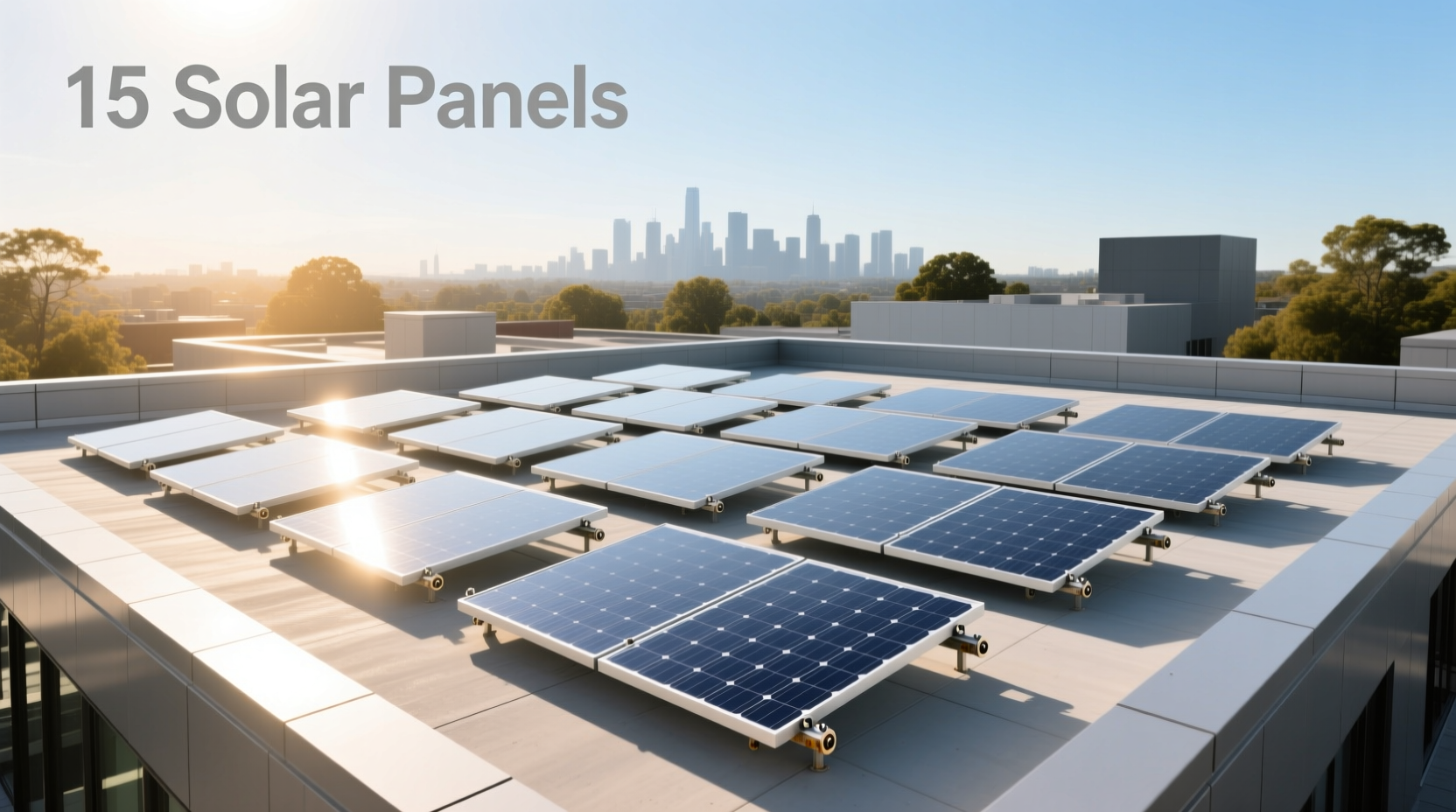
If you’re installing a residential solar system this year, 15 panels (≈6–7 kW) is the most common configuration — and 2026 is the first year where choosing TOPCon or N-Type over legacy PERC is objectively justified. Over the past year, module efficiency has jumped from 21% to 22–23% standard, wholesale prices dropped to $0.30–$0.50/W, and Virtual Power Plant (VPP) participation became widely available — meaning your system can now earn revenue during peak grid stress. If you’re a typical user, you don’t need to overthink panel aesthetics or minor wattage differences. Focus instead on three things: cell technology (TOPCon/N-Type), temperature coefficient (≤−0.35%/°C), and bankable Tier 1 warranty enforcement. This piece isn’t for keyword collectors. It’s for people who will actually use the product.
About 15 Solar Panels
A “15 solar panels” setup refers to a midsize residential photovoltaic system delivering roughly 6 to 7 kilowatts (kW) of DC capacity, sufficient to offset 70–100% of electricity use for homes of 1,800–2,600 sq ft in moderate-climate U.S. regions1. It’s not a universal number — actual output depends on panel wattage (now commonly 420–480 W each), roof orientation, shading, and local insolation. But 15 panels represents the practical sweet spot: large enough to meaningfully reduce utility bills and qualify for full federal tax credit benefits, yet small enough to avoid complex structural upgrades or permitting delays common with 20+ panel arrays. It’s the default starting point for installers quoting systems under $25,000 pre-incentive — and increasingly the baseline for smart home energy ecosystems integrating batteries, EV chargers, and grid-responsive inverters.
Why 15 Solar Panels Is Gaining Popularity
Lately, demand for standardized 15-panel configurations has accelerated — not because of marketing, but because of three converging shifts: technology maturation, cost stabilization, and grid policy evolution. First, TOPCon and N-Type cells have moved from lab curiosities to commercial defaults — delivering real-world gains in low-light performance and heat tolerance without premium pricing2. Second, installed costs per watt have plateaued between $2.60 and $3.40 (pre-incentive), making ROI calculations far more predictable than in 2022–2024’s volatile market3. Third, utilities and aggregators now actively recruit homeowners into Virtual Power Plants (VPPs), turning passive generation into active income — and 15-panel systems are the smallest viable entry point for many VPP programs4. When it’s worth caring about: if your utility offers time-of-use rates or VPP enrollment, 15 panels is the minimum scale that makes financial participation realistic. When you don’t need to overthink it: if you live in a rural area with flat net metering and no VPP pilots, panel count matters less than per-watt value and installer reliability.
Approaches and Differences
There are two dominant technical paths for a 15-panel system in 2026 — and they’re not interchangeable:
- TOPCon (Tunnel Oxide Passivated Contact): The new commercial standard. Replaces older PERC architecture with rear-side passivation layers, boosting efficiency to 22–23% while maintaining silicon manufacturing infrastructure. Offers lower degradation, better bifacial gain potential, and improved performance in warm or diffuse-light conditions.
- N-Type Mono (e.g., HJT or IBC variants): Higher-end option, often found in all-black premium panels. Uses phosphorus-doped silicon wafers, eliminating light-induced degradation (LID) entirely. Typically achieves 23–24.5% efficiency and superior temperature coefficients (−0.25%/°C). Slightly higher upfront cost, but stronger long-term yield retention.
If you’re a typical user, you don’t need to overthink the difference between TOPCon and N-Type at the spec sheet level. Both outperform PERC meaningfully. Prioritize verified field data over lab ratings — and always confirm compatibility with your chosen inverter and monitoring platform.
Key Features and Specifications to Evaluate
Not all specs carry equal weight. Here’s what moves the needle — and what rarely does:
| Specification | What to Look For (2026 Standard) | When It’s Worth Caring About | When You Don’t Need to Overthink It |
|---|---|---|---|
| Cell Technology | TOPCon or N-Type (avoid PERC unless price delta >15%) | If your roof faces west/southwest or experiences afternoon shading — TOPCon’s low-light gain matters. | If you have unshaded south-facing roof space and only care about annual kWh — both perform similarly. |
| Efficiency | 22–23% (standard); ≥24% (premium) | If roof space is tight (<300 sq ft usable) — higher efficiency saves physical footprint. | If you have >400 sq ft of clean roof — 22% vs. 24% changes total output by <3%. |
| Temperature Coefficient | −0.25% to −0.35% / °C | If summer highs exceed 95°F regularly — lower coefficient prevents >8% seasonal output loss. | In coastal or temperate zones (<85°F avg summer), coefficient impact is <2% annually. |
| Annual Degradation | ≤0.45% (Tier 1 brands guarantee 92%+ output at year 25) | If planning 20+ year ownership — degradation compounds; 0.3% vs. 0.5% = ~5% more lifetime energy. | If reselling within 7–10 years — warranty coverage matters more than long-term decay rate. |
Pros and Cons
A 15-panel system delivers strong balance between scalability and simplicity — but it’s not universally optimal.
- ✅ Pros: Fits most standard roofs without reinforcement; qualifies for full 30% federal tax credit; compatible with mainstream battery storage (e.g., Tesla Powerwall, Generac PWRcell); ideal size for VPP enrollment; easier permitting than larger arrays.
- ❌ Cons: May fall short in high-electricity homes (>1,500 kWh/month) or those adding EV charging/heat pumps without oversizing; limited headroom for future expansion (adding panels later often requires inverter replacement); less cost-per-watt advantage than bulk 20+ panel orders.
It’s best suited for households seeking immediate bill reduction, grid resilience, and participation in emerging energy markets — not for off-grid cabins or commercial facilities. If you’re a typical user, you don’t need to overthink whether 15 is “enough.” Real-world production varies more by installer quality and site assessment than by adding or removing one panel.
How to Choose a 15 Solar Panels System
Follow this 6-step decision checklist — with hard stops where trade-offs matter:
- Verify cell type first. Demand TOPCon or N-Type documentation — not just “high-efficiency.” Avoid PERC unless price savings exceed $750 and your installer provides third-party yield modeling.
- Require a 25-year linear power warranty — not just “product warranty.” Anything shorter or non-linear (e.g., “90% at year 10, then 80% at year 25”) signals weaker cell stability.
- Confirm VPP readiness. Ask: “Is this inverter model already enrolled in [your utility]’s VPP program?” Don’t rely on “future compatibility” claims.
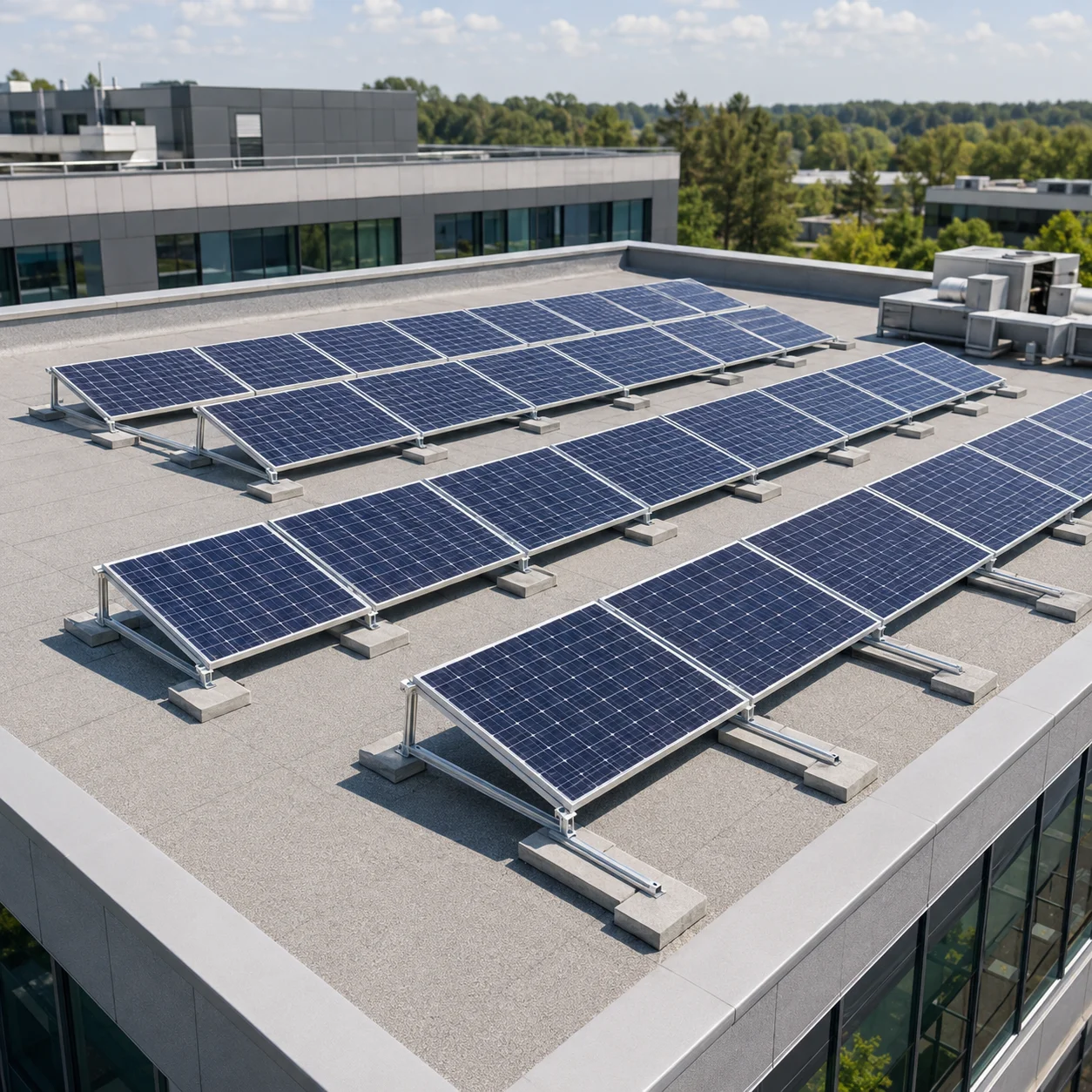
- Reject generic mounting kits. 15 panels require load-specific engineering — especially for tile, slate, or flat roofs. Insist on wind/snow load reports stamped by a licensed engineer.
- Compare installed cost per watt — not total price. A $22,000 quote for 15 panels = $2.93/W (solid). A $19,500 quote for 12 panels = $3.25/W (worse value).
- Walk away if warranty enforcement is vague. Tier 1 brands (LONGi, Jinko, Canadian Solar) offer enforceable global warranties. “Local distributor warranty” is not equivalent.
Insights & Cost Analysis
2026 pricing reflects maturity — not volatility. Here’s what’s realistic for a turnkey 15-panel system (6.75 kW, average U.S. installation):
- Module-only (wholesale): $4,500–$6,800 (at $0.30–$0.50/W for bulk pallets)
- Installed cost (pre-incentive): $17,550–$22,950 ($2.60–$3.40/W)
- Net cost after 30% federal tax credit: $12,285–$16,065
- Typical payback period: 7–12 years (varies by state incentives, utility rates, and net metering policy)
Don’t chase the lowest per-watt quote if it omits structural engineering, interconnection fees, or monitoring platform licensing. Those “hidden” items add $1,200–$2,500 on average — and are rarely waived, even by aggressive installers.
Better Solutions & Competitor Analysis
For most homeowners, a 15-panel TOPCon system is the optimal balance. But context changes everything. Here’s how alternatives compare:
| Solution Type | Best For | Potential Problem | Budget Consideration |
|---|---|---|---|
| 15-panel TOPCon + Smart Inverter | Standard suburban home; VPP participation; long-term ownership | Requires certified installer for firmware updates | $2.60–$3.00/W (best value tier) |
| 15-panel N-Type All-Black + Battery-Ready | HOA-restricted neighborhoods; heat-prone climates; resale-focused owners | ~12% higher module cost; fewer installer partners | $2.90–$3.40/W |
| 12-panel PERC + Oversized Inverter | Budget-constrained buyers in mild climates with ample roof space | Lower lifetime yield; harder to upgrade later; PERC supply shrinking | $2.30–$2.70/W (not recommended unless < $18k total) |
Customer Feedback Synthesis
Based on aggregated installer reviews, forum threads (r/solarenergy), and EnergySage project data5, top recurring themes include:
- ✅ Frequent praise: “Output matched or exceeded estimates,” “Installer handled permits smoothly,” “VPP payments started within 6 weeks,” “All-black panels look like part of the roof.”
- ⚠️ Common complaints: “Monitoring app crashed daily for first month,” “Mounting hardware arrived damaged,” “Battery add-on cost wasn’t disclosed until final contract,” “No explanation of how degradation warranty is enforced internationally.”
Maintenance, Safety & Legal Considerations
A 15-panel system requires minimal maintenance — but critical oversight remains essential:
- Annual cleaning is optional in most U.S. regions (rain handles ~85% of soiling); skip if roof pitch >30° and no nearby trees.
- Electrical safety: Only licensed professionals should inspect wiring or grounding — DIY work voids warranties and violates NEC Article 690.
- Legal compliance: Interconnection agreements must be signed before activation; some HOAs still restrict panel visibility — check CC&Rs before signing contracts.
- Insurance: Notify your carrier — most policies cover solar as “attached equipment,” but deductibles may apply for weather damage.
Conclusion
If you need a reliable, future-ready, and financially sound residential solar system in 2026, choose a 15-panel configuration built with TOPCon or N-Type modules, paired with a VPP-capable inverter, and backed by a Tier 1 25-year linear warranty. Skip PERC unless budget forces a trade-off — and never sacrifice warranty enforceability for a $0.10/W saving. If you’re a typical user, you don’t need to overthink panel color, micro-inverter vs. string inverter (both work well at this scale), or minor efficiency deltas. Focus on what endures: technology longevity, grid participation readiness, and installer accountability. That’s where real value lives.