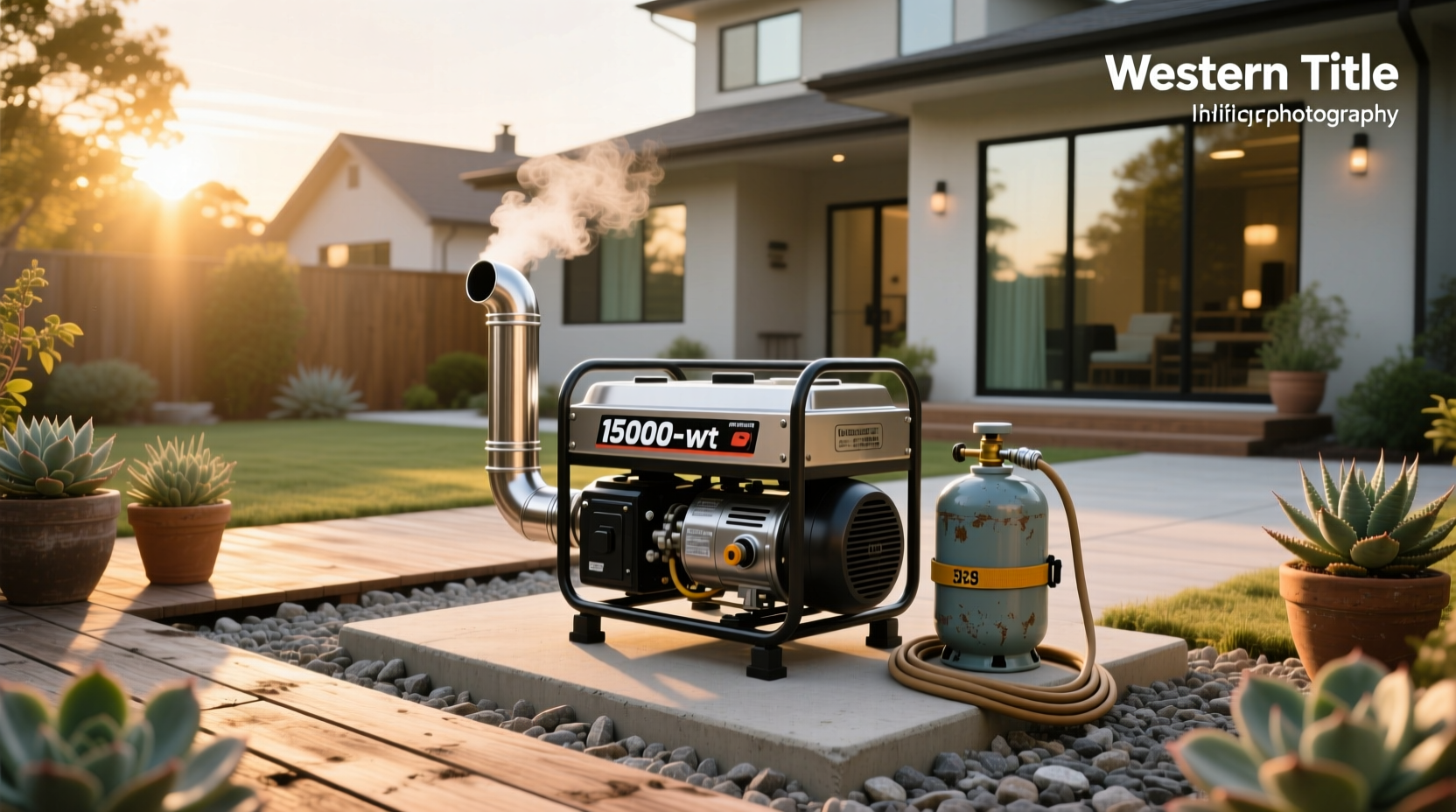
If you’re sizing up a 15000 watt propane generator for whole-house backup in 2026, skip the fuel-type rabbit hole first. Here’s your immediate verdict: For most homeowners with access to natural gas infrastructure, a Tri-Fuel (gasoline/propane/natural gas) model is objectively more reliable long-term—especially when paired with a professionally installed transfer switch. If you prioritize portability, simplicity, or lack a natural gas line, a high-efficiency Dual-Fuel (gasoline/propane) unit with EFI (electronic fuel injection) delivers better runtime and lower maintenance than legacy carbureted models. Over the past year, Tri-Fuel adoption has accelerated—not because it’s ‘new,’ but because natural gas availability in suburban U.S. homes rose sharply, and EFI systems cut propane-related power loss from ~10% to under 4% at full load 1. This piece isn’t for keyword collectors. It’s for people who will actually use the product.
About 15000 Watt Propane Generators
A 15000 watt propane generator is a portable or semi-portable standby power source engineered to sustain an entire single-family home during outages—including refrigeration, sump pumps, well pumps, HVAC compressors, and lighting. Unlike smaller units (<10 kW), this class operates at true whole-house scale, not just ‘essential circuits.’ Most models in this range deliver 12,000–13,500 watts of continuous (rated) output—critical for managing motor startup surges (e.g., a 5-ton AC unit draws ~14,000W peak). They run on propane (LPG) either natively or as part of a multi-fuel system, leveraging propane’s stable shelf life, lower BTU cost (~12% less per BTU than gasoline 2), and cleaner combustion profile.
Why 15000W Propane Generators Are Gaining Popularity
Lately, demand for 15000W propane-capable generators has surged—not due to novelty, but to three converging realities: (1) Grid instability in wildfire- and storm-prone regions; (2) rising natural gas access in new and retrofitted suburban developments; and (3) maturity of EFI technology, which eliminates cold-start failures and reduces propane efficiency penalties. The global portable generator market is projected to reach $9.41 billion by 2035, with North America driving over 40% of volume—and propane-powered units capturing >35% of the >12kW segment 3. Users aren’t buying ‘fuel flexibility’ as a feature—they’re buying operational certainty: the ability to run for days without refueling (via NG line) or months without fuel degradation (propane).
Approaches and Differences: Tri-Fuel vs Dual-Fuel
The core decision isn’t ‘propane or not’—it’s how many fuel paths you need. Two architectures dominate:
- Dual-Fuel (Gasoline + Propane): Simpler plumbing, lighter weight, higher mobility. Propane mode typically delivers ~90–95% of gasoline-rated output. Ideal for rural users, job sites, or those without NG infrastructure.
- Tri-Fuel (Gasoline + Propane + Natural Gas): Adds a dedicated NG regulator and hose interface. Enables unlimited runtime when connected to a home’s NG supply—but requires professional installation and sacrifices ~20% peak output on NG versus gasoline. Best for suburban/urban users seeking ‘set-and-forget’ resilience.
When it’s worth caring about: If your home has a natural gas line and you’ve experienced >24-hour outages, Tri-Fuel’s NG capability eliminates fuel logistics entirely. That’s not convenience—it’s risk reduction.
When you don’t need to overthink it: If you live off-grid, rent, or move frequently, Dual-Fuel gives you full control and avoids permanent modifications. If you’re a typical user, you don’t need to overthink this.
Key Features and Specifications to Evaluate
Don’t default to wattage alone. Prioritize these five measurable specs:
- Rated (continuous) output: Not peak/surge. A true 15000W unit should sustain ≥12,000W on propane at 25°C ambient. Verify in manufacturer test reports—not marketing sheets.
- EFI integration: Carbureted propane systems suffer from inconsistent air/fuel ratios, especially in temperature swings. EFI maintains stoichiometric burn across conditions—critical for longevity and emissions compliance.
- Transfer switch compatibility: All 15000W units require a 50A NEMA 14-50R outlet. Confirm the model supports UL-listed manual or automatic transfer switches (e.g., Reliance Controls or Generac RTS series).
- Runtime at 50% load: On a 20-lb propane tank, expect ~8–10 hours. On a 100-lb tank, ~40–45 hours. Tri-Fuel models list NG runtime separately (typically ‘unlimited’—but verify minimum pressure requirements: 7–11 inches WC).
- CO auto-shutoff & low-oil sensor: Non-negotiable safety features. Check third-party lab validation (e.g., CSA or ETL certification), not just brand claims.
Pros and Cons
| Aspect | Tri-Fuel Advantage | Dual-Fuel Advantage |
|---|---|---|
| Long-term fuel cost | Natural gas is ~30% cheaper per kWh than propane; ~50% cheaper than gasoline | Propane costs ~12% less per BTU than gasoline—but still more than NG |
| Storage & shelf life | Propane tanks last indefinitely; NG is piped—no storage needed | Same propane advantage; no NG dependency |
| Mobility & setup speed | NG connection requires fixed mounting and licensed gas fitter | Plug-and-play with standard propane tank; no permits needed |
| Output consistency | NG mode loses ~20% peak power; EFI mitigates variance on propane/gas | Propane mode loses ~5–8% vs gasoline; EFI narrows gap to ~3–4% |
| Maintenance complexity | Three fuel paths = more valves, regulators, hoses → higher service frequency | Fewer components → lower failure rate over 5+ years |
How to Choose a 15000W Propane Generator
Follow this actionable checklist—prioritizing real-world constraints over theoretical ideals:
- Calculate actual load—not nameplate ratings. Use a Kill-A-Watt meter on your fridge, furnace blower, and AC compressor. Add 25% headroom. If total <10kW continuous, a 12kW unit may suffice—and save $1,200+.
- Verify NG line readiness. Don’t assume ‘natural gas available’ means ‘generator-ready.’ Confirm static pressure (min. 7" WC), pipe diameter (≥½"), and distance to outlet (≤25 ft recommended). If uncertain, start with Dual-Fuel.
- Require a transfer switch? Yes—always. Backfeeding via dryer outlet is illegal, dangerous, and voids insurance. Budget $350–$800 for a manual switch + electrician labor. Automatic switches add $1,200–$2,500.
- Avoid carbureted propane models. They clog, stall in humidity, and lose >10% efficiency after 6 months. EFI is now standard on reputable 15kW units—pay the premium.
- Check propane consumption at 75% load. A realistic figure is 2.4–2.8 gallons/hour. A 100-lb tank holds ~23.6 gallons—so ~10 hours runtime at full load, ~20+ at half-load.
If you’re a typical user, you don’t need to overthink this.
Insights & Cost Analysis
Upfront price isn’t the full story. Consider lifetime cost:
- Dual-Fuel units retail between $2,499–$3,199 (e.g., DuroMax XP15000EH, Champion 15000W). Propane cost: ~$3.20/gal → ~$7.60/hour at full load.
- Tri-Fuel units start at $3,499 (e.g., Champion 15000W Tri-Fuel, DuroMax XP15000E). Natural gas cost: ~$0.012/kWh → ~$3.20/hour at full load—~58% savings versus propane.
Break-even point: If you experience >150 outage hours/year, Tri-Fuel pays back its $800–$1,200 premium in fuel savings within 2–3 years. Below that threshold, Dual-Fuel remains financially rational.
Better Solutions & Competitor Analysis
| Category | Suitable For | Potential Problem | Budget Range (USD) |
|---|---|---|---|
| High-Efficiency Dual-Fuel (EFI) | Rural users, renters, contractors, frequent movers | No NG fallback; propane tank logistics during extended outages | $2,499–$3,199 |
| Tri-Fuel with Smart Monitoring | Suburban homeowners with NG line; >24-hr outage history | Higher install complexity; NG pressure sensitivity | $3,499–$4,299 |
| Standby + Portable Hybrid Setup | Users needing both whole-house coverage AND mobility | Double investment; coordination overhead | $5,200–$7,500 |
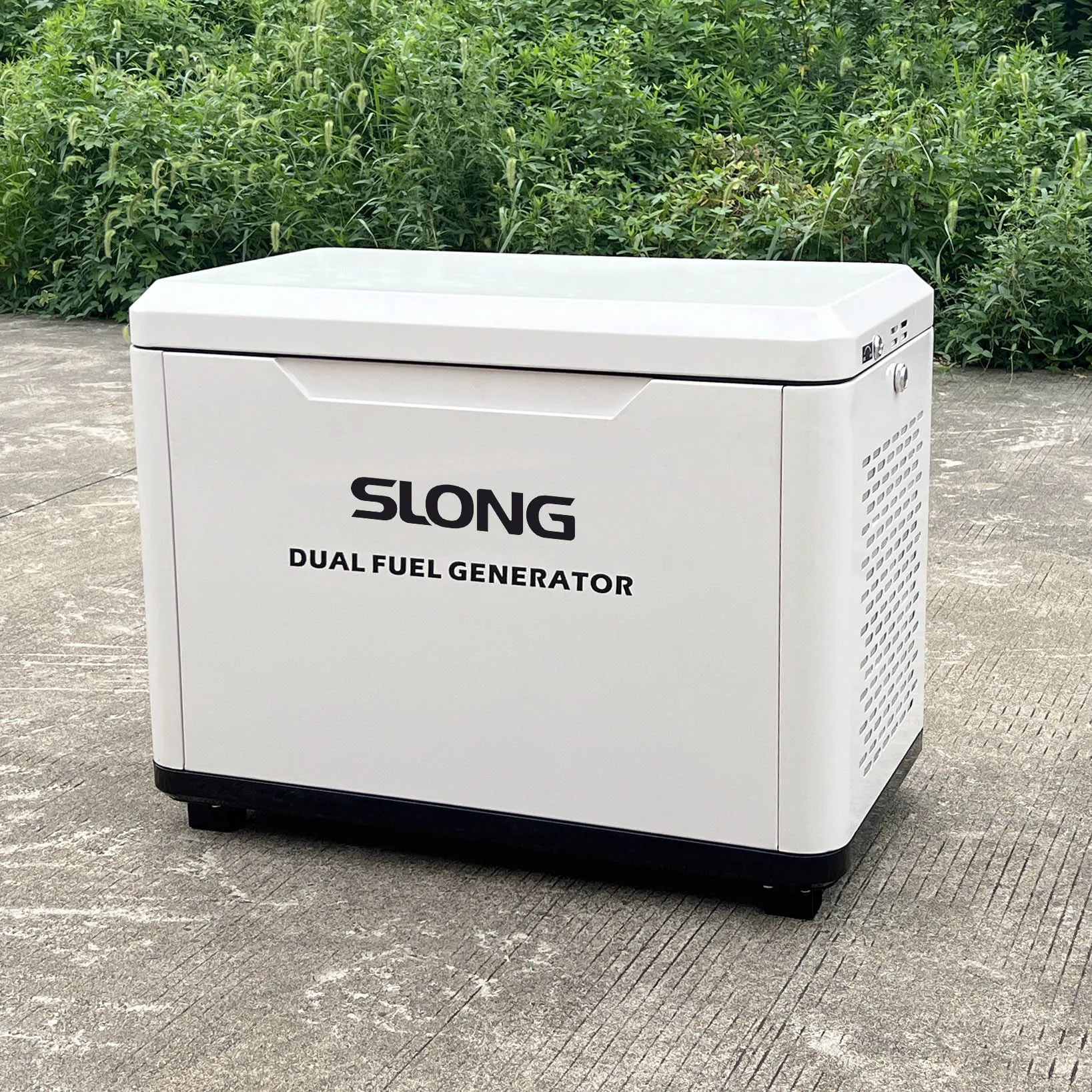
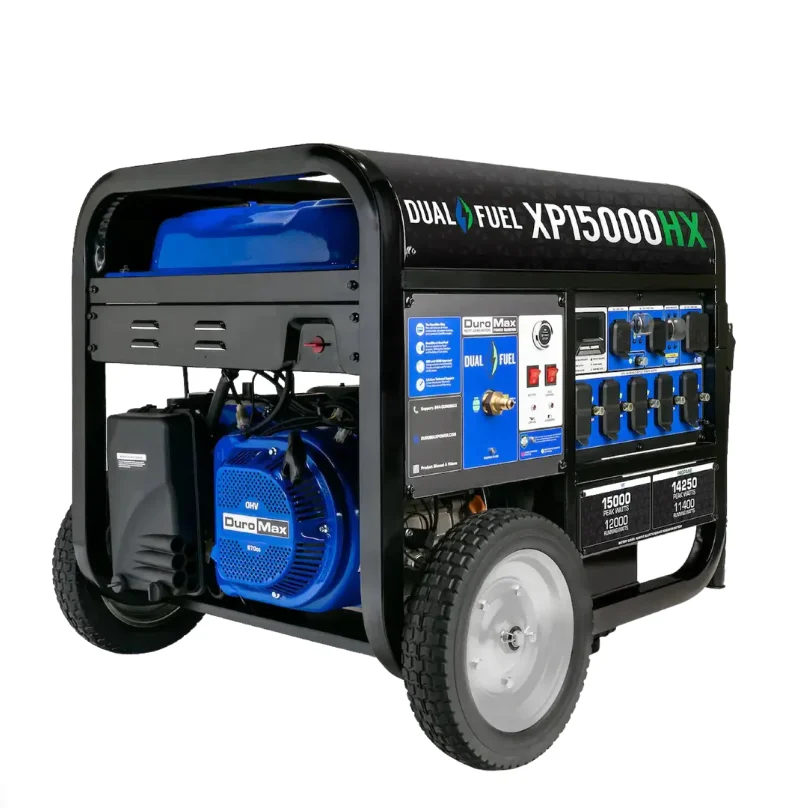
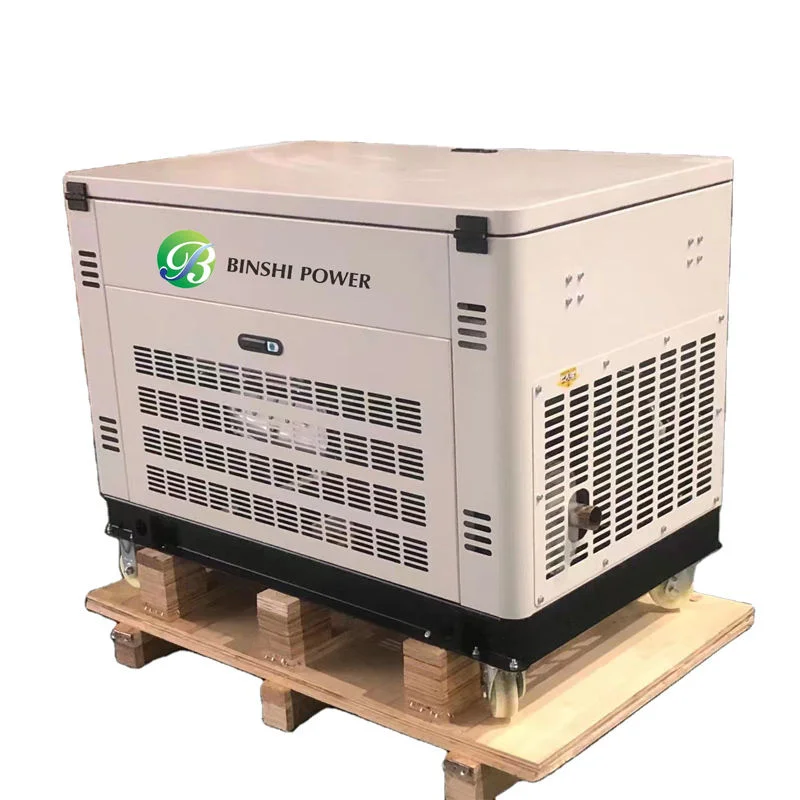
Customer Feedback Synthesis
Based on aggregated reviews (Consumer Reports, Reddit r/Generator, and retailer verified purchases), top recurring themes:
- ✅ Highly praised: EFI reliability in sub-freezing temps; quiet operation at 50% load (<72 dB); intuitive fuel selector dial; clear owner’s manual diagrams.
- ❌ Frequently cited: Weight (320–360 lbs) makes positioning difficult without wheel kit; propane regulator calibration drift after 18 months; smartphone app connectivity drops if Wi-Fi signal weakens beyond 30 ft.
Maintenance, Safety & Legal Considerations
These are not optional:
- Annual oil change + filter replacement (use SAE 10W-30 synthetic; never conventional oil in EFI engines).
- Propane regulator inspection every 2 years—look for corrosion, cracked diaphragms, or erratic pressure readings.
- Transfer switch must be installed by a licensed electrician and inspected per NEC Article 702. DIY setups risk electrocution, fire, and utility backfeed fines.
- Never operate indoors or in enclosed garages—CO buildup kills within minutes. Place ≥5 ft from windows/doors and on level, non-combustible surface.
Conclusion
If you need uninterrupted, hands-off power during multi-day outages and have a natural gas line, choose a Tri-Fuel 15000W generator with EFI and invest in a certified transfer switch. If you need flexible, deploy-anywhere backup without permanent hookups—or live where NG isn’t viable—choose a Dual-Fuel EFI model with robust frame-mounted wheels and a 100-lb propane tank bracket. Both options eliminate the volatility of gasoline storage and deliver proven whole-house resilience. What matters isn’t fuel type—it’s matching architecture to your physical infrastructure and outage profile.


