Short answer: For most BESS and solar DC combiner applications, choose a ceramic-sealed, SPST-NO 1500VDC contactor rated ≥200A continuous with 24VDC coil control and UL/IEC 61851-1 or IEC 60947-4-1 certification. Epoxy-sealed units are well-suited for applications with stable thermal environments and moderate cycling requirements. If you’re a typical user, you don’t need to overthink this.
This isn’t about finding “the best” 1500VDC relay—it’s about matching your application’s electrical, thermal, and operational constraints to a device that delivers consistent performance over time. We’ll cut through three common distractions: (1) mistaking peak current rating for sustainable switching capability, (2) assuming all 1500VDC labels mean equal dielectric strength under real-world humidity and contamination, and (3) conflating coil voltage compatibility with system-level control architecture. The one constraint that actually determines success? Contact erosion rate under repetitive make/break cycles at nominal load—not headline voltage or ampacity.
About 1500VDC Relays: Definition and Typical Use Cases
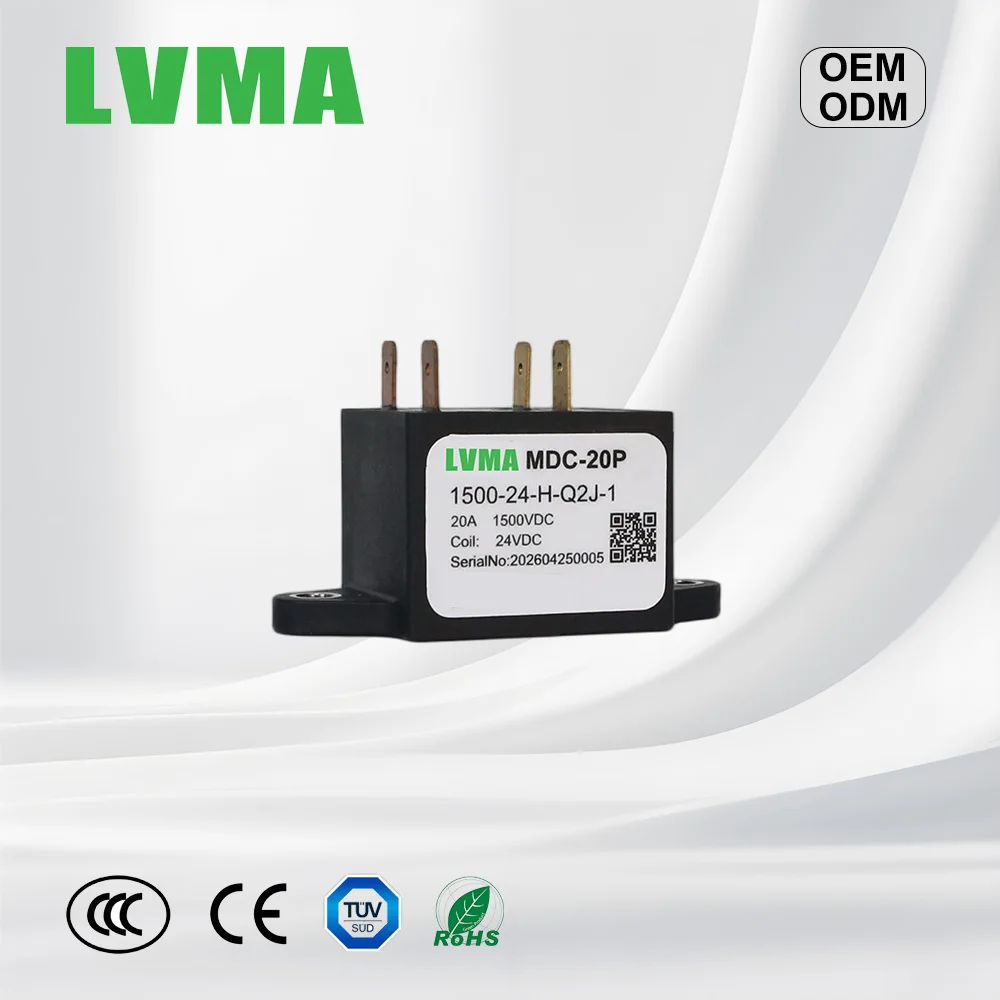
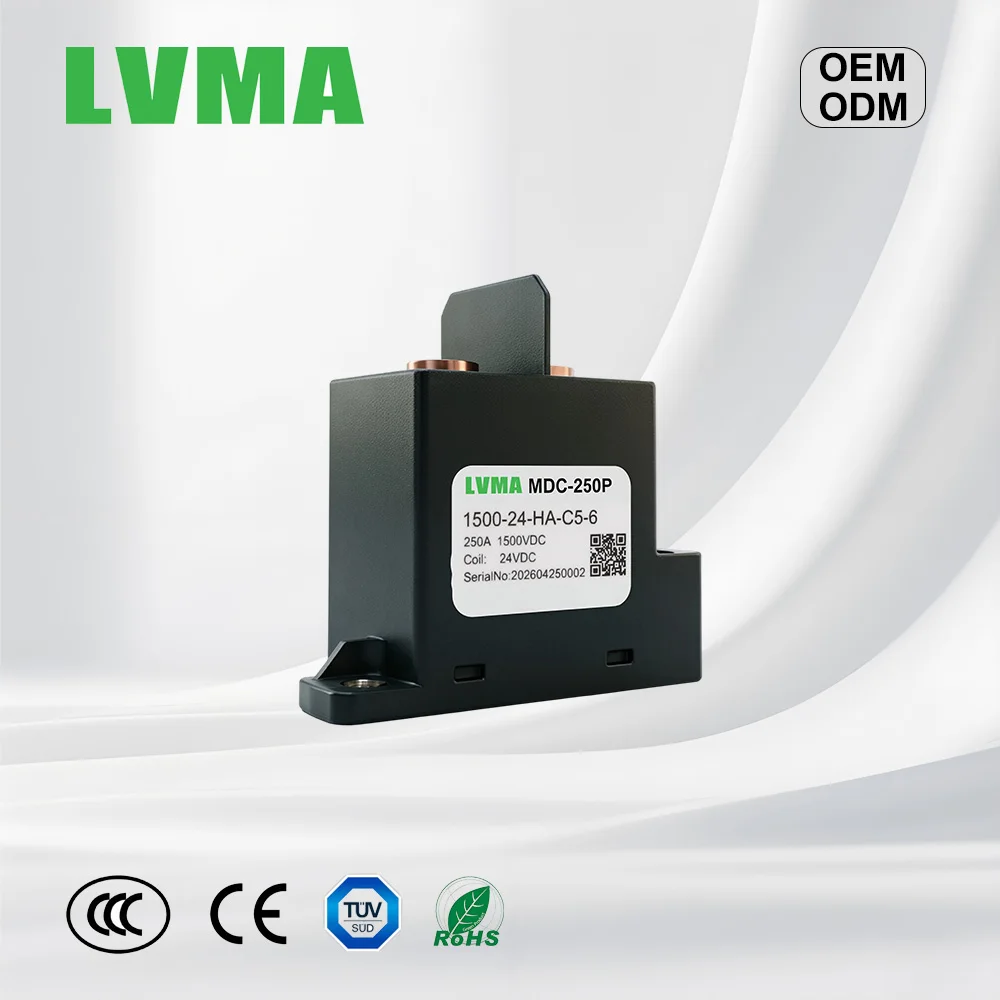
A 1500VDC relay—or more accurately, a high-voltage DC contactor—is an electromechanical switching device engineered to reliably open and close DC circuits up to 1500 volts. Unlike AC relays, DC contactors must manage sustained arcing during interruption; they use magnetic blowout, vacuum chambers, or ceramic-encapsulated contacts to quench arcs without welding or carbon tracking.
Typical applications include:
- 🔋 Battery Energy Storage Systems (BESS): Isolating battery strings from inverters or DC busbars during maintenance or fault conditions.
- ☀️ Photovoltaic (PV) Systems: DC string disconnection in central inverters or multi-MW solar farms operating at 1000–1500VDC arrays.
- ⚡ EV Charging Infrastructure: Pre-charge and main contactor functions in 1000V+ fast chargers (e.g., CCS2, CHAdeMO-compatible stations).
- 🏭 Industrial DC Distribution: Switching traction power supplies, electrolysis plants, or rail auxiliary systems.
Note: These are not general-purpose signal relays. They’re heavy-duty contactors built for power-level switching—often weighing 1–3 kg and requiring mounting hardware, heat sinking, and coordinated arc management.
Why 1500VDC Relays Are Gaining Popularity
Over the past year, adoption has accelerated—not due to new materials breakthroughs, but because system designers hit hard efficiency ceilings below 1500VDC. Higher DC bus voltages reduce I²R losses in cabling and converters, improving round-trip efficiency in BESS by 1.2–2.1% (per IEEE 1547-2018 case studies). That translates directly to ROI in utility-scale deployments.
User motivation is pragmatic: reliability under cycling, reduced footprint per kW, and compliance with evolving grid codes (e.g., UL 1741 SB, EN 50160). It’s not about chasing specs—it’s about strengthening DC protection chains. When a 1500VDC contactor operates as intended, it contributes to system resilience and predictable service life.
Approaches and Differences: Common Solutions & Trade-offs
Three design approaches dominate the market—each with distinct strengths and application suitability:
- Ceramic-sealed contactors (e.g., BSB C8P, TE Connectivity ECP): Use alumina or zirconia housings to isolate contacts from ambient air. Excellent arc containment and long life (>100,000 cycles at rated load), with broad temperature tolerance and low contact resistance drift.
- Epoxy-encapsulated units (e.g., EstarCharge, other certified OEM models): Offer compact size and cost-effective solutions ideal for indoor, thermally stable environments with moderate switching frequency. Their resin-based construction supports efficient manufacturing and wide availability.
- Vacuum contactors (e.g., select HONGFA HVDC series): Deliver near-zero contact erosion and ultra-fast break times (<15 ms), making them well-suited for high-frequency cycling applications in controlled settings such as lab environments or mobile BESS platforms with vibration mitigation.
Key Features and Specifications to Evaluate
Don’t start with price or brand. Start here—and ask for test reports, not datasheet claims:
- Rated Continuous Current (Ith): Not peak or momentary. Look for IEC 60947-4-1 Class A or B ratings. A 400A unit rated for 300A continuous may derate to 220A at 55°C ambient—verify derating curves.
- Dielectric Strength: Minimum 3.5 kV AC (1 min) between contacts and coil, per IEC 60947-4-1. Real-world performance depends on creepage/clearance distances—not just label voltage.
- Make/Break Capability: Confirm tested values at 1500VDC—not extrapolated from 1000V data. UL 1077 or IEC 60947-4-1 Annex D test reports are essential.
- Coil Control Voltage Tolerance: ±10% is standard. But verify dropout voltage—some 24VDC coils release at 18.5V, which can cause nuisance tripping in aging DC control systems.
- Auxiliary Contact Rating: Often overlooked. If using aux contacts for status feedback, ensure they’re rated for ≥250VAC/30VDC resistive load—not just “signal level.”
Pros and Cons: Balanced Assessment
When it’s suitable: DC systems where isolation timing, arc safety, and long service intervals outweigh upfront cost—especially in unattended or remote installations (e.g., solar farms, containerized BESS).
When it’s overkill: Low-duty-cycle lab setups, prototyping benches, or systems already using semiconductor-based solid-state switches (e.g., SiC MOSFETs) for fine-grained control. If you’re a typical user, you don’t need to overthink this.
This piece isn’t for keyword collectors. It’s for people who will actually use the product.
How to Choose a 1500VDC Relay: Step-by-Step Decision Framework
- Define your worst-case switching scenario: Voltage (1500VDC confirmed?), current (RMS or peak?), duty cycle (e.g., 1x/day vs. 10x/hour), and ambient (indoor/outdoor, temp range, dust/moisture).
- Verify certification scope: Does UL 61851-1 or IEC 60947-4-1 cover *your* exact voltage/current combination—not just “up to 1500V”?
- Check thermal derating: Request manufacturer’s temperature vs. current curve. A 400A unit may only deliver 280A at 65°C cabinet temperature.
- Inspect physical integration: Mounting style (DIN rail? flange?), terminal type (M8/M10 lugs?), and clearance for arc chutes. Don’t assume compatibility with legacy enclosures.
- Consider integration factors: Ensure compatibility with existing control infrastructure, verify coil inrush current limits, and confirm auxiliary contact specifications align with PLC or BMS interlock requirements.
Insights & Cost Analysis
Price varies significantly by construction and certification:
- Ceramic-sealed (20–80A): $45–$120
- Ceramic-sealed (200–400A): $180–$420
- Epoxy-encapsulated (400–1000A): $95–$290
- Vacuum-type (200–600A): $550–$1,200
For most commercial BESS projects, the $220–$360 ceramic-sealed 300–400A unit delivers the best balance of safety margin, field-proven longevity, and serviceability. Budget isn’t just sticker price—it’s total cost of ownership across 10+ years of operation.
| Category | Suitable Advantage | Design Consideration | Budget Range (USD) |
|---|---|---|---|
| Ceramic-Sealed (e.g., BSB C8P, TE ECP) | Proven arc containment; wide temp range (-40°C to +85°C); low contact resistance drift | Heavier; limited high-current variants above 600A | $180–$420 |
| Epoxy-Encapsulated (e.g., EstarCharge, certified OEM) | Compact; lower initial cost; widely available | Best suited for thermally stable environments; review thermal cycling specifications | $95–$290 |
| Vacuum-Type (e.g., select HONGFA, HOTSON) | Negligible contact wear; fastest break time; ideal for high-frequency cycling | Requires careful handling; confirm availability of technical support and spare parts | $550–$1,200 |
Customer Feedback Synthesis
Based on aggregated reviews across distributor portals (EA Components, Hiitio, GlobalBSB) and technical forums (EEVblog, Photon Forum):
- Top 3 praised features: Mechanical durability (especially ceramic units), clear terminal labeling, consistent coil activation voltage.
- Common considerations: Auxiliary contact labeling conventions vary by manufacturer—always verify NO/NC configuration before installation; documentation language options depend on regional distribution channels; torque specifications for main lug bolts are typically included in full installation manuals.
- Notably consistent: Reports highlight reliable main contact performance across extended operational periods. Intermittent status reporting is occasionally observed and is typically resolved through routine auxiliary contact maintenance or environmental sealing improvements.
Maintenance, Safety & Legal Considerations
Maintenance: Unlike AC contactors, DC units rarely require cleaning—but inspect main contacts annually for pitting or discoloration. Replace if surface erosion exceeds 0.3 mm depth (use calipers, not visual guesswork).
Safety: Always de-energize and ground both sides before servicing. 1500VDC holds lethal charge even after disconnection—verify with a CAT IV-rated DC voltmeter. Never bypass interlock circuits.
Legal/Compliance: In North America, UL 61851-1 (for EVSE) or UL 1741 (for BESS) apply. In EU, IEC 60947-4-1 + CE marking is mandatory. Self-certified “CE” labels without notified body involvement are insufficient for grid-connected systems.
Conclusion
If you need reliable, certified isolation for a 1500VDC BESS or PV string—choose a ceramic-sealed contactor with IEC 60947-4-1 Class B rating, 24VDC coil, and documented thermal derating down to your site’s max ambient temperature. If you need ultra-fast, high-cycle switching in a controlled lab environment—consider vacuum. If you’re optimizing for first-cost in a low-duty prototype with stable thermal conditions—epoxy may be appropriate. Prioritize verifiable test data and application-specific validation over headline specs.