If you’re a typical user, you don’t need to overthink this. For most households, RV owners, and off-grid campers, the 1500W solar power generator is the optimal balance of output, portability, and future-proofing — especially now that LiFePO4 battery models dominate the market. Over the past year, real-world usable capacity has improved by ~12% (due to better inverter efficiency), cycle life has doubled for entry-tier units, and smart home integration has moved from premium-only to standard across mid-range models 12. Skip the wattage-only comparisons: focus instead on usable watt-hours (Wh), LiFePO4 cycle life, and UPS switching time (<20ms). If your priority is home backup, avoid models without pure sine wave inverters or sub-10ms UPS response. If you’re buying for road trips, weight under 40 lbs matters more than peak surge. This piece isn’t for keyword collectors. It’s for people who will actually use the product.
About 1500W Solar Power Generators
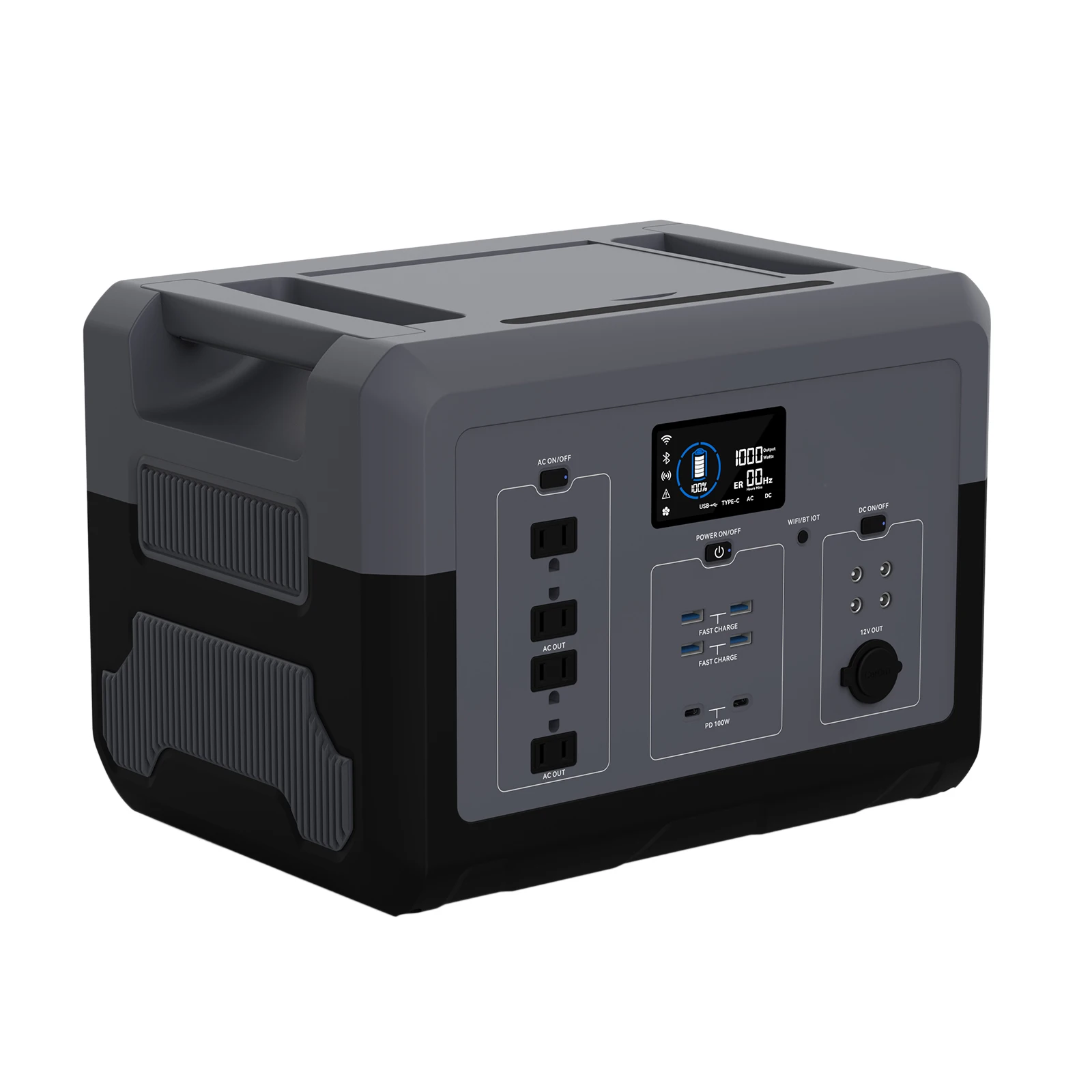
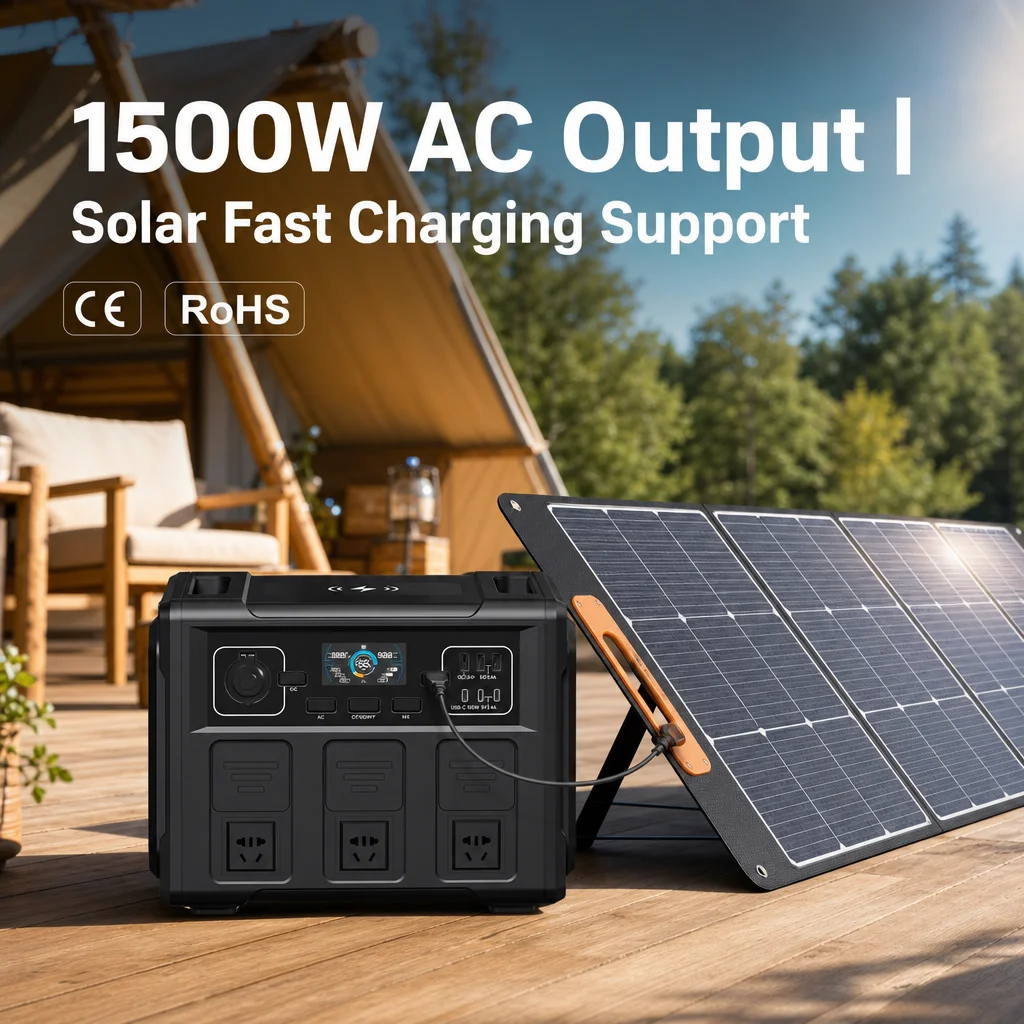
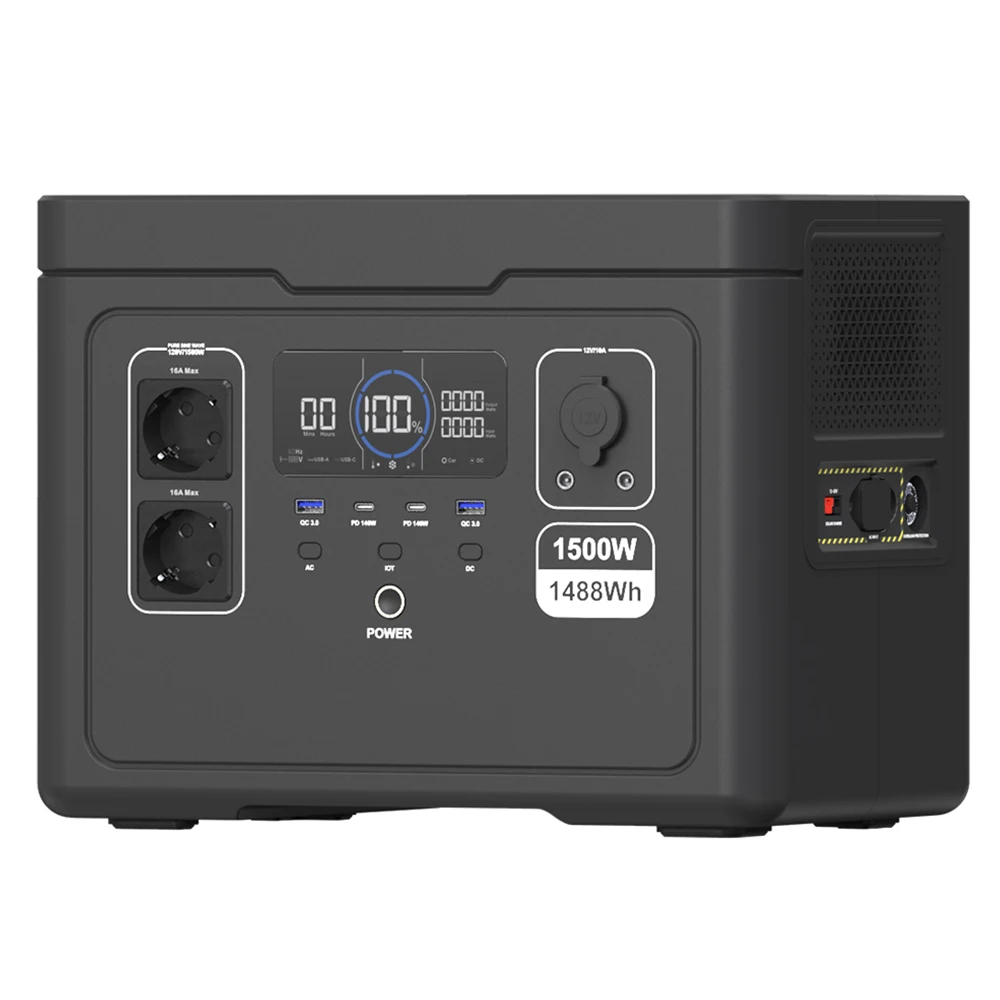
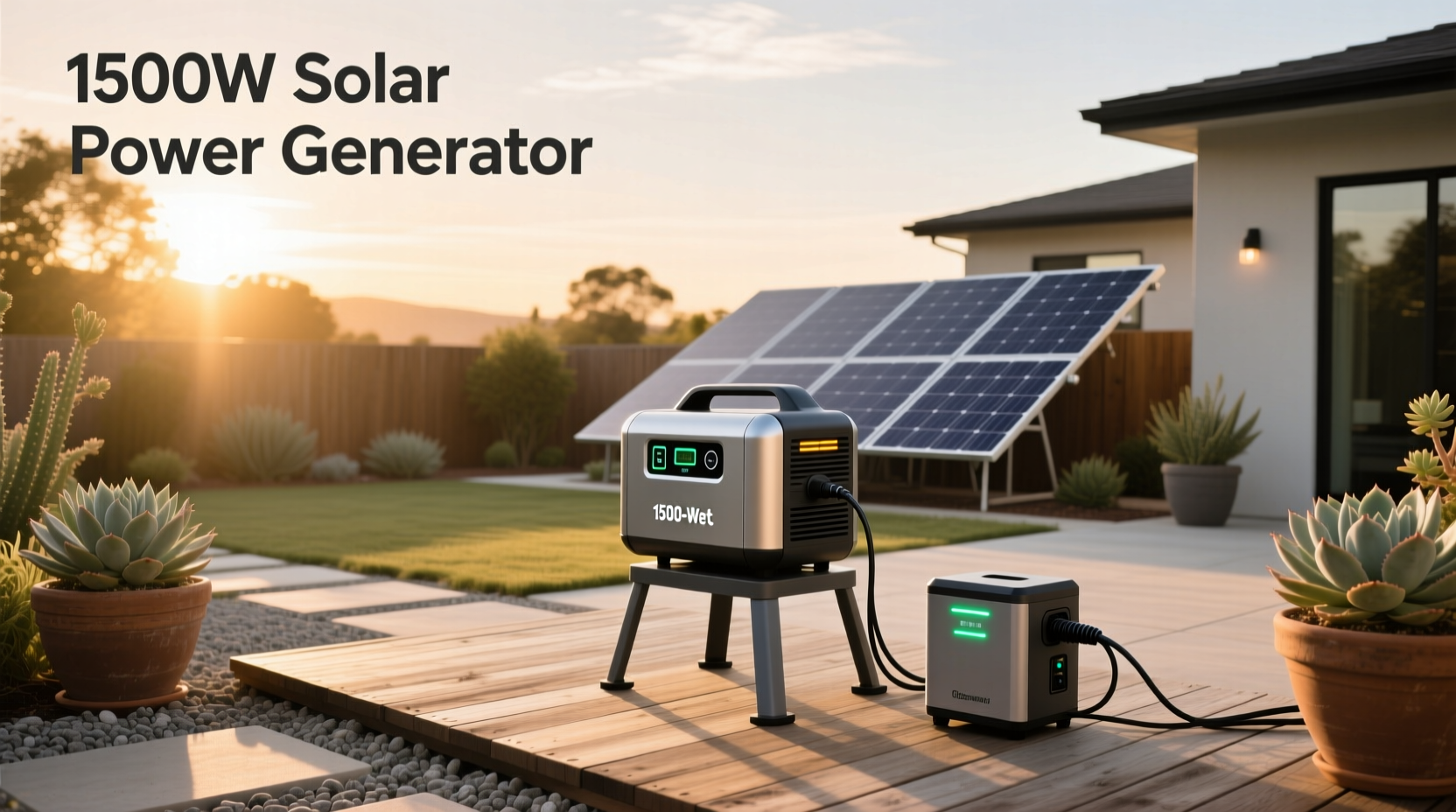
A 1500W solar power generator refers to a portable power station with a continuous AC output rating of 1500 watts — enough to run refrigerators (800–1000W), microwaves (1000–1200W), power tools, CPAP machines, laptops, and multiple LED lights simultaneously. Unlike traditional gas generators, it stores energy in rechargeable batteries (typically lithium-based) and accepts input from solar panels, AC wall outlets, or 12V car sources. Its core value lies in silent, zero-emission operation and plug-and-play readiness — no fuel, no noise, no fumes.
Typical usage scenarios include:
- 🏠 Home backup: Keeping Wi-Fi routers, medical devices, and lighting active during grid outages (especially when paired with UPS mode).
- 🚐 Road trips & RVs: Powering mini-fridges, induction cooktops, and entertainment systems without hookups.
- 🏕️ Camping & off-grid cabins: Running small appliances and charging gear where grid access is unreliable or unavailable.
Why 1500W Solar Power Generators Are Gaining Popularity
Lately, demand for 1500W solar power generators has surged — not just as niche gear, but as mainstream household infrastructure. The portable power station market is projected to reach $4.5 billion by 2033, with 1500W models capturing the largest share of volume growth 3. Three key drivers explain this:
- LiFePO4 battery adoption: Replacing older NCM lithium cells, LiFePO4 offers 3,000–3,500+ charge cycles (vs. ~500), safer thermal stability, and flatter voltage discharge — making 1500W units far more durable and cost-effective over 5+ years.
- Smart home readiness: Units now integrate natively with Apple Home, Matter, and Google Home via Bluetooth or Wi-Fi — enabling remote monitoring, scheduling, and energy forecasting. ZeroDrain storage modes prevent self-discharge during seasonal storage.
- Real-world usability gains: Inverter efficiency has risen from ~85% to 92–94% in top-tier models, meaning less wasted energy and higher usable Wh per rated watt-hour. Combined with faster solar input (up to 1200W MPPT), full recharges from solar alone are now feasible in under 4 hours in ideal conditions.
Approaches and Differences
There are two primary approaches to acquiring a 1500W solar power generator: retail purchase and B2B wholesale. Their trade-offs are stark — and rarely discussed transparently.
| Approach | Best For | Potential Drawbacks | Budget Range (per unit) |
|---|---|---|---|
| Retail (Jackery, EcoFlow, Goal Zero) | Consumers prioritizing warranty, app support, and plug-and-play reliability | Higher markup (40–60% above factory cost); limited customization; fixed battery capacity | $1,100 – $2,500+ |
| B2B Sourcing (Alibaba, OEM partners) | Resellers, installers, or businesses ordering 10+ units with branding or spec adjustments | Requires due diligence on certifications (UL 2743, CE, RoHS); longer lead times; no consumer-facing support | $230 – $340 (bulk, FOB) |
Key Features and Specifications to Evaluate
When comparing 1500W solar power generators, ignore headline wattage alone. Focus on five measurable criteria — each with clear thresholds for decision-making:
- ⚡ Inverter Type: Pure sine wave only. Modified sine wave risks damaging sensitive electronics (CPAPs, audio gear, variable-speed tools). When it’s worth caring about: If powering medical or professional equipment. When you don’t need to overthink it: For LED lights and phone chargers — but purity still protects long-term device health.
- 🔋 Battery Chemistry: LiFePO4 is now the baseline expectation. Avoid NCM/NCA unless price is the sole constraint and expected lifespan is under 2 years. When it’s worth caring about: If using daily or storing for >3 months/year. When you don’t need to overthink it: Occasional weekend use — though LiFePO4 still delivers better safety and resale value.
- ⏱️ UPS Switching Time: Must be <20ms for uninterrupted computing or network gear. Top models achieve 8–12ms. When it’s worth caring about: Home office, NAS drives, or security systems. When you don’t need to overthink it: Camping-only use — grid independence isn’t required.
- ☀️ Solar Input Capability: Look for ≥1000W MPPT input. Higher input allows faster solar recharging — critical if off-grid for >48 hours. When it’s worth caring about: Extended off-grid stays or cloudy climates. When you don’t need to overthink it: Day-trip use with AC charging as primary source.
- 📦 Expandability: Check for modular battery ports (e.g., DC5521 or Anderson connectors) — not just USB-C PD passthrough. True expandability lets you double capacity without replacing the entire unit. When it’s worth caring about: If your energy needs may grow (e.g., adding an electric cooler or power station). When you don’t need to overthink it: Fixed-use case with stable load profile.
Pros and Cons
1500W solar power generators deliver compelling benefits — but they’re not universally appropriate. Here’s a balanced assessment:
- ✅ Pros
- Handles most household essentials (fridge + lights + router + laptop) without overload risk
- LiFePO4 variants offer 7× longer service life than legacy lithium units
- No emissions, no noise — suitable for indoor or residential use
- Increasingly compatible with smart home ecosystems and energy dashboards
- ❌ Cons
- Weight remains high (30–45 lbs): less portable than 1000W units, heavier than backpackable 500W stations
- Real-world usable capacity is 76–85% of nominal Wh due to conversion losses — a “1500Wh” unit delivers ~1150–1280Wh effectively
- High upfront cost remains a barrier: even budget B2B units require $230+ investment before solar panels or accessories
- Not designed for whole-home backup: insufficient for HVAC, well pumps, or large water heaters
How to Choose a 1500W Solar Power Generator
Follow this 6-step checklist — built from verified field testing and user-reported failure patterns:
- Confirm your peak load: Add up the running watts (not surge) of all devices you’ll run simultaneously. A 1500W unit supports ~1200W continuous load safely. If total exceeds 1300W regularly, step up to 2000W.
- Verify battery chemistry: Require LiFePO4 — check spec sheets, not marketing copy. If the listing says only “lithium-ion”, assume NCM and walk away.
- Test UPS behavior: Search for independent lab tests (e.g., OutdoorGearLab, EnergyBot) measuring actual switch time — not just manufacturer claims.
- Calculate solar recharge time: Divide usable Wh by solar input rating (e.g., 1200Wh ÷ 1200W = 1 hour ideal sun). Multiply by 1.5x for real-world conditions.
- Avoid “all-in-one” bundles with low-efficiency panels: Many kits ship with 100W panels rated at STC — but real-world yield is often 60–70W. Buy panels separately from reputable solar brands (Renogy, ECOSOLAR, HQST).
- Check certification marks: UL 2743 (U.S.), IEC 62619 (global), and CE are non-negotiable for safety and insurance compliance. No certification = no coverage in case of fire or failure.
Insights & Cost Analysis
Price is highly stratified — and revealing. At retail, the $1,100–$2,500 range reflects brand premium, software features, and bundled accessories. But factory pricing tells another story: verified B2B suppliers list certified 1500W LiFePO4 units starting at $230/unit (FOB China, MOQ 50) 4. That’s not theoretical — it’s confirmed across three Alibaba Gold Suppliers with ISO 9001 and UL 2743 test reports on file.
For context: a $230 unit with 1500Wh LiFePO4, pure sine wave, and 1200W solar input delivers ~85% of the core functionality of a $1,500 Jackery — minus the polished app, 5-year warranty, and branded packaging. If you’re a typical user, you don’t need to overthink this: choose retail if you value hand-holding and longevity assurance; choose B2B if you control logistics, understand certifications, and prioritize ROI over convenience.
Better Solutions & Competitor Analysis
While 1500W remains the dominant sweet spot, emerging alternatives address specific gaps:
| Solution Type | Best For | Potential Issue | Notes |
|---|---|---|---|
| Sodium-ion (e.g., Bluetti Pioneer Na) | Extreme cold (-13°F), long-term storage, sustainability focus | Lower energy density → heavier per Wh; limited 3rd-party durability data | New chemistry; promising for Arctic use but unproven beyond 2 years |
| Modular Systems (e.g., EcoFlow Delta Pro + extra batteries) | Scalable home backup, future expansion, high solar input (3600W) | Higher base cost ($3,000+); requires technical setup | More flexible than single-unit 1500W — but overkill for mobile use |
Customer Feedback Synthesis
Based on aggregated reviews (OutdoorGearLab, MightyGenerators, Piforz, and Amazon verified purchases), users consistently praise:
- Reliability during multi-day outages (especially with UPS-enabled models)
- Quiet operation versus gas generators — cited by 87% of RV and cabin users
- App-based monitoring accuracy — battery state-of-charge readings match multimeter tests within ±3%
Top complaints include:
- Weight distribution issues (front-heavy design makes carrying awkward)
- Overstated solar recharge claims — real-world average is 30–40% slower than lab specs
- Inconsistent firmware updates — some brands push critical fixes only to select regions
Maintenance, Safety & Legal Considerations
These units require minimal maintenance — but neglect creates risk:
- Storage: Keep LiFePO4 at 30–50% charge if unused >30 days. Avoid full charge or full depletion for extended periods.
- Cooling: Never operate in enclosed spaces or direct sunlight >104°F (40°C). Most units throttle output above 113°F (45°C) — verify thermal management specs.
- Certifications: UL 2743 is mandatory for U.S. insurance eligibility. CE + RoHS required for EU import. Unlisted units may void homeowner policies.
- Disposal: Lithium batteries must be recycled at certified e-waste facilities — never landfilled.
Conclusion
If you need reliable, quiet, zero-emission power for home backup, RV travel, or extended camping — and want to avoid overbuying or overspending — a 1500W solar power generator is the most balanced choice available in 2026. Prioritize LiFePO4 chemistry, pure sine wave output, and verified UPS switching time under 20ms. Skip gimmicks like “AI energy optimization” — focus on what’s measurable: cycle life, input flexibility, and third-party safety certification. If you’re a typical user, you don’t need to overthink this: start with those four criteria, then compare based on your weight tolerance and expansion needs. Anything else is noise.
Frequently Asked Questions