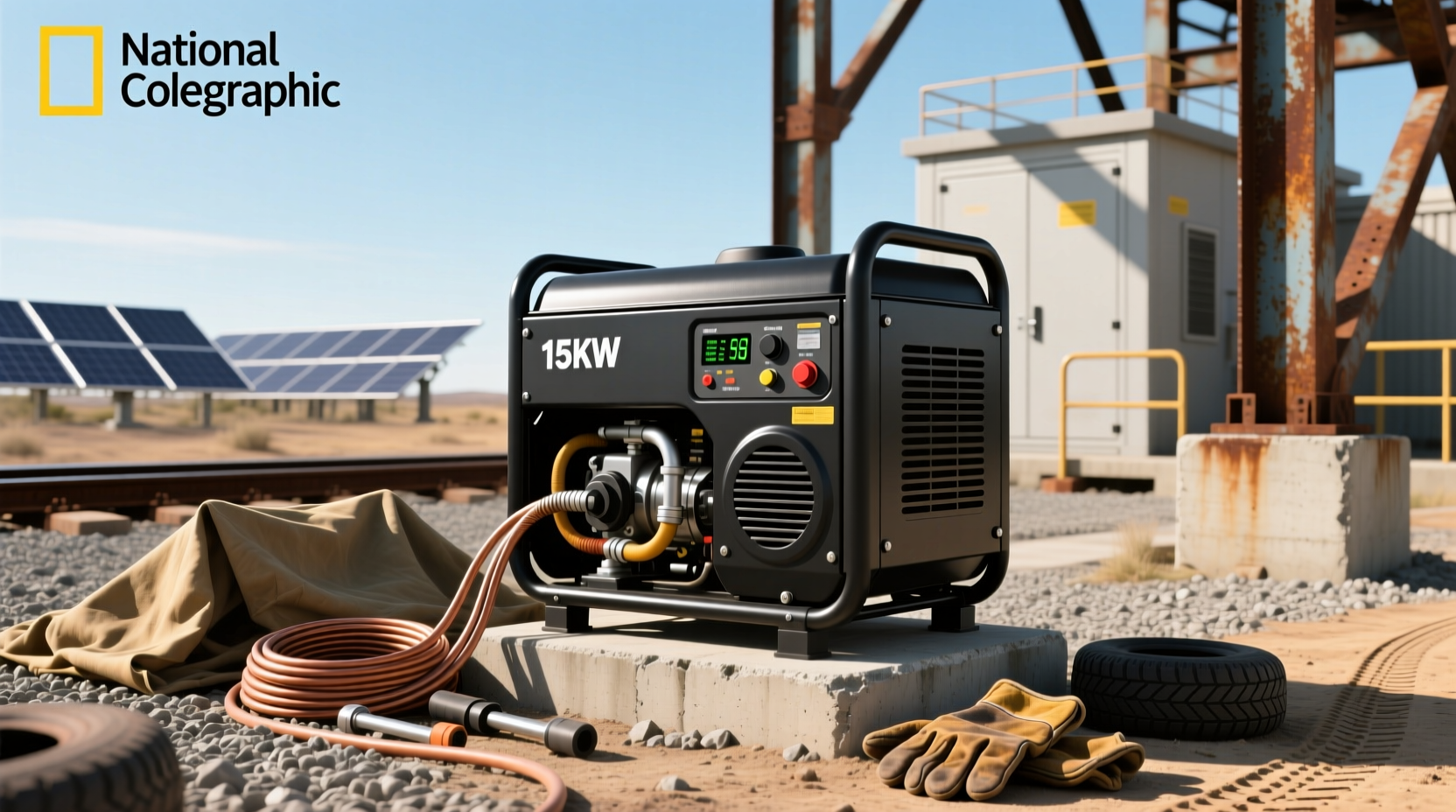
If you’re a typical user, you don’t need to overthink this. For most commercial backup, remote site power, or small industrial loads, a 15kW diesel generator with liquid-cooled 1500/1800 RPM engine, Tier 4 Final compliance, and silent canopy is the optimal baseline—regardless of whether you’re sourcing for a telecom tower in Kenya or a workshop in Ohio. Over the past year, stricter local noise ordinances and tighter emissions enforcement have made silent-type, low-RPM, compliant units non-negotiable in urban and semi-urban deployments—this isn’t theoretical; it’s operational reality. Two common but unproductive debates? Whether “Chinese-made” means “low quality” (false—it depends on engine brand and certification), and whether “portable” implies “less reliable” (also false—if wheels are secondary to core cooling and control architecture). The one constraint that actually moves the needle? Engine longevity under continuous load: air-cooled 3600 RPM units fail faster than liquid-cooled ones at rated output—and that difference compounds over 3+ years of runtime. This piece isn’t for keyword collectors. It’s for people who will actually use the product.
About 15kW Diesel Generators: Definition & Typical Use Cases
A 15kW diesel generator delivers 18.75 kVA of apparent power at standard voltage (e.g., 230/400V 3-phase or 120/240V single-phase) and is engineered for continuous or prime power duty, not just emergency backup. Unlike smaller portable gasoline units, 15kW diesel gensets are built around industrial-grade engines—typically Perkins, Kubota, or Cummins derivatives—with robust fuel systems, liquid cooling, and integrated control panels.
They serve three primary scenarios:
- 🏭Small-to-mid commercial backup: Retail shops, clinics, offices, or data closets where grid instability exceeds 5–10 hours/year 1.
- 🏗️Construction & event sites: Powering tools, lighting, HVAC, and temporary offices—especially where refueling logistics favor diesel’s energy density over propane or gasoline 2.
- 📡Off-grid telecom & 5G infrastructure: Supporting base stations in rural or mountainous areas where solar alone lacks dispatchable reserve—and where silent operation avoids community complaints 3.
If you’re sizing for residential use: 15kW is usually overkill unless you run well pumps, central HVAC, and multiple circuits simultaneously. In those cases, verify your peak load with a clamp meter—not nameplate ratings—before committing.
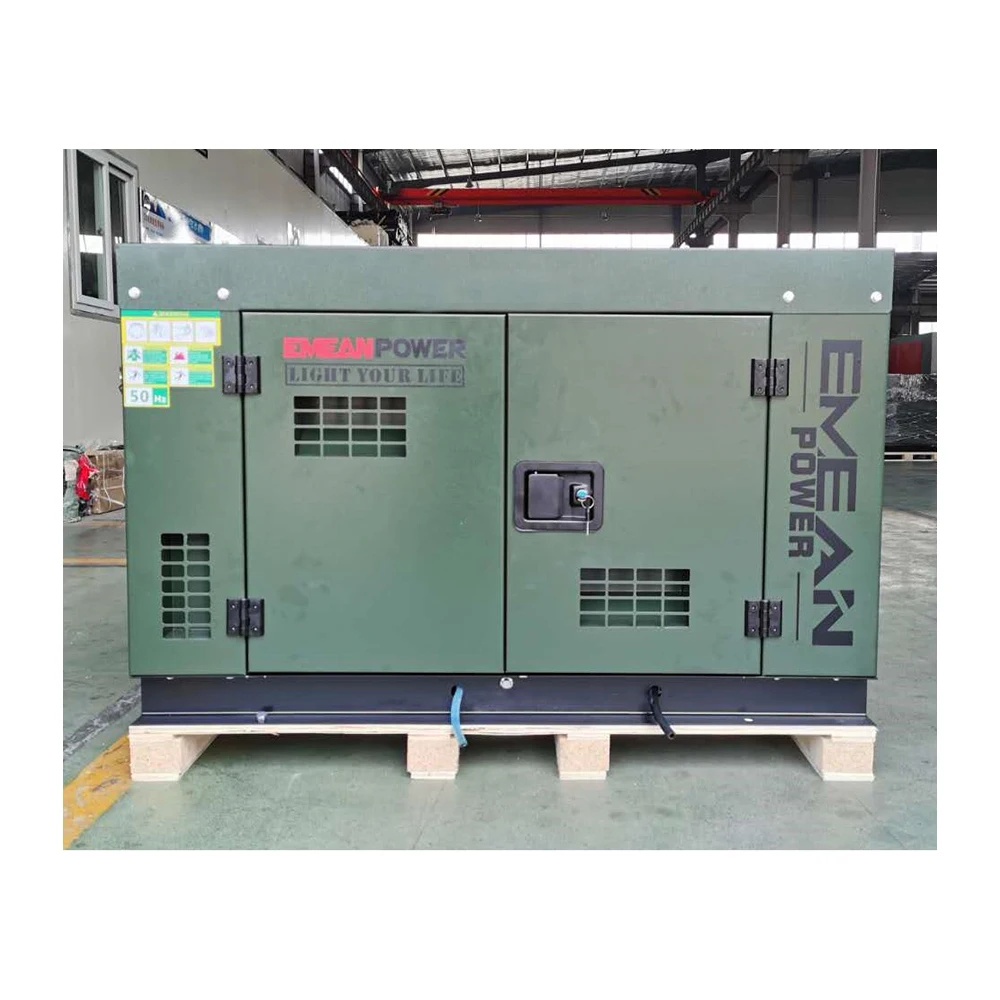
Why 15kW Diesel Generators Are Gaining Popularity
Lately, demand for 15kW diesel generators has accelerated—not because of novelty, but necessity. Global diesel genset markets are projected to reach $22.78B–$43.0B by 2026 4, and the 15kW segment anchors the high-volume “low-power” tier (under 75 kVA), commanding ~43% of total market share 5. Three structural shifts explain why:
- ⚡Grid fragility is quantifiable: North American utilities reported a 27% increase in outage duration between 2020–2023 6. That’s not anecdotal—it’s a procurement trigger.
- 🌐5G and edge computing require local resilience: Each new cell site adds 3–5 kW of constant load. A 15kW unit powers 3–4 sites—or serves as primary power for micro-data centers 7.
- 🌍Asia-Pacific supply maturity: Chinese and Indian manufacturers now offer Tier 4 Final-compliant units with Perkins/Kubota engines at $1,200–$2,000—price parity with legacy Western OEMs, without sacrificing certification traceability 8.
This isn’t about “going diesel.” It’s about matching physics (energy density), regulation (emissions), and economics (TCO over 5 years) to real-world constraints.
Approaches and Differences: Silent vs. Open, Portable vs. Stationary
Not all 15kW diesel generators solve the same problem. The two main architectural splits are functional—not aesthetic.
Silent Canopy vs. Open Frame
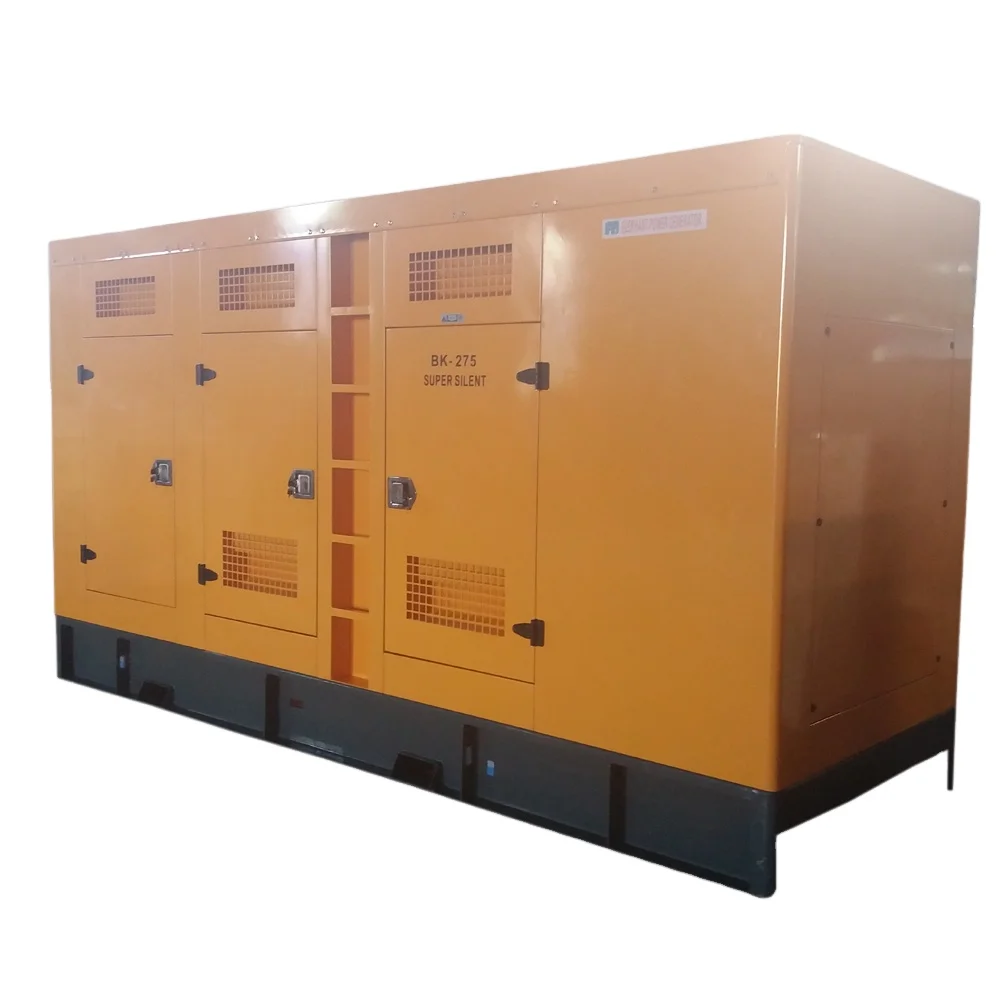
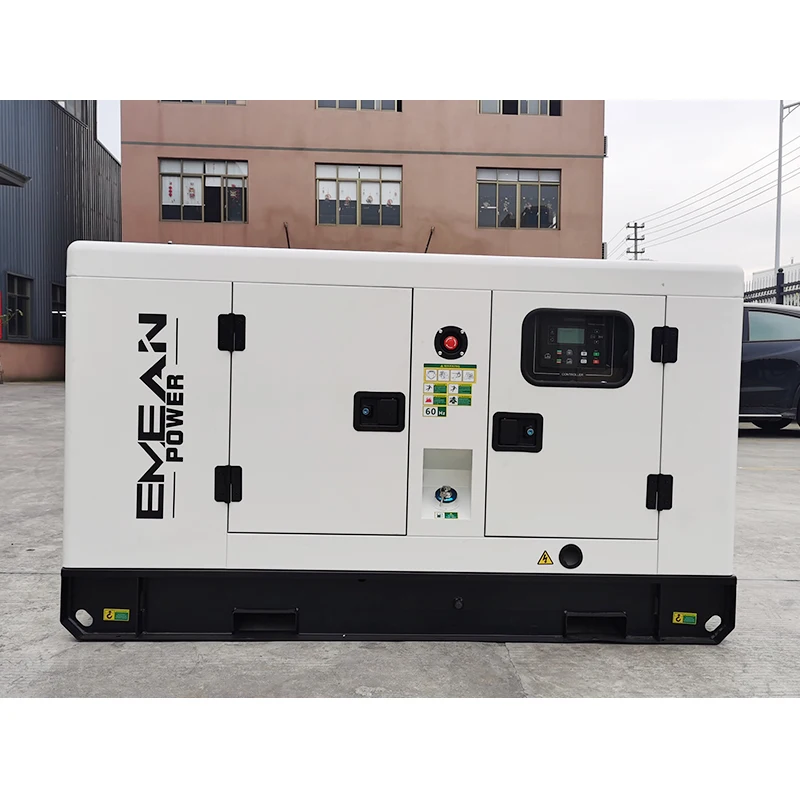
- Silent canopy: Enclosed in sound-dampened steel housing (typically 65–70 dB @ 7m). Includes integrated fuel tank, weatherproof controls, and often ATS-ready terminals. When it’s worth caring about: Urban zoning, residential proximity, or indoor warehouse use. When you don’t need to overthink it: Remote desert sites with no neighbors within 500 m.
- Open frame: Exposed engine, radiator, and alternator. Louder (85–92 dB), less weather-resistant, but easier to service and $300–$600 cheaper. When it’s worth caring about: Short-term rental fleets or field maintenance depots where noise is irrelevant and speed-of-repair is critical. When you don’t need to overthink it: If you’re buying one unit for permanent installation near homes or offices.
Portable (Wheeled) vs. Stationary Mount
- Portable: Integrated steel chassis with pneumatic tires and tow hitch. Weight: 450–650 kg. Designed for repositioning every 2–6 weeks. When it’s worth caring about: Construction contractors, film crews, disaster response teams. When you don’t need to overthink it: Fixed-location backup for a factory—wheels add cost and failure points (bearing wear, tire dry rot).
- Stationary: Bolted to concrete pad or ISO container. Often includes seismic anchoring and exhaust routing. When it’s worth caring about: Telecom shelters, hospitals, or facilities requiring UL 2200 certification. When you don’t need to overthink it: Any application where movement frequency is <1x/year.
If you’re a typical user, you don’t need to overthink this: silent + stationary is the default for >80% of 15kW deployments. Portability only pays off if relocation is routine—not occasional.
Key Features and Specifications to Evaluate
Forget “horsepower.” Focus on five measurable, verifiable specs—each tied directly to runtime, compliance, and service life:
- ⚙️Engine RPM & Cooling: Liquid-cooled 1500 RPM (50Hz) or 1800 RPM (60Hz) engines last 3–5× longer under continuous load than air-cooled 3600 RPM units 9. When it’s worth caring about: Any application expecting >500 annual operating hours. When you don’t need to overthink it: Occasional weekend use—though even then, liquid-cooled holds resale value better.
- 🔍Emission Certification: Tier 4 Final (US/EU) or Stage V (EU) isn’t optional for new installations in most developed markets. Verify certificate number—not just “compliant” claims. When it’s worth caring about: Permitting, insurance, and resale in regulated regions. When you don’t need to overthink it: Off-grid islands with no enforcement—but confirm local customs clearance accepts non-certified units.
- 🔊Noise Level: Measured in dB(A) at 7 meters. Silent units range 63–72 dB. Below 65 dB suits hospitals; 68–70 dB is acceptable for commercial zones. When it’s worth caring about: Local ordinances (e.g., NYC limits 70 dB after 7 PM). When you don’t need to overthink it: Rural farmland—unless nearby residences exist.
- 🔌ATS Integration: Not just “ATS-ready”—look for factory-wired transfer logic with programmable delay, phase sensing, and utility-loss logging. When it’s worth caring about: Critical loads (servers, medical devices). When you don’t need to overthink it: Non-critical backup where manual transfer is acceptable.
- 🔋Fuel Efficiency @ 75% Load: Reputable units consume 2.2–2.8 L/h at 15kW. Avoid units quoting “best-case” consumption at 25% load—it’s misleading. When it’s worth caring about: Sites with limited fuel storage or high transport costs. When you don’t need to overthink it: Facilities with on-site bulk tanks and weekly deliveries.
Pros and Cons: Balanced Assessment
Pros:
- ✅ High energy density: ~38.6 MJ/L diesel vs. ~26 MJ/L gasoline—enables longer runtime per liter 10.
- ✅ Lower fire risk: Diesel autoignition temp is ~210°C vs. gasoline’s ~−43°C.
- ✅ Mature global service network: Perkins, Cummins, and Kubota parts available in 120+ countries.
Cons:
- ❌ Cold-start difficulty below −10°C without block heaters or winter-grade fuel.
- ❌ Higher upfront cost than equivalent gasoline units (but lower TCO after ~2,000 hours).
- ❌ Emissions compliance adds complexity—and cost—for small buyers navigating EPA/CE paperwork.
Best suited for: Users needing >500 annual runtime hours, operating in regulated environments, or powering mixed 3-phase + single-phase loads.
Not ideal for: Occasional weekend use in noise-permissive zones, ultra-low-budget projects (<$1,000), or locations lacking certified diesel fuel suppliers.
How to Choose a 15kW Diesel Generator: Step-by-Step Decision Checklist
Follow this sequence—skip steps only if criteria are pre-validated:
- Confirm phase & voltage: Is your load 3-phase (industrial motors) or single-phase (offices)? Match generator output exactly—don’t rely on phase converters.
- Verify RPM & cooling: Reject any 3600 RPM or air-cooled unit unless runtime is <200 hrs/year. Prioritize 1500/1800 RPM liquid-cooled.
- Check emission certs: Request PDF copy of Tier 4 Final or Stage V certificate—cross-reference engine serial number.
- Test noise claim: Ask for third-party acoustic report (not manufacturer brochure spec). If unavailable, assume 3–5 dB higher.
- Review warranty terms: Look for 2-year *parts-and-labor* coverage—not just 2-year parts. Extended warranties rarely cover misuse (e.g., overload, poor ventilation).
Avoid these pitfalls:
- Buying based on “kW rating only”—ignore power factor (15kW ≠ 15kVA; expect ~0.8 PF → 18.75 kVA required).
- Assuming “diesel” means “all-weather ready”—without cold-start aids, units stall below freezing.
- Overlooking exhaust routing: Silent canopies require dedicated vent paths; improper installation causes overheating.
Insights & Cost Analysis
B2B pricing for certified 15kW silent diesel generators ranges from $1,100 to $2,300, depending on engine brand, ATS inclusion, and regional certification 11. Here’s what drives variance:
- +15–25% for Perkins or Cummins engines (vs. Yuchai or Weichai)
- +8–12% for factory-installed ATS with auto-sensing
- +5–7% for CE + EPA dual certification (vs. CE-only)
For most users, the $1,400–$1,800 band delivers optimal balance: Kubota-powered, Tier 4 Final, 68 dB, with electric start and analog ATS interface. Units below $1,200 often cut corners on cooling system capacity or acoustic lining thickness—verified via teardown reports 12.
| Category | Best-fit Advantage | Potential Issue | Budget Range (USD) |
|---|---|---|---|
| Silent Canopy + Kubota Engine | Proven reliability, global parts, quietest certified option | Slightly heavier; requires level pad | $1,550–$1,950 |
| Open Frame + Yuchai Engine | Lowest entry cost; easiest field access | Noisier; shorter service intervals; Tier 4 compliance rare | $980–$1,320 |
| Mobile Wheeled + Perkins | Full mobility + premium engine; ideal for contractors | Higher TCO (tire/wheel maintenance); less stable on soft ground | $1,890–$2,280 |
Customer Feedback Synthesis
Based on aggregated B2B buyer reviews (2023–2024) across Alibaba, ThomasNet, and industry forums:
- Top 3 praises: “Fuel efficiency exceeded spec,” “ATS engaged flawlessly during 12 outages,” “Service manual clear and multilingual.”
- Top 3 complaints: “Exhaust pipe corroded within 18 months (coastal salt air),” “No English labeling on control panel,” “Cold-start kit not included despite −15°C rating claim.”
Recurring theme: Buyers who verified certifications *before* purchase reported 92% satisfaction. Those who skipped verification cited 3× more warranty disputes.
Maintenance, Safety & Legal Considerations
Maintenance: Oil/filter changes every 250 hours (or annually, whichever comes first); coolant flush every 2,000 hours; valve lash check at 1,000 hours. Skipping coolant service risks cylinder head warping—a $1,200+ repair.
Safety: Never operate indoors or in enclosed garages—even with exhaust venting. CO buildup kills silently. Install battery disconnects and ground-fault circuit interrupters (GFCIs) on all output circuits.
Legal: In the US, EPA mandates Tier 4 Final for new non-road diesel engines sold after Jan 1, 2015 13. In EU, Stage V applies to all new units placed on market after Jan 1, 2019 14. Non-compliant units may be denied import or insurance coverage.
Conclusion: Conditional Recommendations
If you need quiet, code-compliant, long-life backup for commercial or industrial loads, choose a 15kW liquid-cooled, Tier 4 Final, silent-canopy unit with 1500/1800 RPM engine—Kubota or Perkins preferred, $1,500–$1,900 budget.
If you need low-cost, short-term, rugged field power with zero noise constraints, an open-frame Yuchai unit at $1,100–$1,300 suffices—but expect shorter service life and no resale value.
If you move the unit monthly or quarterly, prioritize mobile chassis + Perkins over silent enclosure—mobility trumps noise when relocation is routine.
And again: If you’re a typical user, you don’t need to overthink this. Start with RPM, cooling, and certification. Everything else follows.
Wholesale B2B prices range from $1,100 (basic open-frame, Yuchai) to $2,300 (Perkins-powered silent unit with ATS and dual certification). Mid-tier Kubota units average $1,650–$1,850.
Yes—if your total connected load (measured, not estimated) stays under 12–13 kW continuously. Note: Most homes draw 5–8 kW peak; 15kW is generous but requires proper load balancing across phases and professional ATS integration.
Prime rating = maximum continuous power (e.g., 15kW for unlimited hours). Standby rating = 10–15% higher (e.g., 16.5–17.25 kW) but only for emergency use, max 500 hrs/year. Always size for prime rating unless usage is strictly intermittent.
Yes—if selling or operating in EU (Stage V), Canada (equivalent to Tier 4), Australia (AS/NZS 4250), or Japan (JIS D 1001). Many developing markets accept CE or ISO 8528, but Tier 4/Stage V is becoming the de facto global benchmark for new purchases.
Every 250 operating hours or annually—whichever comes first. Key tasks: oil/filter change, coolant level check, belt tension inspection, and battery terminal cleaning. Full coolant flush every 2,000 hours.


