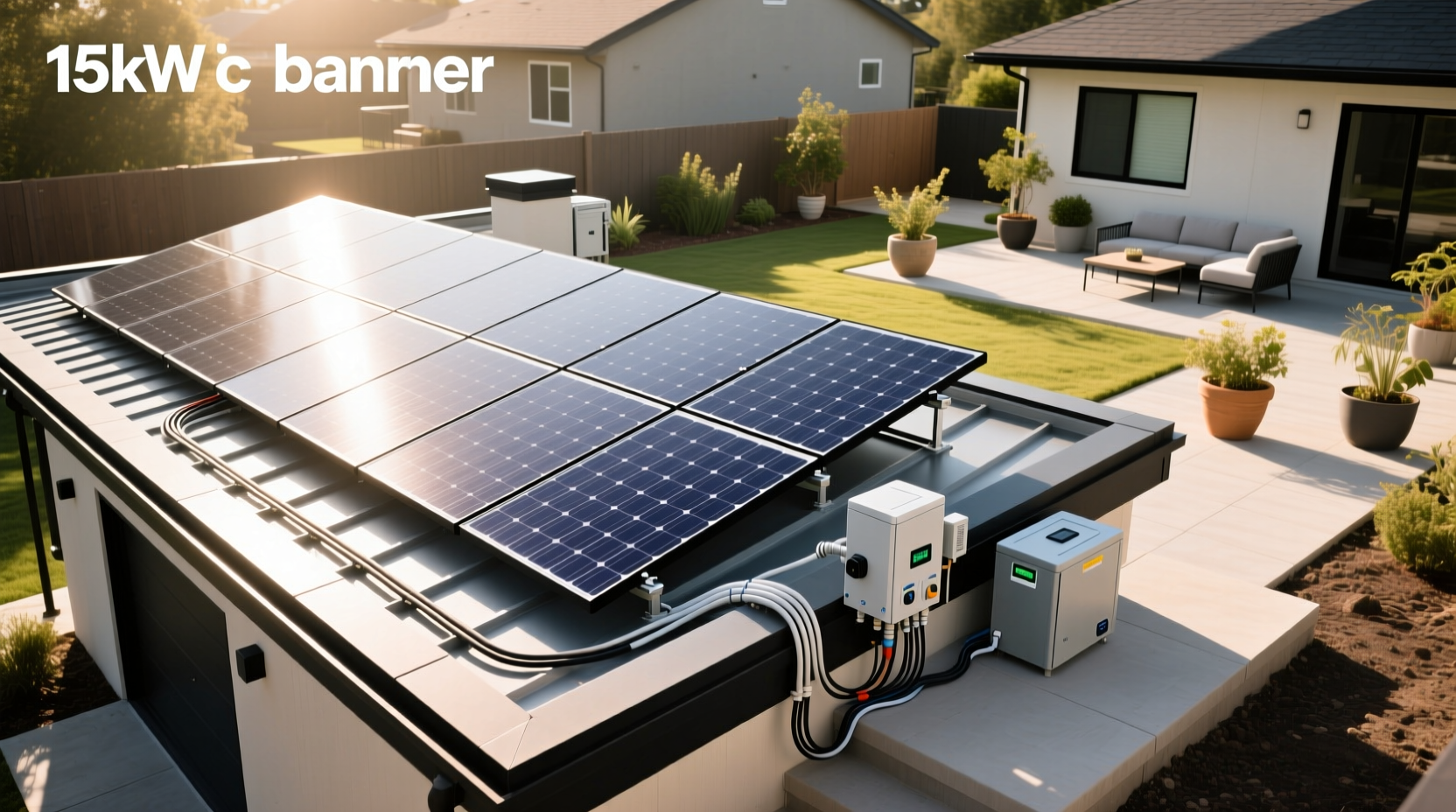
Over the past year, 15kW solar system costs have dropped sharply—not just in headline per-watt figures, but in real-world landed pricing for complete kits, thanks to N-type TOPCon module scaling and hybrid inverter standardization. If you’re a typical user evaluating a 15kW solar system for a large home or small commercial site, you don’t need to overthink panel brand wars or micro-inverter vs. string debates. Focus instead on three anchors: wholesale kit pricing ($0.26–$0.35/W), minimum 22.5% TOPCon efficiency, and three-phase hybrid inverter compatibility with future battery expansion. Avoid overspending on oversized racking or legacy PERC panels—those decisions cost real ROI. This piece isn’t for keyword collectors. It’s for people who will actually use the product.
About 15kW Solar Systems: Definition & Typical Use Cases
A 15kW solar photovoltaic (PV) system is a mid-to-large-scale residential or light-commercial installation capable of generating approximately 55–75 kWh per day under favorable conditions—enough to power a 3,500–5,000 sq ft home with heat pumps, EV charging, and moderate AC usage. Unlike smaller 6–10kW systems designed primarily for offsetting grid consumption, the 15kW tier serves dual roles: energy independence (especially when paired with storage) and active grid participation (via smart inverters with export control and frequency response). Typical users include homeowners with high daytime loads, rural properties off-grid-adjacent, and small businesses like workshops, farms, or retail spaces seeking tariff arbitrage and resilience.
Why 15kW Solar Systems Are Gaining Popularity
Lately, adoption has accelerated—not because of novelty, but because economics and technology aligned. Three signals explain why 2026 is the inflection point:
- ✅ Cost compression: Panel prices fell 38% from 2022–2026, while Tier 1 TOPCon modules now deliver >23% efficiency at near-PERC price points 1.
- ✅ Regulatory tailwinds: Incentives increasingly reward domestic assembly and battery pairing—not just capacity—making 15kW+ systems more incentive-eligible than ever 2.
- ✅ Grid-aware hardware: Modern 15kW inverters no longer just convert DC to AC—they manage load balancing, EV charge scheduling, and even island-mode backup without batteries 3.
Approaches and Differences
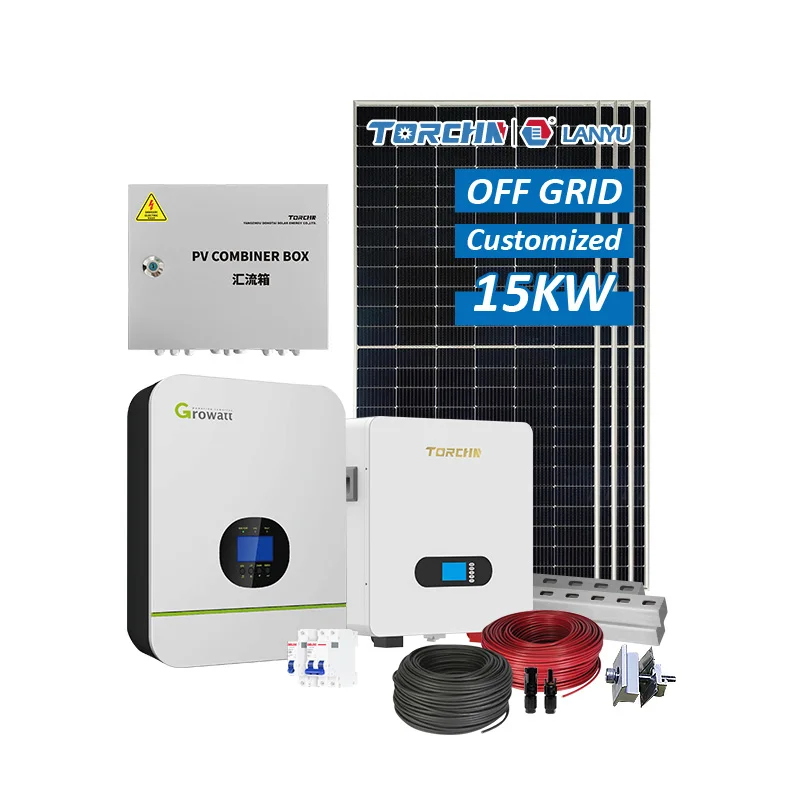
There are two primary procurement paths—and they demand different trade-offs:
| Approach | Key Advantages | Potential Problems | Budget Range (15kW) |
|---|---|---|---|
| Turnkey Installation | Single-point responsibility; permits handled; warranty bundling; design optimization | Markup of 40–70% over component cost; limited hardware choice; slower response to tech updates | $34,500–$42,000 (US) $13,200–$14,250 (AU) |
| DIY / B2B Sourcing | Direct access to $0.26–$0.35/W wholesale kits; full spec control; faster upgrade cycles | Requires technical vetting; import duties & logistics overhead; no unified warranty | $3,900–$5,250 (kit only) + $2,200–$4,800 (inverter + racking) |
When it’s worth caring about: If your local installer quotes >$2.60/W gross, sourcing key components yourself becomes financially justified—even with added labor or engineering review. When you don’t need to overthink it: If you lack electrical certification or live in a jurisdiction with strict interconnection rules (e.g., California Rule 21 Phase 3), turnkey remains the lower-risk path. If you’re a typical user, you don’t need to overthink this.
Key Features and Specifications to Evaluate
Not all 15kW systems deliver equal value. Prioritize these four specs—each with clear thresholds:
- 🔋 Panel Technology: Insist on N-type TOPCon, not P-type PERC. Why? 22.5%+ efficiency means fewer panels, less racking, and 0.4%/year degradation vs. 0.7%. When it’s worth caring about: On roofs with shading or space constraints. When you don’t need to overthink it: If you have >500 sq ft of unshaded south-facing roof and budget is tight—PERC still works, but expect ~8% lower lifetime yield.
- ⚡ Inverter Type: Choose a three-phase hybrid inverter (not single-phase or basic string). Look for ≥98.4% peak efficiency and native Modbus/TCP support for energy monitoring. When it’s worth caring about: If you plan battery addition within 3 years—or run three-phase equipment (e.g., workshop compressors). When you don’t need to overthink it: For simple grid-tie-only setups with no storage plans, a high-efficiency string inverter suffices—but locks out future flexibility.
- 📏 Module Wattage: Target ≥550W panels. Fewer units = faster install, lower balance-of-system (BOS) cost, and simpler maintenance. When it’s worth caring about: When roof area is limited or labor rates exceed $80/hour. When you don’t need to overthink it: If your installer uses standardized racking and offers labor discounts for bulk panel orders, 500W panels may reduce total cost slightly.
- 🛡️ Certifications: Verify UL 1741 (US), IEC 62109 (global), or CE (EU). Skip uncertified “budget” inverters—even if priced 30% lower. When it’s worth caring about: Always. Non-certified gear risks fire hazard, insurance denial, and failed utility inspection. When you don’t need to overthink it: There is no scenario where skipping certification saves meaningful time or money. If you’re a typical user, you don’t need to overthink this.
Pros and Cons
A 15kW system delivers tangible benefits—but only when matched to realistic expectations:
- ✨ Pros
- Global average payback now sits at 7–9 years—down from 12 in 2022 4.
- Bifacial TOPCon panels add 5–20% yield from ground reflection—valuable on gravel, white membrane, or light-colored surfaces.
- Smart inverters enable grid services (e.g., voltage regulation) that may qualify for utility incentives beyond net metering.
- ⚠️ Cons
- Higher upfront complexity: Requires detailed shade analysis, three-phase load balancing, and often structural engineering review.
- Diminishing returns beyond 15kW: Grid export limits, transformer capacity, and interconnection fees scale non-linearly above this size.
- Storage integration adds $3,800–$5,000 for basic lithium configurations—yet remains optional for many users.
How to Choose a 15kW Solar System: A Practical Decision Checklist
Follow this 6-step process—designed to eliminate guesswork and common pitfalls:
- Confirm your actual load profile: Pull 12 months of utility bills. If your annual usage is <40,000 kWh, a 15kW system may overproduce—especially in summer. Trim to 12–13kW unless you plan EV charging or heat pump electrification.
- Verify roof suitability: Use tools like Google Project Sunroof or Aurora Solar. Reject proposals if shading loss exceeds 12%—TOPCon helps, but won’t fix deep canopy cover.
- Require TOPCon datasheets: Ask for manufacturer test reports showing NOCT (Nominal Operating Cell Temperature) and temperature coefficient. Anything >−0.32%/°C is suboptimal for hot climates.
- Test inverter compatibility: Cross-check panel Vmp/Voc against inverter MPPT voltage range. Mismatches cause up to 15% clipping loss—unrecoverable.
- Calculate landed cost—not just sticker price: Add 8–12% for import duty (if sourcing globally), freight, customs clearance, and local certification retesting.
- Walk away from “lifetime warranty” claims: Realistic warranties are 25–30 years linear output (panels) and 5–10 years parts/labor (inverters). Anything longer is marketing noise.
Insights & Cost Analysis
2026 pricing reflects structural shifts—not temporary discounts. Here’s what’s real:
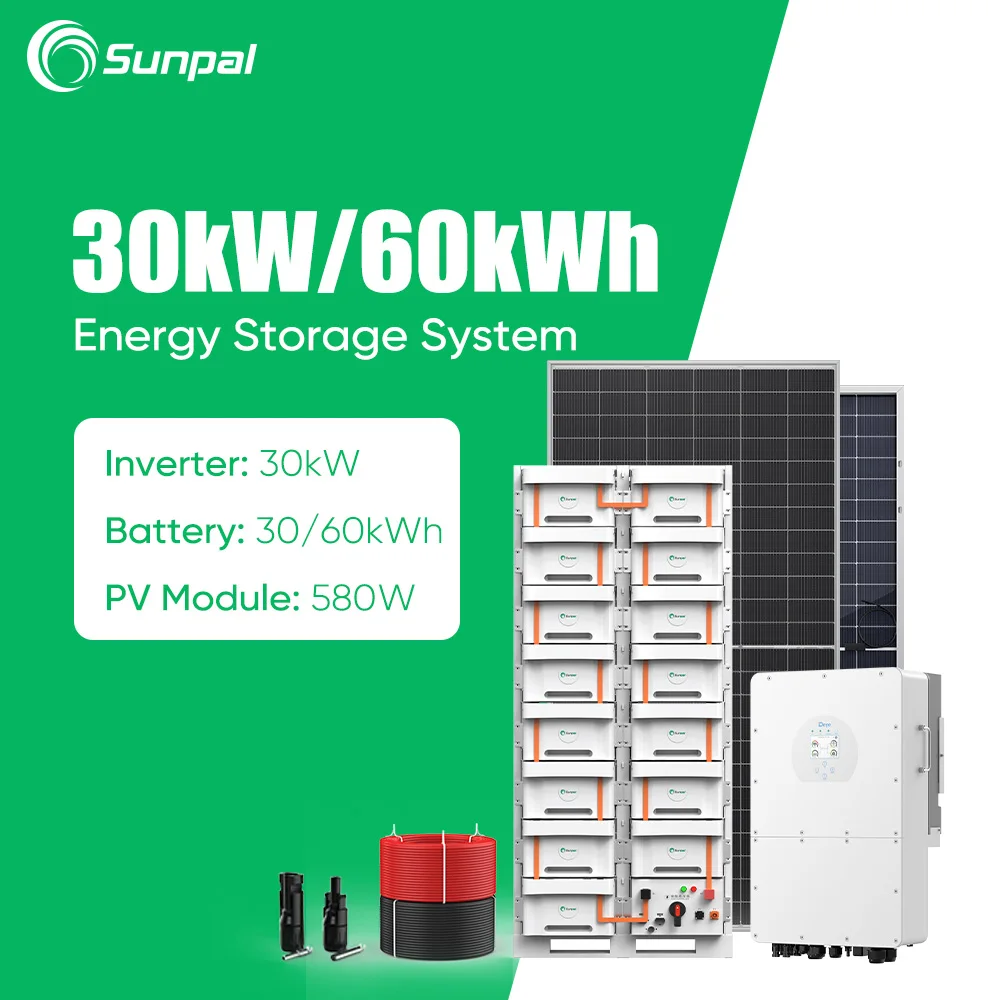
- Wholesale kit cost: $0.26–$0.35/W includes panels, hybrid inverter, racking, and MC4 connectors. That’s $3,900–$5,250 for 15kW 5.
- Installed cost (US): $2.30–$2.80/W translates to $34,500–$42,000 before federal tax credit (30%) and state/local incentives.
- Battery-ready premium: Adding a 10kWh lithium system increases total cost by $3,800–$5,000—but reduces grid dependence by 40–60% during outages.
Bottom line: The biggest savings aren’t in chasing the cheapest panel—they’re in avoiding oversized designs, mismatched components, and uncertified hardware. If you’re a typical user, you don’t need to overthink this.
Better Solutions & Competitor Analysis
Three-tiered hardware strategy delivers best value across risk profiles:
| Solution Tier | Best For | Potential Pitfall | Typical Budget (15kW) |
|---|---|---|---|
| Value-Optimized (Tier 1 TOPCon + certified hybrid inverter) |
Homeowners prioritizing ROI and longevity | Minimal smart features (e.g., no predictive maintenance) | $3,900–$4,600 (kit) |
| Future-Ready (TOPCon + AI-enabled inverter + EV sync) |
SMEs or EV owners planning multi-year upgrades | Higher initial cost; some features require cloud subscription | $4,800–$5,500 (kit) |
| Commercial-Grade (Bifacial TOPCon + grid-forming inverter) |
Farms, workshops, or sites needing island mode | Requires licensed commissioning; not suitable for residential rooftops | $5,200–$6,100 (kit) |
Customer Feedback Synthesis
Based on aggregated installer reviews, forum threads, and B2B procurement surveys:
- Top 3 praised attributes: Faster ROI than projected (72%), reliability of TOPCon under high-temp stress (68%), seamless inverter app integration (61%).
- Top 3 complaints: Delays in customs clearance for imported kits (44%), inconsistent MPPT calibration between batches (29%), confusing warranty claim processes for hybrid inverters (23%).
Maintenance, Safety & Legal Considerations
Maintenance is minimal—but non-negotiable:
- Cleaning: Rain handles most dust; manual cleaning every 12–18 months boosts yield 3–5% in arid/dusty regions.
- Monitoring: Use inverter-native apps or open-platform tools (e.g., PVOutput) to flag >5% daily yield drop—often indicating soiling, micro-cracks, or inverter drift.
- Safety: All DC isolators must be accessible and labeled. Never bypass rapid shutdown requirements—even for DIY installs.
- Legal: Interconnection agreements vary by utility. Some require IEEE 1547-2018 compliance for inverters—verify before ordering.
Conclusion
If you need maximum long-term yield on limited roof space, choose N-type TOPCon panels with ≥22.5% efficiency and a three-phase hybrid inverter. If you need grid resilience without battery upfront, prioritize inverters with certified island-mode capability—even if it adds 8–10% to kit cost. If you need lowest entry barrier with proven reliability, a turnkey 15kW PERC system at $2.40/W remains viable—but expect ~10% lower lifetime kWh/kW. There is no universal “best” 15kW solar system. There is only the right one for your roof, load, timeline, and tolerance for technical involvement.


