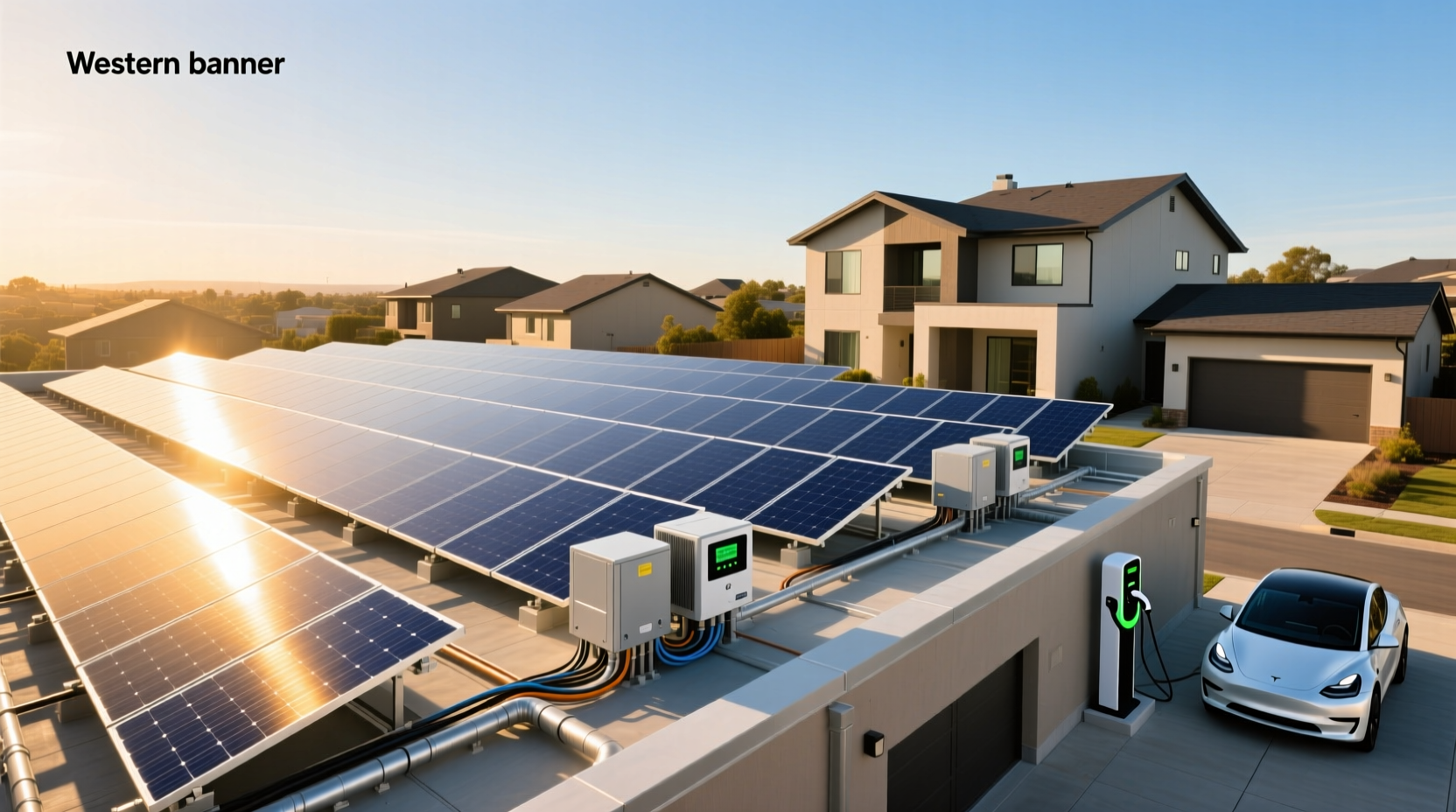
If you’re a typical user, you don’t need to overthink this. A 15,000 watt (15kW) solar system is now the pragmatic choice for large homes (3,000+ sq ft), households charging two EVs daily, or small commercial spaces with high HVAC loads — especially in Sunbelt states where annual production reliably exceeds 21,776 kWh1. Over the past year, rising utility rates and revised net metering rules (like California’s NEM 3.0) have made self-consumption — not grid export — the primary design goal. That means pairing panels with a hybrid inverter is no longer optional for most buyers. Skip the 300W monocrystalline panels; prioritize N-type TopCon or HJT modules (≥400W, ≥24% efficiency) if roof space is constrained. And unless your utility offers robust time-of-use credits, delay battery purchase until after system commissioning — it’s rarely cost-effective upfront. This piece isn’t for keyword collectors. It’s for people who will actually use the product.
About 15kW Solar Systems: Definition & Typical Use Cases
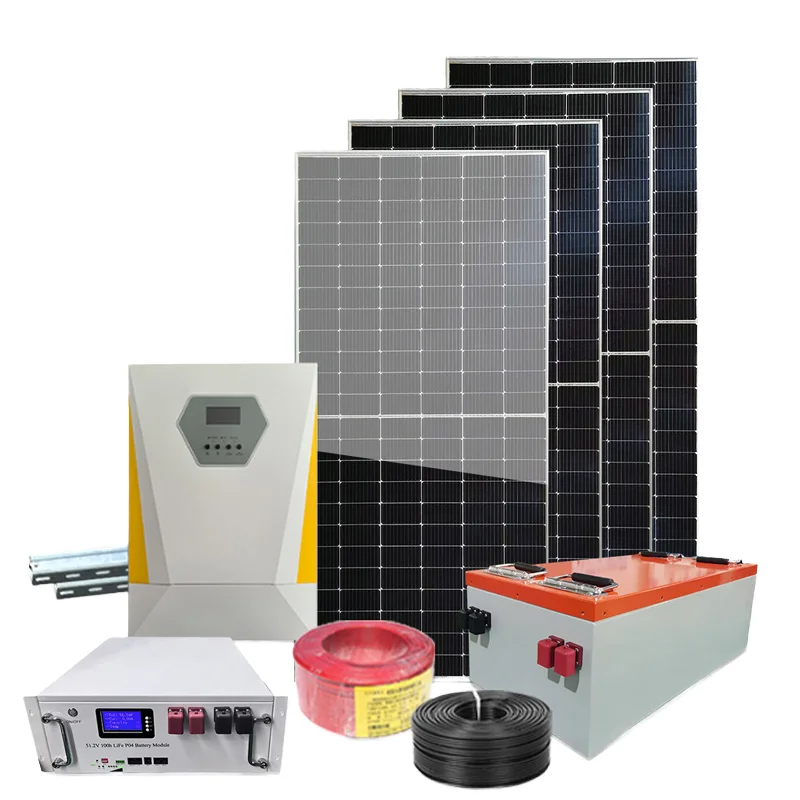
A 15,000 watt (15kW) solar photovoltaic system refers to the DC nameplate capacity of its panel array — meaning it can theoretically produce 15 kilowatts under Standard Test Conditions (STC). In practice, real-world output depends on location, tilt, shading, and component quality. Unlike smaller residential systems (6–10kW), a 15kW setup typically requires 35–45 panels, a 15–20kW hybrid inverter, and often structural reinforcement for roof mounting.
🏠 Typical users:
- Single-family homes with 3,500–5,000 sq ft and high cooling/heating demand
- Families operating two or more electric vehicles (EVs)
- Small offices, workshops, or agricultural buildings with 24/7 refrigeration or machinery
- Off-grid-adjacent properties using solar + lithium storage as primary power
It’s not about “going big” — it’s about matching generation to actual load profiles. For example, a household consuming 1,500 kWh/month (18,000 kWh/year) may find a 12kW system sufficient. But if that same household adds an EV charger drawing 40 kWh/week and upgrades to heat-pump HVAC, 15kW becomes the baseline for energy independence.
Why 15kW Solar Systems Are Gaining Popularity
Lately, three converging forces have accelerated adoption of 15kW solar systems — not just among early adopters, but mainstream homeowners and small business owners.
⚡ Grid economics shifted. Solar and storage accounted for 91% of all new U.S. electricity-generating capacity in early 20262. With wholesale electricity prices volatile and retail rates climbing 4–7% annually in many states, locking in 25 years of predictable generation costs has become financially urgent — not aspirational.
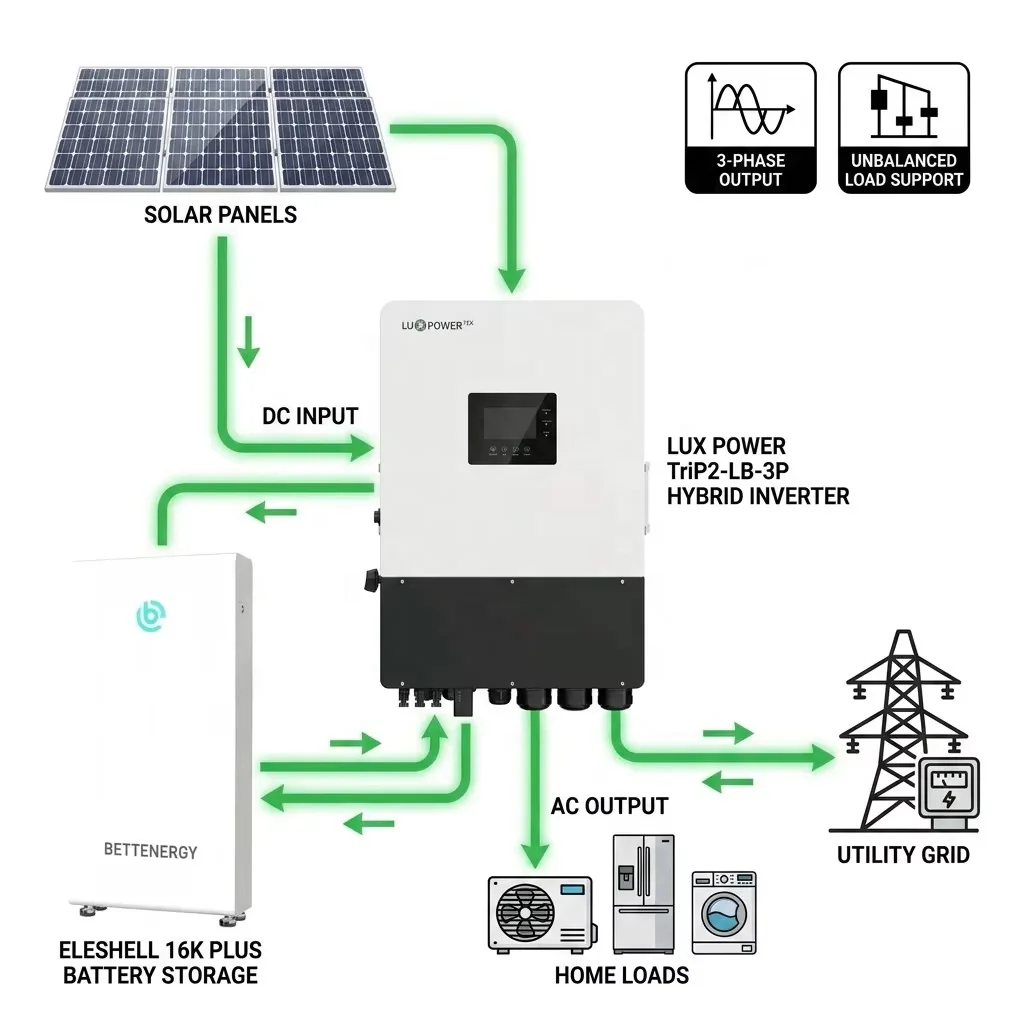
🔋 Battery integration is now standard architecture. Under new utility billing structures, exporting excess solar at low avoided-cost rates yields diminishing returns. Instead, systems are designed for self-consumption: storing midday surplus for evening use. That makes hybrid inverters — capable of managing both PV input and battery charge/discharge — non-negotiable for new 15kW installations.
📈 Panel efficiency gains reduced physical footprint. As 400W+ N-type TopCon and Heterojunction (HJT) panels became the residential standard in 2026, achieving 15kW no longer demands sprawling roof space. A premium 15kW array now fits on ~750–850 sq ft — down from ~1,100 sq ft just three years ago.
Approaches and Differences: Kit vs. Custom, Panel Tech, Storage Timing
Three main approaches dominate the 15kW landscape — each with clear trade-offs in control, cost, and scalability.
| Approach | Key Advantages | Potential Issues | Budget Range (Pre-Incentives) |
|---|---|---|---|
| Pre-engineered 15kW Kit | Fast deployment (4–8 weeks), standardized warranties, bundled logistics | Limited customization; may over-spec components for your site; soft costs still apply | $34,000–$39,000 |
| Custom-Built System | Optimized for your roof geometry, shade profile, and load curve; modular expansion path | Longer lead times (12–20 weeks); higher installer coordination overhead | $36,000–$45,000 |
| Phased Installation (Panels Now, Battery Later) | Lower initial outlay; avoids battery obsolescence risk; lets you validate real-world consumption | May require inverter upgrade later; forfeits early-time-of-use arbitrage | $28,000–$33,000 (panels + hybrid inverter only) |
When it’s worth caring about: If your roof has complex angles, chimneys, or partial shading, custom engineering pays off in yield — often adding 8–12% annual production vs. a generic kit layout.
If you’re a typical user, you don’t need to overthink this. For simple gable roofs with unobstructed southern exposure, a reputable pre-engineered kit delivers comparable ROI with less friction.
Key Features and Specifications to Evaluate
Don’t optimize for peak wattage alone. Focus on metrics that directly impact 20-year value:
- Panel Efficiency & Degradation: Premium N-type TopCon/HJT panels offer 24–25.5% efficiency and ≤0.25% annual degradation3, versus 20–23% and 0.5–0.7% for standard PERC. When it’s worth caring about: If your roof area is ≤900 sq ft, higher efficiency prevents undersizing. When you don’t need to overthink it: On ample flat roofs (>1,200 sq ft), 400W PERC panels deliver similar lifetime kWh/kW at lower cost.
- Inverter Type: Hybrid (AC-coupled or DC-coupled) is mandatory if batteries are planned. Ensure compatibility with your chosen battery chemistry (LiFePO₄ preferred).
- Warranty Structure: Look for 25-year linear performance warranty guaranteeing ≥92% output at year 25 — not just “80% at year 25.” Labor coverage matters too; 10-year labor warranties are now standard among top-tier brands.
Pros and Cons: Who Is a 15kW System Right For?
✅ Pros:
- Meets >95% of annual electricity needs for large, electrified homes
- Enables EV charging without grid draw during peak hours
- Provides meaningful resilience during short-to-mid duration outages (with battery)
- Delivers strong ROI in high-rate states (CA, NY, MA) — payback often <8 years post-ITC
❌ Cons & Limitations:
- Overkill for modest homes (<2,200 sq ft) with efficient appliances and no EVs
- Roof structural assessment is non-optional — older homes may require reinforcement ($2,000–$5,000)
- Permitting complexity increases with size; some municipalities require engineered drawings
- Does not eliminate grid dependence unless paired with multi-day storage (cost-prohibitive for most)
If you’re a typical user, you don’t need to overthink this. A 15kW system is not a status symbol — it’s infrastructure. Its value emerges only when matched to real load patterns, not theoretical capacity.
How to Choose a 15kW Solar System: Your Step-by-Step Decision Checklist
Follow this sequence — skipping steps invites costly rework or underperformance.
- Analyze 12 months of utility bills — identify true kWh/month, seasonal peaks, and demand charges (if applicable). Don’t rely on estimates.
- Get a drone-based shade analysis — tools like Aurora or Helioscope model hourly irradiance loss better than visual inspection.
- Select panel technology based on space, not hype: TopCon/HJT if roof area <900 sq ft; high-quality PERC if space is abundant.
- Require a hybrid inverter — even without immediate battery plans. Retrofitting later often costs $1,800–$3,200 more than bundling upfront.
- Verify installer credentials: NABCEP certification, 5+ years local experience, and ≥10 verifiable references — not just online reviews.
Avoid these common missteps:
- Choosing panels solely by price-per-watt (ignores degradation, warranty terms, and real-world yield)
- Assuming “battery-ready” means plug-and-play — confirm firmware support and communication protocol (CAN bus vs. Modbus)
- Signing contracts before reviewing interconnection agreement language with your utility
Insights & Cost Analysis: Real Numbers for 2026
The national average cost for a fully installed, battery-inclusive 15kW system is $37,050 before federal tax credit1. After the 30% federal Investment Tax Credit (ITC), that drops to ~$25,935 — but regional variation is significant:
- Texas: $30,585 → $21,410 (post-ITC)
- Florida: $33,200 → $23,240
- Massachusetts: $44,540 → $31,178
Breakdown by cost category (national avg):
- Hardware (panels, inverter, racking): ~32%
- Soft costs (permitting, inspection, customer acquisition): ~48%
- Labor & installation: ~20%
Key insight: The largest cost lever isn’t panel brand — it’s installer overhead. Get 3–4 bids with itemized line items. If one quote is >15% below others, verify scope alignment (e.g., does it include roof repair, conduit runs, or utility fees?).
Better Solutions & Competitor Analysis
“Better” depends on your priority: simplicity, future flexibility, or absolute lowest $/kWh. Here’s how leading configurations compare:
| Solution Type | Best For | Potential Drawback | 2026 Price Range (Pre-ITC) |
|---|---|---|---|
| TopCon Panels + Enphase IQ8+ Microinverters | Shaded roofs, granular monitoring, easy expansion | Higher soft cost; microinverter warranty capped at 25 years (vs. 30 for some string inverters) | $38,200–$42,500 |
| HJT Panels + Sol-Ark 15K Hybrid Inverter | Maximizing yield per sq ft; DIY-friendly architecture | Fewer certified installers; limited local service network | $36,800–$40,100 |
| PERC Panels + Fronius Gen24 Plus + BYD Battery-Box | Proven reliability, strong dealer support, balanced cost/performance | Slightly lower efficiency; higher degradation vs. N-type | $34,500–$37,900 |
Customer Feedback Synthesis
Based on verified project reviews (EnergySage, Reddit r/SolarDIY, and installer case studies), recurring themes emerge:
✅ Most praised:
- “Our 15kW TopCon system covers 100% of our usage — plus 25 miles of EV range daily.” (CA homeowner, May 2026)
- “The hybrid inverter let us add a 20kWh battery six months post-install — zero rewiring.” (TX small business)
⚠️ Most frequent complaints:
- “Installer didn’t disclose that our HOA required separate architectural review — delayed interconnection by 11 weeks.”
- “Quoted ‘battery-ready’ but the inverter lacked CAN bus support for our preferred battery — had to replace it.”
Maintenance, Safety & Legal Considerations
Maintenance: Minimal. Clean panels 1–2x/year (more if near dust, pollen, or bird activity). Monitor inverter alerts and production via app — a >15% monthly dip warrants inspection.
Safety: All components must comply with NEC Article 690.12 (rapid shutdown) and UL 1741 SB (inverter certification). Roof-mounted systems require structural engineer sign-off in high-wind or snow-load zones.
Legal: Interconnection agreements vary by utility. Some require third-party insurance riders or specific disconnect switch specs. HOAs cannot prohibit solar outright (under federal law), but may regulate aesthetics — submit plans early.
Conclusion: Conditional Recommendations
If you need reliable, long-term coverage for a large, electrified home or small business — choose a 15kW system built with N-type TopCon or HJT panels, a certified hybrid inverter, and a phased battery strategy. If your roof is shaded or irregular, invest in custom modeling. If you live in a low-rate state with weak net metering, prioritize self-consumption design over maximum export. If your current bill is under $120/month, step back — a 15kW system is almost certainly oversized. This piece isn’t for keyword collectors. It’s for people who will actually use the product.


