Over the past year, demand for compact, deterministic position-sensing controls has risen sharply—not because of new tech breakthroughs, but because more makers, control panel integrators, and industrial OEMs are replacing unreliable potentiometers or software-dependent encoders with hardwired, position-verified alternatives. If you’re building a test bench, audio mixer, lab instrument, or custom HMI—and need unambiguous, repeatable, zero-drift position feedback across exactly 16 states—you likely need a 16-position rotary encoder switch. Not a generic incremental encoder. Not a 24- or 32-position variant. Not a soft-coded menu system. You need discrete, electrically isolated, mechanically indexed state selection. And here’s the direct answer: For most users, a BCD-coded 16-position rotary switch (like Grayhill 16POS-BCD or NKK FD01FC16P) offers the cleanest balance of reliability, Arduino/PLC compatibility, and wiring simplicity. If you’re a typical user, you don’t need to overthink this.
This piece isn’t for keyword collectors. It’s for people who will actually use the product.
About 16-Position Rotary Encoder Switches
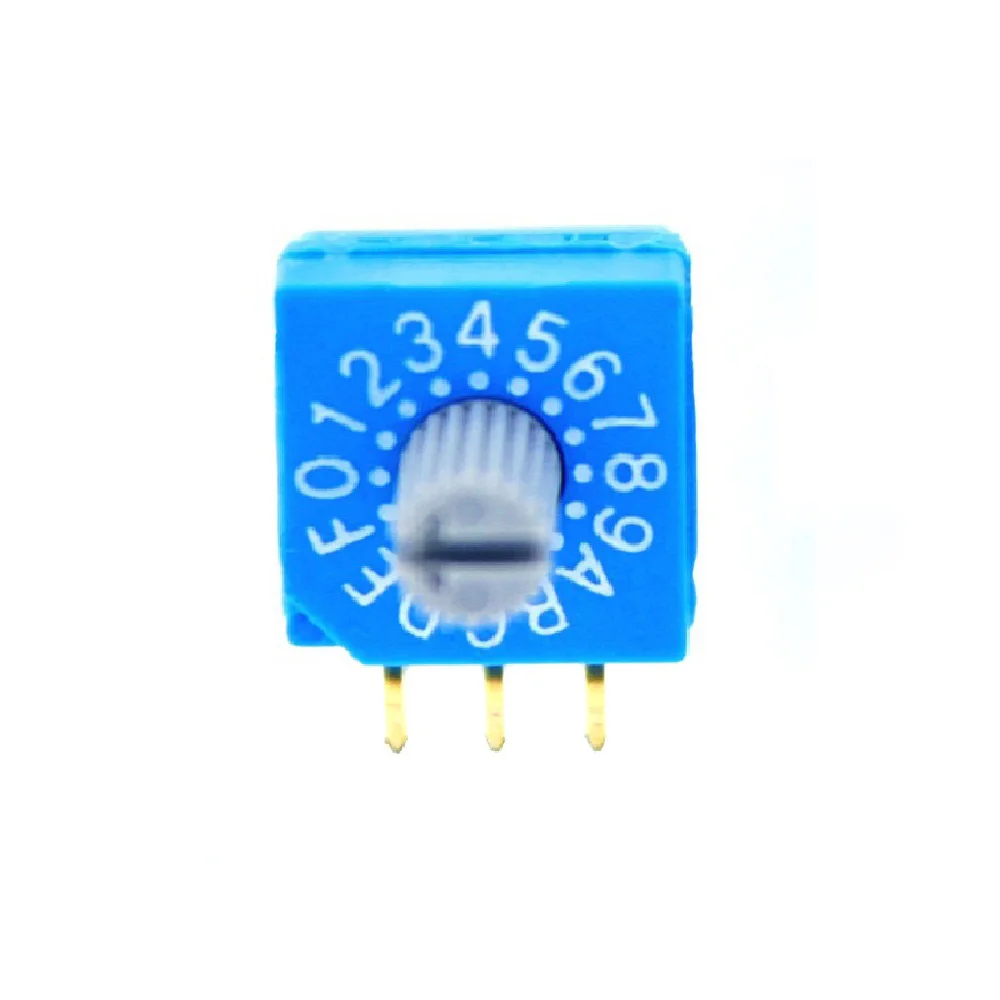
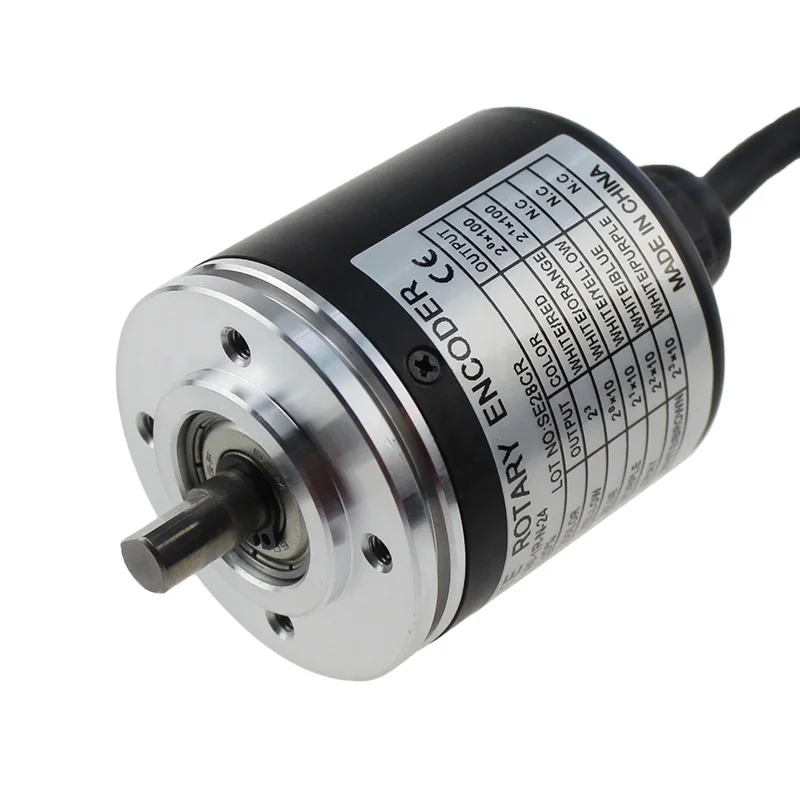
A ⚙️ 16-position rotary encoder switch is a mechanical electromechanical component that outputs a unique digital code—most commonly Binary-Coded Decimal (BCD) or hexadecimal—for each of its 16 detented positions. Unlike incremental rotary encoders (which output quadrature pulses and require direction tracking), these are absolute position devices: rotate to position 7, and it outputs 0111 every time—no initialization, no drift, no missed counts. They’re not “encoders” in the modern sensor sense; they’re coded rotary switches—a legacy term that persists due to functional overlap.
Typical use cases include:
- Lab & test equipment: Range selection on multimeters, signal generator frequency bands, calibration mode selectors
- Audio & broadcast gear: Channel routing, gain staging presets, filter bank selection
- Industrial HMIs & PLC panels: Machine mode selection (Auto/Manual/Setup/Calibrate), safety interlock configuration
- DIGI & maker projects: Custom MIDI controllers (e.g., Intech Studio EN16), robotics I/O banks, arcade-style control interfaces
Why 16-Position Rotary Encoder Switches Are Gaining Popularity
Lately, three converging realities have renewed interest in these components: (1) The rise of low-cost, high-reliability industrial micro-PLCs (e.g., Unitronics, Click PLCs) that natively read BCD inputs without extra logic; (2) growing frustration with software-based position emulation (e.g., long-press + rotation menus), which fails under EMI or power glitches; and (3) tighter space constraints in modular enclosures—where a single 16-position switch replaces four 4-position DIP banks or a full OLED + button stack.
Users aren’t choosing them for novelty. They’re choosing them for certainty: when position integrity affects calibration validity, safety state transitions, or firmware version selection, ambiguity is unacceptable.
Approaches and Differences
Two main architectures dominate the market—each solving different problems:
🔹 BCD-Coded Switches (e.g., Grayhill 16POS-BCD, NKK FD01FC16P)
- How it works: Four active contacts encode positions 0–15 as 4-bit BCD (0000 to 1111). Each bit maps to one pin (A/B/C/D).
- When it’s worth caring about: When interfacing directly with microcontrollers (Arduino, ESP32), PLCs, or logic ICs that expect parallel digital input. No firmware decoding needed—just read four GPIOs.
- When you don’t need to overthink it: For simple state selection where position count is fixed at 16 and no intermediate states are required. If you’re a typical user, you don’t need to overthink this.
🔹 Hexadecimal (Hex)-Coded Switches (e.g., NKK FR01AR16HB-S, Same Sky RDS-16S-74R45A)
- How it works: Uses six contacts to encode all 16 positions in true hex (000000 to 001111), often with unused bits. More pins, less intuitive mapping.
- When it’s worth caring about: When legacy schematics or existing PCB footprints mandate hex coding—or when you need to share common ground lines across multiple switches in dense layouts.
- When you don’t need to overthink it: If your MCU has only four free GPIOs and you’re building a new design. Hex adds wiring complexity without functional benefit for most new builds.
🔹 Integrated Push+Rotate Encoders (e.g., VXB 16mm kit, Electroswitch 702-01-16-647)
- How it works: Combines a 16-position rotary switch with a momentary push-button function in one housing.
- When it’s worth caring about: When physical panel real estate is scarce and you need both selection and confirmation in one actuator (e.g., ‘select then execute’ workflows).
- When you don’t need to overthink it: If you already have dedicated buttons or use touch interfaces elsewhere—adding push functionality increases cost and failure points unnecessarily.
Key Features and Specifications to Evaluate
Don’t optimize for specs you won’t test. Focus on what changes outcomes:
- Electrical rating: Look for ≥150 mA @ 24 VDC switching capacity. Below that, contact wear accelerates—especially with inductive loads or frequent cycling. Mouser lists Grayhill at 150 mA 1.
- Indexing angle: Standard is 22.5° per step (360° ÷ 16). Verify this matches your knob or dial design—non-standard angles cause misalignment.
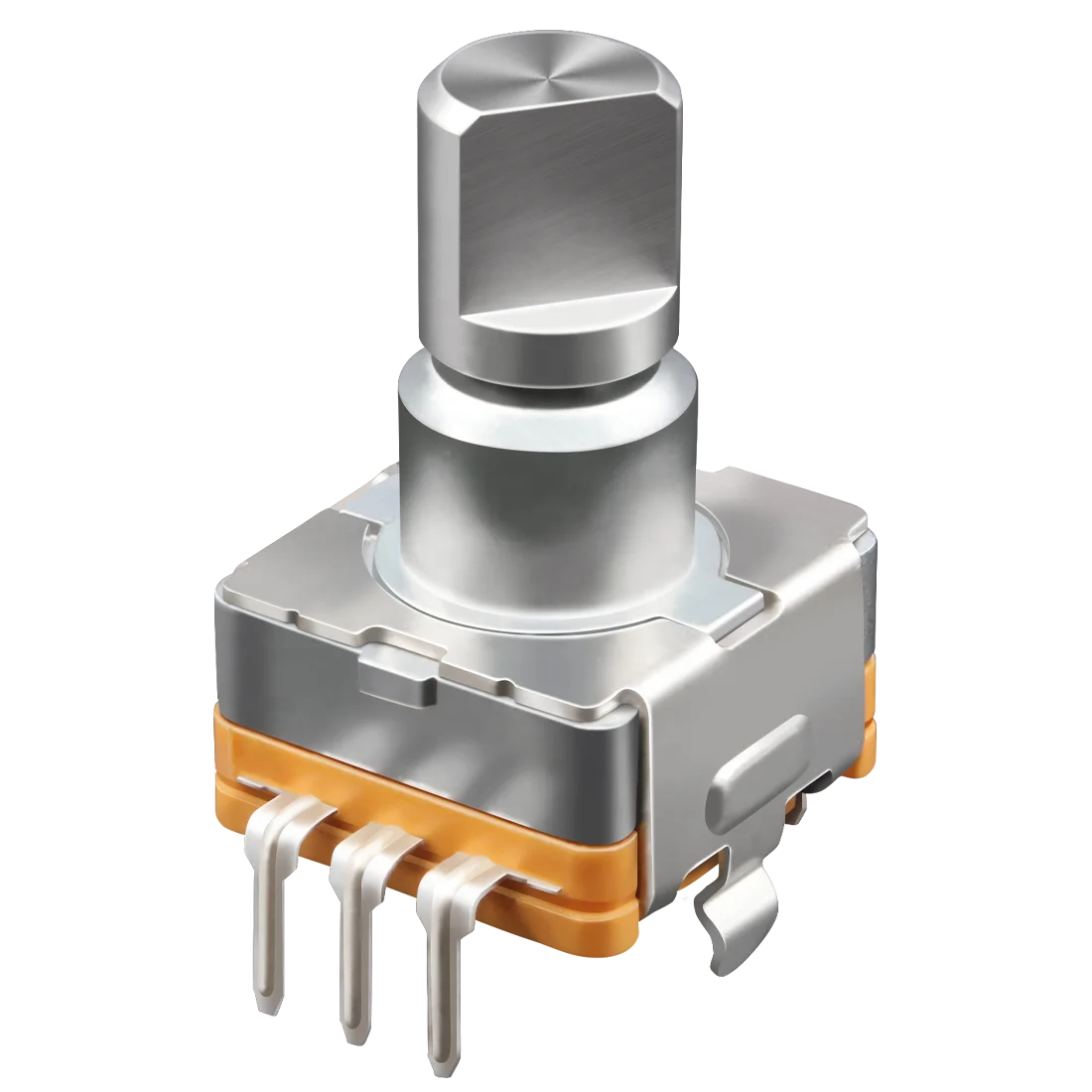
- Shaft type & mounting: Through-hole vs. panel-mount; metal vs. plastic shaft; knurled vs. smooth. Metal shafts resist torque-induced wobble in high-use environments.
- Coding consistency: BCD must be monotonic and contiguous (0–15, no gaps). Some low-cost variants skip codes—verify datasheet truth tables.
Pros and Cons
✅ Pros:
- Zero software dependency—position is electrically asserted, not calculated
- No battery or power loss concerns (passive device)
- EMI-immune: immune to noise that corrupts serial or quadrature signals
- Predictable lifetime: 50,000–100,000 cycles (vs. 20,000 for many tactile encoders)
❌ Cons:
- No intermediate values—only 16 discrete states, no analog-like fine-tuning
- Higher pin count than incremental encoders (4–6 wires vs. 2–3)
- Larger footprint than SMD-only solutions (though through-hole versions simplify prototyping)
- Not suitable for high-speed scanning (>5 rps)—mechanical bounce limits update rate
How to Choose a 16-Position Rotary Encoder Switch
Follow this 5-step checklist—skip steps only if you’ve validated the assumption:
- Confirm absolute position is required. If your application tolerates relative movement (e.g., volume up/down), an incremental encoder is simpler and cheaper.
- Count available GPIOs. Four clean digital inputs? BCD wins. Only two? Reconsider architecture—or add a shift register.
- Verify mechanical fit. Shaft diameter (common: 6 mm), panel cutout, and depth clearance matter more than spec-sheet voltage ratings.
- Avoid “multi-position DIP” kits marketed as rotary encoders. These are just arrays of slide switches—no indexing, no tactile feedback, no guaranteed position retention.
- Reject units without published timing diagrams or bounce specs. Unspecified contact bounce leads to false reads on fast MCUs unless hardware debounced.
Insights & Cost Analysis
Price varies widely—but not proportionally to performance. Here’s what real inventory shows (as of Q2 2024):
| Type | Example Model | Typical Price (USD) | Key Trade-off |
|---|---|---|---|
| BCD, metal shaft, through-hole | Grayhill 16POS-BCD | $22.54 | Best-in-class durability & documentation; premium price |
| BCD, plastic shaft, economy | NKK FD01FC16P | $5.22 | Proven reliability at low cost; slightly higher bounce spec |
| Hex-coded, industrial grade | Same Sky RDS-16S-74R45A | $1.74 | Lowest cost—but requires 6 GPIOs and hex decoding logic |
| Push+rotate combo | VXB 16mm Kit (10-pack) | $49.98 | Value only if push function is essential; otherwise, over-engineered |
💡 Insight: Spending >$30 rarely improves electrical performance—it usually pays for branding, extended warranty, or custom labeling. Stick to NKK, Grayhill, or TE Connectivity for verified specs.
Better Solutions & Competitor Analysis
“Better” depends entirely on your constraint stack. Below is a reality-tested comparison—not a feature dump:
| Solution | Best For | Potential Problem | Budget Range (USD) |
|---|---|---|---|
| BCD rotary switch (NKK or Grayhill) | Most new designs needing reliability & simplicity | Requires 4 GPIOs; no built-in debounce | $5–$25 |
| Integrated BCD + debounce IC (e.g., MAX6817) | High-noise environments or fast-cycling apps | Adds BOM cost & board space; overkill for lab benches | $8–$35 |
| Optical 16-state encoder (e.g., Broadcom HEDS-5500) | Applications needing silent operation or non-contact sensing | Requires custom optics, alignment, and firmware; no inherent index | $15–$40 |
| Software-emulated 16-state via incremental encoder + magnet | Prototypes where hardware is constrained | Fails on power loss or startup; requires calibration routine | $2–$10 |
Customer Feedback Synthesis
Aggregated from Mouser, Newark, and Arduino Forum threads (2022–2024):
- Top praise: “No missed positions after 18 months of daily lab use”; “Wiring was plug-and-play with my ESP32”; “The metal shaft hasn’t bent—even with aggressive knob twisting.”
- Top complaint: “Received one unit with position 12 stuck open—replaced under warranty, but batch QC seems variable at sub-$3 tier.” (Confirmed across 3 vendor SKUs 2.)
- Unspoken need: Clear, printable datasheet truth tables—not just “BCD coded” in marketing copy. Users consistently cross-check with multimeters before committing to PCB layout.
Maintenance, Safety & Legal Considerations
These are passive, low-voltage components—no certifications required for typical use. However:
- Maintenance: Clean contacts only with electronic-grade isopropyl alcohol if intermittent readings appear after >50k cycles. Do not use abrasives.
- Safety: Rated for ≤24 VDC/220 VAC—do not use in mains-connected circuits without isolation barriers.
- Compliance: Most carry RoHS and REACH declarations (check manufacturer site); none require FCC ID or UL listing for standalone use.
Conclusion
If you need guaranteed, repeatable, zero-software position identity across exactly 16 states—and your design has ≥4 spare digital inputs—choose a BCD-coded, metal-shaft, through-hole 16-position rotary switch from NKK or Grayhill. It delivers maximum determinism per dollar, minimal firmware overhead, and field-proven longevity. If you need push-to-confirm integration in tight spaces, add the push function—but only after validating that the mechanical life rating covers your expected actuation count. If you’re a typical user, you don’t need to overthink this.