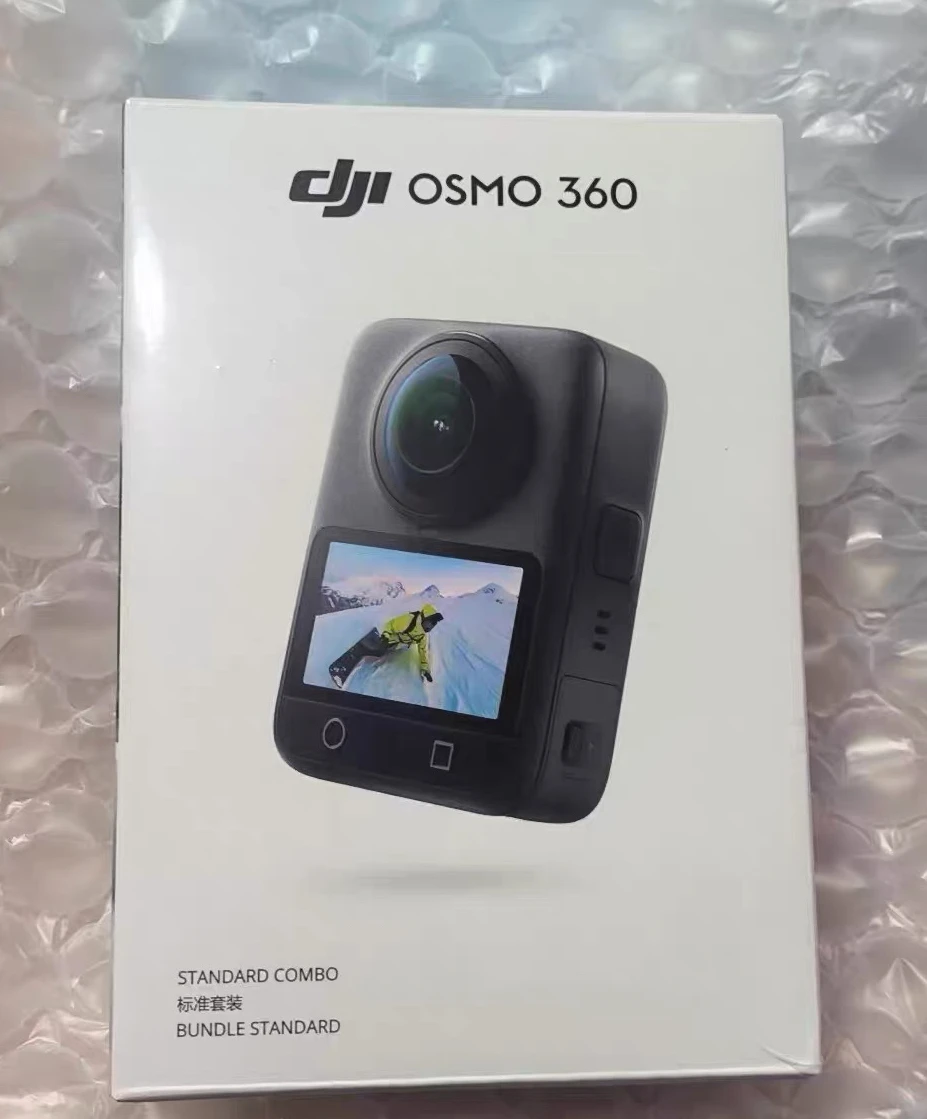
Over the past year, confusion around “16K video cameras” has spiked—not because consumer-grade 16K devices arrived, but because misleading labeling surged on online marketplaces and social feeds. If you’re a typical user, you don’t need to overthink this. There is no native 16K consumer camera—not in action cams, DSLRs, mirrorless bodies, or smartphones. Real 16K capture exists only in specialized industrial imaging systems (e.g., JAI Sweep line-scan cameras) or ultra-high-end cinematic workflows using stitched or super-resolved 8K sensors like the Sony F65 1. Claims like “Xomi Hero 12 / 16K” refer to upscaled or interpolated output—not true 16K resolution—and are functionally identical to aggressive digital zoom or AI upscaling 2. This piece isn’t for keyword collectors. It’s for people who will actually use the product.
About 16K Video Cameras: Definition & Typical Use Cases
16K resolution refers to display or capture formats with approximately 15,360 × 8,640 pixels—roughly 132.7 million pixels per frame 3. That’s 16× the pixel count of 4K (3840 × 2160) and 64× that of Full HD. But resolution alone doesn’t define a “16K video camera.” True capability requires sensor architecture, processing bandwidth, storage throughput, and playback infrastructure—all of which remain outside consumer reach.
Real-world deployments are narrow and mission-specific:
- Industrial inspection: Line-scan cameras like the JAI Sweep SW-16001M-MCL scan moving objects (e.g., semiconductor wafers, printed circuit boards) at high speed, building 16K-wide images one line at a time—not real-time video 4.
- Cinematic installation art: The Haneda Airport 36-screen public display used stitched and super-resolved footage from Sony F65 cameras—captured on location, then processed offline 1.
- Scientific visualization: High-resolution archival scanning of film negatives or microscopic tissue slides—where pixel fidelity outweighs frame rate or portability.
If you’re a typical user, you don’t need to overthink this. Your editing timeline, storage budget, and display hardware cannot meaningfully support native 16K today.
Why “16K Video Camera” Is Gaining Popularity (and Why It’s Misleading)
Lately, search volume for “16K video camera” rose sharply—but not due to new hardware releases. Instead, it reflects three converging signals:
- Algorithm-driven content amplification: Short-form videos (e.g., the 8K World YouTube clip from Jan 2025 5) showcase visual spectacle without clarifying technical constraints—making “16K” feel aspirational rather than operational.
- Marketing inflation: Vendors apply “16K” to products that merely upscale 4K footage via interpolation or crop-and-enlarge techniques—leveraging ambiguity in how resolution labels are regulated across regions.
- Downstream curiosity: As 8K TVs enter premium living rooms, consumers naturally ask, “What’s next?”—even though the bottleneck isn’t display tech, but source material, bandwidth, and workflow viability.
This trend creates two common, unproductive dilemmas:
- “Should I wait for 16K before upgrading my camera?” → No. No mainstream production pipeline supports it. Waiting delays tangible gains in dynamic range, autofocus, low-light performance, or codec efficiency.
- “Does higher resolution always mean better image quality?” → Not at all. A well-exposed, sharp 4K image with rich color science and clean noise handling outperforms a noisy, poorly graded 16K file every time.
The one constraint that truly matters? Workflow realism. Can you record, offload, proxy, edit, grade, export, and deliver at 16K without crashing your system—or waiting 12 hours per minute of footage? For >99.9% of creators, the answer is no.
Approaches and Differences: How “16K” Is Actually Achieved
There is no single “16K camera.” Instead, there are three distinct technical pathways—each serving different goals and constraints:
| Approach | How It Works | Pros | Cons |
|---|---|---|---|
| Super-Resolution Demosaicing (SRDM) | Uses advanced algorithms (e.g., Sony F65’s SRDM) to reconstruct detail beyond native sensor resolution—often combined with anamorphic lenses to stretch horizontal resolution 1. | Preserves organic texture; avoids artificial sharpening halos; leverages existing high-end cinema hardware. | Requires massive post-processing; not real-time; limited to controlled studio or location shoots with full IT support. |
| Multi-Camera Stitching | Records overlapping 8K or 12K feeds from multiple synchronized cameras, then blends them into a seamless ultra-wide image. | Scalable; allows flexible aspect ratios; widely used for VR and immersive installations. | Demands pixel-perfect alignment; introduces parallax errors; stitching artifacts require manual correction. |
| Line-Scan Imaging | Uses a single linear sensor moving relative to the subject (e.g., on a conveyor belt), capturing one line per exposure—building ultra-high-resolution stills or pseudo-video. | Unmatched spatial precision; ideal for static-detail applications like metrology or forensics. | No motion portrayal; zero real-time preview; incompatible with narrative filmmaking or documentary work. |
When it’s worth caring about: You’re building a custom inspection rig for automated manufacturing QA—or producing large-scale public art for permanent installation.
When you don’t need to overthink it: You shoot weddings, vlogs, interviews, or short films. Stick with proven 4K–6K tools.
Key Features and Specifications to Evaluate
Don’t chase the “16K” label. Instead, assess these measurable features—each directly tied to real-world usability:
- Native sensor resolution: Look for specs like “8296 × 4320 (8K)” or “5760 × 3240 (6K).” Anything labeled “16K” without a native resolution spec is marketing shorthand.
- Bit depth & color sampling: 10-bit 4:2:2 or better ensures grading flexibility—far more impactful than extra pixels.
- Codec efficiency: ProRes RAW, Blackmagic RAW, or All-I HEVC preserve quality while keeping file sizes manageable. Avoid “16K” claims paired with heavily compressed 8-bit MP4.
- Thermal & power design: True high-res capture generates heat and drains batteries fast. Check sustained recording times—not just “max duration” under lab conditions.
- I/O & media compatibility: Does it support CFexpress Type B, NVMe SSDs, or proprietary recorders? Bottlenecks here make “16K” irrelevant.
If you’re a typical user, you don’t need to overthink this. Prioritize reliability, battery life, autofocus consistency, and log profile usability over theoretical resolution ceilings.
Pros and Cons: Who Benefits—and Who Doesn’t
✅ Pros (for niche users):
- Future-proof archival for ultra-large-format projection (e.g., dome theaters, museum installations).
- Pixel-level forensic analysis in industrial or scientific contexts.
- Flexibility in reframing and cropping during post—without visible degradation.
❌ Cons (for everyone else):
- No consumer displays can decode or render native 16K video in real time.
- Storage costs balloon: One minute of uncompressed 16K RGB 10-bit ≈ 12 TB.
- Editing software lacks native acceleration—most NLEs treat 16K as a proxy-only workflow.
- Diminishing returns: Human vision cannot resolve 132 MP at standard viewing distances—even on 100″ screens.
When it’s worth caring about: You operate a broadcast facility with dedicated rendering farms and a mandate for multi-decade asset longevity.
When you don’t need to overthink it: You share content on YouTube, Instagram, or Vimeo. Even 4K is overkill for most viewers.
How to Choose a Video Camera—Without Falling for “16K” Hype
Follow this 5-step decision checklist—designed to filter noise and focus on what moves the needle:
- Define your delivery format first. Are you targeting 1080p web, 4K streaming, or theatrical DCP? Match your camera’s native output—not its interpolated ceiling—to that goal.
- Test real-world performance—not spec sheets. Rent or demo units for low-light response, rolling shutter, and autofocus in your actual shooting environment.
- Calculate total cost of ownership. Factor in media cards, backup drives, GPU upgrades, and render time—not just MSRP.
- Verify codec support in your NLE. Premiere Pro, DaVinci Resolve, and Final Cut Pro handle 8K well—but none offer optimized 16K timelines.
- Avoid “resolution-first” purchases. A $2,000 camera with great skin tones, reliable audio inputs, and intuitive menus beats a $5,000 “16K” model with poor ergonomics and no headphone jack.
Red flag to avoid: Any listing that uses “16K” without specifying sensor size, bit depth, or supported frame rates. That’s not transparency—it’s obfuscation.
Insights & Cost Analysis
True 16K-capable systems aren’t priced—they’re commissioned. The Sony F65-based Haneda Airport project involved custom lens mounts, on-site data wrangling, and months of post-processing 1. Industrial line-scan cameras like the JAI SW-16001M-MCL start above $25,000—and require integration engineers, not camera operators.
In contrast, capable 4K–6K hybrid cameras (e.g., Canon EOS R6 Mark II, Sony FX3, Blackmagic Pocket Cinema Camera 6K G2) retail between $2,000–$4,500 and deliver excellent image quality, robust codecs, and mature ecosystem support.
When it’s worth caring about: Budget is uncapped, and your output demands archival-grade resolution for fixed-installation or scientific validation.
When you don’t need to overthink it: You have a realistic budget and timeline. Invest in lighting, sound, and storytelling—not speculative resolution.
Better Solutions & Competitor Analysis
For nearly all creators, “better” means higher practical resolution within proven workflows—not chasing theoretical ceilings. Here’s how current alternatives compare:
| Category | Suitable Advantage | Potential Problem | Budget Range |
|---|---|---|---|
| High-End 6K Cinema Cameras (e.g., Blackmagic URSA Mini Pro 12K) | Native 12K sensor; flexible crop factors; open RAW formats; strong color science. | Large files; demanding on storage/NLE; overkill for most deliverables. | $5,995+ |
| Prosumer 4K Hybrid Cameras (e.g., Sony FX3, Canon R6 II) | Excellent low-light; reliable AF; lightweight; direct-to-edit codecs (e.g., XAVC S-I); broad lens compatibility. | Limited to 4K/60p in some modes; smaller sensors than full-frame cinema rigs. | $3,500–$4,500 |
| 8K Consumer Flagships (e.g., RED Komodo-X, Panasonic GH7) | True 8K oversampling benefits 4K output; future-ready for HDR/VR; growing software support. | Expensive media; heat management challenges; minimal real-world 8K delivery paths. | $5,000–$8,000 |
Customer Feedback Synthesis
Across professional forums (e.g., Reddit r/Cinematography, DVXuser), users consistently praise:
- Clarity when vendors disclose native resolution and supported codecs upfront.
- Reliability of mid-tier 4K cameras in run-and-gun scenarios—especially battery life and weather sealing.
- Transparency around “upscaling” vs. “native capture” in product documentation.
Top complaints include:
- Vague labeling like “16K ready” or “16K output” without defining whether it’s interpolated, cropped, or simulated.
- Missing thermal throttling specs—leading to unexpected shutdowns during long takes.
- Underpowered internal monitors that cannot accurately preview high-res footage.
Maintenance, Safety & Legal Considerations
No regulatory body certifies “16K video cameras,” nor does any broadcasting standard (e.g., ATSC 3.0, DVB-UHD) define 16K delivery parameters. As such:
- There are no mandatory safety certifications specific to 16K capture—though general CE/FCC compliance applies to electronics.
- Maintenance focuses on cooling systems (for high-throughput sensors) and calibration stability (for line-scan units).
- Data privacy laws (e.g., GDPR, CCPA) apply equally—especially if ultra-high-res imaging captures identifiable details in public spaces.
Conclusion
If you need archival-grade resolution for fixed-installation public displays or industrial metrology, explore line-scan or super-resolved cinema systems—but expect six-figure integration costs and specialized expertise. If you create content for human audiences on existing platforms, choose based on workflow fit, not resolution theater. A 4K camera with great color science, reliable autofocus, and efficient codecs delivers more value than a “16K” device that stalls your edit timeline and fills your NAS.
Frequently Asked Questions
Yes—but only as offline-processed assets (e.g., Sony F65 + SRDM) or line-scan stills. No consumer device records native 16K video in real time.
There are cameras *used in* 16K workflows—but none with a native 16K sensor. “16K camera” is a functional description, not a technical specification.
No. 16K (15360 × 8640) is 16× the pixel count of 4K (3840 × 2160)—not 4×. Resolution scales by area, not linear dimension.
No commercially viable 32K video capture or display system exists. It remains a theoretical concept with no known implementation path.



