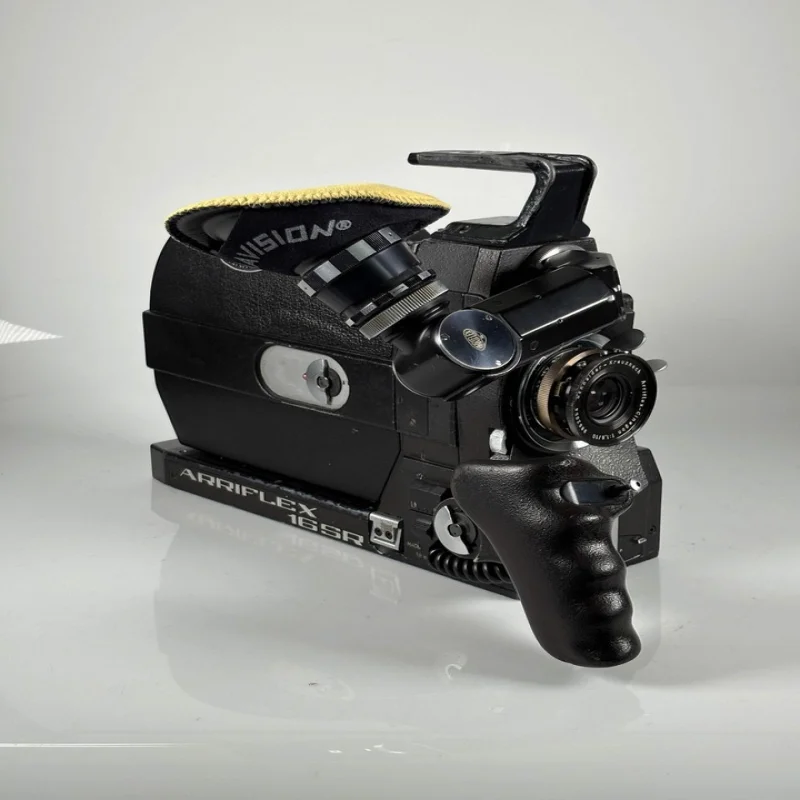
If you’re looking for a 16mm camera for sale in 2026, start here: For narrative sync-sound work, prioritize the ARRI SR3—but only if you’ll use crystal sync and professional film labs. For hands-on learning or experimental shooting, the Bolex H16 delivers unmatched tactile control at half the cost. And if your budget is under $700 and you need reliability over specs, the Krasnogorsk-3 remains the most widely serviced mechanical 16mm body on the market. Over the past year, demand for analog film gear has surged—not as nostalgia, but as a functional response to digital fatigue and hybrid post workflows1. That means more listings, more refurbishment services, and more risk of misaligned expectations: buyers often conflate ‘vintage’ with ‘ready-to-shoot’. This guide cuts through that noise. We answer what to look for in a 16mm camera, how to verify gate integrity before purchase, and why Super 16 conversion matters only if you’re delivering widescreen masters—not if you’re scanning for archival or student reels.
About 16mm Cameras: Definition & Typical Use Cases 🎞️
A 16mm camera captures motion picture film on 16mm-wide celluloid stock. Unlike consumer video cameras, it records physically—requiring film loading, manual threading, and precise mechanical timing. Its defining traits are grain structure, dynamic range limitations, and irreversible exposure decisions made at the moment of capture.
Typical users include:
- Film students learning exposure, focus pull, and workflow discipline;
- Indie directors seeking organic texture for festival-bound shorts or hybrid digital-analog features;
- Documentary shooters using MOS (no-sync) formats for observational realism;
- Educators and archivists maintaining analog literacy and preservation pipelines.
It’s not for vloggers, social-first creators, or anyone needing instant playback or autofocus. If you’re a typical user, you don’t need to overthink this: 16mm is a deliberate tool—not an upgrade path.
Why 16mm Cameras Are Gaining Popularity (2026)
Lately, the 16mm camera market isn’t growing because film is ‘coming back’—it’s growing because professionals are reassigning value. Gen Z and Millennial filmmakers aren’t choosing film for irony; they’re choosing it for control over texture, resistance to algorithmic homogenization, and tactile feedback missing in touch-screen interfaces2. This isn’t a bubble—it’s structural. Kodak and Fujifilm have expanded 16mm production capacity by 30% since 2023 to meet rising demand3. Meanwhile, digital cinema cameras dominate the $356.91M global market—but 16mm holds steady as the standard for film education and high-end indie aesthetics4.
The real shift? Hybrid workflows. Most 2026 16mm shoots end up scanned at 4K+ on professional telecine rigs, then edited digitally. The camera isn’t the endpoint—it’s the first intentional filter.
Approaches and Differences: Three Core Paths
There are three dominant acquisition paths for a 16mm camera for sale—and each serves a distinct workflow priority:
- Professional sync-sound production → ARRI SR3 (or similar PL-mount crystal-sync bodies)
- Experimental/handheld/MOS work → Bolex H16 (spring-wound, C-mount, silent operation)
- Entry-level training & reliability → Krasnogorsk-3 (mechanical, lightweight, globally serviced)
Each reflects a different trade-off: precision vs. portability, electronic stability vs. mechanical simplicity, cost vs. long-term serviceability.
Key Features and Specifications to Evaluate
Before bidding or wiring funds, inspect these five non-negotiables—ranked by impact on final image and usability:
- Film gate condition: Scratches here permanently damage every frame. Run a flashlight across the gate surface; look for hairline gouges or pitting. When it’s worth caring about: Every time—you can’t shoot around a damaged gate. When you don’t need to overthink it: If the seller provides macro photos and a clean test roll scan, skip deep-dive inspection unless you’re paying >$3,000.
- Format type: Standard 16mm vs. Super 16mm: Standard uses 4:3 aspect ratio with full-frame sprocket area; Super 16 widens the aperture to 16:9, sacrificing sprocket space for resolution. When it’s worth caring about: If you’re delivering to broadcast or streaming platforms requiring 16:9 masters. When you don’t need to overthink it: For student projects, archives, or optical printing—Standard 16mm scans cleanly and preserves more negative area.
- Sync speed accuracy: Crystal-controlled motors maintain true 24fps ±0.001%. Critical for double-system sound recording. When it’s worth caring about: Only if you plan to record live dialogue with separate audio recorders. When you don’t need to overthink it: If you’re shooting MOS or syncing audio in post via clapper slate—most modern NLEs handle drift correction reliably.
- Light-tightness: Check door seals, magazine latches, and viewfinder eyepieces. Fogged film = lost footage + lab fees. When it’s worth caring about: Always—especially with older Bolex or K3 models where foam light seals degrade. When you don’t need to overthink it: If the camera was professionally refurbished within the last 18 months (ask for seal replacement receipts).
- Optics compatibility: C-mount (Bolex, K3) vs. PL-mount (ARRI). Adapters exist, but add weight, flange distance risk, and vignetting. When it’s worth caring about: If you already own a lens set—or plan to rent frequently. When you don’t need to overthink it: For beginner use, C-mount primes are abundant, affordable, and optically excellent.
Pros and Cons: Balanced Assessment
No 16mm camera is universally ‘better’. Each excels in context—and fails outside it.
- ARRI SR3: Pros—rock-solid sync, modular design, industry-standard PL mount, reliable motor. Cons—bulky, power-hungry, requires battery packs or AC adapters, steep learning curve for mechanics. Best for: Crewed narrative shoots with sound departments. Not for: Solo shooters, guerrilla docs, or budgets under $5,000.
- Bolex H16: Pros—lightweight, spring-wound (no batteries), intuitive variable shutter, iconic ergonomics. Cons—no crystal sync, aging capacitors in electronics (if equipped), limited parts availability for vintage electronics. Best for: Experimental, handheld, silent, or educational use. Not for: Sync-sound drama or high-volume daily rushes.
- Krasnogorsk-3: Pros—robust, simple, widely serviced, low entry cost, accepts M42 lenses via adapter. Cons—no reflex viewing, noisy operation, limited accessories. Best for: Students, DIY filmmakers, and those prioritizing mechanical longevity over features. Not for: Precision framing or quiet-set environments.
How to Choose a 16mm Camera: A Step-by-Step Decision Checklist
Follow this sequence—not in order of preference, but in order of consequence:
- Define your primary use case: Narrative sync? MOS documentary? Film school assignment? Archival scanning? Your answer eliminates two of the three core models immediately.
- Verify your budget includes hidden costs: Film stock ($15–$25/roll), processing ($20–$40/roll), scanning ($0.15–$0.40/foot), and potential repair ($300–$1,200 for gate or motor service). A $600 K3 becomes $1,800 in Year One.
- Check gate, light seals, and shutter function—in that order. Ask for video proof of threading and a test run. If the seller refuses, walk away.
- Avoid ‘collector-grade’ listings unless you’re restoring: Cameras sold as ‘mint original box’ often haven’t been tested in decades. Operational condition trumps cosmetic perfection.
- Confirm format and mount compatibility with your existing or planned lenses and lab pipeline. Don’t assume Super 16 will ‘just work’ with your scanner’s gate.
This piece isn’t for keyword collectors. It’s for people who will actually use the product.
Insights & Cost Analysis
2026 pricing reflects both scarcity and specialization:
| Model | Typical 2026 Price Range | Annual Operating Cost (Est.) | Service Availability |
|---|---|---|---|
| ARRI SR3 | $5,000 – $10,000+ | $2,200 – $4,500 | Global ARRI service centers (limited third-party options) |
| Bolex H16 | $500 – $2,000 | $1,400 – $2,800 | Specialized shops (US: Cinelab; UK: Metro Imaging; EU: Filmlab Berlin) |
| Krasnogorsk-3 | $300 – $700 | $1,100 – $2,100 | Widely serviced (Russia, Poland, US, Japan) |
Note: Operating costs assume ~10 rolls/month, standard development, and one professional scan per roll. If you’re shooting less than 3 rolls per month, the K3 offers the highest ROI for skill-building. If you’re shooting weekly, the SR3’s consistency justifies its price—provided your lab supports it.
Better Solutions & Competitor Analysis
‘Better’ depends entirely on your definition. Here’s how alternatives compare—not as upgrades, but as functional matches:
| Solution Type | Best For | Potential Problem | Budget (2026) |
|---|---|---|---|
| Refurbished ARRI SR3 (certified) | Sync-sound narrative with lab pipeline | Parts scarcity for older units; no firmware updates | $6,500 – $9,200 |
| Super 16-converted Bolex H16 | Widescreen MOS with vintage handling | Conversion quality varies; may reduce gate life | $1,400 – $2,600 |
| K3 with M42 adapter + Helios 44-2 | Low-cost, high-yield student training | No built-in light meter; manual focus only | $420 – $680 |
| Digital cinema camera with film LUTs | Texture simulation without film logistics | No grain variability, no exposure commitment, no tactile feedback | $2,500 – $8,000 |
Customer Feedback Synthesis
Based on aggregated forum posts (r/cinematography, Cinematography.com, Facebook film groups), top recurring themes:
- Highly praised: Bolex H16’s intuitive variable shutter; K3’s mechanical durability; ARRI SR3’s motor consistency after service.
- Frequent complaints: Fogging from degraded light seals (all models); inconsistent frame registration on uncalibrated K3s; lack of English manuals for Soviet-era gear; surprise lab rejection due to incorrect perforation alignment.
Maintenance, Safety & Legal Considerations
16mm cameras require routine maintenance—but not constant intervention. Key points:
- Maintenance: Clean gate and pressure plate with lens tissue and solvent every 20 rolls; lubricate moving parts annually (by a qualified tech); replace light seals every 3–5 years.
- Safety: Never force film threading. Avoid exposing loaded magazines to direct sunlight or extreme heat. Store film in cool, dry conditions (<50°F / 10°C ideal).
- Legal: No export restrictions apply to used 16mm cameras—but some countries regulate film stock import (e.g., India requires customs permits for raw stock). Always check destination requirements before shipping.
Conclusion: Conditional Recommendations
If you need sync-sound reliability and studio integration, choose a serviced ARRI SR3—and confirm your lab supports its gate dimensions and perforation standard. If you need hands-on learning, portability, and mechanical intuition, the Bolex H16 remains unmatched—even with its quirks. If you need low-cost, high-reliability access to analog workflow, the Krasnogorsk-3 delivers consistent performance at minimal overhead. If you’re a typical user, you don’t need to overthink this: start with your strongest constraint—budget, sound needs, or learning goals—and let that decide.
Frequently Asked Questions