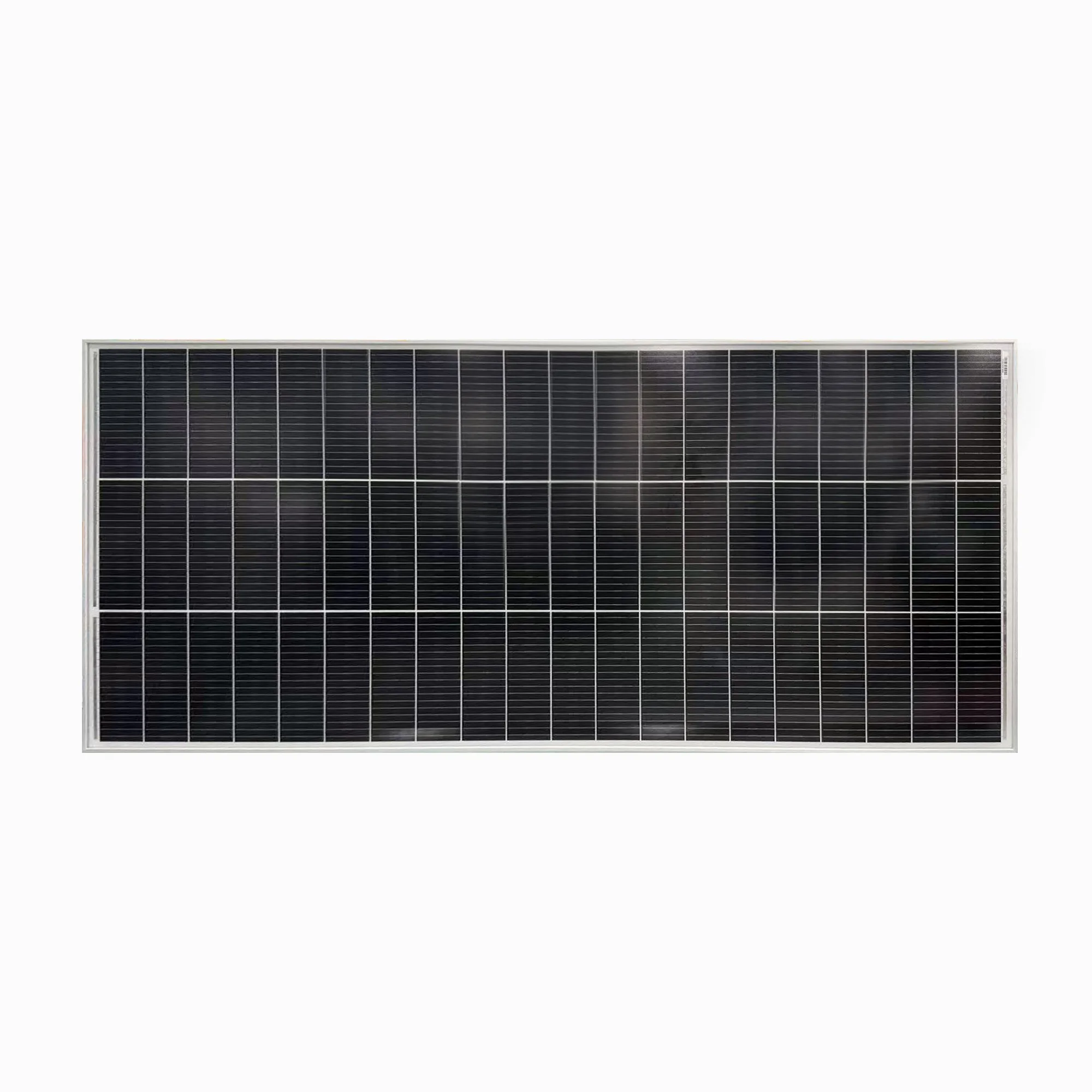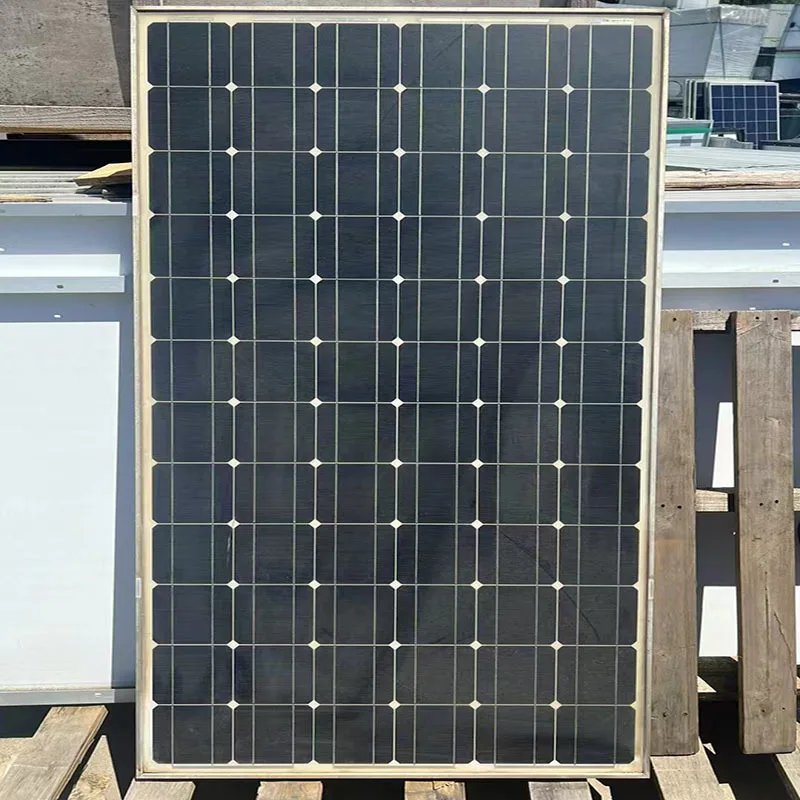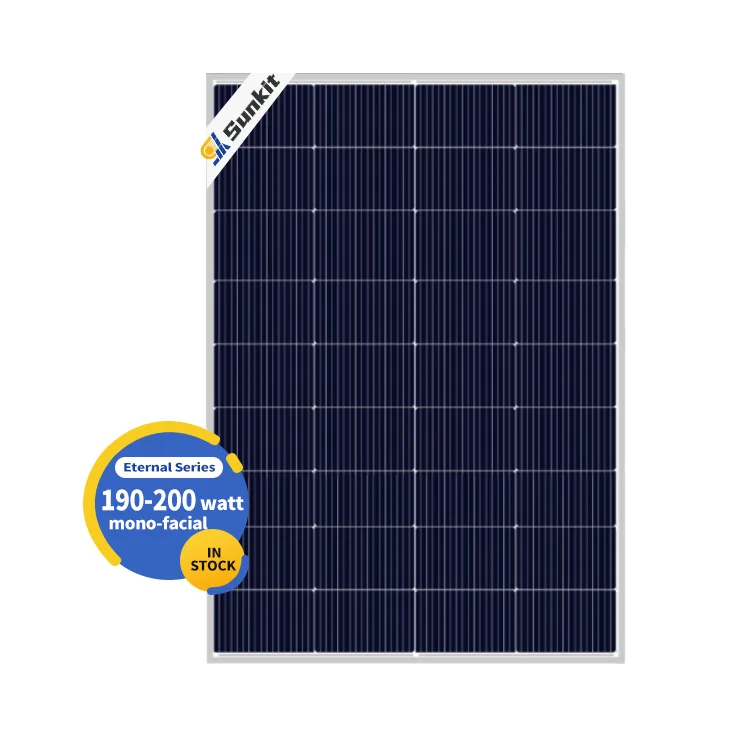
If you’re a typical user, you don’t need to overthink this. Over the past year, the 190W power class has crystallized as a high-utility sweet spot—not too small to be ineffective, not so large that it demands industrial infrastructure. Whether you’re outfitting a campervan with solar, scaling an indoor herb farm, or powering a workstation-grade laptop, 190W delivers measurable headroom without excess bulk, heat, or cost. This guide cuts through ambiguity: for off-grid solar, the Loom Solar 190W monocrystalline panel leads on reliability and size efficiency1; for controlled-environment agriculture, the Hangzhou Sehon IP65 full-spectrum LED grow light balances efficacy and humidity resilience2; for high-performance computing, the Shenzhen Hagors 19V/10A 190W laptop charger stands out for CE-certified stability and ≤2-hour supplier response time3. Skip theoretical wattage debates—focus instead on your actual load profile, environmental constraints, and sourcing timeline. If you need plug-and-play durability in variable sunlight, choose solar. If you control ambient temperature and need photobiological precision, choose grow lighting. If your laptop draws sustained >150W under render or simulation loads, choose the certified adapter. Everything else is noise.
About 190W Products: Definition and Typical Use Cases
The “190W” designation refers to nominal continuous power output—a threshold where consumer-grade electronics meet professional-grade performance. It’s not arbitrary: at 190W, solar panels achieve optimal surface-area-to-output ratios for balcony, RV, and marine mounting4; LED grow lights cross into the 3.0+ µmol/J photosynthetic photon efficacy range needed for fruiting and flowering stages5; and laptop adapters reliably sustain dual-GPU workstations or portable rendering rigs without thermal throttling6. Unlike lower-wattage units (e.g., 65W–100W), 190W systems assume duty cycles above 60% for extended periods. Unlike 300W+ industrial units, they retain portability, low-voltage compatibility (12V/19V/24V), and plug-and-play integration with consumer inverters, drivers, and USB-C PD ecosystems.
Why 190W Is Gaining Popularity
Lately, three converging signals have elevated 190W from niche to mainstream. First, urban “balcony solar” adoption surged +27% in distributed installations (Q2 2026), driven by grid instability and feed-in tariff adjustments—190W panels fit standard rail spacing and weight limits for residential balconies and flat roofs7. Second, indoor cultivation shifted toward year-round, high-yield micro-farms: growers now prioritize spectral control and dimmability over raw wattage, making 190W full-spectrum LEDs ideal for 1–2 m² canopy coverage8. Third, workstation laptops—especially those with RTX 40-series GPUs or Intel Core i9-HX processors—routinely draw 160–185W under load; OEM adapters often fail here, creating demand for robust third-party 190W AC/DC solutions9. This isn’t hype—it’s physics meeting policy meeting procurement reality.
Approaches and Differences
Three distinct product categories converge at 190W—but their design priorities, failure modes, and decision criteria are fundamentally different:
- ☀️ Solar Panels (e.g., Loom Solar 190W): Prioritize power-per-square-meter, low-light responsiveness, and mechanical durability. Trade-offs include limited modularity and no dimming. Best for fixed or semi-permanent outdoor setups.
- 🌱 LED Grow Lights (e.g., Hangzhou Sehon IP65): Prioritize photosynthetic photon flux density (PPFD), spectrum tunability, and thermal management in humid air. Trade-offs include higher sensitivity to ambient temperature and driver complexity. Best for climate-controlled indoor spaces.
- 💻 Laptop Adapters (e.g., Shenzhen Hagors 190W): Prioritize voltage regulation stability, safety certification (CE/RoHS), and transient load handling. Trade-offs include bulkier form factors and strict input voltage tolerances. Best for mobile workstations with sustained GPU/CPU loads.
If you’re a typical user, you don’t need to overthink this: your primary use case dictates category. Mixing them—e.g., using a solar panel to directly power a laptop—is technically possible but introduces DC-DC conversion losses and battery buffer requirements. Stick to purpose-built solutions.
Key Features and Specifications to Evaluate
Not all 190W labels are equal. Here’s what actually moves the needle—and when it matters:
- Efficiency (PPE or lm/W or µmol/J): When it’s worth caring about — if space or weight is constrained (e.g., RV roof, backpackable setup). When you don’t need to overthink it — for stationary home solar or desktop grow lights where footprint isn’t limiting.
- Certifications (CE, RoHS, IP65): When it’s worth caring about — for adapters used daily in shared workspaces or grow lights in humid greenhouses. When you don’t need to overthink it — for temporary, dry-environment solar testing.
- Response Time & MOQ: When it’s worth caring about — for B2B resellers or integrators ordering samples before bulk. When you don’t need to overthink it — for single-unit end-user purchases.
- Thermal Derating Curve: When it’s worth caring about — for grow lights running 18+ hrs/day or adapters in poorly ventilated laptop docks. When you don’t need to overthink it — for intermittent use (<4 hrs/day).
Pros and Cons
| Category | Best For | Common Pitfalls | Not Ideal For |
|---|---|---|---|
| Solar Panels | Off-grid cabins, campervans, marine auxiliary power | Underestimating shading impact; ignoring tilt angle optimization | Indoor use; locations with <4 peak sun hours/day |
| Grow Lights | Hydroponic herbs, cannabis flowering, propagation chambers | Overlooking PPFD uniformity maps; assuming “full spectrum” = balanced PAR | Large commercial greenhouses (>50 m²); non-LED-compatible legacy ballasts |
| Laptop Adapters | Mobile rendering, CAD workstations, AI model training on laptops | Using uncertified adapters under sustained load → voltage sag or shutdown | Ultrabooks or thin-and-light laptops (<65W TDP); travel-only use |
How to Choose a 190W Product: A Step-by-Step Decision Guide
- Define your primary load profile: Measure or estimate peak sustained draw (not just “rated” wattage). Use a Kill-A-Watt meter for adapters, a quantum sensor for grow lights, or PVWatts for solar yield modeling.
- Map your environment: Is it exposed to rain/salt (→ IP65 solar/grow)? Is airflow restricted (→ derating warning for adapters)? Is sunlight inconsistent (→ monocrystalline > polycrystalline)?
- Verify certification at product level: “CE compliant” ≠ “CE certified.” Ask suppliers for test reports (EN 62368-1 for adapters, IEC 61215 for solar, IEC 62471 for LEDs).
- Check real-world MOQ and lead time: Avoid “1-piece MOQ” listings with 60-day delivery if you need it by September. The Hagors adapter ships by Sep 303; the Sehon grow light by Nov 042.
- Avoid these three traps: (1) Assuming 190W solar = 190W output in real conditions (expect 75–85% STC rating), (2) Buying grow lights based on “wattage” alone (PPFD at 18" matters more), (3) Using non-CE adapters with gaming laptops—thermal shutdown occurs mid-render.
Insights & Cost Analysis
Price isn’t linear across categories—and value isn’t either. Based on verified Alibaba listings (Q2 2026):
- Solar Panel: $92.40 (Loom Solar, 1pc MOQ, monocrystalline, tempered glass)1. Highest absolute cost, but lowest lifetime cost per kWh in off-grid use.
- Grow Light: $5.13–$5.23/unit (Hangzhou Sehon, 5pc MOQ, IP65, dimmable)2. Lowest unit price—but only valuable if paired with proper horticultural controls.
- Laptop Adapter: $12.80–$13.80 (Shenzhen Hagors, 1pc MOQ, CE-certified, 19V/10A)3. Mid-tier cost, highest ROI for users replacing failed OEM units.
For budget-conscious buyers: Don’t cut corners on certifications. A $9 uncertified adapter may cost $200 in lost work time due to instability. A $70 uncertified solar panel may void your inverter warranty.
Better Solutions & Competitor Analysis
| Product Type | Top Recommendation | Key Advantage | Potential Issue | Budget Range (USD) |
|---|---|---|---|---|
| Solar Panel | Loom Solar 190W Mono | High PPE (≥23.5%), ≤2h supplier response | No built-in bypass diodes listed | $92.40 |
| Grow Light | Hangzhou Sehon IP65 Full Spectrum | 90 lm/W efficacy, CRI >90, dimmable | MOQ = 5 pcs | $5.13–$5.23 |
| Laptop Adapter | Shenzhen Hagors 190W | CE-certified, ≤2h response, full customization | Plastic housing (not metal) | $12.80–$13.80 |
Customer Feedback Synthesis
Verified buyer data reveals consistent themes:
- Solar: 4.5/5 rating; praised for “100% functional reliability in tiny house setups,” but some note “no mounting hardware included.”
- Grow Light: 4.2/5 rating; users highlight “even canopy coverage at 18" height,” though a few report “driver hum at lowest dim setting.”
- Adapter: 4.4/5 rating; “stable under Blender Cycles render for 4+ hrs” is the top comment—yet several mention “firm cable strain relief needed.”
Maintenance, Safety & Legal Considerations
All 190W devices generate meaningful heat and require attention:
- Solar panels: Clean quarterly with deionized water; inspect frame seals annually. No legal restrictions for residential use, but local HOAs may limit visible installation.
- Grow lights: Replace drivers every 3 years; ensure IP65-rated junction boxes if wiring outdoors. In EU, must comply with EN 62471 (photobiological safety).
- Adapters: Never cover vents; unplug if casing exceeds 60°C. CE marking is mandatory for EU sale—non-compliant units risk customs seizure10.
Conclusion
If you need off-grid energy resilience in constrained spaces, choose the Loom Solar 190W monocrystalline panel. If you manage indoor crops requiring spectral precision and moisture resistance, the Hangzhou Sehon IP65 grow light delivers measurable yield consistency. If your workflow depends on sustained, stable power for high-TDP laptops, the Shenzhen Hagors 190W adapter eliminates thermal surprises. This piece isn’t for keyword collectors. It’s for people who will actually use the product. If you’re a typical user, you don’t need to overthink this—match the tool to the task, verify certification, and prioritize real-world response over spec-sheet headlines.