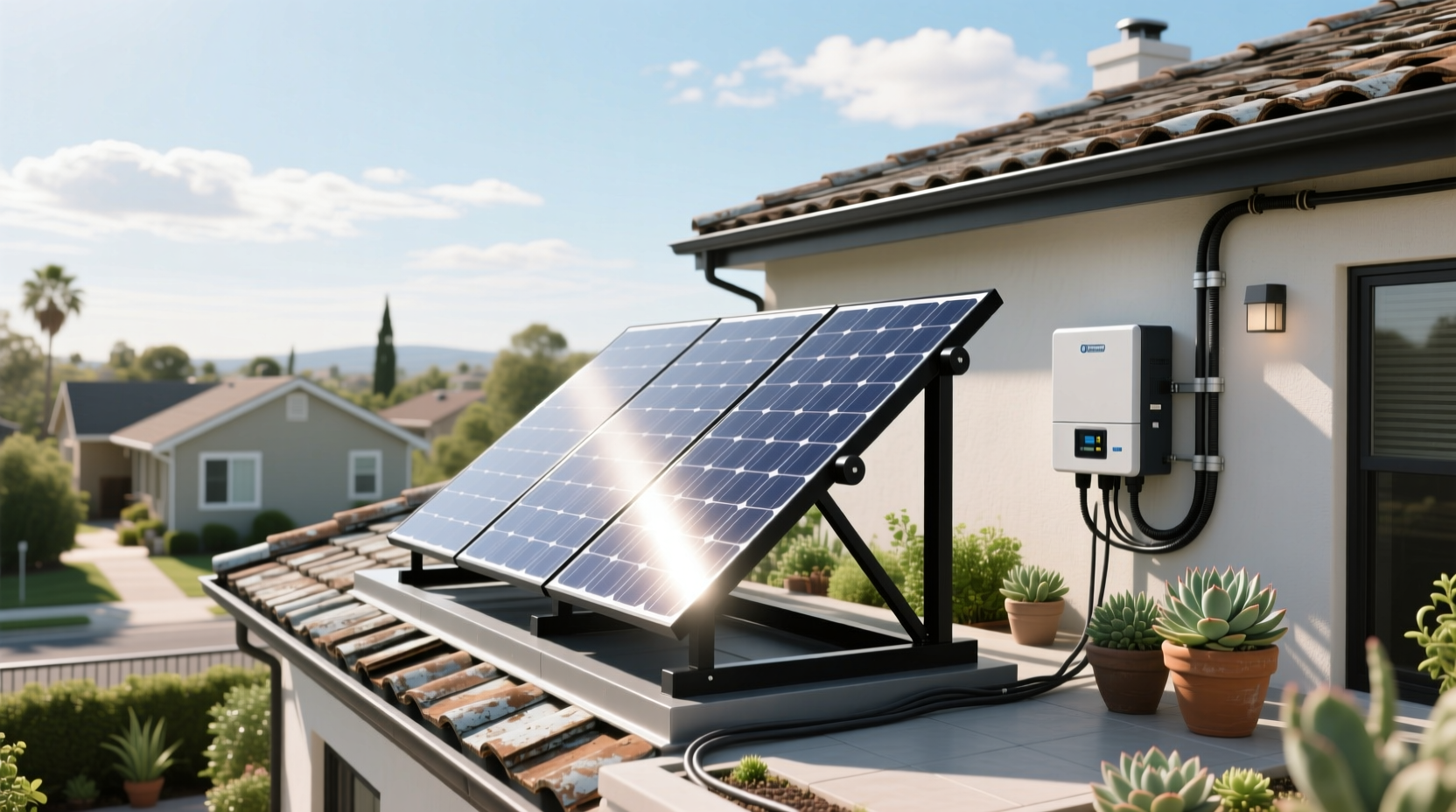
Over the past year, 190 watt solar panels have become the most practical sweet spot for portable off-grid power—especially for RVs, campervans, marine use, and small backup systems. If you’re a typical user installing on an RV roof, mounting on a trailer, or building a foldable field kit, choose a monocrystalline panel with TOPCon cells (not PERC), ETFE coating if flexible, and an MPPT-compatible Vmp near 18–22V. Skip polycrystalline, avoid PET-coated flex panels for marine/RV use, and don’t overspec a charge controller just because Voc spikes in cold weather—you’ll waste money. This piece isn’t for keyword collectors. It’s for people who will actually use the product.
About 190 Watt Solar Panels: Definition & Typical Use Cases
A 190 watt solar panel is a mid-tier photovoltaic module engineered to deliver nominal output under Standard Test Conditions (STC). Unlike utility-scale 500W+ panels or ultra-compact 50W USB chargers, the 190W class balances physical footprint (~1.6–2.0 m² for rigid, ~1.2–1.5 m² for flexible), weight, and power density—making it ideal where space, weight, and mounting constraints matter more than raw peak output.
Typical users include:
- 🚐 RV and van lifers: Installing on curved roofs or limited flat surfaces;
- ⚓ Boat owners: Mounting on bimini tops, arches, or cabin roofs exposed to salt, UV, and vibration;
- 🎒 Campers and overlanders: Using foldable kits with integrated kickstands or carry bags;
- 🏠 Small off-grid cabins or sheds: Pairing one or two units with a 300Ah LiFePO₄ battery and 30A MPPT controller.
It’s not designed for whole-home grid-tied arrays—that’s where 400W+ bifacial modules dominate. Nor is it meant for emergency phone charging alone—that’s better served by 20–60W portable panels. Its niche is reliable, daily-use supplemental power when portability, durability, and system compatibility are non-negotiable.
Why 190W Solar Panels Are Gaining Popularity
Lately, demand for 190W panels has accelerated—not because wattage itself changed, but because three interlocking shifts made this rating far more capable and accessible:
- TOPCon cell adoption: By 2026, TOPCon (Tunnel Oxide Passivated Contact) technology is projected to replace PERC as the commercial standard for mid-power panels, delivering 22–24% module efficiency versus ~19% for legacy monocrystalline 1. That means more energy per square foot—critical when roof space is fixed.
- Portable market expansion: The global portable solar panel market is forecast to reach $1.8 billion by 2026, driven by outdoor recreation, remote work needs, and residential resilience planning 2. Foldable 190W kits now ship with integrated MC4 connectors, carrying cases, and dual-angle stands—no DIY wiring required.
- Material upgrades in flexible variants: ETFE (ethylene tetrafluoroethylene) film has replaced PET as the top-layer coating on premium flexible panels. ETFE transmits ~95% of incident light (vs. ~85% for PET) and resists UV degradation for 10+ years in marine environments—where PET often yellows and delaminates within 2–3 seasons 3.
If you’re a typical user, you don’t need to overthink this: these aren’t incremental improvements—they’re functional upgrades that directly impact longevity, yield, and real-world usability.
Approaches and Differences: Rigid vs Flexible vs Portable
Three distinct form factors dominate the 190W category—each solving different constraints. Confusing them leads to poor ROI or premature failure.
| Category | Best For | Key Advantages | Potential Problems |
|---|---|---|---|
| Rigid (Aluminum frame + tempered glass) | Fixed rooftop, ground mounts, pole mounts | • Highest long-term reliability • Lowest LCOE (levelized cost of energy) • Easier cleaning & inspection |
• Heavy (~25 lbs) • Requires structural mounting hardware • Not suitable for curved or vibrating surfaces |
| Flexible (ETFE-laminated, bendable) | RV roofs, boat decks, curved trailers, temporary installs | • Lightweight (4–8 lbs) • Conforms to curvature without stress • ETFE resists salt, UV, abrasion |
• Lower heat tolerance (derates faster above 65°C) • No rear-side ventilation → 5–10% lower yield in hot climates • Requires adhesive bonding or specialized clamps |
| Portable (Foldable, 2–4 panel array) | Camping, tailgating, emergency backup, seasonal use | • Zero permanent installation • Built-in stand & carry handle • Often includes charge controller or USB outputs |
• Lower wind resistance (requires staking) • More connection points = more failure risk • Less durable than rigid/flex for daily use |
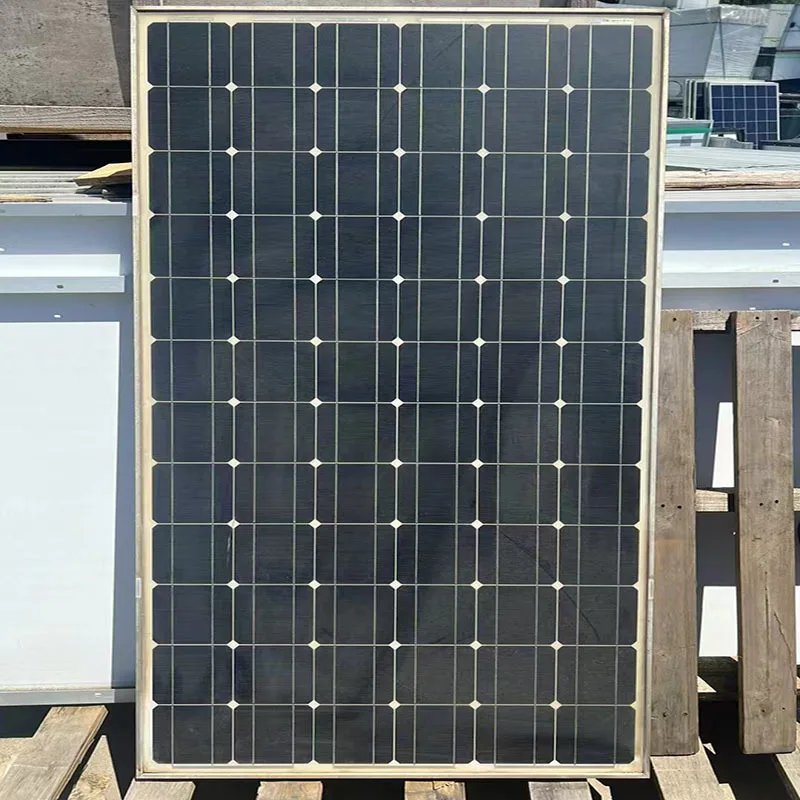
Key Features and Specifications to Evaluate
Not all 190W panels perform equally—even with identical STC ratings. What matters isn’t just the watt label, but how that power delivers under real conditions.
- Vmp (Voltage at Maximum Power): Critical for charge controller compatibility. Most 190W panels operate between 18V and 22V. If your system is 12V nominal, aim for Vmp ≤ 22V. If 24V, Vmp should be ≥ 30V. When it’s worth caring about: mismatched Vmp causes >15% energy loss with PWM controllers. When you don’t need to overthink it: if using an MPPT controller with wide input range (e.g., 12–100V), minor Vmp variation won’t hurt.
- Voc (Open-Circuit Voltage): Determines cold-weather safety margins. A 190W panel may hit 28–32V Voc at -10°C. Your charge controller’s max input voltage must exceed this. When it’s worth caring about: underspec’ing here risks controller shutdown or damage. When you don’t need to overthink it: if ambient temps stay above 5°C, Voc stays within safe bounds for most 100V-rated MPPTs.
- Temperature Coefficient: Expressed as %/°C—lower is better. Good panels range from -0.30%/°C to -0.38%/°C. At 45°C surface temp, a -0.35%/°C panel loses ~10% output vs. STC. When it’s worth caring about: critical for desert or tropical use. When you don’t need to overthink it: if you’re in mild coastal climates, differences shrink to ~2–3%.
- Certifications: UL 1703 (US), IEC 61215 (global), CEC listing (California rebate eligibility). When it’s worth caring about: mandatory for insurance compliance and permitting on dwellings. When you don’t need to overthink it: for temporary camping use, CE or TÜV marks suffice.
Pros and Cons: Balanced Assessment
Every 190W solution trades off something. There’s no universal “best”—only best-for-context.
- Rigid panels excel when: You need 20+ years of service life, have flat mounting area, and prioritize lowest lifetime cost per kWh. They’re unsuitable if weight exceeds 25 lbs or curvature prevents secure framing.
- Flexible panels excel when: You’re bonding to fiberglass, aluminum, or curved metal—and need UV/salt resistance. They’re unsuitable if surface temps regularly exceed 70°C (e.g., black rubber roofs in Arizona summer) or if you expect frequent foot traffic.
- Portable kits excel when: You deploy power seasonally, move locations often, or lack tools/skills for permanent wiring. They’re unsuitable if you need rainproof, 24/7 operation or plan to leave them unattended for weeks.
If you’re a typical user, you don’t need to overthink this: your mounting surface—not marketing claims—dictates the right form factor.
How to Choose a 190W Solar Panel: Decision Checklist
Follow this 6-step checklist before purchase. Skip any step, and you risk underperformance or early failure.
- Confirm your system voltage: Is your battery bank 12V, 24V, or 48V? Match panel Vmp accordingly (e.g., 18–22V for 12V; 36–44V for 24V).
- Measure available mounting area: Rigid panels need ≥1.8 m²; flexible need ≥1.3 m²; portable kits require zero fixed space—but need ~3 m² of open ground.
- Identify environmental stressors: Salt exposure? Choose ETFE-coated flex. High wind? Prioritize rigid with Z-bracket airflow clearance. Frequent shade? Add panel-level monitoring (not standard at this wattage).
- Verify controller compatibility: Does your existing charge controller support the panel’s Voc at your coldest expected temperature? If upgrading, choose MPPT—not PWM—for 15–30% more harvest 4.
- Check certifications: UL/CEC/IEC listed for permanent installs; CE/TÜV acceptable for portable use.
- Avoid these traps: (a) PET-coated “flexible” panels sold as marine-grade (they’re not); (b) “190W” labels without STC test reports; (c) Bundles with non-MPPT controllers unless explicitly rated for LiFePO₄ absorption profiles.
Insights & Cost Analysis
Prices for 190W panels dropped ~16% YoY in 2024, making entry-level systems more viable 5. But price alone misleads—durability and compatibility drive total cost of ownership.
- Rigid monocrystalline: $180–$240. Lowest $/W long term. Expect 25-year linear warranty.
- ETFE flexible: $320–$450. Higher $/W, but justified for marine/RV use where replacement labor costs exceed panel cost.
- Foldable portable kit (2×190W): $580–$760. Includes case, stand, cables. Premium reflects integration—not just cells.
Don’t cut corners on mounting hardware or wiring: undersized MC4 connectors or 12AWG wire for a 190W panel can cause >5% resistive loss and fire risk. Budget 15–20% of panel cost for proper accessories.
Better Solutions & Competitor Analysis
While 190W hits a strong balance, some users benefit from adjacent options:
| Solution | Best When | Trade-off |
|---|---|---|
| Two 100W panels instead of one 190W | You need redundancy (e.g., partial shading), modular expansion, or lighter per-unit weight | Higher connector count, slightly more mounting complexity |
| 190W + panel-level optimizer (e.g., Tigo) | Operating in partial shade (trees, vents, antennas) and want granular monitoring | Adds $40–$60 per panel; requires compatible inverter/controller |
| 190W TOPCon panel vs. PERC | You live in low-light or high-heat areas and value consistent daily yield | $20–$40 premium; minimal difference in full sun |
Customer Feedback Synthesis
Based on aggregated reviews across RV forums, marine retailers, and Amazon (190W category, Jan–Jun 2024):
- Top 3 praises: “Stays cool on RV roof,” “No delamination after 18 months on saltwater boat,” “Fits perfectly in my Sprinter’s roof cutout.”
- Top 3 complaints: “PET coating yellowed in 11 months,” “Voc exceeded my old PWM controller’s limit—had to upgrade,” “Foldable hinges cracked after 50 deployments.”
The pattern is clear: failures almost always trace to material choice (PET vs. ETFE), thermal management, or controller mismatch—not cell quality.
Maintenance, Safety & Legal Considerations
Maintenance: Clean every 2–3 months with water and soft brush. Avoid abrasive cleaners on ETFE. Inspect flex panel adhesives annually for lifting.
Safety: Always disconnect before handling. Use MC4 crimp tools—not pliers—to terminate wires. Never bypass fusing between panel and controller.
Legal: In the US, UL 1703 certification is required for insurance coverage on dwellings. California’s CEC listing enables state rebates. No federal import tariffs currently apply to solar panels under HTS 8541.40.6020 6.
Conclusion
If you need reliable, daily-use power on a moving or constrained platform—choose a 190W monocrystalline panel with TOPCon cells and ETFE coating (if flexible) or UL-listed tempered glass construction (if rigid). If you deploy temporarily and value zero-install convenience—choose a foldable 190W kit with integrated MPPT and rugged hinges. Skip PERC-only panels, avoid PET coatings for marine/RV, and never pair a 190W panel with a non-MPPT controller unless your battery bank is strictly lead-acid and permanently shaded. If you’re a typical user, you don’t need to overthink this: match the form factor to your mounting reality—not your wishlist.


