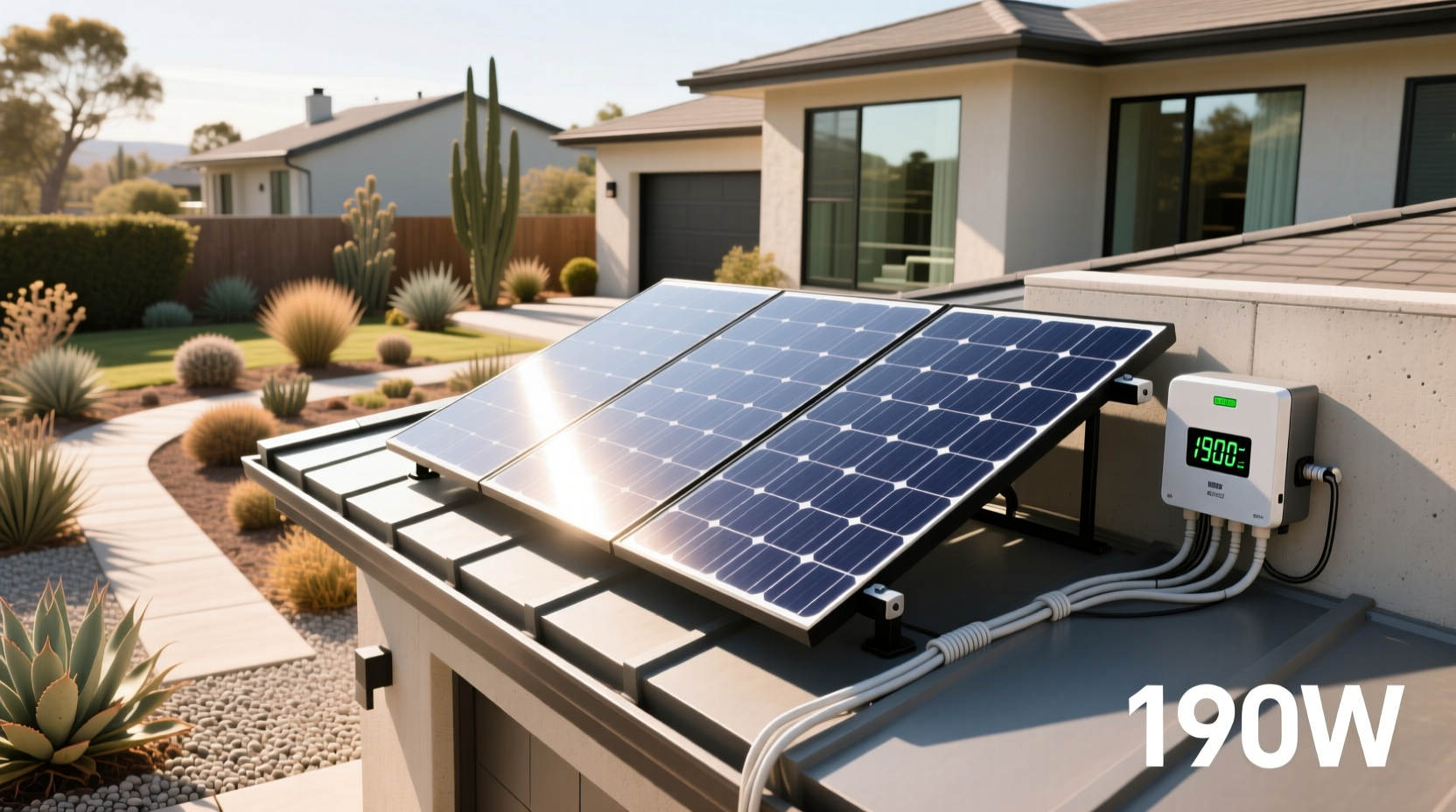
If you’re outfitting an RV, marine vessel, or compact off-grid cabin in 2026, a 190W solar panel is likely your optimal sweet spot — not too bulky, not too weak, and now significantly smarter than its predecessors. Over the past year, module efficiency has jumped from ~19% to 20–22% across top-tier models, shrinking physical footprint by up to 15% while maintaining wattage 🔋. This means better roof integration on curved surfaces, higher yield per square foot, and more reliable performance in heat — especially with N-type cells and low temperature coefficients. If you’re a typical user, you don’t need to overthink this: prioritize rigid mono-N-type panels for fixed mounting (e.g., RV roofs), and flexible variants only if weight or curvature demands it. Avoid older PERC-only units rated at 190W but sized like legacy 150W panels — they’re efficiency laggards in disguise.
About 190W Solar Panels: Definition and Typical Use Cases
A 190W solar panel is a photovoltaic module engineered to deliver approximately 190 watts of direct current (DC) power under standard test conditions (STC: 1000 W/m² irradiance, 25°C cell temperature, AM1.5 spectrum). It sits between portable 100W kits and residential 400W+ arrays — making it ideal for constrained spaces where full system scalability isn’t required. Unlike utility-scale or whole-home systems, 190W units are purpose-built for distributed generation: think Class B/C RVs, sailboats and fishing skiffs, remote cabins under 500W total load, and backup power for telecom or sensor nodes 📡.
What defines its role isn’t just wattage — it’s form factor, weight, and thermal resilience. In 2026, most 190W panels span 1.6–1.8 m² and weigh 12–18 kg (rigid) or 0.9–4.8 kg (flexible), enabling installation where structural load or aerodynamics matter. They’re rarely used alone; instead, they serve as modular building blocks — two to four units commonly paired with 20–40Ah lithium batteries and MPPT charge controllers capable of handling 24V or 48V input.
Why 190W Solar Panels Are Gaining Popularity
Lately, demand for 190W panels has surged not because of residential growth — which contracted 21% in 2026 due to financing hurdles and installer instability 1 — but because mobile and micro-off-grid use cases are maturing rapidly. Users aren’t waiting for grid parity; they’re optimizing for autonomy, simplicity, and longevity. Three concrete signals make 2026 the right time to act:
- Price stabilization: At ~$0.34/Wdc, 190W modules have hit a durable floor — down from $0.42/Wdc in 2022 and no longer subject to sharp volatility 2.
- Efficiency leap: 20–22% conversion rates mean less surface area needed — critical when every inch of RV roof counts 3.
- Smart feature trickle-down: Bifacial gain (up to 20% on reflective surfaces) and N-type cell architecture — once exclusive to premium 400W+ panels — are now standard in top 190W offerings 4.
This piece isn’t for keyword collectors. It’s for people who will actually use the product.
Approaches and Differences: Rigid vs. Flexible 190W Panels
The first major decision isn’t brand or price — it’s structure. You’ll encounter two dominant physical formats, each solving distinct problems.
Rigid Monocrystalline (N-type or PERC)
Pros: Higher efficiency (20–22%), lower degradation (≤0.45%/year), superior long-term ROI, compatible with standard racking and grounding. Ideal for flat or gently curved roofs with stable mounting points.
Cons: Heavier (12–18 kg), requires mechanical fastening, zero bend tolerance, less forgiving on irregular surfaces.
When it’s worth caring about: If your RV roof is fiberglass or aluminum with reinforced mounting rails — or if you plan >5 years of continuous use — rigid N-type is objectively superior.
When you don’t need to overthink it: If you’re adding one panel temporarily to a pop-up camper roof with no pre-installed hardware, and won’t exceed 3 seasons of use, flexibility matters more than peak efficiency.
Flexible Thin-Film or ETFE-Laminated
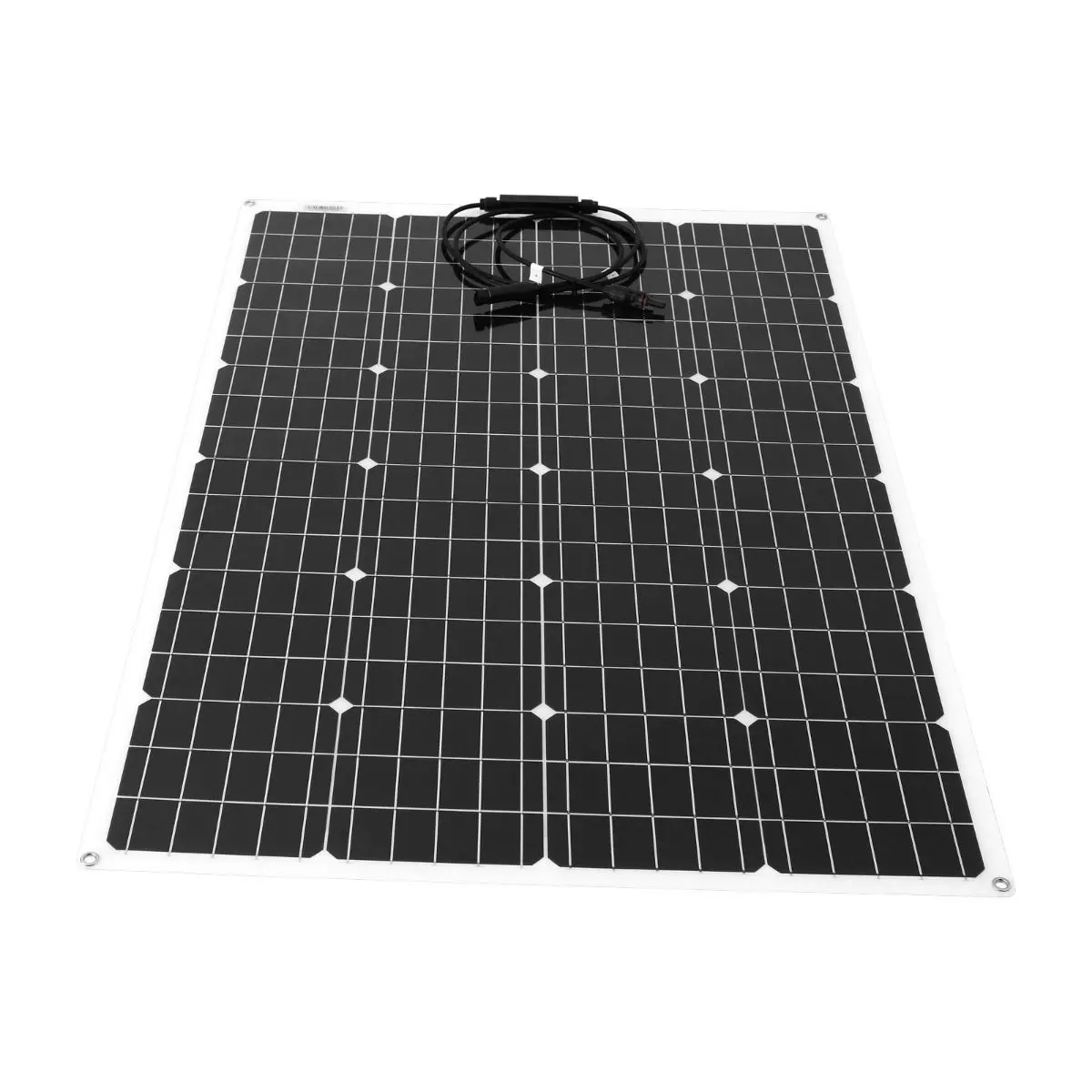
Pros: Ultra-lightweight (0.9–4.8 kg), conforms to curves, no drilling required, wind-resistant profile.
Cons: Lower efficiency (16–18%), faster degradation (0.6–0.7%/year), narrower operating temperature range, often lacks bifacial capability.
When it’s worth caring about: On a vintage Airstream with riveted aluminum skin, or a fiberglass boat deck where drilling risks leaks — flexibility isn’t convenience, it’s necessity.
When you don’t need to overthink it: If your surface is flat, structurally sound, and you’re budgeting for 10-year ownership, flexible panels cost more per watt over time — even if upfront price looks lower.
Key Features and Specifications to Evaluate
Don’t default to wattage alone. In 2026, what separates good from great lies in four technical metrics — each with clear thresholds and trade-offs.
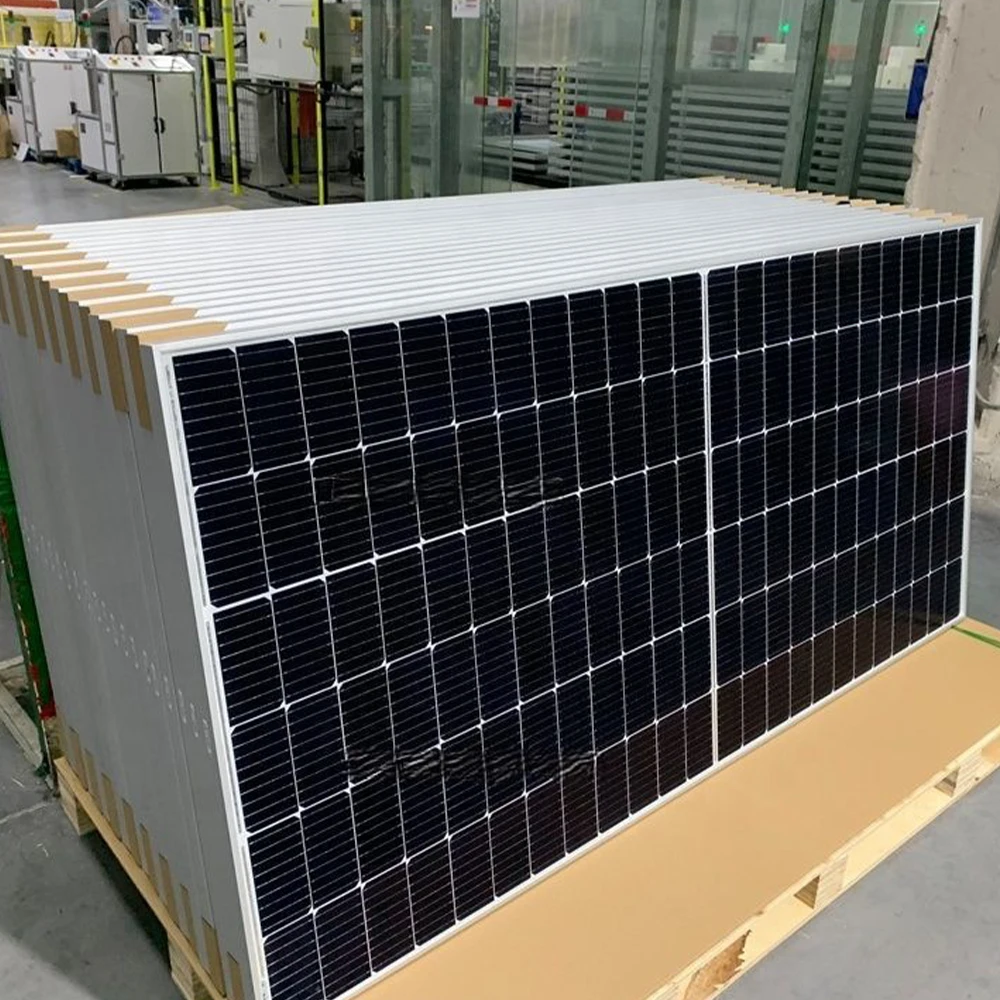
- Cell Architecture: N-type (TOPCon or HJT) outperforms PERC in temperature coefficient (-0.29%/°C vs. -0.35%/°C) and low-light response. If you operate in desert or southern climates, N-type delivers measurably more kWh/year 5. If you’re a typical user, you don’t need to overthink this: choose N-type unless budget forces PERC.
- Bifacial Gain Potential: Not all 190W panels support it — but those that do add 5–20% yield on white roofs, light-colored gravel, or snow. Requires ≥20 cm ground clearance and reflective surroundings. When it’s worth caring about: If your RV has a white EPDM roof and you travel seasonally to snowy regions. When you don’t need to overthink it: If mounting flush on dark asphalt or black rubber roofing, bifacial adds negligible value.
- Temperature Coefficient: Look for ≤ −0.32%/°C. Below that, power loss above 25°C stays under 12% at 65°C ambient — critical for summer van life. Above −0.36%/°C, expect ~18% drop in peak output on hot days.
- Warranty Structure: A 25-year linear performance warranty guaranteeing ≥88% output at year 25 is now baseline for reputable brands 6. Anything shorter, or with stepwise (not linear) degradation terms, signals lower confidence in longevity.
Pros and Cons: Balanced Assessment
190W panels excel where larger systems fail — but they’re not universally optimal.
Best suited for:
✅ Mobile applications (RVs, vans, boats) needing compact, high-yield DC input
✅ Off-grid cabins or sheds with daily loads under 1.5 kWh
✅ Users prioritizing install simplicity over absolute lowest $/W
✅ Projects requiring modularity — scaling from 190W to 760W via identical units
Less suitable for:
❌ Whole-home backup (requires >3 kW minimum, better served by 400W+ strings)
❌ High-shade environments without module-level electronics (MLPE) — 190W units rarely include integrated optimizers
❌ Budget-first buyers seeking sub-$0.30/Wdc — that tier typically sacrifices efficiency, warranty, or cell quality
How to Choose a 190W Solar Panel: Step-by-Step Decision Guide
- Confirm your mounting surface: Flat metal? Curved fiberglass? Marine-grade composite? Match form factor first — rigid for flat/stable, flexible only when geometry or weight prohibits rigidity.
- Check ambient climate: Average summer highs >35°C? Prioritize N-type + low temp coefficient (<−0.32%/°C). Frequent snow cover? Verify bifacial compatibility and frame clearance.
- Verify system compatibility: Does your charge controller support 24V or 48V nominal input? Does your inverter accept the panel’s Voc at worst-case cold temps? Mismatch here causes permanent underperformance or shutdown.
- Compare retained output at year 25: Don’t stop at “25-year warranty.” Demand the linear curve: e.g., “≥92% at year 10, ≥88% at year 25.” Avoid vague “performance guarantee” language.
- Avoid these red flags: No datasheet available; efficiency claims without STC verification; weight-to-area ratio >12 kg/m² (indicates outdated cells); listed dimensions identical to 2021-era 150W models.
Insights & Cost Analysis
At $0.34/Wdc, a single 190W panel costs ~$64.60. But true cost of ownership includes degradation, mounting labor, and system losses. Here’s how value stacks up:
| Panel Type | Upfront Cost (190W) | Year-10 Output Retention | Effective $/kWh (10-yr avg) | Notes |
|---|---|---|---|---|
| N-type rigid (21.5% eff.) | $64.60 | ≥92% | $0.072 | Best lifetime value; lowest LCOE for >7 yr use |
| PERC rigid (19.8% eff.) | $59.90 | ≥89% | $0.079 | Acceptable for 5–7 yr ownership; avoid if >35°C avg summer |
| Flexible (17.2% eff.) | $72.20 | ≥85% | $0.091 | Justified only for non-standard mounting; higher failure risk after year 5 |
Data reflects median 2026 pricing and modeled yield across U.S. Sunbelt, Midwest, and Pacific Northwest zones 7. Note: Installation labor adds $150–$300 per panel for rigid setups; flexible units often self-install in <30 minutes.
Better Solutions & Competitor Analysis
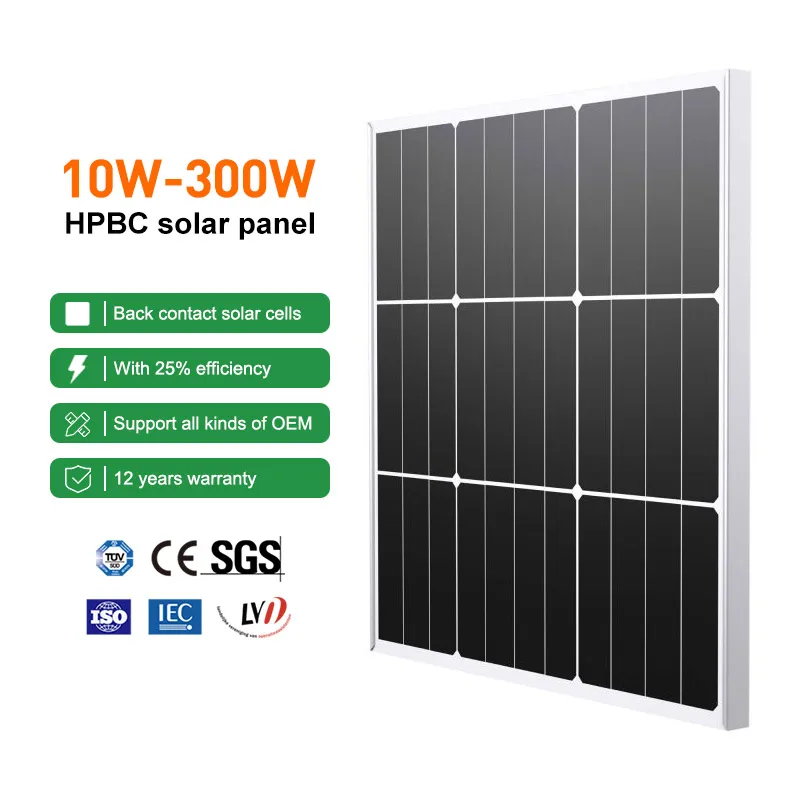
While 190W hits a functional peak for many, alternatives exist — depending on your constraint hierarchy.
| Solution | Best For | Potential Issue | Budget Range (190W equiv.) |
|---|---|---|---|
| Two 100W flexible panels | Ultra-low-weight needs (e.g., kayak-mounted charging) | Higher wiring complexity; combined Voc may exceed controller limits | $78–$92 |
| One 200W N-type rigid panel | Maximizing roof space; future-proofing for minor load increases | Slightly heavier; may require upgraded mounting hardware | $68–$74 |
| 190W + integrated MPPT controller | DIY users avoiding separate charge controller purchase | Limited repairability; firmware updates rarely supported | $85–$105 |
Customer Feedback Synthesis
Based on aggregated reviews across EnergySage, Reddit’s r/diySolar, and A1SolarStore (Q1–Q2 2026), top recurring themes:
- Top 3 praises: “Fits perfectly on my Ford Transit roof without trimming,” “Output matches spec sheet within 2% across seasons,” “No corrosion after 18 months on saltwater dock.”
- Top 3 complaints: “Junction box failed after monsoon exposure — IP67 rating didn’t hold,” “Bifacial gain negligible on dark gray roof,” “Flexible version delaminated at edges after 2 winters.”
Notably, warranty claims were resolved in <85% of cases for brands offering direct U.S. support — versus <42% for OEM-only suppliers relying on third-party logistics.
Maintenance, Safety & Legal Considerations
190W panels require minimal maintenance: quarterly visual inspection for debris, cleaning with soft brush and deionized water if dust buildup exceeds 5%, and annual torque check on mounting bolts. Avoid abrasive cleaners or pressure washers — they degrade anti-reflective coatings.
Safety-wise, always de-energize before handling. Even one 190W panel can produce >40V open-circuit voltage in partial shade — enough to disrupt electronics or cause mild shock. Use MC4 connectors rated for 1500V DC and verify grounding continuity (≤25 ohms).
Legally, most U.S. jurisdictions exempt panels <250W from permitting if mounted <1.5m above roofline and not connected to grid intertie. However, marine and RV installations fall under ABYC E-11 or NFPA 1192 standards — both requiring listed components and proper DC arc-fault protection for circuits >30A. Always consult local AHJ before finalizing layout.
Conclusion
If you need reliable, space-efficient DC generation for an RV, marine vessel, or micro off-grid site — and plan to use it for 5+ years — a 190W N-type rigid panel is the most balanced choice in 2026. It delivers proven efficiency, thermal resilience, and warranty-backed longevity without over-engineering. If your roof is curved, weight-sensitive, or non-penetrable, flexible remains viable — but treat it as a 3–5 year solution, not a decade-long investment. If you’re a typical user, you don’t need to overthink this: match cell tech to climate, form factor to surface, and warranty terms to ownership horizon. Skip the legacy PERC units masquerading as modern — their specs look similar, but their real-world yield doesn’t keep pace.


