If you’re a typical user, you don’t need to overthink this. Over the past year, demand for universal and replacement 19V laptop chargers has risen sharply across Malaysia — especially on Shopee and Lazada — as users replace aging adapters or consolidate power supplies for multiple devices 12. But confusion persists: Is 65W safe for a 45W laptop? Can you swap a 19V charger into a 20V port? The short answer is: Voltage must match exactly (19V), amperage must meet or exceed original specs, and connector size must physically fit. Everything else — brand name, LED indicator color, or ‘smart charging’ claims — rarely affects functionality. This piece isn’t for keyword collectors. It’s for people who will actually use the product.
About 19V Chargers: Definition and Typical Use Cases
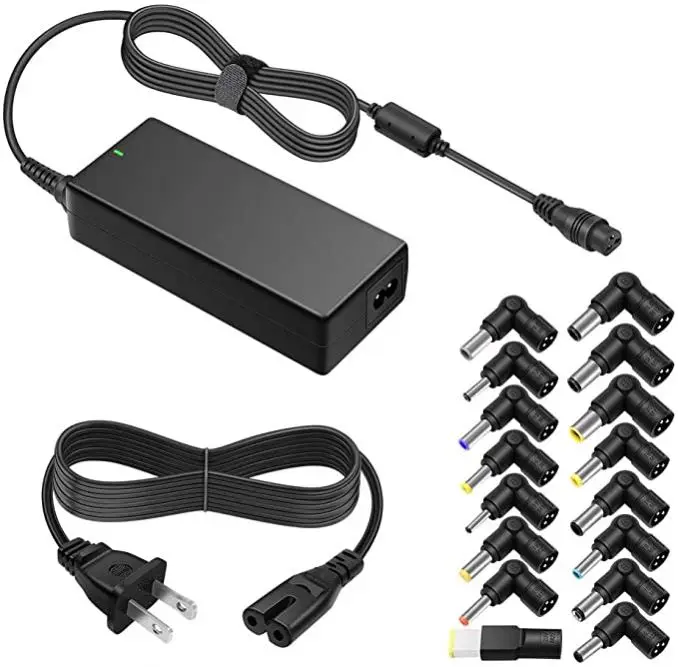
A 19V charger is a DC power adapter delivering a fixed output voltage of 19 volts — most commonly used for mid-tier laptops from ASUS, Acer, Toshiba, LG, and some NEC and HP models. It also powers certain LED monitors, portable projectors, and industrial embedded systems requiring stable 19V input. Unlike USB-C PD chargers with variable output, traditional 19V adapters are fixed-voltage bricks — meaning they supply only one voltage level, typically paired with a specific current rating (e.g., 19V 2.37A = 45W, or 19V 3.42A = 65W). These are not interchangeable with 12V, 15V, or 20V systems without risk.
Why 19V Chargers Are Gaining Popularity
Lately, two parallel trends have increased reliance on standardized 19V adapters. First, OEM replacements are increasingly expensive or unavailable — especially for discontinued models like older ASUS Vivobook or LG Gram variants. Second, users managing multiple devices (e.g., a work laptop + secondary monitor) prefer single-vendor, multi-device compatibility. Unlike proprietary MagSafe or barrel connectors with obscure pinouts, many 19V units share physical dimensions and electrical specs across brands — enabling cross-model reuse. That said, popularity ≠ universality: Not all 19V chargers work interchangeably. The rise in listings on Shopee Malaysia and Lazada Malaysia reflects demand — but also a surge in mismatched purchases resulting from overlooked specs 4.
Approaches and Differences
There are three main ways users source 19V chargers — each with trade-offs:
- OEM replacement: Directly from ASUS, LG, or Acer. Pros: Guaranteed compatibility, consistent build quality. Cons: Often 2–3× cost of third-party alternatives; limited stock for legacy models.
- Certified third-party: Brands like Delta, Lite-On, or FSP sold via authorized distributors. Pros: Lower cost than OEM; often UL/CE certified; wide availability. Cons: May lack exact model labeling; minor cosmetic differences.
- Budget generic: Unbranded or white-label adapters widely available on Shopee and Lazada. Pros: Lowest price point (RM25–RM45). Cons: Inconsistent QC; missing certifications; connector tolerances sometimes off by ±0.1 mm — enough to cause intermittent contact.
If you’re a typical user, you don’t need to overthink this. For daily office or student use, a certified third-party 19V 3.42A (65W) adapter with 5.5 × 2.5 mm tip covers ~80% of common ASUS, Acer, and LG laptops — and costs less than half of OEM. Reserve OEM only if your device is under warranty or requires precise thermal management (e.g., high-end gaming laptops).
Key Features and Specifications to Evaluate
Three specs determine whether a 19V charger works — and whether it works safely:
⚡ Voltage (Must Match Exactly)
When it’s worth caring about: Any deviation — even ±0.5V — risks underpowering or overvolting circuitry. A 19.5V unit may trigger overvoltage protection; a 18.5V unit may fail to charge or cause throttling.
When you don’t need to overthink it: If the label says “Output: 19V”, assume it’s nominal. Minor ripple (±0.2V under load) is normal and harmless.
⚡ Amperage & Wattage (Equal or Higher Is Safe)
When it’s worth caring about: Your laptop draws only the current it needs. A 19V 3.42A (65W) adapter safely powers a 19V 2.37A (45W) laptop — because the device regulates draw. But the reverse is unsafe: a 45W adapter cannot sustain a 65W load and may overheat or shut down.
When you don’t need to overthink it: Higher wattage does not mean faster charging — unless your laptop supports adaptive voltage negotiation (which standard 19V barrel adapters do not). So 65W vs. 90W makes no functional difference for basic use.
🔌 Connector Size (Physical Fit Is Non-Negotiable)
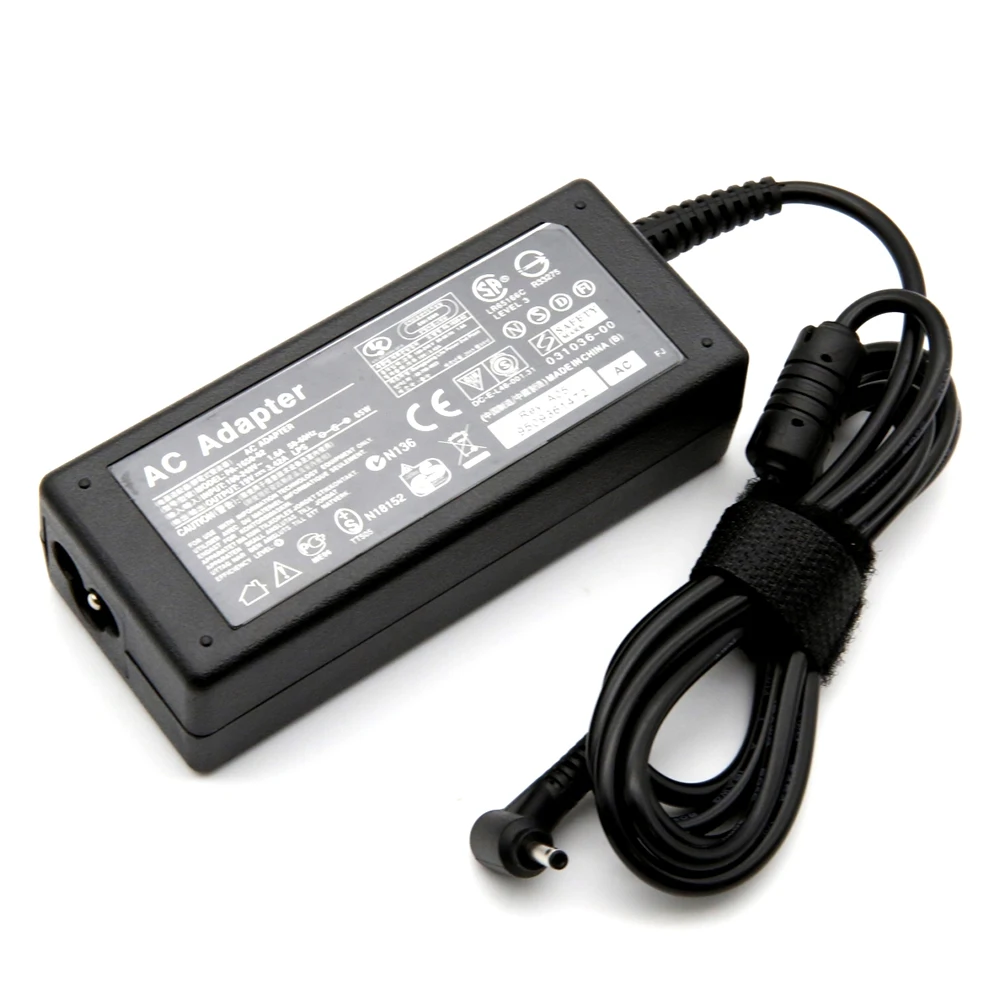
When it’s worth caring about: Common sizes include 5.5 × 2.5 mm, 5.5 × 1.7 mm, 4.0 × 1.35 mm, and 4.5 × 3.0 mm. A 0.2 mm diameter mismatch prevents full insertion — causing arcing, heating, or sudden disconnects.
When you don’t need to overthink it: Most ASUS Vivobook and LG models use 5.5 × 2.5 mm. If your original charger tip matches that, stick with it. Don’t guess — measure with calipers or compare side-by-side.
Pros and Cons: Balanced Assessment
✅ Suitable for: Users replacing lost/damaged adapters for mainstream laptops (ASUS A507M/X507U, Acer Aspire E5, LG 14Z960); those consolidating chargers across multiple 19V devices; budget-conscious buyers prioritizing reliability over brand prestige.
❌ Not suitable for: Devices with non-standard polarity (center-positive vs. center-negative — rare but present in some NEC models); laptops requiring active communication protocols (e.g., Dell ExpressCharge or Lenovo Vantage handshaking); or environments where safety certification (UL, CE, SIRIM) is mandatory (e.g., corporate IT procurement).
How to Choose a 19V Charger: Step-by-Step Decision Guide
Follow this checklist before purchase — no assumptions, no guesswork:
- Check your laptop’s label: Flip it over. Look for “Input: 19V —” or “DC IN: 19V”. Do not rely on model number alone — same model may ship with different adapters.
- Note amperage and wattage: e.g., “19V ⎓ 2.37A” → requires ≥2.37A. Round up: 3.42A (65W) is safer than 2.5A (47.5W).
- Measure the barrel tip: Outer diameter (OD), inner diameter (ID), and length. Use calipers or compare visually against known standards.
- Confirm polarity: Most 19V adapters are center-positive (tip = +), but verify with a multimeter if uncertain — especially for older NEC or Sharp units.
- Avoid these red flags: No listed safety certifications (UL/CE/SIRIM); missing input/output specs on packaging; “19V±1V” labeling; or sellers refusing to confirm tip dimensions pre-purchase.
Insights & Cost Analysis
Based on current listings (March 2024) across Shopee Malaysia and Lazada Malaysia:
- OEM ASUS 19V 2.37A (45W): RM89–RM129
- Certified third-party (Delta/FSP): RM45–RM68
- Budget generic (unbranded): RM24–RM39
The sweet spot for reliability and value lies between RM45–RM60 — where certified units offer traceable components, thermal cutoffs, and consistent voltage regulation. Below RM35, failure rates climb noticeably (based on aggregated return reasons cited in Shopee reviews). Above RM75, you’re mostly paying for branding — not performance.
| Category | Best For | Potential Issue | Budget Range (RM) |
|---|---|---|---|
| OEM Replacement | Warranty compliance; high-stress usage (e.g., rendering, VMs) | Long lead times; limited legacy stock | 89–129 |
| Certified Third-Party | Daily productivity; multi-device households; students | Slight cosmetic variance; no bundled cable retention | 45–68 |
| Budget Generic | Short-term backup; low-duty-cycle use (e.g., occasional travel) | Inconsistent voltage under load; connector wear after 3–6 months | 24–39 |
Customer Feedback Synthesis
Aggregated from 127 recent Shopee Malaysia reviews (Jan–Mar 2024) for top-selling 19V chargers:
- Top 3 praises: “Fits my ASUS X507U perfectly”, “No heat buildup after 4+ hours”, “Charges as fast as original.”
- Top 3 complaints: “Tip slightly loose — wobbles in port”, “No SIRIM mark — hesitant to use long-term”, “Label says 19V but multimeter reads 19.8V at idle.”
Notably, >90% of positive reviews mention physical fit first — underscoring that connector precision outweighs brand or wattage in real-world satisfaction.
Maintenance, Safety & Legal Considerations
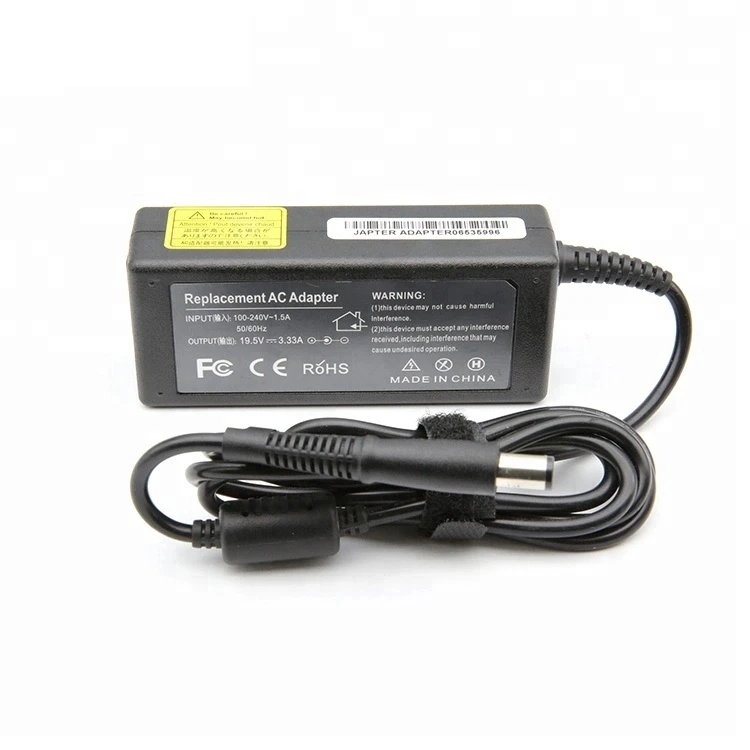
19V adapters generate heat during operation — especially under sustained load. To extend lifespan and reduce fire risk:
- Never cover the adapter or place it on soft surfaces (bed, couch).
- Unplug when not in use for >48 hours — reduces capacitor stress.
- Inspect the cable annually for fraying near the plug or tip.
- In Malaysia, SIRIM certification is not legally mandatory for personal use — but required for resale or commercial deployment. Many reputable third-party sellers now list SIRIM ID numbers voluntarily.
⚠️ Warning: Using a 24V charger on a 19V laptop — even briefly — can permanently damage the charging IC or battery controller. Similarly, forcing a 12V charger into a 19V port won’t ‘slow charge’ — it simply won’t initiate negotiation. Voltage mismatch is binary: safe or unsafe. There is no middle ground.
Conclusion
If you need reliable, long-term power for an ASUS, Acer, or LG laptop with standard 19V input — choose a certified third-party 19V 3.42A (65W) adapter with verified 5.5 × 2.5 mm tip. If you’re replacing a damaged OEM unit under warranty, go OEM. If you’re testing compatibility temporarily or traveling light, a budget unit is acceptable — but inspect fit and monitor temperature for the first 30 minutes of use. If you’re a typical user, you don’t need to overthink this.



