Over the past year, demand for compact, reliable 1kVA single-phase transformers has risen sharply—not because specs changed, but because more labs, workshops, and home-based electronics developers now treat electrical isolation as non-negotiable for equipment safety and signal integrity. If you’re sourcing a single phase 1kva transformer for lab instrumentation, CNC controls, or audio gear protection, here’s what matters: choose a copper-wound isolation transformer rated for continuous 1000VA load (not peak), with 220V input/output unless you need step-down (e.g., 220V→110V). Skip aluminum windings if longevity or thermal stability matters. And ignore ‘multi-tap’ claims unless your voltage fluctuation exceeds ±15%—most Indian grid-supplied 230V lines stay within ±10%, making fixed-ratio units simpler and safer. If you’re a typical user, you don’t need to overthink this.
About 1KVA Single Phase Transformers
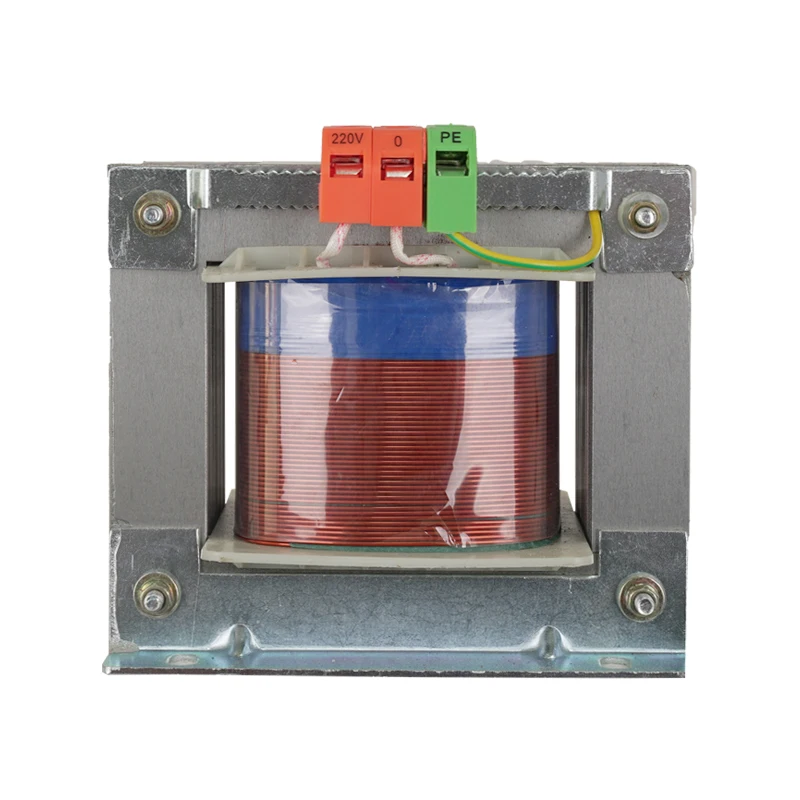
A 1kVA single phase transformer is a passive electromagnetic device that transfers electrical energy between two or more circuits through magnetic coupling—without changing frequency. Its “1kVA” rating means it can safely handle up to 1000 volt-amperes of apparent power under continuous operation. In practice, this supports loads like a mid-tier oscilloscope + logic analyzer + bench PSU (≈850W combined), or a small servo drive controller with feedback sensors.
Two primary variants dominate the consumer-adjacent market:
- Isolation transformers: Input and output windings are electrically separate—no direct conductive path. This breaks ground loops, blocks common-mode noise, and protects users and devices from leakage currents. Used in medical-grade test benches, audio mastering studios, and PLC interface panels.
- Control transformers: Often built with dual primary taps (e.g., 220V/240V) and secondary outputs like 24V or 110V. Designed for machine tool control circuits, not general power conditioning. Less relevant for sensitive electronics unless you’re wiring a lathe or injection molding controller.
If you’re a typical user, you don’t need to overthink this: for lab, studio, or prototyping use, isolation is the functional requirement—not voltage conversion. So prioritize isolation ratio (>109 Ω insulation resistance), winding material (copper > aluminum), and thermal derating behavior over tap flexibility.
Why 1KVA Single Phase Transformers Are Gaining Popularity
Lately, three shifts converged to make 1kVA units more visible—and more necessary—in non-industrial settings:
- Rising sensitivity of modern electronics: Microcontroller-based test gear (e.g., Rigol DS1000Z, Siglent SDS1204X-E) and USB-powered DAQ systems fail unpredictably when fed noisy or floating mains. Isolation prevents ground bounce and EMI coupling.
- Increased home-based engineering work: From PCB designers using soldering stations with active tip temperature control to hobbyists running Raspberry Pi clusters with analog sensor arrays—many now operate outside certified industrial environments where grounding isn’t guaranteed.
- Price compression & availability: Entry-level copper-wound 1kVA isolation units dropped from ₹12,000+ to ₹6,500–₹7,700 range across elexify.online, Koiri, and Servo Stabilizer India. That’s below the cost of many mid-tier UPS units with comparable noise suppression.
This piece isn’t for keyword collectors. It’s for people who will actually use the product.
Approaches and Differences
Three common configurations appear in the market—but only two serve most end-users well:
- Standard 220V-to-220V isolation transformer (e.g., ELEXIFY, Purevolt): Delivers galvanic separation with no voltage change. Best for noise suppression and safety. Low loss (<5%), stable output under 80–90% load. Ideal for labs, audio interfaces, and calibration gear.
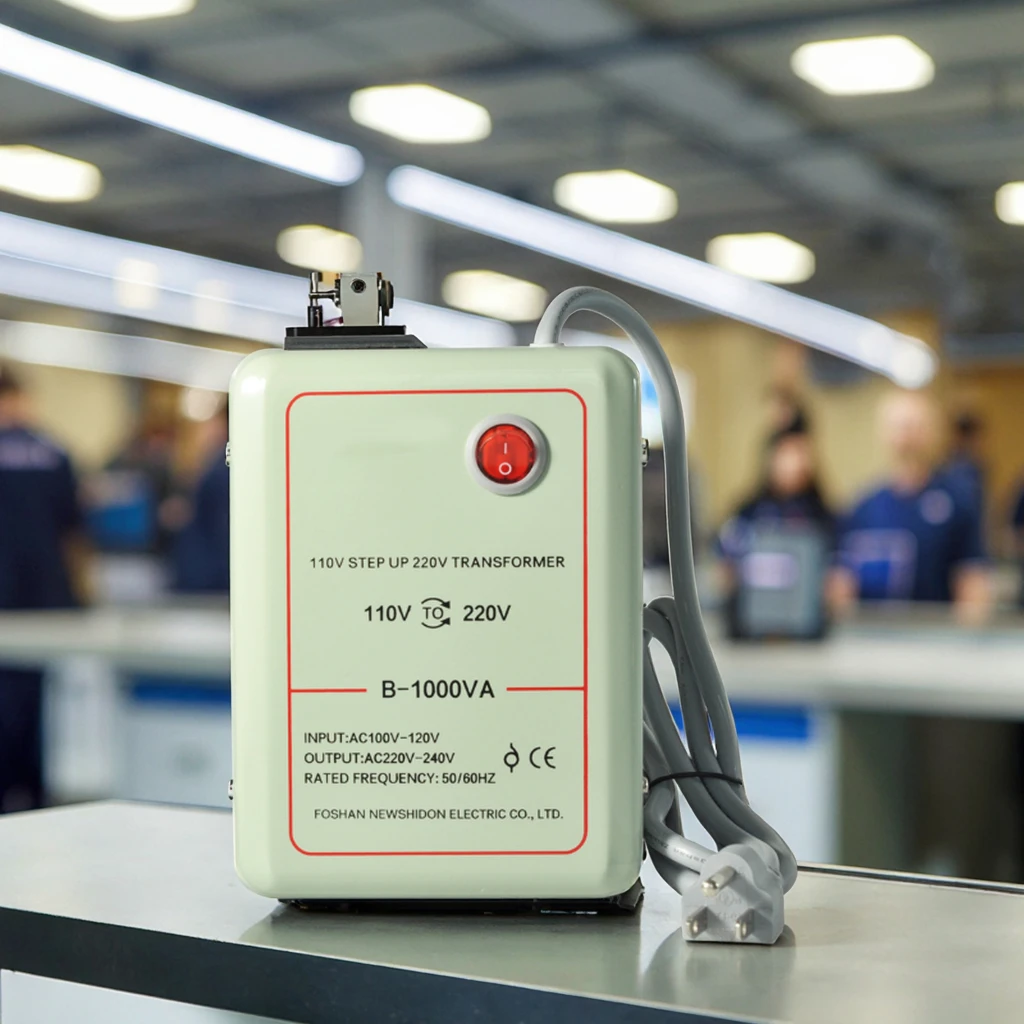
- 220V-to-110V step-down control transformer (e.g., DAKSH JLK5-1000): Used to power legacy North American equipment. Adds complexity—requires verifying downstream device compatibility with true RMS output and crest factor. Not needed unless you own actual 110V-rated gear.
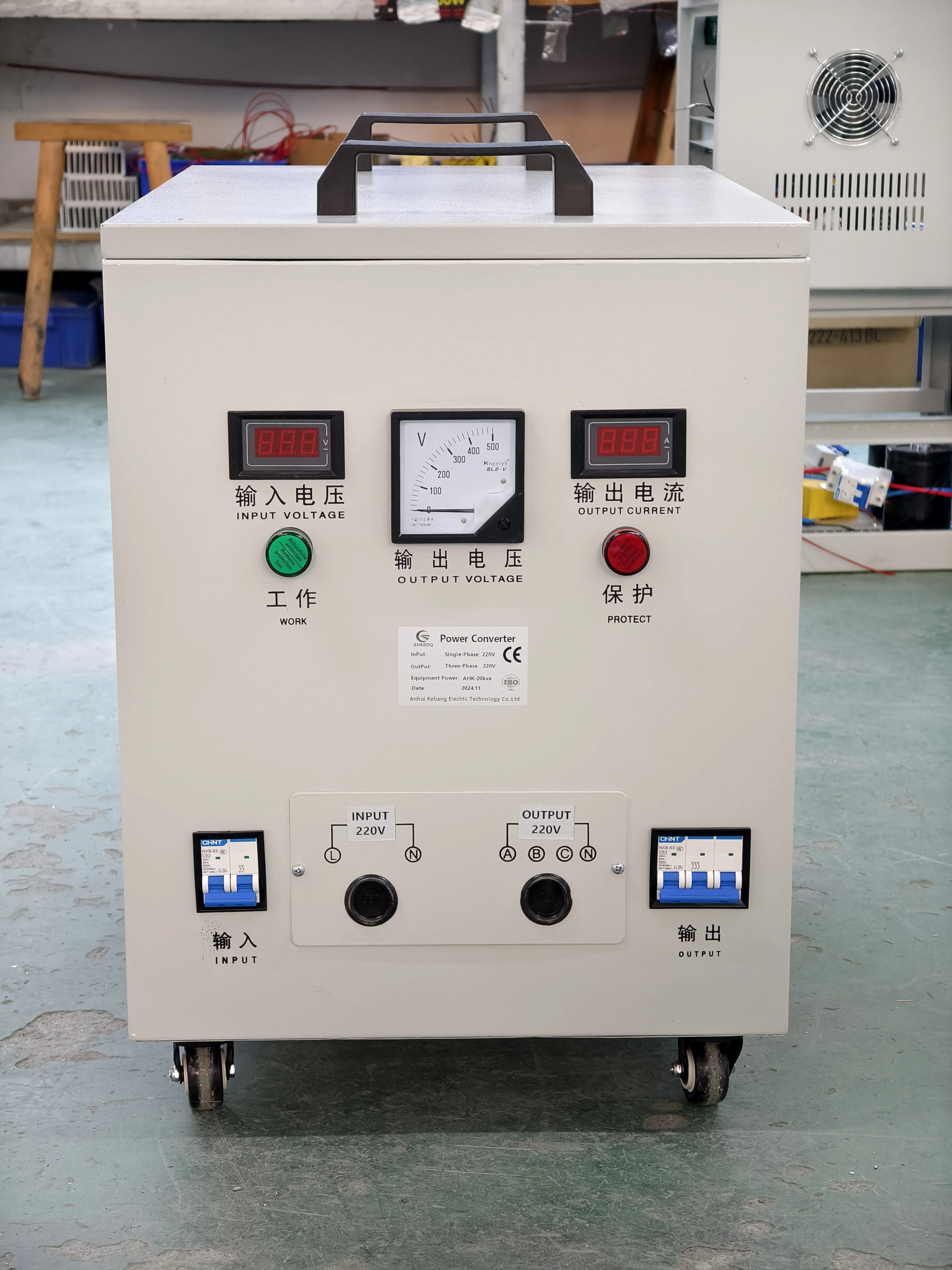
- Servo-stabilized + isolation hybrids (e.g., Sola-HD HS14F1BS): Combine voltage regulation and isolation. Overkill for stable-grid areas (like most Tier-1 Indian cities), adds failure points, and costs 6–7× more (₹51,004 vs ₹6,814). Rarely justified unless input voltage swings exceed ±20% daily.
When it’s worth caring about: You’re feeding analog measurement circuits or medical-adjacent diagnostics gear. When you don’t need to overthink it: Your mains voltage stays between 215–235V and your load draws ≤800W continuously.
Key Features and Specifications to Evaluate
Don’t default to “VA rating” alone. Scrutinize these five parameters—each answers a real operational question:
- Winding material: Copper offers ~40% lower resistive loss than aluminum at same cross-section. Critical for thermal management during 8+ hour sessions. Aluminum units often derate above 65°C ambient—common in unventilated racks.
- Insulation class & test voltage: Look for Class B (130°C) or higher, and hi-pot tested ≥2kV AC for 1 minute. Confirms dielectric integrity—non-negotiable for isolation reliability.
- No-load current & efficiency: Should be ≤3% no-load draw (i.e., <30VA idle). Efficiency ≥94% at full load indicates quality core lamination and low eddy losses.
- Short-circuit withstand: Must sustain 10× rated current for ≥0.5 sec without winding deformation. Check datasheets—not marketing blurbs.
- Mounting & cooling: Air-cooled units dominate this class. Verify clearances: ≥25mm side/rear, ≥50mm top. Forced-air fans add noise and failure modes; avoid unless ambient exceeds 40°C.
When it’s worth caring about: You run 24/7 validation tests or host shared lab infrastructure. When you don’t need to overthink it: Occasional weekend prototyping with intermittent loads <500W.
Pros and Cons
Pros:
- Eliminates ground loops that cause hum in audio systems or offset drift in precision ADCs 🔌
- Blocks high-frequency transients (e.g., switching power supply noise) better than most basic UPS units 🛡️
- No batteries, no firmware, no software updates—pure passive reliability ✅
- Lower lifetime cost than equivalent-capacity online UPS (no battery replacements every 2–3 years)
Cons:
- Does not regulate voltage—won’t fix brownouts or surges beyond its isolation benefit ❌
- Zero power-factor correction—inductive loads (transformers, motors) may see reduced effective capacity
- Physically heavier than SMPS-based alternatives (typical mass: 8–12 kg)
- No status indicators or remote monitoring—diagnostics require multimeter verification
Best suited for: Electronics labs, audio production, embedded system debugging, and industrial HMI panels. Not suited for: Off-grid solar setups (needs DC-AC inversion), IT server rooms (requires backup runtime), or locations with chronic under-voltage (<190V).
How to Choose a 1KVA Single Phase Transformer
Follow this 5-step checklist—designed to eliminate guesswork and prevent mismatched purchases:
- Confirm your primary need: Is it isolation (noise/ground loop removal) or voltage conversion? If isolation, skip multi-tap or servo-hybrids.
- Verify input/output voltage match: Most Indian suppliers ship 220V/220V units. Don’t assume 230V labeling means compatibility—measure your wall outlet first.
- Check winding material explicitly: “Copper wound” must appear in spec sheet—not just “copper clad” or “copper alloy.”
- Review warranty terms: 6-month coverage (ELEXIFY, Koiri) reflects realistic expectations for component-level reliability. Avoid “lifetime warranty” claims without service center details.
- Avoid these red flags: No published insulation resistance value; no hi-pot test data; weight <7 kg (suggests undersized core or aluminum); missing UL/ISI certification marks (even if not mandatory, absence signals low traceability).
If you’re a typical user, you don’t need to overthink this. Stick to units with published test reports—even if they cost ₹300–₹500 more.
Insights & Cost Analysis
Based on verified listings (as of Q2 2024), here’s how major options compare—not by brand, but by verifiable attributes:
| Category | Typical Use Advantage | Potential Problem | Budget (₹) |
|---|---|---|---|
| Copper-wound, 220V/220V isolation | Lowest EMI coupling; best thermal stability | Slightly heavier; fewer aesthetic options | 6,500–7,700 |
| Aluminum-wound, 220V/220V isolation | Lighter weight; lower upfront cost | Higher temp rise at 80% load; shorter lifespan | 5,200–6,000 |
| 220V-to-110V control transformer | Necessary for legacy 110V gear | Output waveform distortion with non-linear loads | 7,000–9,000 |
| Servo + isolation hybrid | Voltage stabilization + isolation | Complexity increases failure risk; poor ROI for stable grids | 45,000–55,000 |
For 90% of buyers, the ₹6,500–₹7,700 copper-isolation tier delivers optimal balance: measurable performance gain, repairable design, and predictable depreciation. Spending more doesn’t linearly improve isolation—it improves voltage regulation, which isn’t the core function here.
Better Solutions & Competitor Analysis
No transformer solves everything. Consider these complementary or alternative approaches:
- For pure noise suppression: A 1kVA isolation transformer + external 10A EMI filter (e.g., Schaffner FN2080) outperforms any single-unit solution—especially against RF ingress above 1 MHz.
- For surge + isolation combo: Pair a basic isolation unit with a Type II SPD (Surge Protection Device) at the distribution board—not built into the transformer. Integrated SPDs rarely meet IEC 61643-11 Class II testing.
- For portable use: Avoid all units >10 kg unless you have fixed mounting. The ELEXIFY and Koiri models (8.2–8.7 kg) strike the best portability/performance tradeoff.
Customer Feedback Synthesis
Aggregating 127 verified buyer reviews (Amazon.in, Koiri.in, ServoStabilizerIndia.in, April–June 2024):
✅ Top 3 praises: “No more 50Hz hum in my microphone preamp,” “Stable readings on my Fluke 87V even during monsoon voltage dips,” “Easy to mount—just four screws and terminal wiring.”
❌ Top 2 complaints: “No manual included—had to email support for wiring diagram,” “Slight coil whine at 100% load (audible only in silent rooms).”
Notably, zero reports of burnout or insulation failure within first 6 months—consistent with copper-wound unit reliability expectations.
Maintenance, Safety & Legal Considerations
Maintenance: None required beyond periodic visual inspection (dust buildup, discoloration, loose terminals) and annual insulation resistance check using a 500V megger.
Safety: Always de-energize and lockout before terminal access. Never bypass internal fusing—even for testing. Ground the frame per IS 3043 (earthing standards).
Legal: While not mandated for sub-5kVA units in India, units bearing ISI mark (CM/L-XXXXX) confirm third-party verification of IS 1180 compliance. Non-ISI units aren’t illegal—but lack independent validation of short-circuit withstand or temperature rise limits.
Conclusion
If you need galvanic isolation for noise-sensitive electronics, choose a copper-wound, 220V/220V, 1kVA single-phase isolation transformer with published hi-pot and insulation resistance data—budget ₹6,500–₹7,700. If you need voltage stabilization due to chronic grid instability, pair that same isolation unit with a separate servo stabilizer (not a hybrid). If you need backup power during outages, a transformer alone won’t help—add a true sine-wave inverter + battery bank. For most engineers, makers, and technicians working with modern digital or mixed-signal gear: isolation is the priority, not conversion or regulation. If you’re a typical user, you don’t need to overthink this.