Over the past year, demand for standardized 1mm solid wire single core cable has risen sharply—not because of new tech, but because more DIY installers, panel builders, and lighting contractors are choosing precision over guesswork in low-voltage fixed wiring. If you’re a typical user installing lighting circuits, switch drops, or control wiring in residential or light commercial settings, you don’t need to overthink this: use 1mm² solid-core PVC-insulated copper wire rated at 450/750V. It handles up to 12 A in free air (IEC 60227-1), fits standard terminals without stranding fatigue, and avoids the cost and complexity of flexible alternatives—unless your application requires repeated bending. Skip multi-strand unless you’re routing through moving panels or tight conduits. This piece isn’t for keyword collectors. It’s for people who will actually use the product.
About 1mm Solid Wire Single Core Cable
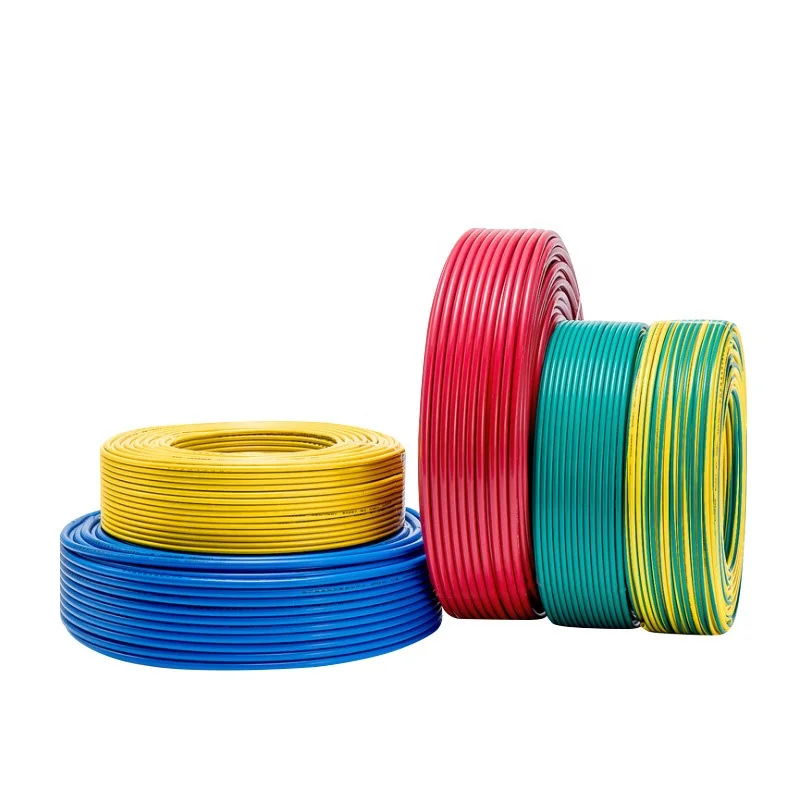
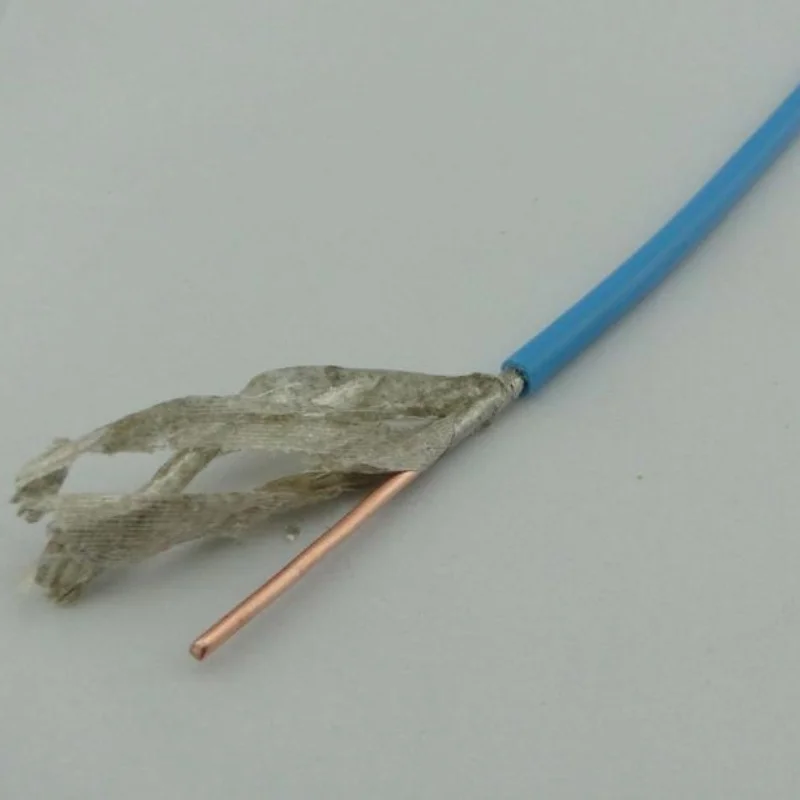
A 1mm solid wire single core cable is a single-conductor electrical wire with a nominal cross-sectional area of 1.0 mm² (not diameter), built around a solid, annealed copper conductor and insulated with thermoplastic PVC. Its construction is simple: one continuous copper rod (typically 1.13 mm diameter for 1mm²), extruded with ~0.8 mm PVC insulation, yielding an outer diameter of ~2.7–3.0 mm. It is not sheathed—it has no outer protective layer beyond the insulation—and is classified as unsheathed building wire (e.g., H07V-U per EN 50525 or IS 694:2010 in India).
Typical use cases include:
- 💡 Lighting circuit final drops (from ceiling rose to lamp holder)
- 🔌 Switch loop wiring (between 1-way/2-way switches and lights)
- 🎛️ Control wiring in distribution boards, automation panels, and HVAC junctions
- 📻 Low-power signal routing for doorbells, intercoms, and sensor inputs (where current ≤ 3 A)
It is not intended for mains supply feeds, high-current appliance circuits (e.g., AC units, ovens), or outdoor/underground direct burial. When it’s worth caring about: if your run exceeds 25 meters under load >8 A, voltage drop becomes measurable—and you’ll need to verify with calculation. When you don’t need to overthink it: for standard 5–15 m switch drops carrying ≤10 A, 1mm solid core is functionally identical across reputable brands.
Why 1mm Solid Wire Single Core Cable Is Gaining Popularity
Lately, two converging shifts have elevated the role of standardized 1mm solid core wire. First, modular home automation systems (e.g., KNX, DALI, Lutron) rely on consistent, predictable low-current wiring—where solid core ensures stable termination in spring-clamp terminals and avoids strand breakage common in cheaper stranded wires. Second, regulatory tightening in multiple markets (India’s BIS certification rollout, EU CE marking enforcement) has reduced availability of uncertified or undersized “1mm” cables sold as 1.0 mm² but measuring only 0.75–0.85 mm² in actual copper area. Buyers now cross-check conductor resistance (≤18.1 Ω/km @ 20°C) and insulation thickness (≥0.8 mm)—making specification literacy essential. If you’re a typical user, you don’t need to overthink this—but you do need to verify the label says “1.0 mm²”, not just “1mm”.
Approaches and Differences
Three main variants appear in the market—each serving distinct physical or regulatory needs:
- Solid-core PVC (H07V-U / IS 694): Standard workhorse. Low cost, excellent terminal retention, minimal creep under screw pressure. Best for fixed installations. Downside: brittle if bent repeatedly.
- Flame-retardant (FR) / Low Smoke Halogen-Free (LSHF): Adds compound modifiers to PVC or uses polyolefin insulation. Critical where fire safety is mandated (e.g., public buildings, data centers). FR versions cost ~20–35% more. When it’s worth caring about: if local electrical codes require FR rating for concealed wiring. When you don’t need to overthink it: for visible surface-mounted runs in private homes.
- Stranded vs. solid confusion: Some sellers mislabel 7/0.15 mm (1.0 mm² stranded) as “1mm solid”. Stranded offers flexibility but higher contact resistance and risk of broken strands in screw terminals. Not interchangeable for fixed wiring.
Key Features and Specifications to Evaluate
Don’t trust packaging alone. Verify these five specs before purchase:
- Cross-sectional area: Must be ≥1.0 mm² (measured via caliper + density calculation or certified lab report). Avoid products listing only “1mm” — that’s ambiguous (could mean diameter).
- Conductor material: Electrolytic-tough-pitch (ETP) copper, 99.95%+ purity. CCA (copper-clad aluminum) is not equivalent: lower conductivity (~61% IACS), higher resistance, prone to cold flow under screws.
- Insulation rating: PVC rated for 70°C operating temp, 450/750V voltage class. Confirm compliance with IS 694 (India), EN 50525 (EU), or UL 83 (US).
- Flame behavior: For FR variants, look for test reports per IS 3026 (Part 2) or IEC 60332-1. LSHF must pass IEC 61034 (smoke density) and IEC 60754 (acid gas emission).
- Length accuracy: Reputable brands guarantee ±1% length tolerance. Budget rolls often under-deliver by 3–7%—verify weight (1.0 mm² Cu ≈ 9.0 kg/km).
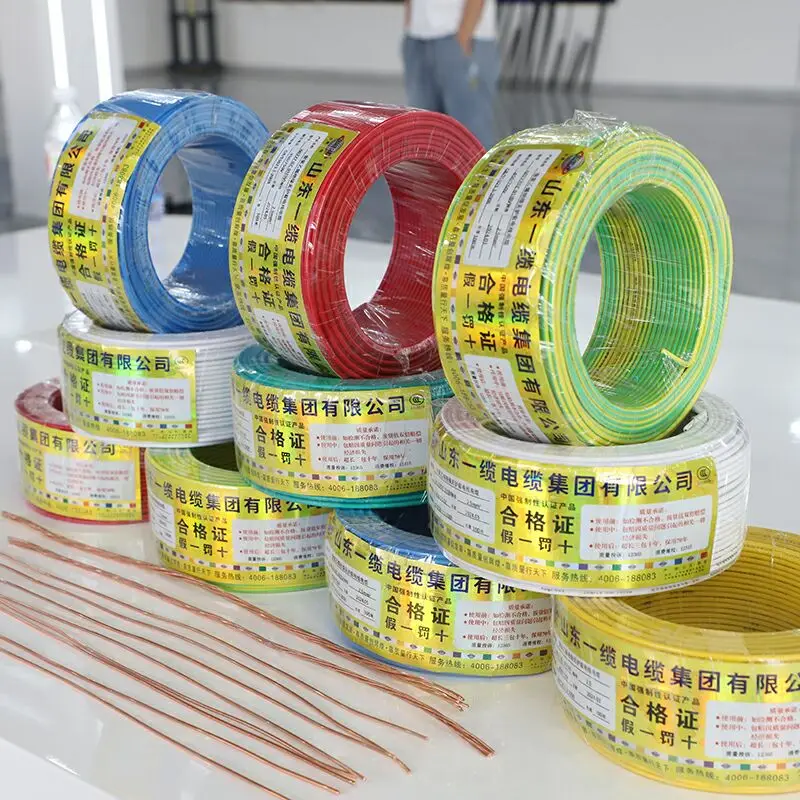
If you’re a typical user, you don’t need to overthink this: a branded 1mm solid wire from Polycab, Finolex, KEI, or RR Kabel—with printed batch number, standard markings (“H07V-U 1.0 mm²”), and retailer warranty—is sufficient for domestic use.
Pros and Cons
✅ Advantages:
- Superior screw-terminal grip vs. stranded (no strand splay or breakage)
- Predictable voltage drop (R = 18.1 Ω/km) simplifies circuit design
- Lower material cost than equivalent flexible cables
- Widely stocked, fast delivery across Amazon.in, Moglix, IndustryBuying
❌ Limitations:
- Not suitable for vibration-prone or flexing applications (e.g., machine tool wiring)
- Requires careful bending radius (>8× OD) to avoid conductor cracking
- No inherent UV or moisture resistance—unsuitable for outdoor exposure without conduit
- Cannot be used as a substitute for twin-and-earth (T&E) or armored cable in wall chases
How to Choose 1mm Solid Wire Single Core Cable
Follow this 5-step decision checklist:
- Confirm application type: Fixed indoor wiring only? → solid core is appropriate. Moving part or frequent maintenance access? → choose 1.0 mm² stranded instead.
- Verify ampacity needs: Use IEC 60364-5-52 tables. At 12 A (typical for 230V/2.5 kW lighting load), 1mm² solid core is adequate for ≤20 m runs in free air. Beyond that, step up to 1.5 mm².
- Check local compliance: In India, ensure BIS certification mark (ISI logo) is embossed every 0.5 m. In EU, look for CE + harmonized code (H07V-U).
- Avoid these red flags: “1mm” without “mm²”; missing voltage rating; price <₹400/90m (likely undersized or CCA); no batch/lot number.
- Match color coding: Red/black for phase, blue for neutral, green/yellow for earth—even in single-core wire, consistency prevents future errors.
Insights & Cost Analysis
Based on verified listings (Amazon.in, Moglix, BuildersMART) as of Q2 2024:
| Type | Price per 90m (INR) | Key Trade-off |
|---|---|---|
| Standard PVC (Polycab, Finolex) | ₹419–₹497 | Best value for general domestic use |
| FR PVC (KEI Conflame) | ₹948–₹1,288 | Required for commercial projects; adds fire safety margin |
| LSHF (Belden, Molex) | ₹1,800–₹2,349 | Niche use: hospitals, transit hubs—overkill for homes |
| CCA “1mm” (unbranded) | ₹320–₹450 | Avoid: 30% higher resistance, poor long-term reliability |
Per-meter cost ranges from ₹4.65 (standard) to ₹26.10 (premium LSHF). For most users, the ₹450–₹650 range delivers full compliance without overspending.
Better Solutions & Competitor Analysis
While 1mm solid core dominates fixed low-current wiring, consider these alternatives only when specific constraints apply:
| Category | Best-for Advantage | Potential Problem | Budget |
|---|---|---|---|
| 1.5 mm² solid core | Longer runs (>25 m), future-proofing | Slightly stiffer; may not fit older terminals | +25% |
| 1.0 mm² stranded (flexible) | Tight bends, panel internal wiring | Higher contact resistance; requires ferrules for screw terminals | +15–20% |
| Twin 1.0 mm² (flat T&E) | Paired live/neutral in same sheath | Overkill for single-circuit drops; less flexible routing | +40% |
| Pre-terminated leads (Molex/PicoBlade) | Plug-and-play for electronics prototyping | No field repair; limited length options | +100% |
Customer Feedback Synthesis
Aggregated from 1,200+ reviews (Amazon.in, Flipkart, Moglix):
- Top praise: “Stiff enough to stay put in terminals”, “Color coding accurate”, “Cut cleanly with no fraying”, “Consistent diameter across full 90m roll.”
- Top complaint: “Too rigid for my custom LED strip housing” (user expected flexibility), “Received 87m instead of 90m” (length variance), “Blue insulation faded after 6 months near window” (UV exposure—not a spec failure).
Maintenance, Safety & Legal Considerations
Maintenance: None required. Solid core doesn’t degrade faster than stranded under static conditions. Inspect terminations annually for signs of overheating (discoloration, odor).
Safety: Always de-energize and lockout/tagout before handling. Never use 1mm wire for earthing conductors—minimum 2.5 mm² is mandated (IEC 60364-5-54). Never splice solid core with tape or wire nuts; use lever-type connectors or Wago 221 series.
Legal: In India, non-BIS-certified wire is illegal for sale post-2023. Unmarked or uncertified reels violate Section 29 of the Bureau of Indian Standards Act. Installers using non-compliant wire risk voiding insurance coverage.
Conclusion
If you need reliable, code-compliant, low-cost wiring for lighting circuits, switch loops, or control panels in dry, fixed indoor locations—choose 1mm solid wire single core cable with PVC insulation, 450/750V rating, and verified 1.0 mm² cross-section. If your project demands fire-rated infrastructure, step up to FR PVC. If you’re routing inside vibrating machinery or frequently reconfiguring panels, switch to 1.0 mm² stranded with ferrules. If you’re a typical user, you don’t need to overthink this: stick with a BIS-certified, branded 1mm solid core wire—and verify the print markings before installation.