If you’re a typical user — an electronics engineer, PCB designer, or procurement specialist sourcing small-signal diodes for automotive, telecom, or consumer hardware — you don’t need to overthink this. Over the past year, distributor stock of the 1N4148W-7-F has remained robust (1.2M+ units available across Mouser, DigiKey, and Element14), but factory lead times have held steady at 40 weeks — a critical signal that inventory resilience is temporary1. So: buy now if you need immediate builds; qualify alternate parts now if you’re planning beyond Q2 2025. This guide cuts through confusion by answering three real-world questions: When does packaging matter?, When does price per unit actually impact total cost?, and When should you walk away from the 1N4148W-7-F entirely? We’ll show exactly which specs move the needle — and which ones are noise for your use case.
About the 1N4148W-7-F: Definition and Typical Use Cases
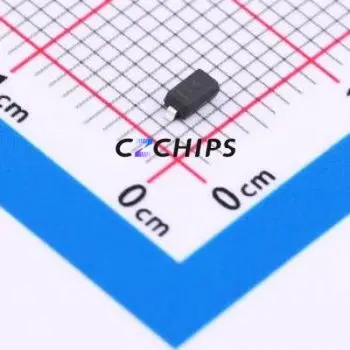
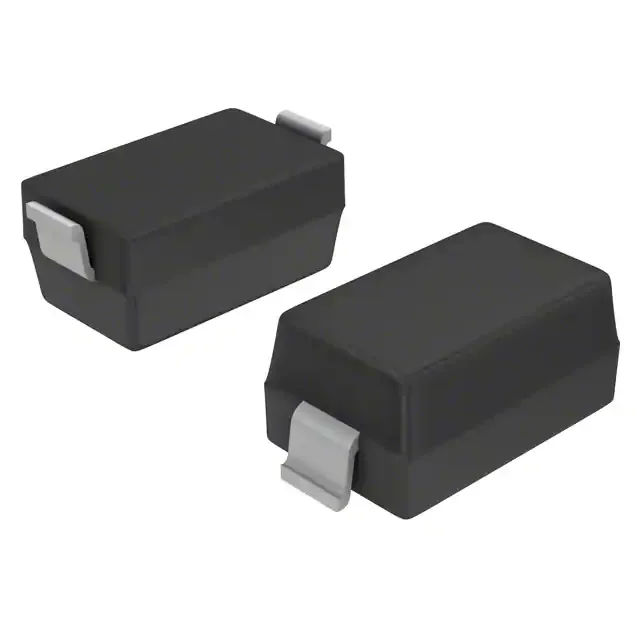
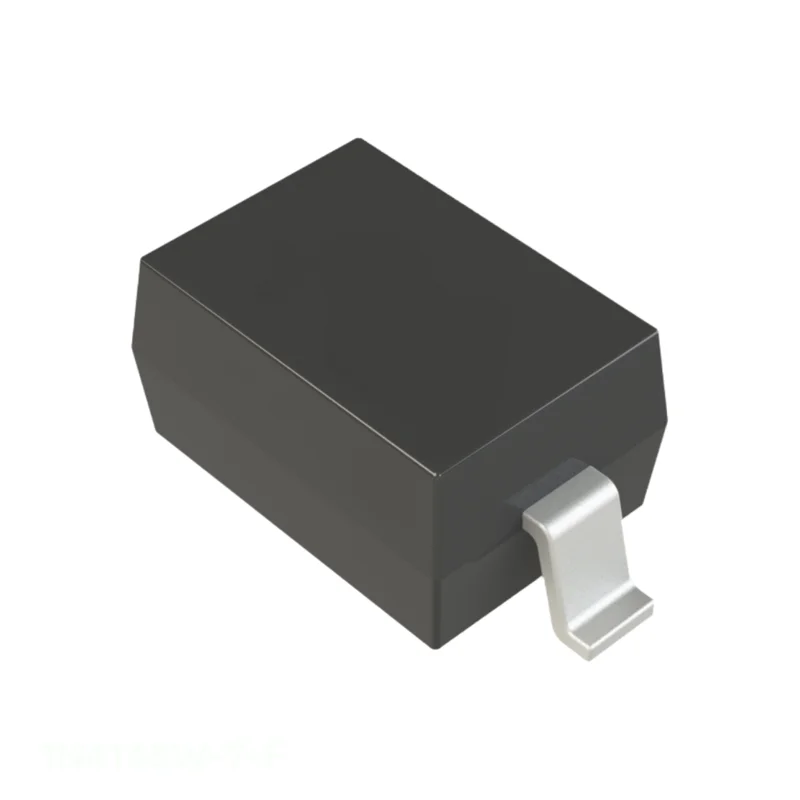
The 1N4148W-7-F is a silicon epitaxial planar fast-switching diode manufactured by Diodes Incorporated in the compact SOD-123 surface-mount package2. It’s not a power diode — it’s a precision signal-level component designed for speed, low capacitance, and reliability in space-constrained designs. Its core function is rapid on/off switching in circuits where timing matters: clamping, reverse polarity protection, logic isolation, snubbing, and high-frequency signal routing.
Typical applications include:
- Automotive ECUs: Signal conditioning in CAN/LIN bus interfaces and sensor input protection3;
- 5G baseband modules: RF detector biasing and transient suppression in front-end receivers4;
- Consumer wearables & IoT nodes: Low-leakage reverse-battery protection in coin-cell-powered devices5;
- Industrial PLC I/O cards: Input filtering and voltage level translation.
This piece isn’t for keyword collectors. It’s for people who will actually use the product — and whose board revisions get delayed when a $0.005 part isn’t on the BOM.
Why the 1N4148W-7-F Is Gaining Popularity
Lately, demand for the 1N4148W-7-F hasn’t spiked — it’s consolidated. As electric vehicle architectures grow more distributed (more ECUs per vehicle) and 5G infrastructure densifies (more remote radio units per cell site), the need for reliable, ultra-fast, SMD-compatible small-signal diodes has become structural — not cyclical6. The 10% CAGR projected for the global power diode market through 2033 reflects underlying system complexity, not short-term hype7. What’s changed recently is visibility: buyers now see the tension between deep distributor stock and 40-week factory lead times as a supply chain inflection point — not just a footnote in a datasheet.
Approaches and Differences: Common Sourcing & Design Strategies
There are three dominant approaches to integrating the 1N4148W-7-F — each with distinct trade-offs:
- Direct drop-in replacement: Swapping legacy through-hole 1N4148 variants for the SOD-123 version. Pros: Minimal layout change; proven performance. Cons: Requires requalification for thermal derating and vibration tolerance in automotive-grade assemblies.
- Bulk procurement from authorized distributors: Buying full reels (3,000 units) from Mouser, DigiKey, or Future Electronics. Pros: Traceability, RoHS/Halogen-free compliance guaranteed, no counterfeit risk. Cons: Higher upfront capital; slower fulfillment than local resellers (2–5 business days vs. same-day).
- Direct OEM sourcing via B2B platforms: Engaging verified manufacturers (e.g., Diodes Inc.-authorized partners with ≥10 years’ experience) for custom reels or tape-and-reel logistics. Pros: Lower unit cost ($0.002–$0.008 at volume), flexible MOQs, joint inventory planning. Cons: Longer qualification cycles; import tariff exposure varies by region8.
If you’re a typical user, you don’t need to overthink this. For prototyping or low-volume production (<5k units/year), authorized distributors are objectively safer and faster. For high-volume manufacturing (>50k units/year), direct OEM engagement pays off — but only after verifying Halogen-free certification and performing lot sampling.
Key Features and Specifications to Evaluate
Not all specs carry equal weight. Here’s what moves the needle — and when it doesn’t:
| Parameter | Value (1N4148W-7-F) | When It’s Worth Caring About | When You Don’t Need to Overthink It |
|---|---|---|---|
| Reverse Recovery Time (trr) | 4.0 ns | Designs operating above 10 MHz (e.g., RF detectors, clock line clamping) | DC/low-frequency logic protection (e.g., microcontroller reset line pull-up) |
| Peak Reverse Voltage (VRWM) | 100 V | Systems exposed to >30 V transients (e.g., automotive 12V rails, industrial sensors) | USB-powered peripherals or battery-backed memory backup circuits (≤5 V) |
| Capacitance (Cj) | 2.0 pF @ 0 V | High-speed signal paths (e.g., antenna switching, analog multiplexers) | General-purpose reverse polarity protection on power inputs |
| Forward Current (IF) | 300 mA (continuous) | Applications with sustained forward bias >100 mA (e.g., LED driver flyback clamp) | Signal-level clamping (<5 mA average current) |
Pros and Cons: Balanced Assessment
Best for: Engineers designing for high-density PCBs where thermal mass is limited, and switching speed directly affects signal integrity or EMI behavior. Also ideal for procurement teams managing mixed-signal BOMs across automotive and telecom programs.
Not ideal for: Through-hole prototyping without reflow capability; ultra-low-cost consumer gadgets where $0.001/unit savings justify longer-lead alternatives; or environments requiring >150°C junction temperatures (this device is rated to 150°C max, but derates sharply above 125°C).
How to Choose the 1N4148W-7-F: A Step-by-Step Decision Guide
Follow this checklist before committing — especially if your design enters production within 6 months:
- Confirm package compatibility: Verify your stencil aperture and reflow profile match SOD-123 thermal mass. If your assembly house lacks fine-pitch SMT capability, consider the through-hole 1N4148 (slower, larger) or LL4148 (MiniMELF, faster but less automated).
- Validate certification status: Require RoHS 3 and Halogen-free documentation — not just a checkbox. Non-compliant batches still appear on gray-market platforms9.
- Check reel quantity vs. usage rate: Full reels (3,000 pcs) minimize handling cost per unit, but if your annual consumption is <1,000 pcs, partial reels reduce obsolescence risk.
- Pre-qualify one functional alternative: The 1N4148WS (SOD-323, same specs, smaller footprint) or LL4148 (MiniMELF, 4 ns trr, higher surge rating) are drop-in viable if supply tightens10.
- Avoid “price-only” resellers: Units priced below $0.0015/unit often lack traceability, fail moisture sensitivity level (MSL) testing, or ship without proper dry-packaging — causing tombstoning or delamination.
Insights & Cost Analysis
B2B pricing remains stable but tiered:
- $0.002–$0.004/unit: Authorized distributors (Mouser, DigiKey), 1–999 pcs
- $0.0018–$0.0035/unit: Verified B2B suppliers with ≥10-year track record, 10k+ pcs11
- $0.0012–$0.0022/unit: Direct OEM contracts (Diodes Inc. or licensed subcontractors), 100k+ pcs
Don’t mistake low unit cost for low total cost. At $0.0015/unit, a $0.0003 difference adds up to $300 per million units — but if that supplier can’t guarantee MSL-1 handling or fails AEC-Q200 screening, the cost of rework or field failure dwarfs any savings. For most users, the $0.0025–$0.004 range delivers optimal balance of price, compliance, and logistics predictability.
Better Solutions & Competitor Analysis
| Alternative | Key Advantage | Potential Issue | Budget Impact vs. 1N4148W-7-F |
|---|---|---|---|
| 1N4148WS (SOD-323) | Smaller footprint (1.7 × 1.25 mm vs. 2.7 × 1.6 mm); identical electrical specs | Higher risk of tombstoning; tighter stencil control required | +8–12% unit cost |
| LL4148 (MiniMELF) | Higher surge current (1 A vs. 0.5 A); better thermal dissipation | Not machine-placed on standard SMT lines; manual placement increases labor cost | +15–20% unit cost + labor premium |
| BAT54CW (Schottky) | Near-zero trr; lower forward voltage (0.33 V) | Higher reverse leakage (1 µA vs. 25 nA); unsuitable for high-impedance analog nodes | +25–35% unit cost |
Customer Feedback Synthesis
Based on aggregated reviews from Mouser, DigiKey, and TME (2023–2024):
- Top 3 praises: “Consistent parametric performance across reels”, “Excellent solderability with standard SnPb and lead-free profiles”, “Accurate date coding and moisture barrier bag labeling.”
- Top 2 complaints: “Lead time estimates on distributor sites don’t reflect actual factory gate availability”, and “Some batches shipped without full RoHS test reports — requires follow-up with supplier QA.”
Maintenance, Safety & Legal Considerations
No field maintenance is required — these are passive, sealed components. However, two legal and safety factors are mandatory:
- RoHS 3 & REACH compliance: Required for CE marking and export to EU, UK, and South Korea. Non-compliant parts may trigger customs rejection or recall liability12.
- Halogen-free declaration: Increasingly mandated in automotive (e.g., ISO/TS 16949) and telecom (ETSI EN 300 132) standards. Confirmed via material declaration (IMDS or IPC-1752A).
Conclusion
If you need fast, reliable, SMD-ready switching for signal-level circuits in automotive, telecom, or compact consumer electronics, the 1N4148W-7-F remains the most balanced choice — provided you source from authorized channels and validate certifications. If your priority is lowest possible unit cost at scale, engage verified B2B suppliers early and pre-qualify the 1N4148WS as a fallback. If your design runs above 100 MHz or demands >1 A surge handling, step up to a Schottky or TVS variant — but don’t pay for speed you won’t use. And if you’re still comparing datasheets instead of placing your first order? If you’re a typical user, you don’t need to overthink this.


