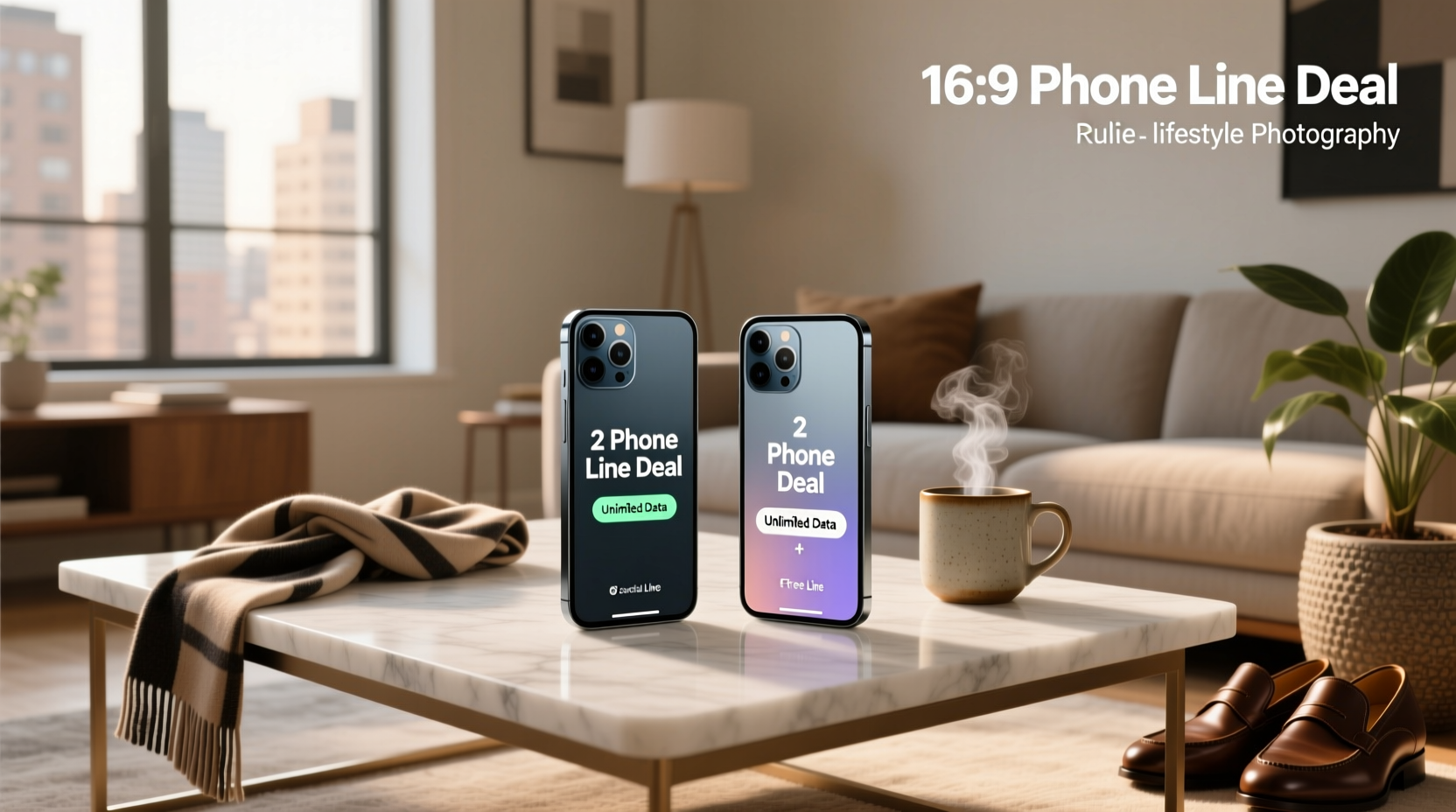
If you’re setting up two phone lines in 2026—whether for a couple, parent-and-teen, or remote-work duo—the most cost-effective choice is almost always an MVNO like Mint Mobile or Visible, not a major carrier. Over the past year, pricing has tightened, coverage transparency improved, and multi-network switching (e.g., toggling between Verizon and T-Mobile networks on one plan) became widely available 1. For typical users, this means you can reliably get strong service at $30–$70/month—without long-term contracts or device financing traps. If you’re a typical user, you don’t need to overthink this. Skip the “family plan” upsell; audit your actual premium data use first; and avoid plans with activation fees or 36-month device locks 2.
About 2 Phone Line Deals
A 2 phone line deal refers to a wireless service plan covering exactly two active mobile numbers—usually with shared or per-line data, voice, and texting. It’s distinct from family plans (3+ lines), single-line postpaid, or prepaid pay-as-you-go. Typical users include couples sharing household costs, adult children managing parents’ service, dual-SIM remote workers, or small business owners with minimal staff. Unlike bulk business plans, these are consumer-grade, self-managed, and optimized for simplicity—not scalability. The core question isn’t “how many lines?” but “what level of network reliability, data priority, and flexibility do two people actually need?”
Why 2 Phone Line Deals Are Gaining Popularity
Lately, more consumers are abandoning bundled family plans—and even single-line contracts—for dedicated 2-line setups. This shift reflects three converging realities: first, MVNOs now match or exceed major carriers on coverage (especially in urban and suburban zones) while charging half the price 3; second, teleportal tools let users switch underlying networks without changing plans or SIMs—a game-changer for travelers or those in coverage gray zones 4; third, senior-focused 2-line plans now integrate caregiver alerts and simplified interfaces—not just cheaper minutes. If you’re a typical user, you don’t need to overthink this. You’re not buying infrastructure—you’re buying predictable, portable, and controllable connectivity for two people.
Approaches and Differences
There are four main approaches to 2-line service in 2026—each with clear trade-offs:
- Value MVNOs (e.g., Mint Mobile, Ting Mobile): Fixed low monthly cost ($30–$50), flat per-line pricing, no second-line discount myth—just double the single-line rate. Best for budget-conscious users who rely heavily on Wi-Fi and moderate data (under 10GB/month per line).
- Unlimited MVNOs (e.g., Visible, US Mobile): $60–$70/month, true unlimited data—but with strict “premium data” caps (e.g., 30GB at full speed before deprioritization). Best for heavy streaming or hotspot users.
- Senior Specialists (e.g., Consumer Cellular, GreatCall): $35–$60/month, simplified billing, emergency response buttons, caregiver dashboards. Ideal if ease-of-use or health-aware features matter more than raw speed.
- Major Postpaid (e.g., Verizon 2-Line Plan, T-Mobile Magenta Plus): $90–$99/month, includes international roaming, device protection, and loyalty perks—but locks you into long-term device payments and rigid network dependency.
Key Features and Specifications to Evaluate
Don’t compare plans by headline “unlimited.” Focus on five measurable specs:
- Premium Data Allowance: How much high-priority 5G data is included before throttling? (e.g., 15GB vs. 50GB). When it’s worth caring about: If you regularly use mobile hotspot or stream HD video outdoors. When you don’t need to overthink it: If you’re mostly on home/work Wi-Fi and use phones for calls, texts, and light browsing.
- Underlying Network: Which major carrier does the MVNO use? (Mint = T-Mobile; Visible = Verizon; Cricket = AT&T). When it’s worth caring about: If you live or commute in rural or fringe coverage areas—check coverage maps *by ZIP code*, not national claims. When you don’t need to overthink it: In metro areas with dense tower deployment, all three networks perform similarly for voice and basic data.
- Multi-Network Flexibility: Can you switch networks mid-plan? (Visible’s “Network Switcher,” US Mobile’s “Multi-Carrier SIM”). When it’s worth caring about: If you travel frequently across regions or experience spotty local service. When you don’t need to overthink it: If you stay within one consistent coverage zone and rarely lose signal.
- Activation & Porting Fees: Is there a fee to start service or bring your number? When it’s worth caring about: Any fee over $10 adds real cost—especially if you’re porting two numbers. When you don’t need to overthink it: If both lines activate free and retain numbers seamlessly (most MVNOs now offer this).
- Device Lock Policy: Does the plan require a 36-month installment plan to qualify for discounts? When it’s worth caring about: If you prefer buying phones outright or upgrading every 2 years. When you don’t need to overthink it: If you already own compatible unlocked devices—or plan to buy used/refurbished.
Pros and Cons
Here’s how 2-line deals balance real-world trade-offs:
| Approach | Pros | Cons |
|---|---|---|
| Value MVNOs | Lowest entry cost; no contracts; easy cancellation | Limited premium data; slower support response; fewer international options |
| Unlimited MVNOs | Balanced speed + value; multi-network options; strong app tools | Premium data caps still apply; limited physical retail presence |
| Senior Specialists | Zero-learning-curve interface; emergency features; U.S.-based support | Fewer customization options; higher per-GB cost; less hotspot flexibility |
| Major Postpaid | Best international roaming; device protection; same-day store support | Highest monthly cost; complex billing; long-term device financing required |
How to Choose the Right 2 Phone Line Deal
Follow this 5-step checklist—designed to eliminate common decision fatigue:
- Audit your real data use: Pull last month’s usage stats from your current carrier. If total combined data is under 20GB, skip “unlimited” plans entirely.
- Verify coverage where you spend time: Use official coverage checkers—not third-party maps—for your home, commute route, and weekend locations.
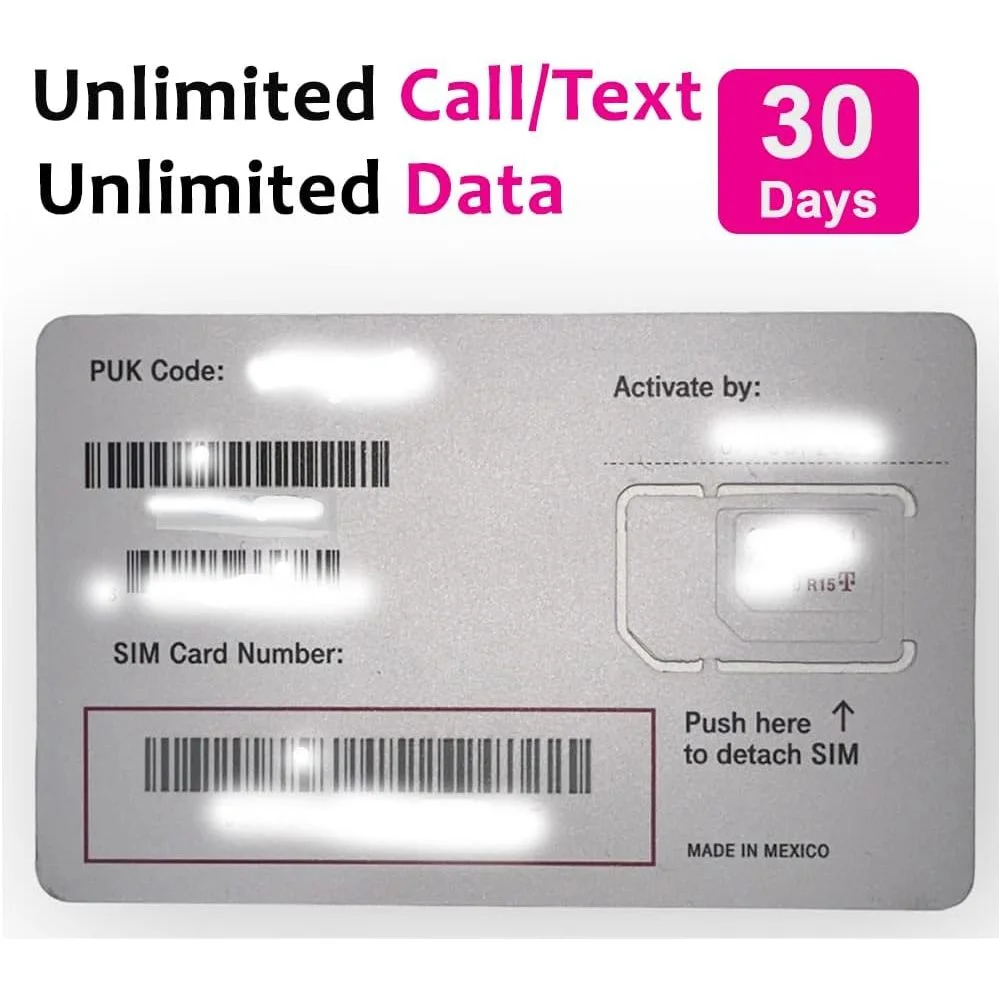
- Calculate total first-year cost: Include activation fees, SIM card costs, and any mandatory device payments—not just monthly rate.
- Test porting continuity: Order SIMs, activate one line, confirm number transfer works—then cancel old service. Never port both numbers simultaneously.
- Read the fine print on “unlimited”: Look for “premium data,” “deprioritization threshold,” and “hotspot terms”—not just “unlimited talk/text/data.”
Avoid these three pitfalls: (1) assuming “second line free” applies to 2-line plans (it rarely does); (2) choosing a plan based on nationwide coverage claims instead of local performance; (3) signing up before checking if your current phones are compatible (most MVNOs require eSIM or unlocked GSM devices).
Insights & Cost Analysis
Based on verified 2026 pricing data, here’s what two lines *actually* cost—excluding taxes and optional add-ons:
- Value MVNOs: $30–$45/month (e.g., Mint Mobile’s $30 Unlimited plan, $15/line)
- Unlimited MVNOs: $60–$70/month (e.g., Visible’s $60 Unlimited plan with 50GB premium data)
- Senior Specialists: $35–$55/month (e.g., Consumer Cellular’s $35 Talk & Text + $20 Unlimited Data)
- Major Postpaid: $90–$99/month (e.g., Verizon’s 2-Line Start Unlimited at $90 + $10 line access fee)
The gap isn’t shrinking—it’s widening. MVNOs gained ground because they decoupled hardware from service. Major carriers still bundle phones with service to drive device sales; MVNOs assume you’ll bring your own. That structural difference explains why $30–$70 is now the standard range—not an outlier.
Better Solutions & Competitor Analysis
For most users, the “better solution” isn’t a specific brand—it’s a category shift: from carrier loyalty to network-agnostic service. The table below compares provider types by real-world utility—not marketing claims:
| Category | Best For | Potential Problem | Budget Range (2 Lines) |
|---|---|---|---|
| Value MVNOs | Budget-first users with stable Wi-Fi access | Lower priority during network congestion | $30–$50 |
| Unlimited MVNOs | Mobile-heavy users needing reliable hotspot or streaming | Deprioritization kicks in after defined premium cap | $60–$70 |
| Senior Specialists | Users prioritizing simplicity, safety, and U.S. support | Less flexibility for tech-savvy customization | $35–$60 |
| Major Postpaid | Frequent international travelers or device-upgrade enthusiasts | Long-term financial lock-in via device financing | $90–$99 |
Customer Feedback Synthesis
Across review aggregators (Wirecutter, NerdWallet, Consumer Reports), two themes dominate:
- Top compliment: “No surprise fees,” especially around porting, activation, and data overages. Users consistently praise transparent billing and self-service portals.
- Top complaint: “Support wait times” for non-urgent issues—particularly email-based channels. Voice support remains fast for billing or activation, but troubleshooting takes longer than at carrier stores.
Notably, dissatisfaction spikes when users expect major-carrier-level retail assistance (e.g., walk-in device repair) from MVNOs—a mismatch of expectations, not service failure.
Maintenance, Safety & Legal Considerations
No special maintenance is required beyond standard phone care: keep software updated, monitor data usage monthly, and replace SIM cards only if physically damaged. Legally, all U.S. carriers must comply with FCC number portability rules—so your existing numbers are fully portable. There are no legal restrictions on using MVNOs for two lines; however, some employer-issued devices may be locked to specific networks—verify compatibility before ordering. Safety considerations relate only to physical device handling (e.g., battery integrity) and privacy settings—not plan structure.
Conclusion
If you need low-cost, predictable service for two people, choose a Value or Unlimited MVNO—and verify coverage in your exact ZIP code first. If you need international roaming, same-day in-store support, or integrated device insurance, a major carrier plan may justify its premium. If you need caregiver tools, large buttons, or simplified billing, go with a senior specialist—even if it costs slightly more. This piece isn’t for keyword collectors. It’s for people who will actually use the product. If you’re a typical user, you don’t need to overthink this.


