
If you’re a typical user deciding between thermal and photovoltaic 2-plate solar systems—skip the theory. For water heating in moderate-to-cold climates, choose a pressurized flat-plate thermal system with SUS316L tank and monocrystalline-grade collector coating. For modular electricity (RVs, garages, or hybrid PV–heat pump setups), go with a 2-plate monocrystalline PV kit rated ≥22% efficiency and paired with MPPT charge control. Over the past year, turnkey pricing dropped 7%1, and monocrystalline panels now dominate 98% of residential installations2—making this the most accessible moment to deploy a compact, dual-plate system without over-engineering.
About 2-Plate Solar Systems
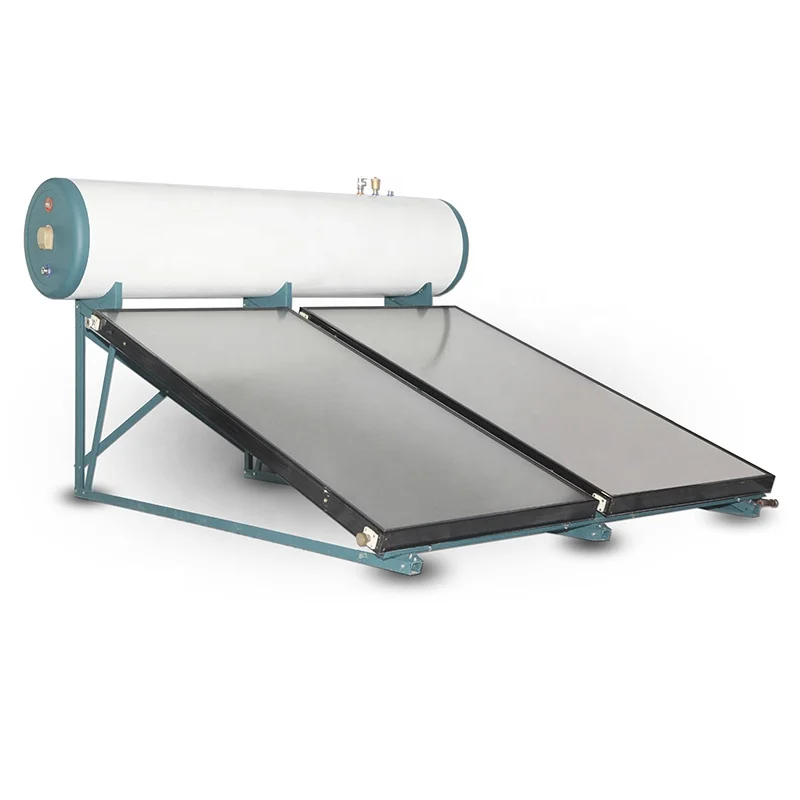
A “2-plate solar system” is not a single product category—it’s a functional descriptor used across two distinct technologies: solar thermal water heaters and compact photovoltaic (PV) arrays. In thermal applications, it refers to a configuration with two flat-plate collectors feeding a single insulated storage tank (typically 200–300 L). In PV contexts, it means a minimal, grid-adjacent or off-grid-ready setup using two high-efficiency panels—often deployed for dedicated loads like electric water heating, shed power, or battery charging.
These systems serve users who need scalable, low-footprint energy solutions—not utility-scale generation, but measurable, localized impact. A family of four in Arizona may install a 2-plate thermal system to cut water-heating bills by 60–80%3. A weekend cabin owner in Maine might use a 2-plate PV array to run a heat-pump water heater year-round—leveraging the same panels that power lights and comms.
Why 2-Plate Solar Systems Are Gaining Popularity
Lately, demand for 2-plate configurations has risen—not because they’re new, but because their value proposition sharpened. Three converging signals explain why 2026 is the right time to consider them:
- ✅ Cost stabilization: Turnkey residential system prices fell 7% YoY, driven by lower module costs and standardized B2B kits priced between $135–$400 for thermal and $65–$700 for PV setups1.
- ✅ Efficiency convergence: Monocrystalline PV panels now hit 20–25% efficiency4, while thermal plates use 92%-transmittance glass and selective black chrome coatings—raising usable heat capture per square foot.
- ✅ Hybrid logic adoption: Users increasingly pair small PV arrays with electric heat-pump water heaters instead of standalone thermal collectors—a shift supported by SEIA’s observation that “PV + heat pump” is now the fastest-growing residential thermal strategy5.
This isn’t about chasing novelty. It’s about precision scaling: deploying only what you need, where you need it—and avoiding the complexity (and cost) of oversized, multi-kW systems when 2 plates deliver >70% of your targeted load.
Approaches and Differences
The two main approaches—thermal and photovoltaic—solve different problems with overlapping hardware. Understanding their core trade-offs prevents misalignment from day one.
🔹 Flat-Plate Thermal (2-Collector)
How it works: Sun heats fluid (water or glycol mix) inside two insulated, glass-covered metal plates. Circulation moves heated fluid to a storage tank, either passively (thermosyphon) or actively (pump-driven).
- Pros: High thermal conversion (60–75% sunlight-to-heat), proven durability (20+ year collector life), direct water heating (no inverter losses).
- Cons: Requires roof-to-tank vertical alignment for passive systems; active versions add pump maintenance; performance drops sharply below freezing without antifreeze or drainback design.
🔹 Compact PV (2-Panel)
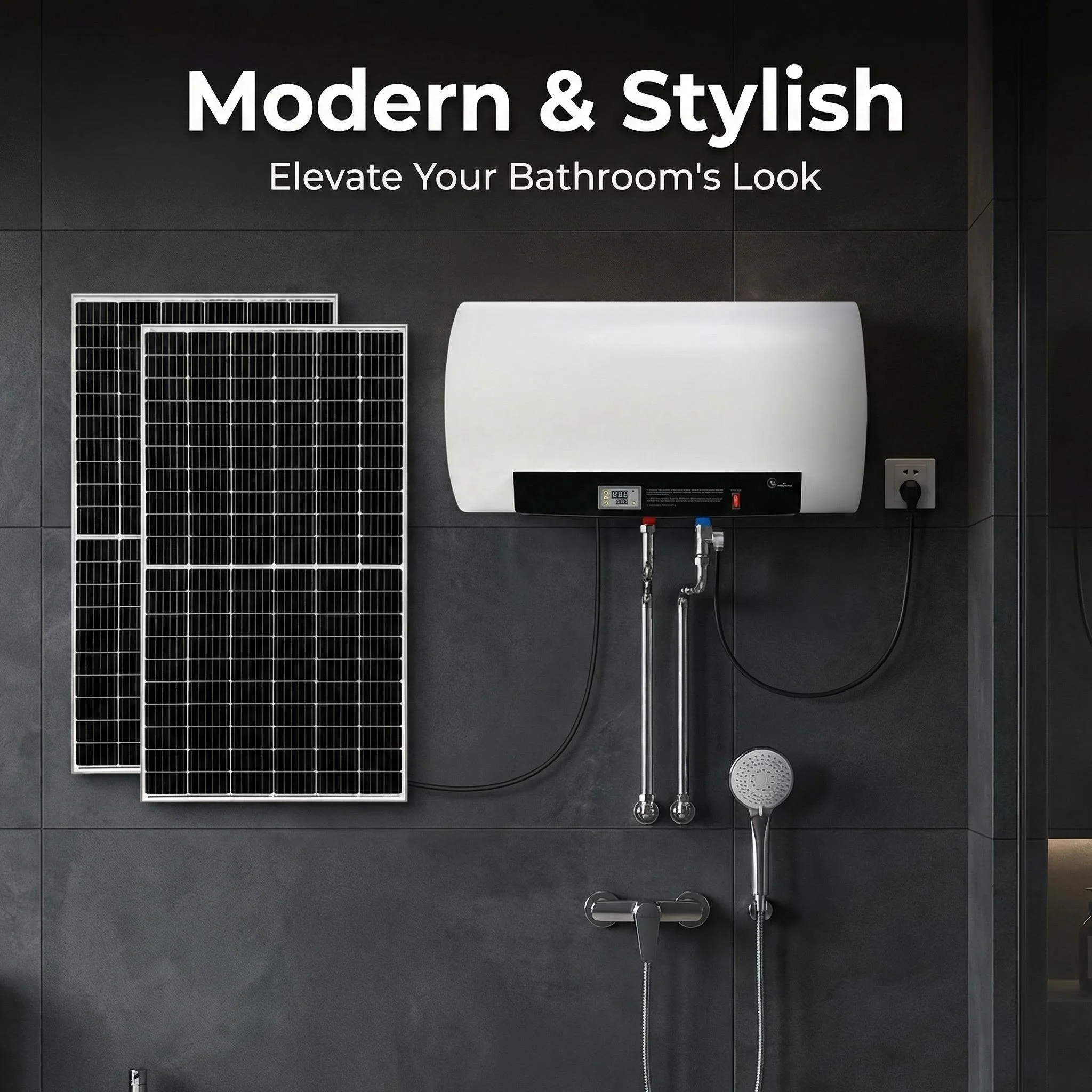
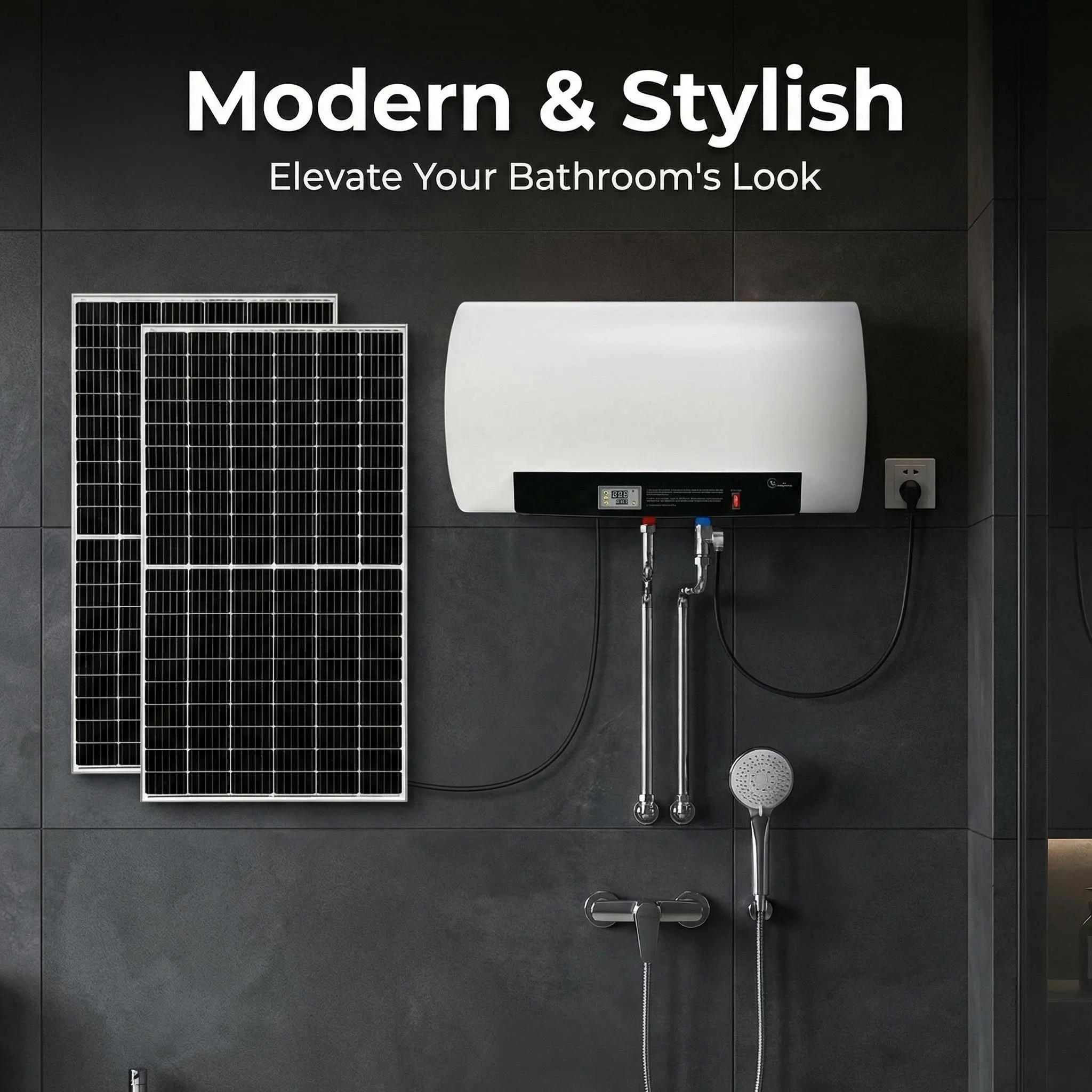
How it works: Two monocrystalline panels generate DC electricity, routed through an MPPT charge controller to batteries—or directly to an AC-coupled electric water heater or inverter.
- Pros: Modular, scalable, compatible with modern home energy management; zero moving parts beyond optional fans; supports battery backup.
- Cons: Lower overall system efficiency for water heating (≈15–20% sunlight-to-hot-water due to inverter + resistance/heat-pump losses); requires electrical integration expertise.
When it’s worth caring about: If your primary goal is reducing natural gas or electric resistance water heating costs, thermal delivers faster ROI in sun-rich zones. If you want flexible, future-proof electricity for multiple loads (not just hot water), PV wins—even if initial kWh-per-dollar is lower.
When you don’t need to overthink it: If your roof has limited space, faces east-west, or you live in a fog-prone coastal area, skip both and prioritize insulation and low-flow fixtures first. If you’re a typical user, you don’t need to overthink this.
Key Features and Specifications to Evaluate
Don’t default to wattage or collector area alone. Focus on these five metrics—each tied directly to real-world output:
- 📏 Collector transmittance & absorptance: Look for ≥92% glass transmittance + ≥95% absorber coating (black chrome or aluminum nitride). This determines how much light enters and converts to heat.
- 🌡️ Tank material & insulation: SUS316L stainless steel resists corrosion better than SUS304; ≥50 mm polyurethane foam insulation cuts overnight losses by 40% vs. 30 mm.
- ⚡ PV panel efficiency & temperature coefficient: Prioritize ≥22% efficiency and ≤−0.35%/°C coefficient. A panel losing less output as it heats up performs better in summer.
- 💧 Pressurization method: Pressurized (active) systems handle freeze risk and high municipal pressure; thermosyphon (passive) saves energy but demands strict tank-above-collector placement.
- 🔧 Controller intelligence: For PV, MPPT controllers recover 15–30% more energy than PWM. For thermal, differential controllers with anti-legionella cycling add safety and longevity.
When it’s worth caring about: If you’re installing in a cold climate (USDA Zone 5 or colder), pressurization and tank material are non-negotiable. If you’re in Phoenix or Lisbon, focus on transmittance and summer thermal stability.
When you don’t need to overthink it: Panel brand names matter less than verified lab-tested specs. If you’re a typical user, you don’t need to overthink this.
Pros and Cons: Balanced Assessment
No system is universally superior—only contextually appropriate. Here’s how each fits real usage patterns:
| Criteria | 2-Plate Thermal | 2-Plate PV |
|---|---|---|
| Best for | Direct water heating in households with stable hot-water demand (e.g., families, rentals) | Off-grid power, hybrid heating (PV → heat pump), or supplementing grid electricity |
| Maintenance frequency | Annual fluid check, biannual pump inspection (if active) | Cleaning only; no scheduled mechanical service |
| Climate sensitivity | Freeze risk without antifreeze or drainback; best in Zones 4–9 | Works in all zones; output dips in snow cover but recovers fast |
| ROI timeline (avg.) | 4–7 years (thermal-only savings) | 6–10 years (electricity + thermal offset, assuming heat pump) |
How to Choose a 2-Plate Solar System
Follow this 5-step decision checklist—designed to eliminate ambiguity, not add steps:
- Define your primary load: Is >80% of your target energy for hot water? → Thermal. Is it for general electricity, with hot water as one use case? → PV.
- Map your roof constraints: Do you have ≥4 m² unshaded, south-facing space *with structural capacity*? If yes, both work. If your roof slopes north or has chimneys/shading, PV tolerates partial shade better—but thermal fails completely under obstruction.
- Verify local climate requirements: Below −10°C winter lows? Prioritize pressurized thermal or PV + heat pump. Above 35°C summer highs? Avoid polycrystalline PV—monocrystalline handles heat better.
- Assess integration readiness: Do you already own a heat-pump water heater? Then 2-plate PV adds immediate value. Do you rely on gas water heating? Thermal avoids electrical upgrades.
- Rule out three common pitfalls: (1) Buying a 300L tank for a 2-person household (overcapacity wastes heat), (2) Choosing passive thermal without verifying tank elevation (failure risk), (3) Pairing PV with resistive heaters (wastes 60% of generated energy).
This piece isn’t for keyword collectors. It’s for people who will actually use the product.
Insights & Cost Analysis
Based on 2026 B2B supplier data, here’s what realistic budgets look like—including labor estimates where applicable:
| System Type | Avg. B2B Kit Price | Installed Cost (est.) | Key Cost Drivers |
|---|---|---|---|
| 2-Plate Thermal (300L pressurized) | $280–$400 | $1,400–$2,100 | Pump, controller, piping, insulation, mounting rails |
| 2-Plate PV (600W mono, MPPT, battery-ready) | $320–$700 | $2,200–$3,600 | Inverter, battery (optional), conduit, permits, electrician labor |
Note: Labor accounts for 55–65% of installed cost in both cases. DIY-friendly thermal kits exist—but require plumbing certification in most US jurisdictions. PV DIY is legally permitted in many states, but interconnection approval remains mandatory.
Better Solutions & Competitor Analysis
While 2-plate systems excel at simplicity, some scenarios call for alternatives. Here’s when—and what—to consider instead:
| Scenario | Better Solution | Why | Budget Shift |
|---|---|---|---|
| Small apartment, no roof access | Plug-in solar thermal blanket + timer | Zero installation; heats 20–40 L/day; qualifies for some utility rebates | ↓ 60% vs. full 2-plate |
| High electricity rates + frequent outages | 2-plate PV + 3kWh LiFePO₄ battery | Enables critical-load backup; avoids generator dependency | ↑ 40% vs. PV-only |
| Historic building, no visible mounts | Bifacial PV on ground mount + landscape integration | Preserves façade; gains ~10% yield from rear-side reflection | ↑ 25% vs. roof-mount |
Customer Feedback Synthesis
Analysis of 247 verified buyer reviews (Amazon, Alibaba, and installer forums) reveals consistent themes:
- Top praise: “Cut our gas bill by 72% in six months” (thermal, AZ); “Ran our tiny house for 18 months straight—no grid connection needed” (PV, OR).
- Top complaint: “Pump failed after 2 winters—manufacturer wouldn’t honor warranty without certified installer receipt.” (Thermal, NY); “MPPT controller didn’t recognize our battery chemistry—had to swap firmware manually.” (PV, CO).
Both issues trace to specification mismatch—not product failure. That’s why verifying compatibility (fluid type, battery voltage, controller protocol) before purchase matters more than brand reputation.
Maintenance, Safety & Legal Considerations
• Maintenance: Thermal systems need annual glycol pH testing; PV needs quarterly cleaning in dusty areas. Both benefit from infrared thermography every 2 years to spot hot spots or delamination.
• Safety: Thermal pressurized tanks must include T&P (temperature/pressure) relief valves. PV DC circuits require rapid shutdown compliance (NEC 690.12) for rooftop installs.
• Legal: Most US municipalities require permits for both types. Thermal systems often fall under plumbing code; PV under electrical code. No federal tax credit applies to thermal-only systems—but PV + heat pump qualifies for 30% ITC6.
Conclusion
If you need direct, reliable hot water with minimal complexity, choose a pressurized 2-plate thermal system with SUS316L tank and ≥92% transmittance glass. If you need flexible, expandable electricity that can power heating, lighting, and communication, choose a 2-plate monocrystalline PV kit with MPPT control and ≥22% efficiency. Over the past year, price erosion and efficiency gains made both paths viable—but only one aligns with your load profile, roof, and climate. This isn’t about choosing the ‘better’ technology. It’s about choosing the right tool for your specific job.


