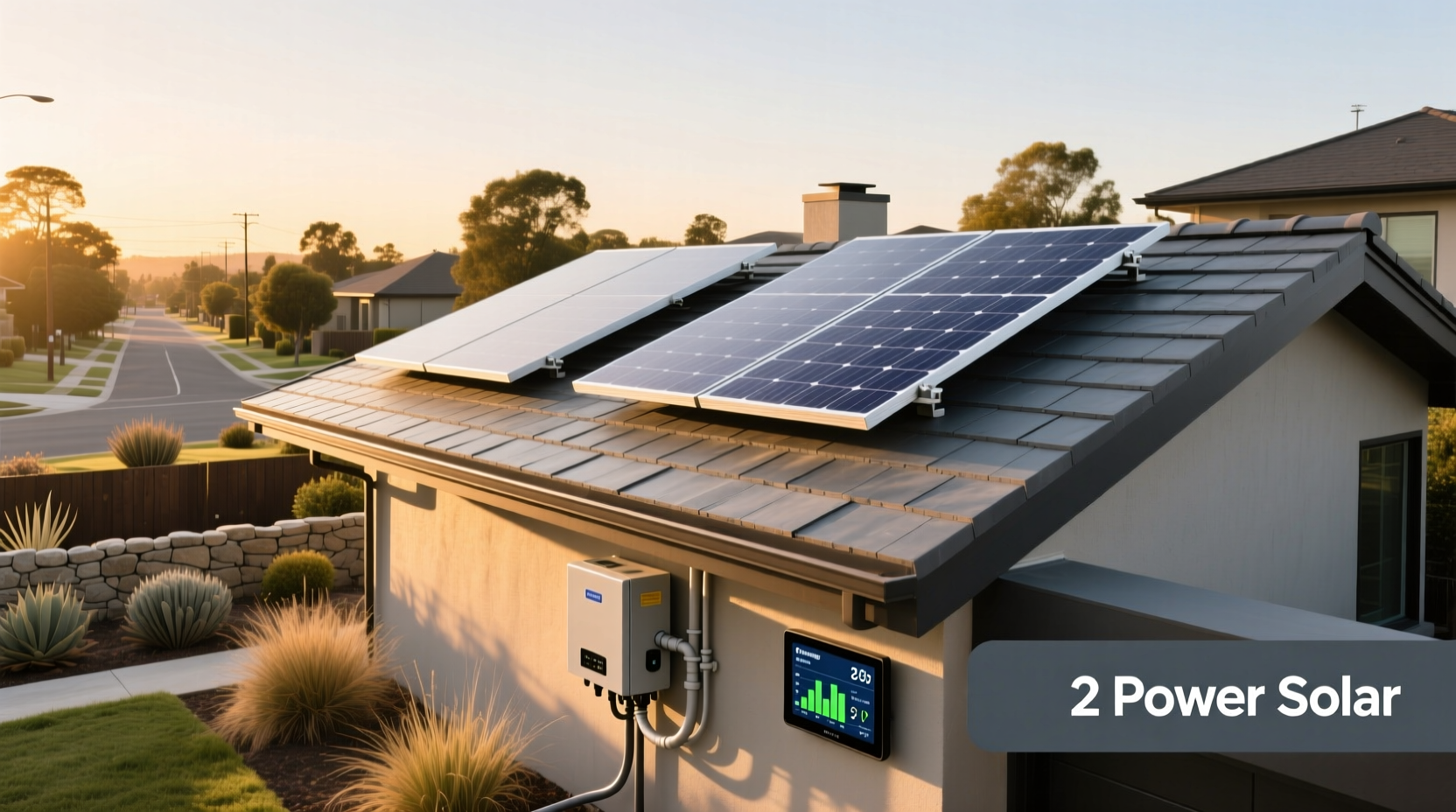
Over the past year, search interest in 2 power solar systems has surged — peaking at a heat index of 62 in mid-2026 1. That’s not hype: it reflects real demand shifts. If you’re evaluating dual-power solar solutions — whether for classroom calculators, off-grid homes, or agricultural boreholes — skip the theory. Here’s what matters: choose solar + battery for portable electronics (like calculators), solar + grid for reliable home energy (2–30 kW kits), and solar + grid/generator for industrial water pumps (2HP+). If you’re a typical user, you don’t need to overthink this. The biggest mistake? Confusing consumer-grade hybrid logic with industrial continuity requirements. This piece isn’t for keyword collectors. It’s for people who will actually use the product.
About 2 Power Solar: Definition and Typical Use Cases
⚡ “2 power solar” (also called dual-power solar) describes any system that integrates solar photovoltaics with a second, independent energy source — most commonly battery storage, grid electricity, or diesel backup. It’s not about doubling panels. It’s about redundancy: ensuring function when sunlight drops, batteries deplete, or grids fail.
Three distinct use cases dominate the market:
- Consumer electronics: Dual-power calculators (solar cell + button-cell battery) used in schools, banks, and promotional giveaways. They last years without battery replacement 2.
- Residential energy systems: Hybrid grid-tied solar kits (2 kW–30 kW) paired with lithium batteries — designed for energy autonomy during blackouts or tariff arbitrage.
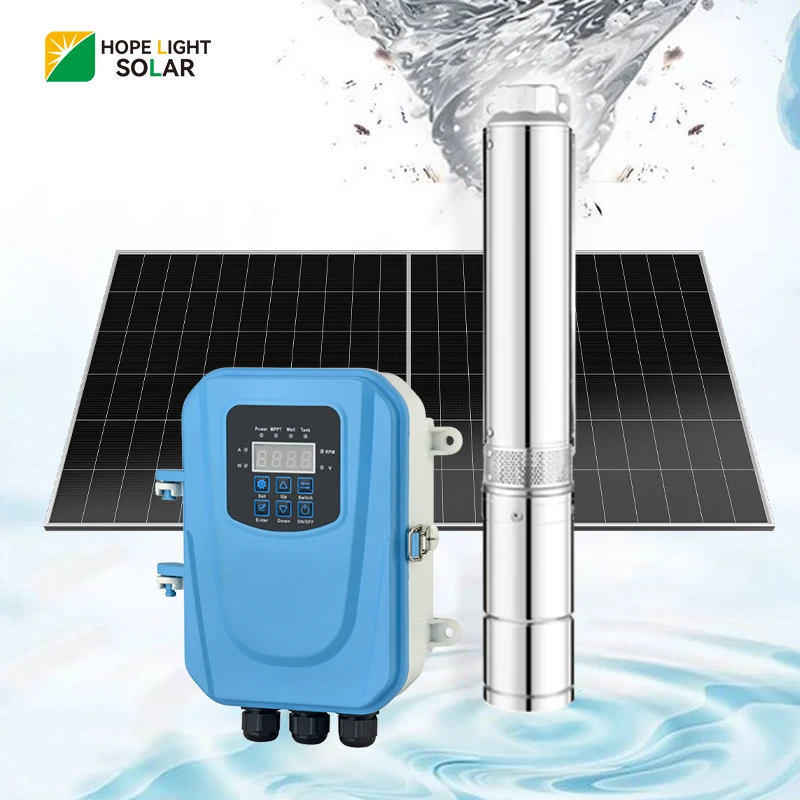
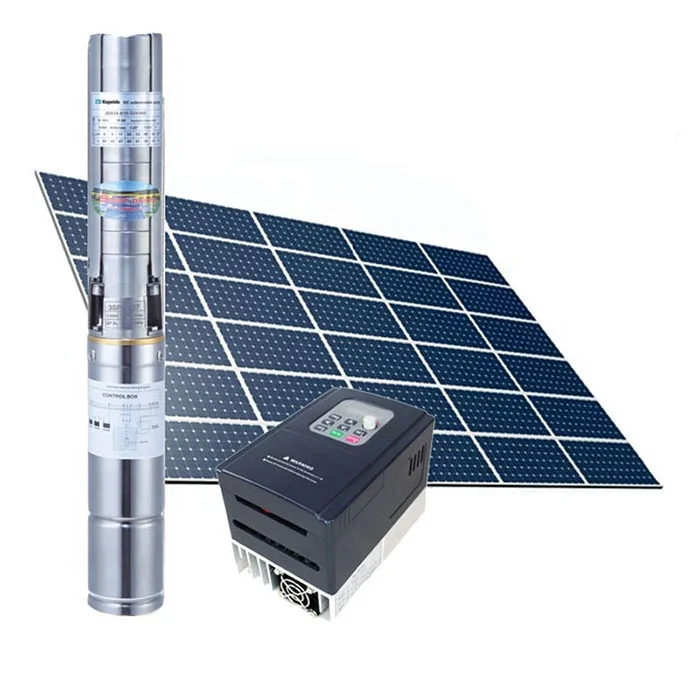
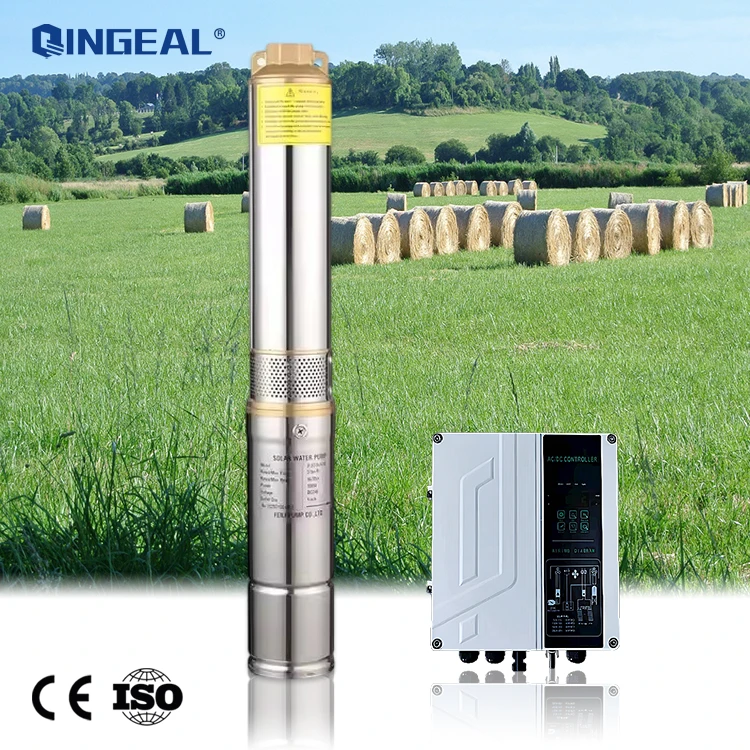
- Industrial infrastructure: “2 power solar boreholes” — AC/DC hybrid pumps (typically 2HP or higher) that draw from PV by day and switch seamlessly to grid or generator at night or under cloud cover 3.
Why 2 Power Solar Is Gaining Popularity
Lately, reliability—not just sustainability—has become the top driver. In education and finance sectors, users prioritize zero-maintenance operation. In rural communities, NGOs and CSR programs (e.g., BUA Cement’s borehole deployments) rely on 2 power solar to guarantee 24/7 water access 4. For homeowners, grid instability in emerging markets and rising time-of-use tariffs make battery-backed solar economically urgent — not aspirational.
Crucially, the surge isn’t uniform across categories. Calculator adoption is stable but high-volume; residential kit demand spiked sharply post-2025; and hybrid pump orders grew fastest in sub-Saharan Africa and Southeast Asia where solar irradiance is strong but grid coverage remains spotty.
Approaches and Differences
There are three fundamentally different implementations of 2 power solar — each solving distinct problems. Confusing them leads to poor ROI and operational failure.
- Solar + Battery (consumer electronics): Low-voltage, ultra-low-power design. Solar trickle-charges a small NiMH or alkaline cell. No switching logic — just parallel input. Ideal for intermittent, low-duty-cycle devices.
- Solar + Grid (home systems): Medium-voltage AC/DC architecture with intelligent inverters. Uses MPPT charge controllers and bidirectional grid interfaces. Prioritizes self-consumption, exports surplus, and draws grid only when battery is depleted or demand exceeds PV output.
- Solar + Grid/Generator (industrial pumps): High-power DC-coupled or hybrid AC/DC systems. Requires robust automatic transfer switches (ATS) and voltage stabilization. Must handle motor startup surges (often 3–5× rated HP) without brownout.
When it’s worth caring about: if your application requires continuous uptime (e.g., irrigation, medical refrigeration, or critical office tools), the switching logic, response time (<100 ms), and surge tolerance matter more than panel wattage. When you don’t need to overthink it: for a desk calculator used 30 minutes/day, basic solar+battery integration is sufficient — no ATS, no firmware, no monitoring needed. If you’re a typical user, you don’t need to overthink this.
Key Features and Specifications to Evaluate
Not all dual-power claims are equal. Here’s what to verify — and why each metric affects real-world performance:
- Switching latency: Time between solar drop-out and secondary source activation. Critical for pumps and inverters (<200 ms recommended). Irrelevant for calculators.
- Power path architecture: DC-coupled (more efficient for battery charging) vs. AC-coupled (easier retrofitting). For new home installations, DC-coupled delivers ~5–8% higher round-trip efficiency.
- Battery chemistry & cycle life: Lithium iron phosphate (LiFePO₄) offers 3,500+ cycles at 80% depth of discharge. NMC is cheaper but degrades faster under partial-state cycling. Avoid lead-acid in hybrid home kits unless budget is extremely constrained.
- CE/ISO certification: Mandatory for inverters, charge controllers, and lithium battery packs sold in EU or compliant markets. Not required for basic calculators — but still indicates manufacturing rigor.
Pros and Cons
Each category balances trade-offs differently:
- Dual-power calculators: ✅ Ultra-low cost ($0.30–$0.55/unit), zero maintenance, decades-long lifespan. ❌ No data logging, no connectivity, no upgrade path.
- Hybrid home kits (2–30 kW): ✅ Full blackout resilience, energy bill reduction (30–70%), scalable. ❌ Higher upfront cost, lithium shipping complexity, requires certified installer for grid interconnection.
- Hybrid borehole pumps (2HP+): ✅ 24/7 water supply, reduced diesel dependency, lower OPEX than generator-only systems. ❌ Requires civil works (well casing, piping), sensitive to voltage fluctuations, needs trained field technicians for ATS calibration.
How to Choose a 2 Power Solar Solution
Follow this 5-step decision checklist — tailored to your role:
- Define the failure mode you’re preventing. Is it battery exhaustion (calculator), grid outage (home), or dry-season pump downtime (agriculture)? Match the architecture to the risk — not the marketing sheet.
- Verify secondary source compatibility. For home kits: confirm inverter supports your local grid voltage/frequency and anti-islanding standards. For pumps: check if grid fallback accepts ±10% voltage swing and 45–55 Hz frequency drift.
- Check certification scope. CE mark on a battery pack ≠ CE on full system. Ask suppliers for test reports covering *integrated operation*, not just individual components.
- Avoid MOQ traps. Calculator suppliers often require 5,000–10,000 units. Pump and kit vendors typically allow single-unit validation — use it.
- Factor in logistics reality. Lithium batteries in home kits require UN3480 Class 9 dangerous goods labeling and IATA-compliant packaging. Don’t let landed cost surprise you.
When it’s worth caring about: if you’re procuring for a school district or municipal project, insist on third-party verification of switching behavior under partial-cloud simulation. When you don’t need to overthink it: for personal home use with standard utility interconnection rules, pre-certified kits from reputable regional suppliers meet >95% of needs. If you’re a typical user, you don’t need to overthink this.
Insights & Cost Analysis
Unit economics vary dramatically by scale and region. Below are realistic landed costs (FOB + freight + duties + compliance) for mid-2026:
| Product Type | Typical Specification | Realistic Landed Cost | Key Cost Drivers |
|---|---|---|---|
| Dual-power calculator | Solar + LR44 battery, 8-digit LCD | $0.32–$0.48/unit (MOQ 5,000) | MOQ pressure, PCB miniaturization, bulk packaging |
| Hybrid home kit | 5 kW inverter + 10 kWh LiFePO₄ + panels | $4,200–$6,100 (installed, ex. labor) | Lithium battery cost, inverter firmware licensing, customs duties on cells |
| Hybrid borehole pump | 2.2 kW (3HP) AC/DC, 100 m head, CE-certified | $1,850–$2,400 (ex. well drilling) | ATS robustness, IP68 motor sealing, copper winding quality |
Better Solutions & Competitor Analysis
“Better” depends on context — not specs alone. Below is a functional comparison of implementation priorities:
| Category | Best-for Advantage | Potential Problem | Budget Consideration |
|---|---|---|---|
| Dual-power calculators | Zero long-term operating cost; ideal for mass distribution | Folding LCD tablet integrations add fragility and $0.80+ unit cost | Lowest entry point — but value collapses beyond 10k units without branding |
| Hybrid home kits | Lithium battery backup enables true energy independence | Low-quality BMS causes premature cell imbalance; avoid uncertified packs | Higher initial outlay, but 5–7 year payback in high-tariff regions |
| Hybrid borehole pumps | Eliminates diesel fuel cost and maintenance for remote sites | Poorly tuned ATS causes motor stalling during transitions | ROI strongest where diesel costs >$1.20/L and grid is unreliable |
Customer Feedback Synthesis
Based on aggregated reviews (B2B procurement portals, community project reports, and retail feedback):
- Top praise: “Calculator still works after 7 years of daily use — never changed the battery.” “Home kit kept fridge and router running through 14-hour blackout.” “Borehole pump delivered consistent flow during 3-week monsoon — grid fallback was seamless.”
- Top complaint: “Kit’s app shows ‘battery full’ but inverter shuts down at 85% SOC — firmware bug.” “Pump’s manual says ‘auto-switch’ but requires weekly reset after cloudy spells.” “Calculator keys feel mushy after 6 months — supplier substituted cheaper membrane.”
Maintenance, Safety & Legal Considerations
Legal and safety expectations differ sharply by segment:
- Calculators: No regulatory oversight beyond general electronics safety (IEC 62368-1). No maintenance needed.
- Home kits: Grid-tied systems require local utility approval and UL 1741-SA (US) or EN 50549 (EU) certification. Lithium battery enclosures must meet IP54 minimum; thermal runaway mitigation is mandatory in enclosed spaces.
- Hybrid pumps: CE marking is non-negotiable for EU export. In Africa, many countries require SONCAP (Nigeria) or PVOC (Kenya) pre-shipment verification. ATS must be rated for motor locked-rotor current.
Conclusion
If you need uninterrupted basic calculation — choose a certified dual-power calculator with solar + button cell. If you need whole-home resilience against grid failure — choose a hybrid grid-tied solar kit with lithium battery backup (2–10 kW range fits most households). If you need guaranteed water delivery for agriculture or community infrastructure — choose a CE-certified 2HP+ hybrid borehole pump with proven ATS response under variable irradiance. There is no universal “best” 2 power solar solution — only the right one for your failure mode, scale, and operational environment. Stop optimizing for specs. Start optimizing for continuity.
Frequently Asked Questions
It means a system that uses solar energy plus one other independent source — most commonly battery storage, grid electricity, or a generator — to ensure continuous operation when sunlight is insufficient.
For reliable, long-duration backup (4+ hours), yes — lithium iron phosphate (LiFePO₄) is the practical standard. Lead-acid works for short outages but degrades quickly under daily cycling and adds weight and space.
You can mount panels and wire DC circuits, but grid interconnection, inverter commissioning, and battery BMS configuration require licensed electricians and utility sign-off in virtually all jurisdictions.
Yes — consistently. Solar cells extend battery life by 3–8× in moderate-use scenarios (e.g., 10 min/day). Field data shows >90% of dual-power units remain functional after 5 years; comparable battery-only models show ~40% functional rate over same period 5.
Because pump performance depends on mechanical load (head/flow), not just electrical input. 2HP (~1.5 kW) reflects the motor’s mechanical output capability under real-world hydraulic resistance — a more meaningful spec than raw wattage for irrigation or deep-well applications.


