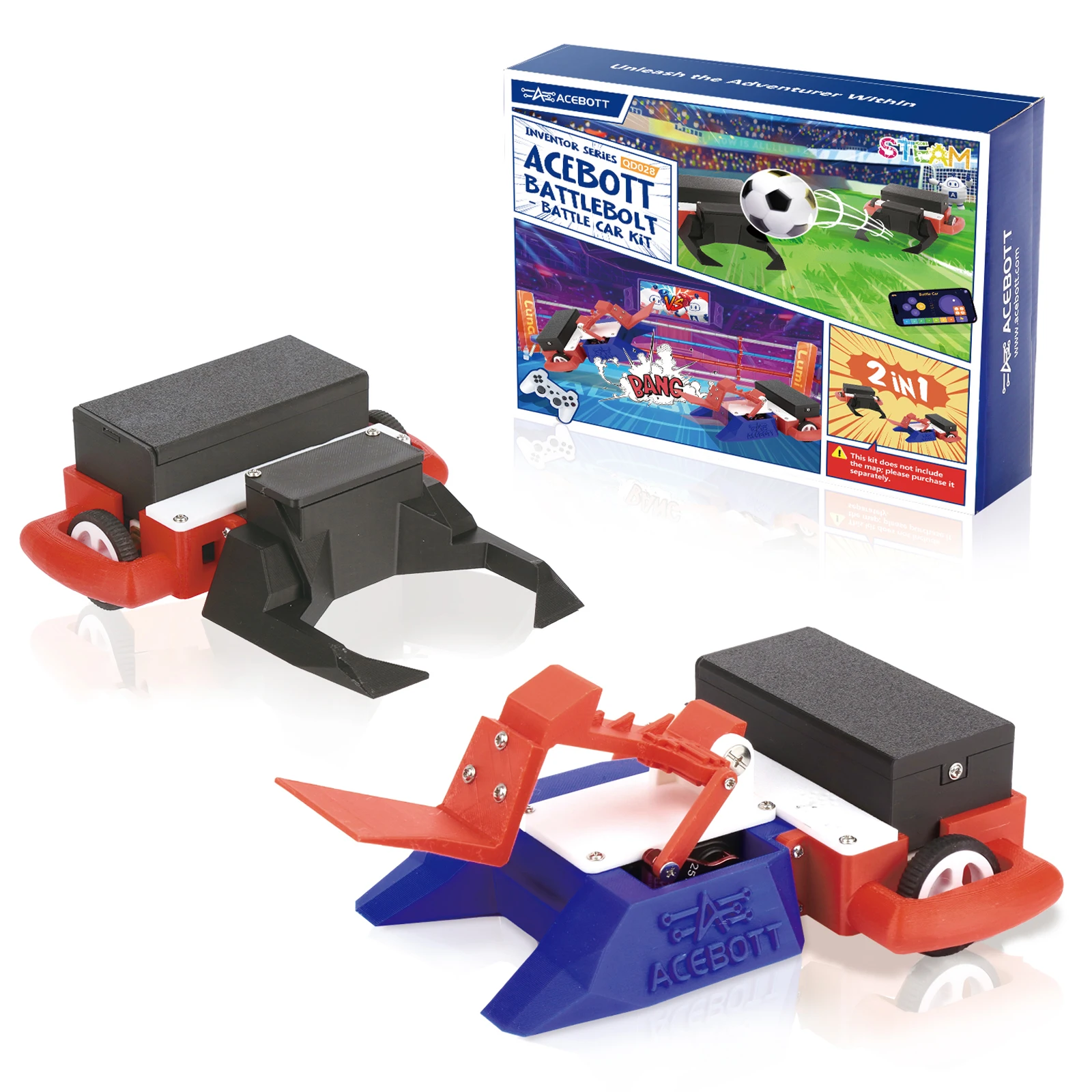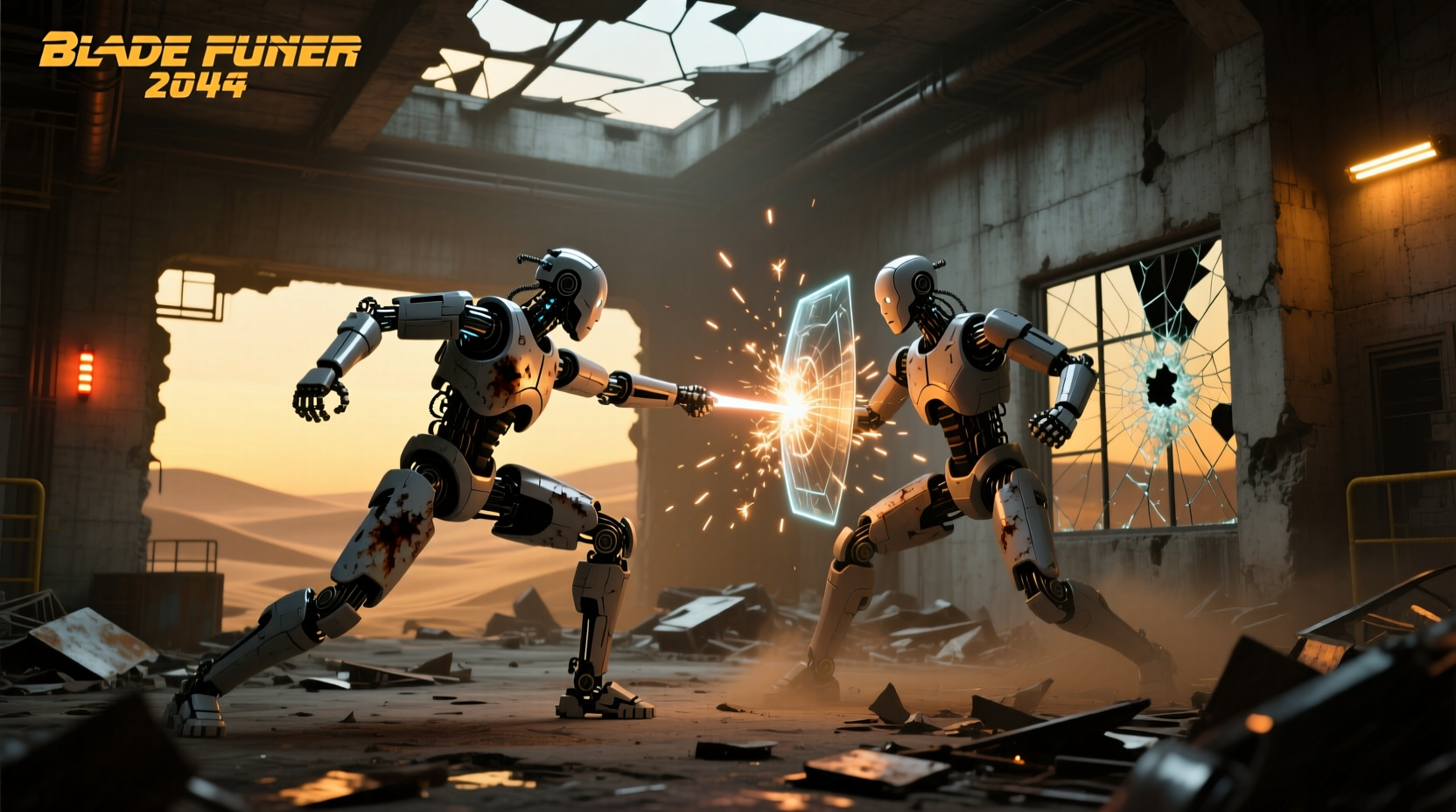
For most buyers in 2026, start with a DIY combat kit compatible with Arduino or ESP32 — not a pre-built toy. Why? Because the $68.7 billion STEM toy market1 now rewards programmable, upgradable systems over static RC units. If you’re a typical user, you don’t need to overthink this. Skip flashy light effects and prioritize expandability, Edge-AI responsiveness, and arena compatibility — especially if buying for education or competitive hobby use. Over the past year, demand for agentic AI-powered combat robots has surged, driven by new humanoid platforms that adapt mid-fight2. That shift makes firmware-upgrade paths and sensor fidelity far more consequential than raw speed or battery life alone.
About "2 Robots Fighting" Systems
The phrase "2 robots fighting" refers to consumer and hobbyist-grade robotic systems designed for head-to-head interaction — ranging from simple tabletop brawlers to programmable, weaponized combat platforms. These are not industrial or military machines; they’re electronics-based play and learning tools built around dual-unit engagement logic. Typical use cases include:
- 🧠 STEM education: Students program behavior trees, sensor responses, and motor control sequences in Python or C++ to simulate autonomous dueling;
- 🕹️ Hobbyist competitions: Organized events (e.g., Antweight/Beetleweight classes) where builders test durability, weapon efficiency, and real-time decision logic;
- 🎮 Casual social play: Paired RC units with impact sensors, sound feedback, and ejection mechanisms for family or classroom use.
This isn’t about violence simulation — it’s about embodied logic, mechanical feedback loops, and iterative engineering. The core value lies in observable cause-and-effect: code → motion → collision → response → adaptation.
Why "2 Robots Fighting" Is Gaining Popularity
Lately, two converging forces have accelerated adoption: policy-driven STEM mandates in schools across APAC and North America, and the rapid commoditization of low-latency edge AI chips. Over the past year, manufacturers in Shenzhen and Shantou have integrated lightweight inference engines (e.g., TensorFlow Lite Micro) directly into $30–$70 kits — enabling real-time opponent tracking and adaptive difficulty scaling3. This moves the category beyond remote control into responsive co-play. Parents seek systems that teach debugging through failure; hobbyists want modular chassis with brushless motor mounts; educators require curriculum-aligned APIs and classroom management dashboards. The $30.51 billion smart toy market projection for 2026 reflects this functional evolution — not novelty alone4.
Approaches and Differences
There are three dominant approaches — each serving distinct goals, skill levels, and time commitments:
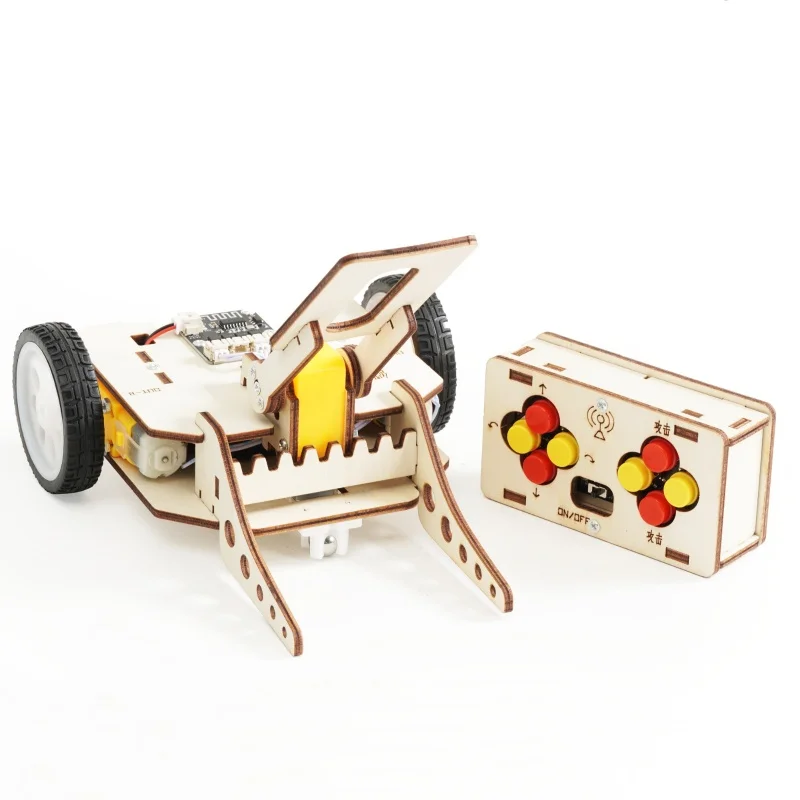
- 🛠️ DIY Combat Kits (e.g., Arduino/ESP32-based): Require assembly, coding, and calibration. Offer full hardware/software control. Ideal for learners and tinkerers.
- 📦 Premade Consumer Sets (e.g., “Rock Em Sock Em”-style): Plug-and-play, no setup. Prioritize visual/audio feedback over programmability. Best for ages 6–12 or casual group play.
- 🏭 Pro-Grade Hobbyist Platforms (e.g., Beetleweight-class kits): Engineered for tournaments. Feature carbon fiber frames, weapon actuation systems, and FCC-compliant transmitters. Demand mechanical literacy and safety awareness.
If you’re a typical user, you don’t need to overthink this. Unless you're entering sanctioned competitions or teaching university-level robotics, avoid pro-grade kits — their complexity outweighs educational ROI for most users.
Key Features and Specifications to Evaluate
Not all specs matter equally. Here’s what to weigh — and when it’s worth caring about:
- Microcontroller Compatibility: When it’s worth caring about — if using for classroom coding (Python/C++) or custom AI logic. When you don’t need to overthink it — for one-off play sessions or gift purchases. Arduino Nano and ESP32-S3 are current de facto standards.
- Communication Protocol: When it’s worth caring about — in multi-unit environments (e.g., school labs). 2.4 GHz FHSS (Frequency-Hopping Spread Spectrum) prevents interference better than basic ISM-band RC. When you don’t need to overthink it — for home use with only two units.
- Sensor Suite: When it’s worth caring about — for adaptive behavior (e.g., IR proximity + IMU tilt detection enables dodge logic). When you don’t need to overthink it — if only using impact-triggered animations.
- Arena Integration: When it’s worth caring about — for consistent testing conditions and spectator appeal. Look for standardized 36"×36" footprint support. When you don’t need to overthink it — if battling on carpet or tabletop.
Pros and Cons
Each approach balances accessibility, longevity, and learning depth:
| Category | Pros | Cons | Budget Range (USD) |
|---|---|---|---|
| DIY Combat Kits | Full customization; curriculum-ready; upgrade path for motors/sensors; strong community support | Steeper initial learning curve; requires soldering/debugging time; no out-of-box entertainment | $45–$120 |
| Premade Consumer Sets | Instant engagement; durable plastic housing; intuitive controls; low supervision needed | No coding interface; limited sensor fidelity; fixed behavior logic; short software lifecycle | $20–$70 |
| Pro-Grade Platforms | Tournament-certified; high power-to-weight ratio; replaceable weapon modules; active builder forums | Requires safety gear & venue compliance; steep cost; regulatory restrictions (e.g., blade RPM limits); minimal educational scaffolding | $150–$600+ |
How to Choose the Right "2 Robots Fighting" System
Follow this 5-step decision checklist — designed to eliminate common missteps:
- Define your primary goal: Education? Competition? Social play? (If uncertain, default to DIY.)
- Assess technical readiness: Do you or your users have basic coding/multimeter experience? If not, skip kits requiring firmware flashing.
- Verify physical constraints: Space (arena size), power access (USB-C vs. LiPo), and noise tolerance (brushless motors generate audible whine).
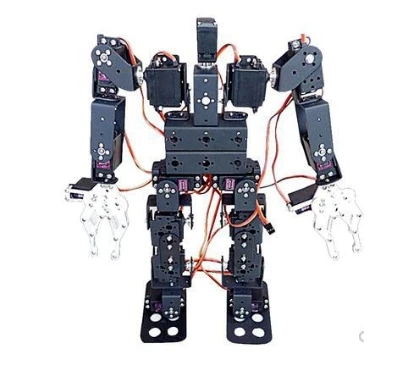
- Avoid these three pitfalls: (1) Assuming “AI” means autonomous — many labeled units use scripted triggers only; (2) Prioritizing aesthetics (e.g., humanoid shape) over sensor accuracy; (3) Ignoring arena compatibility — mismatched dimensions break repeatability.
- Check supply chain transparency: Prefer suppliers listing BOM (bill of materials), firmware update logs, and open-source repositories. Avoid units with locked bootloaders or proprietary IDEs.
This piece isn’t for keyword collectors. It’s for people who will actually use the product.
Insights & Cost Analysis
Bulk sourcing reveals structural pricing tiers. For retailers or STEM labs ordering 50+ units, B2B factory prices range from $7.00 to $13.00 per unit for entry-level kits — but only if MOQ is met and components are standardized (e.g., ESP32-WROOM-32, 12V brushed gearmotors)3. At retail, margin compression hits hardest on premade sets — where branding and packaging dominate cost. In contrast, DIY kits maintain >55% gross margin because value shifts to documentation, community access, and upgrade parts. For individual buyers, spending $65 on an ESP32-based kit delivers more long-term utility than $85 on a branded RC set — assuming you’ll iterate, not just activate.
Better Solutions & Competitor Analysis
The strongest value proposition in 2026 combines three elements: open firmware, arena-standard dimensions, and classroom-ready lesson plans. Few vendors deliver all three — but emerging Shenzhen-based OEMs like Turnkey Robotics and Shantou SmartBot Labs now embed curriculum PDFs and GitHub repos directly in packaging. Below is how top-tier offerings compare on measurable criteria:
| Product Type | Strengths | Potential Issues | Budget |
|---|---|---|---|
| Open-Source DIY Kit (e.g., RoboFist v3) | Fully documented PCB design; ROS2 micro-ROS bridge; free lesson modules (K–12 aligned) | No retail packaging; requires self-sourcing fasteners; English-only docs | $59 |
| Branded Educational Set (e.g., CodeBrawl Pro) | Polished app interface; multilingual teacher dashboard; certified safety testing | Proprietary OS; no CLI access; firmware updates gated behind subscription | $89 |
| Competition-Ready Platform (e.g., NanoSpike Antweight) | FCC-certified transmitter; drop-tested chassis; weapon mount standardization | No beginner mode; requires LiPo charger & fireproof arena; no coding tutorials | $299 |
Customer Feedback Synthesis
Based on aggregated reviews (2025–2026) across Amazon, Tindie, and STEM educator forums:
- ✅ Top 3 praised features: (1) Reliable 2.4 GHz pairing (no cross-talk between units), (2) Clear mounting points for third-party sensors, (3) USB-C power + programming in one port.
- ❌ Top 3 recurring complaints: (1) Proprietary battery packs with no replacement availability after 18 months, (2) Inconsistent IMU calibration across production batches, (3) Arena boundary sensors failing under fluorescent lighting.
Maintenance, Safety & Legal Considerations
All systems using LiPo batteries require safe charging practices (never unattended, never on flammable surfaces). For units with rotating weapons (spinning hammers, drum blades), local event organizers often enforce RPM limits (typically ≤ 1,800 RPM for Antweight class) and mandatory polycarbonate shielding. No jurisdiction currently regulates consumer-grade robot fighters as weapons — but some U.S. states (e.g., California) classify units exceeding 10W motor output as “powered devices” subject to CE/FCC labeling. Always verify compliance markings before import or resale. For classroom use, ensure units meet ASTM F963-17 toy safety standards — particularly for small parts and pinch points.
Conclusion
If you need teaching continuity and iterative learning, choose an open-hardware DIY kit with ESP32 support and documented firmware. If you need low-friction group engagement for ages 7–11, select a premade set with physical arena inclusion and impact-triggered audio. If you need tournament-ready durability and weapon modularity, invest in a certified pro platform — but only after validating local event rules and safety infrastructure. Over the past year, the gap between educational utility and entertainment value has narrowed significantly. What once demanded separate tools now fits in one calibrated system — provided you prioritize interoperability over branding.