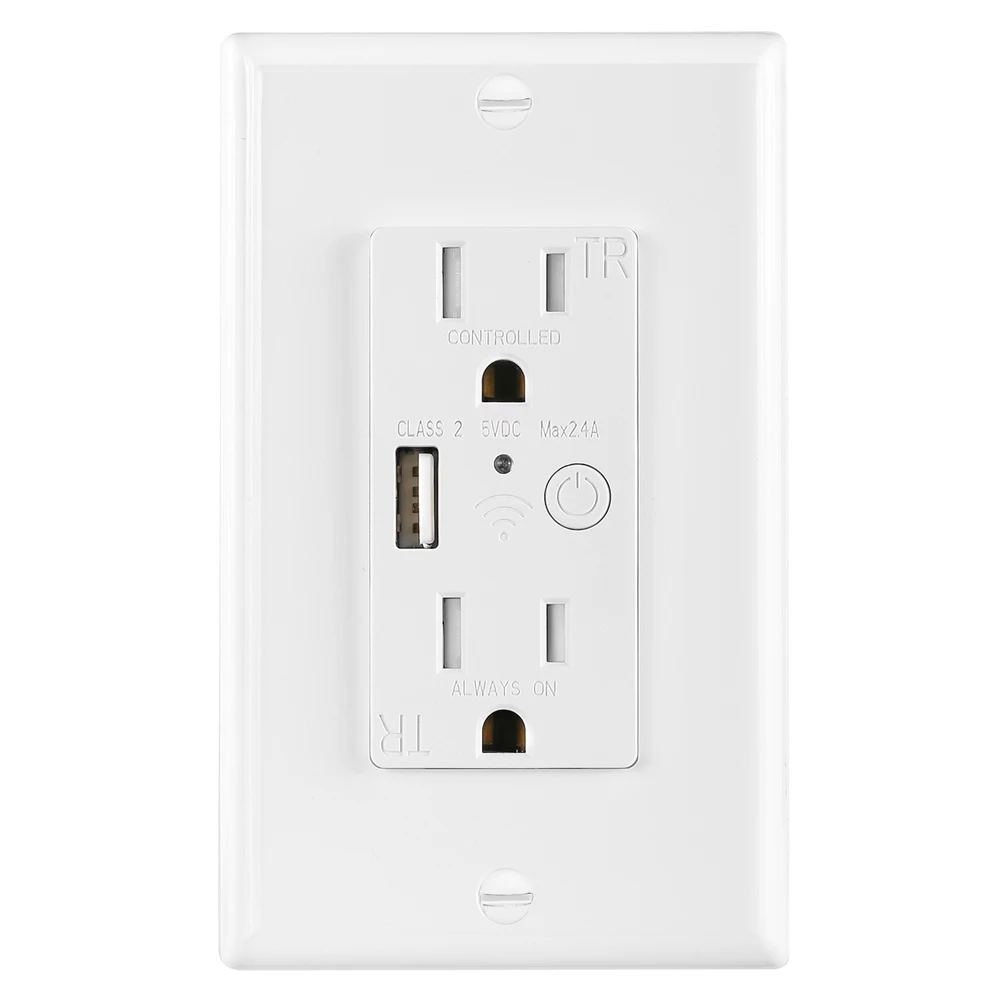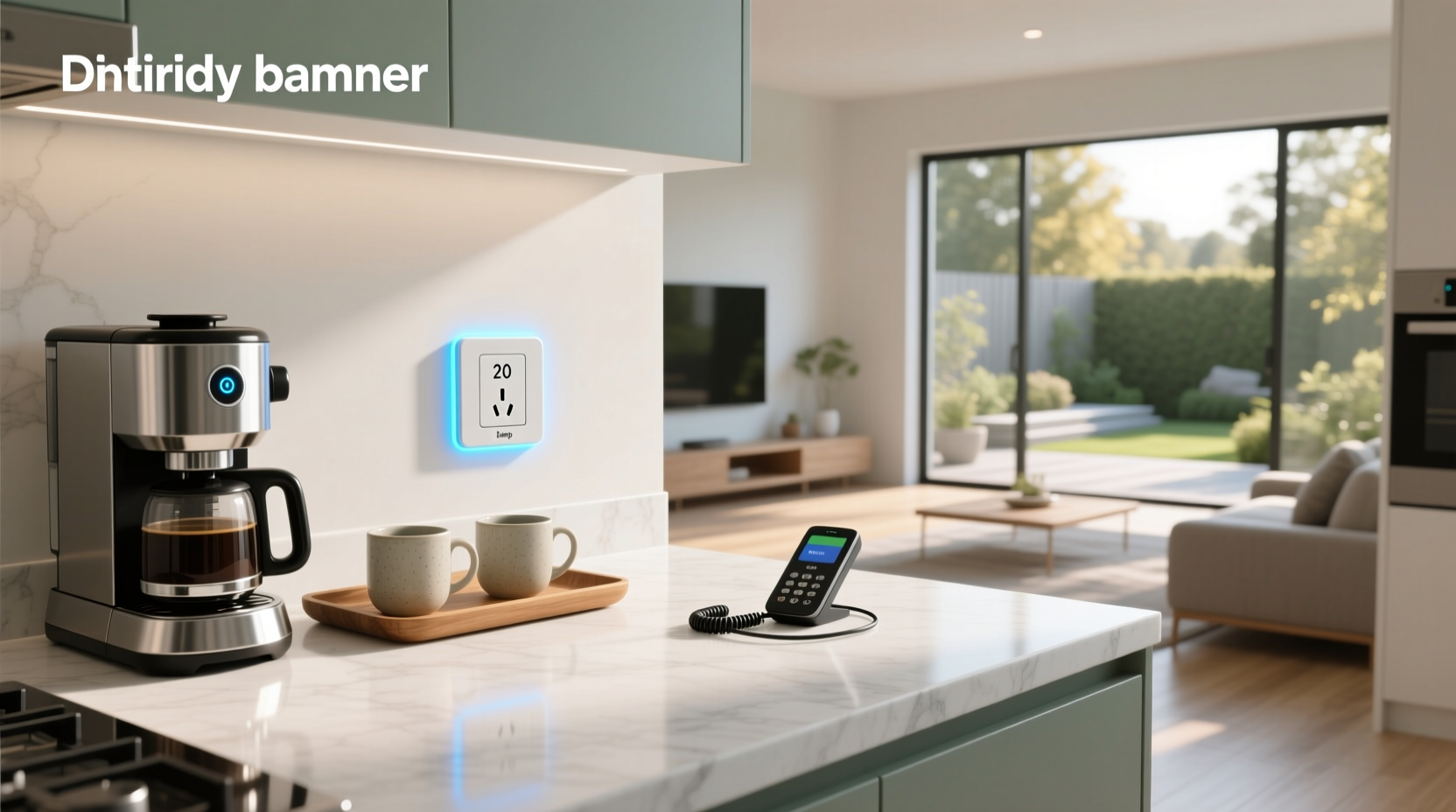
If you’re running a pro-sumer espresso machine, garage air compressor, or commercial-grade space heater on a 20A circuit—and you want remote control, energy tracking, and reliable uptime—you need a true 20A smart outlet, not a repurposed 15A plug. Over the past year, the market has shifted decisively: Matter/Thread support is now table stakes for interoperability, real-time energy monitoring is non-negotiable for cost-aware users, and safety-certified in-wall receptacles (NEMA 5-20R) have overtaken plug-in adapters as the dominant, code-compliant solution. If you’re a typical user, you don’t need to overthink this: skip plug-in ‘20A’ smart plugs—they’re physically incompatible with standard NEMA 5-20P plugs and often lack UL listing for continuous 20A loads. Instead, choose a UL-listed, in-wall smart receptacle (like those from Leviton or Eaton) or a heavy-duty Z-Wave relay paired with a weatherproof enclosure for outdoor/garage use. The biggest avoidable mistake? Installing any 20A smart device on 14-gauge wiring—or assuming a ‘20A-rated’ label means it’s safe for motor-starting inrush currents.
About 20 Amp Smart Outlets: Definition & Typical Use Cases
A 20 amp smart outlet is an electronically controlled electrical receptacle rated for continuous operation at up to 20 amps (2,400 watts at 120V), compliant with the NEMA 5-20R configuration—featuring one vertical hot slot and one horizontal neutral slot (the “T-slot”). Unlike common 15A smart plugs, it’s designed to integrate into standard residential or light-commercial 20A branch circuits protected by a 20A breaker and wired with 12-gauge copper conductors1. It’s not just about higher wattage headroom—it’s about meeting National Electrical Code (NEC) requirements for dedicated high-load circuits.
Typical use cases include:
- ☕ Pro-sumer kitchen appliances: dual-boiler espresso machines (1,800–2,200W), induction cooktops (single-zone), or commercial-grade microwaves;
- 🛠️ Garage and workshop tools: air compressors (especially >1HP), table saws, welders (low-duty cycle), and EV Level 1 chargers (when hardwired via NEMA 5-20);
- 🏭 Light commercial applications: refrigerated display cases, HVAC zone controllers, or small-server rack cooling fans;
- 🌿 Outdoor and seasonal loads: high-output dehumidifiers, pond pumps, or winter livestock heaters—all requiring weather-resistant enclosures and thermal derating.

Why 20 Amp Smart Outlets Are Gaining Popularity
Lately, adoption has accelerated—not because consumers suddenly crave more amps, but because appliance power demands have crossed a threshold. Over the past year, sales of pro-sumer kitchen gear and home workshop tools have surged, pushing more households onto 20A circuits where legacy 15A smart plugs simply won’t fit or function safely2. Simultaneously, two technical shifts have removed key barriers: first, the rollout of Matter 1.3 and Thread 1.3 has enabled local, hubless control across Apple Home, Google Home, and Amazon Alexa—eliminating cloud dependency that previously plagued high-load automation3. Second, energy monitoring has matured from a novelty to a baseline expectation: users now routinely cross-reference real-time kWh data against utility bills to validate savings from load-shifting or identify failing compressors before they trip breakers.
This isn’t about ‘smartness’ for its own sake. It’s about reliability under load, verifiable energy accountability, and compliance—not convenience alone.
Approaches and Differences: In-Wall Receptacles vs. Heavy-Duty Relays
There are only two viable approaches—and they serve fundamentally different needs:
In-Wall Smart Receptacles
These replace standard wall boxes and mount directly into existing 20A circuits. They provide clean aesthetics, built-in load sensing, and direct integration with home automation systems.
- Pros: Code-compliant installation, no external enclosures needed, UL-listed for continuous 20A resistive loads, supports Matter/Thread out of the box (on newer models), minimal footprint.
- Cons: Requires licensed electrician for most installations, limited to indoor/dry locations unless specifically rated, generally not rated for high inrush (motor) loads without derating.
Heavy-Duty Smart Relays & Switches
These are DIN-rail or junction-box mounted modules—often Z-Wave or Zigbee—that control a separate, externally wired 20A outlet or contactor. They decouple intelligence from current-handling hardware.
- Pros: Rated for motor inrush (e.g., 10× rated current for 10ms), configurable thermal protection, weatherproof enclosures available, easier to service or upgrade independently.
- Cons: Requires additional wiring and enclosure, less aesthetically integrated, typically lacks built-in energy monitoring (requires external CT clamp), setup complexity increases with protocol choice (Zigbee vs. Z-Wave).
Key Features and Specifications to Evaluate
Don’t default to specs sheets. Focus on what actually impacts safety and daily function:
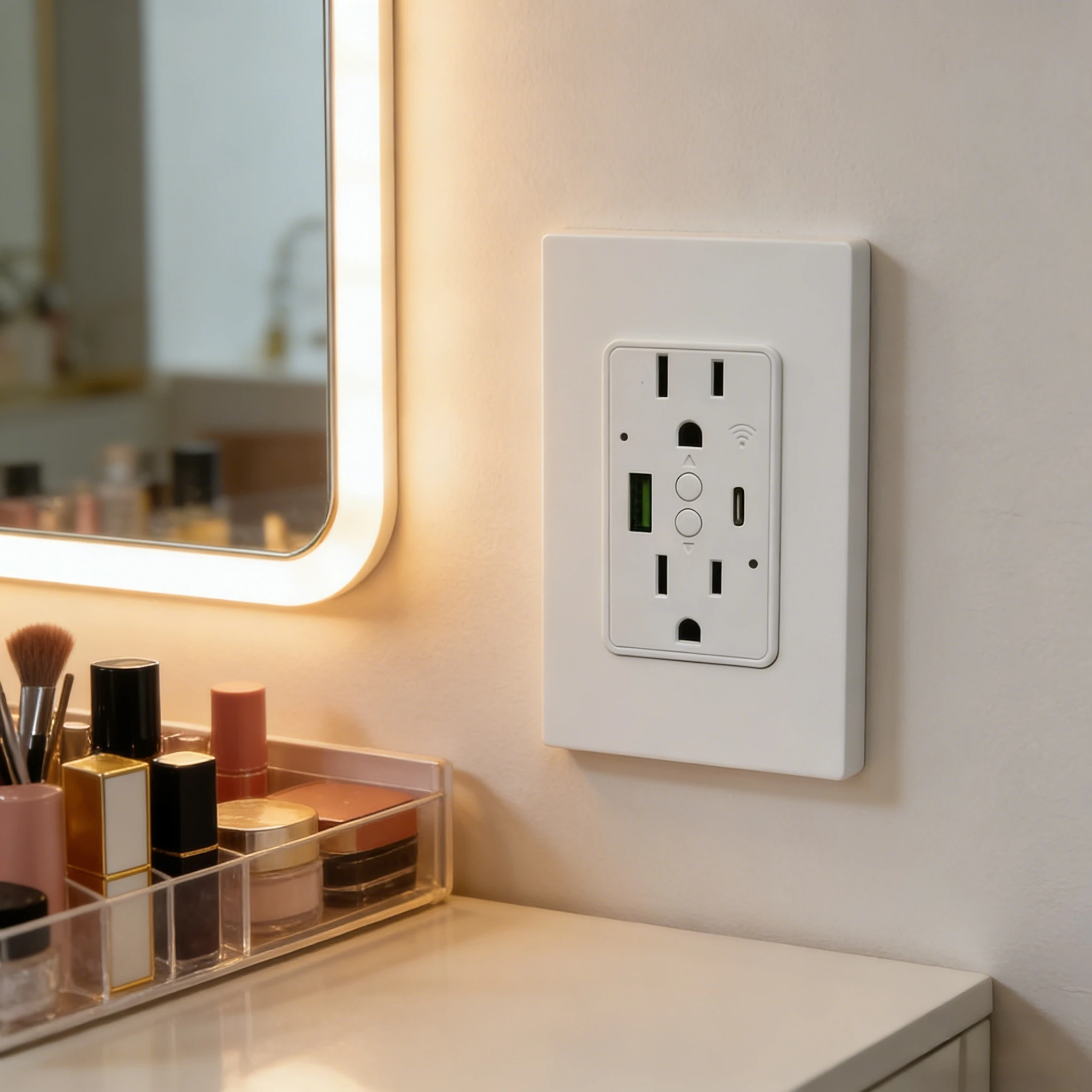
- NEMA 5-20R Certification: Verify the product image shows the T-slot. If it doesn’t, it’s not compatible with standard 20A plugs—even if labeled “20A.” When it’s worth caring about: Every time you plug in an espresso machine or air compressor. When you don’t need to overthink it: If you’re only controlling LED lighting or phone chargers—use a 15A outlet instead.
- UL/ETL Listing for Continuous 20A Load: Look for “UL 498” or “UL 1310” certification—not just “FCC compliant.” Unlisted units may pass short-term tests but fail thermally after 90 minutes at 1,800W4. When it’s worth caring about: For unattended operation (overnight heaters, fermentation chambers). When you don’t need to overthink it: If you’re manually toggling a shop vac for 5 minutes at a time.
- Protocol Support: Matter + Thread is ideal for multi-ecosystem homes. Z-Wave S2 offers strongest local security and mesh resilience. WiFi is simplest but introduces cloud dependency and latency spikes during firmware updates. When it’s worth caring about: If you rely on automations that must trigger within 500ms (e.g., smoke alarm interlock). When you don’t need to overthink it: If you only use voice commands and don’t run complex scenes.
- Energy Monitoring Accuracy: ±3% accuracy is industry standard for UL-listed units. Avoid devices quoting “±10%” or omitting tolerance—those are marketing placeholders, not engineering specs.
Pros and Cons: Balanced Assessment
A 20 amp smart outlet delivers tangible value—but only when matched correctly to application:
- ✅ Worth it for: Users with verified 20A circuits powering high-wattage, frequently used appliances; those needing granular energy visibility (e.g., tracking HVAC cycling); integrators building Matter-native homes.
- ❌ Not worth it for: Renters unable to modify wiring; users with only 15A circuits trying to ‘upgrade’ via plug adapters (unsafe and ineffective); anyone expecting plug-and-play setup without verifying wire gauge and breaker rating first.
If you’re a typical user, you don’t need to overthink this: start by confirming your circuit is truly 20A (check breaker label and wire insulation stamp: “12 AWG” or “12/2”). Everything else follows.
How to Choose a 20 Amp Smart Outlet: A Step-by-Step Decision Guide
- Verify circuit fundamentals: Open the panel. Confirm 20A double-pole (or single-pole) breaker AND check the cable sheath for “12/2” or “12 AWG.” Never assume based on outlet faceplate labeling.
- Identify load type: Resistive (heaters, kettles) = in-wall receptacle OK. Inductive (compressors, pumps, vacuums) = require relay with inrush rating ≥ 5× nominal current.
- Prioritize certifications: Filter products by “UL Listed,” “ETL Listed,” or “CSA Certified”—not “CE” or “RoHS” alone. These are safety marks, not marketing badges.
- Evaluate protocol fit: If using Home Assistant or Hubitat: Z-Wave or Zigbee. If fully committed to Apple/HomeKit: Matter-over-Thread. If simplicity > ecosystem lock-in: WiFi—but accept occasional cloud delays.
- Avoid these traps:
- “20A smart plug” listings on Walmart/Amazon with no NEMA 5-20R photo—these are usually 15A units mislabeled;
- Products lacking temperature derating curves in spec sheets (critical for attic/garage installs);
- Any unit claiming “20A” without stating whether that’s peak, surge, or continuous rating.
Insights & Cost Analysis
True 20A smart outlets carry a meaningful premium—but it reflects engineering, not markup:
- In-wall receptacles: $85–$140 (e.g., Leviton DW15S-1BZ, Eaton PF20W2M)
- Z-Wave relays + enclosure: $110–$190 (e.g., Aeotec Heavy Duty Switch 6 + weatherproof box)
- Plug-in adapters (not recommended): $35–$65—but none meet UL 498 for continuous 20A; avoid for safety-critical loads.
The cost delta pays back fastest in energy visibility: users report identifying phantom loads totaling 80–120W across multiple circuits—translating to ~$100/year in avoided waste5. For commercial users, the ROI accelerates further with predictive maintenance (e.g., detecting rising kWh/hour in a pump signaling bearing wear).
| Category | Best For | Potential Problem | Budget Range (USD) |
|---|---|---|---|
| In-Wall Smart Receptacle | Kitchens, laundry rooms, finished basements | Limited motor inrush tolerance; requires electrician$85–$140 | |
| Heavy-Duty Relay + Enclosure | Garages, workshops, outdoor pumps, HVAC | More complex wiring; no built-in energy monitoring (add-on required)$110–$190 | |
| Matter-Compatible Hub-Based Unit | Multi-brand homes prioritizing local control | Fewer options; currently limited to newer Leviton/Eaton models$120–$160 |
Better Solutions & Competitor Analysis
Forget “best brand” comparisons. Focus on architecture:
- For simplicity + compliance: Leviton DW15S-1BZ (Matter/Thread, UL 498, built-in kWh meter, NEMA 5-20R)—no hub needed for basic control.
- For motor loads + flexibility: Aeotec Heavy Duty Switch 6 (Z-Wave S2, 40A resistive / 20A inductive, supports external CT clamps) paired with a Hubbell weatherproof box.
- For commercial retrofits: Eaton PF20W2M (UL 498, BACnet-ready, optional dry-contact output for building management systems).
This piece isn’t for keyword collectors. It’s for people who will actually use the product—under load, over time, without supervision.
Customer Feedback Synthesis
Based on aggregated reviews across Home Assistant forums, Reddit (r/smarthome), and Hubitat community threads6:
- Top praise: “Finally stopped tripping breakers on my espresso machine,” “Real-time kWh data caught my fridge’s defrost heater drawing 3× normal power,” “Matter pairing worked first try—no cloud lag.”
- Top complaint: “Installed it myself—didn’t realize my ‘20A circuit’ was actually 14-gauge wire. Had to rewire,” “Relay got hot after 4 hours on a 1,500W heater—needed better ventilation,” “WiFi model dropped offline every time my ISP updated DNS.”
Maintenance, Safety & Legal Considerations
These aren’t set-and-forget devices:
- Maintenance: Clean dust from vents annually; verify firmware updates don’t disable local control (a known issue with some early Matter 1.2 implementations).
- Safety: Never exceed 80% continuous load (16A / 1,920W) on a 20A circuit per NEC 210.20(A). Derate further in ambient temps >30°C (86°F).
- Legal: In most U.S. jurisdictions, replacing a receptacle on a 20A circuit requires a permit and inspection if modifying wiring. In-wall smart outlets fall under NEC Article 406.3(D) and must be listed for the purpose—unlisted units violate code and void insurance coverage7.
Conclusion
If you need reliable, code-compliant automation for high-wattage appliances on a verified 20A circuit, choose a UL-listed in-wall smart receptacle with Matter/Thread support and real-time energy monitoring. If your load includes motors, pumps, or outdoor exposure, pair a Z-Wave heavy-duty relay with a NEMA 3R enclosure. If you’re still using 15A wiring or haven’t confirmed your breaker rating, pause: no smart outlet solves fundamental infrastructure mismatch. If you’re a typical user, you don’t need to overthink this—start with wire gauge and breaker verification. Everything else follows.
Frequently Asked Questions