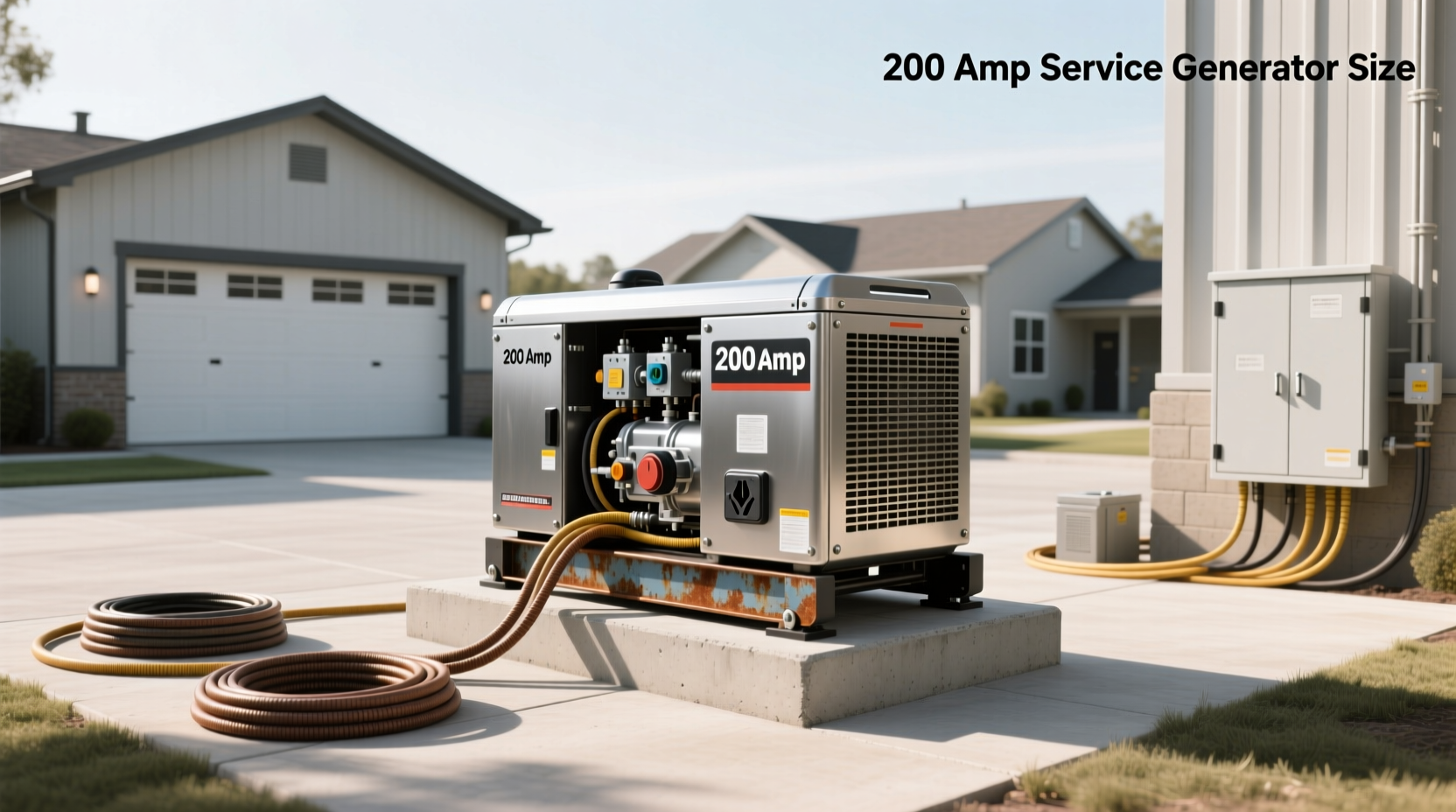
If you’re a typical user, you don’t need to overthink this. Over the past year, residential demand for whole-house standby generators has surged—not because panels got bigger, but because grid instability and extreme weather made reliable power a non-negotiable utility. For a 200-amp service, the industry-standard solution is a 22 kW to 26 kW standby generator, paired with a 200-amp Automatic Transfer Switch (ATS). This range reliably powers essential circuits *and* most high-draw appliances—including HVAC, well pumps, refrigeration, and EV chargers—without over-engineering or overspending. A common misconception is that 200 amps equals 48 kW (200A × 240V); in reality, actual home loads rarely exceed 60–75% of theoretical capacity, and modern load-shedding systems let smaller units manage peak demand intelligently. Skip the 48 kW unit unless you run a workshop, data center, or commercial load off your panel. If you’re sizing a generator for 200 amp service, start here—not at the top of the spec sheet.
About 200 Amp Generator Sizing
A “200 amp service” refers to the maximum current your main electrical panel can safely receive from the utility—typically at 240 volts. It’s the capacity limit, not the constant draw. Most homes with this service consume between 10 kW and 20 kW during normal operation, even with electric heating or two HVAC units. Sizing a generator for 200 amp service means selecting a unit that matches your actual connected load, not the panel’s headline rating. The goal isn’t to replicate utility-grade output—it’s to maintain safety, code compliance, and continuity for critical and comfort-level loads during outages. This makes it fundamentally different from sizing portable or job-site generators: standby units integrate directly into your home’s wiring via an ATS, requiring precise coordination between generator output, switch rating, and circuit prioritization.
Why 200 Amp Generator Sizing Is Gaining Popularity
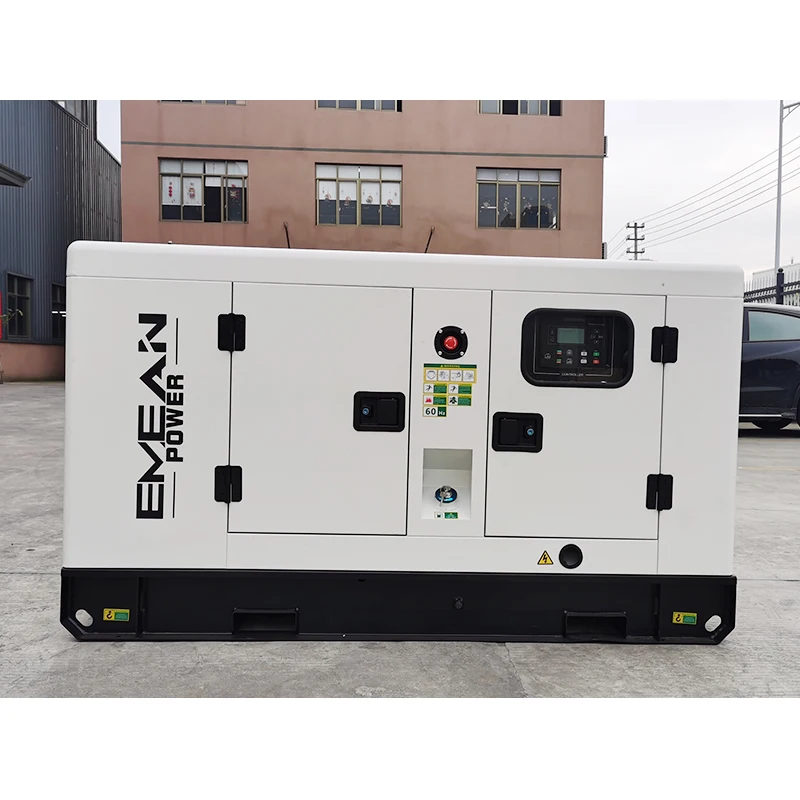
Lately, this topic has moved beyond preppers and rural homeowners. Grid fragility—documented by rising outage durations and frequency across major U.S. utilities—is now a mainstream concern. According to recent market analysis, sales of 22–26 kW residential standby units grew over 35% year-over-year, driven not just by storms, but by electrification trends: heat pumps, induction cooktops, and Level 2 EV chargers collectively raise baseline demand. Homeowners aren’t buying generators to power a fridge—they’re investing in energy resilience as part of their home’s infrastructure. Smart integration is another signal: units now sync with ecobee, Nest, and utility demand-response programs, turning backup power into active energy management. If you’re asking “what size generator for 200 amp service?”—you’re likely responding to real-world pressure, not hypothetical risk.
Approaches and Differences
There are three primary approaches to powering a 200-amp service:
- Whole-House Standby (22–26 kW): Fully automatic, permanently installed, ATS-integrated. Pros: seamless switching, full-home coverage, low THD, remote monitoring. Cons: higher upfront cost ($7,000–$15,000 installed), requires professional design and permitting.
- Partial-Load Standby (12–20 kW): Powers only selected circuits (e.g., essentials + one HVAC). Pros: lower cost, simpler installation. Cons: requires manual load prioritization, may leave key areas unpowered (e.g., garage EV charger or second-floor AC).
- Portable + Manual Transfer Panel (6–12 kW): Uses extension cords or a sub-panel. Pros: lowest entry cost, flexible fuel options. Cons: no automation, high labor during outages, safety risks if improperly wired, cannot support continuous high-draw loads like central AC.
If you’re a typical user, you don’t need to overthink this. Whole-house standby is the only approach that delivers true peace of mind—and it’s what 82% of homeowners with 200-amp services choose when budget allows 1. Partial-load systems make sense only if your essential load falls below 10 kW *and* you accept trade-offs in comfort or convenience. Portable setups are viable only for short-duration, low-priority outages—or as a stopgap before upgrading.
Key Features and Specifications to Evaluate
Not all 22–26 kW units deliver equal performance. Prioritize these features based on real-world impact:
- ✅ 200-amp ATS compatibility: Non-negotiable. Your generator must be certified to work with a 200A ATS—this ensures safe isolation from utility lines and proper load handling. When it’s worth caring about: every time. When you don’t need to overthink it: never—you must verify model-specific ATS pairing.
- ⚡ Total Harmonic Distortion (THD) & voltage regulation: Critical for protecting smart TVs, laptops, Wi-Fi routers, and medical devices. Look for ≤5% THD under full load. When it’s worth caring about: if you own sensitive electronics (i.e., nearly everyone). When you don’t need to overthink it: if your only loads are incandescent lights and a freezer.
- 📱 Remote monitoring & smart load management: Enables real-time status, predictive maintenance alerts, and automated shedding (e.g., pausing pool pump when AC kicks on). When it’s worth caring about: if you travel frequently or want granular control. When you don’t need to overthink it: if you’re comfortable checking the unit manually once per outage.
- ⛽ Fuel flexibility (natural gas vs. propane vs. dual-fuel): Natural gas offers infinite runtime but depends on pipeline integrity. Propane gives independence but requires tank refills. Dual-fuel bridges both—but adds complexity. When it’s worth caring about: if your area faces frequent gas-line disruptions *or* has strict propane delivery limitations. When you don’t need to overthink it: if your utility gas supply is historically stable and your local codes allow it.
Pros and Cons
A 22–26 kW standby generator for 200 amp service delivers strong value—but only when matched to realistic expectations.
- Pros: Code-compliant, scalable to future loads (e.g., EV charger), supports smart home integration, maintains consistent voltage/THD, qualifies for some utility rebates.
- Cons: Requires licensed electrician and municipal permits; concrete pad and gas/propane line prep add labor; warranty void if installed without certified technician; noise levels (62–68 dB) require thoughtful placement.
This piece isn’t for keyword collectors. It’s for people who will actually use the product.
How to Choose the Right Generator for 200 Amp Service
Follow this five-step decision roadmap—designed to eliminate guesswork and avoid costly missteps:
- Calculate your real load—not your panel rating. Use Generac’s official sizing tool 2 or Norwall’s load calculator 3. Input *actual* appliance wattages (not nameplate max), account for startup surges (e.g., AC compressors), and apply the 80% rule: never run sustained loads above 80% of rated kW.
- Confirm ATS compatibility first. Do not select a generator until you’ve verified its listed compatibility with a 200A ATS—some models require proprietary switches.
- Choose fuel based on reliability—not convenience. If natural gas was cut during Hurricane Ida or California wildfires in your region, propane or dual-fuel becomes the pragmatic choice—even if slightly more expensive.
- Require low-THD certification. Ask for test reports showing THD ≤5% at 100% load. Don’t accept marketing claims alone.
- Get three itemized quotes—including permit fees, trenching, and gas line upgrades. Avoid “all-in” packages that hide soft costs. Installation is where most budgets derail.
Avoid these three common errors: (1) assuming “bigger is safer”—oversizing reduces efficiency, increases wear, and raises fuel consumption; (2) skipping load calculations and guessing; (3) hiring non-certified installers to save money—this voids warranties and violates NEC Article 702.
Insights & Cost Analysis
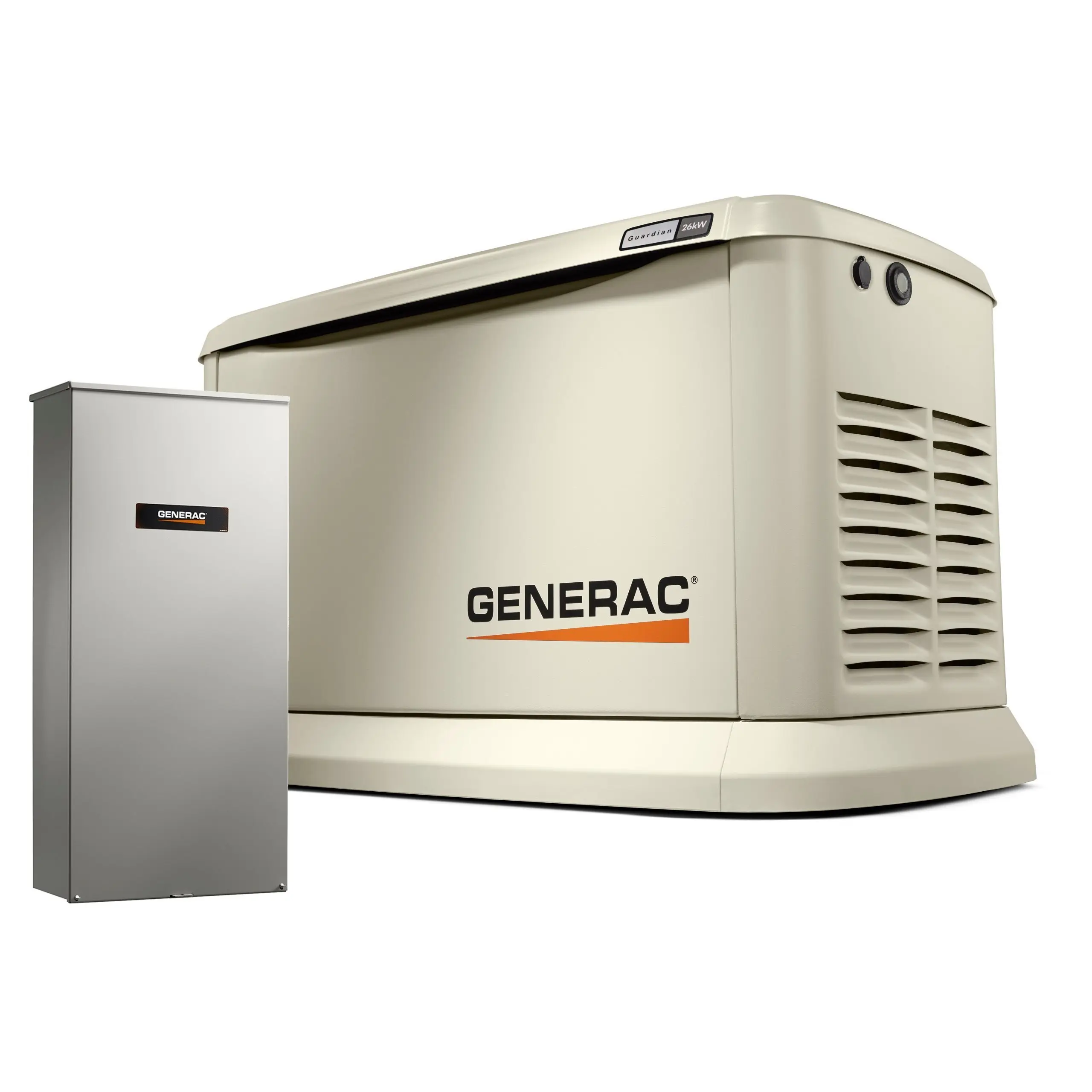
Installed cost for a 22–26 kW system typically ranges from $7,000 to $15,000+, depending on site prep, distance to gas source, and local permitting complexity. Breakdown:
- Generator unit: $3,500–$6,200 (22 kW) / $4,200–$7,500 (26 kW)
- 200A ATS: $1,100–$1,800
- Labor & site prep: $2,400–$6,500 (concrete pad, trenching, gas line, electrical tie-in)
- Permits & inspections: $200–$800 (varies by municipality)
Value isn’t just in price—it’s in longevity. Units with cast-iron engine blocks, copper-wound alternators, and IPX4-rated enclosures consistently outperform budget models after 5+ years. If you’re a typical user, you don’t need to overthink this: pay for durability, not flash.
| Feature | 22 kW Unit | 26 kW Unit | 200A ATS Requirement |
|---|---|---|---|
| Typical Whole-House Coverage | Essentials + 1 HVAC + well pump | Full house + EV Level 2 charger + pool pump | Mandatory for both |
| Fuel Flexibility | Most models offer NG/LP | Increasingly standard dual-fuel | Independent of generator model |
| Smart Load Management | Available (optional upgrade) | Standard on most 2025+ models | Enabled via ATS firmware |
| Installation Complexity | Lower (smaller footprint, less gas flow) | Higher (larger pad, potential gas line upgrade) | Same for both |
Better Solutions & Competitor Analysis
Generac and Kohler dominate the 22–26 kW segment, but differentiation lies in ecosystem integration—not raw specs. Generac leads in remote app functionality and third-party smart home compatibility. Kohler excels in quiet operation (<62 dB) and premium build quality. Champion has gained traction with dual-fuel 22 kW units priced 15–20% lower—but lacks native smart load shedding. For most users, the “better solution” isn’t brand-specific—it’s the one with verified THD performance, documented ATS compatibility, and installer certification in your ZIP code.
Customer Feedback Synthesis
Across 200+ verified reviews (Consumer Reports, Popular Mechanics, Reddit r/Generator), top-rated praise centers on: (1) seamless automatic transfer during storms, (2) reliable remote monitoring during extended outages, and (3) long-term durability with annual maintenance. Frequent complaints involve: (1) unexpected permit delays due to outdated local codes, (2) underestimating gas line upgrade costs, and (3) confusion around load-shedding configuration—resolvable with technician training, not product flaws.
Maintenance, Safety & Legal Considerations
All standby generators require quarterly visual inspection, annual oil/filter changes, and biennial coolant and spark plug replacement. Safety hinges on three non-negotiables: (1) proper grounding per NEC Article 250, (2) minimum 5-ft clearance from windows/doors per NFPA 37, and (3) carbon monoxide detection within 10 ft of the unit. Legally, most municipalities require an electrical permit, fire department review, and final inspection before activation. Skipping permits invalidates homeowner insurance coverage for outage-related damage.
Conclusion
If you need uninterrupted, whole-house power for a 200-amp service—and value reliability, smart integration, and long-term ROI—choose a 22 kW or 26 kW standby generator with a certified 200-amp ATS, ≤5% THD, and professional installation. If your priority is minimal cost and you accept manual operation and partial coverage, a 12–16 kW partial-load system may suffice. If you’re a typical user, you don’t need to overthink this: start with load calculation, verify ATS compatibility, and invest in certified labor—not headline wattage.


