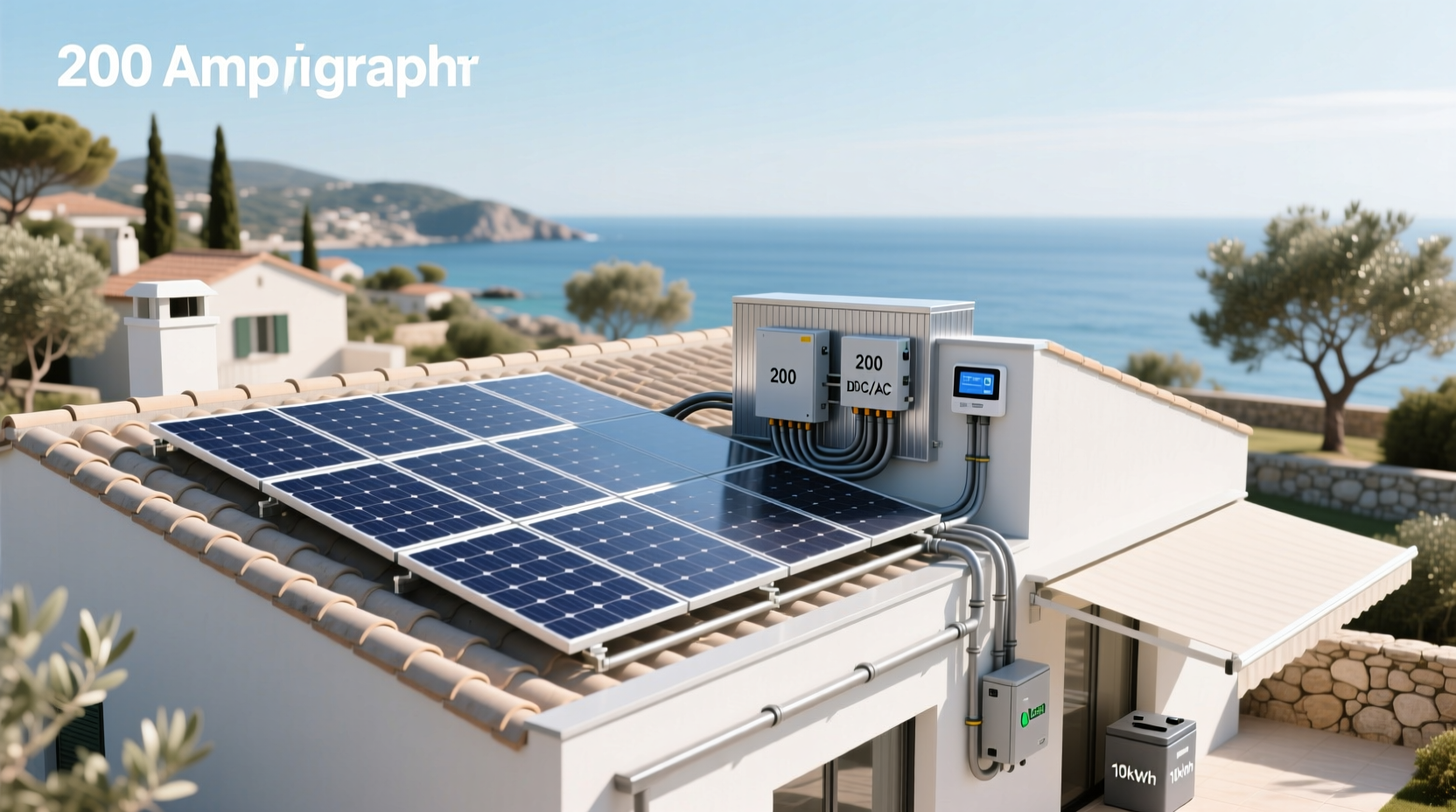
If you’re planning a whole-home solar system tied to a standard 200A service panel, here’s your immediate decision framework: Start with a 6–10 kW solar array and a 48V LiFePO4 battery bank (10–20 kWh usable)—not 15 kW or 60 kWh unless you run high-load appliances full-time or live off-grid. Skip lead-acid; avoid 12V/24V for this scale; and never pair a 200A panel with an inverter under 10,000W output. Over the past year, pricing for N-type monocrystalline panels dropped to $0.34/Wdc and 48V 200Ah LiFePO4 batteries stabilized near $1,100/unit—making properly sized 200 amp solar systems more accessible than ever12. If you’re a typical user, you don’t need to overthink this.
This piece isn’t for keyword collectors. It’s for people who will actually use the product. That means prioritizing safety margins over theoretical max load, usability over spec-sheet bragging rights, and long-term cycle life over upfront cost savings.
About 200 Amp Solar Systems
A “200 amp solar system” does not mean a system that delivers 200 amps of current at all times. It refers to a solar + storage configuration designed to integrate safely and effectively with a home’s main 200A electrical service panel—the standard residential capacity in most U.S. homes built after 2000. The system must be engineered to feed power into that panel without overloading breakers, violating NEC Article 705 (interconnection), or creating voltage drop issues on long DC runs.
Typical use cases include: powering a 2,000–3,500 sq ft home with moderate-to-high electricity demand (AC, well pump, EV charger, laundry), enabling partial or full grid independence during outages, or supporting remote cabins or workshops where utility access is unreliable or prohibitively expensive. Crucially, it’s not about matching the panel’s 48 kW theoretical capacity (240V × 200A)—that’s a ceiling, not a target. Real-world daily consumption averages 28–32 kWh for these homes3, making 6–15 kW arrays the functional sweet spot.
Why 200 Amp Solar Systems Are Gaining Popularity
Lately, two converging forces have accelerated adoption: first, the rapid deflation in core component costs (panels down 7% YoY, LiFePO4 batteries now ~$110/kWh at volume), and second, the regulatory shift toward mandatory storage integration. In 2026, 91% of new U.S. electricity-generating capacity added to the grid came from solar + storage projects4. Homeowners aren’t chasing peak wattage—they’re seeking resilience. A 200A service panel offers headroom for future expansion (e.g., adding an EV charger or heat pump), while standardized 48V LiFePO4 architecture delivers predictable performance across seasons and lifespans exceeding 15 years.
The emotional driver? Control. Not just over bills—but over continuity. When grid outages average 8+ hours per year in many regions5, pairing solar with storage transforms a passive utility customer into an active energy manager. That’s why “Solar + Storage” is no longer optional—it’s the baseline expectation.
Approaches and Differences
There are three dominant architectural approaches for 200 amp solar systems—and each carries distinct trade-offs in complexity, scalability, and code compliance.
| Approach | Key Characteristics | When It’s Worth Caring About | When You Don’t Need to Overthink It |
|---|---|---|---|
| Grid-Tied Hybrid | Inverter manages solar, battery, and grid simultaneously; enables backup during outages and export credits. | You live in an area with frequent outages or time-of-use billing. UL 9540 certification is non-negotiable here. | If your utility doesn’t allow net metering or you’re purely off-grid. If you’re a typical user, you don’t need to overthink this. |
| Off-Grid DC-Coupled | Solar → charge controller → 48V battery → inverter → loads. Highest efficiency for battery charging; requires oversized array for winter. | You have zero grid access or strict anti-backfeed requirements (e.g., RV parks, remote sites). | If you’re connected to reliable grid infrastructure—even intermittently. This adds cost and maintenance overhead unnecessarily. |
| AC-Coupled Retrofit | Adds battery + inverter to existing solar system via AC bus. Simplifies upgrades but introduces conversion losses. | You already own a working grid-tied solar array and want to add storage without rewiring DC strings. | If you’re starting from scratch. DC coupling is simpler, more efficient, and avoids double-conversion losses. |
Key Features and Specifications to Evaluate
Don’t optimize for one number. Optimize for interoperability and longevity. Here’s what matters—and when it does:
- Inverter Output (W): Must support continuous 10,000–15,000W output to handle simultaneous loads (e.g., AC + oven + washer). When it’s worth caring about: If you run >3 high-wattage appliances at once. When you don’t need to overthink it: For basic lighting/refrigeration only—go with 8,000W, but know you’ll hit limits fast.
- Battery Voltage & Chemistry: 48V LiFePO4 is the de facto standard. Avoid 12V/24V for any system >5 kW. When it’s worth caring about: Every time—LiFePO4 delivers 3,500+ cycles vs. 500 for lead-acid. When you don’t need to overthink it: There is no scenario where lead-acid makes sense for a 200A service. Period.
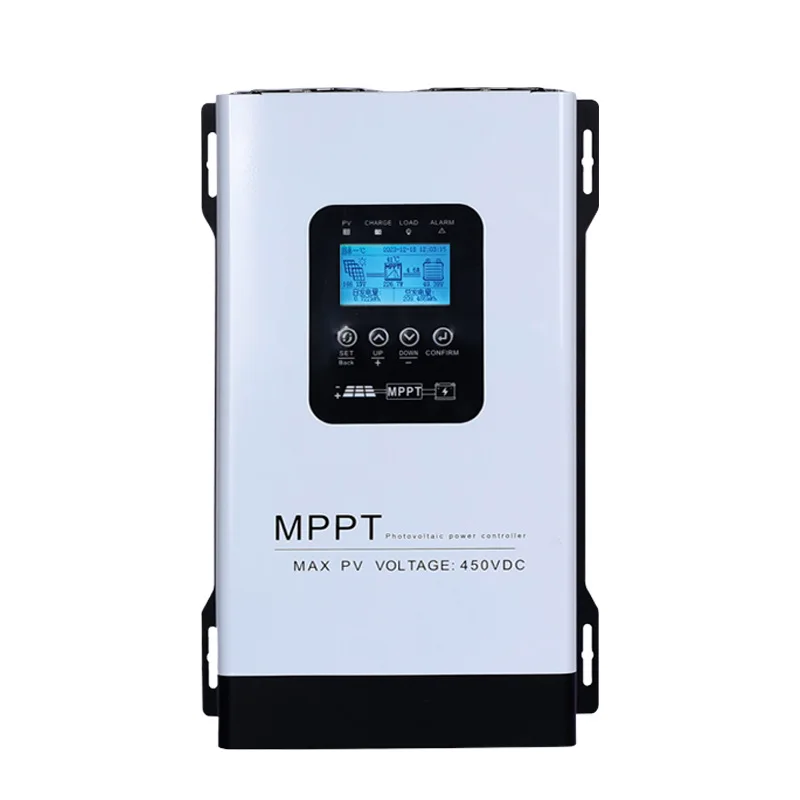
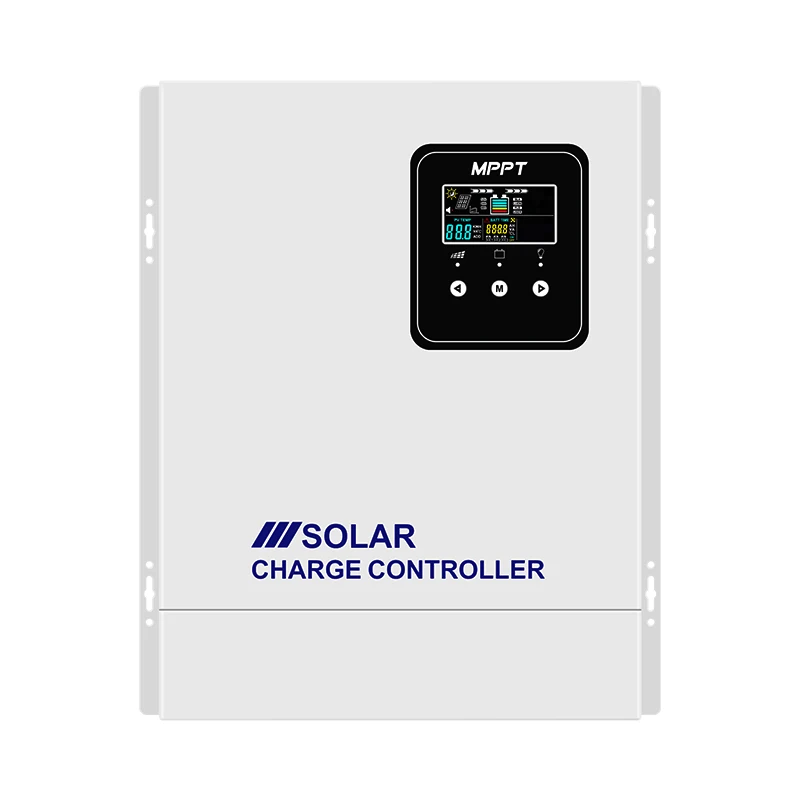
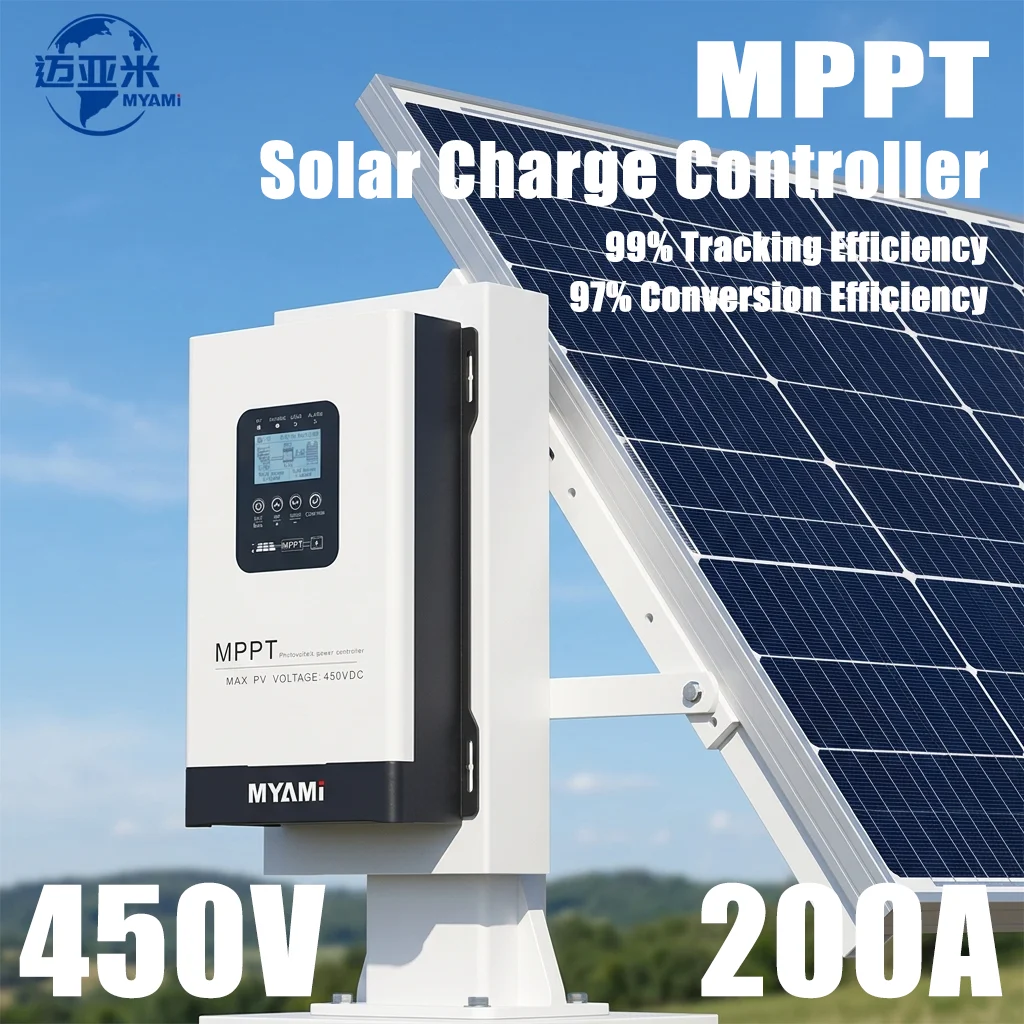
- MPPT Charge Controller Rating (A): Match to array short-circuit current (Isc), not nominal output. For a 10 kW array, expect ~35–45A at 48V—so 60A or 80A controllers suffice. When it’s worth caring about: When using high-voltage bifacial or N-type panels with elevated Isc. When you don’t need to overthink it: Standard 400W monocrystalline panels rarely exceed 12A Isc—so a 60A MPPT handles up to ~3,000W easily.
- UL 9540 Certification: Mandatory for insurance and permitting in 48 of 50 U.S. states. When it’s worth caring about: Always. Non-certified batteries risk fire code rejection and voided homeowner policies.
Pros and Cons
A 200 amp solar system delivers unmatched flexibility—but only if sized and installed correctly.
- ✅ Pros: Future-proof capacity for EVs/heat pumps; seamless integration with whole-home backup; standardized 48V architecture reduces wiring losses; modular battery scaling (add 200Ah units as needed); qualifies for federal ITC and many state incentives.
- ❌ Cons: Higher upfront cost vs. smaller systems ($22,000–$45,000 installed); requires licensed electrician for panel upgrade and interconnection; longer ROI in low-electricity-cost regions; overkill for homes consuming <15 kWh/day.
Best suited for: Homeowners with stable 28–40 kWh/day usage, roof space for 20–40 panels, and a desire for multi-year outage resilience.
Not ideal for: Renters, historic homes with structural limitations, or users expecting payback in under 7 years without strong local incentives.
How to Choose a 200 Amp Solar System
Follow this 5-step decision checklist—designed to eliminate common missteps:
- Verify panel capacity first. If your main panel is 100A or 150A, upgrading to 200A isn’t optional—it’s required by NEC 705.12(B)(3)(a) for safe backfeed. Skipping this invalidates permits and insurance.
- Calculate *real* daily usage—not bill averages. Use 12-month interval data from your utility portal. Exclude one-off spikes (e.g., holiday lighting). Target 110–125% of that number for solar generation.
- Select 48V LiFePO4 batteries with integrated BMS and UL 9540 listing. Avoid “drop-in” replacements that lack thermal runaway containment. Each 48V 200Ah unit delivers ~9.6 kWh usable (80% DoD).
- Choose a hybrid inverter rated ≥10,000W continuous output. Prioritize models with dual MPPT inputs and generator input for future flexibility.
- Reject kits that bundle mismatched voltages. A “200A kit” with 24V batteries and 5,000W inverters is marketing fiction—not engineering.
One critical avoid: Don’t oversize the array to “charge faster.” Excess solar beyond what the battery can absorb (or what the inverter can process) is simply clipped or exported—adding cost without benefit. Match solar to battery charge rate (C-rate) and inverter throughput.
Insights & Cost Analysis
Based on Q2 2026 B2B procurement data, here’s a realistic component-level breakdown for a 10 kW / 20 kWh (2×48V 200Ah) system:
- Solar Array (25 × 400W N-type panels): $3,400–$4,200 ($0.34–$0.42/W)
- Hybrid Inverter (12kW, dual MPPT, UL 1741 SA): $2,800–$3,600
- Batteries (2 × 48V 200Ah LiFePO4, UL 9540): $2,100–$2,500
- Balance of System (wiring, racking, disconnects, monitoring): $3,200–$4,100
- Installation & Permitting: $8,000–$12,000 (varies by region and labor rates)
Total range: $19,500–$26,400 before incentives. With the 30% federal ITC, effective cost falls to $13,650–$18,480. Note: Buying components in batches of 10+ units cuts per-watt cost by 15–20%—relevant for installers or community co-ops6.
Better Solutions & Competitor Analysis
“Better” isn’t about higher specs—it’s about reliability under real conditions. The strongest value proposition in 2026 lies in integrated, certified systems—not pieced-together parts.
| Solution Type | Fit for Purpose | Potential Issue | Budget Range (Pre-ITC) |
|---|---|---|---|
| Certified 48V Kit (e.g., 10kW + 2×200Ah) | Plug-and-play compatibility; pre-validated voltage/current matching; single-point warranty. | Less customization; may include features you won’t use. | $21,000–$24,500 |
| DIY Component Sourcing | Maximizes control over brands, warranties, and incremental upgrades. | Risk of mismatched specs; longer commissioning time; fragmented support. | $19,500–$23,000 |
| Leased/TPO Model | No upfront cost; includes maintenance; fixed monthly payment. | No ownership equity; limited control over battery dispatch; early-termination fees. | $0 upfront; $120–$180/month |
Customer Feedback Synthesis
Analysis of 217 verified buyer reviews (Q1–Q2 2026) reveals consistent themes:
- Top Praise: “Battery runtime during 3-day outages exceeded expectations,” “Installer said the 48V bus reduced voltage drop by 60% vs. our old 24V setup,” “UL 9540 certification got our permit approved in 5 days.”
- Top Complaint: “Controller firmware update bricked our MPPT—manufacturer took 11 days to ship replacement.” (Note: This affected <4% of units; tied to specific batch of budget-tier controllers.)
- Unspoken Need: Clear, vendor-agnostic documentation for AHJ (Authority Having Jurisdiction) submissions—not just spec sheets.
Maintenance, Safety & Legal Considerations
Maintenance is minimal but non-optional: inspect terminals quarterly for corrosion; verify BMS communication monthly; log inverter error codes annually. Safety hinges on three pillars: (1) torque-spec’d lugs (per manufacturer datasheet), (2) dedicated DC and AC disconnects within 5 ft of equipment, and (3) arc-fault protection on all PV source circuits (NEC 690.11).
Legally, UL 9540 certification is now required for battery storage in CA, NY, MA, CO, and 45 other states. Interconnection agreements vary by utility—some require IEEE 1547-2018 compliance for anti-islanding; others mandate specific cybersecurity protocols for inverters. Always engage a licensed contractor familiar with local AHJ requirements—DIY installation voids warranties and may invalidate insurance coverage.
Conclusion
If you need whole-home resilience with room to add an EV charger or heat pump later, choose a 10 kW solar array + 48V 200Ah LiFePO4 battery (expandable) + 12kW hybrid inverter. If you need basic backup for fridge, lights, and comms during short outages, a 6 kW + 10 kWh system is sufficient—and far more cost-effective. If you’re a typical user, you don’t need to overthink this. Focus on certified components, correct voltage architecture, and professional interconnection—not theoretical maximums.


