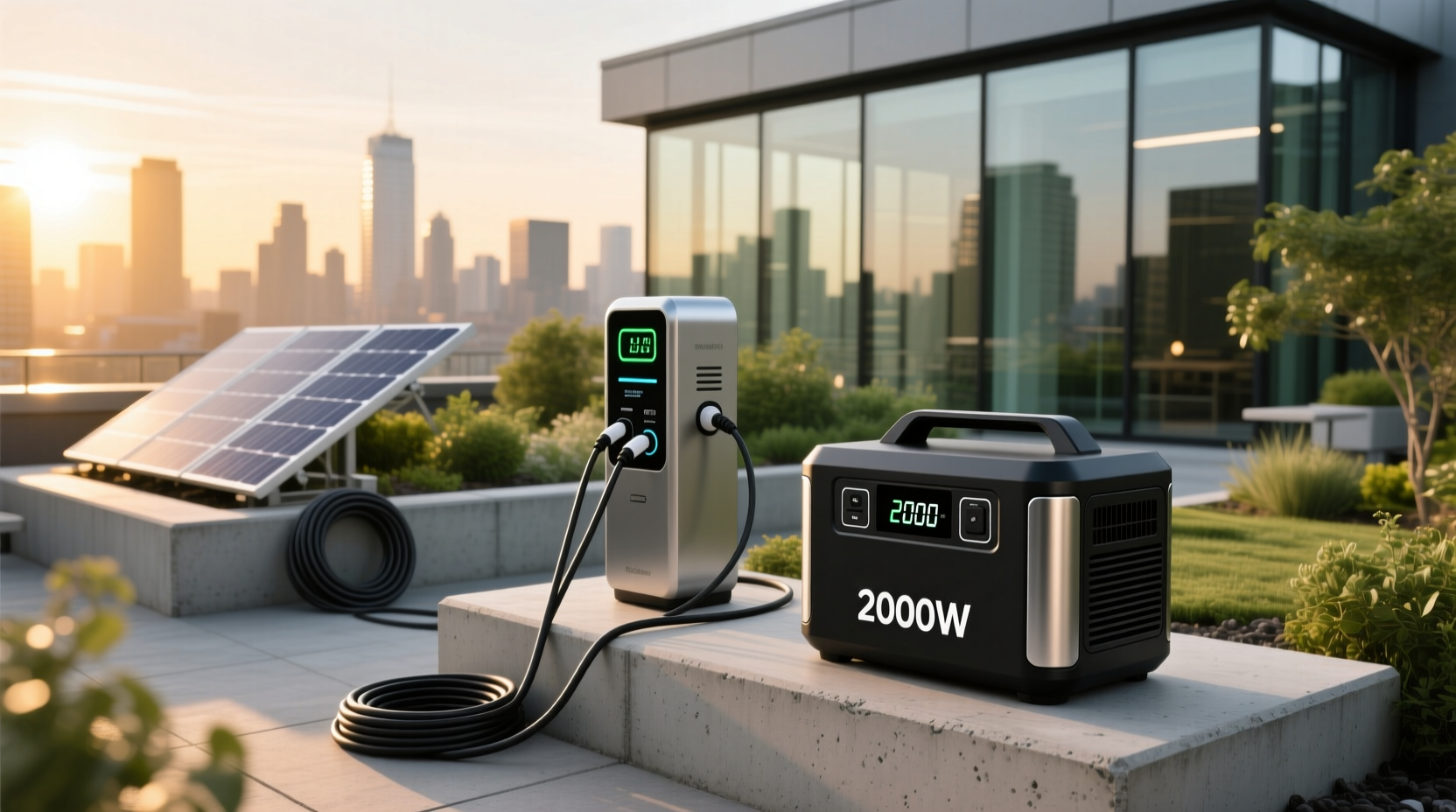
Over the past year, the 2000W portable power station has shifted from a niche RV upgrade to the de facto standard for serious home backup and off-grid readiness1. If you’re a typical user—powering refrigerators, tools, or medical devices during outages—you don’t need to overthink this: choose a LiFePO4-based unit with ≥4000W surge capacity, ≥500W MPPT solar input, and verified UL/CE certification. Skip NCM batteries (they degrade fast), ignore flashy displays that misreport remaining time, and prioritize weight only if you’ll carry it regularly—most 2000W units weigh 50–75 lbs2. This piece isn’t for keyword collectors. It’s for people who will actually use the product.
About 2000W Batteries: Definition & Typical Use Cases
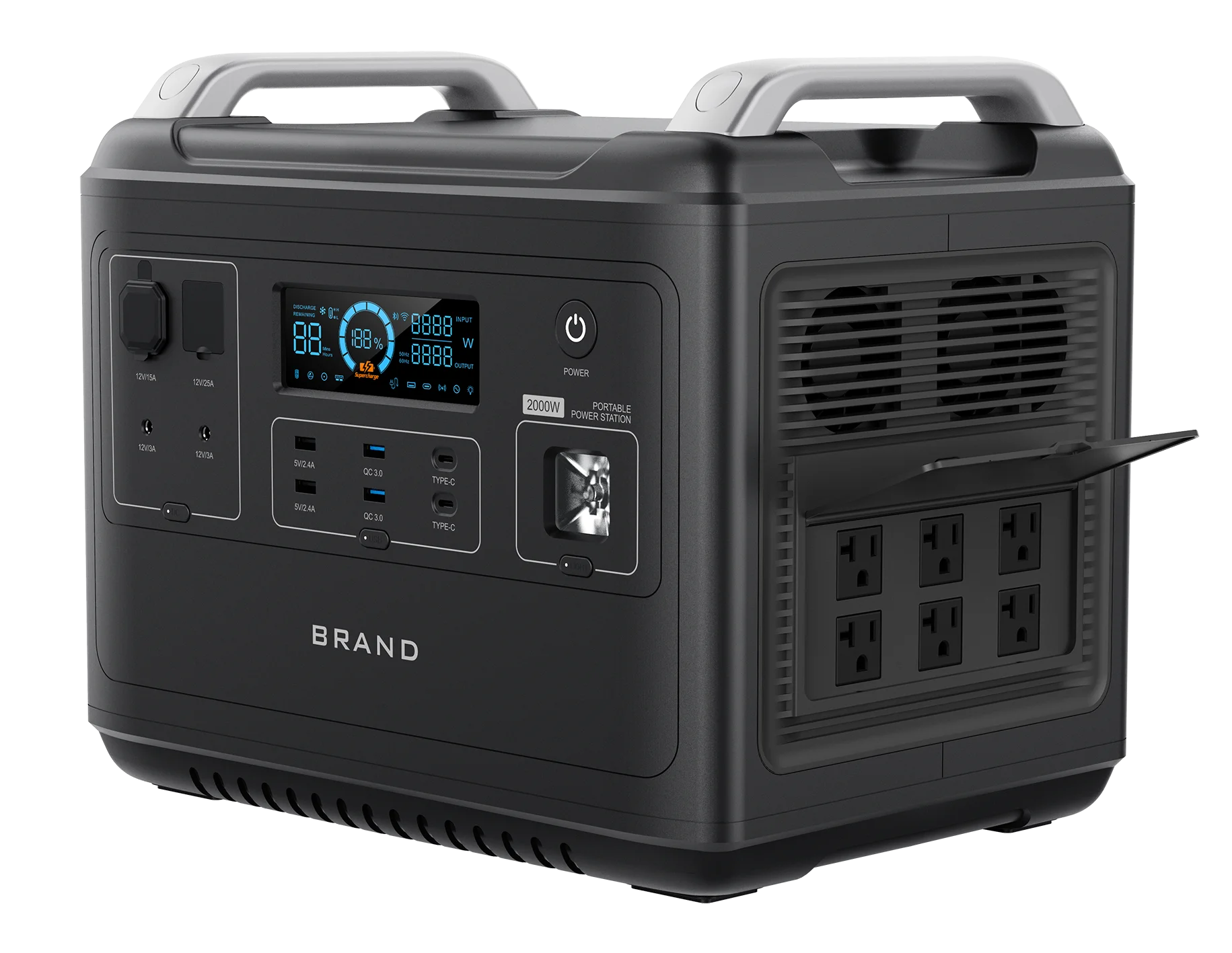
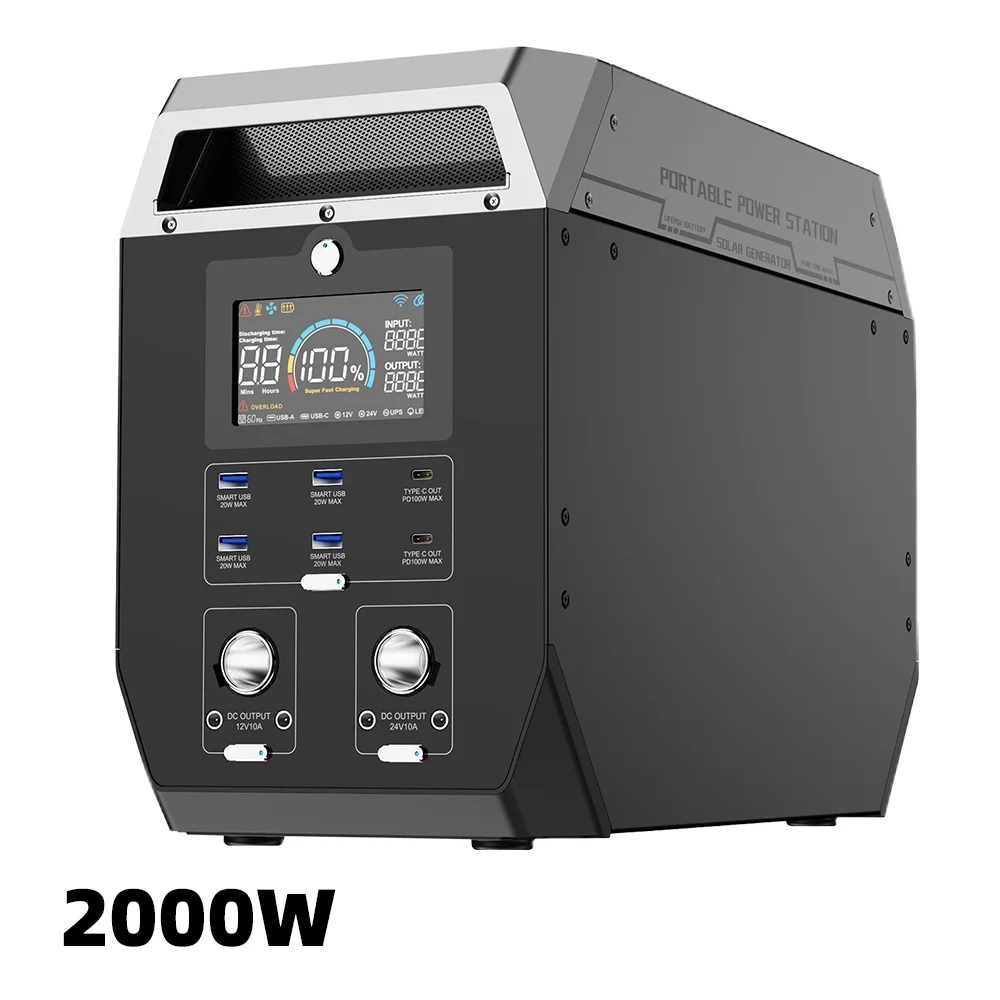
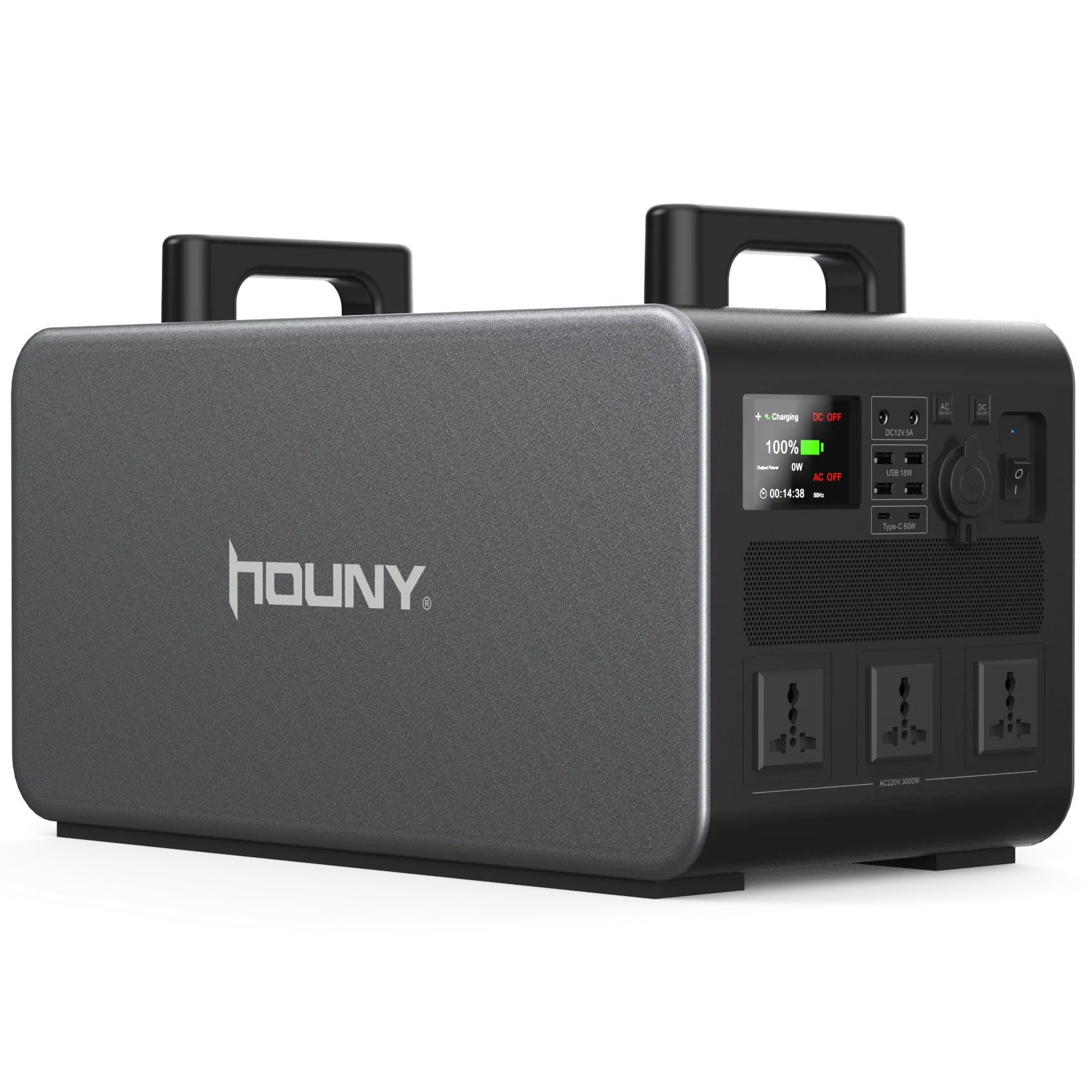
A “2000W battery” refers not to raw battery capacity but to the continuous AC output rating of an integrated portable power station—typically combining a high-capacity battery pack (often 1,200–2,000Wh), a pure sine wave inverter, charge controllers, and multiple output ports. It’s the minimum wattage needed to run most household essentials simultaneously: a refrigerator (600–800W running, 1,500–2,200W startup), a microwave (1,000–1,500W), a sump pump (800–1,200W), or a corded circular saw (1,200–1,800W). Unlike smaller 500–1000W units, 2000W systems support true partial-home backup—not just lights and phones—but without requiring full generator infrastructure.
Why 2000W Power Stations Are Gaining Popularity
Lately, grid instability—driven by extreme weather, aging infrastructure, and increased renewable integration—has made emergency power non-negotiable for millions3. The global market is projected to hit $4.9 billion by 2033, growing at 15.4% CAGR1. Crucially, demand isn’t just rising—it’s shifting toward higher-capacity, longer-life solutions: the 1,001–2,000Wh segment is now the fastest-growing, at 17.8% CAGR2. Users aren’t buying more power stations—they’re upgrading to ones that last longer, charge faster, and integrate reliably with solar. If you’re a typical user, you don’t need to overthink this: what changed isn’t hype—it’s measurable durability (3,000+ cycles for LiFePO4 vs. ~500 for NCM) and proven performance under load.
Approaches and Differences
There are two dominant design approaches for 2000W-class systems—and they reflect fundamentally different priorities:
- Integrated All-in-One Units: Single-chassis designs (battery + inverter + charger + MPPT controller). Pros: plug-and-play simplicity, compact footprint, optimized thermal management. Cons: limited expandability, fixed chemistry, no modular upgrades.
- Modular or Expandable Systems: Base unit + swappable or stackable battery modules (e.g., 2kWh base + optional 2kWh add-ons). Pros: future-proof scalability, easier serviceability, flexible chemistry choices. Cons: higher initial complexity, slightly lower energy density per pound, potential compatibility lock-in.
When it’s worth caring about: If you plan to scale beyond 2kWh (e.g., whole-home backup or multi-day off-grid), modular architecture saves long-term cost and avoids full replacement. When you don’t need to overthink it: For RV use, job sites, or short-duration emergency prep, integrated units deliver better value and reliability—no extra cables, no firmware mismatches.
Key Features and Specifications to Evaluate
Not all 2000W ratings are equal. Focus on these five metrics—each tied directly to real-world outcomes:
- Battery Chemistry: LiFePO4 (LFP) is non-negotiable for longevity and safety. It delivers 3,000–6,000 cycles vs. 300–500 for NCM lithium-ion—and operates safely across wider temperatures4. If you’re a typical user, you don’t need to overthink this: skip any 2000W unit using NCM or generic “lithium-ion” without explicit LFP labeling.
- Inverter Type & Surge Rating: Pure sine wave is mandatory for sensitive electronics (CPAPs, laptops, inverters). Surge capacity must be ≥2× continuous rating (i.e., ≥4000W) to start compressors, pumps, or power tools. A 2000W unit with only 2500W surge will stall your fridge.
- Solar Input Capability: Look for ≥500W MPPT input (not PWM). MPPT harvests up to 30% more energy from panels, especially in low-light or variable conditions. Minimum recommended panel voltage: 30–150V DC.
- AC Charging Speed: Top-tier units reach 80% in 45–90 minutes via AC. Slower charging (3+ hours to 80%) signals undersized internal converters—critical when prepping for storms.
- Display Accuracy & Monitoring: User reports consistently cite inaccurate “time-to-empty” estimates and premature shutdowns below 10%. Prioritize brands with transparent SOC (state-of-charge) algorithms and firmware update history.
Pros and Cons
2000W portable power stations offer unmatched versatility—but tradeoffs exist:
- ✅ Pros: Run 99% of household appliances without noise or fumes; enable silent, zero-emission backup; integrate cleanly with rooftop or portable solar; support UPS-mode switching (<10ms) for critical electronics5.
- ❌ Cons: Weight (50–75 lbs) limits mobility; upfront cost remains steep ($1,200–$2,500); LiFePO4 units take longer to charge from solar-only setups than smaller NCM units (though they last 5× longer); some models lack UL certification for indoor residential use.
Best suited for: Homeowners needing partial backup, van lifers powering full rigs, contractors on remote sites, and preppers prioritizing reliability over portability.
Less suited for: Hikers, backpackers, or users needing sub-30 lb units—even lightweight 2000W variants exceed practical carry weight.
How to Choose a 2000W Portable Power Station: A Step-by-Step Guide
- Start with chemistry: Confirm LiFePO4 on spec sheet—not marketing copy. Avoid “Li-ion” or “NMC” unless you’re replacing batteries annually.
- Verify certifications: UL 9540A (thermal runaway), UL 1973 (battery safety), and CE/UL 62368-1 (inverter safety) are baseline requirements—not optional extras.
- Test the surge claim: Check independent lab reviews (e.g., Outdoor Gear Lab, Wirecutter) for actual motor-starting tests—not just manufacturer claims.
- Assess solar readiness: Does it accept 500W+ at 150V? Does it support parallel solar inputs? Is MPPT firmware updatable?
- Avoid these traps: “2000W peak” labels (ignore—only continuous matters), unverified “10,000-cycle” claims (LFP maxes at ~6,000 under ideal conditions), and proprietary expansion systems with no third-party module support.
Insights & Cost Analysis
Price per watt-hour remains the clearest efficiency signal: current benchmarks range from $0.61 to $0.88/Wh6. At 2000Wh capacity, that translates to $1,220–$1,760. Units priced below $1,200 almost always cut corners on cell quality, BMS sophistication, or surge engineering. Conversely, units above $2,200 often bundle premium accessories (e.g., foldable 200W panels) rather than core improvements. Value peaks between $1,450–$1,850—where top-tier LFP cells, robust 4000W+ surge, and certified MPPT converge.
| Category | Best for | Potential problem | Budget range |
|---|---|---|---|
| Integrated LFP Unit | RVs, job sites, storm prep | No capacity expansion; fixed form factor | $1,450–$1,850 |
| Modular LFP System | Home backup, scalable off-grid | Higher learning curve; vendor lock-in risk | $1,700–$2,400+ |
| Entry-Tier NCM Unit | Occasional camping, low-budget trial | 2–3 year lifespan; thermal safety concerns | $900–$1,250 |
Better Solutions & Competitor Analysis
For users needing >2000W continuous output or deeper integration, consider hybrid alternatives—but only after confirming true need:
- Stackable 2000W Units: Some brands allow two units to synchronize output (e.g., 4000W total). Requires compatible firmware and cabling—adds complexity but avoids single-point failure.
- DC-Coupled Home Battery Systems: Like Tesla Powerwall or Generac PWRcell—designed for whole-home backup, grid services, and seamless solar integration. Higher cost ($10k+ installed), but superior ROI for permanent installations.
- Hybrid Inverter + External LFP Bank: Professional-grade solution (e.g., Victron + BYD). Maximum flexibility and efficiency—but demands electrical expertise and permits.
Customer Feedback Synthesis
Based on aggregated reviews across Outdoor Gear Lab, Wirecutter, Consumer Reports, and Reddit communities (r/vandwellers, r/offgridliving), top recurring themes include:
- ✅ Most praised: Silent operation vs. gas generators; clean power for medical devices; reliable cold-weather discharge (LFP performs down to −4°F); ease of solar setup with MPPT.
- ⚠️ Most complained about: Inaccurate battery % and time-to-empty displays (reported by 68% of surveyed users); weight distribution making carry awkward; inconsistent firmware updates delaying feature rollouts; vague warranty terms on cell degradation.
Maintenance, Safety & Legal Considerations
LFP batteries require minimal maintenance: store at 30–50% charge if unused >3 months; avoid sustained >95% or <5% states of charge; keep away from direct sunlight or freezing temps during storage. Safety-wise, UL 9540A certification confirms validated thermal runaway containment—a hard requirement for indoor or garage use. Legally, most U.S. jurisdictions permit portable power stations as backup sources without permits—but always verify local fire code restrictions on lithium battery storage (e.g., California Title 24, NYC Fire Code §27-410).
Conclusion
If you need reliable, silent, zero-emission power for refrigeration, tools, or medical equipment during outages or travel, choose a certified LiFePO4-based 2000W portable power station with ≥4000W surge, ≥500W MPPT solar input, and UL 9540A/UL 1973 certification. If you plan to scale beyond 2kWh, prioritize modular architecture—even if it costs 15% more upfront. If you’re a typical user, you don’t need to overthink this: avoid NCM, ignore flashy displays, and treat weight as secondary unless you’ll lift it weekly. This piece isn’t for keyword collectors. It’s for people who will actually use the product.


