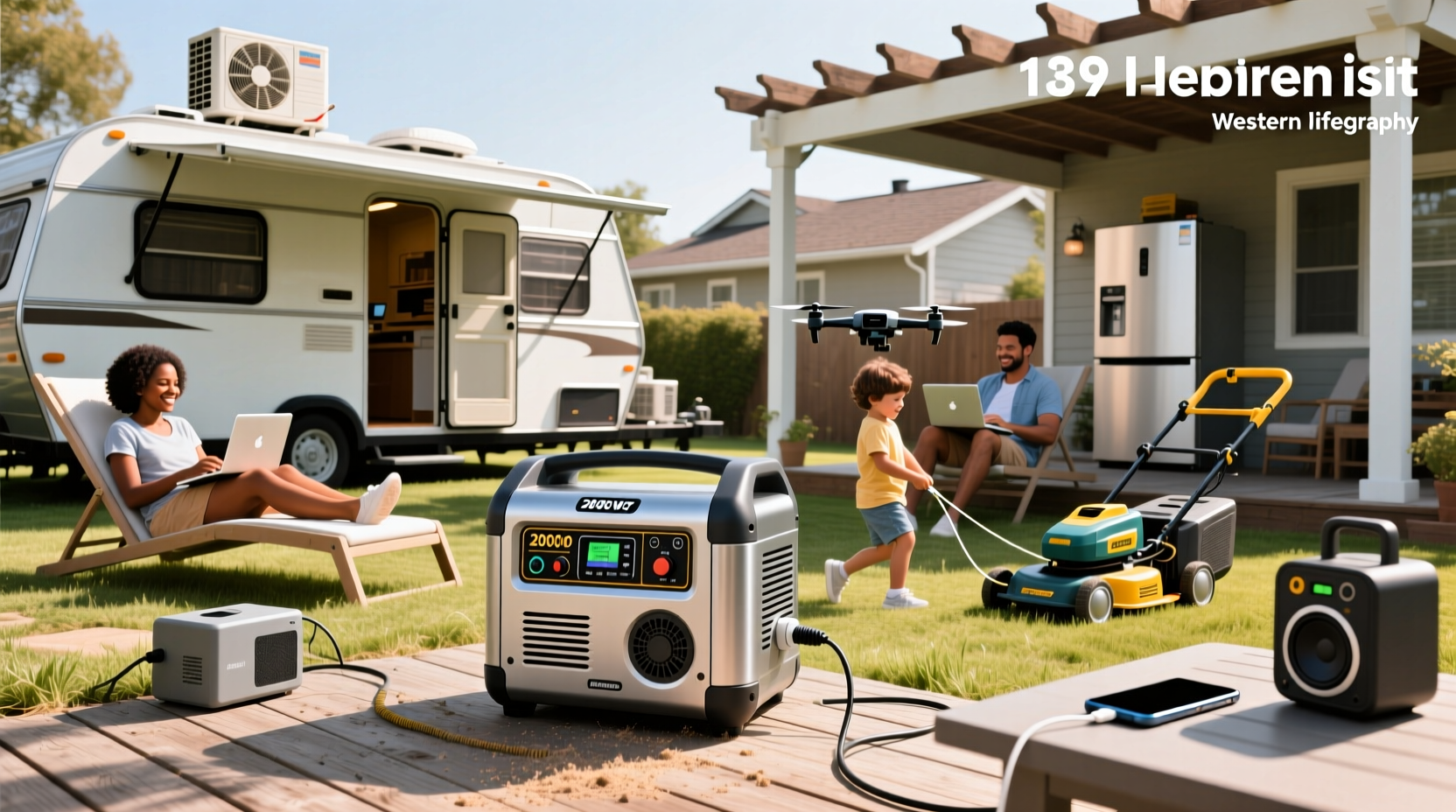
Over the past year, inverter generators in the 2000 watt class have become the default choice for homeowners, campers, and tradespeople—not because they’re the most powerful, but because they strike the rare balance of clean power, portability, and real-world usability. If you’re a typical user, you don’t need to overthink this: a quality 2000W inverter generator reliably powers a refrigerator, laptop, microwave, and small air conditioner simultaneously, as long as you respect starting watt surges and avoid high-draw tools like circular saws or well pumps. The biggest mistake? Assuming “2000W” means you can run any two 1000W devices at once—it doesn’t. Real output is usually 1600–1800 running watts, with peak startup capacity up to 2200W. This guide cuts through marketing noise and focuses on what actually matters: what will it run, when does fuel type matter, and why noise level isn’t just about comfort—it’s about compliance.
About 2000W Generators: Definition & Typical Use Cases
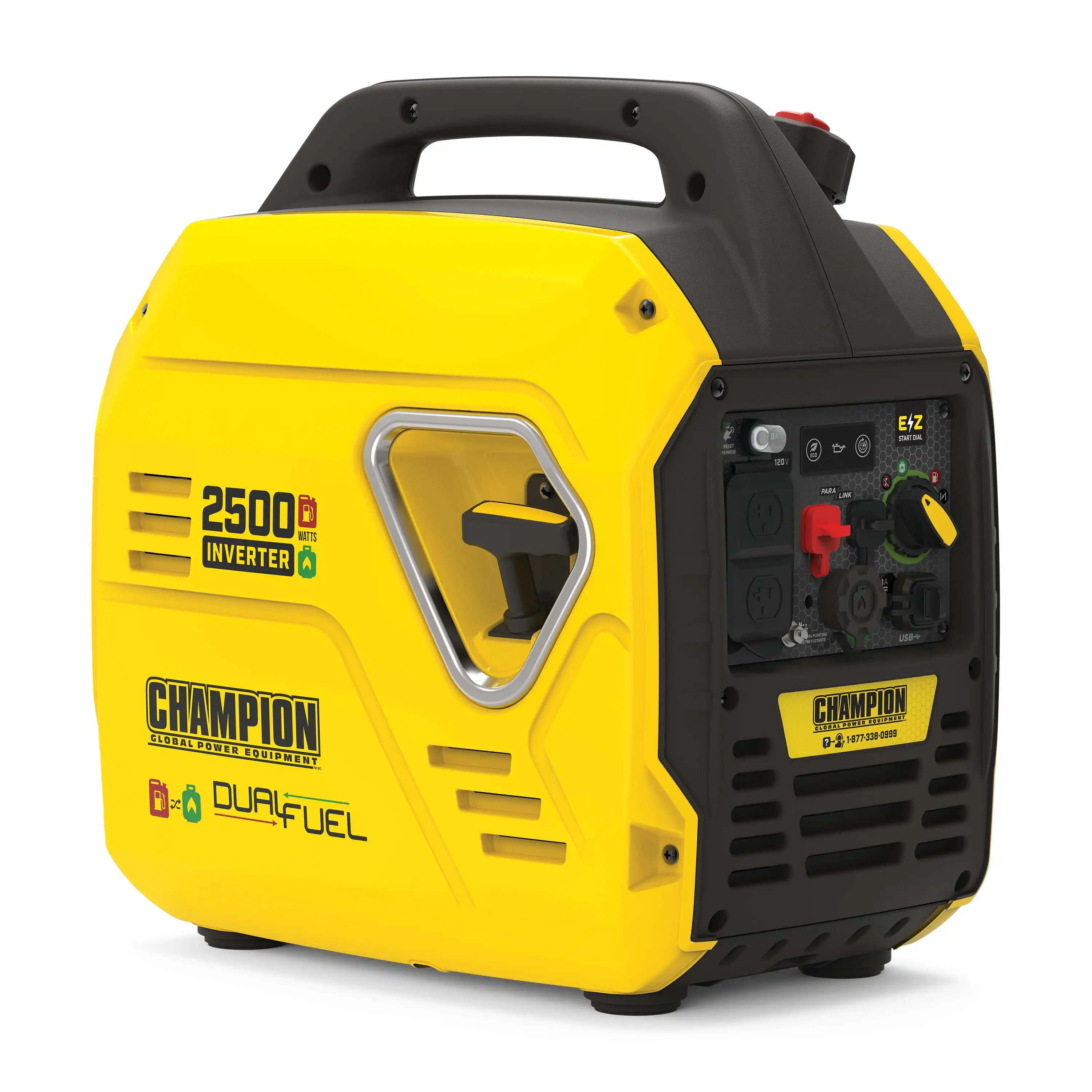
A 2000 watt generator refers to a portable unit rated for up to 2000 watts of starting (peak) power, with sustained running (continuous) output typically between 1600W and 1800W. It’s not a single product category—but a functional sweet spot defined by weight (<50 lbs), noise (<58 dBA), and inverter-based power delivery. Unlike older open-frame models, modern 2000W units almost always use inverter technology, which converts raw AC to DC and back to stable, low-THD (<3%) AC—making them safe for laptops, routers, smart thermostats, and LED lighting 1.
Typical users include:
- 🏠 Homeowners preparing for short outages (storms, grid instability)—powering fridge, lights, Wi-Fi, and phone charging;
- 🚐 RV and camper owners needing quiet, clean power for AC (up to 8k BTU), microwave, and coffee maker without campground noise violations;
- 🛠️ Contractors and DIYers using corded tools intermittently—drills, sanders, and LED work lights—but not high-torque equipment.
If you’re a typical user, you don’t need to overthink this: your priority isn’t maximum wattage—it’s stable, quiet, and compatible power for everyday electronics and essential appliances.
Why 2000W Generators Are Gaining Popularity
Lately, demand for 2000W generators has accelerated—not due to new tech breakthroughs, but because real-world needs have converged around this output tier. Market data shows the 1–2 kVA segment now holds 36.8% of the residential portable generator share in 2026 2. Three shifts explain why:
- Inverter dominance: Clean sine wave output is no longer optional—it’s expected. Modern appliances (especially those with variable-speed compressors or microcontrollers) fail or degrade under dirty power. Inverters deliver THD <3%, meeting UL 2201 standards for sensitive electronics 3.
- Dual-fuel adoption: Gasoline degrades in 3–6 months; propane lasts indefinitely. Dual-fuel models let users store propane safely and switch fuels mid-use—critical for emergency readiness and extended off-grid trips.
- Smart integration: USB-C PD ports, Bluetooth monitoring, and parallel capability (to link two units for 4000W) are now standard on mid-tier models—not premium add-ons.
This piece isn’t for keyword collectors. It’s for people who will actually use the product.
Approaches and Differences
There are three main approaches to 2000W power—each with trade-offs rooted in physics and use context:
| Type | Key Advantages | Potential Problems | Budget Range (USD) |
|---|---|---|---|
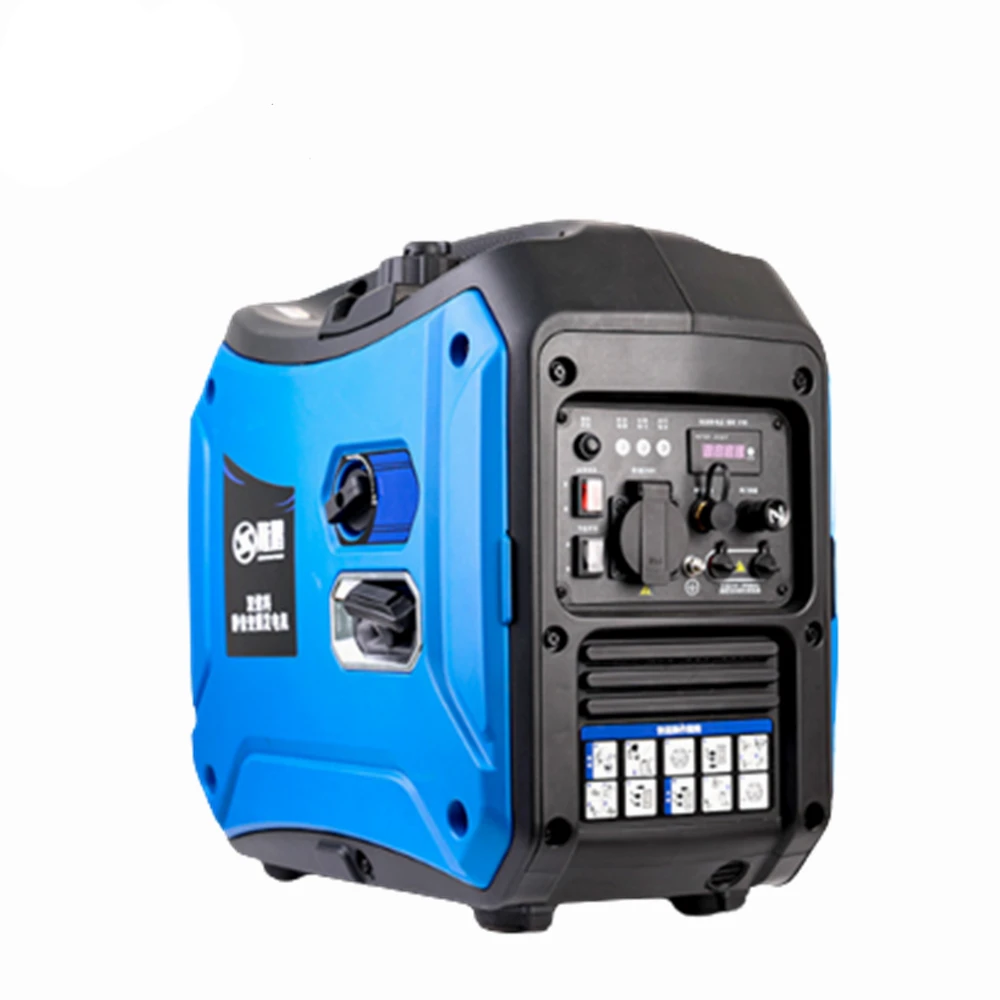
| Inverter (Gasoline-only) | Lightest (<45 lbs), quietest (48–52 dBA), best fuel efficiency, cleanest power | Fuel shelf life limited; no flexibility during gas shortages | $750–$1,100 |
| Dual-Fuel Inverter | Propane compatibility extends runtime & storage; cleaner burn; same portability | Slightly heavier (+3–5 lbs); ~10% lower efficiency on propane | $950–$1,400 |
| Conventional Open-Frame | Lower upfront cost; higher surge tolerance for motor starts | Noisy (65–72 dBA); THD >6%; incompatible with most modern electronics; heavy (>60 lbs) | $500–$800 |
When it’s worth caring about: If you plan to run laptops, medical-grade CPAP machines (non-therapeutic), or smart-home hubs—only inverter models meet safety and compatibility thresholds. Dual-fuel becomes essential if you store fuel long-term or travel to remote areas where gasoline is unreliable.
When you don’t need to overthink it: For occasional backyard use powering lights and a fan, a conventional model may suffice—but only if you never intend to charge phones or run Wi-Fi.
Key Features and Specifications to Evaluate
Don’t default to wattage alone. These five specs determine whether a 2000W generator delivers usable power—or constant tripping and frustration:
- ⚡ Running vs. Starting Watts: Always prioritize running watts (e.g., 1700W) over peak (2000W). A fridge drawing 700W running but 1800W on startup leaves only ~−100W headroom—if you add a 600W microwave, you’ll overload. Check both numbers per device 4.
- 🔊 Noise Level (dBA): 48–52 dBA = normal conversation; 56–58 dBA = office ambient. Campgrounds often enforce ≤55 dBA limits. If yours exceeds that, you’ll be asked to shut down—or face fines.
- 🧩 THD (Total Harmonic Distortion): Must be <3% for electronics. Anything above 5% risks interference, overheating, or premature failure in devices with switching power supplies.
- 🔌 Outlets & Ports: Look for at least one 30A TT-30R (for RVs), two 20A GFCI outlets, and one USB-C PD (60W+). Avoid models with only basic 120V 20A outlets and no GFCI protection.
- 🛡️ Safety Certifications: UL 2201 (inverter safety), EPA/CARB compliance (emissions), and CO auto-shutdown are non-negotiable for indoor-adjacent or enclosed use.
Pros and Cons
Best for: Users needing reliable, quiet, clean power for mixed loads (refrigerator + router + lights + laptop), weekend camping, storm prep, or mobile workspaces.
Not ideal for: Running multiple high-surge tools simultaneously (e.g., table saw + air compressor), whole-house backup (requires ≥5000W), or powering sump pumps with high startup draws (>2500W).
If you’re a typical user, you don’t need to overthink this: 2000W covers ~85% of common residential and recreational loads—if you sequence usage and avoid stacking motor starts.
How to Choose a 2000W Generator: Step-by-Step Decision Guide
- List your top 3 priority devices—include both running and starting watts (find these in manuals or spec sheets). Add 15% buffer.
- Calculate total simultaneous load. If sum exceeds 1600W running, step up or stagger use.
- Rule out conventional models unless you only power incandescent bulbs and basic power tools—and never electronics.
- Require dual-fuel if: You store fuel >3 months, live in wildfire-prone zones (propane safer), or travel internationally where gasoline quality varies.
- Avoid “2000W” claims without published running watts. Some brands inflate peak ratings while delivering only 1400W continuous—verify independent test data (e.g., Consumer Reports 5).
Insights & Cost Analysis
Price reflects engineering—not just branding. Here’s what $100 increments typically buy:
- $750–$900: Solid single-fuel inverters (e.g., Honda EU2200i clones), 48–52 dBA, THD <2.5%, 1700W running.
- $950–$1,200: Dual-fuel with parallel capability, digital display, CO sensor, USB-C PD, 1750W running.
- $1,250+: Premium build (magnesium housing), 5-year warranty, app control, 1800W running, sub-49 dBA.
The jump from $900 to $1,200 adds real-world resilience—not gimmicks. If you rely on it monthly, pay for durability. If it sits in the garage for emergencies only, $850 is rational.
Better Solutions & Competitor Analysis
For most users, a single 2000W inverter is optimal. But two scenarios justify alternatives:
| Scenario | Better Solution | Why It Wins | Trade-off |
|---|---|---|---|
| You need >1800W reliably, but still want portability | Two 2000W units with parallel kit | Delivers 3600W continuous, same noise/portability, redundant system | +30% cost; requires compatible models & cable |
| You need silent, zero-emission power for short durations | Lithium power station (e.g., 2000Wh + 2000W inverter) | No fuel, no noise, instant start, solar rechargeable | ~4 hours at full load; slower recharge; higher upfront cost |
Customer Feedback Synthesis
Based on aggregated reviews across Reddit, Wirecutter, and retailer platforms (2024–2026):
- Top 3 praises: “Runs our RV fridge and AC all night,” “quiet enough for tailgating,” “USB-C charges my MacBook Pro at full speed.”
- Top 3 complaints: “Propane adapter leaked after 3 months,” “no 30A outlet on base model,” “manual start feels outdated next to push-button competitors.”
Maintenance, Safety & Legal Considerations
All 2000W generators require routine maintenance: oil changes every 25–50 hours, air filter cleaning every 10 hours in dusty conditions, and spark plug replacement annually. Never operate indoors, in garages, or under canopies—even with ventilation. CO buildup kills silently.
Legally, many U.S. states (CA, NY, CO) and municipalities prohibit non-CARB-compliant generators. Campgrounds routinely reject units >55 dBA. Always verify local ordinances before purchase.
Conclusion
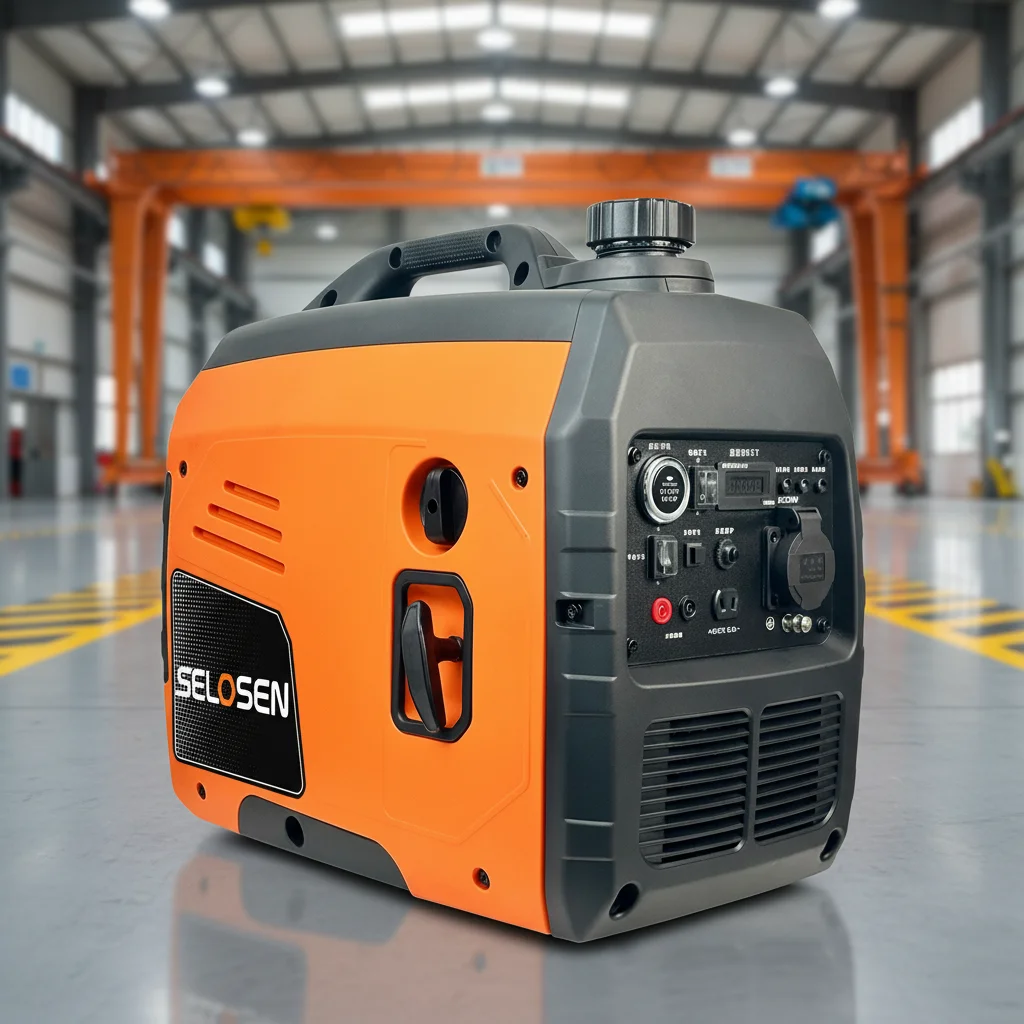
If you need clean, quiet, portable power for refrigeration, communication, cooking, and climate control—choose a dual-fuel inverter generator rated for ≥1700 running watts and ≤55 dBA. If you only need occasional tool power and never electronics, a conventional model may suffice—but accept its limitations. If you prioritize silence, zero emissions, and solar compatibility over runtime, a lithium power station is a better fit despite lower sustained output. This piece isn’t for keyword collectors. It’s for people who will actually use the product.
FAQs