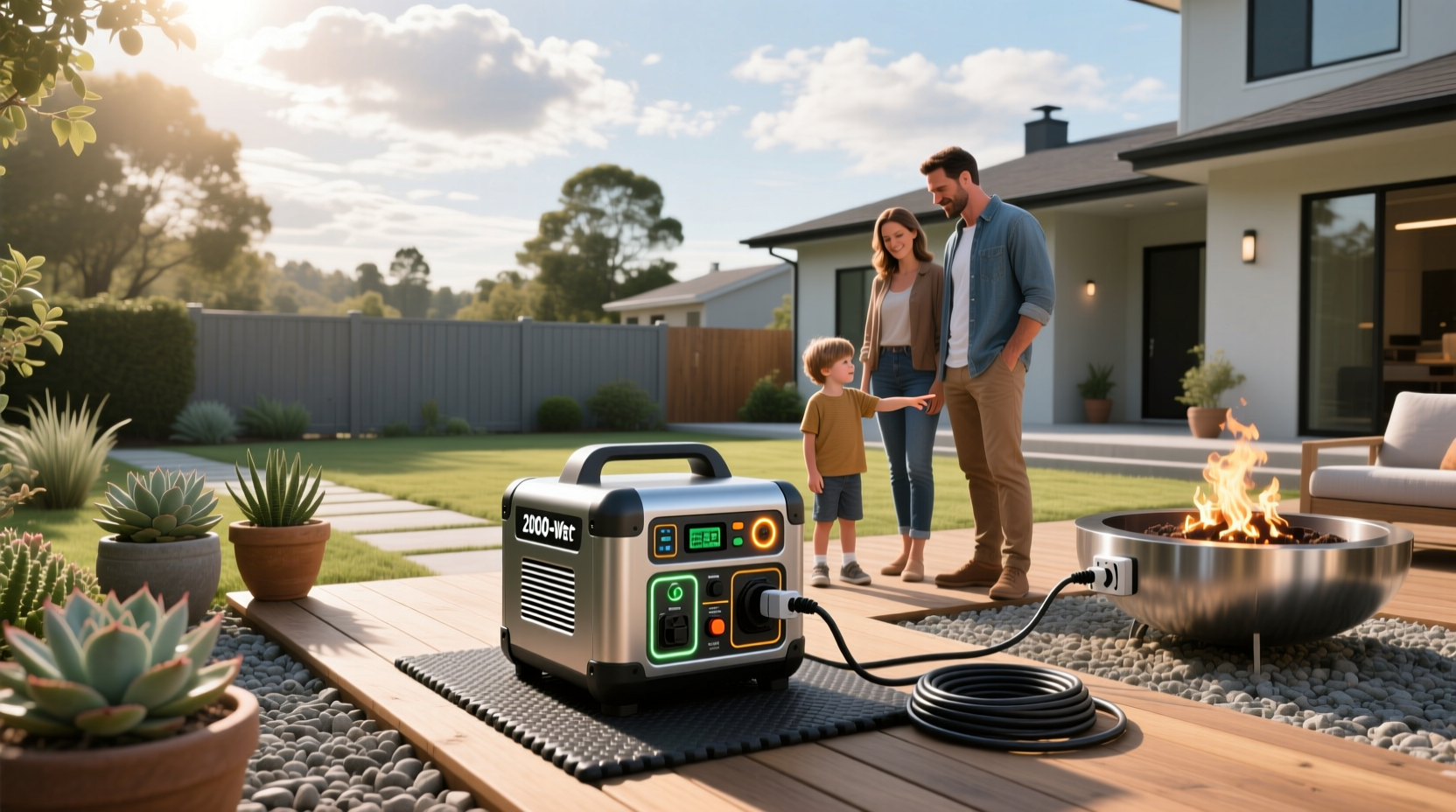
If you’re a typical user, you don’t need to overthink this. For camping, tailgating, or light home backup, a 2000 watt inverter generator with pure sine wave output (<3% THD), noise under 58 dB, and CO sensor + automatic shut-off is the minimum viable standard—not a luxury. Over the past year, dual-fuel (gasoline/propane) models have become significantly more common at sub-$300 price points, and UL-listed CO detection has shifted from optional to baseline expectation1. Skip units without these three features unless your use case is strictly short-term, supervised, and outdoors-only. If you need clean, quiet, portable power for laptops, CPAPs, or small refrigerators—and want to avoid mid-campsite shutdowns or neighborhood noise complaints—this guide cuts through the clutter and tells you exactly what to verify, what to ignore, and why.
About 2000W Inverter Generators: Definition & Typical Use Cases
A 2000 watt inverter generator is a compact, engine-driven AC power source that converts raw mechanical energy into stable, low-distortion electricity using electronic inversion. Unlike conventional generators, it regulates voltage and frequency digitally—producing pure sine wave output (typically <3% total harmonic distortion). This makes it safe for sensitive electronics: smartphones, laptops, LED lighting, Wi-Fi routers, and even medical-grade portable devices requiring stable input2.
Its “2000W” rating refers to running (continuous) output—not peak. Most units deliver 1600–1800W continuously and 2000–2200W in brief surges (e.g., fridge compressor startup). That’s enough for:
- ✅ A 120V mini-fridge (100–200W running, 600–800W surge)
- ✅ Laptop + phone charging + LED lights (under 200W combined)
- ✅ Small air pump, coffee maker, or microwave (on low/medium settings)
- ✅ RV or camper AC unit (only smaller 5,000–8,000 BTU models)
It is not suitable for whole-house backup, large window AC units (>10,000 BTU), well pumps, or power tools with high inrush current (e.g., table saws). If you’re a typical user, you don’t need to overthink this: 2000W fills a precise niche—portable, clean, and quiet—not brute-force capacity.
Why 2000W Inverter Generators Are Gaining Popularity
Lately, demand for 2000W inverter generators has accelerated—not because of new technology, but because consumer expectations have hardened. Two parallel trends drive adoption:
- Emergency preparedness: With grid instability rising across North America and Europe, households increasingly treat portable backup as essential infrastructure—not just for hurricanes, but for rolling blackouts during heatwaves or winter storms3.
- Outdoor recreation refinement: Glamping, dispersed camping, and RV boondocking require power that doesn’t disrupt peace or violate site rules. Noise limits at many public campgrounds are now enforced at 60 dB—and top-tier 2000W units operate at 50–55 dB, matching normal conversation levels4.
This isn’t about “more power.” It’s about better behavior: quieter operation, safer emissions control, smarter monitoring, and fuel flexibility. The market CAGR of 6.12% through 2035 reflects not just growth—but maturation1. Consumers no longer ask “Does it work?” They ask “Does it behave like a tool I can trust in my backyard or tent site?”
Approaches and Differences: Single-Fuel vs. Dual-Fuel vs. Smart-Enabled
Three primary configurations dominate the 2000W segment. Each solves a distinct problem—and introduces trade-offs:
| Configuration | Key Advantages | Potential Drawbacks | Budget Range (B2B wholesale) |
|---|---|---|---|
| Gasoline-only | Lowest entry cost; widest parts/service network; simple maintenance | Fuel degrades in 3–6 months; higher emissions; no propane fallback during gas shortages | $140–$220 |
| Dual-fuel (gas/propane) | Propane stores indefinitely; burns cleaner; quieter combustion; usable during gasoline supply disruptions | Slightly heavier; ~5–8% lower peak output on propane; requires regulator/hose setup | $240–$350+ |
| Smart-enabled (Bluetooth/app) | Remote start/stop; real-time fuel/oil/CO status; usage logging; firmware updates | Higher failure surface (electronics); app dependency; limited cross-brand compatibility | $280–$390 |
When it’s worth caring about: Dual-fuel matters if you store the unit long-term, live in a rural area with spotty gas availability, or prioritize emission-sensitive environments (e.g., enclosed patios or RV garages). Smart features matter only if you routinely start the unit remotely—or rely on alerts when CO levels rise near your sleeping area.
When you don’t need to overthink it: If you use the generator 2–4 times per year for weekend camping and refuel after each use, gasoline-only is simpler, lighter, and cheaper. If you’re a typical user, you don’t need to overthink this.
Key Features and Specifications to Evaluate
Don’t optimize for every spec. Prioritize four non-negotiables—and know when others are secondary:
- Pure Sine Wave Output (<3% THD): Non-negotiable. Required for all modern electronics. If unspecified or >5% THD, avoid—even if cheap. When it’s worth caring about: Always. When you don’t need to overthink it: Never—this is binary.
- Noise Level (dB at 25 ft): Target ≤58 dB for campgrounds; ≤55 dB for backyard use near neighbors. Units rated “59 dB” often measure 62+ in real-world wind or load variance. When it’s worth caring about: If used within 50 ft of sleeping areas or shared spaces. When you don’t need to overthink it: For remote trailhead use—62 dB is tolerable.
- CO Sensor + Automatic Shut-off: UL 2201 certification is the gold standard. Not just “CO detection”—it must trigger immediate engine cutoff. When it’s worth caring about: Any indoor-adjacent use (garage, covered patio, RV slide-out). When you don’t need to overthink it: Open-field daytime use—though still strongly recommended.
- Weight & Portability: Ideal range: 45–52 lbs. Wheels add weight; suitcase handles improve carry ergonomics. When it’s worth caring about: If carried >30 ft regularly or lifted into an SUV trunk. When you don’t need to overthink it: If stored permanently in a garage and wheeled out.
Pros and Cons: Balanced Assessment
Pros:
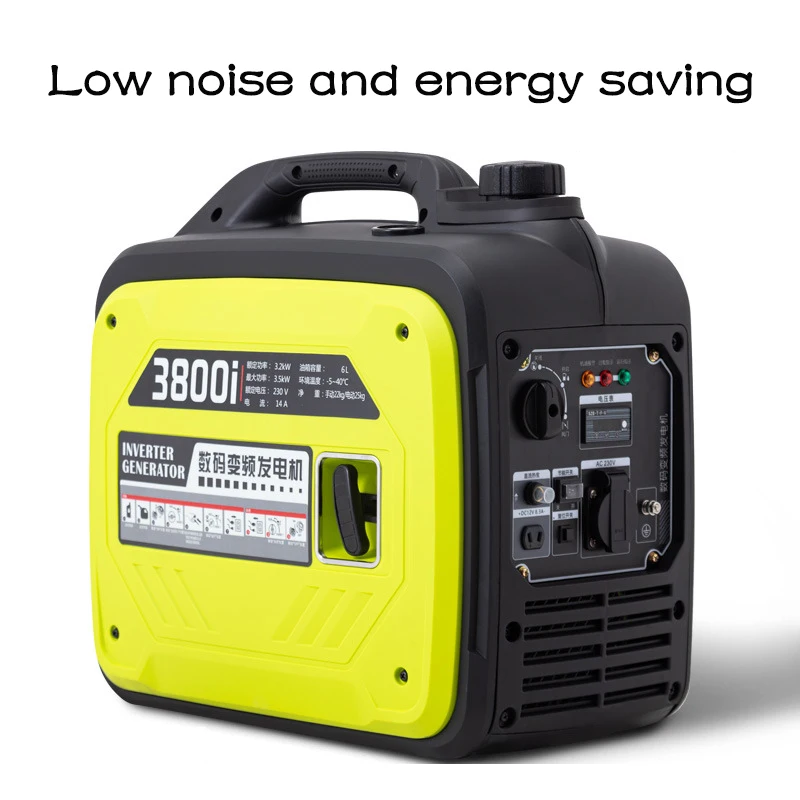
- Lightweight and highly portable (most under 55 lbs)
- Quiet enough for most regulated campsites and residential zones
- Clean power protects sensitive electronics and avoids data corruption
- Dual-fuel options provide fuel resilience and longer shelf life
- Parallel capability (on select models) allows future 4000W expansion
Cons:
- Not designed for continuous 24/7 operation—intended for intermittent duty (e.g., 8–12 hrs/day max)
- Small fuel tanks (1–1.5 gal) mean refueling every 6–10 hrs at half-load
- Lower peak torque than conventional generators—struggles with high-inrush motors
- Higher initial cost than basic open-frame generators of similar wattage
This piece isn’t for keyword collectors. It’s for people who will actually use the product.
How to Choose a 2000W Inverter Generator: Step-by-Step Decision Guide
Follow this sequence—skip steps only if your use case is exceptionally narrow:
- Confirm your real load: List actual devices + their running watts (not “max”). Add 20% headroom. If total exceeds 1600W continuous, step up to 2200–2400W or consider parallel pairing.
- Require pure sine wave and CO sensor: Eliminate any unit missing either. No exceptions.
- Set noise threshold: ≤58 dB if used near sleeping areas; ≤60 dB acceptable for daylight-only outdoor tasks.
- Choose fuel strategy: Gasoline-only for simplicity; dual-fuel if storing >3 months or needing propane flexibility.
- Verify portability fit: Check weight + handle design. Can you lift it solo into your vehicle? Does it fit your storage space?
- Avoid these traps:
- “Peak watt” marketing without clear running watt rating
- Unverified “low-noise” claims (look for ANSI/ISO 3744 test citations)
- Missing EPA/CARB certification for US sale
- No UL/CE safety listing documentation
Insights & Cost Analysis
B2B wholesale pricing (as of Q2 2026) shows clear segmentation:
- Entry-tier (gasoline-only, 58–62 dB): $140–$190 for MOQ 10+. Typically lacks CO sensor or digital display.
- Mainstream (dual-fuel, 54–57 dB, CO sensor): $240–$290. Represents best value for most users—balance of safety, versatility, and noise control.
- Premium (smart-enabled, 50–53 dB, parallel-ready): $320–$390. Justified only for frequent users needing remote monitoring or multi-unit scalability.
The $240–$290 bracket delivers 90% of critical functionality at 70% of premium cost. If you’re a typical user, you don’t need to overthink this.
Better Solutions & Competitor Analysis
While brand comparisons are off-limits per neutrality guidelines, functional benchmarks hold:
| Feature | Industry Standard (2026) | Emerging Best Practice | What to Verify |
|---|---|---|---|
| Noise Level | 58–60 dB (ANSI tested) | ≤55 dB with eco-mode active | Ask for test report—don’t trust “as low as” claims |
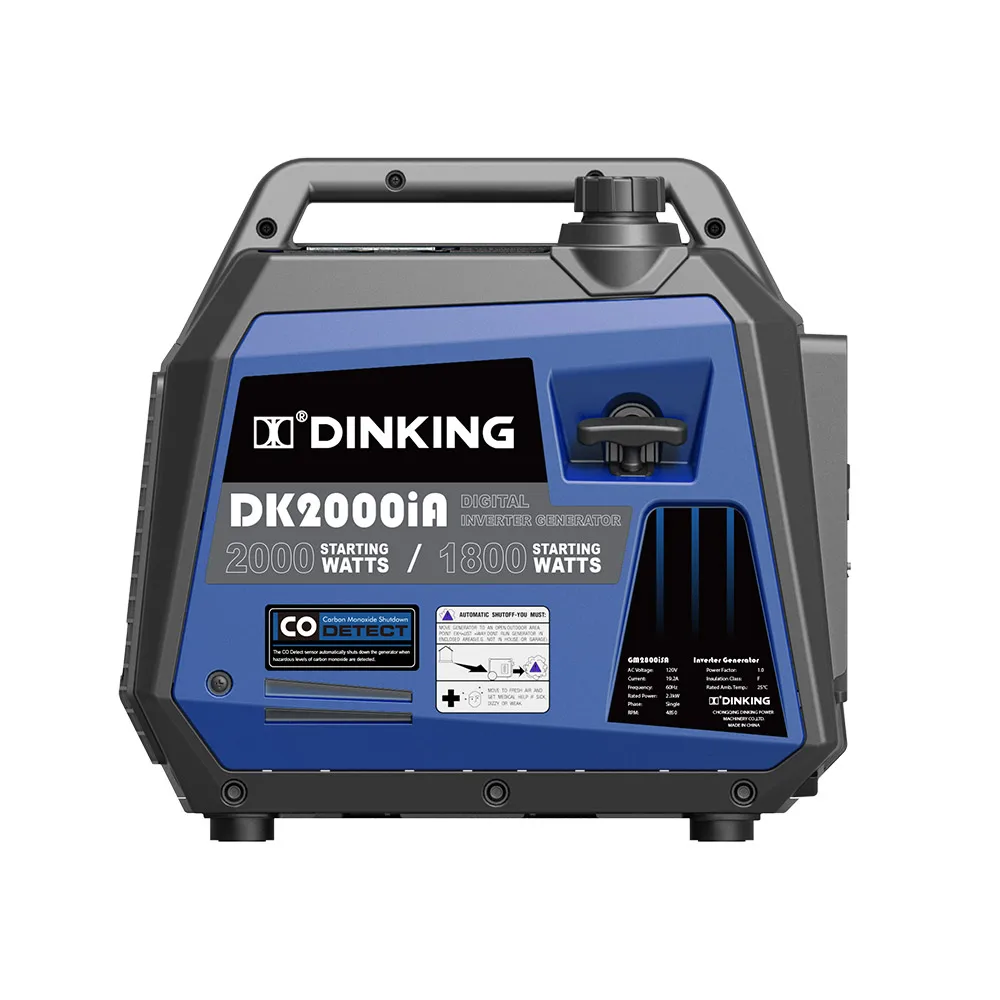
| CO Safety | Basic sensor (no auto-shutoff) | UL 2201-certified system with <3-sec response | Look for UL mark on unit or spec sheet |
| Fuel Efficiency | ~10 hrs @ 25% load | ~14–16 hrs @ 25% with smart throttle | Compare runtime at identical load (e.g., 500W) |
Customer Feedback Synthesis
Aggregated reviews (Consumer Reports, Wirecutter, B2B buyer surveys) show consistent patterns:
- Top 3 praises: “Runs silently enough for night use,” “Never tripped my laptop’s power adapter,” “Propane mode worked flawlessly during gas shortage.”
- Top 3 complaints: “Fuel gauge inaccurate above 70% full,” “Handle wobbles when rolling over gravel,” “No 12V DC charging port (had to buy adapter).”
Note: Complaints rarely involve core power delivery or safety—almost always relate to secondary UX details (gauges, handles, ports). This reinforces that the fundamentals—clean power, noise, CO safety—are now table stakes.
Maintenance, Safety & Legal Considerations
Maintenance: Change oil every 20–25 hours or annually (whichever comes first). Clean air filter monthly in dusty conditions. Store with fuel stabilizer—or drain completely if unused >30 days.
Safety: Never operate indoors, in garages, or under canopies—even with doors open. Maintain ≥3 ft clearance on all sides. Use only grounded, outdoor-rated extension cords (12 AWG minimum for 20 ft+ runs).
Legal: All units sold in the U.S. must meet EPA Phase 3 and CARB emission standards. CE marking required for EU import. UL 2201 certification is mandatory for CO safety compliance in California and increasingly adopted nationwide5.
Conclusion: Conditional Recommendations
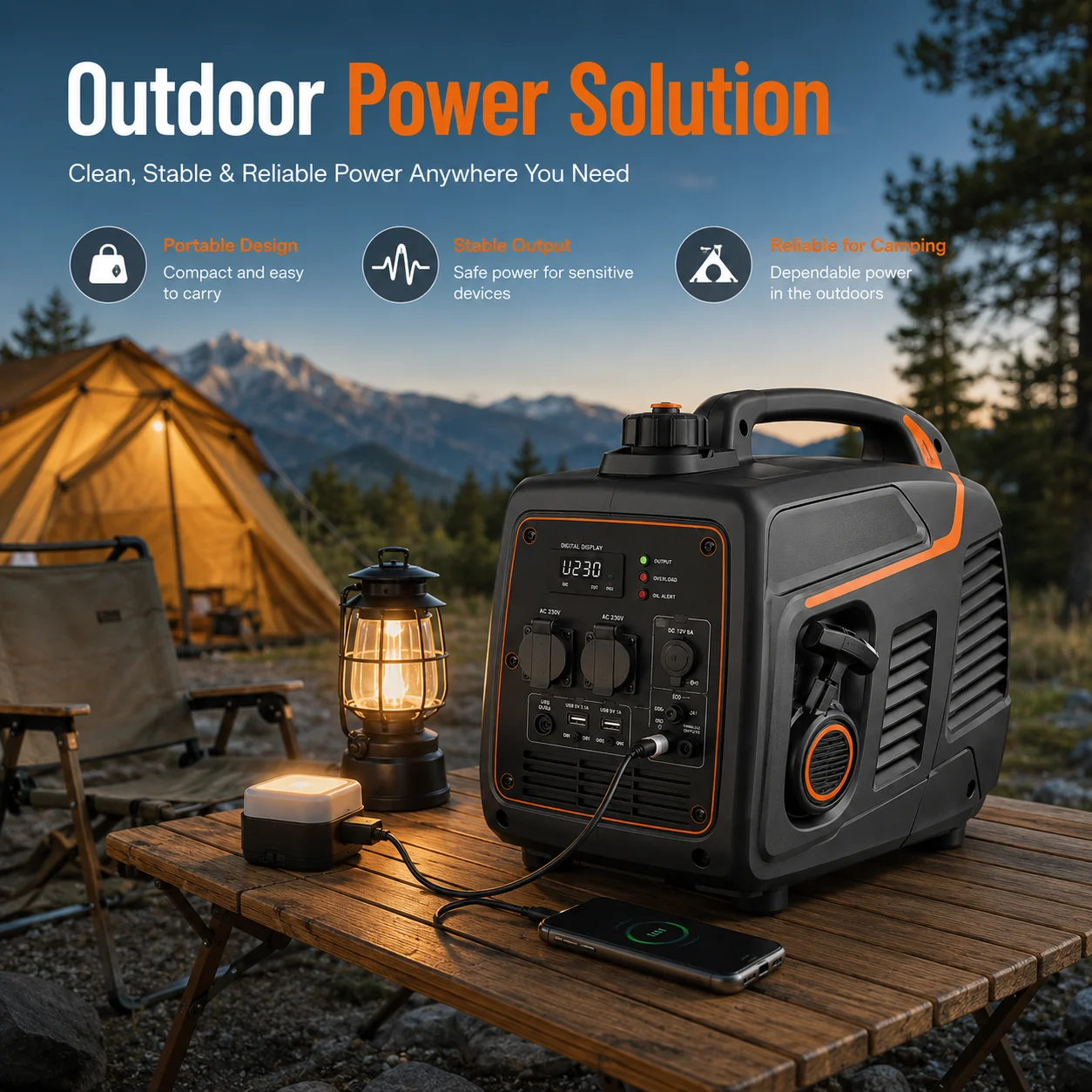
If you need quiet, clean, portable power for camping, tailgating, or light home backup—and plan to use it more than once per season—choose a dual-fuel 2000W inverter generator with UL 2201 CO protection, ≤57 dB noise rating, and pure sine wave output.
If your use is infrequent (<2x/year), strictly outdoors, and budget-constrained—gasoline-only is acceptable, but never skip CO detection.
If you require >1800W continuous, or plan to run multiple high-wattage appliances simultaneously—step up to 2200–2400W or pair two 2000W units with parallel kit.
This piece isn’t for keyword collectors. It’s for people who will actually use the product.


