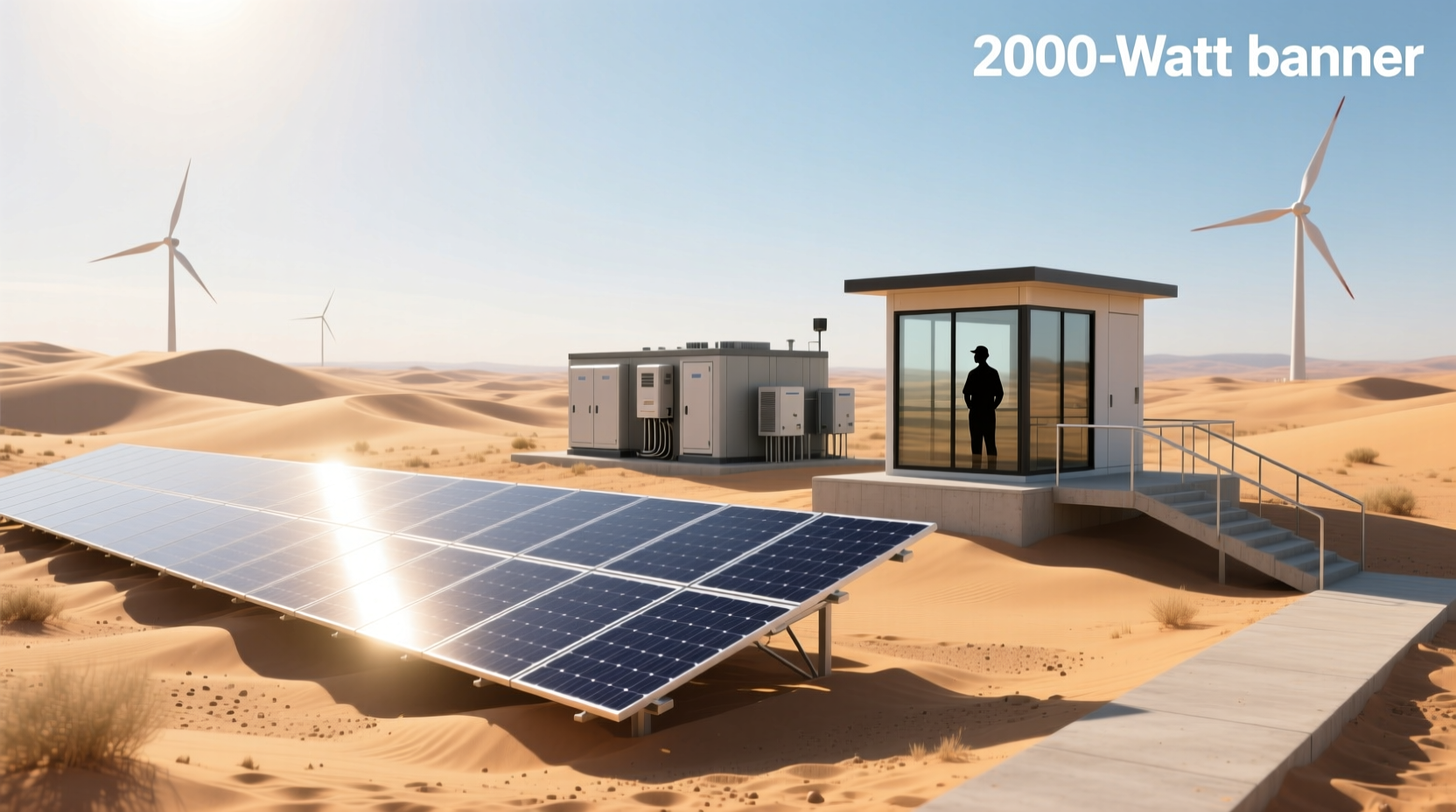
If you’re a typical user, you don’t need to overthink this. Over the past year, the 2000W portable power station market has matured decisively: LiFePO4 battery chemistry is now non-negotiable, ultra-fast AC charging (0–80% in under 60 minutes) is standard, and true sine wave inverters with UPS-grade switchover (<10ms) are baseline—not premium features 12. For most RV owners, home backup users, and off-grid professionals, a certified 2000W unit with ≥2000Wh usable capacity, 4000W surge, and MPPT solar input is the pragmatic sweet spot—not overkill, not underpowered. Skip NCM batteries, ignore flashy UIs without verified cycle life data, and always test ambient drain claims: many units lose 20–30% of stored energy just idling 2. This piece isn’t for keyword collectors. It’s for people who will actually use the product.
About 2000W Portable Power Stations
A 2000W portable power station is a self-contained, rechargeable energy system designed to deliver up to 2000 watts of continuous AC power—and often 3500–4000W surge—for short durations. Unlike generators, it produces zero emissions, operates silently, and requires no fuel. Its core components include a high-capacity lithium battery (now almost exclusively LiFePO4), a pure sine wave inverter, multiple output ports (AC, DC, USB-C PD, Anderson), and increasingly, integrated MPPT solar charge controllers.
Typical use cases:
- 🏠 Home emergency backup: Running refrigerators, Wi-Fi routers, medical devices (CPAP), lights, and small HVAC units during outages.
- 🚐 RV & van life: Powering microwaves, induction cooktops, air conditioners (12k BTU+), and battery chargers while dry camping.
- 🏕️ Outdoor work & events: Supporting film crews, mobile food vendors, remote construction sites, and pop-up festivals where grid access is unreliable or unavailable.
Crucially, a 2000W unit isn’t defined solely by its peak wattage—it’s validated by usable watt-hours (Wh), cycle life, thermal management, and real-world efficiency. A 2000W rating means little if the battery degrades to 60% capacity after 500 cycles or if phantom draw erodes 25% of charge overnight.
Why 2000W Power Stations Are Gaining Popularity
Lately, adoption has accelerated—not because consumers want more power, but because reliability, safety, and usability have finally caught up to demand. In 2026, three converging signals make this capacity class especially relevant:
- ⚡ LiFePO4 is now mandatory for serious use: With 3,000–4,000+ cycles to 80% capacity and superior thermal stability, it eliminates fire risk concerns that plagued earlier NCM models 1. If you’re a typical user, you don’t need to overthink this: avoid NCM entirely.
- ⏱️ Charging speed crossed a usability threshold: Units hitting 0–80% in ≤55 minutes via AC mean you can top up between work shifts or before a weekend trip—no more overnight waits 2.
- 🛡️ UPS functionality became standardized: Switchover times under 10ms prevent desktop reboots or router disconnects during grid failure—making these viable as primary home backup, not just “nice-to-have” extras.
This isn’t hype. It’s engineering convergence: safety, speed, and seamless integration now coexist at price points that support mass deployment.
Approaches and Differences
There are two dominant sourcing paths—and they serve fundamentally different needs:
| Approach | Key Advantages | Potential Issues | Budget Range (B2B) |
|---|---|---|---|
| Premium Brand (EcoFlow, Anker, Jackery) | Proven firmware, strong app ecosystem, regional service centers, UL-certified cells, consistent MPPT efficiency >98% | High retail markup (often $1,500+); limited customization; slower wholesale MOQ negotiation | $1,200–$2,200 (retail) $700–$1,100 (wholesale, MOQ ≥50) |
| Specialized B2B Manufacturer | Lower entry cost ($350–$700 wholesale); flexible MOQ (some under 10 pcs); custom branding & port layouts; faster iteration on specs like dual-MPPT inputs | Requires deeper due diligence on cell certifications; variable firmware maturity; limited public review history | $350–$700 (wholesale, MOQ 5–20) |
When it’s worth caring about: You’re procuring for resale, fleet deployment, or integration into a larger system (e.g., solar + EV charger). Then, MOQ flexibility, CE/FCC documentation, and OEM support matter deeply.
When you don’t need to overthink it: You’re buying one unit for personal RV use or home backup. Prioritize verified cycle life and real-world idle drain over minor firmware differences.
Key Features and Specifications to Evaluate
Don’t default to headline specs. Focus on what impacts daily function:
- 🔋 Usable Capacity (Wh), not nominal: A 2000Wh unit may only deliver 1400–1600Wh under low-load conditions due to inverter overhead. Ask for tested idle drain per hour (target: ≤1.5Wh/h).
- ⚡ Continuous vs. Surge Rating: Confirm both. 2000W continuous is essential; 4000W surge handles compressor startups (fridge, AC). If you’re a typical user, you don’t need to overthink this—just verify independent lab reports.
- ☀️ MPPT Efficiency & Input Range: Look for ≥97% efficiency and wide PV input (12–150V) to maximize harvest from common 24V or 48V panel strings.
- 🔌 True Sine Wave Output: Non-negotiable for sensitive electronics. Avoid modified sine wave—even if cheaper.
- 🌡️ Thermal Management: Passive cooling suffices for intermittent use; active (fan-assisted) is better for sustained 1500W+ loads or hot climates.
Pros and Cons
Pros:
- ✅ Powers 99% of household appliances (including microwaves, coffee makers, and 12k BTU ACs) 1
- ✅ Silent, emission-free operation—ideal for indoor or noise-sensitive environments
- ✅ Scalable via expansion ports (add extra batteries for 4000Wh+ setups)
- ✅ Rapid AC/solar charging enables multi-day resilience without grid dependency
Cons:
- ⚠️ Weight remains high (30–60 lbs)—not truly “portable” for solo carry over distance
- ⚠️ Ambient power draw still affects long-term storage: 20–30% loss over 72 hours is common without deep-sleep mode 2
- ⚠️ High-quality LiFePO4 cells increase upfront cost versus older chemistries—but pay back in longevity
How to Choose a 2000W Power Station: A Step-by-Step Guide
- Define your primary use case: Home backup? RV? Job site? This determines required runtimes, port types, and whether UPS matters.
- Verify LiFePO4 chemistry and cycle life: Demand test reports showing ≥3,000 cycles to 80% capacity. Reject vague “long-life” claims.
- Check real-world idle drain: If the spec sheet omits this, ask directly. Anything above 2Wh/h is subpar for backup use.
- Confirm solar compatibility: MPPT voltage range must match your panels. Dual-input capability adds redundancy.
- Review certifications: UL 1973 (battery), UL 1741 (inverter), CE, FCC, and RoHS are minimums—not optional extras.
- Avoid these pitfalls:
- Units listing “2000W” but with only 1500W continuous rating
- No published thermal derating curves (how output drops at 40°C+)
- Missing deep-sleep mode or firmware update history
Insights & Cost Analysis
Wholesale pricing for compliant 2000W LiFePO4 units stabilized in early 2026 between $350 and $700, depending on MOQ, certifications, and included accessories 1. Retail equivalents commonly exceed $1,500—a 100–200% markup. The gap reflects brand investment in software, warranty infrastructure, and consumer-facing support—not fundamental hardware superiority.
For resellers or integrators: sourcing at $450/unit with MOQ 10 yields ~55% gross margin before logistics. For end users: paying $1,600 for identical hardware makes sense only if you value proven app reliability and local repair networks over raw specs.
Better Solutions & Competitor Analysis
The “better” solution depends on your constraint—not your budget. Below is a neutral comparison of functional priorities:
| Solution Type | Best For | Key Strength | Real-World Limitation |
|---|---|---|---|
| EcoFlow Delta Pro (2000W) | Users needing fastest recharge (55 min) and robust app analytics | Industry-leading AC input speed; expandable to 6kWh | Heavier (48 lbs); higher idle drain than newer B2B units |
| Anker Solix F2000 | RV/solar-first users prioritizing panel yield | Best-in-class MPPT efficiency (99.2%); intuitive solar dashboard | Limited third-party battery expansion options |
| Verified B2B Unit (e.g., OUPES / BLUETTI OEM) | Cost-conscious buyers or bulk deployers | Same LiFePO4 cells + MPPT specs at 40–60% lower cost | Firmware updates less frequent; fewer public long-term durability reviews |
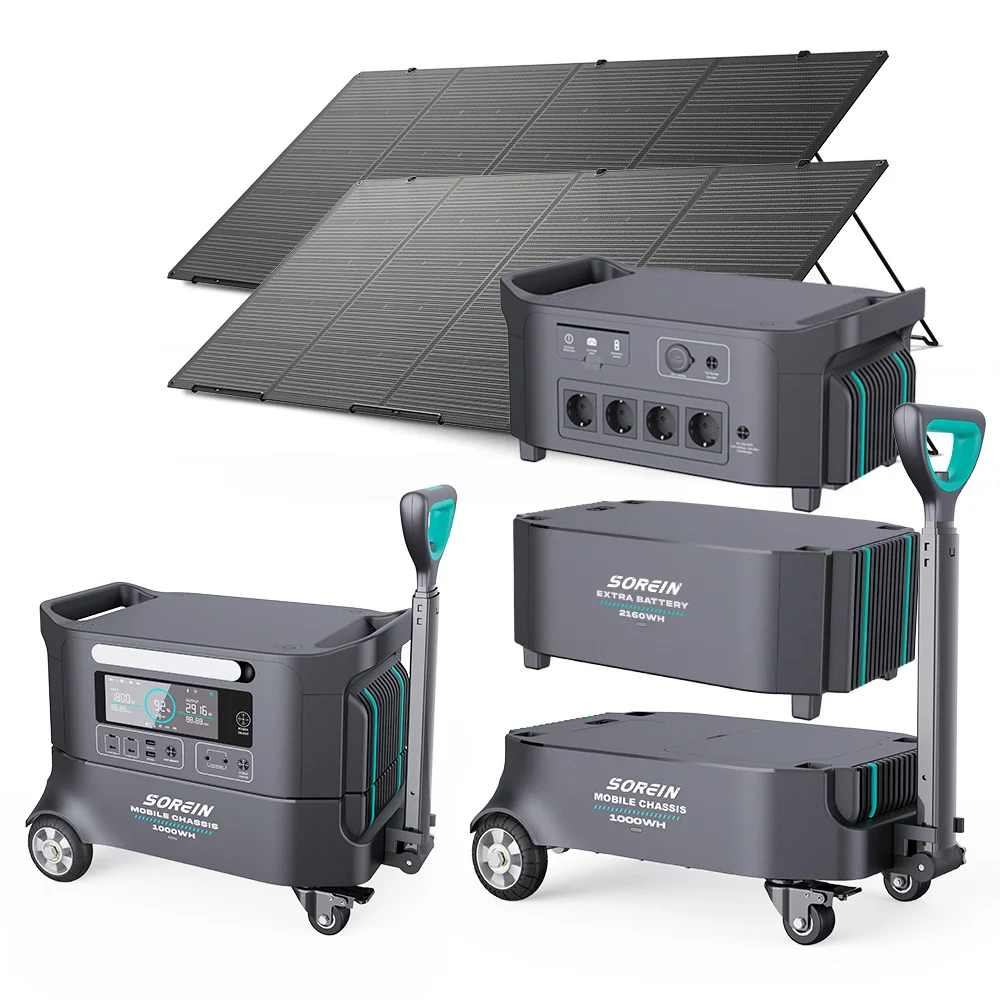
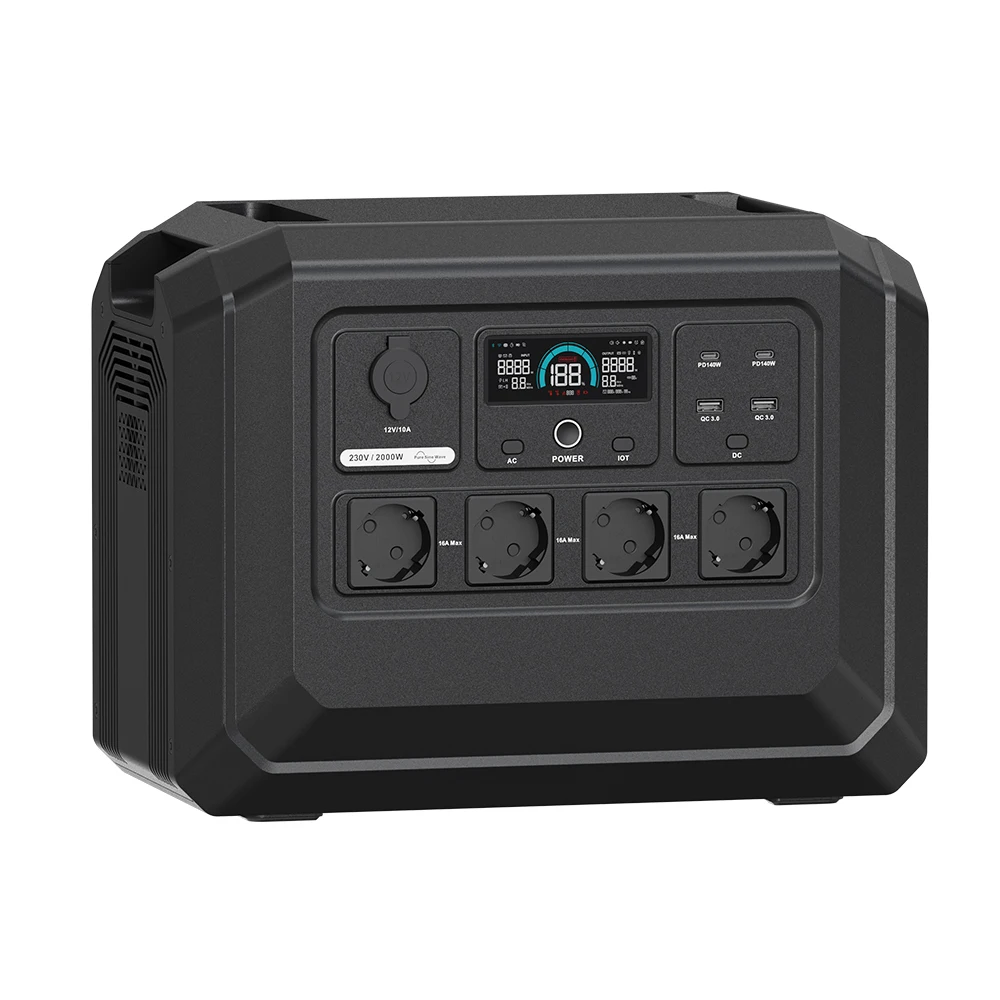
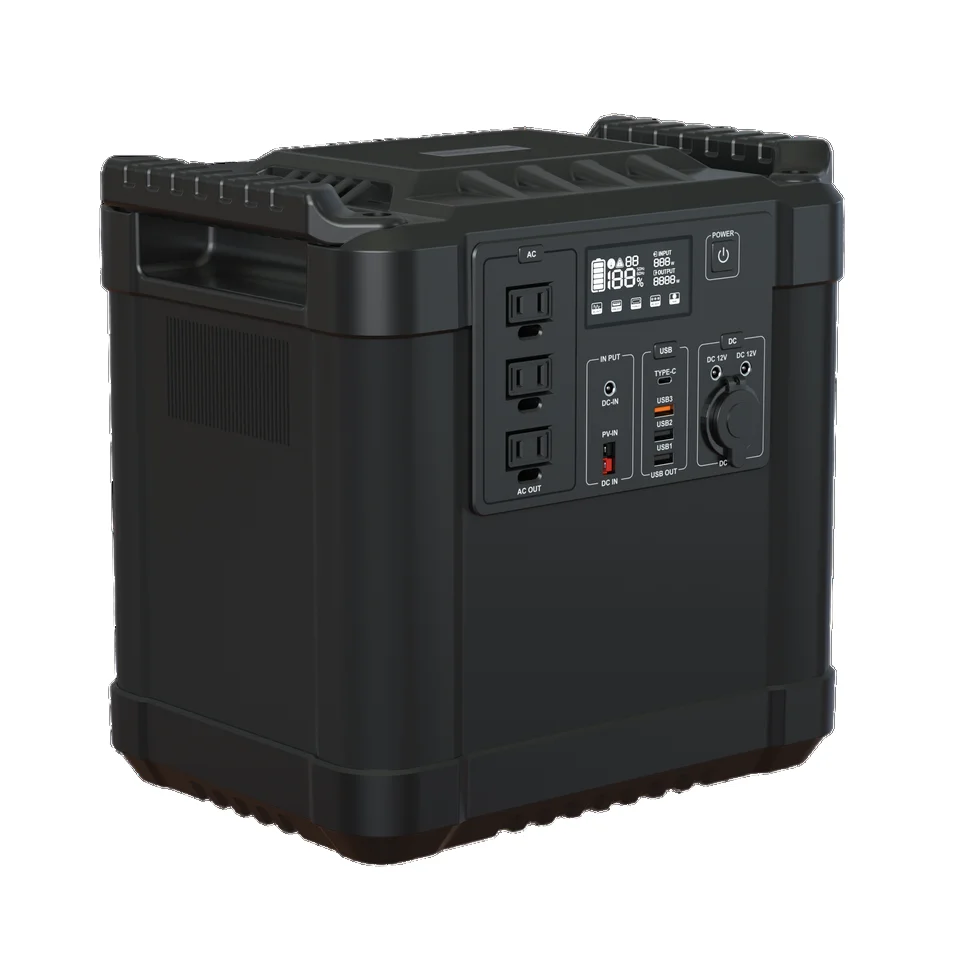
Customer Feedback Synthesis
Based on aggregated reviews across Outdoor Life, Consumer Reports, and RV forums 23:
- 👍 Most praised: Quiet operation, ability to run full-size refrigerators overnight, and reliability of solar recharging in variable light.
- 👎 Most complained about: Unplanned shutdowns during low-load conditions (linked to aggressive auto-shutoff logic), inconsistent Bluetooth pairing, and weight distribution making carry awkward.
Maintenance, Safety & Legal Considerations
Maintenance: Minimal. Keep firmware updated. Store at 30–50% charge if unused >30 days. Clean vents quarterly in dusty environments.
Safety: LiFePO4 is thermally stable, but never enclose units during operation. Use only manufacturer-approved solar cables and fuses. Avoid charging below 0°C unless rated for low-temp operation.
Legal: Most regions require UL 1973 or IEC 62619 certification for commercial resale. CE marking is mandatory for EU distribution. Always request test reports—not just logos.
Conclusion
If you need reliable, silent, grid-independent power for home backup or extended off-grid use, a certified 2000W LiFePO4 power station is the most balanced solution available in 2026. If you’re a typical user, you don’t need to overthink this: prioritize verified idle drain (<2Wh/h), 3,000+ cycle life, and MPPT efficiency >97%. Skip NCM, skip unverified “fast charge” claims, and skip units without deep-sleep mode. Your choice isn’t about brand loyalty—it’s about matching measurable performance to your actual runtime and environmental demands.


