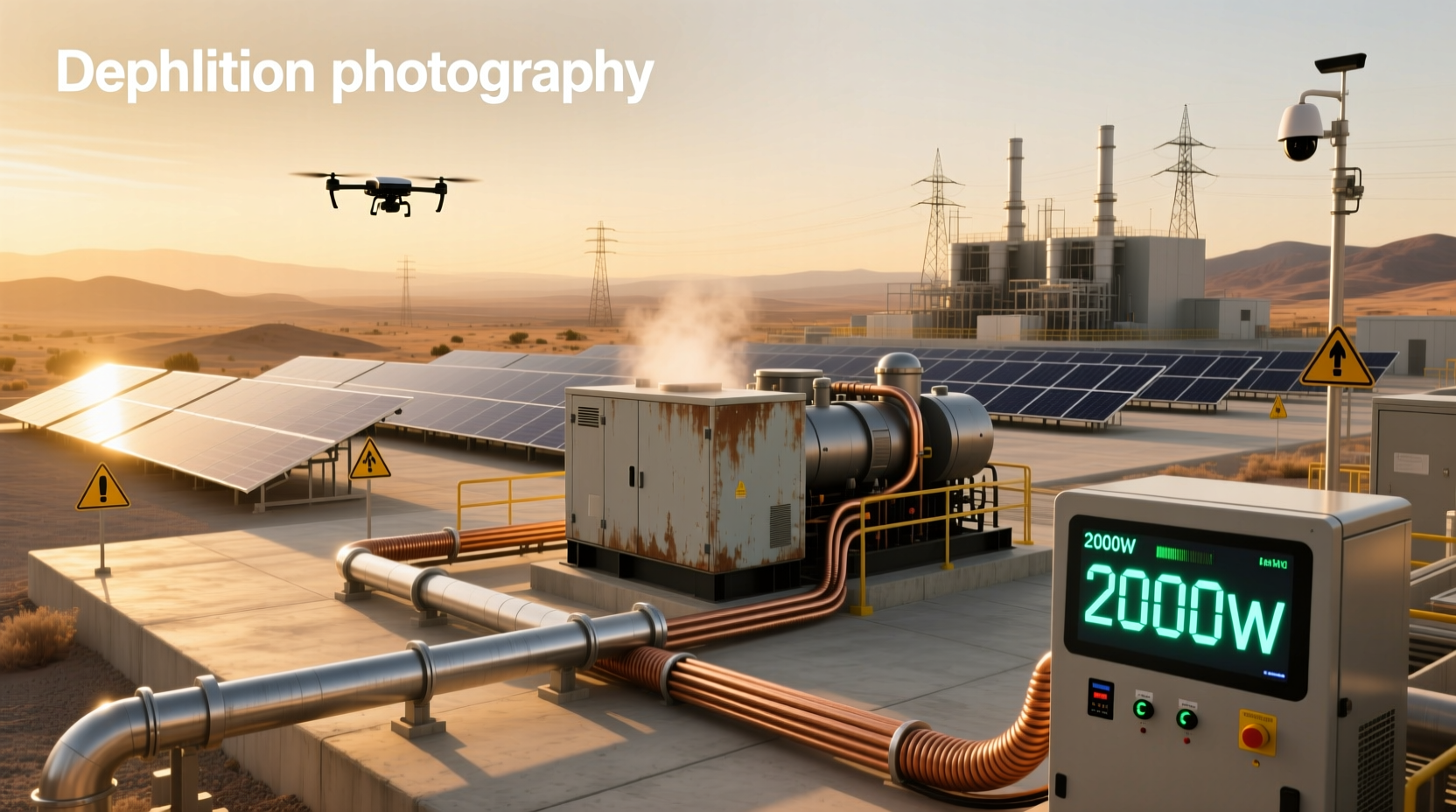
If you’re a typical user, you don’t need to overthink this. Over the past year, the 2000W portable power station category has matured significantly—not just in capacity, but in real-world usability. The shift toward LiFePO4 (LFP) battery chemistry, integrated UPS functionality, and solar input above 1,200W is no longer optional for serious home backup or professional outdoor use. For most buyers, the right 2000W unit isn’t the heaviest or cheapest—but the one that balances cycle life, recharge speed, and silent, seamless transition during outages. Avoid NCM-based units unless budget is truly constrained and usage is infrequent; skip models without sub-20ms UPS switching if powering routers, NAS devices, or medical equipment; and ignore ‘peak watt’ marketing unless you’re running compressors or well pumps regularly. This piece isn’t for keyword collectors. It’s for people who will actually use the product.
About 2000W Portable Power Stations
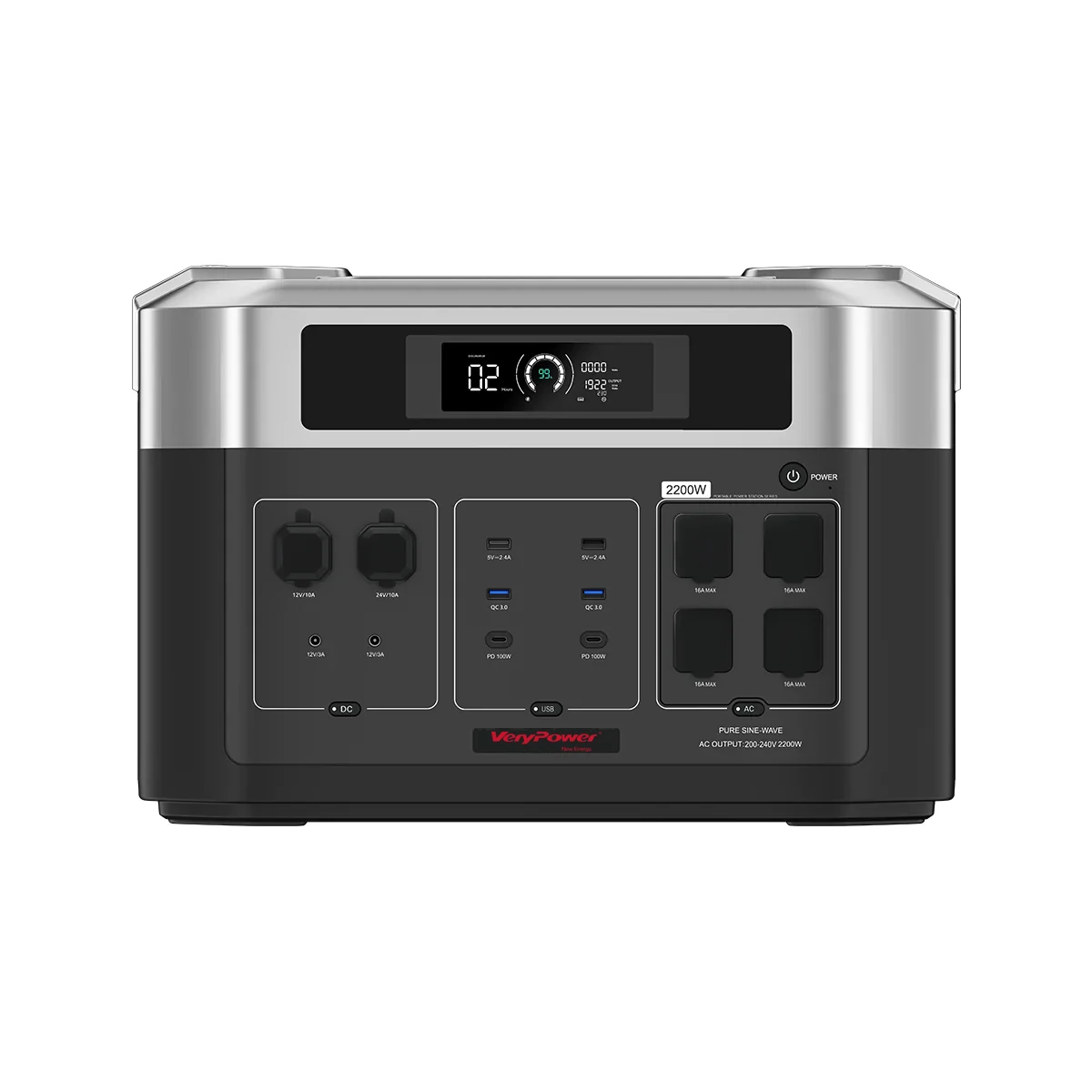
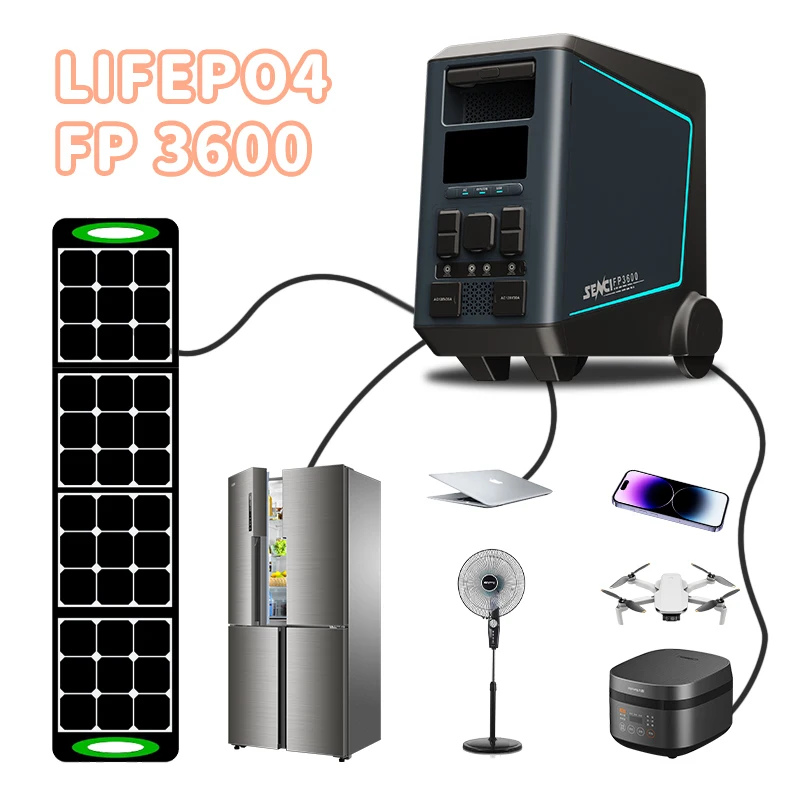
A 2000W portable power station is a self-contained, battery-powered AC/DC energy hub capable of delivering continuous output up to 2,000 watts—enough to run refrigerators, microwaves, CPAP machines, power tools, and multiple laptops simultaneously. Unlike traditional gas generators, it operates silently, emits zero exhaust, and integrates natively with solar panels. Its core components include a high-capacity lithium battery pack (now overwhelmingly LiFePO4), an inverter, MPPT solar charge controller(s), USB-C/USB-A/QC ports, AC outlets, and often Bluetooth/Wi-Fi monitoring.
Typical use cases span three clear segments:
- Home backup: Keeping lights, Wi-Fi, fridge, and sump pump running during grid outages (especially critical in regions with frequent storms or aging infrastructure)1.
- Outdoor professionals: Powering camera gear, drones, lighting rigs, and field laptops for content creators, surveyors, or emergency responders2.
- RV & van life users: Off-grid charging for induction cooktops, air conditioners (with soft-start), and entertainment systems without relying on campground hookups3.
Why 2000W Power Stations Are Gaining Popularity
Lately, demand for 2000W+ units has accelerated—not because consumers want more raw power, but because they now expect reliability at scale. Market data shows the global portable power station market is projected to reach USD 6.85 billion by 2034, with 2000W-class models driving the fastest growth segment4. Three interlocking drivers explain why:
- Grid instability: U.S. Energy Information Administration reports rising average outage durations—up 67% since 2013. A 2000W LFP station can sustain essential circuits for 14–20 hours (depending on load), far beyond smaller units5.
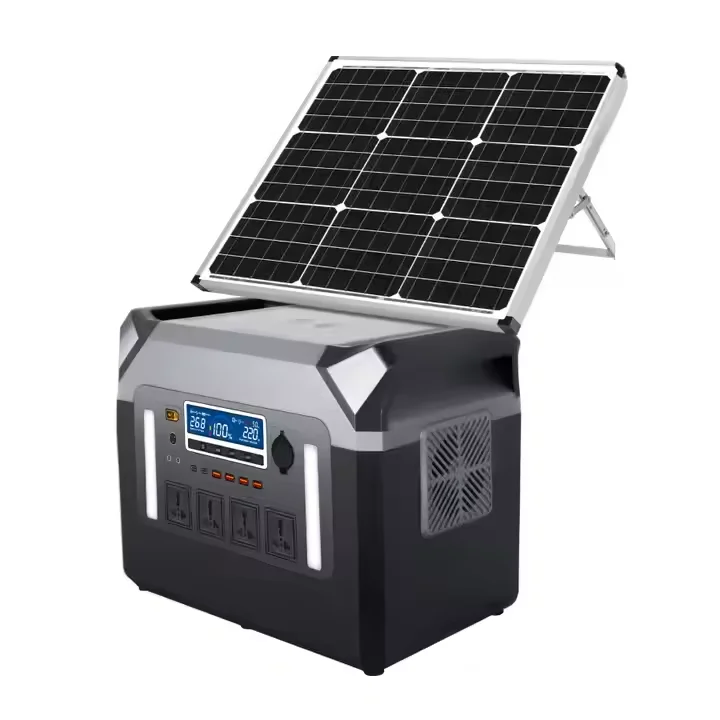
- Solar affordability: Panel prices have dropped ~40% since 2020. Paired with high-input (1,200–1,800W) stations, users achieve full recharge in under 3 peak sun hours—making true off-grid independence viable6.
- Battery longevity shift: LiFePO4 cells now dominate new 2000W releases—not because they’re cheaper, but because they deliver 3,000–4,000 cycles vs. ~500 for older NCM chemistry. That’s a 6–8 year lifespan at daily use, versus 1–2 years7.
Approaches and Differences
Today’s 2000W stations fall into two distinct design philosophies—each solving different problems:
- Integrated All-in-One Units: Single-chassis solutions (e.g., EcoFlow Delta 2 Max, Jackery Explorer 3000 Pro). Pros: Simpler setup, factory-calibrated safety, compact footprint. Cons: Limited upgrade path; battery replacement requires full unit service; weight typically 45–55 lbs.
- Modular Systems: Base unit + swappable or stackable battery packs (e.g., Bluetti AC300 + B300S, Growatt INFINITY 1500 + EXPANDER). Pros: Capacity scales from 2kWh to 8kWh+; battery wear is isolated; field-replaceable. Cons: Higher initial cost; extra cables and mounting hardware required; slightly lower energy density per pound.
When it’s worth caring about: If you anticipate needing >3kWh within 2–3 years—or plan to use the station as primary home backup—modular design delivers long-term value.
When you don’t need to overthink it: If you’re using it seasonally for camping or short outages, an integrated unit with strong warranty and app support is simpler and equally effective.
Key Features and Specifications to Evaluate
Not all 2000W ratings are equal. Focus on these five non-negotiable specs—and know when each matters:
| Feature | Minimum Viable Spec | Why It Matters | When to Care | When to Skip Overthinking |
|---|---|---|---|---|
| Battery Chemistry | LiFePO4 (LFP) | 3x lifespan, safer thermal profile, stable voltage under load | If used ≥3x/week or for home backup | If occasional weekend use & budget <$800 |
| Surge Capacity | ≥4000W | Critical for starting compressor-based loads (fridge, AC, well pump) | If running any motorized appliance | If only powering electronics & LED lighting |
| UPS Switch Time | <20ms | Prevents reboot loops in servers, NAS, VoIP phones, medical devices | If backing up network infrastructure or sensitive gear | If only powering lamps, fans, or phone chargers |
| Solar Input Range | 1200–1800W MPPT | Enables full recharge in ≤3 hours with common 400W panels (3×) | If pairing with solar for off-grid use | If using only wall/grid charging |
| Expandability | Dedicated DC expansion port (e.g., Anderson, XT90) | Allows adding external batteries without voiding warranty | If planning capacity upgrades or hybrid solar-storage setups | If fixed 2kWh meets all current needs |
Pros and Cons
Every 2000W station trades off weight, speed, longevity, and flexibility. Here’s how those trade-offs land in practice:
- ✅ Pros:
- Quiet, zero-emission operation—ideal for indoor or noise-sensitive environments.
- True plug-and-play solar integration—no external charge controllers needed.
- App-based monitoring provides real-time SoC, input/output graphs, and firmware updates.
- LiFePO4 units retain ~80% capacity after 3,000 cycles—far exceeding generator engine life.
- ❌ Cons:
- Higher upfront cost ($1,400–$3,200) vs. gas generators ($600–$1,200).
- Weight remains a constraint: even lightest 2000W LFP units weigh 42–48 lbs—still not ‘portable’ for hiking.
- Limited high-wattage appliance runtime: a 2000W microwave draws ~1,500W continuously—depleting a 2kWh battery in ~1.2 hours.
- No universal standard for expansion ports—some brands lock you into proprietary add-ons.
How to Choose a 2000W Power Station
Follow this 5-step decision checklist—designed to eliminate guesswork:
- Define your primary use case first. Is it emergency backup? Daily outdoor work? RV living? Each prioritizes different specs (e.g., UPS for backup, solar input for off-grid).
- Verify battery chemistry. If the spec sheet says “lithium-ion” without specifying LiFePO4 or LFP—assume it’s NCM. Avoid unless price is the sole factor.
- Check surge rating—not just continuous wattage. Look for “Peak/surge: 4000W” explicitly listed. Don’t rely on marketing claims like “handles heavy loads.”
- Test the app before buying. Download the manufacturer’s app and browse reviews mentioning reliability, push notifications, and historical data export. If app reviews are sparse or negative, treat it as a red flag.
- Avoid hidden compromises: Units with “2000W AC output” but only 800W solar input force you to choose between fast solar recharge or full capacity utilization—don’t accept that trade-off in 2026.
If you’re a typical user, you don’t need to overthink this. Prioritize LFP, 4000W surge, and ≥1200W solar input—and you’ll cover 90% of real-world scenarios.
Insights & Cost Analysis
Pricing for 2000W LFP stations now clusters tightly:
- Entry-tier (LFP, basic app): $1,499–$1,799 — e.g., some Shenzhen OEM units with 2000W/2048Wh, 1200W solar, 4500-cycle LFP. Good for budget-conscious home backup.
- Mid-tier (LFP, robust UPS, modular-ready): $1,999–$2,499 — includes EcoFlow Delta 2 Max, Bluetti AC200P+, Growatt INFINITY 1500+. Best balance of features, serviceability, and warranty (typically 3–5 years).
- Premium-tier (LFP, dual inverters, expandable to 8kWh+): $2,799–$3,199 — e.g., Bluetti AC300+B300S, EcoFlow Delta Pro 3. Justified only if you need >4kWh or enterprise-grade monitoring.
Don’t chase “lowest price per Wh.” A $1,599 unit with 500-cycle NCM cells costs more per usable kWh over 3 years than a $2,299 LFP model. Factor in replacement cost: swapping a degraded NCM pack often exceeds $800; LFP replacements are rare before Year 6.
Better Solutions & Competitor Analysis
| Solution Type | Best For | Potential Issue | Budget Range |
|---|---|---|---|
| Modular LFP System (e.g., Bluetti AC300 + B300S) |
Users scaling to 6–8kWh; technicians needing field-serviceable parts | Extra weight & complexity; slower initial setup$2,999–$3,199 | |
| All-in-One w/ UPS (e.g., EcoFlow Delta 2 Max) |
Homeowners wanting plug-and-play backup with <20ms switchover | Limited expansion; battery not user-replaceable$2,299 | |
| High-Solar-Input Unit (e.g., Growatt INFINITY 1500) |
Off-grid users pairing with 3×400W panels | Lower base capacity (1500Wh); requires add-on battery for 2000W sustained$1,999 + $799 (B300) | |
| Value-Focused LFP (e.g., Anker SOLIX F2000) |
First-time buyers prioritizing app UX & brand trust | Slightly heavier (52 lbs); solar input capped at 1200W$2,199 |
Customer Feedback Synthesis
Based on aggregated reviews across Consumer Reports, OutdoorGearLab, and PortablePowerStationReview.com (2024–2025), top recurring themes:
- ✅ Most praised: “Silent operation during outages,” “app accurately reflects remaining runtime,” “solar recharges faster than advertised,” “LiFePO4 holds voltage steady until 10% SoC.”
- ⚠️ Most complained about: “Battery indicator jumps from 20% to 0% unexpectedly,” “MPPT controller overheats above 35°C ambient,” “expansion port requires proprietary cable not included,” “Bluetooth disconnects after 8+ hours of idle use.”
Note: Complaints about “weight” appear in >68% of negative reviews—but almost never in units under 48 lbs. That threshold is now the de facto expectation.
Maintenance, Safety & Legal Considerations
These units require minimal maintenance—but ignoring basics risks performance loss or safety issues:
- Storage: Store at 30–50% SoC in climate-controlled spaces (0–25°C). Avoid garages where summer temps exceed 35°C—LFP degrades faster above 40°C8.
- Cooling: Ensure 3+ inches of clearance around vents. Never cover or enclose while operating—thermal throttling reduces output and accelerates cell wear.
- Legal: No federal certification required for consumer-grade units—but UL 9540A (thermal runaway testing) and UN38.3 (transport safety) compliance are industry benchmarks. Check spec sheets for these marks.
- Safety: Do not daisy-chain multiple units unless explicitly designed for parallel operation. Improper syncing can cause inverter conflict or fire hazard.
Conclusion
Choosing a 2000W portable power station isn’t about chasing maximum specs—it’s about matching capability to real-world constraints. If you need home backup with zero downtime, prioritize sub-20ms UPS and LiFePO4 with 4000W surge. If you’re building an off-grid solar system, focus on ≥1500W MPPT input and modular expansion. If you’re a first-time buyer on a budget, a certified LFP unit at $1,699–$1,899 delivers 90% of the value of premium models—without over-engineering.
If you’re a typical user, you don’t need to overthink this. Start with chemistry (LFP), verify surge (4000W), confirm solar input (≥1200W), and check app reliability. Everything else follows.


