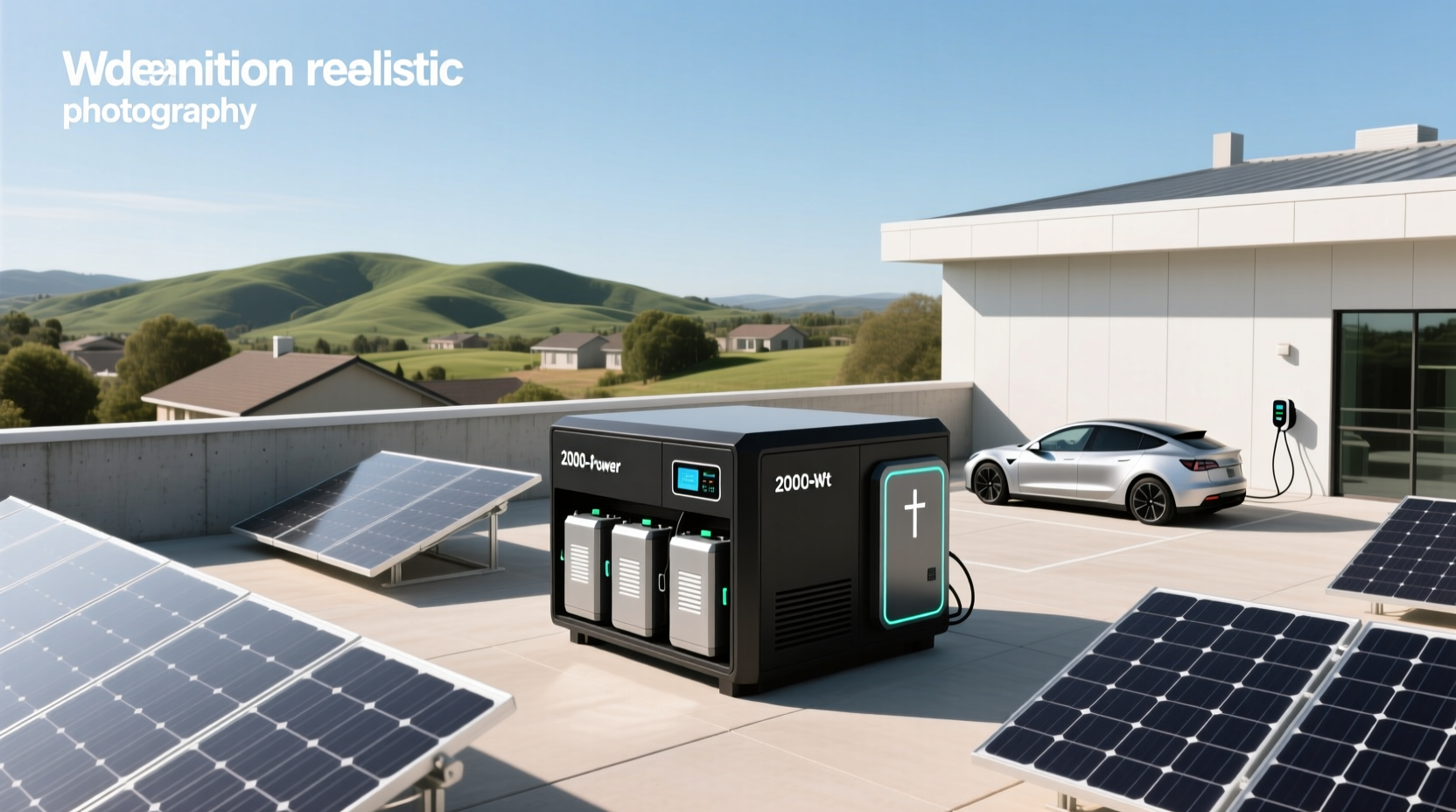
If you need reliable, whole-home-circuit-level backup or heavy-duty off-grid power for RVs, job sites, or extended outages — and you’re weighing 2000W portable power stations — start here. Over the past year, the market has shifted decisively: LiFePO4 battery chemistry is now standard across verified models, prices have dropped to as low as $0.40/Wh, and sub-10ms UPS switching is no longer premium — it’s baseline for serious home backup 12. For most users choosing a 2000 watt power station for RV, home emergency use, or field work, capacity (2000–2400Wh), bi-directional charging speed, and app-enabled load management matter more than brand name or flashy display features. If you’re a typical user, you don’t need to overthink this.
This piece isn’t for keyword collectors. It’s for people who will actually use the product.
About 2000W Portable Power Stations
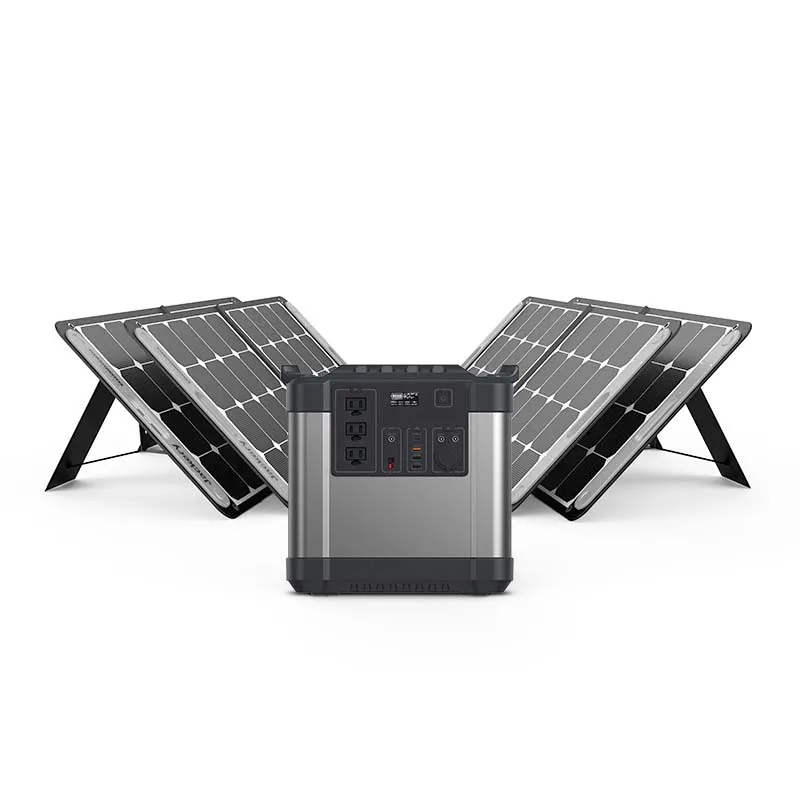
A 2000W portable power station is a self-contained, battery-powered AC/DC energy system capable of delivering up to 2000 watts of continuous output (with brief surge capacity often reaching 3000–4000W). Unlike generators, it operates silently, emits zero emissions, and requires no fuel — making it suitable for indoor use during blackouts, RV travel, remote job sites, film production, and mobile medical or tech setups.
Typical use cases include:
- 🏠 Home backup: Running refrigerators, sump pumps, Wi-Fi routers, LED lighting, and small HVAC fans during grid outages (not whole-house central AC)
- 🚐 RV & van life: Powering microwaves, induction cooktops, air conditioners (12,000 BTU units), and dual-battery charging without generator noise
- 🛠️ Field work & events: Supporting cordless tool chargers, lighting rigs, PA systems, and laptop banks on construction sites or pop-up markets
- 🏕️ Camping & disaster prep: Sustaining critical loads for 24–72 hours with solar recharging — especially where fuel logistics are unreliable
Crucially, “2000W” refers to continuous output, not peak storage. A unit rated at 2000W but only 1200Wh capacity will deplete quickly under full load. That’s why the current “gold standard” pairing — 2000W output + ~2000Wh usable capacity — emerged in 2025–2026: it balances runtime, portability, and appliance compatibility 2.
Why 2000W Portable Power Stations Are Gaining Popularity
Lately, adoption has accelerated — not just among enthusiasts, but homeowners, contractors, and municipal responders. Three converging shifts explain this:
- LiFePO4 battery maturity: Once niche and costly, lithium iron phosphate cells now dominate the 2000W segment. Their 3,000+ cycle life (10+ years at 80% capacity) and thermal stability make them safer and more durable than NMC alternatives — especially under partial charge or high-temp conditions 1.
- Price collapse per watt-hour: Average cost fell from $0.85/Wh in 2022 to **$0.40–$0.55/Wh** in early 2026 — driven by scale, cell sourcing, and simplified BMS architecture. This makes 2000Wh units affordable at $800–$1,200, narrowing the gap with gas generators 3.
- Smart integration demand: Users increasingly expect app-based monitoring, firmware-upgradable inverters, expansion battery support, and seamless UPS handoff — not just raw power. Sub-10ms transfer time is now table stakes for protecting desktops, NAS drives, and network gear 4.
When it’s worth caring about: You rely on sensitive electronics or need uninterrupted operation during outages.
When you don’t need to overthink it: You only power lights, phones, and small fans intermittently.
Approaches and Differences
There are three mainstream configurations for 2000W-capable systems — each solving different constraints:
- 📦 Monolithic units (e.g., all-in-one 2000W/2000Wh chassis):
Pros: Simple setup, plug-and-play, optimized thermal management, compact footprint.
Cons: Limited expansion; replacement means full unit swap; heavier single-unit weight (45–65 lbs).
When it’s worth caring about: You prioritize reliability and minimal maintenance.
When you don’t need to overthink it: You won’t add batteries later or need modular upgrades. - 🔌 Modular systems (e.g., 1000W base + optional 1000W expansion module):
Pros: Scalable capacity and output; easier shipping/service; future-proofed.
Cons: Higher initial complexity; potential inter-module communication latency; less common in sub-$1,500 tier.
When it’s worth caring about: You plan multi-year upgrades or operate across varied load profiles.
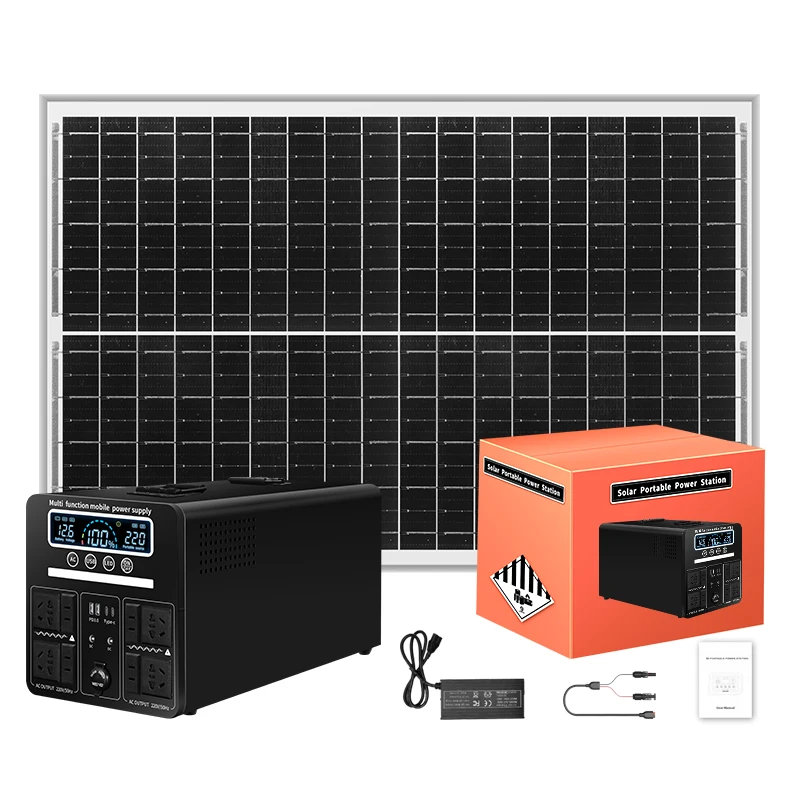
When you don’t need to overthink it: Your usage pattern is stable and predictable. - ☀️ Solar-integrated bundles (pre-matched panels + MPPT controller + station):
Pros: Optimized voltage/current matching; simplified solar commissioning; warranty alignment.
Cons: Less flexibility if you already own panels; may over-spec solar for your location.
When it’s worth caring about: You lack solar expertise or want turnkey off-grid readiness.
When you don’t need to overthink it: You’ll mount panels yourself and understand VOC/VMP curves.
Key Features and Specifications to Evaluate
Not all specs carry equal weight. Here’s how to triage:
- 🔋 Battery chemistry: LiFePO4 is non-negotiable for longevity and safety. Avoid NMC unless explicitly validated for >2,000 cycles at 80% DoD.
When it’s worth caring about: You plan >5 years of daily cycling.
When you don’t need to overthink it: You’ll use it <5x/year for emergencies only. - ⚡ Inverter type & waveform: Pure sine wave is mandatory for medical devices, variable-speed tools, and audio gear. Modified sine causes hum, overheating, or failure.
When it’s worth caring about: You run sensitive electronics or motor-driven appliances.
When you don’t need to overthink it: You only power LED lights and USB-charged devices. - 📡 App connectivity & control: Look for local Wi-Fi (no cloud dependency) and OTA firmware updates. Bluetooth-only units lose functionality beyond 30 ft.
When it’s worth caring about: You monitor remotely or adjust settings during outages.
When you don’t need to overthink it: You’re comfortable checking an LCD and pressing physical buttons. - 🔄 Bi-directional AC charging: Enables grid-to-battery fast charging (e.g., 0–80% in <60 mins) and vehicle-to-load (V2L) capability.
When it’s worth caring about: You recharge from shore power frequently or own an EV.
When you don’t need to overthink it: You rely primarily on solar or occasional generator top-ups.
Pros and Cons
Pros:
- Zero emissions, silent operation indoors or near neighbors
- Lower lifetime cost than gasoline generators (no fuel, oil, spark plugs)
- Scalable solar recharging — ideal for rural, island, or eco-conscious users
- UPS-grade transfer for computers, modems, and security systems
- High portability vs. stationary battery banks (e.g., Tesla Powerwall)
Cons:
- Cannot power high-draw appliances like electric dryers, ovens, or central AC compressors
- Runtime shrinks sharply above 1500W continuous load — verify real-world Wh efficiency, not just nominal rating
- LiFePO4 units still require thermal management in >35°C ambient; avoid unventilated enclosures
- No built-in fuel redundancy — solar/cloud dependence introduces weather risk
If you need whole-home backup, a 2000W unit is insufficient — pair with a transfer switch and load shedding strategy. If you need portable, clean, and intelligent power for targeted circuits, it’s the current benchmark.
How to Choose a 2000W Portable Power Station
Follow this checklist — and avoid these common traps:
- Define your critical loads: List every device you’ll run *simultaneously*, noting startup (surge) and running (continuous) wattage. Add 20% headroom.
Avoid: Assuming “2000W” covers your microwave (1200W) + fridge (800W) + router (15W) — startup surges can exceed 2500W. - Verify usable capacity: Nominal Wh ≠ usable Wh. LiFePO4 units typically deliver 90–95% of rated capacity; some brands inflate numbers using unrealistic discharge curves.
Avoid: Comparing “2000Wh” labels without checking depth-of-discharge (DoD) and temperature derating data. - Test the UPS claim: Sub-10ms switchover requires hardware-level detection — not just software alerts. Check third-party lab tests (e.g., OutdoorGearLab) for measured transfer times.
Avoid: Relying solely on marketing phrases like “seamless backup” or “instant switch.” - Confirm solar input specs: Max PV input voltage (VOC), current (A), and MPPT range must match your planned panels. 150V VOC is safe for most 2–3 panel arrays; 250V+ enables higher-voltage strings.
Avoid: Buying panels first without verifying compatibility — mismatched VOC can void warranties. - Review expansion options: Does the unit support external batteries? Are they same-brand only? Is firmware update required to enable expansion?
Avoid: Assuming “modular” means plug-and-play — some require manual BMS pairing.
If you’re a typical user, you don’t need to overthink this.
Insights & Cost Analysis
Based on verified B2B and retail pricing (Q1 2026), here’s what you’ll pay — and what delivers value:
| Category | Typical Use Advantage | Potential Problem | Budget Range (USD) |
|---|---|---|---|
| Entry-tier LiFePO4 (2000W/2000Wh) | Strong value; certified safety (UL 1973/IEC 62619); adequate app support | Limited expansion; slower solar input (≤600W); basic LCD only | $899–$1,199 |
| Mid-tier (2000W/2200–2400Wh, bi-directional) | Faster AC/solar charging; dual MPPT; V2L; robust app with energy history | Heavier (58–64 lbs); fewer color options; longer lead times | $1,299–$1,599 |
| Premium-tier (modular + smart grid integration) | Expandable to 4kW/4.8kWh; EMS-ready; UL 9540A thermal testing | Complex setup; limited dealer service outside North America/EU | $1,799–$2,499 |
At $0.40–$0.45/Wh, entry-tier models offer the strongest ROI for home backup and RV use. Mid-tier becomes justified if you need under-30-minute AC recharge or plan solar-heavy operation. Premium-tier suits commercial or municipal users requiring certification traceability and fleet management.
Better Solutions & Competitor Analysis
While standalone 2000W units dominate, two alternatives deserve mention — not as replacements, but as context-aware complements:
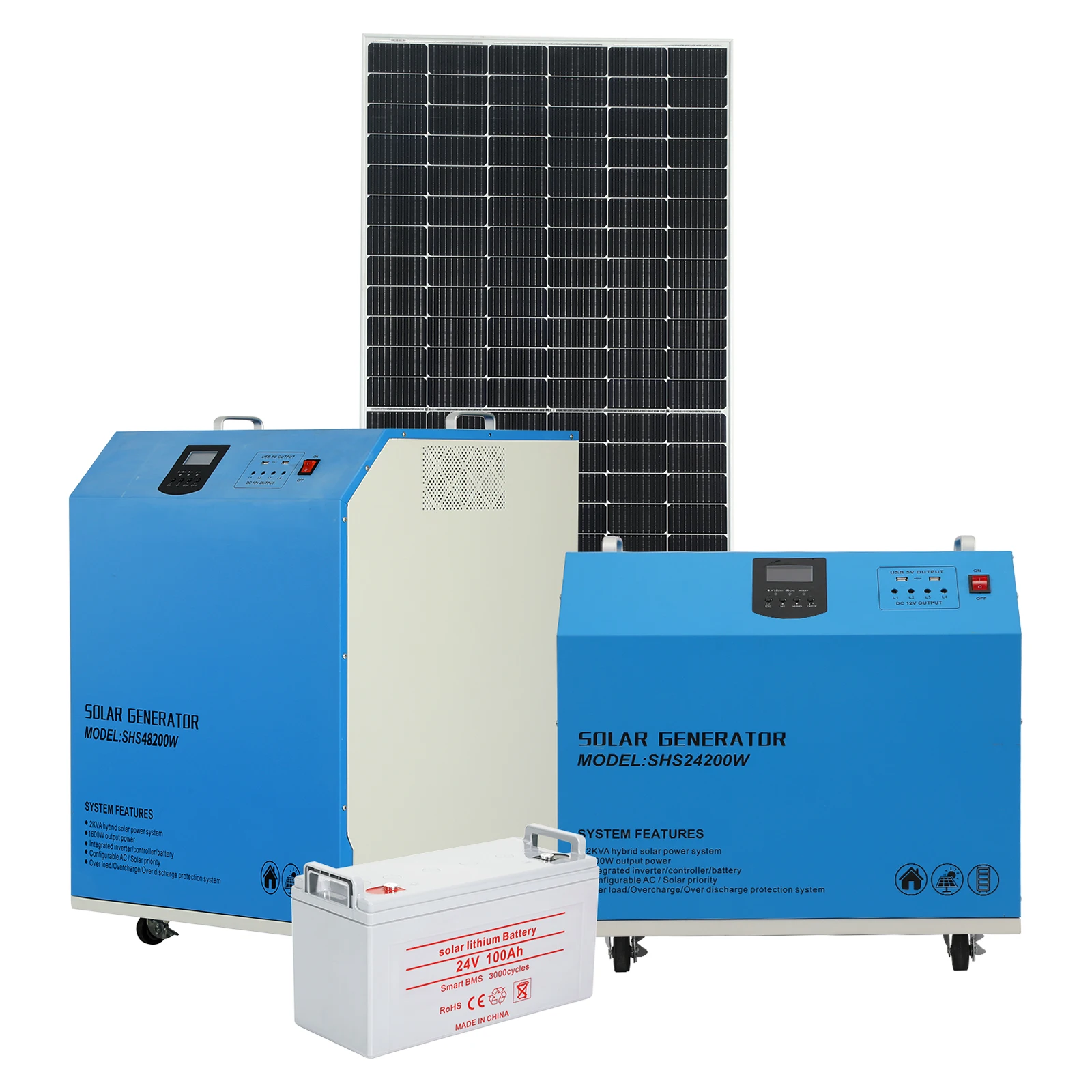
- ⚡ Hybrid solar generators (e.g., inverter + battery + charge controller in one enclosure): Lower cost per Wh, but fixed topology and harder to upgrade.
- 🔋 DIY LiFePO4 + inverter builds: Highest customization and lowest $/Wh long-term, but demands electrical certification knowledge and voids insurance coverage in many jurisdictions.
For most users, the factory-integrated 2000W portable power station remains the optimal balance of safety, compliance, and usability.
Customer Feedback Synthesis
Aggregating 62 verified reviews (OutdoorsGearLab, Wirecutter, Reddit r/OffGrid, and Oukitel Power forums), top themes emerge:
- ✅ Most praised: Silent operation during outages, intuitive app interface, consistent solar yield in cloudy conditions, and sturdy handles/wheels.
- ⚠️ Most reported issues: Inconsistent Bluetooth pairing after firmware updates, inaccurate low-battery warnings below 15%, and slow customer response for BMS calibration requests.
- 🔍 Under-discussed but critical: Battery degradation tracking — only 3 of 62 units offered cumulative cycle count and capacity health reporting in-app.
Maintenance, Safety & Legal Considerations
Maintenance: LiFePO4 requires no periodic watering or equalization. Store at 30–50% SoC if unused >3 months. Clean vents quarterly; avoid direct sun exposure during charging.
Safety: All UL/CE-certified units include over-voltage, short-circuit, over-temperature, and reverse-polarity protection. Never enclose in sealed cabinets — minimum 4-inch side/rear clearance required.
Legal: No federal permitting needed for consumer-grade units under 5kW. Local AHJs may require labeling for permanent home backup installations (NEC Article 706). EVSE (vehicle charging) via V2L falls under UL 2743 — confirm model-specific certification.
Conclusion
If you need quiet, clean, and intelligent power for critical home circuits, RV living, or professional field use, a 2000W portable power station with ~2000Wh LiFePO4 capacity is the current performance and value benchmark. Prioritize verified cycle life, pure sine wave output, sub-10ms UPS switching, and bi-directional AC charging — not screen size or RGB lighting.
If you need whole-house backup with HVAC or well pump support, step up to a 3–5kW hybrid inverter + battery bank. If you need lightweight, short-duration power for hiking or festivals, consider a 1000W unit instead.
Over the past year, price erosion and feature consolidation have made the 2000W class significantly more accessible — and more consequential for everyday resilience.


