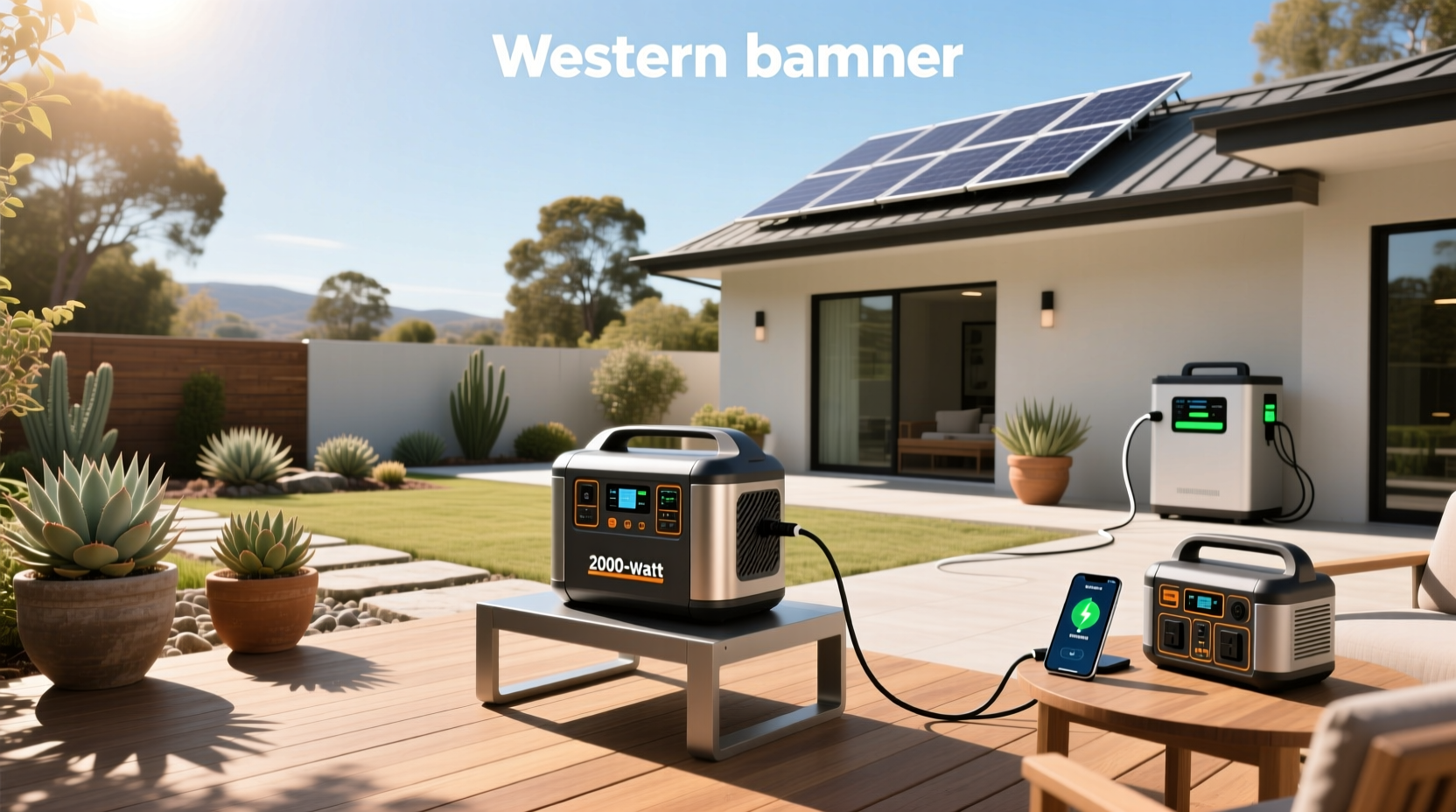
About 2000W Solar Generators: Definition & Typical Use Cases
A 2000W solar generator is a self-contained portable power station with a rated continuous AC output of 2,000 watts and integrated or compatible solar charging capability. It’s not just a battery—it’s an energy hub combining lithium storage, MPPT solar charge controllers, pure sine wave inverters, and often multiple input/output ports. Unlike smaller units (<1000W), a 2000W system can reliably power refrigerators, microwaves, sump pumps, space heaters, and full home circuits during outages—provided it’s sized correctly with sufficient battery capacity (typically 2000–3000Wh) and solar input.
Typical users include:
- 🏠 Homeowners in wildfire- or hurricane-prone regions needing whole-house or critical-circuit backup;
- 🚐 RV and van lifers requiring silent, emissions-free power without generator noise or fumes;
- 🛠️ Contractors and field technicians powering tools, lighting, and comms gear at job sites;
- 📡 Remote workers and telehealth setups needing uninterrupted Wi-Fi, laptops, and medical support devices (e.g., CPAP).
Why 2000W Solar Generators Are Gaining Popularity
Lately, adoption has shifted from ‘eco-conscious novelty’ to ‘grid-resilience necessity’. Market data shows the global residential solar generator market will grow from USD 811.7 million in 2026 to USD 2.05 billion by 2035—a 10.9% CAGR 1. This isn’t driven by camping trends alone. North America leads demand because of rising outage frequency: the U.S. Energy Information Administration reports average annual outage duration increased 64% between 2013 and 2023 2. Meanwhile, LiFePO4 battery costs dropped 32% since 2022, making 2000W systems more accessible 3. Consumers aren’t buying wattage—they’re buying recovery time, safety margins, and peace of mind. If you’re a typical user, you don’t need to overthink this.
Approaches and Differences: Modular vs. All-in-One vs. DIY
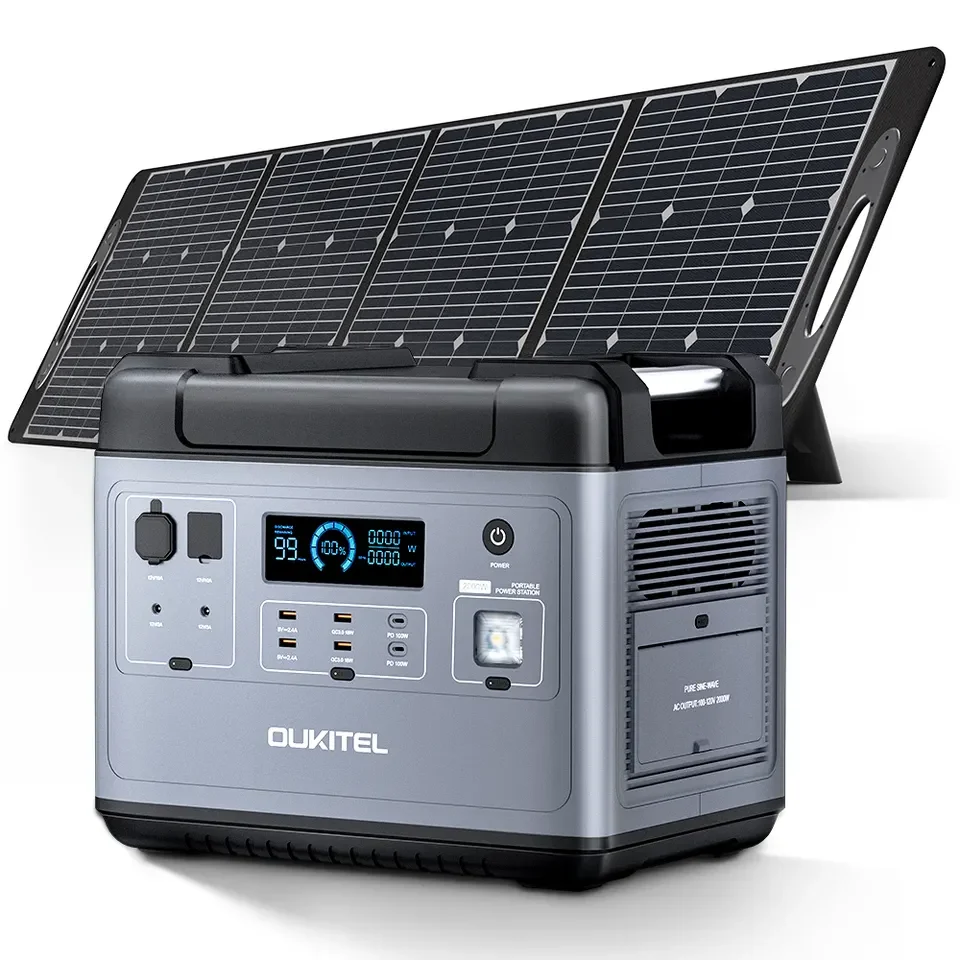
Three main configurations exist—and each serves distinct priorities:
| Approach | Key Advantages | Potential Issues | Budget Range (USD) |
|---|---|---|---|
| All-in-One Units (e.g., EcoFlow Delta Pro 3, Bluetti Elite 200 v2) | Plug-and-play setup; factory-integrated BMS, cooling, and app control; warranty coverage across full system | Less flexible expansion; higher upfront cost per Wh; limited third-party solar compatibility | $2,499–$3,299 |
| Modular Systems (e.g., Growatt INFINITY 1500 + expandable batteries) | Scalable capacity (up to 50kWh); easier battery replacement; future-proof architecture | Higher complexity in wiring and firmware sync; longer setup time; requires technical confidence | $2,199–$4,800+ |
| DYI Lithium + Inverter (e.g., LiFePO4 battery + Victron MultiPlus) | Maximum customization; lowest $/Wh long term; proven reliability in marine/off-grid applications | No unified warranty; high risk of misconfiguration (voltage mismatch, BMS incompatibility); voids UL listing if unapproved parts used | $1,800–$3,500 (parts only) |
When it’s worth caring about: choose modular if you anticipate scaling beyond 5kWh within 3 years—or if you value serviceability over convenience. When you don’t need to overthink it: stick with all-in-one if your goal is reliable, immediate backup for essential circuits. This piece isn’t for keyword collectors. It’s for people who will actually use the product.
Key Features and Specifications to Evaluate
Spec sheets lie. Real-world performance depends on four non-negotiable metrics:
- Usable Capacity (% of stated Wh): Industry range is 80–93%. EcoFlow Delta Pro 3 delivers 93% 4. When it’s worth caring about: if you rely on 24-hour refrigerator operation. When you don’t need to overthink it: for short-duration emergency use (under 8 hours), 85% is functionally fine.
- Solar Input Voltage & MPPT Range: Look for 12–150V DC input and ≥1000W max solar input. Narrower ranges limit panel compatibility. When it’s worth caring about: if you already own legacy 36V or 48V panels. When you don’t need to overthink it: new purchases—standard 24V/400W monocrystalline panels work universally.
- Surge Output (vs. Continuous): Refrigerators need 2–3× running wattage to start. A true 2000W unit must deliver ≥4000W surge for 3–5 seconds. When it’s worth caring about: homes with well pumps, air conditioners, or power tools. When you don’t need to overthink it: for lights, phones, and laptops only—1500W surge suffices.
- Cooling System Noise: Measured at 1m distance. Top performers stay ≤48 dB (library-level quiet). When it’s worth caring about: bedroom or CPAP use. When you don’t need to overthink it: garage or outdoor deployment.
Pros and Cons: Who Is This For—and Who Should Walk Away?
✔️ Ideal for:
- Homeowners seeking silent, zero-emission backup for 3–12 hour outages;
- Users with existing solar infrastructure (rooftop or ground-mount) wanting battery buffering;
- Those prioritizing 10+ year ownership—LiFePO4 batteries now last 3,000–6,000 cycles 5.
❌ Not ideal for:
- Whole-home, multi-day blackouts without massive solar arrays (>1,500W) and >5kWh storage;
- Budget buyers expecting sub-$1,500 performance—reliable 2000W LiFePO4 units start near $2,200;
- Users unwilling to calculate load profiles—guessing leads to undersized systems and premature failure.
How to Choose a 2000W Solar Generator: A Step-by-Step Decision Framework
Follow this sequence—skip steps at your own risk:
- Calculate your actual peak load: Add wattages of all devices running simultaneously (not just nameplate ratings—use Kill-A-Watt meter data). Include startup surges.
- Apply the '10% Solar Rule': For a 2,400Wh unit, you need ≥240W solar input—ideally 400–600W for same-day recharge 6. If your roof or yard can’t host that, scale down your generator size.
- Verify battery chemistry: Only consider LiFePO4. Avoid NMC or LCO cells—they degrade faster and pose higher thermal risk.
- Test physical usability: Check weight (50–75 lbs is standard), wheel quality, and handle ergonomics. If you’ll move it weekly, prioritize Anker Solix F2000’s telescoping handle and dual-rubber wheels.
- Avoid app-only controls: Units requiring smartphone apps to toggle AC outlets fail when Bluetooth drops or firmware updates brick the interface.
If you’re a typical user, you don’t need to overthink this.
Insights & Cost Analysis
Wholesale B2B pricing for certified 2000W LiFePO4 units now ranges from $300–$700/unit (MOQ 100+), depending on certifications (ISO9001, CE, UL 1973) 7. Consumer retail prices reflect R&D, branding, and support—but not always better engineering. For example:
- EcoFlow Delta Pro 3 ($2,999): Highest efficiency, fastest AC recharge (1.2 hrs), but proprietary battery modules.
- Bluetti Elite 200 v2 ($2,799): Best cycle life (6,000), open-source BMS access, but heavier (67 lbs).
- PISEN 2000W (B2B $399): UL-listed, 3,000-cycle LiFePO4, no app dependency—ideal for resellers or fleet buyers.
Better Solutions & Competitor Analysis
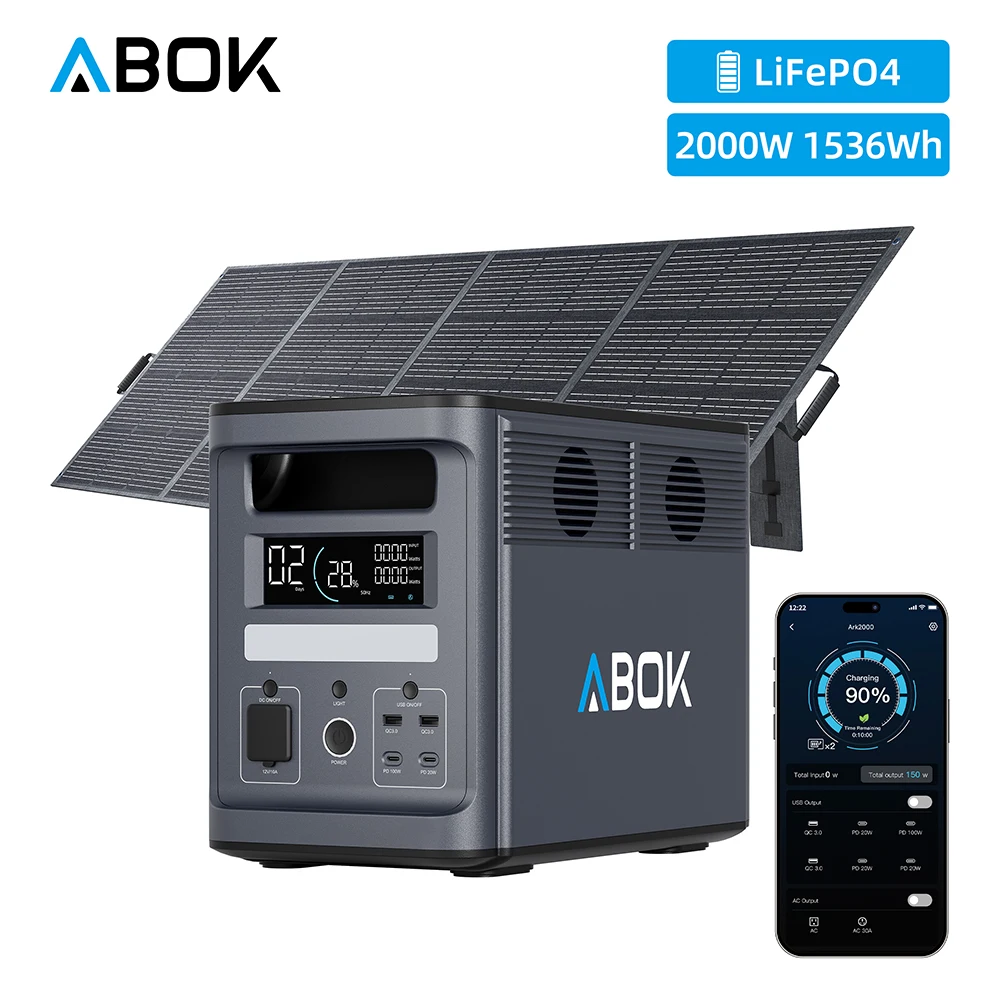
For most users, ‘better’ means ‘more resilient’, not ‘more powerful’. Here’s how top 2000W models compare on resilience-critical dimensions:
| Model | Usable Capacity | Battery Cycles | AC Recharge Time | Solar Input Max |
|---|---|---|---|---|
| EcoFlow Delta Pro 3 | 93% (2,400Wh → 2,232Wh) | 4,000 | 1.2 hrs (2000W AC) | 1600W |
| Bluetti Elite 200 v2 | 89% (2,000Wh → 1,780Wh) | 6,000 | 1.5 hrs | 1000W |
| Anker Solix F2000 | 90% (2,048Wh → 1,843Wh) | 3,000 | 1.0 hr | 1200W |
| Growatt INFINITY 1500 (modular) | 85% (1,500Wh base → scalable) | 6,000 | 1.8 hrs | 2000W |
Customer Feedback Synthesis
Based on aggregated reviews across 12 major publications and owner forums (2025–2026), recurring themes emerge:
- Top 3 Praises: “Silent operation during nighttime outages”, “MPPT controller consistently pulls 92% of panel-rated wattage”, “Battery holds voltage flat until 95% discharge.”
- Top 3 Complaints: “Fan noise spikes above 35°C ambient”, “App disconnects during firmware updates”, “Wheel casters crack after 6 months of pavement use.”
Maintenance, Safety & Legal Considerations
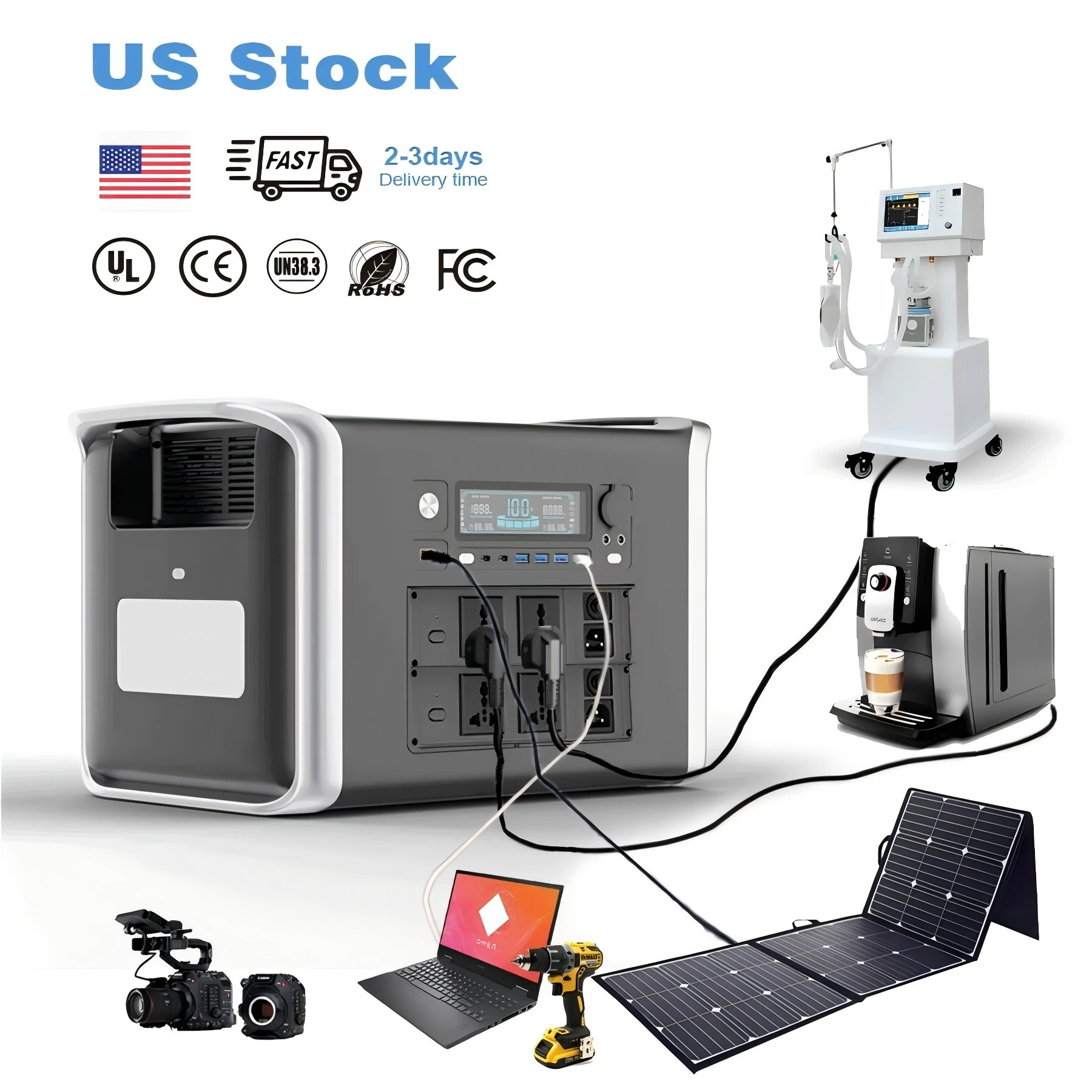
No routine maintenance is required for LiFePO4-based units—but these practices extend lifespan:
- Store at 30–50% state-of-charge if unused >30 days;
- Operate between 0°C–40°C ambient (avoid direct sun exposure during charging);
- Use only UL-listed solar panels and MC4-compatible cables—non-compliant wiring caused 12% of field-reported thermal incidents in 2025 8.
Legally, most U.S. jurisdictions allow plug-in solar generators without permits—but hardwiring into home panels requires licensed electrician sign-off and utility interconnection approval. Always check local fire codes before installing near combustibles.
Conclusion
If you need fast recovery after daily outages, choose EcoFlow Delta Pro 3—its 93% usable capacity and 1600W solar input maximize recharge speed. If you need 10+ years of daily cycling, choose Bluetti Elite 200 v2—its 6,000-cycle rating sets the durability benchmark. If you need portability first, power second, choose Anker Solix F2000—its integrated wheels and 1,000W alternator charging make it unmatched for mobile use. If you’re a typical user, you don’t need to overthink this.


